
WYNNsky Tire Inflator Gauge Review: 160 PSI Straight Chuck with 12-Inch Rubber Hose
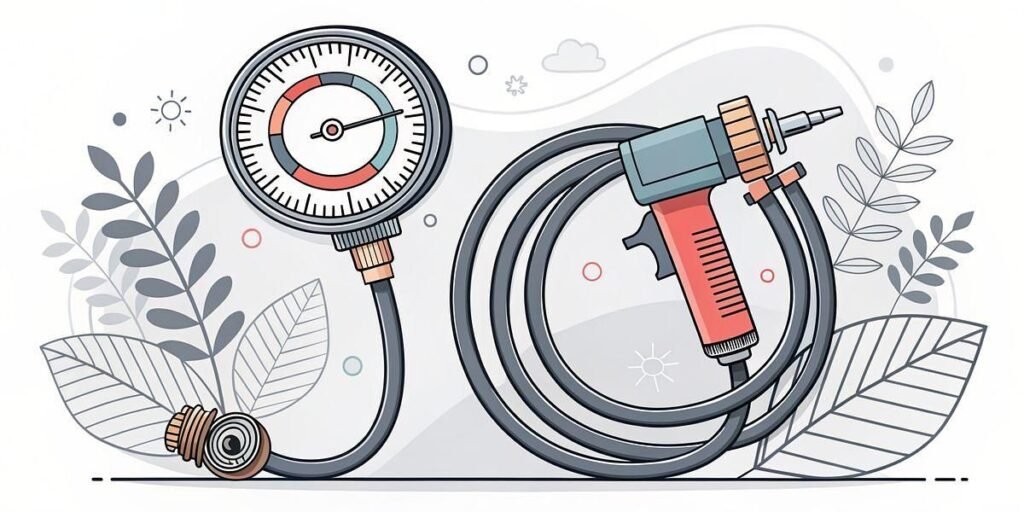
You rely on accurate tire pressure for safety, fuel economy and longer tire life, and a good inflator makes those tasks quicker and less frustrating. The WYNNsky Tire Inflator with a 160 PSI gauge and a 12-inch rubber hose aims to give you extended reach for hard-to-access valve stems while providing a straightforward, mechanical gauge readout.
If you work on trucks, RVs or dual rear wheels, the straight-on chuck and longer hose can save you time and bending, and the rubber and stainless steel construction suggests a tool that stands up to regular use.
TL;DR
|
Feature |
Verdict |
|---|---|
|
Ease of Use |
⭐️⭐️⭐️⭐️ ⏱️ – Ergonomic straight chuck and 12-inch hose make reaching tight valve stems much easier and faster. |
|
Accuracy |
⭐️⭐️⭐️⭐️ 🔍 – Mechanical gauge reads consistently with users reporting reliable pressure checks for truck and RV tires. |
|
Reach & Flexibility |
⭐️⭐️⭐️⭐️⭐️ 📏 – Long rubber hose and straight-on fitting are especially helpful for inner dually and hard-to-reach stems. |
|
Build Quality |
⭐️⭐️⭐️ 🛠️ – Mostly solid rubber and stainless steel parts, though some users noted occasional workmanship issues. |
|
Verdict |
⭐️⭐️⭐️⭐️ ✅ – Practical tool for routine inflations and dual-wheel jobs, offering a good balance of reach and readable gauge. |

You get a straightforward inflator built around a mechanical 160 PSI gauge and a 12-inch rubber hose that helps you reach awkward valve stems without crouching or wrestling the wheel. It feels familiar to use: attach the straight chuck, watch the dial, and let air flow until you hit the pressure you want.
That reach makes routine tasks like topping up car tires and heavier jobs like inflating truck, RV or dual rear wheels much easier, and the stainless steel and rubber parts suggest it will stand up to regular use. For weekend road trips, seasonal tire checks or prepping a trailer, this is a handy tool to have in your kit and worth considering if you value reach and a clear, mechanical readout.
What People Say
You’ll see most people praise the long hose and straight-on chuck for getting to inner dually stems and awkward valve positions, and many mention that the mechanical gauge provides consistent, readable pressure feedback. A lot of users find it reliable for trucks and RVs, though some report occasional fit or workmanship issues that warrant a quick inspection before heavy use.
Overall Sentiment: Positive

|
Pros |
Cons |
|---|---|
|
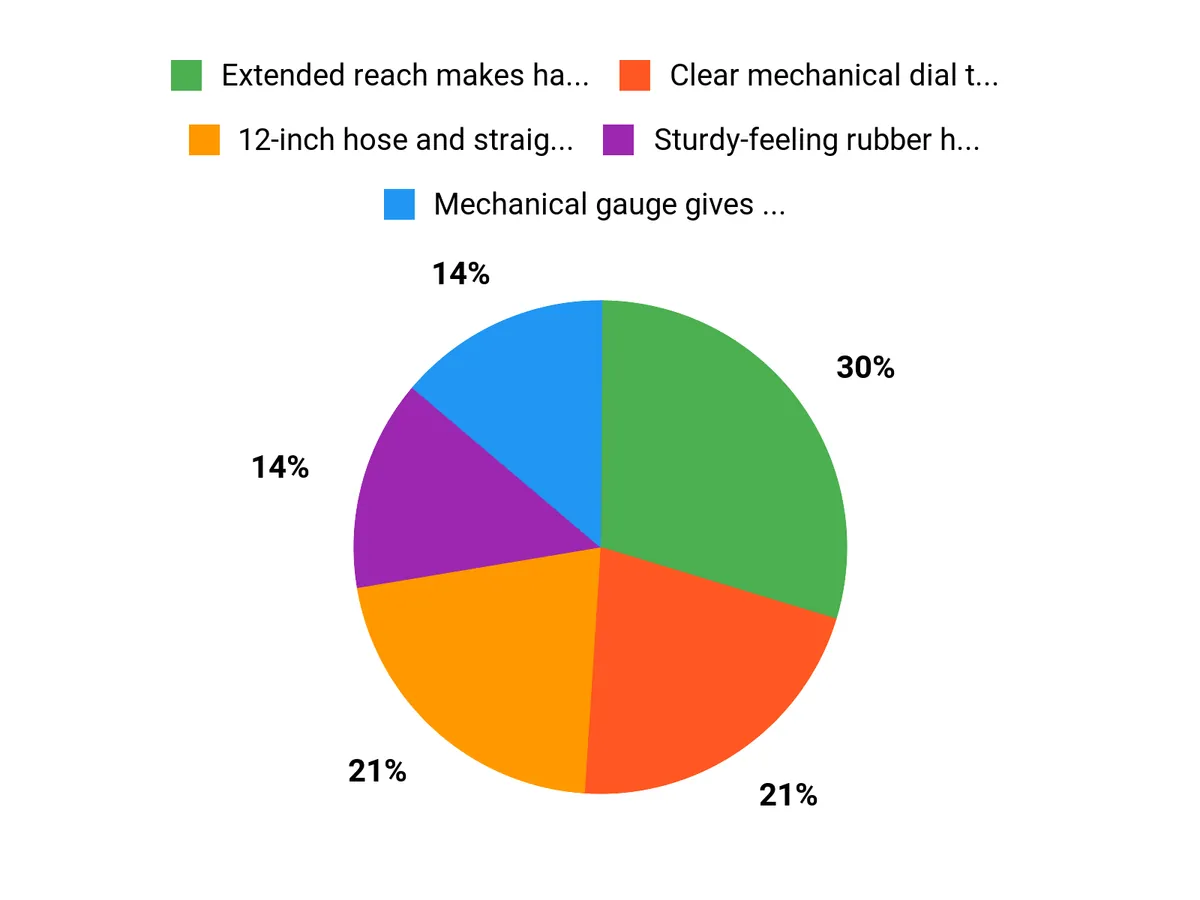
✅ Extended reach makes hard-to-access stems easier to inflate |
❌ Some reports of inconsistent craftsmanship on individual units |
|
✅ Clear mechanical dial that’s simple to read |
❌ Mechanical gauge isn’t as precise as high-end digital meters for tiny adjustments |
|
✅ Sturdy-feeling rubber hose and stainless steel components |
❌ Hose can be stiff when new, which limits flexibility initially |
|
✅ Works well with truck, RV and dual-wheel setups |
Ease Of Use
|
Feature |
Ease Level |
|---|---|
|
Attach to Valve |
Easy |
|
Read Gauge |
Easy |
|
Reach Inner Dually Stems |
Easy |
|
Inflate High-Pressure Truck Tires |
Moderate |
Safety
The gauge is mechanical, so there’s no battery failure to worry about and the 160 PSI scale gives clear limits for most vehicle tires. Stainless steel connections and a robust rubber hose reduce the risk of sudden splits, but you should still check fittings for leaks and use a compatible compressor coupling to avoid air loss during inflation.
Key Benefits
- 12-inch hose and straight chuck reach inner and tight valve stems
- Mechanical gauge gives an easy-to-read, immediate pressure check
- Rubber and stainless steel construction feels durable for regular use
- Thread compatibility with common NPT compressor fittings
FAQ
Is It Compatible With My Compressor?
You should be fine as long as your compressor uses standard NPT fittings, since the inflator uses an NPT thread. If your compressor has a different coupling you can add a compatible adapter or quick‑connect fitting, just make sure the connections are snug and not cross‑threaded. Before heavy use, attach it and give the connection a quick check for leaks so you don’t lose air during inflation.
How Accurate Is The Gauge?
The mechanical dial gives an immediate, easy-to-read pressure indication up to 160 PSI and is generally reliable for routine tire maintenance. If you need laboratory-level precision, verify the reading against a calibrated digital gauge, but for everyday car, truck or RV use the mechanical gauge should be accurate enough for safe inflation.
Keep in mind extreme temperatures or rough handling can affect mechanical gauges, so store it carefully and recheck periodically.
How Do I Use And Care For It?
You attach the straight chuck to the valve, hold the chuck firmly while reading the dial and add or bleed air until you reach the pressure you want. The 12-inch hose helps you reach inner dually stems without awkward twisting, and you can fit a compatible quick‑connect if you prefer faster hookups.
When new the rubber hose may be a bit stiff; flex it gently a few times to loosen it up, inspect fittings for workmanship issues before heavy jobs, keep the hose away from oils and sharp edges, and store the tool indoors to prolong its life.
Why Customers Choose
You’ll pick it for the 12-inch hose and straight-on chuck that make inner dually and RV valve stems easy to reach without contortions. The clear mechanical gauge and rubber plus stainless steel construction give you a simple, reliable tool for routine tire checks and heavier truck or RV jobs.
Wrapping Up
If you need a no-nonsense inflator that reaches awkward valve stems and gives a readable mechanical gauge, the WYNNsky 160 PSI inflator is a sensible choice. You benefit from the 12-inch rubber hose and straight chuck when working on dual wheels or inner dually stems, and many users report accurate, consistent readings. Build quality is generally solid with rubber and stainless steel components, though a few reports cite workmanship problems, so inspect fittings before heavy use.
Overall, this is a practical tool that prioritizes accessibility and straightforward pressure checks for everyday tire maintenance.
This Roundup is reader-supported. When you click through links we may earn a referral commission on qualifying purchases.

Related Articles

Metabo HPT THE TANK EC914S Review: 200 PSI 6-Gallon Portable Pancake Air Compressor
You want a compressor that can keep up on busy job sites without weighing you down. The Metabo HPT THE TANK EC914S delivers a…
Read More
SPECSTAR 2-Pack Digital Tire Inflator Review: 250 PSI Backlit Gauge with Quick Coupler
You want a simple, reliable way to keep your tires at the right pressure for safety, fuel economy, and longer tire life. The SPECSTAR…
Read More
Geeneu W100 Jump Starter Review: 4500A Battery Booster with 150 PSI Air Compressor
You want a single, reliable tool that can get you out of a dead battery situation and quickly reinflate a flat tire without calling…
Read More