
Trailer Tire Pressure: 5 Steps to Set Safe PSI
What’s in This Article
- Determine Trailer Target PSI From Weight
- Read the Tire Sidewall and Trailer VIN Sticker for Max PSI & GAWR
- Calculate PSI From Load Per Tire
- Use Manufacturer Load-Inflation Charts
- Adjust Trailer PSI for Uneven Side-to-Side Loading
- Adjust PSI for Temperature and Driving Conditions
- How Rim Rating, Ply, and Tire Age Limit Safe PSI
- Pre-Trip Checklist: Measure, Inflate, Inspect Tires
- Troubleshooting Tire Pressure Problems
- Frequently Asked Questions
A trailer tire blowout can ruin a trip in seconds, and low pressure ranks among the most common causes. The right pressure depends on the loaded weight each tire carries, not just the number printed on the sidewall. You’ll learn how to use trailer weight, tire charts, sidewall limits, and pre-trip checks to set safer trailer tire pressure.
Quick Answer
Set trailer tire pressure by dividing the loaded trailer weight by the number of tires, then matching that load to the tire maker’s load-inflation chart. Keep pressure within the tire sidewall, rim, and trailer placard limits. Check pressure cold before each trip, and adjust when cargo, temperature, or side-to-side weight changes.
Key Takeaways
- Use loaded trailer weight and load-inflation charts to choose pressure, not guesswork.
- Keep pressure at or below the lowest safe limit from the tire, rim, and trailer placard.
- Weigh each wheel position when one side of the trailer carries more cargo.
- Check pressure when tires are cold because driving heat raises readings.
- Replace cracked, worn, damaged, or aged tires before they fail on the road.
Determine Trailer Target PSI From Weight
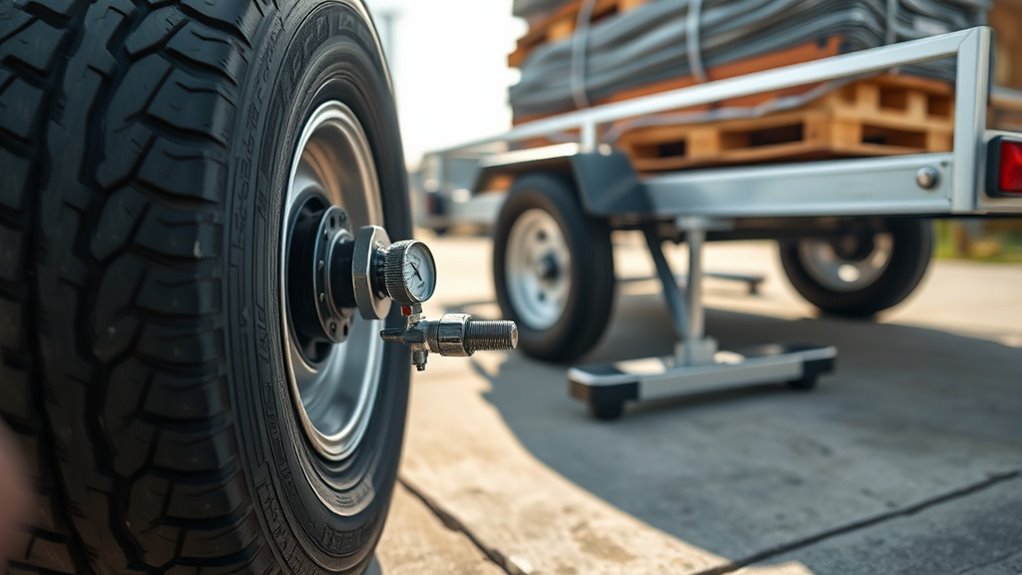
Start with the trailer’s actual loaded weight. Divide that weight by the number of tires to estimate the load each tire carries. For example, 11,100 lb divided by 4 tires equals 2,775 lb per tire.
Next, match that load to the tire maker’s load-inflation chart. If a chart shows that about 2,870 lb needs 60 psi, you may choose the next higher chart value when the tire, rim, and placard allow it.
Do not exceed the tire sidewall, wheel rim, or trailer placard limit. Uneven cargo can put more weight on one side, so use the heaviest wheel load when you set pressure.
Read the Tire Sidewall and Trailer VIN Sticker for Max PSI & GAWR
The tire sidewall lists the maximum cold inflation pressure and the load capacity at that pressure. Treat that number as a limit, not as an automatic target for every load.
Check the trailer VIN sticker or certification label next. It lists the Gross Axle Weight Rating (GAWR), tire size, and recommended cold tire pressure for the trailer’s rated load.
Use the lower safe limit that still supports your load. If the placard, rim, and tire do not match, confirm the correct setup with the trailer maker or a qualified tire shop.
Warning: Never raise pressure past the tire, rim, or trailer placard limit to compensate for an overloaded trailer.
Calculate PSI From Load Per Tire (Step-by-Step Math)
Begin by finding the load per tire. Divide the trailer’s total loaded weight by the number of tires, then compare that number with the manufacturer’s chart for your exact tire size and load range.
- Weigh the trailer when it’s loaded for travel.
- Divide the loaded weight by the number of tires.
- Find your tire size and load range on the tire maker’s load-inflation chart.
- Choose the chart pressure that meets or exceeds the load per tire.
- Confirm that the pressure stays within tire, rim, and trailer placard limits.
For example, a 11,100 lb trailer with four tires puts about 2,775 lb on each tire before side-to-side differences. If your chart lists the next safe value at 60 psi, use that value when every limit allows it.
Avoid straight-line math that divides rated load by rated pressure. Tire load capacity does not rise in a simple one-to-one line across all pressures, so the manufacturer’s chart gives you safer guidance.
Use Manufacturer Load-Inflation Charts (ST235/80R16E Sample)
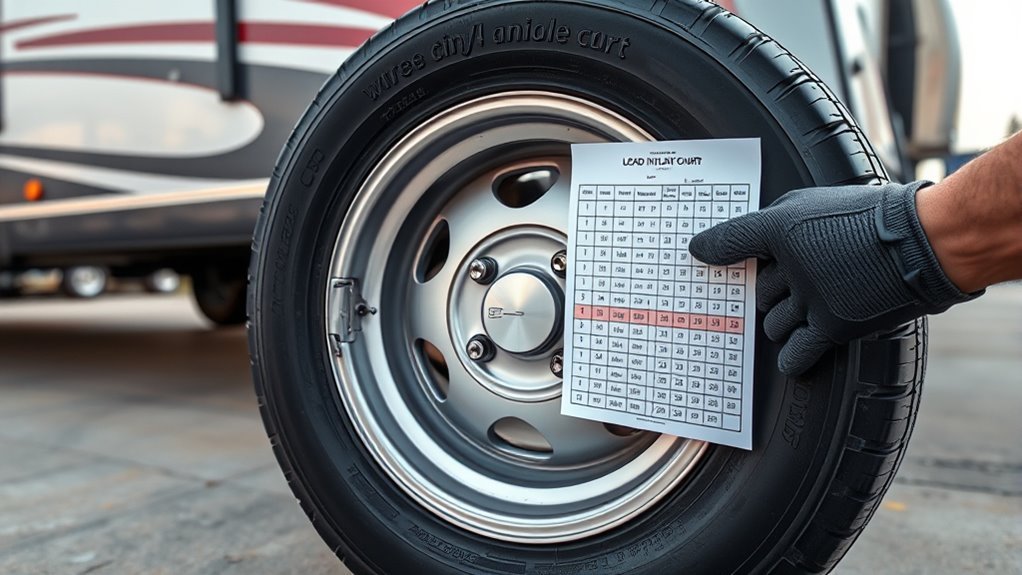
After you calculate load per tire, use the manufacturer’s load-inflation chart for your exact tire. Match the tire size, load range, and tire type before you choose pressure.
For an ST235/80R16E sample, the chart may show a load near 2,870 lb at 60 psi and a higher maximum load at 80 psi. Use the chart from your tire maker because values can vary by design.
If your load falls between two chart entries, choose the next higher listed pressure. That small buffer helps reduce heat and flex while keeping you within rated limits.
Adjust Trailer PSI for Uneven Side-to-Side Loading
One side of a trailer often carries more weight than the other. Water tanks, toolboxes, slide-outs, and cargo placement can shift weight to one wheel position.
Weigh each wheel position when you can. Use the heaviest wheel load to choose pressure for matching tires on the same axle, unless the tire maker or trailer maker gives a different rule.
Do not use extra pressure as a fix for poor loading. Rebalance cargo first, then set pressure from measured load and the correct chart.
Pro tip: Keep a simple note with loaded wheel weights and matching cold pressures for your usual trips.
Adjust PSI for Temperature and Driving Conditions
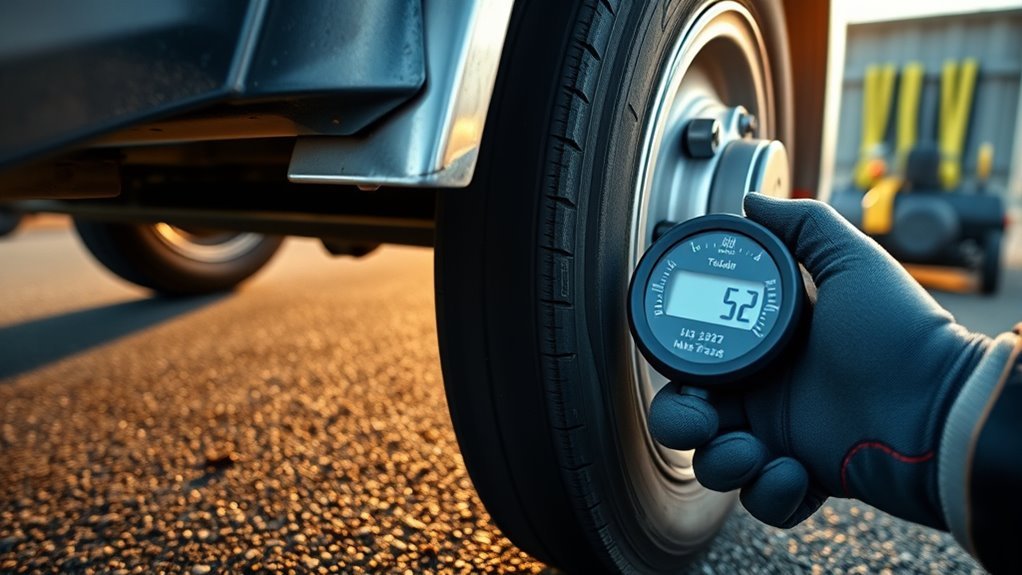
Check trailer tire pressure when the tires are cold, before you drive more than a short distance. Driving heats the tire, and heat raises the pressure reading.
Do not bleed air from a hot tire just because the pressure rose during travel. Let the tire cool, then recheck it against your cold target.
- Measure cold pressure before each trip with a reliable gauge.
- Inflate to the chart pressure that supports the loaded tire weight.
- Recheck pressure after major cargo changes or large temperature swings.
- Stop and inspect any tire that runs much hotter than the others.
Hot weather, high speed, heavy loads, and long highway runs increase stress. Slower speeds, proper loading, and correct cold pressure help tires run cooler.
How Rim Rating, Ply, and Tire Age Limit Safe PSI
Rim rating, tire load range, and tire condition all limit safe inflation. Use the lowest rated component as your real pressure limit.
Load range replaced the older “ply rating” language on many modern tires, but many drivers still use both terms. A higher load range can carry more weight only when the tire, rim, axle, and trailer ratings all support that load.
Tire age also matters. Replace trailer tires that show cracks, bulges, exposed cords, impact damage, or severe uneven wear, even when tread depth looks acceptable.
Pre-Trip Checklist: Measure, Inflate, Inspect Tires
Run a cold tire check before each trip. This routine takes only a few minutes and helps you catch leaks, damage, and unsafe loading before highway speeds make them worse.
- Verify cold pressure on all trailer tires with a calibrated gauge.
- Inflate each tire to the load-specific target from the chart.
- Inspect tread, shoulder, and sidewall areas for cuts, cracks, bulges, and uneven wear.
- Confirm that axle load stays within the Gross Axle Weight Rating (GAWR).
- Check valve stems, caps, lug nuts, and spare tire pressure.
Repeat the check after major temperature changes or load changes. A tire pressure monitoring system can help, but it should not replace manual checks.
Troubleshooting: Underinflation, Overinflation, and Perceived Overloading
Pressure problems usually show up as heat, poor handling, uneven wear, or repeated air loss. Fix the cause before you add more weight or take another long trip.
Signs Of Underinflation
Underinflated tires flex too much, build heat, and lose load capacity. Heavy loads make that stress worse and can lead to tire failure.
- Shoulder wear points to repeated low-pressure use.
- Bulging sidewalls or a flat-looking profile signal excess flex.
- Sluggish handling can mean the tire lacks enough pressure for the load.
- Frequent air loss can point to a leak, valve issue, or rim problem.
Stop and inspect the tire if you see these signs. Repair or replace damaged parts before you tow again.
Risks Of Overinflation
Overinflation can shrink the contact patch and reduce traction. It can also speed center tread wear and make impact damage more likely.
Never exceed the tire’s maximum cold pressure. The right answer comes from matching load to the chart while staying within every rated limit.
Addressing Perceived Overload
If the trailer looks overloaded, check weight and balance before you focus on pressure. More air cannot make an overloaded axle, rim, or tire safe.
- Weigh the trailer and compare axle loads with GAWR.
- Move cargo to improve side-to-side and front-to-back balance.
- Set pressure from the heaviest measured tire load.
- Reduce cargo or upgrade components if any rating falls short.
Do not tow at the edge of every rating for long periods. A margin gives your tires more room to handle heat, speed, and rough roads.
Frequently Asked Questions
What PSI Should I Run My Trailer Tires At?
Run the pressure shown in your tire maker’s load-inflation chart for the load each tire carries. Confirm that the pressure does not exceed the tire sidewall, rim, or trailer placard limit.
How to Calculate Tire Pressure Based on Load?
Weigh the loaded trailer, then divide that weight by the number of tires for a basic estimate. For the best result, weigh each wheel position and use the manufacturer’s load-inflation chart.
Is 65 PSI Too Much for Trailer Tires?
65 psi is not too much when your tire, rim, placard, and load chart all allow it. It becomes unsafe if it exceeds any rated limit or if the trailer remains overloaded.
Should Trailer Tires Be Inflated to the Max PSI on the Sidewall?
Not always. The sidewall lists the maximum cold pressure, while the correct target depends on load, tire chart data, and trailer placard guidance.
Can You Let Air Out of Hot Trailer Tires?
Do not bleed air from hot tires that started at the correct cold pressure. Heat raises pressure during normal driving, so check and adjust pressure when the tire cools.
Safety Disclaimer: This article is for informational purposes only and does not replace guidance from your trailer maker, tire maker, or a qualified tire professional. Check your specific ratings before you tow.
Conclusion
The safest trailer tire pressure starts with loaded tire weight and the correct load-inflation chart. Check your pressure cold, inspect each tire, and stay within the lowest limit set by the tire, rim, axle, and trailer placard. Recheck your setup whenever your cargo, route, or weather changes. Good pressure habits help your trailer track better, run cooler, and reach the next stop safely.
References
- Tire Safety — National Highway Traffic Safety Administration
- Too Much Heat Can Destroy Your Tires — Federal Motor Carrier Safety Administration
- Tire Inflation Loading — Goodyear RV Tires

Related Articles
How to Use a Tire Spoon: Pro Technique for Mounting Tires
Careful technique makes tire mounting easier, but the real pro trick for using a tire spoon starts with one overlooked step.
Read More
How to Unmount a Tire: Tools, Steps & Pro Tips for Clean Removal
Start unmounting a tire with the right tools and pro tricks, then discover the cleanest way to avoid costly damage.
Read More
How to Tie a Tire Swing: Safe Knot & Hanging Guide
D**iscover the safest knot, rope, and branch choices for a tire swing, plus expert tips that could prevent a dangerous mistake.
Read More