
Sand Driving Tire Pressure: Best PSI Guide
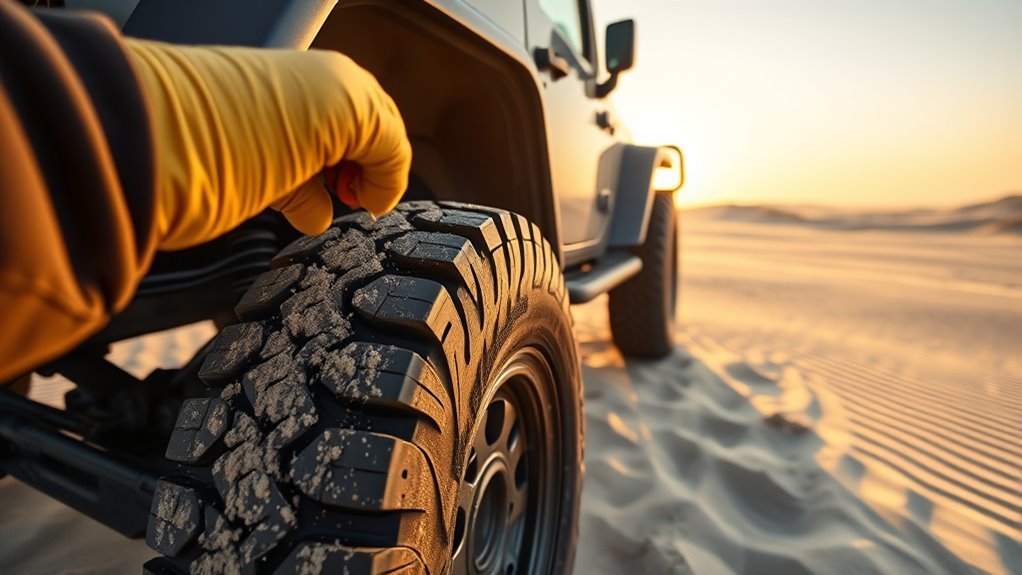
Driving on sand requires lower tire pressure to keep your vehicle moving. Drop your tires to roughly 12 to 18 PSI. Soft dunes need about 12 to 15 PSI, general beach sand needs 15 to 18 PSI, and firmer areas can handle 18 to 20 PSI. Start at 18 PSI and lower it gradually if needed. Check each tire with a reliable gauge. Keep your momentum steady to avoid digging in. Remember to bring a deflator and a portable compressor so you can refill your tires before hitting the pavement again.
Quick Answer
- Soft dunes: 12 to 15 PSI
- General beach sand: 15 to 18 PSI
- Firm, packed sand: 18 to 20 PSI
- Highway re-inflation: Return to the manufacturer’s recommended pressure (usually 32 to 40+ PSI) before driving on pavement.
- Pro tip: Turn off traction control in deep sand to maintain engine power and momentum.
[Products Worth Considering]
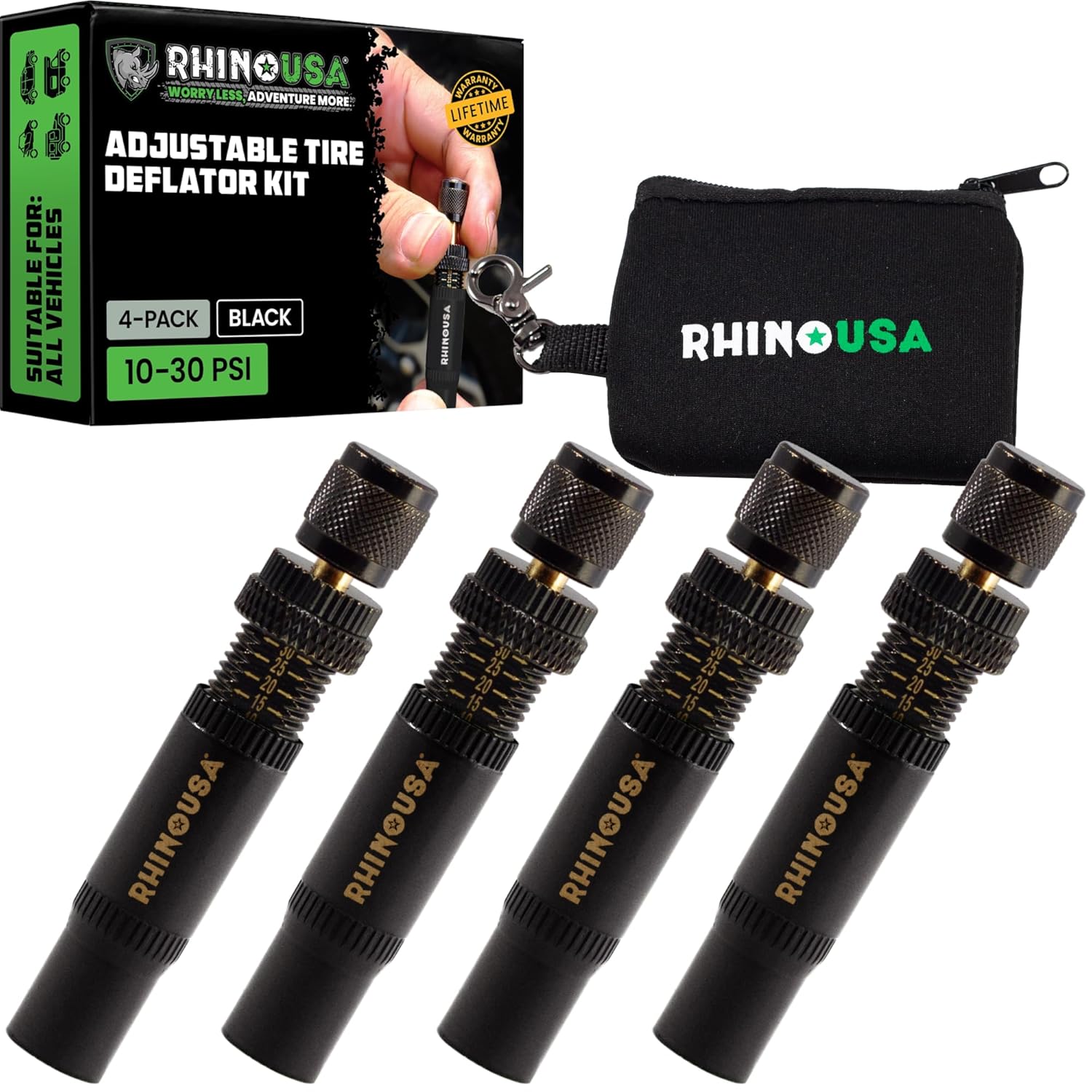
Use the Rhino USA adjustable tire deflators to air down all four tires at once by screwing one deflator onto each valve stem, letting you step away while the tires reach your preset pressure. Each deflator independently adjusts across a 10–30 PSI range with laser-etched indicators for quick setup and verification, making it ideal for beach, sand, and rocky off-road trails.

This portable cordless tire inflator delivers up to 160 PSI with fast 17 L/min airflow to help you quickly top up tires and get back on the road. It features dual power mode, running on a 21V rechargeable battery or a 12V DC adapter for convenient roadside use. An automatic shut-off with digital pressure gauge helps prevent overinflation, and a built-in LED light improves visibility in low-light conditions.

Powools cordless tire inflator delivers up to 150 PSI for fast, reliable inflation in a compact, travel-ready design. The LED digital display shows real-time and preset pressure, while auto shutoff helps prevent over-inflation. Multiple attachments and pressure units make it useful for car tires, bikes, motorcycles, and inflatables, with a bright multi-mode LED light for low-visibility jobs.
Quick Tire Pressure (PSI) Ranges for Different Sand Types
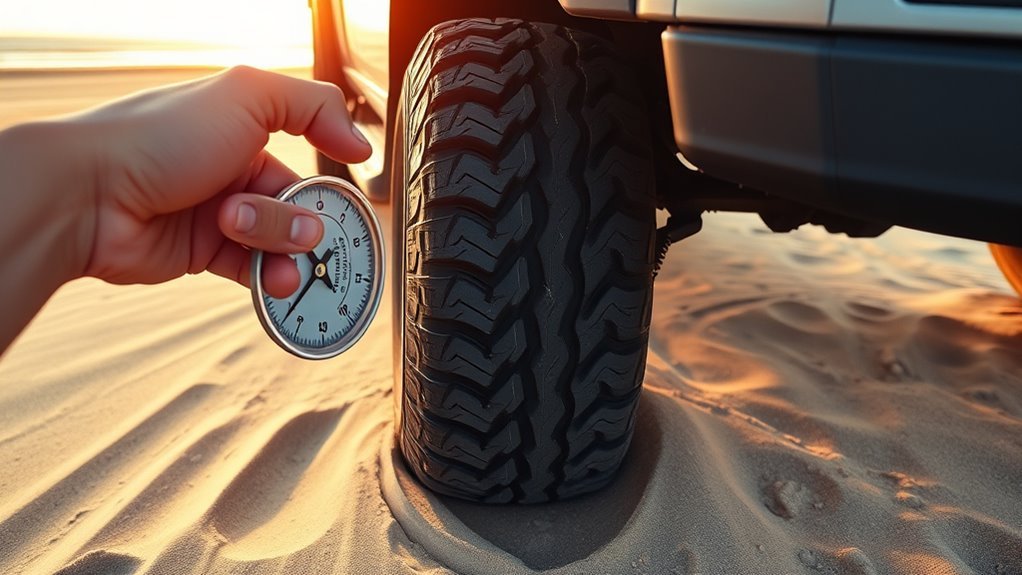
Lowering your tire pressure improves flotation and traction on sand. A range of 15 to 18 PSI works well for most beaches. Drop to 12 to 15 PSI for very soft or dry sand, and stay around 18 to 20 PSI for firm, packed sand. Start at a middle ground like 18 PSI. If the sand gets softer, lower the pressure. This creates a larger footprint and helps keep your heavy vehicle on top of the surface. Lower your pressure in small steps and test how the vehicle feels. Avoid sharp steering or hard braking, as both can quickly dig your tires into the ground. Always stay above your tire manufacturer’s minimum pressure to prevent the tire bead from slipping off the wheel. Carry a reliable gauge and an inflator so you can safely return to normal highway speeds later. Practice on easy sections of the beach first to see how your vehicle reacts to the softer terrain.
How Vehicle, Tire Size, and Load Change Your Target PSI
Your vehicle’s weight directly dictates how low you can safely drop your PSI. Heavier rigs usually need higher pressure to prevent rim pinching and to maintain steering control. Bigger-diameter or wider tires let you run lower pressures for increased flotation, while smaller tires often require slightly higher PSI to avoid bogging down. Always factor in your payload and tire construction (like heavy-duty E-rated tires versus standard passenger tires) when setting a target PSI. Recheck your pressures if conditions or cargo loads change.
Vehicle Weight Effects
Because vehicle weight changes how a tire interacts with sand, you need to adjust your target PSI rather than relying on a universal number. Heavier SUVs and trucks push harder against the ground, which naturally enlarges the tire footprint and improves flotation. You want enough tire bulge to float, but not so much that you risk pinching the sidewall. If your vehicle is loaded with heavy gear, start with a slightly higher pressure to protect the tires from heat buildup and internal damage. Drop the pressure slowly until you see a healthy bulge and notice better traction. Many full-size 4x4s recommend staying around 20 PSI, while lighter vehicles can safely run much lower.
Tire Size Influence
Tire size also impacts how much air you should let out. Wider tires provide a larger footprint by default, so dropping them to 10 to 15 PSI offers excellent flotation. Smaller or narrower tires usually need to stay between 18 and 20 PSI to prevent digging in. If you are running heavy-duty E-rated tires, their stiff sidewalls can handle lower pressures without popping a bead. Standard passenger tires need a bit more pressure to stay safe and secure on the wheel.
- Lower your pressure enough to float over the sand, not plow through it.
- Monitor your sidewalls to make sure they aren’t buckling under the vehicle’s weight.
- Make small adjustments and test how the vehicle drives after each drop in pressure.
Use measured deflation, account for your cargo weight, and always carry a plan for re-inflation.
Tread Patterns: All-Terrain vs. Mud-Terrain
Your tire’s tread pattern matters just as much as its size. All-terrain (A/T) tires are excellent for sand because their tighter tread blocks help the tire stay on top of the surface. Mud-terrain (M/T) tires have aggressive, widely spaced lugs designed to scoop and dig. While great for mud, this digging action acts like a shovel in the sand and can quickly bury your axles. If you run M/T tires, you may need to drop your pressure slightly lower than you would with A/T tires to maximize the footprint and limit the digging effect.
Step-by-Step: Air Down and Re-Inflate Your Tires
When you reach the sand, use a tire deflator to drop all four tires to your target pressure. For general sand, aim for 15 to 18 PSI. For very soft dunes, aim for 12 to 15 PSI. Check the numbers with a dedicated gauge as you go to make sure they match. Drop the pressure in small stages so you don’t accidentally go too low. Keeping equal pressure on all four corners keeps your vehicle handling predictably. Monitor your tires periodically while driving. Lower PSI increases flotation, but it also raises the risk of a blowout if you accidentally transition onto hard pavement. Before you leave the beach, stop on firm ground. Attach your air compressor and restore the tires to your normal street pressure. Check your driver’s side door jamb for the correct street pressure, which is usually between 32 and 40 PSI. Do not drive at highway speeds on partially inflated tires, as the resulting heat buildup can destroy the tire.
Tools You’ll Actually Need: Gauges, Deflators, Compressors
If you plan to drive on the beach, you need three pieces of essential gear: a reliable pressure gauge, a set of tire deflators, and a portable air compressor capable of safely refilling your tires to street pressures.
- Pressure gauge: Look for a highly accurate dial or digital readout so you can equalize all tires quickly.
- Deflator types: Automatic deflators (like the popular Staun-style valves) stop letting air out once they hit a preset PSI. Manual screw-on types work fine but require you to actively watch the gauge.
- Portable compressor: Choose a model that connects directly to your car battery. Cheaper models that plug into a cigarette lighter often overheat or take too long to fill large off-road tires.
Deflate on level ground, monitor your pressure accuracy, and reinflate fully before hitting the pavement to protect your tires.
[Products Worth Considering]

This portable cordless tire inflator delivers fast, efficient inflation for cars, motorcycles, bikes, and sports balls with a digital pressure gauge. Use the one-click PSI preset with auto shut-off for accurate, hands-free topping to your target pressure up to 150 PSI. It’s compact and rechargeable with a built-in emergency LED light plus valve adapters and accessories for quick, ready-to-go use.

The JACO FlowPro Tire Inflator measures, inflates, and airs down tires up to 100 PSI with battery-free operation and ±2% accuracy after calibration. It features a glowing pressure dial for night visibility, a heavy-duty steel build with a hybrid hose, and a precision push-to-inflate thumb trigger. The patented Lightning Air Chuck locks on for a secure seal, and the kit includes quick-connect hardware for easy inline use with your air compressor.
Driving Techniques and PSI Troubleshooting on Dunes
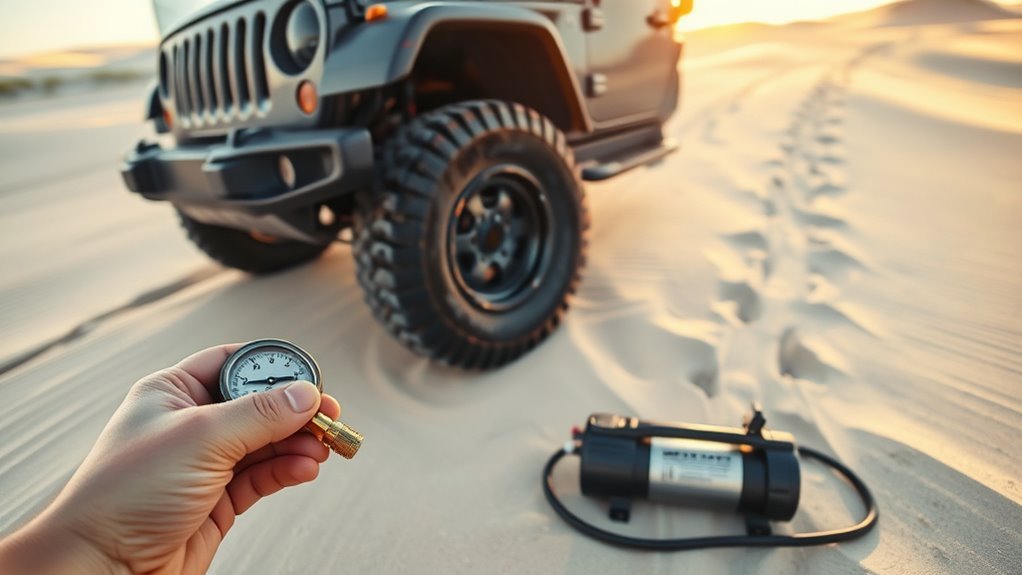
Lowering your pressure is only half the battle. You also need the right driving habits to stay unstuck and safe. Keep your momentum up using a steady throttle. Sudden spikes in engine RPM will just spin the tires and bury your vehicle. If you start losing traction while climbing a dune, change your line or angle and use controlled throttle to regain momentum.
| Action | Purpose |
|---|---|
| Steady speed | Preserve momentum |
| Line change | Avoid soft patches |
| Coasting stop | Prevent digging |
| PSI checks | Match sand conditions |
| Controlled throttle | Prevent wheelspin |
Avoid sharp turns, especially on ridgelines. If you start getting stuck, stop immediately. Do not keep spinning the tires. Back up along your exact tracks and try again with a slightly firmer line or a bit more momentum. Monitor your pressure often, as sand compacts and conditions shift throughout the day.
Signs Your Pressure Is Wrong and How to Fix It
Watch how your tires react to the sand so you can correct your pressure before you damage a tire or get stuck. If the sidewalls bulge out drastically while turning or under heavy load, your pressure is too low. Add a few pounds of air to protect the sidewalls and avoid pinch flats. If your vehicle struggles to move forward and keeps sinking into the soft sand, check your gauge and drop the pressure toward 12 to 15 PSI to float more effectively. If your wheels spin easily but the vehicle barely moves, reduce the pressure toward 16 to 18 PSI to gain traction. Frequent stalls or poor climbing performance usually means you need to adjust within the 18 to 25 PSI range based on the firmness of the ground.
- Bulging tires: Increase pressure slightly and monitor the sidewalls.
- Sinking tires: Lower pressure to float, and recheck often.
- Spinning or bogging: Lower pressure to improve surface grip.
Always carry a reliable gauge and make small adjustments.
Post-Trip Checks: Inspect, Clean, and Protect Your Tires
After a beach run, perform a quick tire inspection routine. Check the tread and sidewalls for pinches, cuts, or embedded debris before you re-inflate. Rinse your vehicle’s undercarriage thoroughly with fresh water to remove salt and sand, which heavily accelerate rust and corrosion. Finish by applying a protective solution like Fluid Film or WD-40 to exposed metal components to reduce long-term salt damage.
Tire Inspection Routine
When you come off the sand, inspect your tires immediately for cuts, bulges, or embedded rocks. Pay special attention to the sidewalls, which take extra stress when driving at low pressures. Perform this quick inspection before you leave the beach. Check your pressures with a gauge and restore the tires to normal road PSI to prevent overheating on the drive home.
- Note any visible damage, such as deep cuts, punctures, or exposed tire beads, and decide if a repair is needed immediately.
- Clean sand and salt from wheel crevices. Trapped grit accelerates wear and corrosion over time.
- Apply a light protective coating to rubber and metal components near the tire to extend their service life.
Don’t drive at highway speeds until your tires are fully inflated and confirmed safe.
Undercarriage Salt Rinse
Salt and sand corrode metal and abrade rubber components quickly. Rinse your vehicle’s undercarriage with fresh water as soon as possible to prevent long-term damage. Use a lawn sprinkler placed under the truck or a pressure washer with a water broom attachment. Target the wheel wells, suspension parts, brake components, and the inside of the wheels. This undercarriage maintenance limits rust and mechanical wear. Inspect your tires for cuts or pinching while you clean. Once the undercarriage is dry, apply a rust-preventative product like Fluid Film to vulnerable joints and exposed metal frames. Prompt rinsing keeps your rig reliable for the next trip.
Frequently Asked Questions
What Is the Best PSI for Sand Driving?
For most vehicles, 15 to 18 PSI is the sweet spot for sand driving. Drop down to 12 to 15 PSI for very soft dunes, and stick to 18 to 20 PSI for firm, packed beaches. This range improves traction, increases your tire footprint, and prevents you from sinking.
Should You Drive Fast or Slow on Sand?
Drive at a slow, steady pace. High speeds on sand drastically increase the risk of rollovers and suspension damage. Keep enough momentum to push through soft patches, but avoid abrupt braking or hard acceleration, which causes tires to dig in.
Should I Use 4H or 4L in Sand?
Use 4 High (4H) for flat beaches and general sand driving. Switch to 4 Low (4L) if you need to climb steep dunes or pull another vehicle out. Turn your traction control off. Traction control systems cut engine power when they detect wheel slip, which will quickly kill your momentum and get you stuck in deep sand. Don’t forget to revert to 4H or 2WD when you hit the pavement.
What Psi to Use on Sand?
As a general rule, aim for roughly half of your normal street pressure. For most standard 4x4s, this means airing down to around 15 to 18 PSI. Adjust based on how soft the sand is, how heavy your vehicle is loaded, and the specific limitations of your tires.
Conclusion
Airing down is the single most effective thing you can do to improve off-road traction in the sand. Dropping your pressure expands the tire’s footprint, helping a heavy truck float over the surface instead of sinking into it. Always deflate before hitting soft sand, carry a reliable gauge, and bring a compressor so you can safely return to street pressure when you leave the trail. If you do get stuck, stop spinning the tires immediately. Get out, let a few more PSI out of the tires, clear the sand from around the axles with a shovel, and use your recovery boards.

Related Articles
How to Use a Tire Spoon: Pro Technique for Mounting Tires
Careful technique makes tire mounting easier, but the real pro trick for using a tire spoon starts with one overlooked step.
Read More
How to Unmount a Tire: Tools, Steps & Pro Tips for Clean Removal
Start unmounting a tire with the right tools and pro tricks, then discover the cleanest way to avoid costly damage.
Read More
How to Tie a Tire Swing: Safe Knot & Hanging Guide
D**iscover the safest knot, rope, and branch choices for a tire swing, plus expert tips that could prevent a dangerous mistake.
Read More