
Dunlop (Woods) Valve Guide: How to Identify, Maintain, and Inflate
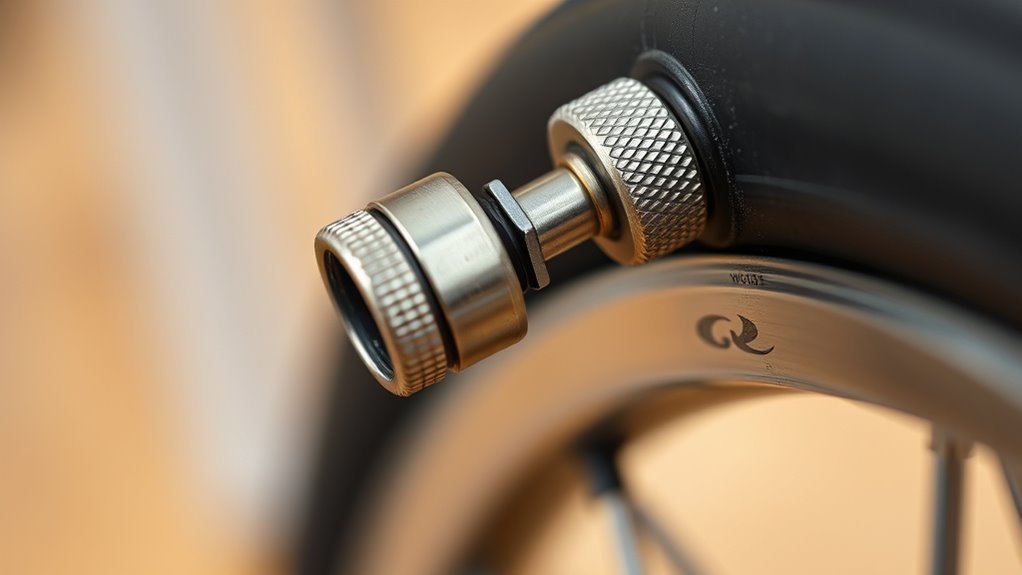
A Dunlop (Woods) valve is a simple, robust bicycle valve found on many commuter and entry-level bikes. You see them especially in parts of Europe and Asia. C.H. Woods invented it. The valve uses a threaded metal core and rubber sleeve to seal a wider rim opening of about 8.5 mm. That makes it durable in wet climates and easy to maintain. To inflate, you unscrew the core, pump air in, then tighten it to seal. Check the sleeve and threads regularly for wear. Read on for practical tips, comparisons, and advice on when to pick one.
Quick Answer
- A Dunlop (Woods) valve is a wide-diameter bicycle valve (~8.5 mm) known for its durability and simple design.
- You inflate it by unscrewing the core, pumping air in, and tightening the core back to seal.
- Most Presta-style pump heads fit Dunlop valves, so you rarely need a special adapter.
- It works best on heavier rims and is ideal for commuter, city, and entry-level bikes.
- The main drawback: air escapes fast when the core is loose, making fine pressure adjustments tricky.
- Replace the rubber sleeve when it cracks or hardens, and inspect threads before every ride.
Who This Guide Is For
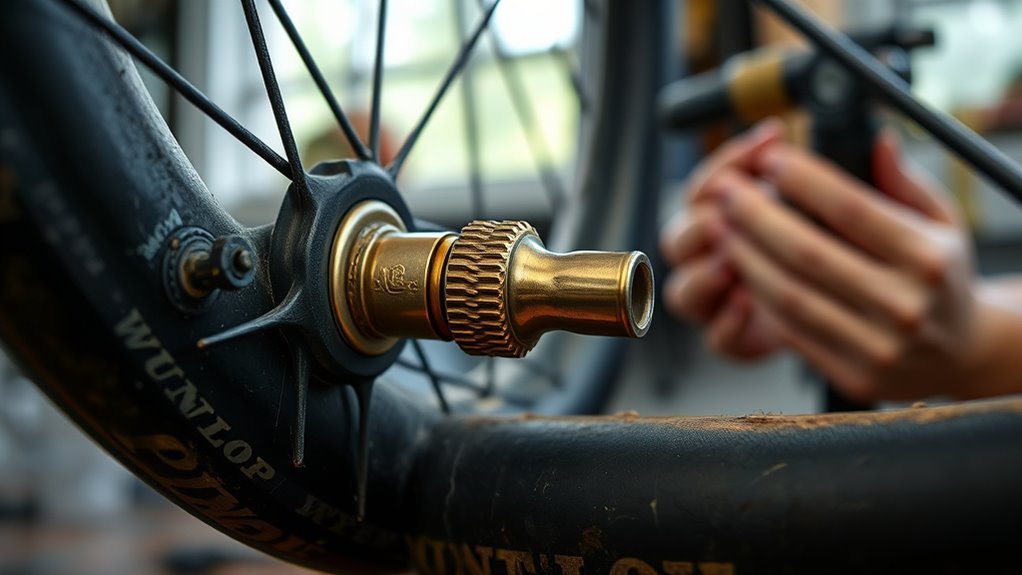
This guide is for riders, mechanics, and bike restorers who deal with Dunlop (Woods) valves. You want practical advice on identification, maintenance, and inflation.
You will learn a bit of Dunlop history, including its origin with C.H. Woods and why it stayed popular across parts of Europe and Asia. You will also see clear valve advantages: a simple airtight seal that handles humid climates, plus durable performance on heavier rims.
Expect guidance on handling larger-diameter stems, recognizing when rims need to be solid and heavy, and managing the fast airflow that makes pressure adjustments tricky. You will also get tips on modern Dunlop upkeep and inflation that do not demand special tools.
What Is a Dunlop (Woods) Valve?
A Dunlop (Woods) valve is a straightforward, larger-diameter valve invented by C.H. Woods. In cycling circles it is often called the “English” valve, and you may still see it on older and entry-level bicycles worldwide.
It uses a simple mechanism to create an airtight seal. That makes it robust and reliable, particularly in humid conditions. Because it needs a wider rim hole (~8.5 mm), you will not find it on most premium road or mountain bikes today.
You can inflate it with a Presta pump tip, but adjusting pressure can be tricky because air escapes quickly once the core is unscrewed. Its main valve advantages are durability and ease of service, balanced against limited compatibility with modern high-performance wheels.
How to Identify a Dunlop Valve
Not sure which valve your bike has? Here is how to tell a Dunlop apart from Presta and Schrader at a glance.
- Diameter: A Dunlop valve stem is about 8.5 mm wide, the same as Schrader but noticeably thicker than a Presta (~6 mm).
- Top nut and sleeve: Look for a knurled locking nut and a visible rubber sleeve around the inner core. Schrader valves have a spring-loaded pin instead, and Presta valves have a thin locknut you unscrew at the tip.
- Rim hole: If the hole in your rim is the larger size (~8.5 mm) but the valve has no spring-loaded pin inside, it is almost certainly a Dunlop.
- Common bikes: You will most often find Dunlop valves on city bikes, Dutch-style bikes, and older commuter models.
How a Dunlop Valve Works
A Dunlop valve seals reliably because of its simple threaded core and rubber sleeve. You unscrew the small cap or core to let air in. When you tighten it again the rubber sleeve presses against the valve seat to stop airflow.
You will notice rapid airflow when the core is open, so fine pressure adjustments are harder than with Presta or Schrader. The larger diameter requires sturdy rims. The straightforward design gives airtight seal advantages and durability in humid climates.
For routine maintenance, check the rubber sleeve and threads for wear. Replace the sleeve if it is brittle or cracked. The table below summarizes the key points.
| Feature | Note |
|---|---|
| Operation | Unscrew to inflate |
| Strength | Robust in humidity |
| Care | Inspect sleeve regularly |
Inflate, Maintain & Replace a Dunlop Valve
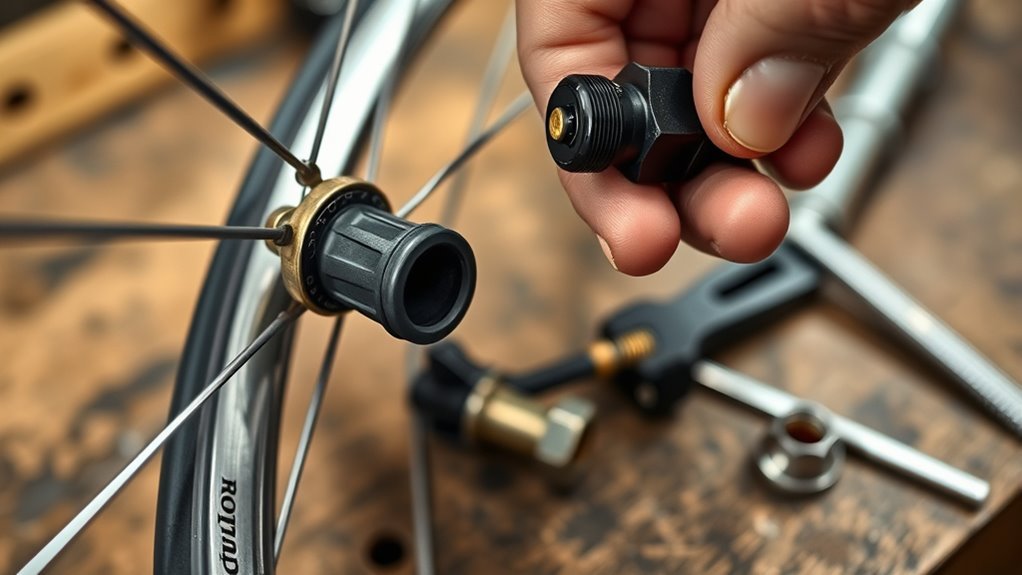
To top up or service a Dunlop (Woods) valve, unscrew the small cap and use a compatible pump. Many Presta pump heads work fine. Tighten the cap right away to avoid rapid air loss.
You can inflate quickly, but be careful when adjusting pressure: unscrewing releases air immediately. Check the valve regularly and replace it if it shows wear or fails to hold air.
- Use a pump with a compatible tip. Presta-style heads often fit.
- Inspect the rubber and threading as part of routine maintenance.
- Replace with a Dunlop valve that matches your rim diameter.
- No special core-removal tool is needed. Removal is straightforward.
Familiarize yourself with common bicycle valve types while following these upkeep steps.
Dunlop vs Presta vs Schrader: Key Differences
Choosing between Dunlop, Presta, and Schrader comes down to valve size and how each fits your rim. Dunlop needs a larger hole (like Schrader), while Presta is narrow enough for lighter rims.
The inflation mechanisms differ too. Presta uses a screw-down valve for fine pressure control. Schrader relies on a spring-loaded core. Dunlop’s straightforward seal can release air quickly if you are not careful. Knowing these contrasts helps you pick the right valve and pump setup for your bike.
Valve Size and Fit
The three common valve types differ mainly in diameter and rim compatibility. Pick the one that matches your rim.
You need to consider valve compatibility and rim design. Dunlop and Schrader share a larger ~8.5 mm diameter and require sturdier rim holes. Presta’s ~6 mm size suits lighter, narrower rims. You can adapt a Presta valve to a Schrader-sized hole with a reducer, but not the other way around. For practical fit and safety, stick with the original valve type your rim was built for.
- Dunlop: ~8.5 mm, bulkier, common on entry-level bikes
- Schrader: ~8.5 mm, the vehicle standard, fits the same rims as Dunlop
- Presta: ~6 mm, narrow, designed for high-performance rims
- Adapters: Presta-to-Schrader works; Schrader-to-Presta is not recommended
Inflation Mechanism Differences
Once you have matched valve types to rim holes, it is worth looking at how each valve actually holds and releases air. That affects ease of use and pump compatibility.
The Dunlop (Woods) valve uses a simple screw-to-seal mechanism. You unscrew the cap to adjust pressure, but if you do not re-secure it quickly, air escapes fast. Its larger diameter also needs solid rims.
Presta lets you control release by unscrewing a thin knurled nut, so you get precise, quick adjustments. It fits the narrow rim holes favored on performance bikes.
Schrader has a robust stem with a spring-activated core that stays closed until pressed. It is durable but less precise for fine pressure tuning, and pump compatibility varies.
Pros and Cons of Dunlop Valves (Performance & Climates)
You will not find Dunlop valves on many high-end bikes, but they offer clear advantages and trade-offs in real-world performance across different climates.
Dunlop advantages include a simple, robust mechanism that seals well in humid environments and is easy to maintain. That explains their popularity on entry-level bikes and in regions where simplicity matters. Dunlop disadvantages include the larger diameter, which limits use with lightweight rims, and tricky pressure adjustments since unscrewing causes rapid air loss.
- Reliable in humid climates and suited to low-tech repairs
- Incompatible with some modern, lightweight rims
- Higher risk of air loss during fine pressure tuning
- Practical choice for entry-level and budget-friendly bikes
Weigh reliability and maintenance needs against compatibility and precision.
When to Choose Dunlop Valves: Use Cases and Replacements
If you ride in the city and want a durable, budget-friendly setup, Dunlop valves are a smart choice for urban commuting. They work with most pump heads or with a simple Presta tip adapter, though pressure adjustments can be fiddly because of fast airflow when unthreaded. When you need a replacement, pick the correct valve length for your rim and carry a spare inner tube for quick swaps.
Urban Commuting Durability
Dunlop (Woods) valves stand out for durability and low maintenance in city riding. They handle frequent stops, rough pavement, and humid conditions without losing pressure easily.
The urban commuting advantages are real: a robust airtight seal that copes with moisture and daily impacts, plus valve durability factors like a wider diameter and sturdier rims that add stability on uneven roads. Check your valves regularly and replace tubes at the first sign of wear to avoid sudden flats.
- Do a quick inspection before every ride
- Prefer heavier rims for added stability
- Replace inner tubes showing cracks or weakened seals
- Carry a proper adapter for reliable inflation on the go
These habits keep your commute predictable and reduce roadside hassles.
Compatibility With Pumps
Keeping your Dunlop-valved wheels reliable on city rides also means thinking about pump compatibility. Dunlop valves accept a Presta pump tip, so many hand pumps and track pumps work without adapters. That improves pump compatibility for mixed setups.
Remember, the larger diameter needs a solid, heavier rim, which is why you will not see Dunlop valves often on lightweight, high-performance wheelsets. Favor Dunlop for entry-level bikes, commuters, and riders who value simplicity and easy maintenance.
Be mindful that unscrewing the cap releases air quickly, so make pressure adjustments carefully. When swapping valves, confirm the rim design supports the Dunlop size to avoid fit and performance issues.
Easy Replacement Tips
Choose Dunlop valves for bikes where simplicity, durability, and easy maintenance matter most. Think city commuters, casual riders, and bikes used in humid or rough conditions.
When you need a swap, follow these valve maintenance tips: check the seal, clean any corrosion, and test with a pressure gauge before reassembly. Use replacement tools like rim-compatible valve pullers and pliers, and verify that the rim bed accepts the larger Dunlop diameter.
- Inspect rim thickness and confirm it is a solid, heavy rim to avoid fit issues.
- Deflate fully, remove the old valve core, and clean the hole before inserting the new valve.
- Seat the valve straight, tighten with appropriate tools, then inflate slowly.
- Recheck for leaks and retorque after a short ride.
Frequently Asked Questions
Can I Use a Presta Pump on a Dunlop Valve?
Yes. You can use a Presta pump on a Dunlop valve as long as the fit is snug. Many Presta pump heads or adapters handle this well, preventing air loss and making inflation straightforward.
Why Are Presta Valves so Difficult?
Presta valves feel difficult because their thin, threaded design demands careful handling. You need a specific pump head or adapter, and precise tightening is important for reliable air retention without damaging the rim or valve.
What Is the Pressure on a Dunlop Valve?
You will typically run Dunlop valve pressure around 30 to 60 psi for city and entry-level bikes. Compared to other valve types, that is a lower pressure range. Dunlop valves allow quick air release, so careful adjustment and regular maintenance are important for airtightness.
Conclusion
The Dunlop valve is humble, practical, and stubbornly reliable. Pick it when you want easy maintenance, rental-bike reliability, or to avoid fiddly adapters. It is not the flashiest option, but it gets you home. Keep it clean, replace the inner parts when they wear out, and do not let valve snobbery fool you into thinking performance equals prestige. Function over fashion, every time.

Related Articles
How Tall Is a 315 70 R17 Tire? Exact Height, Width & Dimensions
Beneath the specs of a 315/70R17 tire lies its exact height, width, and fitment details—see what really makes it stand out.
Read More
How Tall Is a 315 70 17 Tire? Exact Height, Width & Dimensions
A 315/70R17 tire is taller and wider than you might expect—find its exact dimensions and what could affect fitment.
Read More
How Tall Is a 285 70 R17 Tire? Exact Height, Width & Dimensions
Discover the exact height, width, and dimensions of a 285/70R17 tire—and why it might not be the full 33-inch size you expect.
Read More