
Tire Pressure and Gas Mileage: 3% PSI Savings Guide
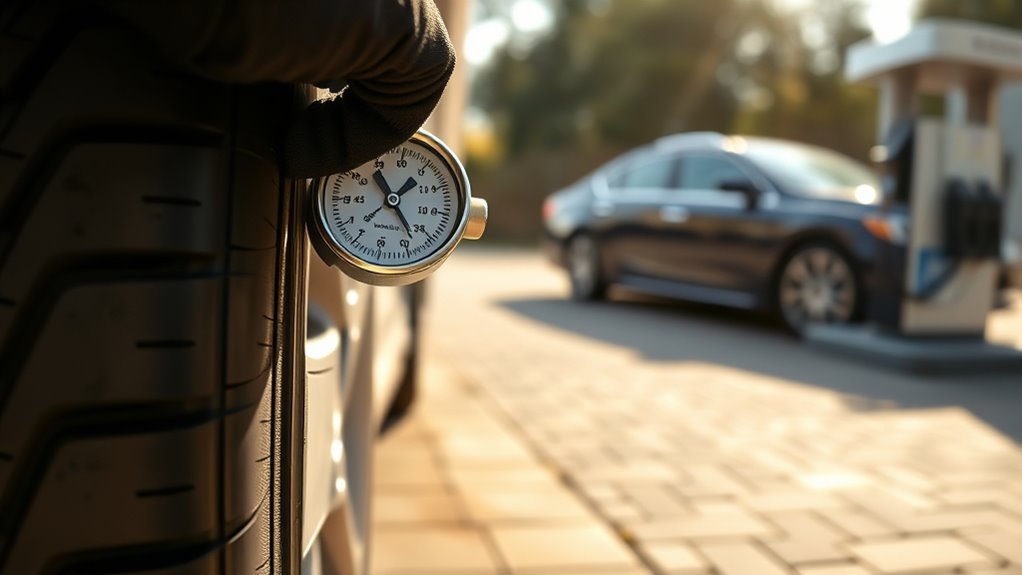
Low tire pressure wastes gas before you notice a problem. Even a small pressure drop makes your tires flex more, which raises rolling resistance and forces your engine to use more fuel. This guide explains how tire pressure affects gas mileage, where to find the right pounds per square inch (PSI), and how to check it the right way.
What’s in This Article
- Quick Answer: How Tire Pressure Saves Gas
- How Tire Pressure Changes Rolling Resistance and MPG
- What Studies and Real-World Tests Show About Underinflation
- How Much Fuel and Money Proper Tire Pressure Saves
- Where to Find the Right PSI for Your Vehicle and Tires
- Simple Monthly Checks: Measure and Top Off Tire Pressure
- When Low Pressure Hurts MPG Most (Speed, Temperature, Load)
- Monitoring Tools: TPMS, Gauges, and Phone Apps
- Maintenance Checklist: Rotations, Alignment, and Replacing Tires
- Frequently Asked Questions
Quick Answer: How Tire Pressure Saves Gas
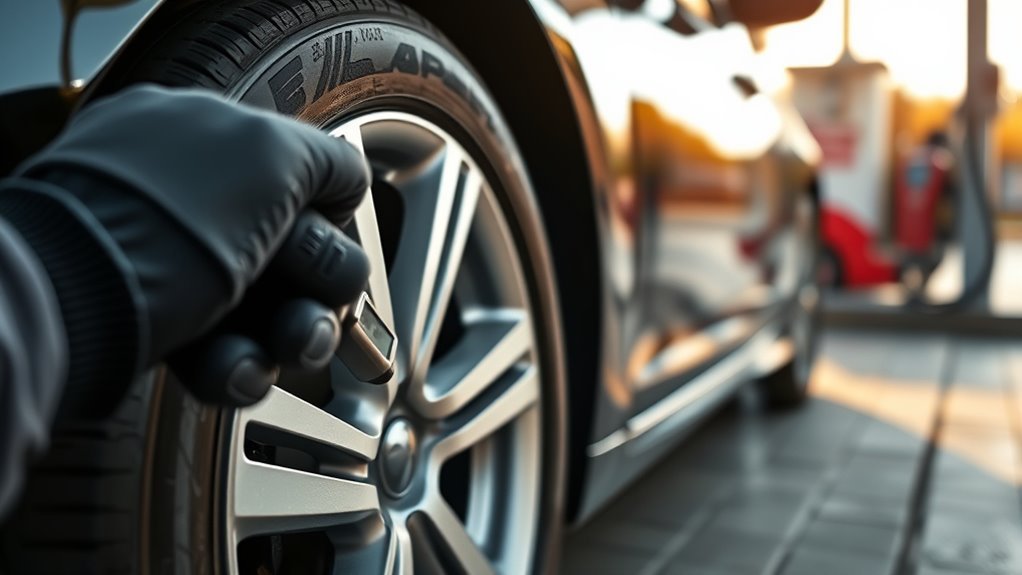
Keeping your tires at the manufacturer-recommended PSI helps your car use less fuel because it lowers rolling resistance. When tires run low, they flex more, create more heat, and make the engine work harder.
Underinflation can reduce fuel economy by about 0.2% for every 1 PSI drop across all four tires, according to the U.S. Department of Energy. Proper pressure can improve gas mileage by up to about 3%, while severe underinflation can cause larger losses, especially in low-speed driving. Check your tires monthly when they are cold, and use your tire pressure monitoring system (TPMS) as a backup alert, not as your only pressure check.
Key Takeaways
- Keep tires at the PSI listed in your owner’s manual or driver-side door placard.
- Check tire pressure once a month and before long trips.
- Measure pressure when tires are cold for the most accurate reading.
- Expect tire pressure to change by about 1 PSI for every 10°F temperature shift.
- Use TPMS warnings as a safety alert, but confirm pressure with a gauge.
How Tire Pressure Changes Rolling Resistance and MPG
When your tires are underinflated, they flatten more where they meet the road. That larger contact patch increases rolling resistance, so the engine must use more energy to keep the vehicle moving.
Proper inflation keeps the tire closer to its designed shape. That helps reduce wasted energy, improves handling, and limits uneven tread wear.
Increased Rolling Resistance
Underinflated tires bend and recover with each rotation. This repeated flexing creates hysteresis losses, which means the tire turns more energy into heat instead of forward motion.
Correct tire pressure helps limit those losses. It also spreads the load more evenly across the tread, which can extend tire life and reduce operating costs.
MPG Reduction Effects
If you let tire pressure drop below the vehicle maker’s recommendation, MPG drops in a measurable way. The U.S. Department of Energy says proper tire pressure can improve gas mileage by up to about 3%.
Low pressure also affects more than fuel use. It can reduce steering response, increase heat buildup, and make the tire wear unevenly.
Warning: Do not inflate tires to the number printed on the tire sidewall unless that number matches your vehicle’s placard.
What Studies and Real-World Tests Show About Underinflation
Lab and road tests show the same pattern: low tire pressure raises rolling resistance and reduces fuel economy. The loss grows when pressure drops far below the recommended level.
Older controlled testing from Oak Ridge National Laboratory found large fuel-economy losses when tires ran at about half their recommended pressure. The effect was stronger at lower speeds, where rolling resistance makes up a larger share of the vehicle’s energy demand.
Lab Test Findings
Testing has shown that severe underinflation can create a clear fuel penalty. Tires at about 50% of recommended pressure produced roughly a 10% fuel-economy loss at 40 mph and about a 5% loss at 80 mph in Oak Ridge testing.
Moderate underinflation also matters. Running tires at about 75% of recommended pressure often produces a smaller but still measurable MPG loss.
| Metric | Result |
|---|---|
| 50% PSI at 40 mph | About 10% MPG loss |
| 50% PSI at 80 mph | About 5% MPG loss |
| 75% PSI | About 2–3% MPG loss |
| Main trend | Lower pressure raises rolling resistance |
Real-World Impacts
Real driving adds more variables, including speed, load, tire type, road surface, and weather. Still, the main lesson stays simple: underinflated tires waste fuel because they make the vehicle harder to roll.
You may not feel a small pressure loss from the driver’s seat. A gauge check catches it before it hurts MPG, tire wear, or safety.
Speed Sensitivity
Low pressure often hurts MPG most in city driving. At lower speeds, rolling resistance accounts for a larger share of the energy needed to move the vehicle.
At highway speeds, air drag becomes a larger factor, so the percent loss from tire pressure may look smaller. That does not make underinflation safe or harmless.
How Much Fuel and Money Proper Tire Pressure Saves
If you keep your tires at the manufacturer-recommended pressure, you can improve fuel economy by up to about 3%. That equals about $2.40 saved on a 20-gallon fill-up when gas costs $4.00 per gallon.
The exact savings depend on how far you drive, your gas price, your vehicle, and how low your tires were before you corrected them. Proper pressure also helps prevent uneven wear, which can delay premature tire replacement.
- Check pressure monthly with a calibrated gauge.
- Correct small pressure drops before they grow.
- Track MPG trends after each fill-up.
- Inspect tread wear during each pressure check.
- Include tire pressure in routine vehicle service.
Where to Find the Right PSI for Your Vehicle and Tires
You’ll find the correct tire pressure in the owner’s manual and on the sticker inside the driver-side door jamb. That placard lists the recommended PSI for the original tire size and normal load.
Do not use the maximum PSI printed on the tire sidewall as your default target. That number shows the tire’s maximum cold pressure, not the vehicle maker’s recommended setting.
If you changed tire size, carry heavy loads, or tow often, check the owner’s manual for load guidance. You can also ask a qualified tire technician to confirm the right pressure for your setup.
Note: Front and rear tires may need different PSI, so check both values before you inflate.
Simple Monthly Checks: Measure and Top Off Tire Pressure
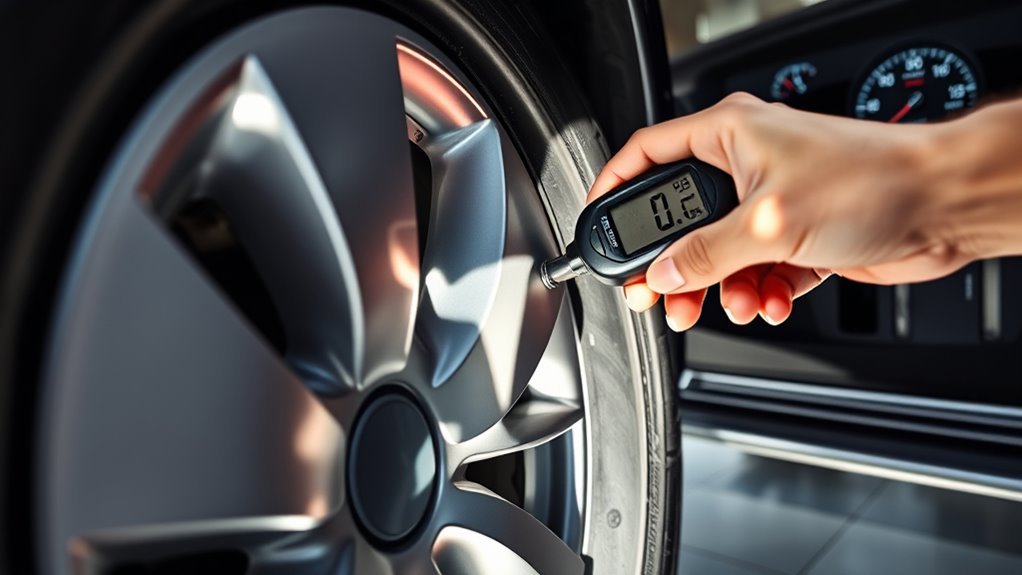
Check your tire pressure once a month and before long trips. Use a calibrated gauge, and measure the tires when they are cold.
Cold tires have been parked for at least a few hours or driven only a short distance. Heat from driving raises pressure, which can make a hot reading look better than it really is.
- Find the recommended PSI on the door placard or in the owner’s manual.
- Remove the valve cap and press the gauge firmly onto the valve stem.
- Read the PSI and compare it with the vehicle’s target pressure.
- Add air in short bursts, then recheck with the gauge.
- Replace the valve cap and repeat the process on each tire.
Do not forget the spare tire if your vehicle has one. A low spare will not help when you need it most.
When Low Pressure Hurts MPG Most (Speed, Temperature, Load)
Low pressure hurts MPG most when your tires flex more than usual. City driving, heavy loads, towing, and cold weather can all make the effect worse.
Temperature matters because air pressure changes as air expands or contracts. A common rule of thumb says tire pressure changes by about 1 PSI for every 10°F shift in air temperature.
Check pressure during seasonal temperature swings, especially after cold fronts. A tire that looked fine in warm weather may run low when the temperature drops.
Monitoring Tools: TPMS, Gauges, and Phone Apps
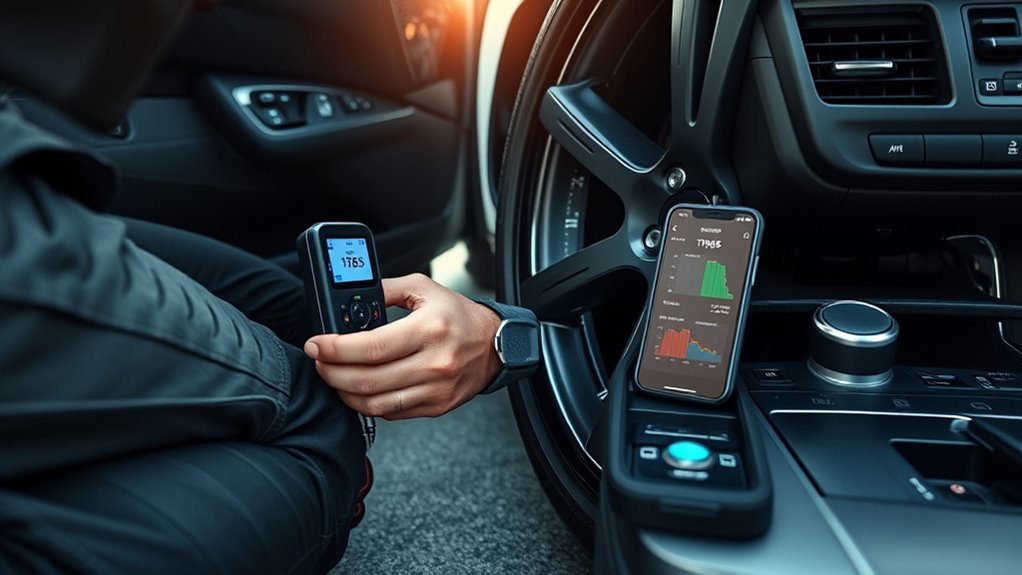
A tire pressure monitoring system (TPMS) helps warn you when tire pressure drops too low. Most systems alert you only after pressure falls well below the recommended level, so they should not replace manual checks.
A digital or dial gauge gives you a direct reading. Keep one in the glove box so you can verify pressure after a warning light, a temperature swing, or a long trip.
- TPMS alerts: Warn you when pressure drops below a set threshold.
- Digital gauges: Give quick readings that are easy to see.
- Dial gauges: Provide durable manual readings without batteries.
- Phone apps: Track pressure history when your vehicle or sensor system supports it.
- Manual checks: Confirm exact PSI before you add air.
Pro tip: Check tire pressure on the same day each month so the habit becomes automatic.
Maintenance Checklist: Rotations, Alignment, and Replacing Tires
Proper pressure works best when you also keep up with rotation, alignment, and tread checks. These tasks help your tires roll smoothly and wear evenly.
Many vehicles need tire rotation every 5,000 to 7,500 miles, but your owner’s manual gives the right schedule. Alignment checks matter when you notice pulling, uneven wear, or a steering wheel that sits off center.
| Action | What to Check | When to Act |
|---|---|---|
| Tire rotation | Uneven tread wear | Follow the owner’s manual |
| Alignment check | Pulling or uneven wear | Act when symptoms appear |
| Tread check | Tread depth and damage | Replace when below legal or safe limits |
Use a tread-depth gauge for the clearest reading. Replace tires when they reach the legal limit, show damage, or no longer match safe driving needs.
Frequently Asked Questions
Does Tire PSI Affect Gas Mileage?
Yes, tire PSI affects gas mileage because it changes rolling resistance. Keeping tires at the recommended pressure can improve fuel economy by up to about 3%.
Is higher tire pressure better for fuel economy?
Higher pressure can reduce rolling resistance, but overinflation creates other problems. It can reduce ride comfort, increase center tread wear, and hurt grip, so you should follow the vehicle placard.
How often should you check tire pressure?
Check tire pressure at least once a month and before long trips. Check more often when temperatures change sharply or when you carry heavy loads.
Why did my TPMS light turn on after cold weather?
Cold air lowers tire pressure because air contracts as temperature drops. If the pressure falls below the TPMS threshold, the warning light can turn on even without a leak.
Should you check tire pressure hot or cold?
Check tire pressure when tires are cold for the most accurate reading. If you must check hot tires, do not bleed air just because the reading looks high.
Conclusion
The right tire pressure helps your car waste less fuel, handle better, and wear tires more evenly. Check the PSI on your door placard, measure each tire cold, and top off any tire that sits below spec.
Make the check part of your monthly routine. A few minutes with a gauge can protect your fuel budget, your tires, and your control on the road.
References
- Keeping Your Car in Shape — U.S. Department of Energy
- Tires — National Highway Traffic Safety Administration
- Car Maintenance Tips to Save Fuel — FuelEconomy.gov
- Tire Pressure Monitoring Systems and Tire Safety — National Highway Traffic Safety Administration

Related Articles

What Is a Fat Tire? Complete Guide & Best Options
I’ll show you what makes fat tires different, which setups work best, and why the right choice could change your ride.
Read More
What Does W Mean on a Tire? Load, Speed & Rating Guide
Huh, what does W on a tire really mean, and why could choosing the wrong rating affect your safety and performance?
Read More
What Does Tire Flipping Work? Muscles, Benefits & Workout Guide
Strong tire flips hammer your entire body, but which muscles and benefits matter most?
Read More