
All-Terrain vs Mud-Terrain Tires: Tread & Use Case Guide
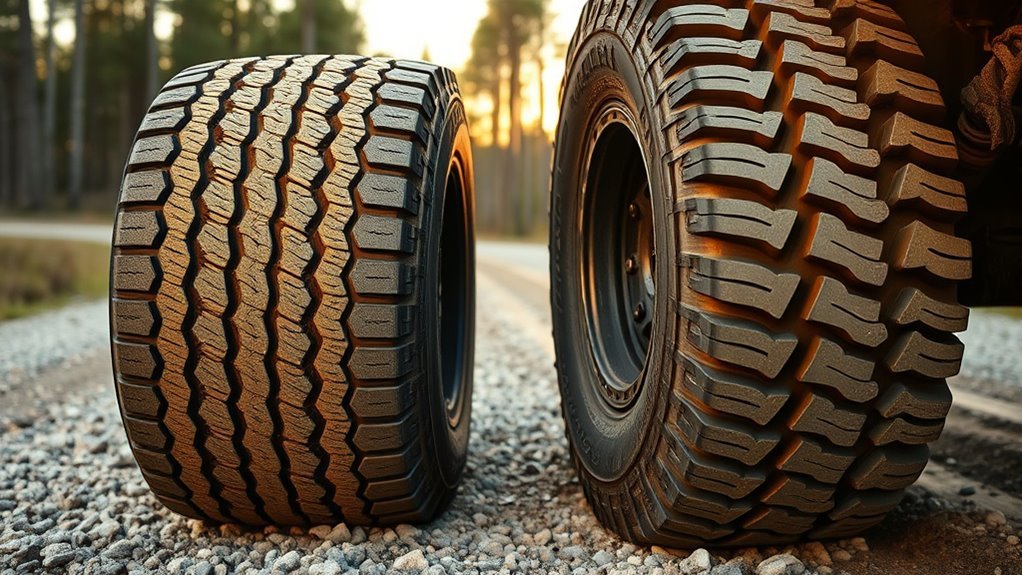
You should pick A/T tires if your truck or SUV spends most of its time on pavement but still sees gravel roads, job sites, camping trails, snow, or mild mud. Choose M/T tires only when deep mud, ruts, rocks, and aired-down trail grip matter more than road noise, wet-road braking, tread life, and fuel economy. The right choice is less about which tire is “better” and more about where you drive most often.
Quick Answer
A/T tires are best for daily drivers that need quiet highway manners, longer tread life, and occasional off-road grip. M/T tires are best for serious off-road use in mud, rocks, and deep ruts, but they are louder, usually wear faster, and can reduce wet-road control and fuel economy.
Key Takeaways
- Choose A/T for mixed driving: commuting, towing, gravel, light trails, rain, and occasional snow.
- Choose M/T for repeated deep mud, rock crawling, rutted trails, and low-speed off-road traction.
- A/T tread blocks are closer together and usually more siped; M/T tread lugs are larger, deeper, and spaced farther apart for self-cleaning.
- For winter driving, look for the 3PMSF symbol rather than assuming any A/T or M/T tire is snow-ready.
- Always match size, load range, speed rating, and inflation pressure to your vehicle’s door placard and tire manufacturer guidance.
Quick Verdict: Who Should Pick A/T vs M/T?
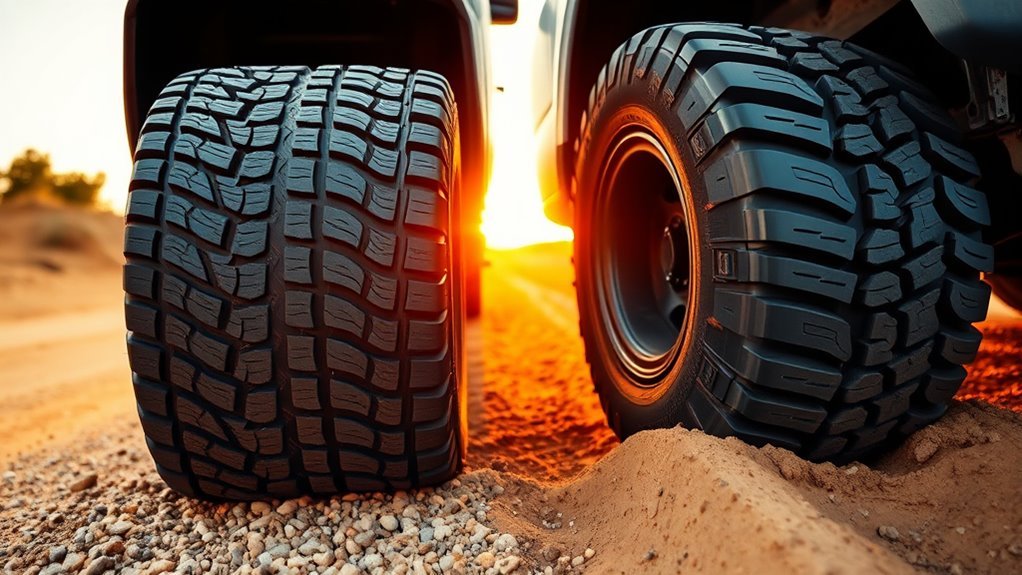
Pick A/T tires if your driving is mostly road use with some dirt, gravel, sand, hunting trails, forest roads, snow, or mild mud mixed in. A/T tires are built to balance comfort, road grip, tread life, and off-road capability. They are the safer default for most pickup, Jeep, SUV, and overlanding owners who still drive to work, school, or the highway every week.
Pick M/T tires if you regularly drive through deep mud, slick clay, rocky climbs, deep ruts, or rough trails where the tire must dig, flex, and clear debris. M/T tires trade everyday refinement for off-road bite. That means more tread noise, more vibration, heavier steering feel, and usually faster tread wear.
| Driving Need | Better Choice | Why |
|---|---|---|
| Daily commuting and highway trips | A/T | Lower noise, smoother ride, and better pavement manners. |
| Gravel, fire roads, campsites, and mild trails | A/T | Enough tread bite for mixed terrain without the harsh road trade-offs. |
| Deep mud, ruts, slick clay, and rock gardens | M/T | Large voids and sidewall lugs help the tire dig and self-clean. |
| Rain and winter road use | A/T, preferably 3PMSF-rated | More siping and a tighter tread pattern usually help wet and snow traction. |
| Show-truck stance or aggressive appearance | Depends | M/T tires look aggressive, but A/T or R/T tires are often better if the truck is mostly street-driven. |
How Tread Design Drives Traction and Handling
The biggest difference between A/T and M/T tires is tread design. All-terrain tires use closer tread blocks, smaller voids, more biting edges, and more siping. That gives them a stable contact patch on pavement while still adding grip on dirt, gravel, light mud, and snow.
Mud-terrain tires use large lugs, wide open channels, aggressive shoulder blocks, and reinforced sidewall features. Those open voids help the tread throw out mud, sand, stones, and debris instead of packing up. That is why M/T tires can keep pulling when a milder tread turns into a slick, spinning donut.
The trade-off is simple: the same open tread that works well off-road leaves less continuous rubber on the road. That can reduce steering precision, add road hum, increase rolling resistance, and make wet pavement more demanding. For a daily driver, those trade-offs show up every mile. For a trail rig, they may be worth it.
Note: Tire category names are broad. One mild A/T can behave almost like a highway tire, while an aggressive A/T or R/T can get close to M/T performance in some conditions. Always compare the specific tire model, not only the label.
Road Performance: Noise, Comfort, Fuel Economy, and Wear
For everyday pavement driving, A/T tires usually have the advantage. The tighter tread pattern creates more consistent road contact, which helps reduce noise and vibration. Many A/T tires also use tread compounds designed for longer wear and better road manners.
M/T tires are built for traction first. Their chunky lugs can slap the pavement and create a steady hum or drone at highway speed. As they wear, that noise can grow louder, especially if the tires are not rotated regularly or if the vehicle has alignment issues.
Fuel economy can also change. M/T tires are often heavier and more aggressive, which can increase rolling resistance. Larger tire sizes, heavier load ranges, and low tire pressure can make the effect stronger. A/T tires are usually more efficient, but size, weight, inflation, and vehicle setup matter more than the letters on the sidewall.
Tread life is also model-dependent. Many A/T tires come with mileage warranties, while many M/T tires have shorter mileage coverage or no treadwear warranty because they are used in harsher conditions. Off-road spinning, sharp rocks, towing, poor alignment, and underinflation can shorten the life of either type.
The more often your vehicle sees pavement, rain, and highway speed, the more an A/T tire makes sense. The more often it sees deep mud, rocks, and aired-down trail use, the more an M/T tire earns its trade-offs.
Off-Road Performance: Mud, Rocks, Sand, and Deep Ruts
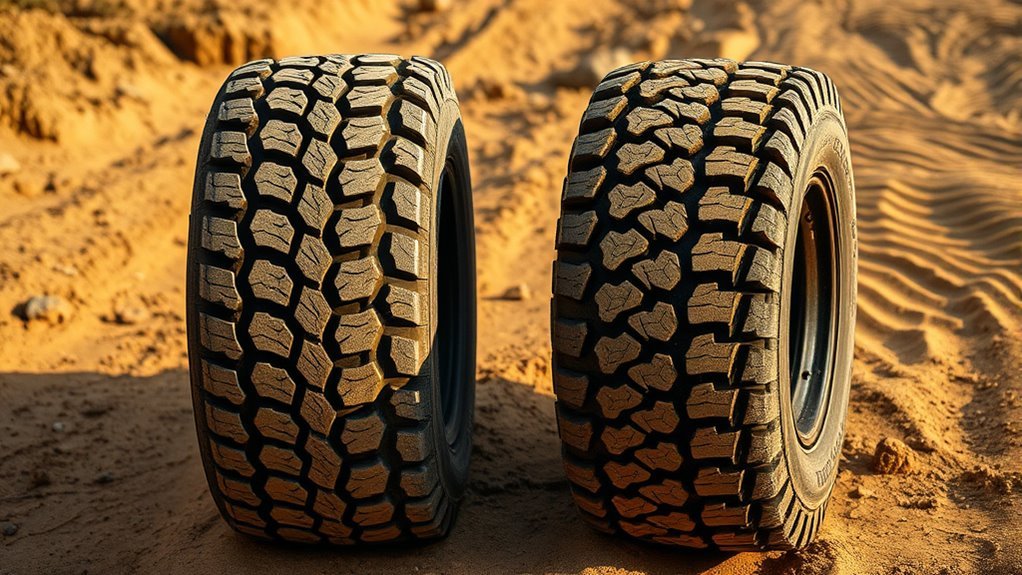
Off-road, the winner depends on the surface. In deep mud, M/T tires are usually the better tool. Their wide voids and tall tread lugs help the tire dig, clear mud, and keep rotating instead of clogging. A/T tires can work in shallow mud, but they pack up more easily in sticky clay or deep ruts.
On rocks, M/T tires can also have an edge because of their stronger sidewall protection, aggressive shoulder lugs, and ability to conform when aired down. That helps the tire grip ledges and resist cuts. Some aggressive A/T tires are excellent on rocky trails too, but M/T tires are normally built for harsher abuse.
On sand, the answer is more nuanced. Flotation matters more than digging. Aired-down A/T tires can work very well because they create a longer footprint and do not always dig as aggressively. M/T tires can perform well in sand too, but heavy throttle can make them shovel downward and bury the vehicle faster.
In deep ruts, M/T tires usually track better because the side lugs provide lateral bite. That extra shoulder traction helps the tire climb rut walls and hold direction. A/T tires can feel smoother and more predictable on hard-packed trails but may lose bite when the rut gets slick or deep.
Pro Tip: For trail use, tire pressure often matters as much as tread type. Airing down can improve traction and ride comfort, but always stay within safe limits, use an accurate gauge, and air back up before highway driving.
Wet and Winter Performance: Braking and Snow Behavior
A/T tires usually perform better than M/T tires in rain because they tend to have more siping, smaller tread blocks, and better water evacuation across the contact patch. That helps the tire stay planted under braking and steering. M/T tires can move water through large voids, but their big, stiff tread blocks often give less fine-edge grip on slick pavement.
Winter performance depends on the exact tire. Do not assume an A/T tire is good in snow just because it has an aggressive tread. Look for the three-peak mountain snowflake symbol, also called 3PMSF. This symbol indicates that the tire meets an industry severe-snow traction requirement, which is more meaningful than an M+S marking alone.
Some A/T tires carry the 3PMSF symbol and can be a strong choice for drivers who face winter roads but do not want a dedicated winter tire. Many M/T tires do not have enough siping for packed snow and ice, even if they look aggressive. They may bite in deep loose snow, but they can feel less secure on icy roads, packed snow, and wet winter pavement.
Warning: Neither A/T nor M/T tires automatically replace dedicated winter tires. If you regularly drive on ice, mountain passes, or severe winter roads, compare 3PMSF-rated tires and consider a true winter tire set.
Tire Lifespan, Maintenance, and Common Wear Patterns
A/T tires often last longer than M/T tires because they use less aggressive tread blocks and are usually driven on less punishing surfaces. M/T tires may wear faster because of softer compounds, large tread blocks, added weight, and repeated off-road abuse. Still, the way you maintain the tire can make or break either choice.
The basics are simple: check inflation pressure, rotate on schedule, inspect tread depth, and correct alignment problems early. NHTSA TireWise recommends paying attention to tire pressure, tread condition, load limits, recalls, and tire age as part of routine tire safety. USTMA tire care guidance also highlights pressure, tread, rotation, and alignment as core tire maintenance habits.
Expected Tread Life
There is no universal mileage number for A/T or M/T tires. Tread life depends on tire model, load range, vehicle weight, alignment, tire pressure, driving style, terrain, and rotation schedule. As a general rule, A/T tires are more likely to offer mileage warranties and longer road life. M/T tires are more likely to trade tread life for off-road traction and sidewall strength.
Check the specific tire’s warranty page before buying. For example, some modern A/T tires are sold with mileage warranty coverage, while many maximum-traction M/T tires focus on off-road toughness and limited workmanship coverage instead of long mileage promises.
Maintenance Best Practices
- Check pressure when tires are cold. Use the vehicle door placard for normal road pressure, not the maximum pressure molded on the tire sidewall.
- Rotate regularly. Follow the vehicle or tire manufacturer’s interval. Many light-truck owners rotate around every 5,000 to 7,500 miles, especially with aggressive tread patterns.
- Inspect tread depth. Replace tires before they become unsafe. In the U.S., 2/32 inch is a common legal minimum, but wet and winter grip can decline well before that.
- Watch alignment and balance. Pulling, vibration, cupping, feathering, or uneven shoulder wear should be corrected quickly.
- Clean after off-road use. Remove stones, mud, and debris from the tread and inspect sidewalls for cuts, punctures, bulges, or exposed cords.
Common Wear Patterns
Center wear often points to overinflation or too much pressure for the load. Both-edge wear often points to underinflation. One-side shoulder wear usually suggests alignment problems. Cupping or scalloping can come from worn suspension parts, imbalance, or missed rotations.
M/T tires can also develop heel-and-toe wear because their tall tread blocks flex under braking and acceleration. That can make them louder over time. Regular rotation helps even out this pattern, but it may not eliminate it completely.
Price, Load Ratings, and Wheel/Size Trade-Offs
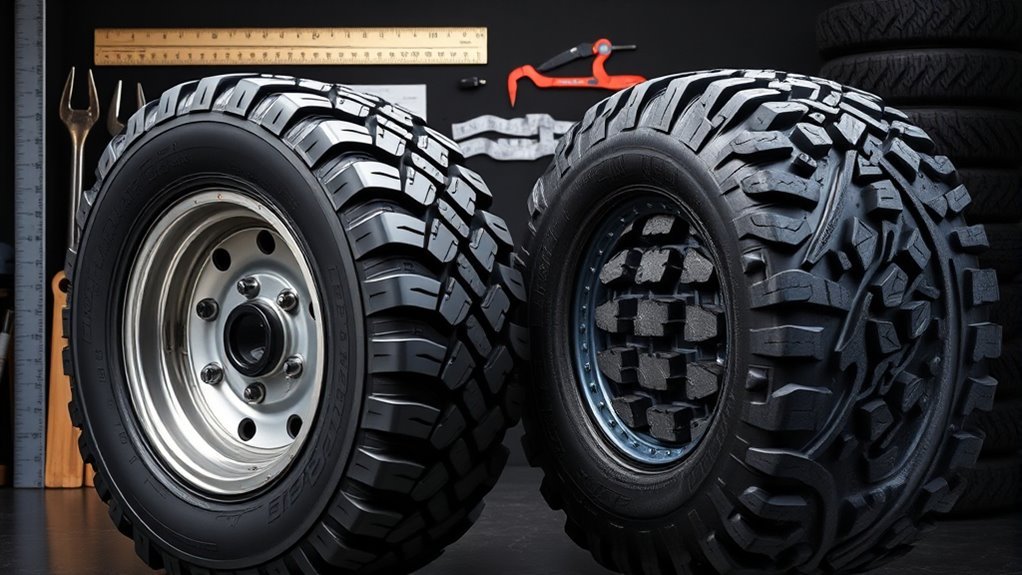
M/T tires often cost more than A/T tires in the same size because they use heavier construction, deeper tread, and more aggressive sidewall features. But price varies widely by brand, size, load range, speed rating, and availability. A cheap tire that wears quickly or performs poorly in rain can cost more in the long run than a better tire with the right rating.
[Products Worth Considering]


Price Versus Performance
Think in terms of total cost, not just the price per tire. A/T tires may save money through longer tread life, lower noise fatigue, better fuel economy, and fewer compromises on the road. M/T tires may be worth the extra cost if they prevent trail damage, reduce recoveries, and give you the traction needed for the terrain you actually drive.
For a daily driver, buying M/T tires for looks alone can be expensive. You pay for off-road capability every time you hear the tread hum, lose wet-road refinement, or replace the tires sooner. For a dedicated trail vehicle, buying mild A/T tires can be equally frustrating if they clog up and leave you stuck.
Load Rating Choices
Load rating matters. Match your tire’s load capacity to your vehicle, payload, towing needs, and Gross Axle Weight Rating. Do not choose a heavier load range just because it sounds tougher. A higher load range can add weight and stiffness, which may hurt ride comfort and traction on lighter vehicles.
Check the tire size, load index, speed rating, and inflation pressure against your owner’s manual and door placard. If you tow, haul tools, carry rooftop tents, or run steel bumpers and recovery gear, include that weight in your decision.
Wheel Size Compromises
Wheel size affects sidewall height, ride comfort, and off-road performance. A smaller wheel with more sidewall can improve airing-down flexibility and help protect the rim on rocks. A larger wheel can sharpen road feel and fit bigger brakes, but it often leaves less sidewall for trail use.
Wider tires can add flotation in sand and a larger footprint off-road, but they may rub fenders, reduce fuel economy, follow road grooves, or require wheel offset changes. Taller tires can improve ground clearance, but they can also affect gearing, speedometer accuracy, braking, and transmission behavior.
Note: Changing tire size can affect TPMS behavior, spare-tire fitment, speedometer readings, and warranty coverage if the new size is outside manufacturer recommendations.
Or Pick a Hybrid? When R/T Tires Make Sense
If A/T feels too mild and M/T feels too extreme, consider a rugged-terrain or R/T tire. R/T tires sit between all-terrain and mud-terrain designs. They usually have more aggressive shoulder lugs and larger voids than an A/T, but they try to stay more livable on pavement than a full M/T.
R/T tires make sense for drivers who hit trails often but still use the vehicle on highways. They can be a smart fit for overlanding rigs, weekend trail trucks, hunting vehicles, and daily-driven Jeeps that see more dirt than a mild A/T owner but less extreme mud than a dedicated M/T user.
Be careful with mixed tire setups. Running different tread types, sizes, or wear depths on the same vehicle can create handling imbalance, drivetrain stress, and unpredictable braking. On four-wheel-drive and all-wheel-drive vehicles, keep tire size, construction, and circumference matched according to manufacturer guidance.
Practical Buying Checklist: Pick the Right Tire for Your Use Case
Use this checklist before buying:
- Driving split: If you drive 70% or more on pavement, start with A/T. If you drive frequent deep mud or rock trails, consider M/T.
- Weather: For snow, look for 3PMSF-rated tires. For heavy ice, consider dedicated winter tires.
- Terrain: Gravel and light trails favor A/T. Mud, ruts, and rocks favor M/T. Mixed trail and road use may favor R/T.
- Noise tolerance: If highway drone bothers you, avoid full M/T tires on a daily driver.
- Load and towing: Match load index and load range to your vehicle and cargo, not just appearance.
- Size and clearance: Confirm fender, suspension, brake, and spare-tire clearance before upsizing.
- Warranty: Compare treadwear coverage, workmanship warranty, road-hazard options, and exclusions.
- Maintenance commitment: Aggressive tires need rotation, balancing, alignment checks, and pressure monitoring to stay smooth.
[Products Worth Considering]
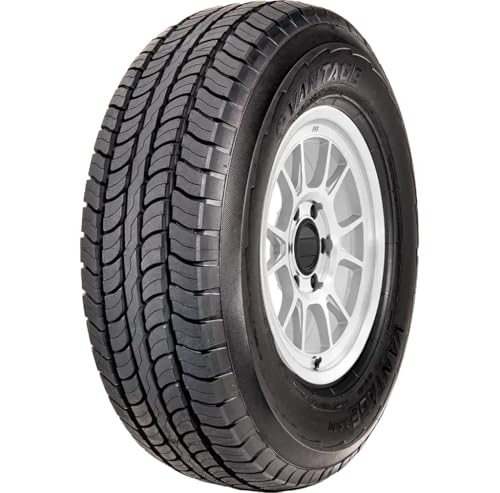
All-season tire for SUVs

Designed for use on Jeeps, light trucks, and SUVs

Designed for use on light trucks and SUVs
A/T vs M/T Tires by Use Case
[Products Worth Considering]

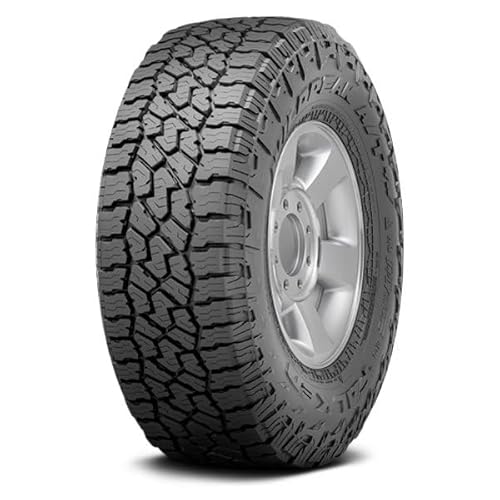
All-terrain, all-weather tire

Designed for use on Jeeps, light trucks, and SUVs
Best for Daily Driving
A/T tires are the better daily-driving choice for most people. They are quieter, smoother, and more predictable in rain. They also usually offer better tread life and less rolling resistance than M/T tires.
Best for Overlanding
A/T or R/T tires are usually best for overlanding because long trips include highways, gravel, dirt, weather changes, and loaded vehicle weight. Choose a tire with strong sidewalls, the right load rating, and good availability in case you need a replacement far from home.
Best for Mud
M/T tires are the clear winner in deep mud and slick clay. Their open lugs self-clean better and keep more biting edge available as the tire rotates.
Best for Snow
A 3PMSF-rated A/T is often the best compromise for trucks and SUVs that see winter roads and mild trails. M/T tires can work in deep loose snow, but many struggle on packed snow and ice because they lack dense siping.
Best for Towing and Hauling
Either A/T or M/T can work for towing if the load rating is correct, but A/T tires are usually more comfortable and stable for highway towing. Choose the tire by load index, inflation guidance, and heat management rather than tread style alone.
Frequently Asked Questions
Can I mix different brands of A/T and M/T tires on one vehicle?
It is not recommended. Mixing A/T and M/T tires can create uneven traction, different braking behavior, different rolling diameters, and faster drivetrain wear on 4WD or AWD vehicles. Use four matching tires of the same size, type, load rating, and similar tread depth whenever possible.
Do tread patterns affect tire pressure recommendations?
The tread pattern does not replace the vehicle’s recommended road pressure. For normal driving, start with the pressure listed on the door placard. Off-road, drivers may air down to increase footprint and comfort, but pressure changes should be done carefully and followed by airing back up before highway speeds.
How do tire sidewalls affect off-road bead sealing?
A stronger sidewall can resist cuts, bruises, and deformation on rocks, but bead retention also depends on wheel design, tire pressure, load, and driving style. Airing down too far on standard wheels can increase the risk of debeading, especially during hard side loads.
Are A/T or M/T tires compatible with TPMS sensors?
Yes, A/T and M/T tires can work with TPMS as long as the wheel, valve stem, sensor type, and tire size are compatible. Problems usually come from wheel changes, sensor damage, incorrect valve stems, or pressure settings that do not match the vehicle’s requirements.
Will tire choice influence my vehicle’s warranty or insurance coverage?
It can. Tires that do not meet the vehicle manufacturer’s size, load, speed, or clearance requirements may affect warranty claims if they contribute to a failure. Nonstandard tire sizes can also affect braking, stability systems, and crash claims. Check your owner’s manual, tire placard, insurer, and installer before major size changes.
Are M/T tires bad in the rain?
Not always, but they are usually less refined on wet pavement than A/T tires. The large tread blocks and wide voids that help in mud can reduce fine-edge grip and road contact in rain. A cautious driving style and proper tread depth are especially important with M/T tires on wet roads.
Are A/T tires good enough for off-roading?
Yes, A/T tires are good enough for many off-road drivers. They work well on gravel, dirt, dry trails, mild rocks, sand, campsites, and light mud. Choose M/T only when you regularly need maximum traction in deep mud, sharp rocks, or severe ruts.
Conclusion
Choose A/T tires if you want the best all-around balance for daily driving, highway comfort, wet-road control, light trails, gravel, and occasional snow. Choose M/T tires if you need maximum off-road traction in mud, rocks, and ruts and you are willing to accept extra noise, faster wear, and reduced road refinement.
For many drivers, the smartest answer is not the most aggressive tire. It is the tire that fits the miles you actually drive. Match tread type to your terrain, verify load rating and size, keep pressure and alignment correct, and rotate the tires consistently. That is how you get safer handling, better tread life, and the right amount of traction without paying for compromises you do not need.
Sources
- NHTSA TireWise — tire safety, pressure, tread, load limits, recalls, and consumer tire guidance.
- U.S. Tire Manufacturers Association: Tire Care Essentials — tire pressure, tread depth, rotation, alignment, and inspection guidance.
- 49 CFR § 570.62 Tires — U.S. inspection guidance for tread depth and tire condition.
- Tire Rack: Three-Peak Mountain Snowflake Symbol — explanation of the 3PMSF severe-snow-service marking.
- BFGoodrich All-Terrain T/A KO3 — example of a modern all-terrain tire design and feature set.
- BFGoodrich Mud-Terrain T/A KM3 — example of a modern mud-terrain tire design and feature set.

Related Articles
What Is a Fat Tire? Complete Guide & Best Options
I’ll show you what makes fat tires different, which setups work best, and why the right choice could change your ride.
Read More
What Does W Mean on a Tire? Load, Speed & Rating Guide
Huh, what does W on a tire really mean, and why could choosing the wrong rating affect your safety and performance?
Read More
What Does Tire Flipping Work? Muscles, Benefits & Workout Guide
Strong tire flips hammer your entire body, but which muscles and benefits matter most?
Read More