
CARORAV TPMS Sensor GM Review
Disclosure: As an Amazon Associate, we earn from qualifying purchases. If you click a link on this page and make a purchase, we may receive a small commission at no extra cost to you.
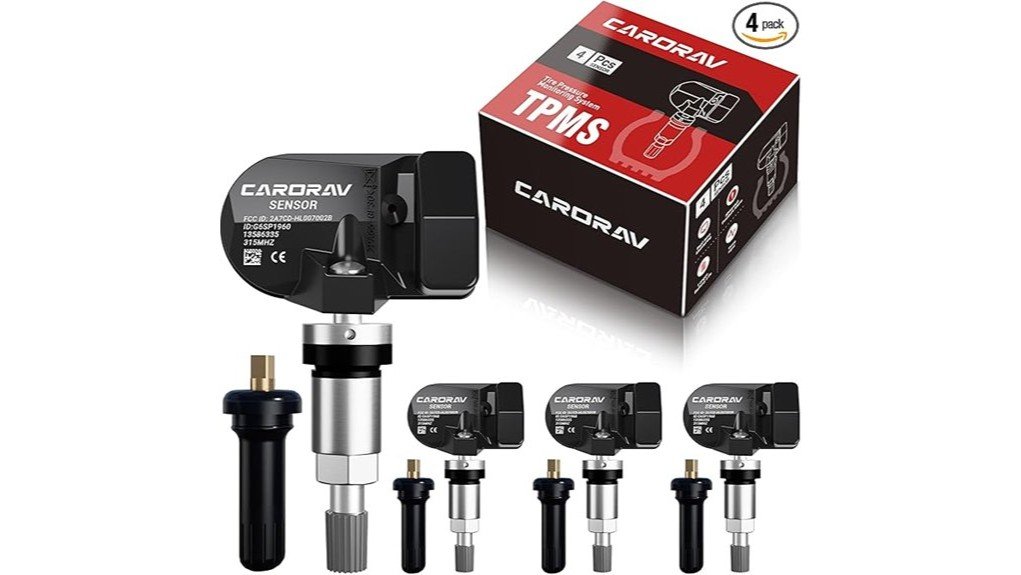
A failed tire-pressure sensor can leave you with a warning light, missing pressure readings, or the wrong wheel position on the display. The CARORAV TPMS Sensor GM four-pack offers a lower-cost way to replace all four sensors on many compatible GM vehicles. It arrives pre-programmed for supported applications, but you still need to confirm the 315MHz frequency, match the OE number, and complete a relearn after installation. This review explains where the set fits well and where professional help may save time.
Quick Verdict
Rating: 8/10, recommended with compatibility caveats
Best For: GM owners replacing several compatible 315MHz sensors at the same time
Bottom Line: This four-pack gives you pre-programmed sensors, broad GM coverage, and a manufacturer-stated battery life of more than five years. The main tradeoff is fitment and relearn complexity, since frequency alone does not guarantee compatibility.
| Specification | Detail |
|---|---|
| Brand | CARORAV |
| Model | CAR6196-4 / TPMS Sensor GM |
| Product type | Direct-fit replacement tire pressure monitoring sensors |
| Quantity | 4 sensors |
| Frequency | 315MHz |
| Programming status | Pre-programmed, vehicle relearn still required |
| Primary OE references | 13586335, 13581558, 13598771, 13598772 |
| Vehicle families | Select Buick, Cadillac, Chevrolet, and GMC models |
| Claimed battery life | More than 5 years under normal use |
| Claimed operating range | -40°C to +125°C |
| Listed item weight | 8.1 ounces |
| Listed package size | 4.17 x 3.62 x 2.4 inches |
Key Takeaways
- The CARORAV set contains four 315MHz replacement TPMS sensors for select GM vehicles.
- Pre-programmed means the sensor protocol is prepared, not that the vehicle will recognize each sensor automatically.
- You should confirm the exact OE number, model year, trim, wheel type, and frequency before ordering.
- Most installations require tire removal or bead-breaking equipment, a suitable torque tool, and a relearn tool or scan tool.
- The set makes the most sense when several original sensors are near the same age or you are building a second wheel set.
[Products Worth Considering]

This spare tire tool kit is designed for the 2004 to 2018 Ford F-150 to help you loosen and tighten wheel lug nuts and manage the spare tire and provided jack functions from underneath the vehicle. It includes the lug nut wrench and extension pieces plus a convenient storage carrying case for organized transport. The jack itself is not included.
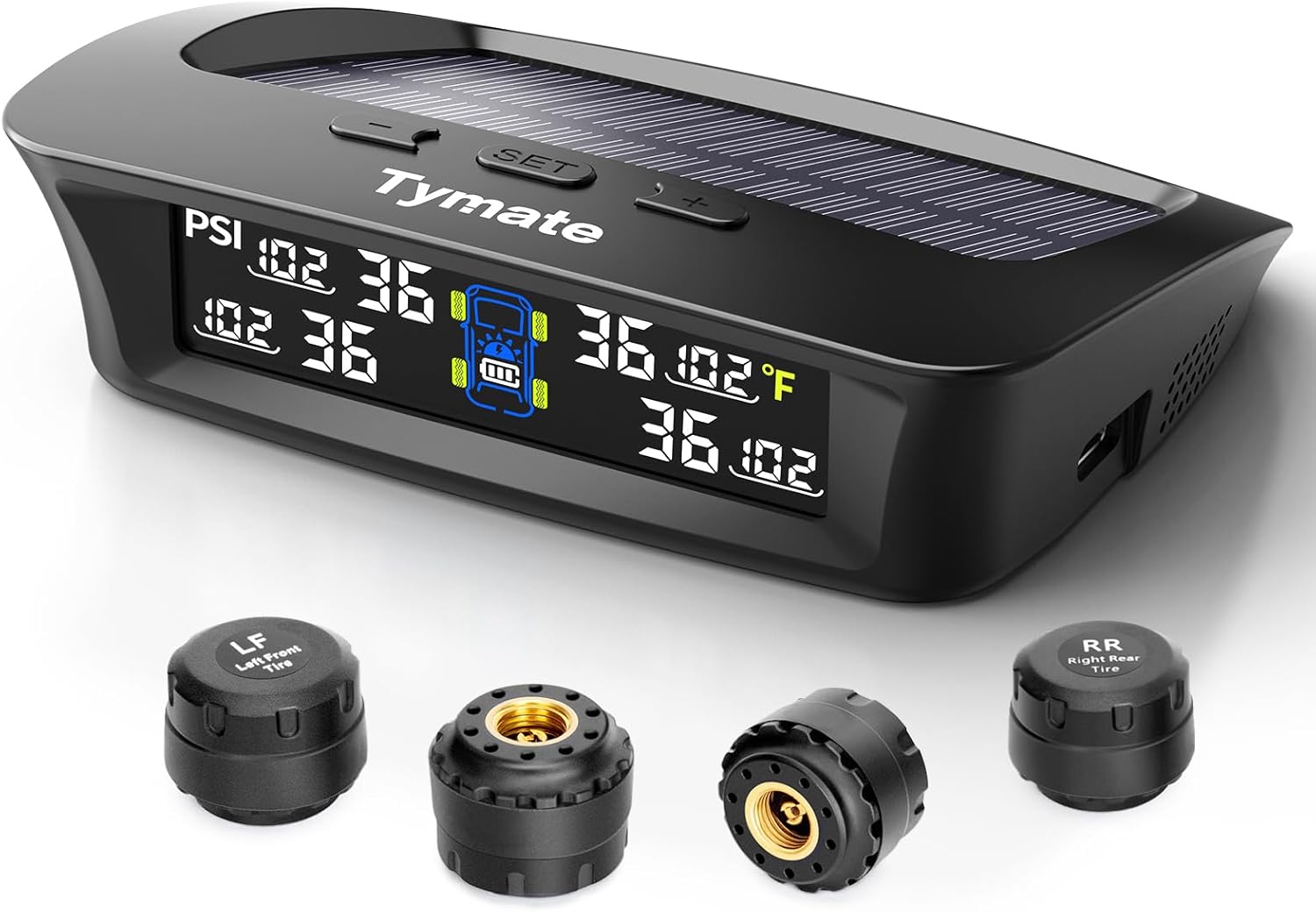
The Tymate TM3 RV TPMS delivers real-time tire pressure monitoring from 0 to 144 PSI with accurate readings and dependable wireless communication. It includes four external sensors with pre-pairing, six alarm modes for rapid leak, pressure extremes, temperature, and signal loss, plus an easy-reference setup for alert thresholds. Solar and USB-C charging help keep the display powered, while the color LCD and adaptive backlight improve visibility for safer driving and towing.
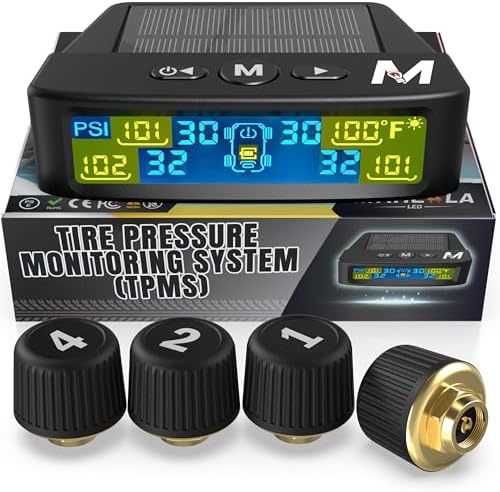
Marcala’s TPMS set of four sensors helps you monitor tire pressure and temperature in real time while driving, with updates every second. The bright color LCD uses auto-dimming for easy viewing, powered by dual solar and USB charging, and offers six alarm modes. Built for trailers, RVs, campers, trucks, and towing setups, the sensors support monitoring 1-4 wheels up to 98 PSI with IP67 waterproof protection.
What Is the CARORAV TPMS Sensor GM?
The CARORAV CAR6196-4 is a four-sensor replacement kit for vehicles that use compatible 315MHz direct TPMS hardware. Each sensor mounts inside the wheel and sends pressure data to the vehicle’s receiver after the sensor IDs have been learned.
CARORAV lists common GM replacement numbers such as 13586335, 13581558, 13598771, and 13598772. The listing also names select Buick, Cadillac, Chevrolet, and GMC vehicles, including Enclave, Encore, ATS, CTS, Colorado, Silverado, Impala, Yukon, and Sierra applications.
The broad vehicle list is useful for initial screening, but it should not replace an OE-number lookup. GM used different frequencies and sensor designs across years, trims, wheel packages, and regional markets.
Who Should Buy It?
Best For
- You have verified a matching 315MHz GM application and OE reference.
- You want to replace four aging sensors during one tire service.
- You need sensors for a compatible winter or spare wheel set.
Skip If
- Your vehicle requires 433MHz sensors or a different OE number.
- You expect installation without removing or loosening the tire bead.
- You do not have access to the correct relearn method or a qualified tire shop.
Before You Buy: Do not order by vehicle make alone. Match the OE number and 315MHz frequency, then confirm your exact year, trim, wheel package, and market using the vehicle catalog or a professional parts lookup.
Fit and Compatibility
Compatibility is the most important part of this purchase. A sensor may physically fit the valve opening but still use the wrong frequency, protocol, or relearn method for your vehicle.
Start by checking the part number printed on an original sensor, your service records, or a trusted parts catalog. Compare that information with the CARORAV listing instead of relying only on a broad model name such as Silverado, Sierra, Enclave, or Yukon.
What to Check Before Ordering
- Frequency: Your vehicle must use a compatible 315MHz system.
- OE number: Match one of the supported replacement references.
- Model year and trim: The same model can use different sensors across production years.
- Wheel design: Confirm valve-hole fit, sensor clearance, and mounting style.
- Relearn access: Know whether your vehicle supports a manual relearn or needs a scan tool.
Using the Sensors With Aftermarket Wheels
Aftermarket wheels can work when the valve opening, sensor angle, and internal clearance match the sensor hardware. A tire technician should confirm that the sensor body will not contact the wheel barrel or tire bead during installation.
Do not force the valve assembly into a wheel that uses a different mounting design. Incorrect seating or torque can cause an air leak, damage the sensor, or create an unreliable pressure reading.
Build, Battery Life, and Temperature Range
CARORAV states that the internal battery can operate for more than five years under normal conditions. Like most direct TPMS sensors, the battery is built into the sensor body, so the complete sensor is normally replaced when the battery eventually fails.
The listed operating range is -40°C to +125°C. That range covers the temperature swings found around wheels and brakes, but battery life still depends on storage time, driving conditions, transmission frequency, and manufacturing variation.
The Amazon technical details list an 8.1-ounce item weight and a package size of 4.17 x 3.62 x 2.4 inches. Those figures describe the listed item or package, not the dimensions of one mounted sensor.
Installation and Setup
Installing an internal TPMS sensor usually requires removing the wheel, deflating the tire, and breaking the bead away from the valve area. That makes this a tire-service job rather than a simple driveway swap for most owners.
A qualified installer should inspect the wheel’s valve opening, sealing surfaces, tire bead, and mounting hardware before fitting each sensor. The fastener should be tightened to the specification supplied for the sensor and wheel, not by feel.
| Step | What to Do | Why It Matters |
|---|---|---|
| 1 | Verify OE number and 315MHz compatibility | Prevents installing an incompatible sensor |
| 2 | Remove the wheel and safely loosen the tire bead | Provides access without crushing the sensor |
| 3 | Inspect and clean the valve seating area | Reduces the risk of slow air leaks |
| 4 | Mount and torque the sensor correctly | Protects the seal and sensor housing |
| 5 | Reinstall, inflate, and leak-check the tire | Confirms safe, airtight fitment |
| 6 | Complete the vehicle-specific relearn | Assigns each sensor ID to the correct wheel position |
Pro Tip: Ask the tire shop to activate and read all four sensors before mounting them. A quick bench check can catch a non-responsive or mismatched sensor before the tire is fully reassembled.
How to Relearn the TPMS Sensors
Pre-programmed sensors still need a relearn because the vehicle must store each sensor ID and connect it to a wheel position. The exact entry steps can differ by model year, instrument cluster, key type, and diagnostic equipment.
On many compatible GM vehicles, the general sequence starts with the parking brake applied and the ignition in ON/RUN. You then enter tire-learning mode through the Driver Information Center, steering-wheel controls, key-fob procedure, or a scan tool.
- Set all tires to the pressure on the vehicle’s tire-and-loading placard.
- Enter the vehicle’s TPMS learning mode using the owner’s manual procedure.
- Activate the left-front sensor near the valve stem and wait for confirmation.
- Repeat in this order: right front, right rear, then left rear.
- Confirm the final horn chirp or completion message.
- Turn the ignition off, recheck pressures, and verify the display after the next drive cycle.
Some vehicles can use a stationary manual relearn, while others require an OBDII-capable TPMS tool or professional scanner. Follow the instructions for your exact vehicle rather than assuming one GM procedure applies to every model.
[Products Worth Considering]
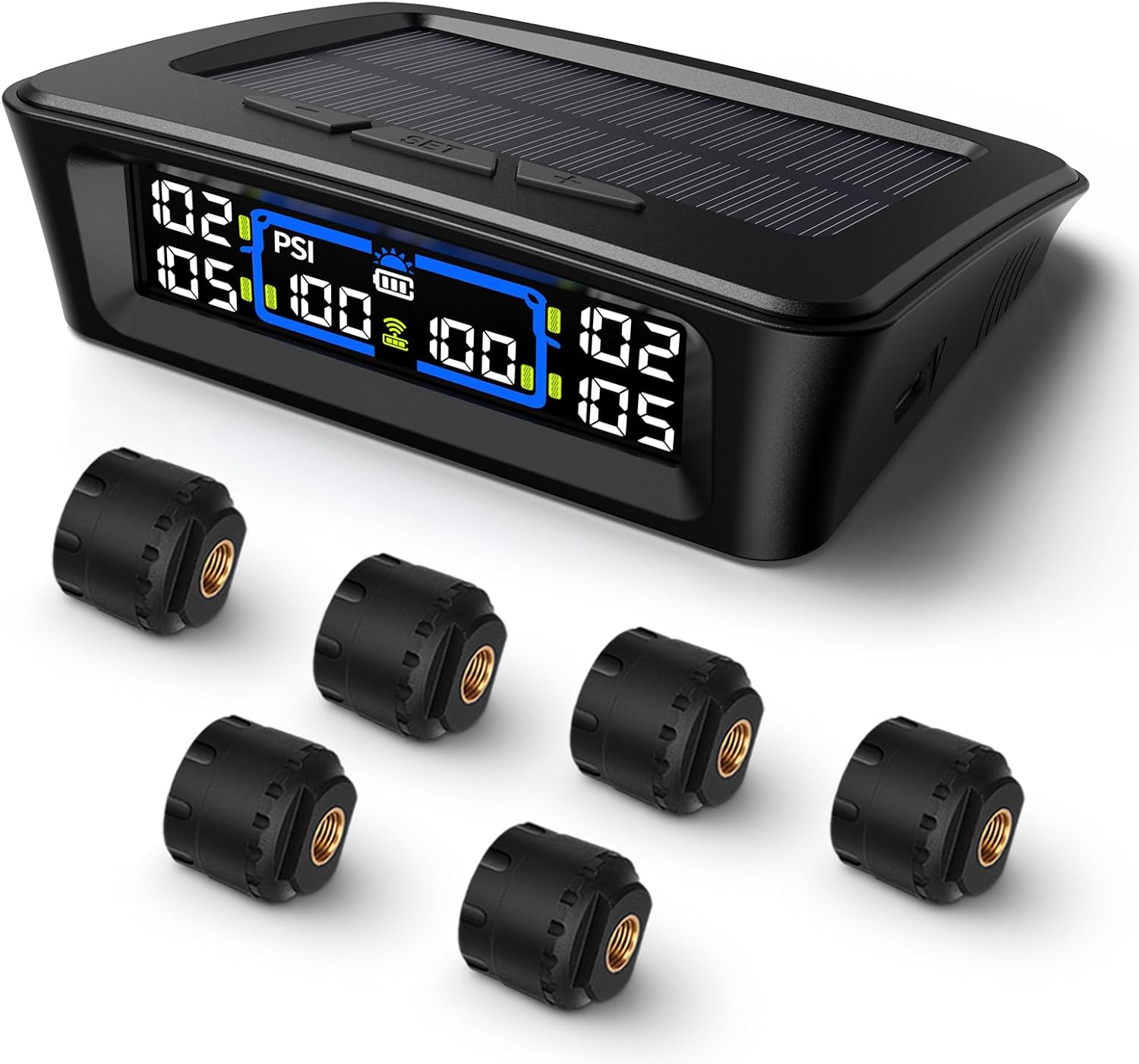
The Tymate TM12 RV TPMS delivers real-time tire pressure and temperature monitoring with a stable 433Hz display for safer long-distance driving. It supports simultaneous monitoring across vehicle and trailer zones, includes six alarm modes for pressure, temperature, leakage, battery, and signal loss, and features easy DIY installation with auto calibration. Power is supplied via USB-C charging or solar recharging, with a wide 0–144 PSI range and up to 50 ft signal coverage for RVs and towable trailers.

This roadside assistance kit helps drivers and passengers in urgent situations after an accident or breakdown, providing practical support while waiting for help. It includes a lightweight, compact tire inflator for fast inflation of standard vehicle tires, plus reinforced jumper cable protection for safer handling. Ideal for winter weather, road trips, camping, and travel, with everything stowed neatly in a trunk bag.
Compatibility and Safety
A working TPMS helps alert you to significant pressure loss, but it does not replace routine tire checks. Use an accurate gauge at least monthly and before long trips, and inflate each tire to the vehicle placard specification.
Do not use the maximum pressure molded on the tire sidewall as your normal target unless the vehicle manufacturer specifically calls for it. Stop and inspect the tire if the warning returns, the reading drops again, or the vehicle shows a TPMS malfunction message.
Have a professional inspect damaged valve hardware, corroded wheels, leaking beads, or tires that have been driven while underinflated. Replacing a sensor will not repair a puncture, damaged wheel, or leaking tire.
How It Performs in Real Use
Replacing Four Aging Sensors
This kit is most convenient when all four original sensors are close in age. Replacing the set during scheduled tire work can reduce the chance of paying for repeated bead-breaking labor as older batteries fail one at a time.
Building a Winter Wheel Set
A four-pack can give a compatible winter wheel set its own sensors, so you do not need to transfer hardware each season. You will still need to relearn the wheel positions after the seasonal swap if your vehicle does not store two sensor sets.
Replacing One Failed Sensor
You can install only one sensor from the package when a single unit fails, provided the part number and frequency match. The remaining sensors can serve as spares, though battery shelf time continues even while they are stored.
After a Tire Rotation
Many GM vehicles need a position relearn after a tire rotation so the dashboard shows the correct corner. The sensors may continue transmitting pressure, but the displayed wheel location can be wrong until the matching process is completed.
Pros and Cons
Pros
- Four-sensor package suits complete wheel-set replacement.
- Pre-programmed design removes a separate sensor-coding step for supported vehicles.
- Supports several common GM OE replacement references.
- Manufacturer-stated battery life exceeds five years under normal use.
- Wide listed operating-temperature range suits automotive wheel environments.
Cons
- Broad GM fitment still requires exact OE-number and year verification.
- Installation normally needs tire-service equipment.
- Every installed sensor requires a vehicle relearn, and some vehicles need a scan tool.
Is It Worth the Price?
The CARORAV four-pack is positioned as a value-focused alternative to buying four dealer-supplied sensors. It offers the strongest value when you already need tire work and can install all four sensors during the same service visit.
The set is also worth considering for a compatible second wheel set. However, the purchase can become less economical if you order the wrong frequency, pay for repeated mounting, or need extra diagnostic work because fitment was not confirmed first.
Buy it for verified compatibility and four-sensor convenience, not simply because your vehicle carries a GM badge.
How It Compares to Alternatives
A GM Genuine or ACDelco sensor may be the better choice when you want an OE-branded part and dealer-supported catalog matching. Dorman direct-fit sensors are another option for buyers who prefer a model-specific aftermarket part from an established automotive supplier.
Programmable options such as the Schrader EZ-sensor can cover many applications, but they normally need compatible programming equipment before relearning. The CARORAV set makes the most sense when its pre-programmed 315MHz application and OE references match your vehicle exactly.
Frequently Asked Questions
Does the package include four sensors?
Yes. The reviewed CARORAV CAR6196-4 listing is a four-pack. Confirm the seller and selected package on the product page before ordering because other CARORAV listings may offer different quantities.
Are the sensors ready to use without programming?
They are pre-programmed for supported applications, so they should not need universal-sensor coding. Your vehicle must still learn each sensor ID through a manual or tool-assisted relearn.
Will these sensors fit every Buick, Cadillac, Chevrolet, or GMC?
No. They fit select vehicles using compatible 315MHz hardware and supported OE numbers. Check the exact year, trim, wheel package, and original part number before buying.
Do I need an OBDII scanner or TPMS tool?
You will usually need an activation tool, and some vehicles require an OBDII-capable TPMS scanner. Check your owner’s manual or ask a tire shop which relearn procedure applies to your vehicle.
Can I install only one sensor from the four-pack?
Yes, when one sensor has failed and the replacement matches the required part number and frequency. You still need to perform the correct relearn after installation.
Can I use them with aftermarket or winter wheels?
Often, yes, but the wheel must accept the sensor’s valve hardware and provide enough internal clearance. Have the wheel and sensor checked together before the tire is mounted.
How long should the batteries last?
CARORAV states a normal battery life of more than five years. Actual life can vary with storage time, climate, driving conditions, and how often the sensor transmits.
What should I do if the TPMS light stays on?
First check every tire with an accurate gauge and correct pressure to the vehicle placard. If the light flashes, readings are missing, or the relearn fails, have the system scanned for a sensor, receiver, or installation fault.
The Bottom Line
The CARORAV TPMS Sensor GM four-pack is a practical choice when your vehicle uses a supported 315MHz sensor and you want to replace several units at once. Its pre-programmed design and stated five-year-plus battery life are useful strengths, but you should skip it when the OE number, wheel fit, or relearn method cannot be confirmed.
Ready to Buy?
Check the latest product details and verify fitment before you decide.

Related Articles
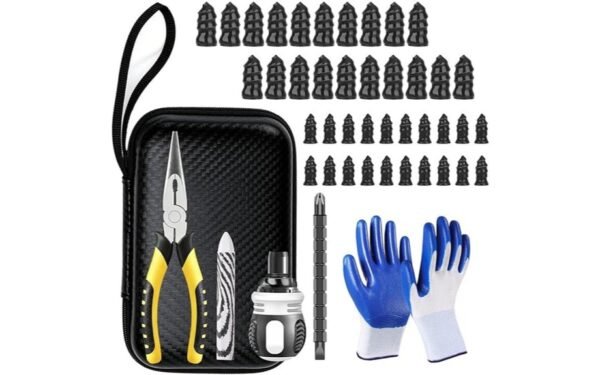
Tire Screw Plug Repair Kit Review
Compact tire screw plug repair kit review reveals fast roadside fixes, but which punctures are truly safe enough to trust?
Read More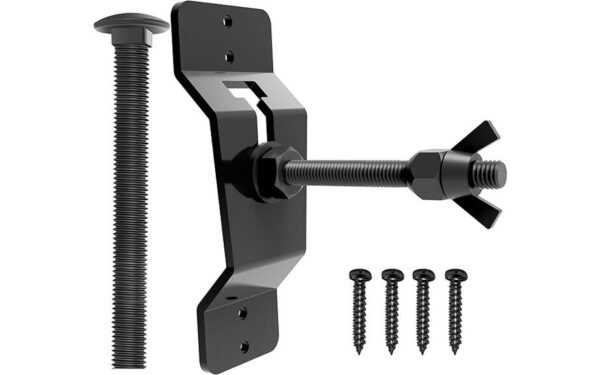
Wall Mount Spare Tire Carrier Mount Review
I review the wall mount spare tire carrier’s fit, strength, and stability—see what could make or break your trailer setup.
Read More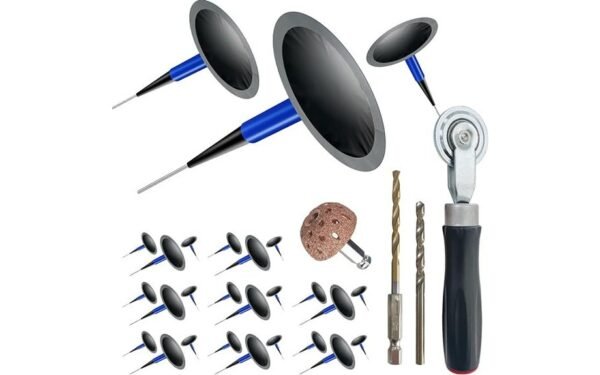
Socpuro Tire Repair Patch Tool Kit Review
Great for quick DIY puncture fixes, the Socpuro Tire Repair Patch Tool Kit has limits and surprises you’ll want to know before buying.
Read More