
When to Replace Tires: 7 Signs It’s Time for New Ones
You need new tires when wear, age, damage, or handling changes put safety, traction, or fuel economy at risk. Check tread with the penny test or wear bars; replace under 2/32″ (and consider under 4/32″ for wet roads). Inspect sidewalls for cracks, bulges, or cuts and note punctures that can’t be repaired. Replace tires older than 6–10 years. Uneven wear, vibrations, or pulling signal alignment, inflation, or suspension problems. Keep going and you’ll get specific replacement and installation guidance.
Do I Need New Tires? Quick Checklist
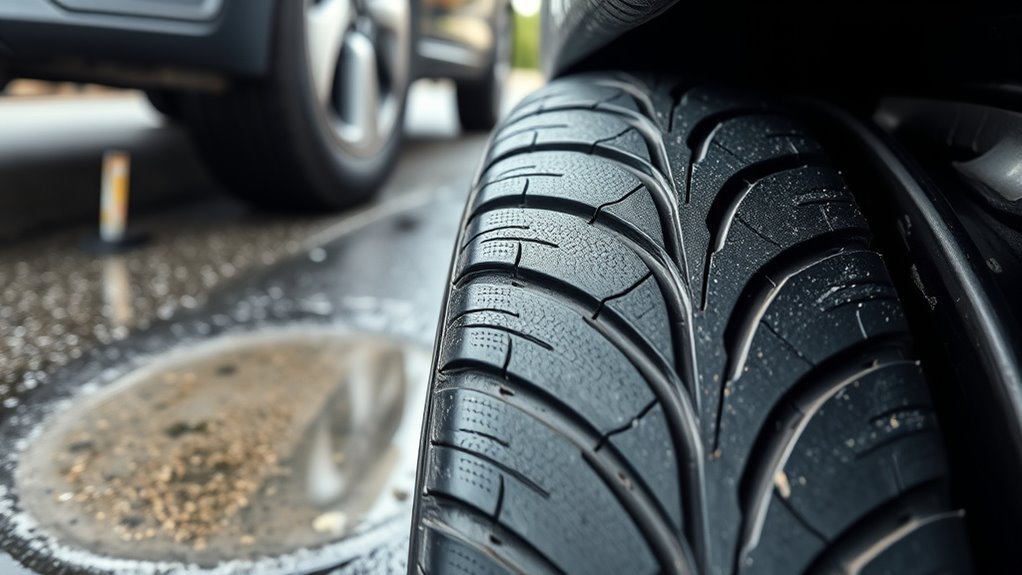
Wondering whether your tires need replacing? Run this quick checklist to take control: start with regular tire maintenance—inspect sidewalls for cracks, bulges, or blisters; any visible structural damage means replace now. Note changes in ride quality: if you feel unusual vibrations or steering pull, that’s a signal of internal damage or uneven wear that needs professional inspection and likely replacement. Track age—tires older than 6–10 years should be retired even if tread seems okay because rubber degrades. Pay attention to wet-weather performance; longer stopping distances or loss of traction in rain mean reduced grip and a safety-driven replacement. Make seasonal checks part of your liberation routine: before winter and summer, verify condition and pressure, and swap to appropriate tires if needed. This checklist keeps you proactive, avoids surprises, and lets you choose freedom on the road rather than waiting for failure.
Check Tread Depth: Penny Test & Wear Bars
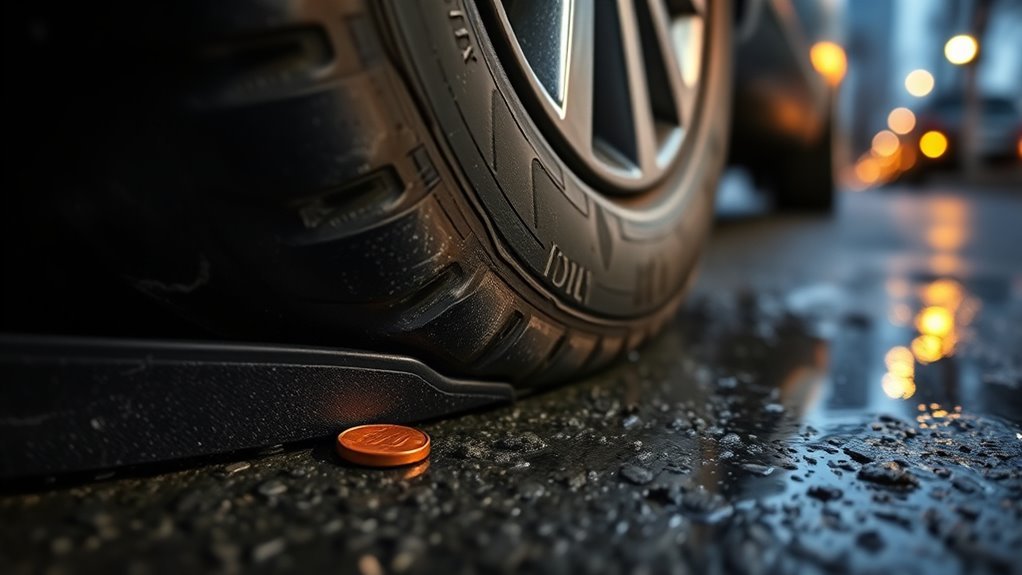
Anyone can quickly check tread depth with a simple penny test or by spotting the tire’s built-in wear bars. Stick a penny into the grooves with Lincoln’s head pointing down; if you can see his head, your tread depth is under 2/32 inch and you need new tires. Wear bars are molded across the tread — when the tread wears flush with those bars, the legal minimum’s reached.
You should inspect tread depth every few thousand miles or at least monthly to protect traction in wet or snowy conditions. Look for uneven wear too; cupping, feathering, or one-sided wear often signals misalignment or incorrect inflation that undermines tire safety and calls for immediate attention. Don’t wait for a blowout or loss of control; keep measurements simple, act when the penny test or wear bars warn you, and reclaim control of your ride’s safety and freedom.
Read Your Tire’s DOT Date: When Age Means Replace
Look for the DOT code on the tire sidewall and read the last four digits to find its manufacture week and year. That DOT decoding gives you the hard date: e.g., 3520 means week 35 of 2020. You’ll use that to judge tire longevity, not just tread. Replace tires once they hit 10 years from that manufacture date, even if they look fine. Rubber degrades over time; age can weaken belts and sidewalls, making failure unpredictable.
Check every tire, including the spare, and record dates so you’re not guessing later. Make DOT decoding part of your maintenance ritual—empowering you to act, not wait for a crisis. Prioritize safety over false economy: new tires restore grip, handling, and peace of mind. If any tire is a decade old, plan replacement now; liberation from worry starts with a clear, date-based decision.
Spotting Tire Damage: Cracks, Bulges, and Cuts
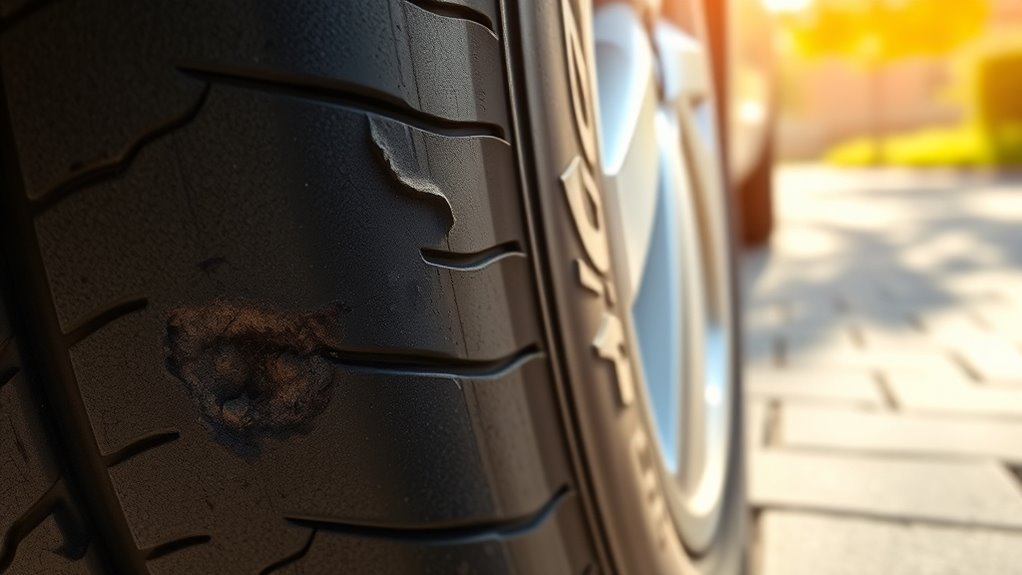
Check your tires regularly for visible sidewall cracks, bulges or blisters, and any punctures, cuts, or tears—these are signs of structural failure that can cause sudden blowouts. Cracks often come from age, sun exposure, or hard impacts, while bulges and blisters mean internal cord damage and compromised pressure containment. If you spot any of these issues, get the tire professionally inspected and replaced as needed.
Visible Sidewall Cracks
Although small at first, visible sidewall cracks, bulges, or cuts signal structural damage that can quickly turn into a blowout, so inspect your tires regularly and replace any tire showing these defects. When you do sidewall inspection, look for splits, cords showing, or anything that wasn’t there last month — age, impacts, or low pressure accelerate failure. Damage prevention is simple: replace rather than patch, keep proper inflation, and don’t delay. A cracked sidewall means compromised integrity; even good tread won’t save you. You’re choosing freedom on the road — don’t gamble it.
| What to check | Action |
|---|---|
| Small cracks | Replace |
| Cuts | Replace |
| Exposed cords | Replace |
| Any change | Replace |
| Safety risk | Replace |
Bulges And Blisters
When you spot a bulge or blister on a tire sidewall, don’t drive on it — those deformations mean the internal cords or belts are compromised and a blowout can happen without warning. During a regular sidewall inspection, sweep your hands and eyes around the tire for any soft spots, raised areas, or shiny breaks in the rubber. Bulges and blisters usually follow impact damage from potholes, curbs, or hard hits that crush the internal layers. Under-inflation makes this worse by heating and flexing the tire until hidden layers fail. If you find a bulge or blister, replace the tire immediately; patching or delaying puts you at serious risk. Protect yourself and choose freedom from preventable roadside danger.
Punctures, Cuts, Tears
After spotting a sidewall bulge, keep scanning for punctures, cuts, and tears that can be just as dangerous. You should inspect tires regularly for visible damage—cracks, deep cuts, or tears signal structural weakness and higher blowout risk. Sidewall damage and cuts that reach the sidewall are non-repairable; replace immediately to protect yourself and others. Small tread punctures under 1/4 inch may be fixed with approved patch-plug methods, but anything larger or on the sidewall needs replacement. Frequent checks let you catch issues early and avoid escalation. Use these tire maintenance tips: document damage, check pressure after repairs, and choose reputable puncture repair options when appropriate. Stay vigilant; freedom on the road demands safety.
Uneven Wear & Handling Symptoms : Diagnose the Cause
If you spot uneven tread—more wear on one edge, the center, or patchy cupping—don’t shrug it off: it usually signals alignment, inflation, or suspension trouble that’ll degrade handling and safety. You should inspect tires regularly and compare patterns across all four corners. Excess wear on one side points to tire alignment faults; center wear hints at overinflation, while edge wear suggests underinflation or camber problems. Cupping often ties to worn shocks or other suspension issues that beat the tires into uneven contact.
If one tire’s notably more worn, get a professional check immediately—driving on it risks loss of control and faster failure. Correcting alignment and fixing suspension issues restores even contact, improves traction, and extends tread life. You’ll save fuel and feel the difference in steering responsiveness. Don’t accept sloppy handling; address uneven wear fast to reclaim safer, freer driving.
Wet Traction and Fuel Economy: Hidden Signs to Replace
Don’t wait until a puddle catches you off guard—reduced tread means less wet grip and a higher hydroplaning risk. You’ll also notice fuel mileage slipping as worn rubber raises rolling resistance and forces the engine to work harder. Check tread depth (replace at about 4/32″), keep pressures correct, and watch for uneven wear that can kill both traction and economy.
Reduced Wet Grip
When roads are wet, worn tires with shallow tread can’t move water effectively, so you’ll feel longer stopping distances, more slipping, and an increased chance of hydroplaning. You own your safety—practice routine tire maintenance and don’t accept vague risks in rainy conditions. Tread under 4/32″ already degrades water-channeling; 2/32″ is legal minimum, not a performance target. Replace earlier to preserve bite and control. Studies show deeper tread shortens wet stopping distances by displacing more water; worn rubber lets water lift the contact patch. If you sense longer braking, slipping, or reduced steering feel in showers, act now. Regular checks and timed replacements prevent loss of control. Swap tires before margins vanish so you stay free to move without fear.
Lowered Fuel Efficiency
Beyond just stopping distance, worn tread and low pressure quietly hit your fuel economy. You’ll notice the engine works harder because increased rolling resistance from underinflated or bald tires demands more fuel. A 1 PSI drop costs about 0.2% in efficiency, so quick pressure checks are a high-return fuel saving strategy. Tires under 4/32″ tread not only reduce wet grip but raise consumption; swapping worn rubber can boost mileage 3–4%.
Be proactive: set a regular tire check routine, rotate and align as needed, and use recommended pressures. These tire maintenance tips free you from wasted trips to the pump and keep your vehicle performing cleanly. Replace tires before economy—and safety—erode.
Replacing Tires: Two vs Four and AWD/2WD Rules
If you’re replacing tires, plan to change all four whenever possible to keep handling predictable—this is especially important on AWD systems where mismatched tread depth can stress the drivetrain. Replacing all four maximizes tire longevity, aligns tread patterns, and preserves vehicle stability; replacement timing should be proactive, not reactive. If budget forces you to replace only two, mount them on the rear axle so you don’t induce oversteer and lose control in slippery conditions.
On 2WD cars, put new tires on the driven axle and match them to the remaining pair in tread depth and type. Mixing brands or differing tread patterns risks uneven wear and compromised control, so stick to similar specifications or replace all four. Always consult your owner’s manual for torque, rotation, and axle-specific guidance. You’re aiming for safety and freedom on the road—choose consistency over convenience and prevent drivetrain strain or sudden handling surprises.
Frequently Asked Questions
What Is the 7 7 Rule for Tires?
The 7 7 rule says you should replace tires at seven years or when tire tread reaches 2/32 inch. You’ll check tread depth and DOT date; don’t ignore aging rubber, wear, or compromised handling—choose safety and freedom.
Conclusion
So yeah, you can pretend those bald tires are fashion statements, but they’re not. If the penny test, DOT date, cracks, bulges, uneven wear, poor wet grip, or worse fuel economy whisper “replace,” listen. Swap pairs only when you’re corner-cutting or follow the AWD/2WD rules — otherwise do all four. Do it before the road teaches you the hard way; tires are cheap, drama and hospital bills aren’t. Stay practical, not poetic.
Related Articles
When to Replace Tubeless Sealant: Timing & Signs
Be warned: tubeless sealant can fail in weeks or months—learn the signs, testing tips, and exact replacement timing to avoid flats.
Read More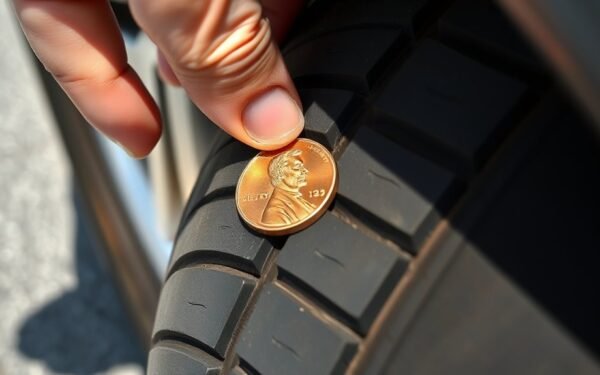
The Penny Test for Tread Depth: How to Do It Right
Better learn the penny test correctly—discover when Lincoln’s head reveals dangerous tread wear and what to do next.
Read More
Tire Rotation Schedule: How Often & Why It Matters
Optimizing tire life? Discover why rotating every 5,000–8,000 miles matters for safety and savings—read on to learn exact patterns and tips.
Read More