
What Tires for City Driving on a RAV4? A Practical Guide
You should fit your RAV4 with quiet, low‑rolling‑resistance all‑season tires in your OEM size (commonly 225/65R17) to balance fuel economy, comfort, and wet‑weather grip; choices like Michelin Defender 2 and Fullway HP108 offer reduced road noise and 2–4% better MPG, while T or H speed ratings and a 109 load index suit urban loads and emergency maneuvers. Rotate every 5,000–7,500 miles and check pressure monthly for max life, and keep going to see specific models, winter options, and buy/install tips.
Top Tire Choice for RAV4 City Driving : The Short Answer
If you drive your RAV4 mainly in the city, choose all-season tires that balance traction, noise control, and fuel efficiency—examples include the Fullway HP108 for quiet, stable rides and the Landspider Citytraxx G/P for improved wet/dry grip; for better fuel economy consider low rolling resistance options like the Michelin Defender 2, and maintain monthly pressure checks plus regular rotations to push city tire life toward 60,000 miles or more. You’ll favor the Fullway HP108 when low cabin noise and steady handling matter; its tread minimizes road roar while preserving consistent urban traction during quick stops. Choose the Landspider Citytraxx G/P if wet braking and lateral grip under frequent maneuvers are priorities. If liberation means fewer fuel stops and lower operating cost, the Michelin Defender 2’s 2–4% fuel economy gain is measurable. Pair any choice with monthly pressure checks and scheduled rotations to maximize tire longevity, maintain predictable handling, and reduce total ownership cost in stop-and-go city use.
How Tire Size, Speed & Load Ratings Affect RAV4 Urban Performance
When you stick with the RAV4’s typical 255/65 R17 tires, you keep a balance of handling and comfort that’s tuned for city streets; matching that size with the correct speed (T or H) and load (e.g., 109) ratings guarantees the tires can handle quick urban maneuvers and the vehicle’s weight without compromising safety. You’ll preserve designed tire performance and predictable urban handling by staying within factory specs.
- Choose speed ratings T (118 mph) or H (130 mph) to ensure the rubber sustains brief high-speed responses during emergency lane changes without excess stiffness.
- Match load rating 109 (2,271 lbs per tire) to support cargo and passengers; under‑rated tires reduce stability and increase wear.
- Keep recommended PSI (~32–35) for ideal contact patch—this improves fuel economy and steering precision.
- Prefer lower rolling resistance options when you want better city fuel efficiency (2–4% gain) without sacrificing baseline urban handling and safety.
Best Touring and Highway All‑Season Tires for Quiet, Fuel‑Efficient City Miles
Anyone looking to cut city fuel costs and cabin noise should consider touring or highway all‑season tires like the Michelin Defender 2 or Bridgestone Ecopia HL422 Plus, which improve rolling resistance and can boost mileage by about 2–4% compared with standard touring rubber. You’ll get urban comfort and measurable savings: quieter cabins, smoother starts/stops, and extended tread life when you maintain proper inflation.
| Feature | Benefit |
|---|---|
| Michelin Defender 2 / Ecopia HL422 Plus | Lower rolling resistance → +2–4% MPG |
| Fullway HP108 | Symmetrical tread → stable, quiet urban commute |
| 255/65 R17 compatibility | Guarantees handling and fit for RAV4 |
Use tire comparisons focused on fuel, noise, and longevity to choose. Touring/all‑season tires often reach 60–80k miles if inflated correctly, reducing replacements and freeing you from frequent maintenance burdens. Pick tires that prioritize low noise and steady economy to maximize liberation from fuel waste and cabin distraction.
Low Rolling Resistance Tires for Better MPG: When to Pick Them

Having covered touring and highway all‑season options for quiet, fuel‑efficient city miles, let’s look at when low rolling resistance (LRR) tires make the most sense: choose them if you regularly drive in stop‑and‑go urban traffic, average short trips where engine warm‑up penalties are high, or seek a steady 2–4% MPG gain without sacrificing everyday traction. You’ll benefit from tire technology advancements that cut friction via specialized tread compounds and patterns; popular city-ready models include Michelin Defender 2, Bridgestone Ecopia HL422 Plus, and Continental Cross Contact LX25. Proper maintenance—regular inflation checks, timely rotations—extends tread life to 60,000–80,000 miles and preserves fuel efficiency benefits. Consider LRR tires when fuel savings compound over many miles, when you value quieter, greener commutes, or when short urban runs dominate your driving. If liberation for you means lower running costs and fewer fill‑ups, LRRs are a targeted, evidence-backed choice that balances economy with adequate urban traction.
Budget‑Friendly All‑Season Options for RAV4 (Safety First)
If you’re prioritizing safety and savings for city driving in a RAV4, budget all‑season tires like the Fullway HP108 and Landspider Citytraxx G/P deliver reliable wet‑and‑dry traction, stable handling, and load ratings above 1,300 lb per tire at a fraction of premium prices. You’ll get measured performance: the Fullway HP108’s symmetrical tread and nearly 8 mm depth boosts grip and tire durability for stop‑start commuting, while the Landspider’s asymmetrical design enhances urban traction and reduces road noise for a more liberated, less constrained ride. Both support >1,300 lb per tire, so you won’t compromise safety when carrying passengers or cargo. Choosing these all‑season models cuts replacement frequency and handles mixed weather, translating to lower total cost of ownership. Fitment simplicity and predictable wear patterns mean you can reclaim time and money without sacrificing control. Inspect tread depth regularly and rotate as recommended to maintain peak performance and preserve the safety margin you depend on in city traffic.
City Winters: All‑Season Enough or Swap to Winter Tires?
Wondering whether your RAV4 needs winter tires for city driving? You’ll decide by cold frequency and conditions. All-season tires give adequate winter performance in light snow and mild freezes, preserving tire longevity if you run them year-round. But when temperatures regularly fall below 40°F or streets ice over, winter tires outperform: softer compounds stay flexible, and deeper grooves plus more biting edges boost grip and control.
- If your city sees occasional flurries and brief cold snaps, keep all‑seasons for convenience and longevity.
- If you face consistent snowfall or ice, swap to winter tires—stopping distances can drop by up to 30% versus all‑seasons.
- Prioritize winter performance when commutes are crucial; the compound and tread improvements translate to measurable safety gains.
- Balance costs: seasonal mounting and a second set reduce wear on each set and extend overall tire longevity.
Choose freedom from winter risk: match tire function to your local climate for safer, more confident driving.
How Tread Design and Wet‑Weather Features Cut Hydroplaning in City Rain
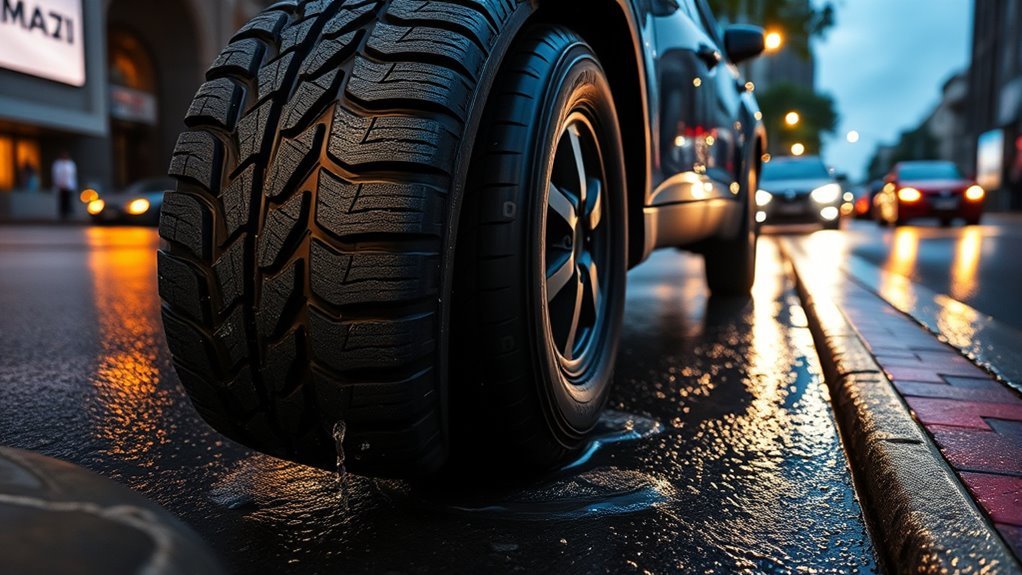
When you encounter city rain, look for tread patterns with deep channels and circumferential grooves that evacuate water quickly to cut hydroplaning risk. Siping and asymmetrical designs, like those on the Landspider Citytraxx G/P, boost wet grip and directional stability on slick pavement. Combined with robust tread depth (near 8 mm) and a high treadwear rating, all‑season tires sustain that performance over time.
Tread Pattern Channels
Effective water evacuation starts with tread pattern channels: wide, deep grooves and asymmetrical designs actively move water away from the contact patch, cutting hydroplaning risk in heavy city rain. You’ll want tires with clear water evacuation paths and a proven tread design that balances wet grip and longevity. Maintain at least 4/32″ tread depth and favor higher treadwear ratings to keep channeling effective as miles add up. Rotate tires and keep inflation correct to preserve pattern geometry.
- Wide longitudinal channels: evacuate bulk water quickly, lowering hydroplaning threshold.
- Asymmetrical blocks: optimize wet contact, improving lateral stability.
- 4/32″ minimum depth: measurable standard for reliable dispersion.
- Maintenance (rotation, pressure): sustains channel integrity and performance.
Siping And Grip
Because small cuts in the tread—sipes—increase the number of biting edges, they materially boost wet traction and help break the water film at the contact patch, lowering hydroplaning risk in city rain. You’ll see siping benefits immediately: more edges equal measurable traction improvement on slick asphalt, especially during stop‑start urban driving. Combine deep tread patterns and asymmetrical designs and you get efficient water evacuation channels that sustain contact and control. A durable treadwear rating (560, for example) confirms the compound resists wear while preserving wet grip over time, so you won’t trade longevity for safety. Choose tires where siping, patterned voids, and asymmetry work together — that combo liberates your commute, keeping you confident and in command in heavy city rain.
Circumferential Grooves
Siping improves grip by increasing biting edges, but water still needs clear pathways out from under the contact patch — that’s where circumferential grooves matter. You want tires that prioritize groove depth and rapid water evacuation so you keep control in city rain. Studies show effective circumferential grooves can cut hydroplaning distance by up to 30%, translating to measurable safety margins.
- Groove depth: deeper channels give more capacity for water, sustaining evacuation as tread wears.
- Channel design: continuous circumferential grooves direct flow away from the contact patch, preserving adhesion.
- Wet traction: optimized grooves improve stability at speed, reducing slip on slick asphalt.
- All‑season balance: good tread geometry pairs grooves with siping for reliable urban performance and liberation on wet streets.
Tire Maintenance and Driving Habits to Extend Life in Stop‑and‑Go Traffic
1 simple habit—checking your tire pressure monthly—can cut underinflation-related fuel loss by up to 3% in stop‑and‑go city driving, and it’s only one piece of a maintenance routine that preserves tread life and safety. You’ll rotate tires every 5,000–7,500 miles to equalize wear; that extends usable life and maintains predictable handling in frequent stops. Track tread maintenance by measuring depth often and replace tires at 2/32″ to avoid hydroplaning on wet streets. When you fit new rubber, confirm proper wheel alignment—misalignment accelerates uneven wear and undermines braking response in urban traffic. Consider low rolling resistance tires for a 2–4% fuel gain and quieter rides, but don’t skip the basics: correct inflation, scheduled rotations, alignment checks, and tread-depth monitoring. These actions give you control over operating costs, safety, and freedom from premature replacements, so you can drive your RAV4 in the city without being tied down by preventable tire issues.
Quick Buying Checklist and Installation Tips for a Smooth RAV4 Fit
When you’re buying tires for city driving on a RAV4, prioritize all‑season models in the correct size (commonly 225/65R17) and low rolling resistance options to balance traction, comfort, and a 2–4% fuel efficiency gain; check model recommendations like the Fullway HP108, Landspider Citytraxx G/P, or Michelin Defender 2. You’ll focus on tire compatibility, seasonal performance, and fitment details to free yourself from frequent replacements.
For city RAV4 driving, pick 225/65R17 all‑season, low‑rolling‑resistance tires like Michelin Defender 2 for efficiency and longevity
- Verify size and load index: match 225/65R17 (or OEM spec) and confirm rim diameter and bolt pattern for compatibility.
- Choose all‑season, low rolling resistance tread for predictable seasonal performance and optimized city efficiency.
- Inspect hub, studs, and lug nuts: you may need new lug nuts when swapping rims—use OEM or specified replacements for secure installation.
- After install, set pressure, torque lugs to spec, and plan rotations every 5,000–7,500 miles to extend life and maintain control.
Frequently Asked Questions
Is RAV4 Good for City Driving?
Yes — you’ll find the RAV4 excellent for city driving: its fuel efficiency boosts savings, parking maneuverability eases tight spots, safety tech reduces risk, and compact SUV dynamics let you move confidently and freely through urban streets.
Conclusion
You’ll want touring or low‑rolling‑resistance all‑seasons sized to your RAV4’s spec—think quiet, fuel‑efficient miles, not race lap times. Pick tires with good wet braking and a UTQG treadwear ≈500+ for city longevity; expect 5–10% MPG gain with LRR models versus heavy, knobby tires. Swap to true winter rubber below 45°F. Maintain correct pressure and rotate every 6,000–8,000 miles. Do that and your RAV4 will practically hum with economical, safe confidence.

Related Articles
Upsizing Wheels on a Toyota RAV4: Pros, Cons, and Considerations
Boost your Toyota RAV4's performance with larger wheels, but discover the hidden trade-offs that could impact your ride before you decide.
Read More
Can I Change Tire Size on My Toyota RAV4? Rules and Recommendations
Are you considering changing the tire size on your Toyota RAV4? Discover the essential rules and recommendations before making a decision.
Read More
What to Do If the TPMS Light Comes On in Your RAV4
Understand the steps to take when the TPMS light illuminates in your RAV4, as overlooking it could lead to serious tire problems.
Read More