
What Are Directional Tires on a Hyundai Sonata? Full Explanation

Directional tires on your Hyundai Sonata are designed with a V-shaped tread pattern that enhances traction and stability, especially on wet roads. These tires improve grip and reduce hydroplaning risks, making them a great choice for high-performance driving. Installing them correctly—ensuring the arrows point forward—is essential for ideal performance. Regular maintenance, like tire rotations and pressure checks, helps extend their lifespan. Discover more about maximizing your Hyundai Sonata’s performance with the right tire choices!
Understanding Directional Tires: Design and Purpose
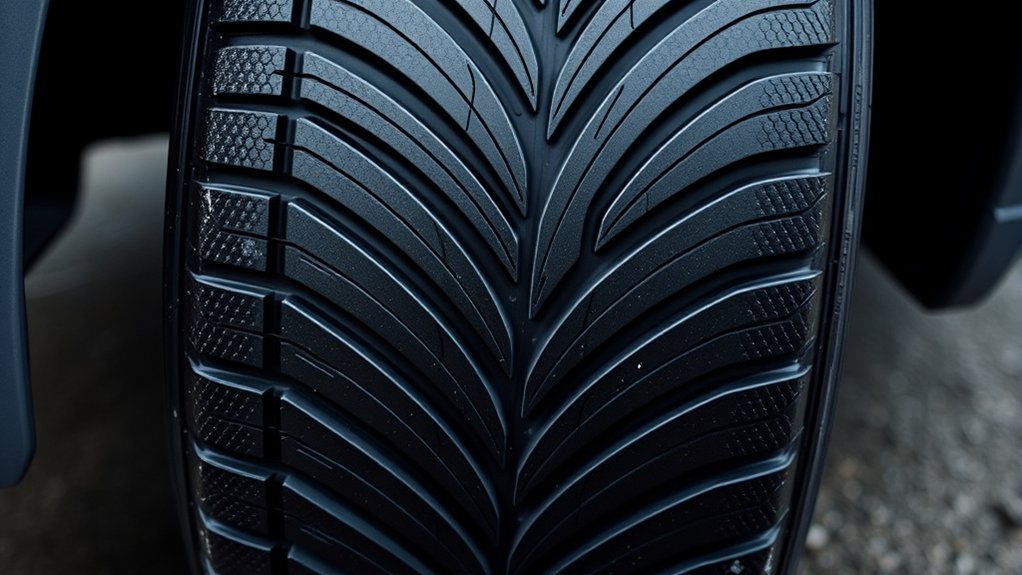
When you think about tire performance, directional tires stand out due to their unique design and purpose. Their V-shaped tread pattern enhances water evacuation, ensuring better grip on wet surfaces. This design features lateral voids and channels that effectively direct water away from the tire’s contact patch, greatly reducing the risk of hydroplaning.
To maximize their performance, it’s essential to install directional tires with the tread pattern facing the correct direction, indicated by arrows or triangles on the sidewall. Unlike symmetrical or asymmetrical tires, directional tires can only be rotated front to back on the same side, which means you need to manage their rotation carefully to avoid uneven wear. Typically found on high-performance vehicles, these tires are engineered to enhance handling and stability, especially in challenging conditions. In your Hyundai Sonata, they provide the confidence you need for a thrilling drive, rain or shine.
How Directional Tires Boost Hyundai Sonata Performance
Directional tires can greatly enhance your Hyundai Sonata’s performance, especially in wet conditions. Their V-shaped tread pattern boosts water evacuation, reducing hydroplaning risks while improving grip and cornering stability. This means you’ll enjoy a more responsive driving experience, whether maneuvering tight turns or cruising at higher speeds.
Enhanced Wet Performance
While driving in wet conditions can be intimidating, equipping your Hyundai Sonata with directional tires can greatly enhance your experience. These tires feature a V-shaped tread pattern that effectively channels water away, boosting wet traction and markedly improving hydroplaning prevention.
Here’s how directional tires elevate your driving in wet weather:
- Improved Handling: Their optimized design enhances stability during rainy conditions.
- Enhanced Grip: You’ll enjoy superior traction on slick roads compared to standard tires.
- Fuel Efficiency: Directional tires reduce rolling resistance without compromising performance.
Improved Cornering Stability
Cornering stability is essential for an exhilarating driving experience, and equipping your Hyundai Sonata with directional tires can greatly enhance this aspect. With a V-shaped tread pattern, these tires provide superior grip during high-speed maneuvers, making your cornering techniques more effective. You’ll notice improved tire responsiveness and confidence while maneuvering sharp turns.
| Feature | Benefit |
|---|---|
| V-shaped tread design | Enhanced grip in corners |
| Water evacuation | Reduced hydroplaning risk |
| Even pressure distribution | Consistent performance |
| Increased stability | Agile handling on winding roads |
How to Identify Directional Tires: Key Features and Markings
Identifying directional tires is vital for maintaining your Hyundai Sonata’s performance and safety. These tires feature unique tread patterns that resemble arrows, indicating the correct rotation direction. To spot them, look for specific tire markings on the sidewall.
Here are key features to help you identify directional tires:
- Tread Patterns: V-shaped grooves enhance water evacuation, boosting traction in wet conditions.
- Tire Markings: Arrows or triangles indicate the proper mounting orientation.
- Rotation Requirement: Unlike symmetrical tires, directional tires must be rotated front-to-back on the same side.
Incorrect installation can lead to faster wear and reduced performance, so understanding these features is important. By recognizing these key elements, you can guarantee your tires are mounted correctly, maximizing safety and efficiency on the road.
Installing Directional Tires for Best Performance
When you install directional tires on your Hyundai Sonata, be certain the sidewall arrows point forward for peak performance. Following proper rotation practices, like moving tires from front to rear on the same side, can help prevent uneven wear. Regularly checking for tread wear also guarantees your tires maintain their grip and safety on the road.
Proper Installation Techniques
Installing directional tires on your Hyundai Sonata is crucial for peak performance, and getting it right can make a significant difference in handling and safety. Follow these mounting guidelines to guarantee ideal tire alignment:
- Position the sidewall arrows: They should point in the direction of forward motion for proper installation.
- Face the tread pattern correctly: Typical V-shaped designs must face forward to enhance water evacuation and reduce hydroplaning risks.
- Rotate front to rear only: Avoid side-to-side rotation to maintain the tires’ designed performance characteristics.
Regularly check for uneven wear patterns, as improper alignment can decrease tire life. Consulting a professional tire technician can guarantee your directional tires are mounted correctly, maximizing performance and traction on your Sonata.
Rotation Best Practices
To keep your directional tires performing at their best, understanding rotation best practices is essential. Directional tires need to be mounted with tread pattern arrows pointing forward, guaranteeing ideal traction in your Hyundai Sonata. Unlike symmetrical tires, these can only be rotated front to rear on the same side, which limits your options. Regular tire rotation helps minimize uneven wear patterns, so check your tire pressure and tread depth frequently. If you notice uneven wear, consider remounting the tires to maintain their correct orientation. For the best results, professional installation is recommended to avoid any handling issues. By following these practices, you’ll enhance your tires’ lifespan and guarantee a smooth, safe ride.
Rotation Practices for Directional Tires on Your Sonata
Properly rotating directional tires on your Hyundai Sonata is crucial for maximizing performance and extending tire life. Unlike standard tires, directional ones should only be rotated from front to rear on the same side. This specific rotation method guarantees ideal tire alignment and prevents uneven wear.
Properly rotating directional tires on your Hyundai Sonata maximizes performance and extends tire life by ensuring ideal alignment and preventing uneven wear.
To maintain the integrity and performance of your tires, consider these practices:
- Rotate your tires every 5,000 to 7,500 miles for consistent wear.
- Check tire pressure regularly to avoid handling issues.
- Inspect tread wear frequently to guarantee safety and efficiency.
Comparing Directional Tires to Other Types: A Detailed Look

When you’re weighing your tire options for the Hyundai Sonata, it’s essential to understand how directional tires stack up against other types. Directional tires feature a V-shaped tread pattern, enhancing water evacuation and reducing hydroplaning risks. In wet conditions, they outperform symmetrical tires, which have a uniform design. However, they may not offer significant advantages in dry weather compared to well-constructed symmetrical or asymmetrical tires.
While directional tires excel in high-speed handling, their one-directional rotation limits flexibility, potentially leading to uneven wear if not managed properly. Unlike asymmetrical tires, which have different tread patterns for each side, directional tires focus solely on performance. Plus, they often come at a higher price due to specialized designs. So, if tire longevity and performance in varied conditions are priorities for you, weighing these factors will help you make an informed decision.
Maintaining Directional Tires for Longevity and Performance
Directional tires can offer impressive performance, but maintaining them is key to maximizing their longevity and effectiveness on your Hyundai Sonata. To keep your tires in prime shape, focus on these essential tire maintenance tips:
- Proper Installation: Confirm the tread pattern’s arrows on the sidewalls align correctly for peak traction.
- Regular Rotations: Rotate your tires from front to back on the same side to preserve their design and performance.
- Monitor Driving Habits: Avoid aggressive acceleration and hard cornering to extend tread life.
Additionally, keep an eye on inflation levels, check for uneven wear, and maintain accurate wheel alignment. Seasonal tire changes can also enhance performance, especially when switching to winter tires for better handling in wet or snowy conditions. By following these practices, you’ll enjoy a smoother ride and prolong the life of your directional tires.
Frequently Asked Questions
What Is the Purpose of Directional Tires?
Directional tires enhance tire performance by optimizing traction benefits on wet and dry surfaces. Their unique tread design efficiently channels water, reducing hydroplaning risk and improving handling, making your driving experience safer and more enjoyable.
How to Do Hyundai Tire Rotation?
Rotating your Hyundai’s tires is like giving them a dance; they need rhythm! Rotate every 5,000 to 7,500 miles for ideal tire maintenance. Always check pressure and tread depth to keep your ride smooth.
Conclusion
To sum up, directional tires can greatly enhance your Hyundai Sonata’s handling and performance, especially in wet conditions. Did you know that using the right tires can improve your vehicle’s traction by up to 30%? By understanding their design and maintenance needs, you can guarantee a safer and more enjoyable driving experience. So, next time you’re considering tire options, remember how directional tires can make a real difference on the road!

Related Articles

Hyundai Sonata TPMS Light On After New Tires? Here’s the Fix
If your Hyundai Sonata's TPMS light is on after new tires, it could indicate a simple fix—discover how to resolve it effectively.
Read More
Hyundai Sonata Tire Road Hazard Warranty: What Does It Cover?
Find out when Hyundai's Sonata tire warranty actually pays for punctures, blowouts, and pothole damage—and what extra coverage you might need.
Read More
Hyundai Sonata TPMS Sensor Malfunction: How to Diagnose & Fix
Step into the world of Hyundai Sonata TPMS sensor malfunctions and discover essential diagnostic tips—your solution awaits just beyond the next click.
Read More