Tire Section Width Meaning: First Number on Your Tire
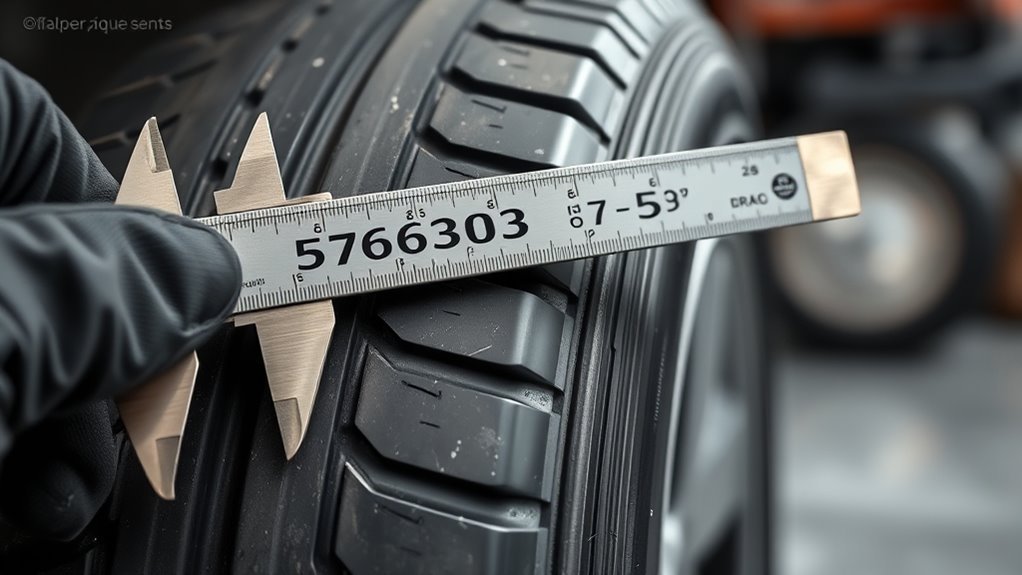
The first number on your tire is the section width, given in millimeters, and it’s the nominal distance between the sidewalls when the tire’s mounted and inflated. It guides wheel fitment, clearance, and handling: wider numbers usually mean more grip and rolling resistance, narrower numbers improve efficiency and snow traction. Actual tread width can vary with design and rim choice, so match section width to recommended wheel width and vehicle specs for safe, predictable performance—keep going to learn specific fitment and trade-offs.
Who This Guide Is For and How to Use It

If you’re a vehicle owner or enthusiast who needs to interpret tire sizes, this guide focuses on the section width—the first number in a tire code measured in millimeters—which tells you the distance between sidewalls when the tire is mounted and inflated. You’ll use this guide to match section width to vehicle requirements, ensuring wheel fitment, handling, and clearance remain within design limits. You’ll assess how wider section widths increase grip and traction for performance or off-road use, and how narrower widths may suit efficiency or clearance-constrained applications. Apply data-driven comparison: check manufacturer recommendations, wheel width compatibility, and fitment tolerances before changing sizes. Consider tire inflation’s role in maintaining intended section width and monitor pressures to preserve handling characteristics. Evaluate tread patterns alongside section width to confirm intended use—wet traction, mud evacuation, or low rolling resistance. Use this guide to make empowered, liberating choices that align safety, performance, and vehicle architecture without guesswork.
What the Section Width Number Measures (mm)
Section width is the three-digit millimeter measurement stamped on a tire (for example, 225) that denotes the distance from one sidewall to the other when the tire is mounted and inflated on its recommended rim; you use that number to choose rims and predict fit. The section width number (mm) quantifies a tire’s nominal lateral size and informs compatibility, load distribution, and the section width benefits you’ll get: wider nominal widths often deliver increased contact potential, improved grip, and enhanced stability, which can boost tire performance in traction and cornering. You should treat the number as a standardized specification for selection rather than an absolute tread measurement.
| Spec | Meaning | Effect |
|---|---|---|
| 225 mm | Sidewall-to-sidewall nominal width | Good balance of grip and efficiency |
| 245 mm | Wider nominal width | Higher potential grip, altered handling |
| 205 mm | Narrower nominal width | Lower rolling resistance, less grip |
Select section width deliberately to preserve safety, compatibility, and the liberation of confident driving.
Why the Sidewall Number and Actual Tread Width Can Differ
Because the stamped section width measures sidewall-to-sidewall on a mounted, inflated tire, it doesn’t always equal the tread’s contact width on the road. You should know the first number is a nominal sidewall measurement; actual tread width varies because manufacturers engineer tire shape to meet performance and packaging targets. Tire design variations — bead profile, carcass construction, and sidewall stiffness — change how a tire inflates and flattens, shifting tread contact relative to the stamped value. Tread pattern influence also matters: deep grooves, asymmetric blocks, and aggressive siping alter edge usage and effective contact area, so two tires both labeled 225 mm can yield different contact widths. Manufacturing tolerances add further deviation. You can’t assume stamped width equals grip footprint; inspect technical data and tests for true contact dimensions. Embrace this knowledge to choose tires that free your driving from misleading numbers and align design intent with real-world performance.
How Section Width Affects Grip, Fuel Economy, and Comfort

When you choose section width, you directly change grip and traction because a wider tread increases contact area and improves dry and wet adhesion. That wider footprint also raises rolling resistance, which can reduce fuel economy as the engine works harder to overcome it. Finally, wider tires often have stiffer sidewalls, so you’ll usually trade a bit of ride comfort for handling stability unless you find an ideal compromise for everyday driving.
Grip And Traction
Tire width directly alters how your car grips the road: wider sections increase the contact patch and improve dry and wet traction, but they also raise rolling resistance which can lower fuel economy and make the ride feel firmer. You’ll notice sharper responses and greater lateral stability as tire performance improves, and traction control systems work more effectively with larger contact areas. Balance is essential to retain handling predictability and avoid excessive scrub or tramlining.
- Wider section width increases contact patch, improving dry grip and cornering.
- Enhanced water dispersion reduces hydroplaning risk and boosts wet traction.
- Traction control benefits from better sensor feedback and consistent slip thresholds.
- Excessive width can induce handling quirks and stress suspension components.
- Match width to vehicle specs to preserve predictable, liberating control.
Fuel Economy And Comfort
Although wider section widths boost dry grip and lateral stability by increasing the contact patch, they also raise rolling resistance and often transmit more road harshness because reduced sidewall flex absorbs less energy. You’ll gain handling and traction, but expect higher fuel consumption; wider tires increase drag and penalize efficiency unless you offset with optimized tread patterns and proper tire pressure. Narrower sections lower rolling resistance and usually improve city fuel economy, while offering a softer ride via greater sidewall compliance. Choose width to balance performance, economy, and comfort; adjust tire pressure to tune rolling resistance without sacrificing safety. Liberation lies in informed choice: prioritize what frees your driving—efficiency, comfort, or cornering prowess.
| Aspect | Effect |
|---|---|
| Grip | Improves with width |
| Fuel Economy | Falls as width grows |
| Comfort | Decreases with wider tires |
| Tuning | Tire pressure, tread patterns |
Convert Section Width to Sidewall Height and Overall Diameter
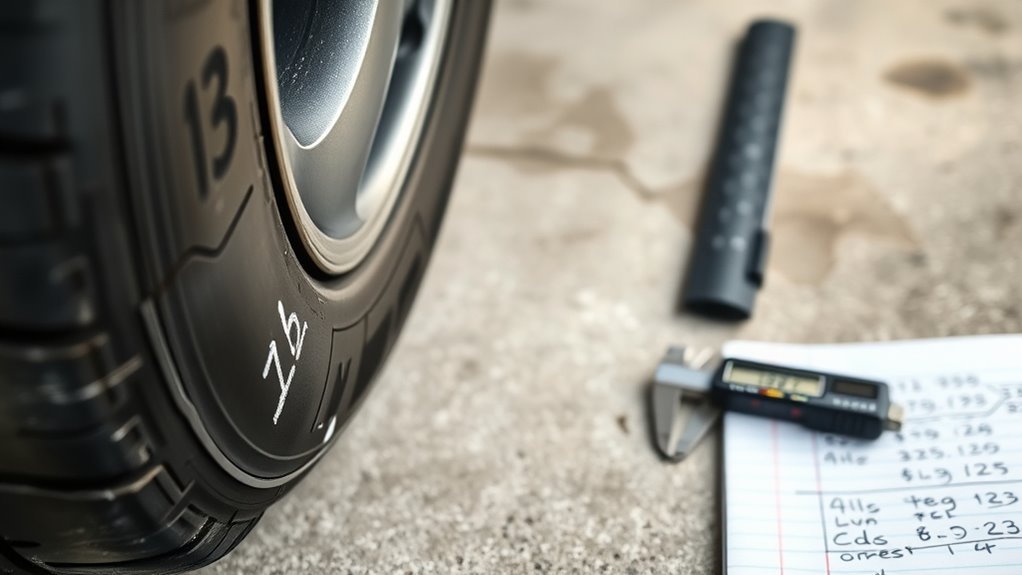
Because the section width (the first tire number in millimeters) directly defines the tire’s cross-sectional width, you can compute sidewall height by multiplying that width by the aspect ratio (expressed as a decimal), and then find overall diameter by adding twice the sidewall height to the wheel diameter (converted to millimeters). You’ll apply straightforward sidewall calculations: e.g., 225 mm × 0.60 = 135 mm sidewall. Add 2 × 135 mm to a 16″ wheel (406.4 mm) to get 676.4 mm overall diameter.
- Use section width and aspect ratio to derive sidewall height precisely.
- Convert wheel inches to millimeters (1″ = 25.4 mm) for consistent units.
- Double the sidewall height and add wheel diameter to get overall diameter.
- Compare diameters to assess diameter implications for speedometer and fitment.
- Record calculations to preserve accuracy when selecting or replacing tires.
You’ll gain freedom through exact measurements, ensuring correct fitment, predictable handling, and clarity about how width changes affect performance and instrumentation.
Choosing the Right Section Width for Your Vehicle and Driving Style
Having measured sidewall height and overall diameter, you can now pick a section width that matches your vehicle and driving goals. You’ll balance tire performance, driving conditions, and vehicle constraints. Use wider widths (e.g., 255 mm) for greater pavement grip and lateral stability; expect firmer ride characteristics. Choose narrower widths (e.g., 195 mm) for snow and ice to slice through slush and improve traction; expect more cushioning. Always verify rim compatibility and suspension clearance to avoid interference. If your vehicle has modifications, confirm offset and fender requirements before selecting a wider tire.
| Scenario | Recommendation |
|---|---|
| Performance street | 235–255 mm for grip and stability |
| Winter/snow | 185–205 mm for traction in ice |
| Comfort-focused | Narrower widths for softer ride |
| Mixed use | Mid-range width for balance |
Prioritize your liberation: select widths that free you to drive confidently in your typical driving conditions while respecting vehicle specs.
Fitment Changes and Modifications When You Change Width
When you change tire section width, expect fitment consequences that often require offset adjustments, wheel or fender clearance mods, and suspension evaluation. You’ll need to plan fitment adjustments deliberately so the wider contact patch doesn’t induce rubbing, steering pull, or altered scrub radius.
- Verify wheel offsets to maintain correct track width and steering geometry.
- Assess fender clearance; roll or trim as needed to avoid tire-to-body contact.
- Check rim diameter and backspacing; wider tires may need different wheels.
- Recalibrate speedometer if overall tire diameter changes enough to skew readings.
- Inspect suspension components; upgraded springs, control arms, or alignment may be required.
Wider tires can improve grip and stability but increase noise and fuel consumption; you must weigh gains against trade-offs. Use precise measurements: tire width, rim width, offset, and suspension limits. Make incremental changes, document specifications, and pursue liberation through informed, technically sound modifications.
Common Mistakes and Safety Risks of Mixing Section Widths
If you mix tire section widths across an axle or between front and rear, you’ll introduce uneven contact patches and circumferential differences that compromise grip, steering response, and braking balance. You’ll see uneven wear rates, altered alignment loads, and increased stopping distances; these effects degrade predictable handling and can negate electronic stability systems. A wider tire on one side shifts lateral load transfer, producing torque imbalances under cornering and in wet or icy conditions, raising crash risk.
You should avoid ad hoc swaps and follow manufacturer guidance to maintain warranty and safety system integrity. During tire maintenance tips and regular safety inspections, measure tread depths, check pressures, and verify circumference consistency. If you detect mismatched widths, replace or reconfigure tires to restore symmetry rather than compensating with pressure adjustments alone. Prioritize matched-section widths to preserve steering precision, braking efficiency, and the liberation that comes from trusting your vehicle’s dynamics.
Quick Reference: Matching Section Width to Wheel Width and OEM Specs
Fit matters: match a tire’s section width to an appropriate wheel width—generally 70–90% of the labeled section width—to preserve contact patch shape, sidewall profile, and handling precision. You’ll use the section width (the first number, in mm) to calculate compatible wheel widths; this maintains wheel compatibility and predictable tire performance. Follow OEM specs when present; they reflect engineered compromises for safety and dynamics.
- Verify the labeled section width (e.g., 225) and compute wheel width range (70–90% → ~157–203 mm equivalent).
- Cross-check OEM recommended sizes to confirm factory-approved wheel compatibility.
- Measure actual tread width for real-world tire performance data, since section width is sidewall-to-sidewall.
- Remember wider section widths increase grip but may need bodywork changes to prevent rubbing.
- Prioritize matched sets and approved wheel/tire combos to preserve handling and legal compliance.
You’ll gain freedom to modify safely when you respect these constraints: precise sizing empowers reliable performance and liberation from guesswork.
Frequently Asked Questions
Is 285 the Width of a Tire?
Yes—you’re looking at section width: 285 mm denotes tire measurements across the tread. You’ll gain performance impact like improved dry grip and stability, but you’ll need to verify fitment and trade-offs for snow or mud.
What’s a Section Width on a Tire?
The section width is the tire’s nominal width in millimeters measured across the sidewalls; you’ll use it in tire specifications to guarantee rim fitment, and you’ll see its performance impact on traction, handling, and vehicle stability.
Which Tire Is Wider, 50 or 45?
The 50 isn’t wider; you’ll find tire width stays the same while aspect ratio changes. A 225/50 and 225/45 share tire width, but 50 has taller sidewalls, affecting ride comfort and handling responsiveness.
Conclusion
You’ve learned that the first tire number maps the tread’s crosswise span in millimeters — a precise measurement that governs fit, handling, and ride. Picture a blueprint: change that width and the vehicle’s balance, fuel burn, and clearance shift like engineered parts on an assembly line. Use OEM specs and wheel-width charts as your ruler; when you deviate, anticipate altered grip, rolling diameter, and potential safety trade-offs. Choose deliberately.