
Tire Sealant vs Patch: When to Use Each Repair Method
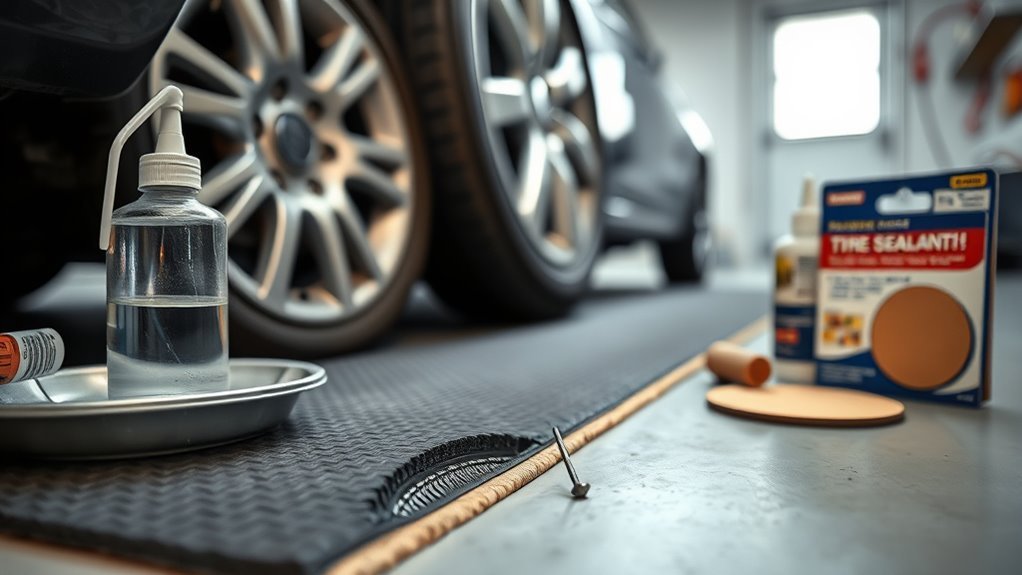
Use a sealant for immediate, temporary fixes to small tread punctures under 1/4″—it gets you moving fast but isn’t a long-term fix and can fail in extreme conditions. Choose a professional internal patch (or plug-patch) for larger holes, internal cord damage, or any shoulder/sidewall issues to restore structural integrity. Replace tires for cuts, bulges, or punctures over 1/4″. Keep going and you’ll find practical guidance on evaluating damage, costs, and safety trade-offs.
Quick Verdict: Sealant or Patch-Which to Use Now?
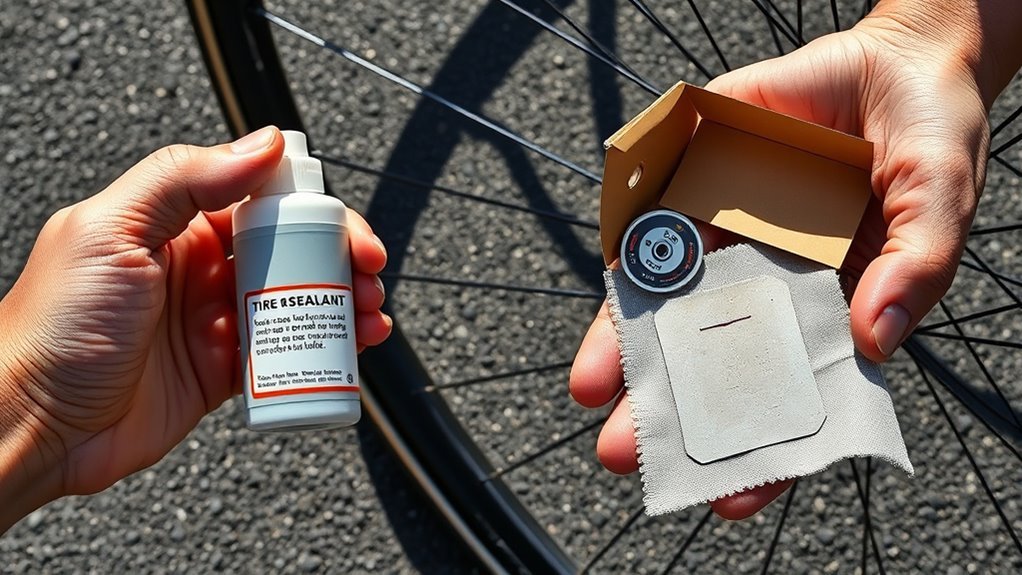
Which should you use right now: a sealant for a quick fix or a patch for a lasting repair? You’ll grab a sealant when you need immediate mobility: it’s quick to apply, doesn’t require tire removal, and delivers sealant benefits that stop small leaks on the road. Use it for punctures under 1/4 inch so you can continue your trip and reach a shop.
Don’t confuse temporary freedom with permanence. You’ll choose a patch when you want durability and safety; it’s installed from the inside, bonds structural rubber, and outperforms sealants for long-term integrity. Recognize patch limitations too: it needs tire removal and professional fitting, so you won’t get instant movement.
Practical workflow: use sealant to escape danger, then seek a professional to assess internal damage and apply a patch if needed. That sequence balances immediate liberation with lasting repair.
How Puncture Type & Location Decide the Fix
You’ve used a sealant to get moving or planned a patch for permanence; now decide based on where and how big the hole is. Conduct a rapid puncture assessment: measure diameter and note location (tread center, shoulder, sidewall). If the hole is under ¼ inch in the tread, sealant offers a quick, noninvasive stop that can handle multiple small leaks and buy time without tire removal. For larger punctures or visible internal damage, sealant won’t suffice and you’ll need either a patch or replacement.
Choose a patch when damage exceeds sealant capability but remains in the tread or shoulder and internal structure is intact; patches bond inside to restore repair longevity. Avoid patching sidewall damage—the flex and thin construction prevent a reliable repair, so replace the tire. If punctures exceed ¼ inch or show internal cord exposure, replace the tire outright; neither sealant nor patch can guarantee safety or lasting performance.
How Tire Sealants Work: and When to Use Them
When a small puncture lets air escape, a tire sealant lets you keep driving by spraying a liquid inside the tire that flows to the leak, reacts to air, and solidifies to plug holes typically smaller than 1/4 inch in the tread. You’ll use sealant application as a rapid, roadside response: inject through the valve or pour via a canister, rotate the tire so the compound reaches the breach, then reinflate. This technique suits emergency use when removing the wheel isn’t feasible and you need mobility and autonomy.
Technically, sealants cure on contact with circulating air and particulate edges, forming a plug that restores pressure quickly. They don’t repair internal carcass damage or sidewall tears, so treat them as temporary interventions. After using sealant, you should still get a professional inspection and definitive repair or replacement. That preserves safety and guarantees your freedom to travel without recurring failures.
What a Professional Patch Involves
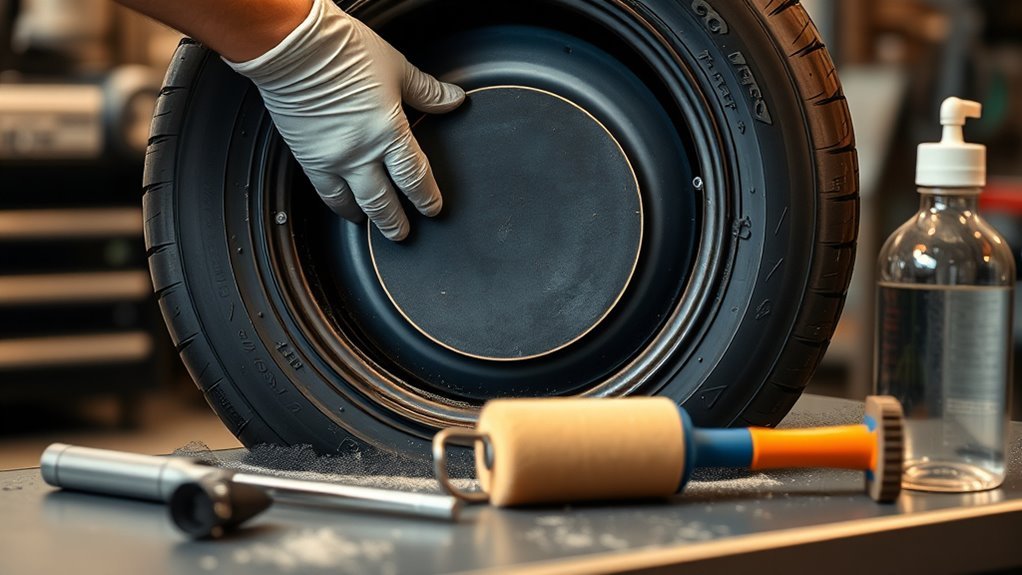
You’ll start by removing the tire from the rim and inspecting the carcass to locate and assess the puncture. Inside the tire you’ll clean and roughen the surrounding area to promote adhesion, then position a rubber patch and bond it with adhesive—often using heat or vulcanizing techniques for a permanent seal. Finally you’ll remount and inflate the tire to manufacturer specs and verify the repair under pressure.
Tire Removal And Inspection
Start by removing the tire from the rim so you can inspect the inner surface and prepare a reliable patch. You’ll perform a thorough tire inspection and damage assessment, looking for bulges, cracks, or structural failures that rule out patching. With the tire off, you’ll locate the puncture, confirm it’s within the repairable zone, and note any hidden damage that adhesive and patching can’t fix.
- Verify repairability: internal damage, sidewall exclusion, and puncture size
- Document condition: exact location, evidence of impact, and bead integrity
- Post-repair steps: adhesive application, patch placement, rebalance, and inflate to spec
You’ll only patch when inspection proves the tire safe for service, preserving mobility and autonomy.
Interior Surface Preparation
With the tire off the rim and the puncture located, prepare the interior surface to guarantee a lasting bond between patch and carcass. You’ll start with thorough surface cleaning: remove debris, cord fragments, and old sealant using a solvent and a stiff brush so the rubber is bare and consistent. Next, mechanically roughen the area with a rasp or sanding tool to increase surface energy and promote reliable adhesion. Apply the specified adhesive evenly to both the prepared carcass and the patch backing, following manufacturer dwell times and coverage rates. Use controlled pressure when seating the patch to eliminate air pockets. Finish with a focused inspection for contaminants, proper adhesive spread, and complete coverage before proceeding to patch application and vulcanization.
Patch Application And Vulcanization
Remove the tire from the rim so you can access the injury and position the patch precisely; after cleaning and roughening the area, apply the adhesive and seat the patch using steady, even pressure to expel air. You’ll use a vulcanizing agent to chemically bond the patch to the casing, then allow proper cure time. Professionals use tools and technique you shouldn’t improvise—this guarantees patch longevity and safe service.
- Surface prep: clean, roughen, inspect for hidden damage.
- Adhesion: apply vulcanizing adhesive, seat patch, remove trapped air.
- Cure and test: allow vulcanization to complete, verify seal and balance.
This process delivers vulcanization benefits: a permanent, reinforced bond that resists leaks and restores structural integrity.
Plug, Patch, or Both: Matching Fixes to Roadside Scenarios
When you hit a nail or find a slow leak, choose the repair that matches the damage: use a plug for small tread punctures (up to ¼ inch) when you need a quick, temporary drive to a shop; opt for a patch when you want a permanent, airtight fix applied from the inside; or request a plug-patch if you need the combined durability of both methods—never rely on sealant for anything beyond a short-term stopgap, and consult a professional for sidewall damage or multiple punctures.
Assess puncture types first: straight, isolated tread holes suit plugs; punctures that breach deeper layers demand internal patches; angled or ragged holes benefit most from plug-patch repair. For roadside situations, use a plug to regain mobility and reach a facility; avoid improvising patches outside a shop. At the shop, technicians will select repair methods based on damage location, size, and tire construction. You’ll gain safety and independence by knowing when a quick plug is acceptable and when a patch or plug-patch is mandatory for a lasting, roadworthy fix.
Sealant vs. Patch: Cost, Time, and Safety Trade-Offs
You’ll usually spend less and get back on the road faster with a DIY sealant — kits run about $10–$20 and take only minutes to apply without removing the tire. Professional patches cost roughly $50 and demand dismounting and careful prep, but they restore an airtight, long-term repair that maintains tire integrity. Balance the short-term savings and speed of sealants against the superior safety and durability of patches for larger or critical punctures.
Cost And Time Tradeoffs
Although sealants cost far less and can be applied in minutes, they’re a temporary fix best for small punctures, while professional patches—though pricier and requiring wheel removal—provide a permanent, durable repair and clearer safety assurance. You’ll weigh immediate cost and time savings against long-term reliability: sealant effectiveness gives quick mobility and low upfront expense ($10–$20 DIY), whereas patch longevity justifies higher labor and parts ($25–$75) and longer downtime.
- Quick response: sealants restore driveability in minutes, ideal for on-the-spot freedom.
- Durable outcome: patches take longer (hour+), but restore full structural integrity and long-term use.
- Practical rule: use sealant for emergency, patch for permanent repair and minimized future service complexity.
Safety And Effectiveness
Because immediate mobility matters, sealants give you a fast, on-the-spot fix for small punctures (typically under 1/4 inch) without removing the tire, but they’re inherently temporary and can fail in extreme temperatures or with larger damage; professional patches, installed after tire removal, create a durable, long-term seal that better prevents future leaks and preserves tire integrity, though they cost more and take longer. You’ll choose sealant to regain freedom quickly; expect limited repair longevity and to follow up. Choose a patch to meet safety standards and extend tire life. Practical comparison:
| Method | Speed | Durability |
|---|---|---|
| Sealant | Immediate | Short-term |
| Patch | Hours | Long-term |
| Outcome | Mobility now | Safety assured |
When to Skip Repair and Replace the Tire
When a puncture exceeds 0.25 inches, is on the sidewall or shoulder, appears as a crack, bulge, or blister, or when there are multiple nearby punctures, you should replace the tire rather than attempt a repair; these conditions compromise the tire’s internal structure and exceed safe repair limits. You want freedom on the road, not a compromised tire. Prioritize tire lifespan and respect documented repair limits to avoid catastrophic failure. If any of the listed signs appear, replace the tire promptly.
- Sidewall/shoulder damage, cracks, bulges — nonrepairable structural failure
- Punctures >0.25″ or clustered punctures — exceed repair limits, replace
- Flat-driven internal collapse or visible blisters — irreversible damage, replace
Replacing preserves vehicle control, prevents progressive failure, and maintains your autonomy. Repairs suit limited, center-tread punctures within repair limits; everything else calls for replacement to keep you safe and liberated.
Frequently Asked Questions
What Are the Cons of Using Tire Sealant?
You’ll face limited sealant effectiveness: temporary fixes, poor performance in cold, clogged TPMS, and obstructed future repairs; it won’t fix internal damage and sacrifices long term durability, risking safety and forcing eventual professional replacement.
Why Can’t You Patch a Tire Twice?
Sure—because patching twice magically improves tire integrity, right? You can’t: repeated patches hit repair limitations, weaken the carcass, create uneven surfaces, risk leaks or blowouts, and can void safety, legal, and insurance protections.
Can You Patch a Tire After Using Sealant?
Yes—you can patch after sealant, but you’ll need to remove sealant to restore sealant effectiveness and enable proper patching techniques; you’ll want professional tools and careful inspection so you’re not held back by hidden damage.
Conclusion
When you spot a nail in the tread, don’t guess—decide. Sealant is the quick bandage: imagine a squirrel stuffing leaves into a hole—fast, temporary, good for small tread punctures and emergency fixes. A professional patch is the surgeon’s stitch—clean, permanent, and required for sidewall damage or large holes. Match method to location and severity, factor time and cost, and replace the tire when integrity is compromised; safety always comes first.
Related Articles

When to Replace Tubeless Sealant: Timing & Signs
Be warned: tubeless sealant can fail in weeks or months—learn the signs, testing tips, and exact replacement timing to avoid flats.
Read More
The Penny Test for Tread Depth: How to Do It Right
Better learn the penny test correctly—discover when Lincoln’s head reveals dangerous tread wear and what to do next.
Read More
Tire Rotation Schedule: How Often & Why It Matters
Optimizing tire life? Discover why rotating every 5,000–8,000 miles matters for safety and savings—read on to learn exact patterns and tips.
Read More