
Tire Rubbing on Frame or Fender: Causes & Easy Fixes
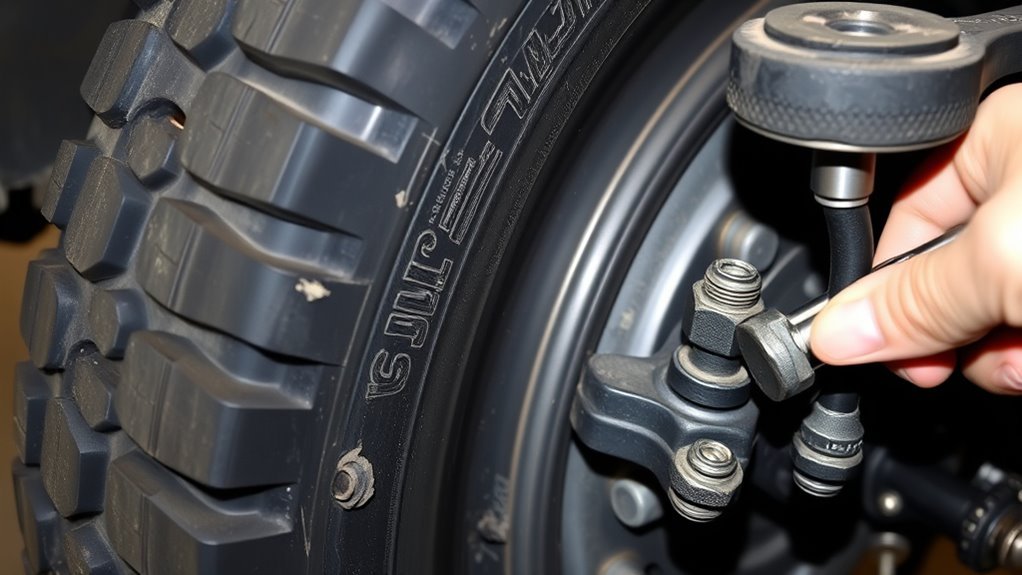
If your tire’s rubbing the fender or frame, check clearance (1.5–2″ is critical), tire pressure, and spin the wheel to spot contact. Inspect control arms, mounts, ball joints, and the spindle for bends, play, or stretched bolt holes. Fixes include correcting alignment, restoring ride height, fitting small spacers, or reverting to factory tire size. Significant misalignment or structural damage needs straightening or replacement. Continue below to find step‑by‑step checks and repair options.
Quick Checklist: Find Where Your Tire Is Rubbing
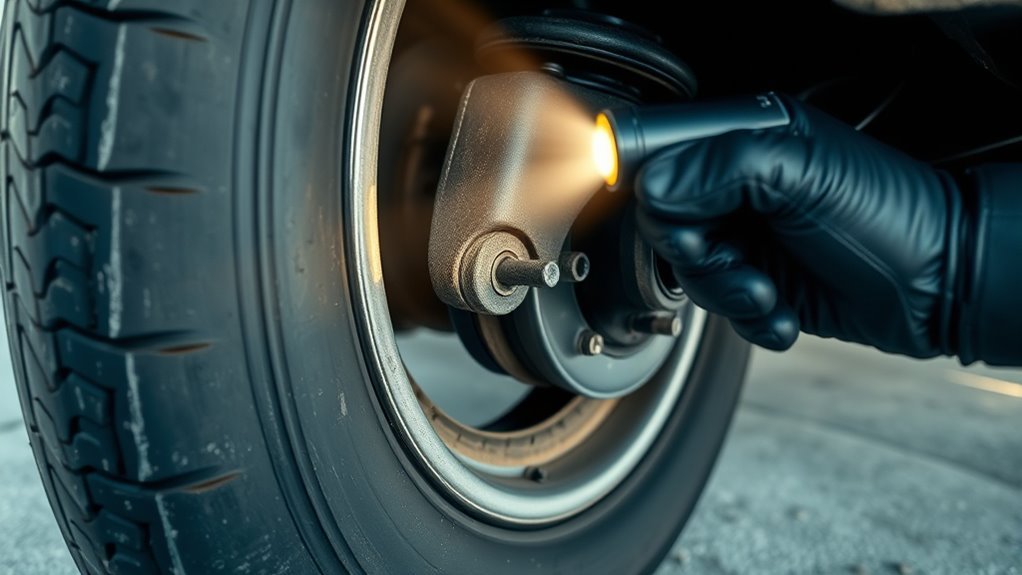
When you’ve got a tire rubbing, start by measuring the gap between the tire and fender—1.5–2 inches is the critical range where rubbing often appears at full compression—then work methodically around the wheel. First, note tire pressure and set it to spec; a soft tire lets the sidewall bulge and narrows clearances. Spin the wheel slowly and watch for contact points on the fender liner, lip, or frame. Use the opposite wheel as a reference to spot asymmetry in tire position. Check for visible frame movement or bends that shift the tire inward during travel. Inspect sway bar end links for improper orientation; a misaligned link alters roll geometry and can create intermittent rub. Measure wheel offset to confirm the wheel isn’t sitting too far out or in; incorrect offset changes track width and clearance. Record each finding, prioritize obvious obstructions, and plan the next repairs with focused, liberated intent.
Inspect Suspension Mounts, Control Arms, Ball Joints, and Spindle
After you’ve tracked down obvious contact points and checked wheel offset, inspect suspension mounts, control arms, ball joints, and the spindle for signs of damage or misalignment that can pull the wheel inward or outward. Start by comparing the suspected side to a reference wheel on the opposite side: match control arm angles, mount positions, and sway bar end link orientation. Look for bent upper or lower control arm mounts; any bend shifts suspension geometry and reduces clearance.
Check ball joints for play, torn boots, or missing fasteners—ball joint maintenance isn’t optional because a compromised joint alters camber and toe under load. Inspect the spindle, especially bolt holes, for elongation or cracking; even slight stretching changes pivot points and wheel stance. If sway bar links sit at different angles between sides, treat that as a clue to underlying control arm misalignment. Record discrepancies before you replace parts so you can restore liberated, predictable suspension behavior without guesswork.
DIY Fixes for Tire Rubbing: Alignment, Clearance, and Tire Swaps
Start by confirming whether the rubbing is alignment-, clearance-, or size-related so you can pick the simplest fix: check control arm angles and toe/camber settings, verify tire diameter and width against manufacturer specs, and measure suspension ride height and wheel offset. If alignment is the cause, correct control arm geometry and set toe/camber to spec; that’ll stop edge wear and restore predictable handling. For clearance issues, raise ride height via suspension adjustments—replace sagging springs or revalve shocks—or fit small wheel spacers to shift the tire outward. When size causes interference, revert to factory tire sizing or choose a narrower diameter and width that maintains safe load and speed ratings. After any change, inspect suspension components and tire edges for wear, then road-test carefully. These fixes keep you independent: precise, reversible, and focused on fitment and function rather than concessions to compromise.
Signs It’s Structural Damage (Subframe, Control Arm, Spindle)
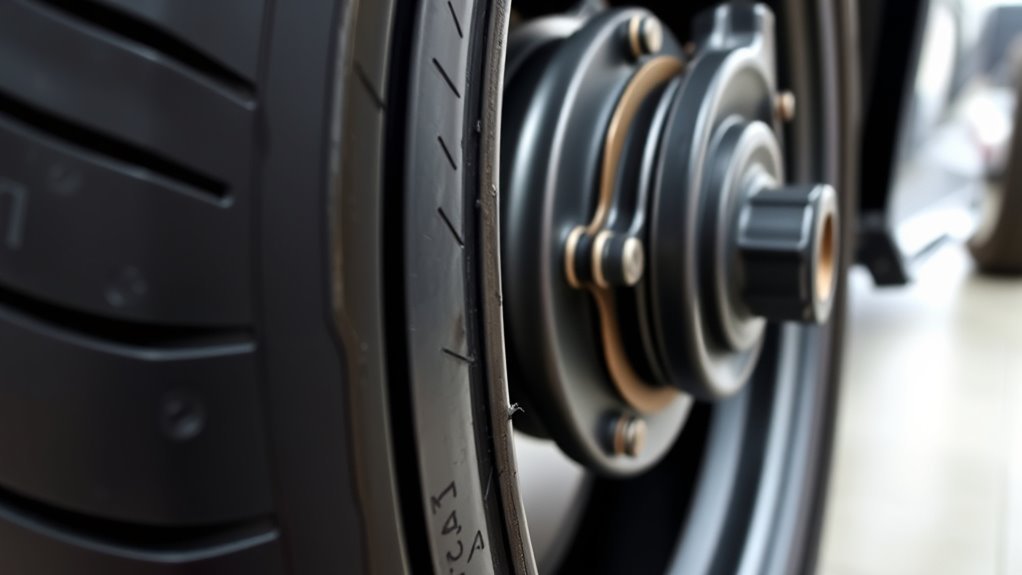
If alignment checks, clearance measurements, and tire swaps haven’t stopped rubbing, inspect for structural damage to the subframe, control arms, and spindle—these parts set the baseline geometry and won’t be corrected by simple adjustments. You want clear signs: pronounced control arm misalignment that shifts camber, toe, or caster and produces rapid, uneven tire wear or direct contact with fenders or frame. Check for bent upper ball joint bolts, stretched spindle bolt holes, or elongated control arm mount holes—each indicates past impact and degraded spindle integrity that alters wheel placement. Look for a bent upper control arm bracket or a skewed engine cradle; both warp suspension geometry and reduce clearance. Measure against factory dimensions where possible; any repeatable offset beyond spec is structural. If you find these defects, temporary tweaks won’t liberate your ride—restoring correct geometry requires straightening or replacing subframe components, control arms, or the spindle to prevent recurring rubbing and guarantee safe handling.
When to See a Pro : Cost, Safety, and Red Flags
When minor tweaks and alignment checks don’t stop your tire from rubbing the frame or fender, get a professional to avoid escalating damage and safety risks. You’ll want a professional assessment if you see uneven tire wear, a tipped-wheel look, stretched bolt holes, bent control arms, or frame/suspension damage that small shops can’t handle. Listen for red flags: unusual noises in turns, steering vibrations, or a persistent pull to one side—these require immediate evaluation.
Expect repair costs to vary widely: simple suspension fixes and alignments stay modest, but frame straightening or replaced control arms can exceed $1,000 depending on labor and parts. Bring clear photos and describe symptoms to speed diagnosis and avoid unnecessary work. A qualified shop will use proper tools, measure suspension geometry, and advise whether repair, replacement, or safe drivable limits apply. Don’t gamble with structural issues—get expert help and regain control.
Frequently Asked Questions
Can Winter Tires Increase Rubbing Compared to Summer Tires?
Yes—you’ll often see more rubbing with winter tire tread because deeper blocks and wider grooves change contact shape; tire size impact matters too, so choose proper width and diameter to avoid frame or fender interference.
Will Lowering My Car Always Cause Tire Rubbing?
No — lowering doesn’t always cause rubbing; ironically, you’ll sometimes “kiss” the pavement. You’ll need suspension adjustments, consider wheel spacers, check tire width and ride height, and tune components to liberate fitment and handling.
Are Aftermarket Wheels More Likely to Rub Than OEM Wheels?
Yes — aftermarket wheels can rub more often. You’ll need to check wheel offset and tire width since aggressive offsets or wider tires push contact patches outward, increasing fender/frame interference risk; choose correct specs to stay free.
Can Tire Rubbing Damage My Alignment Over Time?
Yes — if you ignore it, tire rubbing can gradually alter alignment. Like a stubborn whisper wearing away stone, uneven tire wear and repeated contact force suspension adjustments, so you’ll want prompt inspection and corrective action for freedom on the road.
Is It Safe to Drive a Short Distance With Minor Rubbing?
Yes—you can drive a short distance with minor rubbing if you monitor rubbing indicators and use temporary solutions like padding or adjustable fender tweaks; stay cautious, minimize speed, and prioritize fixing the root cause for lasting freedom.
Conclusion
You’ve walked through the quick checks, inspected mounts, arms, ball joints and spindles, and learned simple DIY fixes like alignment, clearance adjustments, and tire swaps. If you’ve spotted bent subframes or cracked control arms, don’t gamble—those are structural and need a pro. Want to avoid getting stranded or making things worse? Prioritize safety: fix what you can accurately, and pay for expert repair when damage or complexity exceeds your tools or confidence.
Related Articles
When to Replace Tubeless Sealant: Timing & Signs
Be warned: tubeless sealant can fail in weeks or months—learn the signs, testing tips, and exact replacement timing to avoid flats.
Read More
The Penny Test for Tread Depth: How to Do It Right
Better learn the penny test correctly—discover when Lincoln’s head reveals dangerous tread wear and what to do next.
Read More
Tire Rotation Schedule: How Often & Why It Matters
Optimizing tire life? Discover why rotating every 5,000–8,000 miles matters for safety and savings—read on to learn exact patterns and tips.
Read More