Tire Rubber Compound Types: Soft, Medium & Hard Explained
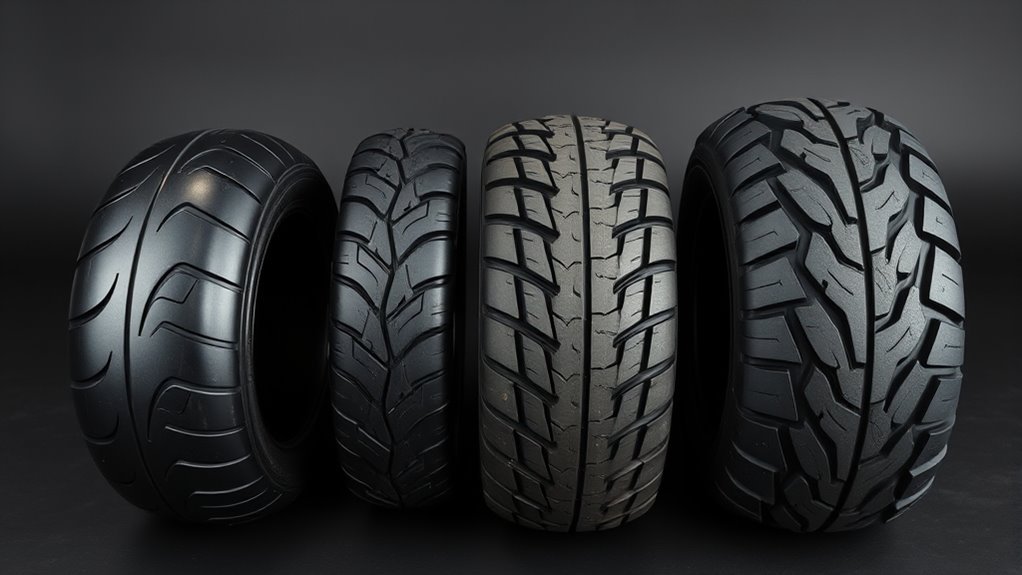
You pick a tire compound to trade grip, heat tolerance, and wear for your specific mission. Soft rubbers give peak mechanical adhesion and lower-temperature grip but wear fast; mediums balance predictable grip, longer stints, and thermal stability; hards sacrifice peak adhesion for durability and high-heat resilience. Match compounds to track, street, or off-road demands, adjust pressures and maintenance for temperature-driven hysteresis, and keep strategy in mind—more details follow if you want deeper guidance.
What a Tire Compound Is and Why It Matters
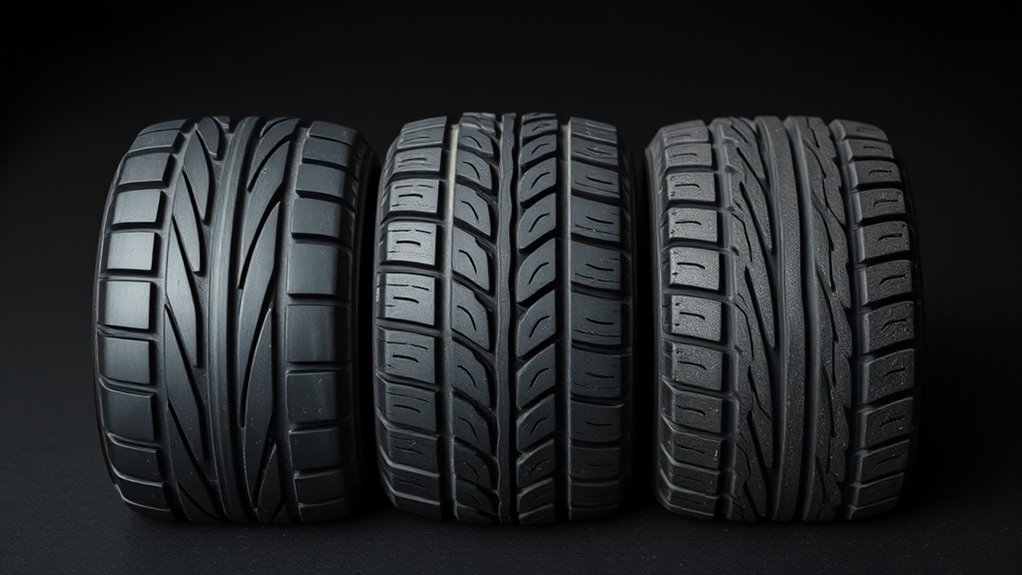
A tire compound is the engineered mix of natural and synthetic rubbers, fillers like silica and carbon black, and additives designed to deliver specific properties—grip, wear resistance, heat tolerance, and fuel efficiency—and it dictates how a tire responds across temperatures and driving conditions. You evaluate tire composition as a systems-level decision: polymer chains provide elasticity, fillers adjust stiffness and thermal dissipation, and additives tune hysteresis for rolling resistance. That composition produces measurable performance impact—traction coefficients, tread wear rates, and fuel consumption differentials under defined loads and temperatures. You’ll account for operating environment, balancing grip against longevity and efficiency; colder air increases modulus and reduces contact adaptability, while heat lowers modulus and raises wear propensity. Choosing a compound is an act of agency: you prioritize liberation from compromise, selecting a formulation that aligns with your mission—short-term maximum adhesion or long-haul durability and economy—based on quantified trade-offs rather than marketing rhetoric.
How Soft, Medium, and Hard Compounds Differ in Grip and Wear
Having established how compound chemistry governs trade-offs between grip, wear, and thermal behavior, we’ll next compare how soft, medium and hard formulations translate those trade-offs into on-track performance. You’ll see a clear grip comparison: soft compounds deliver peak mechanical adhesion and higher friction coefficients at lower temperatures, so you can push for faster cornering and shorter stopping distances. Medium compounds present intermediate adhesion, giving you predictable grip over extended stints. Hard compounds reduce surface deformation, lowering grip but preserving stability under high thermal loads.
In a concise wear analysis, soft tyres exhibit rapid carcass and tread degradation, forcing more frequent changes as lap times fall. Medium tyres balance abrasion resistance and contact patch conformity, extending useful life without extreme compromise. Hard tyres maximize tread longevity and resist thermal breakdown, so you’ll sacrifice ultimate lap performance for durability. Understanding these differential behaviors lets you assert control over performance and resource allocation without needless compromise.
Choose Compounds by Use Case: Track, Street, and Off‑Road
Because each driving environment stresses tyres differently, you should pick compounds that prioritize the required trade-offs: for track use, choose soft compounds to maximize grip and reduce lap times; if you need longer stints or warmer-condition resilience, select medium compounds that balance track performance with improved durability. On the street, prioritize medium or hard compounds—these resist wear and maintain predictable handling in daily use and hot climates, freeing you from frequent replacements and limiting performance degradation. For off‑road applications, favor hard compounds that emphasize off road durability and puncture resistance, accepting reduced grip for sustained reliability on rough terrain. You should assess mission profile: short, controlled circuits demand grip-focused rubber; extended road use requires longevity and thermal stability; rough trails need toughness over traction. Combine compound choice with your liberation goals—minimize constraints like downtime and maintenance, maximize autonomy—and select the compound whose mechanical trade-offs align precisely with your operational priorities.
How Temperature and Track Conditions Change Compound Performance
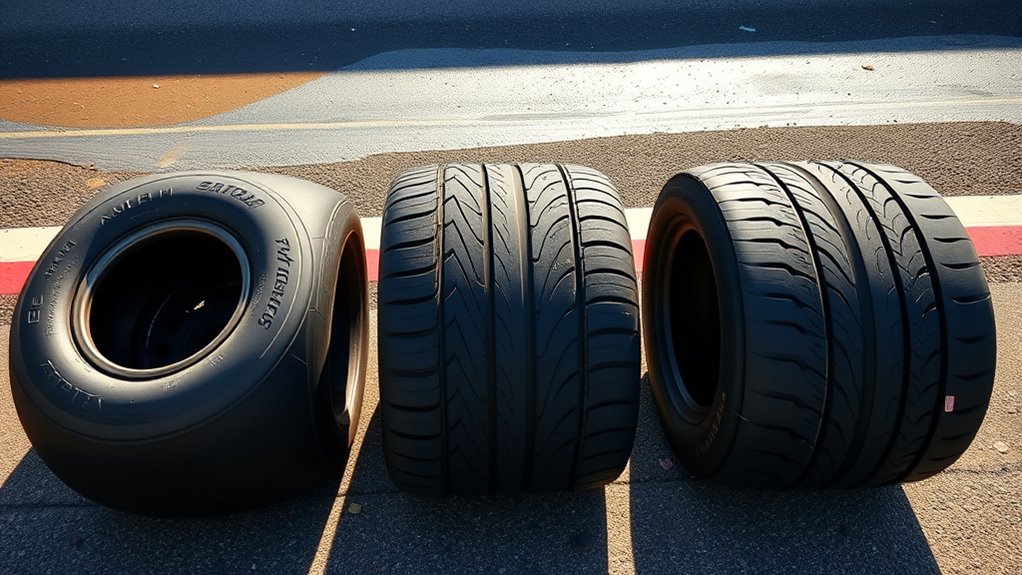
When track temperatures climb or fall, tyre compounds respond in predictable mechanical ways that you must anticipate: soft compounds deliver peak conformity and grip in cooler conditions but will soften further and wear quickly as heat builds, mediums retain a stable balance across a wider temperature band, and hards keep their structural integrity under high heat at the cost of peak adhesion. You’ll monitor temperature effects on rubber hysteresis, contact patch morphology, and micro-slip to decide when a softer carcass yields grip versus when it devolves into accelerated tread abrasion. On a cooling track surface, soft rubber sustains ideal adhesion and lower wear; on a heating track surface, you’ll prefer hards to preserve structure and stint length despite reduced adhesion. Mediums give you predictability across variable sessions, letting you pursue liberation from conservative pit calls. Quantifying degradation rates and lap-time deltas under differing temperatures and track surface conditions gives you the empirical basis to select compounds that align with your performance and endurance objectives.
How F1 Tire Rules Shape Racing Strategy (Racer’s Guide)
You must plan stints around the mandatory slick-compound rule, which forces use of at least two different dry compounds and thereby dictates pit-stop timing and stint length. With only 13 dry sets per weekend (2 hard, 3 medium, 8 soft), you’ll optimize allocation across practice, qualifying and race to balance outright pace against degradation. Because tyres can’t be shared between teammates, your strategy has to be individualized and data-driven using practice telemetry and Pirelli degradation curves.
Mandatory Slick Compound Rule
Although teams can chase outright lap time with the softest rubber, F1’s mandatory slick-compound rule forces you to plan a multi-compound race, requiring at least two different dry compounds to be used in a race and shaping every strategic decision from stint length to pit-stop timing. The mandatory compound requirement compels you to balance peak grip against longevity: soft for qualifying pace, harder for stint robustness. You’ll allocate sets across practice and race, mindful of the post-practice returns and the 13-set weekend limit, optimizing stint windows to exploit temperature and degradation curves. Regulations barring tyre sharing mean your tyre management is inherently individual, so strategic implications include tighter pit sequencing, split strategies within teams, and liberated risk-taking when degradation models indicate performance cliffs.
Tyre Allocation Limits
Because teams get just 13 dry sets—2 hards, 3 mediums and 8 softs—and must return two sets after practice, tyre allocation forces you to treat rubber as a constrained resource that dictates every session plan and race stint, from qualifying gambits to pit-stop sequencing. You’ll plan with surgical precision: conserve softs for qualifying, reserve hards for extended stints, and use mediums as bridge compounds. The two-compound race rule and non-transferable allocations between teammates amplify load-balancing pressures.
- Prioritise tyre allocation by session value: quali, long-run data, race-simulation.
- Model pit-stop windows and stint degradation to inform strategic planning under allocation limits.
- Keep contingency sets for weather shifts; intermediate/wet reserves protect freedom when conditions change.
Practical Tips to Pick the Right Compound and Common Mistakes
How should you match a tire compound to your climate and driving habits? You’ll balance tire maintenance and performance optimization by matching compound choice to typical temperatures and your aggression level. Medium compounds suit varied climates; soft works in cooler, low-abrasion environments but wears fast in heat. Don’t run soft tires daily in hot areas. Keep specified pressure to prevent under-inflation-driven degradation, especially in soft compounds.
| Scenario | Recommended Compound | Key Risk |
|---|---|---|
| Cooler commuter | Soft | Faster wear if aggressive |
| Mixed climate | Medium | Best balance |
| Hot daily use | Hard/medium | Reduced grip with hard |
| Performance track | Soft/medium | Rapid wear vs grip trade-off |
| Heavy abrasion roads | Hard | Lower grip, higher durability |
Avoid assuming maximum grip equals maximum safety; recognize trade-offs between grip and durability. Inspect pressures and wear patterns frequently. Choose compounds that free you from frequent replacements while preserving necessary grip for your liberated driving style.
Frequently Asked Questions
When to Use Soft, Medium, or Hard Tires?
Use soft for short, cool stints when peak grip wins; choose medium for balanced tire performance factors in varied driving conditions considerations; pick hard for hot, long races prioritizing durability and minimizing pit stops for strategic freedom.
What Is the Difference Between Hard and Soft Compound Tires?
Hard compounds give you greater durability and steadier tire performance with lower traction levels, while soft compounds deliver superior traction levels and faster lap times but wear quickly; you’ll choose based on race length, temperature, and strategy.
What Are the Different Types of Tire Compounds?
You get soft, medium, and hard compounds: soft maximizes tire performance with lower compound durability, medium balances grip and longevity for versatile performance, and hard sacrifices grip for superior compound durability and extended stint reliability.
Conclusion
You’ve learned how compounds trade grip for life, and you’ll choose them by use, temperature and track—often by the tiniest coincidence: a warm patch or a stray pebble that turns a safe stint into a strategic gamble. Trust data, not intuition; match compound hardness to load, heat range and surface. By measuring wear rates and lap-time deltas, you’ll make precise calls that protect pace and tires’ lifespan, turning small chance events into controlled advantage.
Related Articles

Staggered Tire Sizes Meaning: Why Front & Rear Differ
Better rear traction and bold styling come at handling and fitment trade-offs—discover why front and rear tire sizes differ and what to watch for.
Read More
Plus Sizing Tires Explained: Benefits, Risks & Rules
Maximize handling and style with plus sizing—discover the benefits, hidden risks, and essential fitment rules before you decide.
Read More
Tire Speed Rating Chart: Every Letter Decoded
On this Tire Speed Rating Chart: Every Letter Decoded, discover what each code means and why your next tire choice could change everything.
Read More