
Tire Bead Wire vs Aramid Fiber: Weight & Performance

You’ll pick aramid (folding) beads when you want lower rotational mass, quicker acceleration, and easier tubeless setup; they’re lighter, more compliant, and improve rolling resistance and comfort. Wire (steel) beads add weight and stiffness, blunt acceleration and climbing, and demand more effort for installation but cost less and withstand urban abuse. Choose aramid for performance and portability, wire for durability and value — keep going for specifics on tradeoffs, installation, and model choices.
Quick Comparison: Wire vs Aramid Beads (One‑Line Verdict)
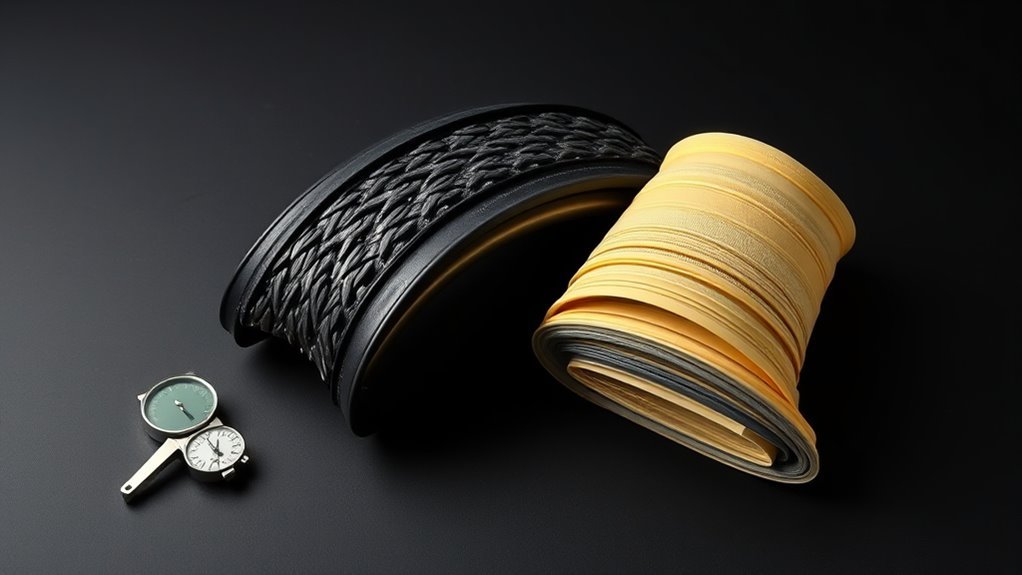
Verdict: choose wire beads if you want the most affordable, durable option; pick aramid (Kevlar) beads if you need lighter weight, foldability, and better rolling performance. You’ll assess bead durability against weight and practical needs: wire uses steel, giving robust, predictable longevity at lower cost, while aramid sacrifices some structural rigidity for about a 2‑ounce weight saving and foldability. For liberation-minded riders, that weight and packability translate into freedom to carry, transport, and race without being tethered to heavy gear. Analyze performance trade offs quantitatively: aramid’s lighter mass improves rolling resistance and traction, enhancing handling and efficiency on varied terrain; wire’s heavier construction maintains cost efficiency and straightforward maintenance. You’ll choose based on mission profile—commuting and economy favor wire; competitive or travel use favors aramid. Make the decision by prioritizing bead durability versus dynamic performance gains, not fashion or hype.
What the Bead Is and Why It Affects Weight & Performance
The bead is the reinforced edge that locks the tire onto the rim, and its construction—steel wire versus aramid fiber—directly determines mass distribution and stiffness. You’ll notice wire beads add measurable weight and rigidity, raising rotational inertia and slightly increasing rolling resistance. Aramid beads reduce weight and allow more compliant tire behavior, improving acceleration, packing compactness, and traction.
Bead Material Differences
Although it sits out of sight at the tire’s inner edge, the bead directly determines how a tire mates to the rim and thereby influences weight, handling, and installation effort. You’ll choose between wire and aramid based on trade-offs: rigidity and cost versus lightness and agility. Wire beads use steel for durable, inexpensive rims but reduce portability and limit bead flexibility, increasing torque transfer and robustness. Aramid fiber (Kevlar) beads cut mass, improve rolling behavior, and grant greater bead flexibility, which enhances installation ease and handling responsiveness.
- Wire bead: heavier, stiffer, durable, lower cost, resists deformation.
- Aramid bead: lightweight, foldable, better traction and nimble feel.
- Decision: prioritize durability and price or liberation via weight and performance.
Impact On Ride Weight
One key component that changes ride weight is the bead, the ring of material that locks the tire to the rim; its composition—steel wire versus aramid fiber—directly shifts mass, packing size, and performance trade-offs. You’ll notice wire beads add roughly 200 grams compared with aramid folding beads, altering weight distribution and rotational inertia. That extra mass reduces tire flexibility, increases rolling resistance, and blunts acceleration, so you sacrifice nimbleness for cost-effective durability. Aramid beads let you fold tires for smaller packed size and freer transport, enhancing performance where every gram matters. Choose based on intended use: prioritize lightweight aramid for competitive gains and liberated mobility, or select wire for rugged longevity and conservative ride stability when durability outweighs marginal speed benefits.
Wire (Steel) Bead: Construction, Weight, and Ride Effects
Because they use a rigid steel wire to seat the tire on the rim, wire-bead tires deliver predictable fit and stability for casual and urban riding, but that rigidity adds weight—typically 1.5–2 lb—and reduces compliance compared with folding designs. You get durable, budget-friendly construction: the steel bead anchors the tire to the rim, improving puncture resistance and long-term serviceability while making tire installation more demanding and often tool-dependent.
Rigid steel-bead tires offer reliable, budget-friendly stability for urban riding, at the cost of extra weight and less comfort.
- Construction: rigid steel wire forms a fixed bead; this limits flex and simplifies seating tolerances, so rims and tires mate reliably under load.
- Weight/performance: the added 1.5–2 lb increases rotational mass, subtly lowering acceleration and climbing efficiency; expect measurable but modest performance penalties.
- Ride effects: stiffness reduces energy loss to deformation but lowers ride comfort over rough surfaces; you trade compliance for durability and predictable handling.
If you seek freedom from frequent repairs and basic, honest performance, wire beads are a pragmatic, liberating choice.
Aramid (Kevlar) Bead: Construction, Weight, and Ride Effects
You’ll find aramid (Kevlar) beads use woven high-tensile fibers instead of steel, yielding a folding bead that’s typically about 2 ounces lighter than a wire equivalent. That weight saving and the fiber’s flexibility let the tire conform more readily to rim and terrain, improving handling and lowering rolling resistance. Because construction combines aramid with advanced rubber compounds, you’ll also notice enhanced traction, comfort, and puncture resilience in varied riding conditions.
Lightweight Folding Advantage
Although lighter construction isn’t just cosmetic, aramid (Kevlar) bead folding tires shave up to around 200 grams compared with wire-bead equivalents, and that weight saving directly lowers rotational mass and improves acceleration and climbing performance. You gain clear performance benefits and storage convenience: the reduced mass improves rolling efficiency and handling while the foldability frees you from bulky transport constraints. The ride becomes more compliant; higher casing thread counts and aramid flexibility absorb impacts and preserve speed.
- Acceleration: lower rotational inertia yields quicker response and sustained power transfer.
- Portability: compact folding enables freer travel, easier stowage, and faster logistics.
- Comfort vs speed: flexible bead balances shock absorption with low rolling resistance for liberated performance.
Bead Construction Materials
When you swap steel bead hoops for aramid (Kevlar) beads, the tire sheds roughly 2 ounces per unit and gains foldability without sacrificing structural integrity; the aramid fibers’ flexibility lets the bead conform to the rim more precisely, lowering rolling resistance and improving cornering grip. You’ll appreciate that aramid construction uses woven high-tensile fibers instead of hooped steel, producing a compact, flexible bead that supports modern tread compounds and consistent bead seating. Analyze performance metrics like rolling resistance coefficients, packability, and service intervals to justify cost. Expect improved bead longevity under normal loads due to corrosion-free fibers, though cuts and UV exposure remain failure modes. For riders seeking liberating mobility, aramid beads trade marginal upfront cost for measurable weight and functional gains.
Ride Feel And Handling
Having swapped steel hoops for aramid beads, you’ll notice the tire’s lighter construction and greater lateral compliance quickly influence ride feel and handling. You gain marginal weight savings (~2 oz) that lower rotational mass and sharpen acceleration; higher TPI and aramid flexibility improve ride comfort by damping small impacts and reducing rolling resistance. The result is freer, more responsive handling dynamics—especially on mixed surfaces—while retaining adequate traction. You’ll also appreciate easier packing and travel logistics from the flexible bead.
- Weight and responsiveness: reduced rotational inertia accelerates and decelerates more willingly, refining handling dynamics.
- Comfort and damping: higher TPI plus aramid compliance absorb imperfections, improving ride comfort.
- Practicality: flexible beads simplify transport and tire changes without sacrificing performance.
Handling & Rolling Resistance: How Beads Change Ride Feel
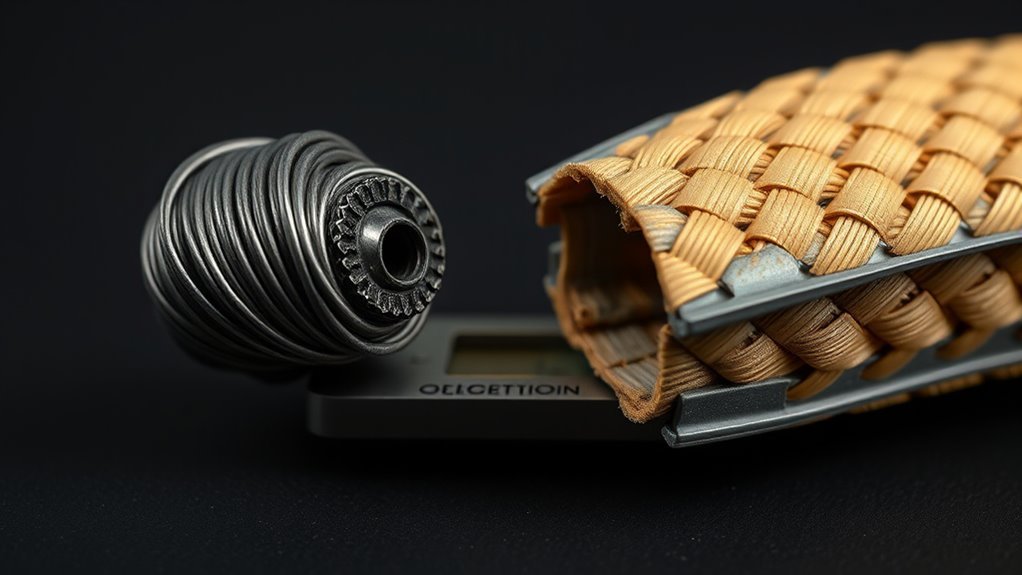
Because bead construction directly affects mass, flex, and contact patch behavior, it plays a measurable role in handling and rolling resistance. You’ll notice lower rolling resistance and improved acceleration efficiency with aramid folding beads: reduced mass and greater flexibility let the tire conform to surface irregularities, improving grip enhancement and terrain adaptability. Wire beads add mass, stiffen weight distribution, and can blunt handling nuances and comfort levels, especially at varied tire pressure.
| Metric | Effect |
|---|---|
| Weight | Aramid: lighter — better acceleration efficiency |
| Flexibility | Aramid: more conformity — grip enhancement |
| Comfort | Wire: stiffer — reduced comfort levels |
| Cornering | Aramid: improved cornering performance and stability |
You’ll adjust tire pressure to balance rolling resistance and comfort; lower pressure aids grip but raises rolling resistance if too low. For liberated riders seeking control, aramid beads extend handling precision across terrain while wire beads prioritize durability over responsiveness.
Tubeless, Installation, and Durability: Bead‑Specific Issues
Grip and ride feel matter, but bead choice also shapes how you’ll set up and maintain tires—especially for tubeless systems, installation, and long‑term durability. You’ll favor folding (aramid) beads for tubeless: their flexible rim seating and airtight seal simplify achieving stable tire inflation and lower rolling losses. Wire beads rarely work with tubeless rims, so plan accordingly.
- Tubeless compatibility: Folding beads seal more reliably, reducing sealant demand and leak points; wire beads generally require tubes.
- Installation and service: You’ll install and remove folding beads with less force and fewer tools, easing field repairs and bead maintenance; wire beads demand leverage and can pinch tubes.
- Durability tradeoffs: Wire beads offer rugged, steel‑based strength; aramid resists fatigue and cuts but can suffer UV aging, so monitor tire inflation, inspect beads, and store tires to extend life.
Which Bead to Choose by Riding Style, Goals, and Budget
Which bead should you pick depends on how you ride, what you value, and how much you’re willing to spend. You’ll weigh Riding preferences against Performance trade offs: choose wire bead if you prioritize durability, low cost, and robust service for urban commuting or casual miles. Wire beads give predictable longevity and value; they cost less and tolerate rough conditions, freeing you from constant concern over tiny gains.
Opt for aramid fiber folding beads when your goals center on speed, efficiency, and reduced fatigue. The roughly 2-ounce weight savings yields measurable benefits for competitive cyclists and freedom-seeking riders chasing higher average speeds and sharper handling. Expect lower rolling resistance and improved traction, but accept higher price and slightly less blunt durability.
Match choice to budget and objectives: if marginal gains matter and you can invest, pick aramid; if resilience and economy matter more, pick wire. Evaluate Riding preferences and acknowledge Performance trade offs to liberate your decision.
Model Comparison: Spec Checklist and Quick Decision Matrix
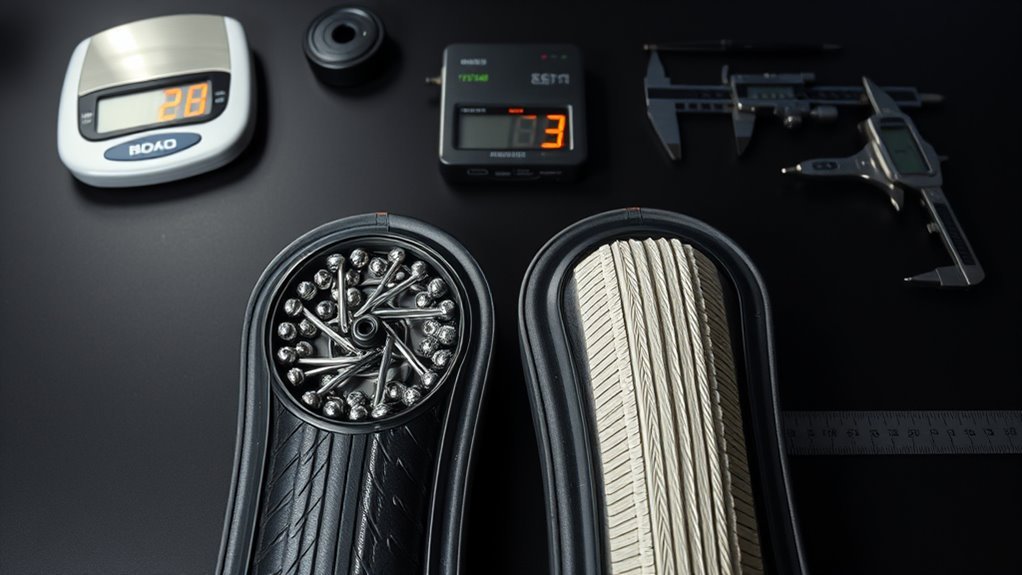
Now that you’ve matched bead type to riding goals and budget, let’s compare specific models with a compact spec checklist and a quick decision matrix to help you pick a tire at a glance. You want a clean tool: compare weight, rolling resistance, sidewall strength, UV sensitivity, price, and installation tips. Emphasize tire longevity metrics and real-world failures rather than marketing copy.
- Folding (aramid): ~2 oz lighter; superior rolling resistance and traction; moderate UV degradation risk; easier installation; premium price — choose for speed and transport.
- Wire: heavier; robust sidewalls and proven durability; tougher installation; budget-friendly — choose for rugged use and cost control.
- Hybrid/plus: balances weight and strength; variable installation ease; mid-range cost — choose for versatility.
Decision matrix: prioritize folding when weight and performance free you to go faster; pick wire when structural durability and cost secure your freedom to ride longer. Use installation tips to reduce damage and extend tire longevity.
Frequently Asked Questions
Are Wire Bead Tires Better?
No—wire bead tires aren’t universally better; you’ll choose based on performance comparison and installation ease: they’re durable, affordable, and easier to fit but heavier and stiffer, so they limit competitive performance and agile, liberated riding.
Are Wire Bead Tires Harder to Install?
Yes—you’ll struggle more: installation challenges stem from lower tire flexibility, so you’ll need extra leverage, patience, and perhaps tools. Technically, the rigid bead resists seating, demanding analytical technique but rewarding stable, liberated ride control.
What Is an Aramid Bead?
An aramid bead is a lightweight, high-strength tire edge using aramid fibers; you’ll gain aramid benefits like reduced weight and improved bead flexibility, enhancing installation, ride responsiveness, and durability while supporting liberated, performance-focused cycling choices.
Conclusion
You’ll pick the bead that matches your goals: steel for durability and economy, aramid for lower weight and snappier response. Think of aramid as a scalpel and wire as a hammer — each excels when used properly. Check tire weight, rim compatibility, tubeless seal needs, and budget; prioritize rolling resistance and handling over marginal grams unless racing. In short, choose by ride priorities, not by faddish weight savings.
Related Articles
Latex vs TPU Tubes: Best Performance Guide
Uncover whether latex’s unbeatable rolling resistance or TPU’s lighter, tougher profile wins your rides — and what trade-offs you’ll actually feel in the saddle.
Read More
Wide vs Narrow Tires: Ultimate Grip vs MPG Guide
A concise guide comparing wide and narrow tires for grip, speed, and fuel efficiency—discover which suits your driving needs and why it matters.
Read More
Motorcycle Tire Pressure Chart: Recommended PSI by Type
Discover ideal PSI ranges for road, track, and wet motorcycle tires — practical tips and adjustments await to optimize grip and safety.
Read More