Tire Aspect Ratio Explained: What the Number Means
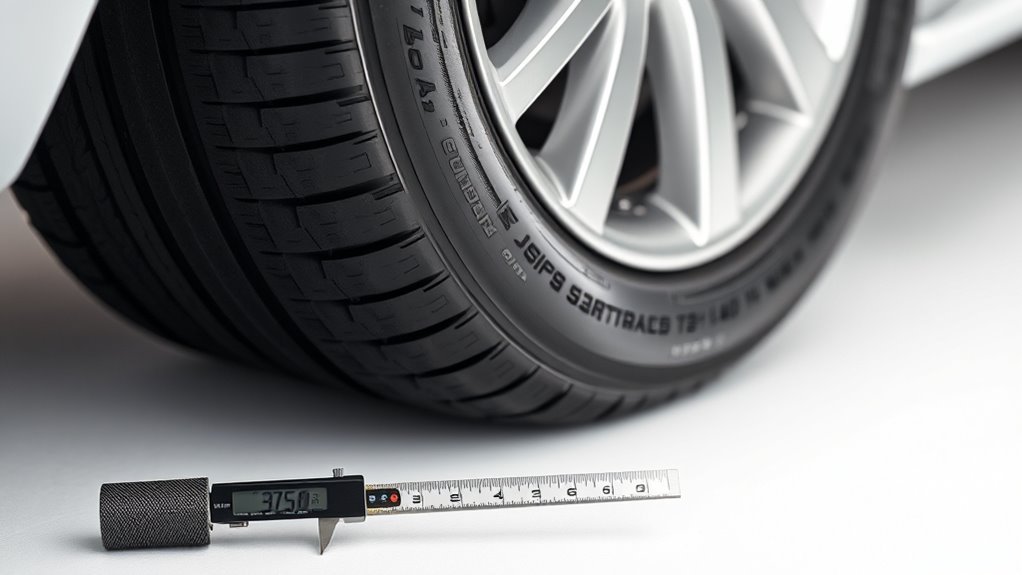
Tire aspect ratio tells you the sidewall height as a percentage of tire width; for example, a 65 profile means the sidewall is 65% of the tire’s width in millimeters. You’ll use that percentage to calculate sidewall height (width × ratio), convert to inches, and add twice the sidewall to rim diameter for overall tire diameter. Aspect ratio affects ride comfort, handling, fuel use, and speedometer accuracy — keep reading to see calculations, trade‑offs, and fitment checks.
What Tire Aspect Ratio Means (Quick Answer)
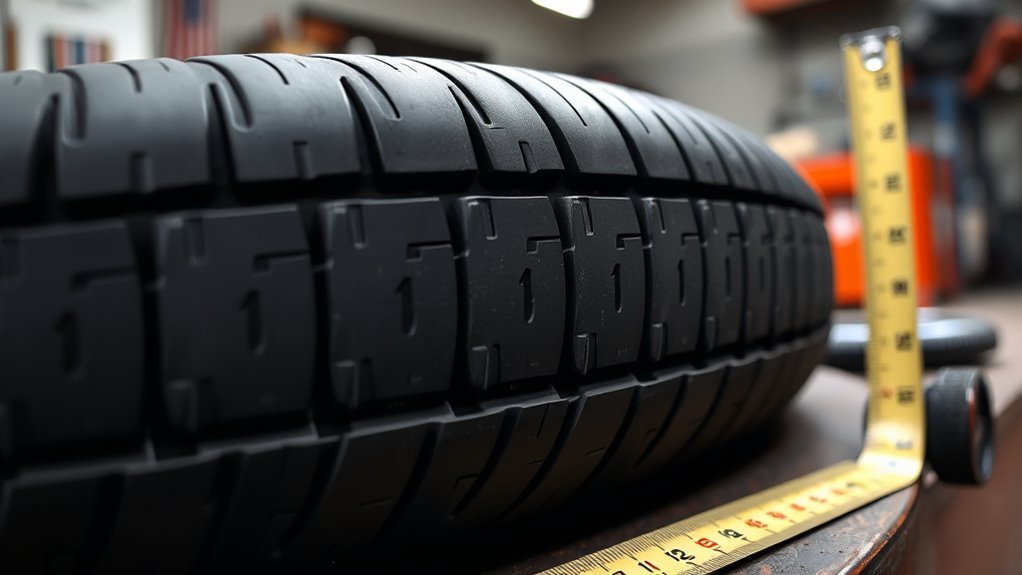
Think of the aspect ratio as the sidewall’s height expressed as a percentage of the tire’s width; for example, a 65 profile means the sidewall height equals 65% of the width in millimeters. You’ll read that number on the tire sidewall and know it’s a direct scalar: aspect ratio = (sidewall height / width) × 100. A higher ratio yields a taller sidewall, which increases cushioning and improves ride comfort by absorbing impacts; a lower ratio shortens the sidewall, reducing flex for firmer steering and sharper tire performance. Common passenger ratios span roughly 40–75: sports cars trend low for responsiveness; SUVs and trucks trend high for isolation. When you change ratio, you alter handling, fuel economy, and comfort, so select based on mission profile rather than aesthetics. You’ll calculate exact heights elsewhere, but conceptually treat aspect ratio as the primary geometric parameter that trades suspension load-sharing for lateral precision, empowering you to choose liberation through informed specification.
How to Calculate Sidewall Height and Overall Diameter
First, calculate sidewall height by multiplying tire width (mm) by the aspect ratio as a decimal — for example, 235 mm × 0.65 = 152.75 mm. Convert that to inches by dividing by 25.4, so 152.75 mm ÷ 25.4 ≈ 6.01 in. Finally, get overall diameter by adding twice the sidewall height to the rim diameter in inches, e.g., 16 in + 2×6.01 in = 28.02 in (verify with manufacturer specs).
Converting Millimeters To Inches
When you convert tire measurements from millimeters to inches, divide the millimeter values by 25.4 so you can calculate sidewall height and overall diameter in the same unit system. For tire measurements you’ll convert width and computed sidewall height: 235 mm ÷ 25.4 ≈ 9.25 in. Use unit conversions consistently to avoid errors when comparing specs or swapping sizes. After you compute sidewall height in millimeters (width × aspect ratio) convert that result to inches before adding to rim diameter. For example, a 235/80R16 has a sidewall of 188 mm → 188 ÷ 25.4 ≈ 7.4 in; overall diameter = (7.4 × 2) + 16 = 30.8 in. Accurate conversions free you to choose the right tire.
Calculating Sidewall Height
To calculate a tire’s sidewall height, multiply the nominal width in millimeters by the aspect ratio expressed as a decimal (for example, 235 mm × 0.80 = 188 mm). You’ll then convert millimeters to inches by dividing by 25.4, so 188 mm ≈ 7.4 in. Use that sidewall value to assess ride characteristics: higher aspect ratios yield taller sidewalls, increasing cushioning and influencing handling. You should factor sidewall height into choices that affect tire pressure decisions and long-term tread wear, since taller sidewalls absorb impacts and can alter contact patch behavior. Calculate precisely when selecting replacements to preserve vehicle dynamics and your autonomy on the road. Don’t skip measurement; correct sizing prevents compromised handling and unexpected performance loss.
Determining Overall Diameter
Now that you know how to compute sidewall height from section width and aspect ratio, you can determine overall tire diameter by adding twice that sidewall height to the rim diameter. You calculate sidewall in mm (section width × aspect ratio), convert to inches (divide by 25.4), double it, then add rim diameter in inches. This gives the true diameter that affects speedometer, clearance, and tire performance through sidewall flexibility.
- Compute sidewall: section width (mm) × aspect ratio (decimal).
- Convert: sidewall mm ÷ 25.4 = sidewall inches.
- Double: 2 × sidewall inches = total sidewall contribution.
- Add rim: total sidewall contribution + rim diameter = overall diameter.
Use this to choose sizes that free vehicle capability.
How Aspect Ratio Changes Ride, Handling, and Fuel Economy
Although a tire’s aspect ratio might seem like a simple number, it directly alters ride comfort, handling precision, and fuel consumption by changing sidewall height and flex characteristics. When you choose a lower aspect ratio (e.g., 50), the shorter sidewall reduces flex, sharpening handling performance and cornering stability; the vehicle feels more responsive in turns and braking response tightens. Higher aspect ratios (e.g., 70) increase sidewall height, which cushions impacts, absorbs road imperfections, and improves ride comfort by damping vibrations. You’ll also note effects on rolling resistance: low-profile tires can reduce it and sometimes improve fuel economy, though results vary with speed, load, and road surface. Shifting from tall to short sidewalls yields a sportier dynamic but raises risk of harsher ride and greater susceptibility to rim and tire damage. Any ratio change also alters overall tire height, subtly affecting speedometer accuracy and traction/braking behavior—factors you must weigh when seeking liberated control over your vehicle.
Choose the Best Tire Aspect Ratio for Your Car and Driving Style
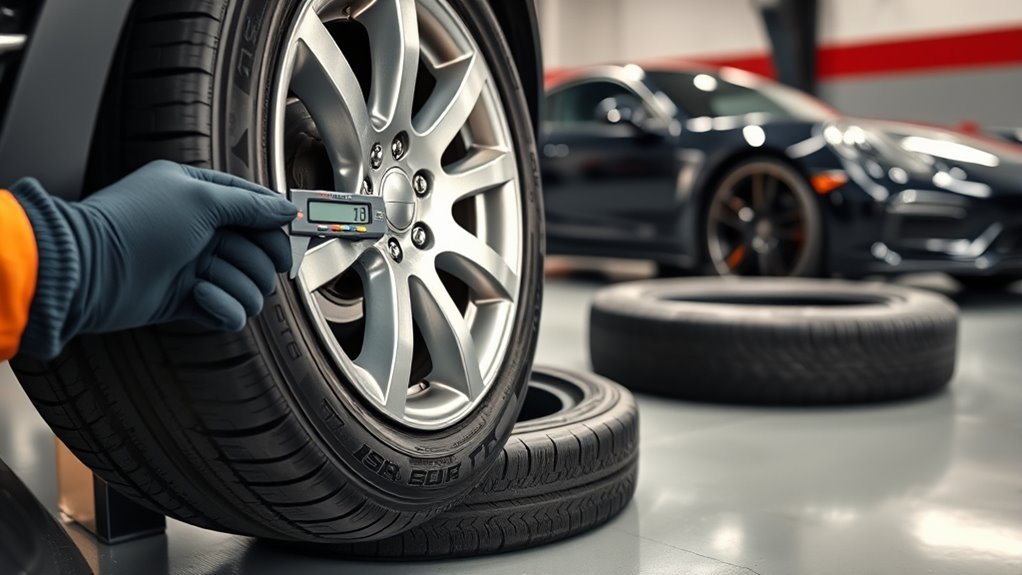
Which aspect ratio suits you depends on your car, typical roads, and driving priorities. You’ll choose higher ratios (70–80) if you want cushioning and a comfort balance that soaks rough surfaces and aids traction in poor weather. If you crave sharp steering and cornering you’ll favor low-profile performance tires (35–45) that reduce sidewall flex and improve response, at the cost of a firmer ride and higher road feel. Moderate ratios (60–65) deliver versatile performance for daily use, keeping ride quality, handling, and rolling resistance in equilibrium. Remember large aspect ratio shifts can alter dynamics and require alignment or calibration.
- Urban commute: choose 60–65 for predictable comfort balance and economy.
- Sport driving: pick 35–45 performance tires for precision and lateral grip.
- All-season/off-road: use 70–80 for added traction and cushioning.
- Practical upgrade: avoid >10% aspect change to limit vehicle-system impacts.
Will It Fit? Speedometer, Clearance, and Vehicle Systems
When you change aspect ratio, the tire’s overall diameter shifts and can alter speedometer and odometer readings, so confirm size equivalence or recalibrate instruments. Also check wheel-well clearance and suspension travel—reduced sidewall height or larger diameter can cause rubbing during turns or compressions. Finally, make sure new tire dimensions don’t interfere with ABS, traction control, or steering geometry to preserve safety and performance.
Speedometer & Odometer Accuracy
If you change a tire’s aspect ratio, you change its overall diameter and that directly alters what your speedometer and odometer report, often causing them to under-read when the tire is larger than stock. You’ll need deliberate speedometer calibration to correct systematic error and avoid odometer discrepancy that affects legal records and vehicle value. Larger or smaller diameters shift rotational counts used by vehicle systems, potentially degrading ABS and traction control inputs.
- Measure overall tire height and calculate percent deviation from OEM spec.
- Determine expected speed/odometer error using diameter ratio.
- Apply ECU or speedo module recalibration, or use a gear/sensor correction.
- Validate with GPS or certified calibration run to guarantee compliance and liberated control.
Clearance And Suspension Interference
Because changing a tire’s aspect ratio alters overall diameter and sidewall height, you must verify physical clearance around the wheel well and suspension to prevent rubbing or component contact. You’ll assess tire interference risks, check suspension limits, and confirm speedometer effects. Measure static and dynamic clearance, inspect struts, control arms, and brake lines, and consider fender trimming only as a last resort. Consult manufacturer specs and use conservative offsets.
| Checkpoint | Method | Threshold |
|---|---|---|
| Static clear. | Measure wheel-to-arch gap | ≥ recommended spec |
| Dynamic travel | Compress suspension through travel | No contact |
| Offset/ET | Compare to stock wheel | Within tolerance |
| Speedo change | Calculate diam. diff. | Acceptable error |
Maintain safety, preserve mobility, and reject compromises that risk structural or control integrity.
Common Tire Aspect Ratio Mistakes and Compatibility Rules
Although a taller sidewall can boost comfort, mixing tires with substantially different aspect ratios or changing overall diameter beyond recommended limits often creates handling, speedometer, and stability-system problems you may not expect. You’ll want to respect manufacturer limits and factor tire pressure and seasonal changes into your plan: colder temps alter pressure and ride height, so nominal aspect compatibility may shift.
- Maintain diameter within ±3%: exceeding this risks speedometer error and ABS/ESC miscalibration.
- Match aspect ratios across axle pairs: pairing low-profile and tall-sidewall tires induces uneven grip and unpredictable handling.
- Favor OEM or expert guidance before swapping sizes: specs account for clearance, suspension dynamics, and system integration.
- Account for performance trade-offs: lower aspect ratios sharpen cornering but reduce comfort; higher ratios increase compliance but may slow response.
You’re choosing freedom on the road; do it responsibly by prioritizing compatibility, consulting experts, and monitoring tire pressure regularly.
Quick Reference: Common Aspect Ratios and Typical Uses
Start with the numbers you see stamped on the sidewall: the aspect ratio (the middle number in a size like 205/65R16) tells you that the sidewall height is 65% of the tire width, and that percentage directly influences ride comfort, handling, and load response. For quick selection: 40–55 are low-profile tires favored on performance cars; they reduce sidewall flex, sharpen cornering, and boost tire performance and steering responsiveness at the expense of cushioning. 55–75 covers typical passenger tires; 65 is common balance point—adequate handling with maintained ride comfort. 70+ are high-profile tires used on SUVs and light trucks; taller sidewalls absorb impacts, improve off-road capability, and enhance ride comfort under load. Remember: changing aspect ratio alters speedometer accuracy, handling dynamics, and fuel economy. If you seek freedom from compromise, consult a tire professional to match aspect ratio to vehicle geometry and intended use, preserving safety and the specific tire performance characteristics you want.
Frequently Asked Questions
What Is a Good Aspect Ratio for a Tire?
A good aspect ratio for most drivers is 55–75, since you’ll get balanced tire performance and driving comfort; you’ll favor lower ratios for sharper handling and higher ratios when you want greater cushioning and road absorption.
Conclusion
You now know tire aspect ratio isn’t mystical—it’s the sidewall height as a percent of width, shaping ride, grip, and rolling diameter. Like an architect reading blueprints, you’ll calculate sidewall and overall diameter to predict speedo, clearance, and ABS impacts, then match aspect ratio to handling and fuel goals. Choose ratios that respect vehicle specs and common compatibility rules to avoid surprises—precision here keeps performance predictable and systems reliable.
Related Articles

What Does 700c Mean? Tire Size Meaning for Road Bikes
I’m about to demystify what “700c” actually means for road bike tires—and why rim BSD and tire width matter for fit.
Read More
Inner Tube Size Chart: How to Find the Right Tube
Curious which inner tube fits your wheel and valve type—discover quick sizing tips, common pitfalls, and easy fixes to keep riding confidently.
Read More
Bicycle Tire Size Chart: Every Common Size Decoded
Pore over precise ETRTO codes and rim-BSD matches to confidently decode every common bicycle tire size—discover exact fit rules inside.
Read More