
Snow Tire Tread Depth: Minimum Safe Depth for Winter
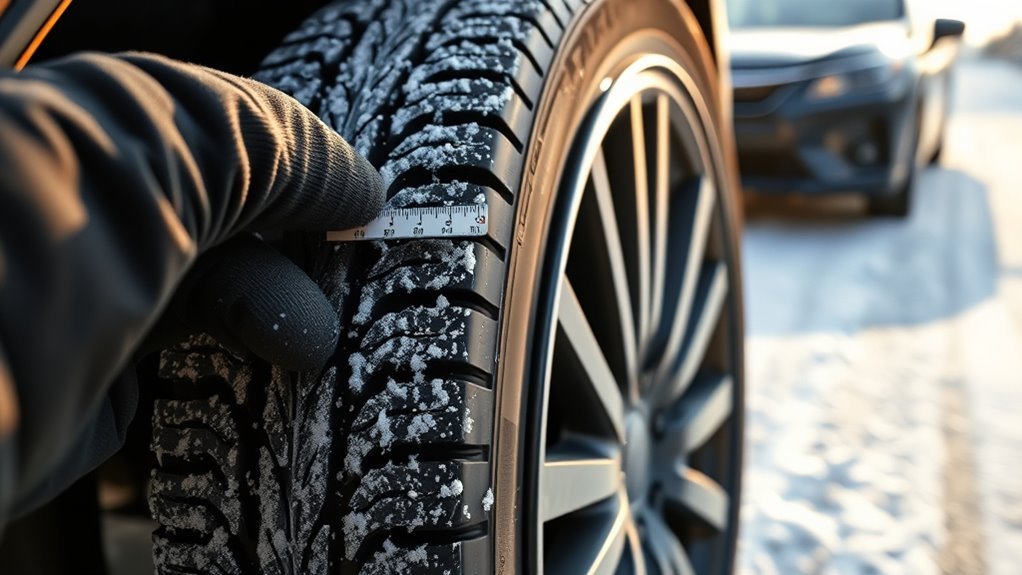
You should keep winter tires at about 5/32″ tread or deeper for reliable snow and slush traction; 4/32″ is already marginal and 2/32″ is legally unsafe. New winter tires start around 10–11/32″, and snow grip drops roughly 14% at half depth while wet stopping worsens as tread thins. Measure multiple grooves with a gauge or coin and watch for cuts, bulges, or hardening; continue below for specifics on measurement, replacement, and shopping.
Quick Answer: How Much Tread Do Winter Tires Need?
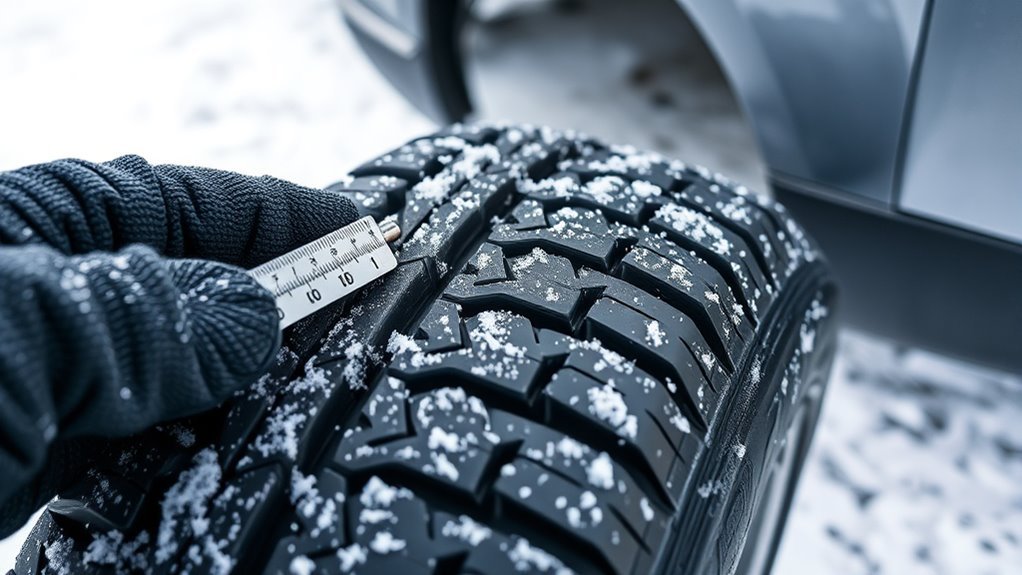
For reliable snow and ice performance, you should keep winter tire tread at about 5/32″ or deeper; this is the recommended minimum to maintain effective grip in winter conditions. You’ll find new winter tires start around 10/32″–11/32″, so plan replacements based on measured tread wear, not just age. As tread depth decreases, performance declines predictably: when you’re at roughly half-tread depth (about 5/32″), snow traction can drop about 14%, increasing stopping distance and reducing control. Continue measuring tread depth regularly because tires become less effective well before reaching the legal minimum of 2/32″. Replace tires when they approach the safe minimum for winter use, not solely the legal limit. By monitoring tread wear and replacing proactively, you’ll preserve mobility and autonomy in adverse conditions, ensuring your vehicle responds reliably when snow and ice demand maximum traction.
What Tread Depth Is : And Why 6/32 Matters for Winter
Think of 6/32″ as the practical cutoff where winter tires still channel snow and slush effectively. You’ll treat tread depth as a measurable variable that directly controls snow traction and braking. At 6/32″ you retain most of the design capacity; below that, you can lose up to 14% of snow traction, and stopping distances increase measurably. New winter tires typically begin at 10/32–11/32″, giving headroom for multiple seasons before you approach the cutoff.
Monitor tread wear with a gauge or visual indicators; don’t wait for the legal 2/32″. When depth falls to about 5/32″ or less, winter performance degrades rapidly as channels can’t evacuate slush and snow-packed voids. You’re not speculating—you’re managing a quantifiable decline in capability. Regular checks let you replace tires before safety margins erode, preserving your freedom to travel in winter conditions without undue risk.
Minimum vs. Ideal Tread Depth for Snow, Ice and Slush
You should know the legal minimum tread is typically 2/32″, but that level is unsafe in winter conditions. For winter tires the recommended minimum is 5/32″ and new tires start around 10/32″–11/32″ for ideal snow and ice traction. Expect up to a 14% loss in snow traction and longer wet stopping distances once tread reaches about half its original depth.
Minimum Legal Depth
Many regions set the legal minimum winter tire tread depth at 2/32 inches, but performance on snow and ice falls off well before that point, so you should treat 2/32 as a legal limit, not a safe target. You’ll see tread wear bars at 2/32; they’re a regulatory cue, not a performance endorsement. By the time bars appear, traction loss is significant and stopping distances lengthen. You should monitor tread depth proactively because legal compliance doesn’t guarantee control in white conditions. New winter tires begin around 10/32–11/32 inches and lose effectiveness as they wear; half-worn tires can reduce snow grip noticeably. Use precise measurements and replace tires before legal minimums compromise your freedom to move safely.
Recommended Winter Depth
Although 2/32 inches is the legal limit, you should target at least 5/32 inches for winter driving because snow and ice performance falls off markedly below that point. You’ll aim higher when liberation from winter constraints matters: new winter tires start at 10/32–11/32 inches, delivering peak grip on snow and slush. At 4/32 inches, performance becomes marginal; research shows snow traction drops roughly 14% when tread is halved, so you must monitor tread maintenance proactively. Tread wear bars signal 2/32 inches, when tires lose effectiveness for safe winter driving. Practically, replace or rotate at 5/32 inches to preserve braking and lateral control on ice and packed snow. This policy maximizes winter performance while minimizing exposure to avoidable risk.
Performance When Half‑Worn
Having established 5/32 inches as the practical replacement target, it’s important to examine how performance changes as winter tires wear toward half their original depth. You’ll see measurable tread wear effects: at half-tread depth snow traction drops ~14% and wet stopping distances increase ~7%, signaling clear performance degradation. Even at 5/32 inches winter compounds beat all-seasons, but continued wear reduces slush/water channeling and raises hydroplaning risk. You should replace before legal minima; waiting costs control and freedom on slippery roads.
| Condition | Change at Half-Worn | Impact |
|---|---|---|
| Snow traction | -14% | Reduced grip |
| Wet stopping | +7% | Longer distances |
| Hydroplaning | Increased | Loss of control |
| Overall safety | Degraded | Replace early |
Measure Tread at Home: Penny, Quarter and a Gauge

You can quickly assess tread with a penny by inserting Lincoln’s head down into a groove—if his entire head is visible the tread is at or below 2/32″, which is unsafe. A quarter gives a 4/32″ reference point when Washington’s head is covered, useful for judging all-season suitability. For precise readings use a calibrated tread depth gauge that reports in 32nds of an inch.
Penny Test Method
Use the penny test to quickly judge whether your tire tread is near or below the legal minimum: insert a penny with Lincoln’s head upside down into the tread grooves and note how much of the head is visible—if any of Lincoln’s head is fully visible the tread is 2/32″ or less and the tire should be replaced. For consistent penny placement, pick multiple grooves across the tire and repeat at several points around the circumference. Assess tread visibility objectively: partial coverage indicates tread above 2/32″, full exposure indicates replacement. The penny test gives a rapid, actionable screen you can perform without tools. Use it to assert control over your safety; follow up with a quarter or gauge when you need a more precise depth reading.
Using A Tread Gauge
A simple tread depth gauge gives a precise, repeatable measurement in 32nds of an inch, so you can quantify wear rather than estimate it with coins. Use a gauge to verify penny and quarter checks and to confirm when tread bars are flush at 2/32″. You want at least 5/32″ for winter; a gauge tells you if you meet that liberation threshold.
- Insert gauge into main grooves, seat base flat, read value in 32nds for exactness.
- Compare readings across three circumferential positions to detect uneven wear.
- Record measurements; replace tires when reaching 4/32″ for winter planning, 2/32″ mandatory replacement.
- Follow gauge maintenance: clean sensor, store dry, calibrate if adjustable to assure tread gauge accuracy.
Use the tool routinely to control safety and freedom on winter roads.
How Worn Tread Reduces Braking, Cornering and Hydroplaning Resistance
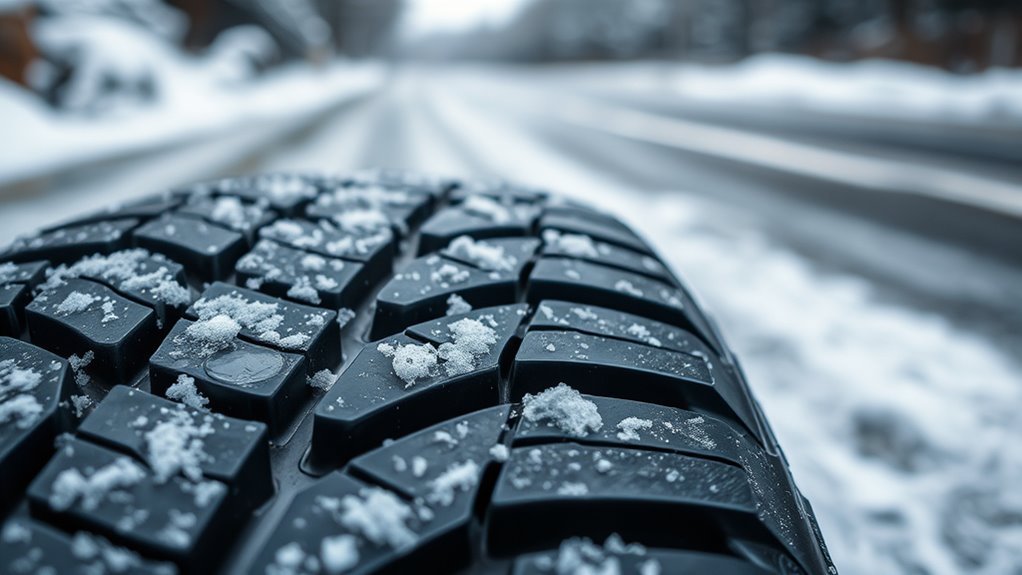
Because tread channels and siping wear down, your tire’s ability to bite into snow and expel water falls off sharply, which increases stopping distances, undermines lateral grip during cornering, and raises hydroplaning risk. With tread wear to half-depth you’ll see about a 7% increase in stopping distance on snow and ice and roughly a 14% reduction in snow traction during lateral maneuvers. That traction loss degrades your ability to control yaw and maintain a planned line, eroding confidence and freedom to drive decisively in winter conditions.
Hydroplaning resistance also declines: tests show an 8% reduction at half-tread depth, so at speed you’re more likely to ride on a water film rather than the rubber contacting pavement. Below 5/32″ the tire can’t evacuate slush effectively, compounding braking and cornering deficits. Tread wear bars at 2/32″ mark a critical limit—beyond that, winter performance is unsafe and your margin for error vanishes.
When to Replace: Tread Depth, Age, Damage and Grip Loss
Having established how worn tread degrades braking, cornering and hydroplaning resistance, you need clear criteria for when to replace winter tires. Determine replacement by measurable decline in grip, not habit. Tire longevity varies with use and winter conditions; use tread depth, age, and visible damage as objective triggers.
Set clear, measurable winter-tire replacement criteria: tread depth, age, and visible damage—not habit—for reliable cold-weather grip.
- Replace at or before 5/32″ for winter conditions; performance falls markedly below this threshold.
- Never rely on 2/32″ as acceptable for snow/ice—it’s a legal minimum only; replace well before you hit wear bars.
- Evaluate tires older than six years regardless of tread depth; rubber hardening reduces traction and increases risk.
- Remove tires showing cuts, bulges, cord exposure, or uneven wear that compromises contact patch or causes vibration.
You’ll maintain control by acting on these criteria. Prioritize measurable safety over marginal savings; freedom on winter roads demands decisive maintenance.
Shopping Tips: Choosing Winter or All-Weather Tires by Tread and Rating
When shopping for winter or all-weather tires, prioritize options that start at 5/32″ tread depth and carry the three-peak mountain snowflake (3PMSF) rating, since those criteria predict substantially better snow and slush traction than standard all-seasons. You’ll evaluate tire brands by technical specs: tread depth, compound temperature range, tread patterns, and official ratings. Pick tires with documented tread life and performance numbers; compare laboratory braking and independent road-test results to avoid marketing claims. Inspect tread patterns for deep, interconnected sipes and directional channels that evacuate slush and maintain bite. Confirm 3PMSF certification for true winter capability; if you need compromise, select all-weather models that meet 5/32″ and show credible cold‑rubber formulations. Shop early to secure inventory and preferred tire brands before seasonal shortages. Read user and professional reviews focused on icy braking distances and wear. Act decisively: choose the configuration that maximizes control and mobility, not nominal convenience.
Frequently Asked Questions
Is 5/32 Tire Tread Ok for Winter?
Yes — 5/32 is acceptable for winter; you should monitor tread wear closely. It still provides reasonable winter safety, though traction and wet braking degrade versus new tires, so replace promptly if wear accelerates.
What Tread Depth Is Good for Winter Tires?
You should aim for about 10/32 to 11/32 inches new, keeping at least 5/32 inches for safe winter driving; you’ll preserve tire performance and tread design effectiveness, so you can stay free and confidently mobile.
Is 10/32 Tread Depth Good for Winter Tires?
Yes — you’ll gain clear freedom: 10/32 tread depth delivers superior tire performance and tangible safety benefits, reducing stopping distances and improving handling on snow and ice, so you’ll drive with confidence and control.
Conclusion
You’ve learned the numbers and tests; now imagine gripping a snowy road like a keyed gear. Keep winter tires at or above 6/32″ for confident braking and channeling slush, never flirting with the thin, glassy edge of 4/32″. Measure regularly with a gauge or coin, inspect age and damage, and replace when grip fades. Treat tread depth as a measurable safety margin — maintain it, and you’ll control winter, not react to it.
Related Articles

When to Replace Tubeless Sealant: Timing & Signs
Be warned: tubeless sealant can fail in weeks or months—learn the signs, testing tips, and exact replacement timing to avoid flats.
Read More
The Penny Test for Tread Depth: How to Do It Right
Better learn the penny test correctly—discover when Lincoln’s head reveals dangerous tread wear and what to do next.
Read More
Tire Rotation Schedule: How Often & Why It Matters
Optimizing tire life? Discover why rotating every 5,000–8,000 miles matters for safety and savings—read on to learn exact patterns and tips.
Read More