
Slow Leak in Tire Causes on a RAV4: How to Find the Leak
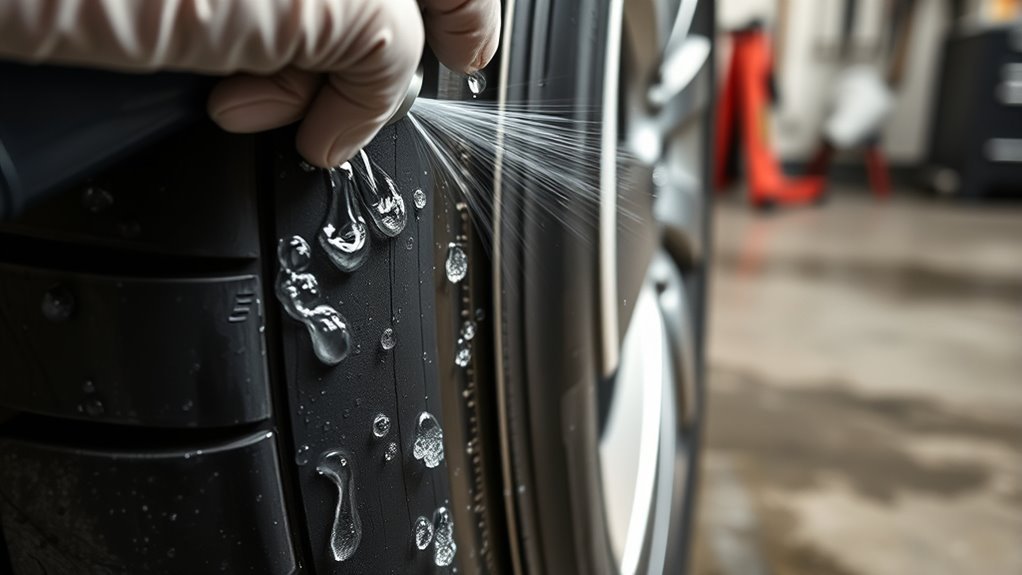
If you’re experiencing a slow tire leak on your RAV4, regularly check your tire pressure, as a drop of 1 PSI monthly is common. Conduct a visual inspection for punctures, cuts, or bulges on the tread and sidewalls. Use the soapy water test on suspected areas to identify leaks—bubbles indicate air loss. Pay attention to valve stems and embedded objects. Understanding these signs can help you maintain peak tire health and prevent future leaks, leading to safer driving.
Identifying and Addressing Slow Tire Leaks in Your RAV4
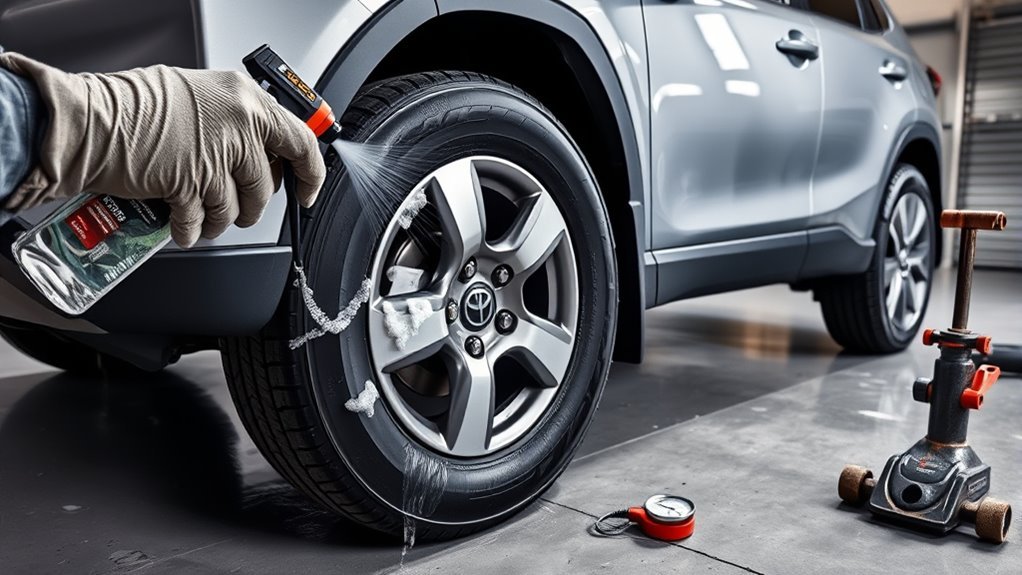
Slow tire leaks in your RAV4 can be frustrating, but identifying them early can save you time and money. Regular tire maintenance is essential for your vehicle’s performance and safety. Start by regularly checking tire pressure; a gradual decrease of about 1 PSI per month is common but concerning. If you suspect a leak, perform a soapy water test on the tire’s surface. Apply soapy water to suspected areas and watch for bubbles, which indicate escaping air. Pay attention to the valve stems and tire bead seats, as damage here can also cause slow leaks. If you find a puncture in the tread, it’s often repairable. However, any damage near the sidewall typically necessitates tire replacement. These proactive measures not only enhance your safety but empower you to maintain your vehicle effectively.
Identifying Common Causes of Slow Tire Leaks
When you’re dealing with slow tire leaks in your RAV4, several common causes might be at play. Tiny punctures from nails or screws can compromise your tire’s integrity, while valve stem issues often lead to gradual air loss. Additionally, environmental factors like temperature changes can create sidewall cracks, further contributing to leaks.
Common Puncture Sources
Identifying common sources of tire leaks is essential for maintaining your RAV4’s performance and safety. Here are three prevalent culprits to watch for:
- Nails and Screws: These small pieces of debris often puncture the tread area, creating slow leaks that can be hard to detect.
- Potholes and Urban Hazards: Driving in cities increases your chances of encountering sharp objects and potholes, which can lead to tire damage.
- Debris at the Tire Bead: Bent wheels or accumulated debris can cause leaks between the tire and rim.
Regular inspections and debris removal are key to puncture prevention. By staying vigilant, you’ll help guarantee a safer driving experience with fewer interruptions.
Valve Stem Issues
Valve stem issues can greatly impact your RAV4’s tire performance, often going unnoticed until it’s too late. Over time, valve stems can become brittle due to age or damage, leading to slow leaks. Even a minor crack can considerably reduce tire pressure, causing you to lose air without realizing it. Regular visual inspections are essential for spotting signs of wear, helping you prevent these leaks before they escalate. Additionally, environmental factors, like extreme temperatures and road salt, can worsen valve stem deterioration. To stay ahead of potential issues, consider using a tire pressure monitoring system (TPMS). This tool alerts you to slow leaks caused by valve stem problems, enabling timely intervention and maintaining ideal tire pressure.
Environmental Factors Impacting Tires
Tire leaks can often stem from a variety of environmental factors impacting their integrity. Understanding these influences can help you maintain tire health:
- Temperature Effects: Fluctuations cause tire materials to contract and expand, leading to cracks that may result in slow leaks.
- Harsh Weather: Extreme heat or cold accelerates tire deterioration, increasing vulnerability to punctures.
- Urban Hazards: Driving in urban environments exposes tires to sharp debris and road hazards, making them more susceptible to minor punctures.
Additionally, rim corrosion from road salt and moisture can compromise the tire’s air seal. Regular inspections for signs of wear and environmental damage enhance your tires’ weather resilience, identifying potential issues before they escalate.
Conducting a Visual Inspection for Tire Damage
When you conduct a visual inspection for tire damage, start by checking the tread and sidewalls for any visible punctures, cuts, or bulges. These signs often indicate potential sources of slow leaks. Incorporating effective inspection techniques, like using a soapy water mixture, can help you identify hidden issues before they escalate.
Signs of Tire Damage
To effectively identify signs of tire damage, start with a thorough visual inspection of the tread and sidewalls. Here are key indicators to look for:
- Embedded Objects: Check for nails, screws, or other debris lodged in the tread that may cause leaks.
- Uneven Wear Patterns: Look for signs of uneven wear, which might suggest improper inflation or alignment issues.
- Valve Stem Conditions: Inspect the valve stem for cracks or brittleness that could lead to air leaks.
Monitoring tread depth and ensuring proper tire maintenance is essential. Regularly check tire pressure to catch any gradual drops, signaling potential hidden damage or slow leaks. Stay proactive to keep your RAV4 safe on the road!
Common Puncture Sources
After identifying signs of tire damage, it’s essential to focus on common puncture sources that can compromise your RAV4’s safety. Start with a thorough visual inspection of the tire tread and sidewalls. Look for embedded objects like nails or screws; these are frequent culprits in punctures. Check for cuts, bulges, or irregular wear patterns that may signal damage or slow leaks. Don’t forget to examine the bead seat, as debris or bent rims can lead to air loss. For tiny punctures, applying a soapy water mixture to suspected areas can reveal escaping air through bubbles. Regularly monitoring tire pressure plays a vital role in puncture prevention and effective debris management, helping you maintain peak safety on the road.
Effective Inspection Techniques
While conducting a visual inspection for tire damage, start by closely examining the tire tread and sidewalls. Look for embedded foreign objects like nails or sharp debris that could indicate a puncture. Regular tire maintenance is essential, so check for visible damage such as cuts, bulges, or cracks, especially on the sidewalls.
Here are three effective inspection techniques:
- Inspect the Valve Stem: Look for damage or corrosion, as this is a common cause of slow leaks.
- Use Soapy Water: Apply a soapy water mixture to suspected areas; bubbles will form if there’s a leak, aiding in leak detection.
- Monitor Tire Pressure: Regularly check tire pressure; a consistent drop signals a slow leak needing immediate attention.
Using the Soapy Water Test to Confirm a Leak
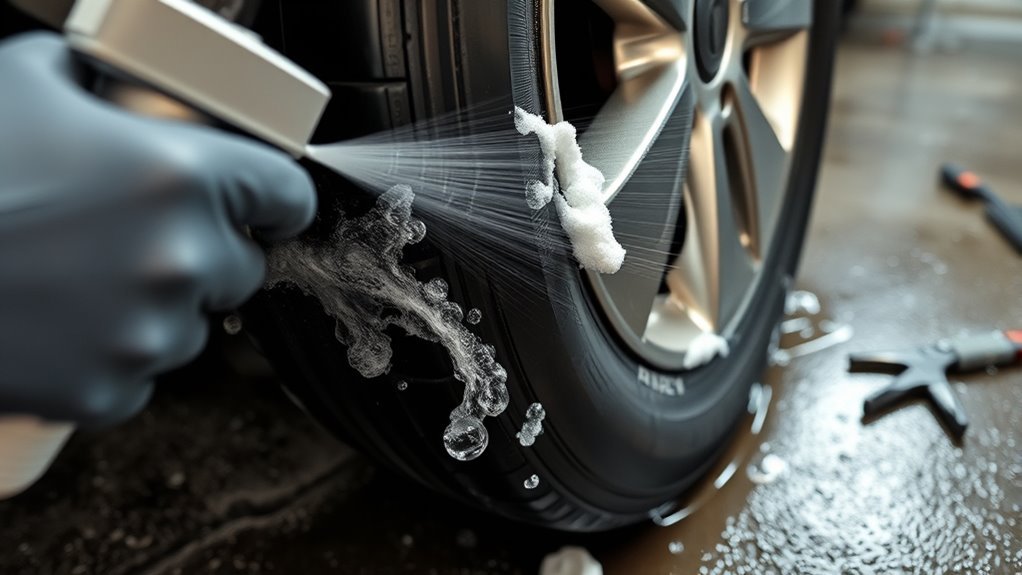
If you suspect a tire leak in your RAV4, the soapy water test is a reliable method to confirm its presence. This straightforward leak detection technique involves mixing soap with water, then applying it to the suspected area. Use a spray bottle or sponge to cover the tire thoroughly, paying special attention to the tread and any embedded objects. As you apply the solution, watch for air bubbles forming; this indicates an active leak. If bubbles appear, it confirms you need to address the issue, either through repair or replacement. Regularly performing the soapy water test is a proactive approach to tire maintenance, helping you catch slow leaks early and prevent further damage. By incorporating this simple check into your routine, you can enhance your vehicle’s safety and reliability on the road.
How to Keep an Eye on Your Tire Pressure
Detecting a tire leak is just the first step; maintaining proper tire pressure is key to vehicle safety and performance. To guarantee your tires remain in peak condition, here are some essential tire maintenance tips:
- Check Pressure Monthly: Tires can lose about 1 PSI each month. Regular checks help prevent unexpected issues.
- Use a Tire Pressure Gauge: Always verify that your tires are inflated to the manufacturer-recommended pressure, usually found on the driver’s side door jamb.
- Monitor the TPMS: Keep an eye on your Tire Pressure Monitoring System indicator. It alerts you to significant pressure drops.
Incorporating these pressure monitoring techniques into your routine not only enhances your vehicle’s performance but also extends tire life. Regular inspections and prompt attention to drops in pressure can save you time and money down the road.
When to Get Professional Help With Tire Repairs
Knowing when to seek professional help with tire repairs is vital for maintaining your safety on the road. If you notice a slow leak that drops pressure considerably within a few days, it’s time to consult an expert. Punctures near the sidewall often can’t be repaired safely, and many shops won’t touch that area. If two tire shops fail to locate the leak despite using water dunking, consider a professional assessment to check for hidden issues like valve stem damage or bead leaks. For persistent leaks after DIY fixes, professional consultation guarantees all underlying problems are addressed, preventing further deterioration. If you’re unfamiliar with tire maintenance, expert help provides essential services like inspection, patching, or replacement based on damage severity. Following these maintenance tips will keep you safe and your RAV4 performing effectively on the road.
The Risks of Ignoring a Slow Tire Leak
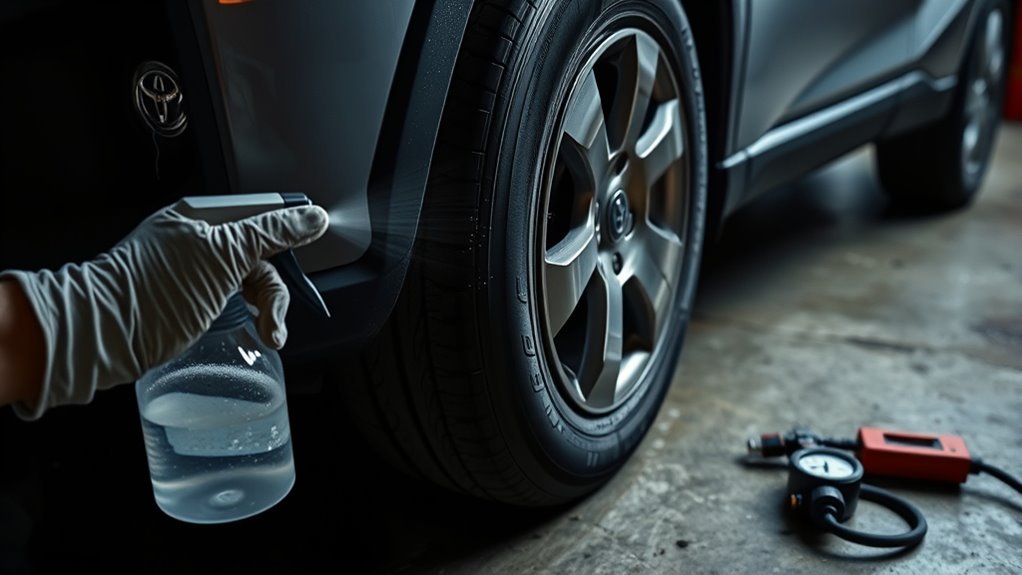
Neglecting a slow tire leak can lead to serious consequences that extend beyond just inconvenience. It’s essential to prioritize tire maintenance and be aware of the risks involved. Here are three key points to reflect on:
Neglecting a slow tire leak can have serious consequences; prioritize maintenance to avoid risks and ensure safety on the road.
- Fuel Efficiency Loss: Every 1 PSI drop in tire pressure decreases fuel efficiency by about 0.4%. Ignoring a leak can greatly impact your wallet over time.
- Uneven Tire Wear: A slow leak can cause uneven wear, potentially shortening your tire’s lifespan by up to 25%. This means more frequent replacements and higher costs.
- Increased Blowout Risk: Under-inflated tires heighten the chance of sudden blowouts, risking loss of vehicle control and serious accidents.
Best Practices for Preventing Future Tire Leaks
To effectively prevent future tire leaks, it’s crucial to adopt a proactive maintenance routine. Start by regularly rotating your tires every 5,000 miles to guarantee even wear, which minimizes the risk of leaks. Check and maintain proper tire inflation, as tires naturally lose about 1 PSI per month; neglecting this can lead to slow leaks. Utilize pressure monitoring systems to stay alert to any changes in tire pressure. Additionally, perform annual alignment checks to maintain proper tire positioning, reducing the chance of damage that could result in leaks. Inspect your tires visually each month for embedded debris, cuts, or bulges, as early detection can prevent minor issues from escalating. Finally, avoid driving over potholes or curbs, as impacts can compromise your tires and rims, increasing the risk of leaks at the bead or sidewall. Following these tire maintenance tips will enhance your driving safety and extend tire life.
Frequently Asked Questions
How Far Can I Drive on a Tire With a Slow Leak?
You can drive about 80 kilometers (50 miles) on a tire with a slow leak, but prioritize tire maintenance. Regular leak detection is essential; monitor tire pressure frequently to avoid potential blowouts and guarantee safety.
How Much Does It Cost to Fix a Slow Leak in a Tire?
Tire repair costs typically range from $10 to $30 for a slow leak. Utilizing effective leak detection methods can save you money, especially if you discover the issue early and avoid costly replacements.
Conclusion
In your journey with your RAV4, don’t let a slow tire leak become a dark cloud over your drive. By diligently checking for damage, using the soapy water test, and monitoring tire pressure, you can keep your wheels rolling smoothly. Remember, addressing leaks early not only enhances safety but also saves you from costly repairs down the road. Stay proactive, and your RAV4 will carry you on countless adventures, free from the worry of unexpected stops.

Related Articles

Upsizing Wheels on a Toyota RAV4: Pros, Cons, and Considerations
Boost your Toyota RAV4's performance with larger wheels, but discover the hidden trade-offs that could impact your ride before you decide.
Read More
Can I Change Tire Size on My Toyota RAV4? Rules and Recommendations
Are you considering changing the tire size on your Toyota RAV4? Discover the essential rules and recommendations before making a decision.
Read More
What to Do If the TPMS Light Comes On in Your RAV4
Understand the steps to take when the TPMS light illuminates in your RAV4, as overlooking it could lead to serious tire problems.
Read More