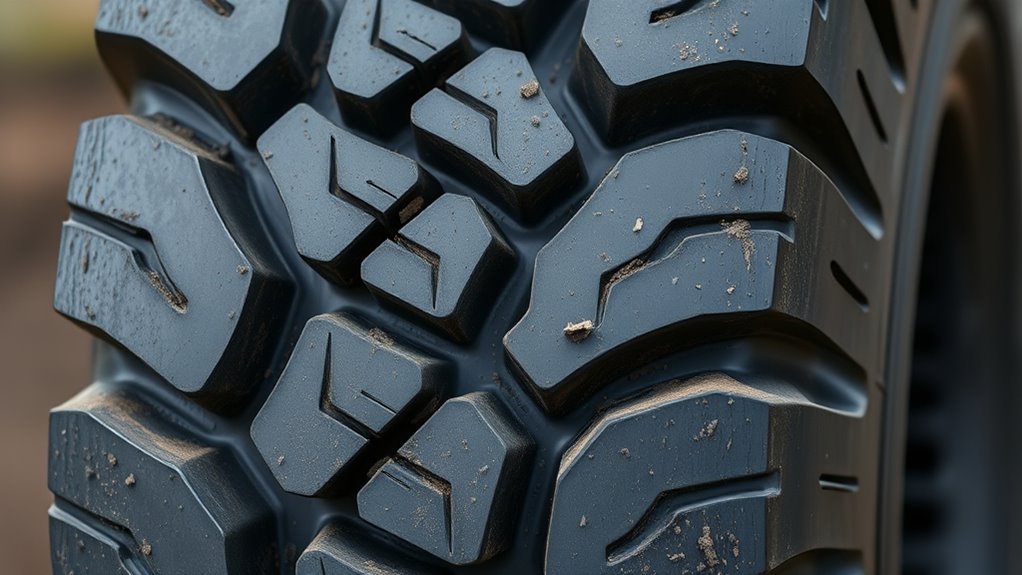
If you want the most bite in deep mud, loose dirt, ruts, wet rock, and technical trail sections, mud-terrain treads are usually the most aggressive tire pattern you can choose. Their large tread blocks, open voids, shoulder lugs, and reinforced construction help the tire dig, clear debris, and keep gripping when a smoother all-terrain tread would pack with mud. The trade-off is simple: more off-road traction usually means more road noise, faster wear, lower fuel economy, and less comfort on pavement.
Quick Answer
The tire tread that gives maximum off-road traction is a mud-terrain (M/T) tread. It uses tall, widely spaced lugs, deep voids, biting edges, and reinforced sidewalls to dig into soft ground and eject mud. It is best for mud, rocks, and loose soil—not daily highway comfort, ice, or packed snow.
Key Takeaways
- Mud-terrain tread is the strongest choice for deep mud, loose dirt, ruts, wet rocks, and dedicated trail use.
- Large lugs create bite, while open voids help the tire self-clean instead of turning into a smooth mud-packed roller.
- Reinforced sidewalls, shoulder lugs, and cut-resistant compounds help protect the tire from rocks, roots, and trail debris.
- The same aggressive pattern increases road noise, vibration, tread wear, rolling resistance, and wet-road compromise.
- Choose by terrain, vehicle weight, load rating, winter needs, and how much pavement you drive—not by tread appearance alone.
How Mud-Terrain (M/T) Treads Create Off-Road Grip
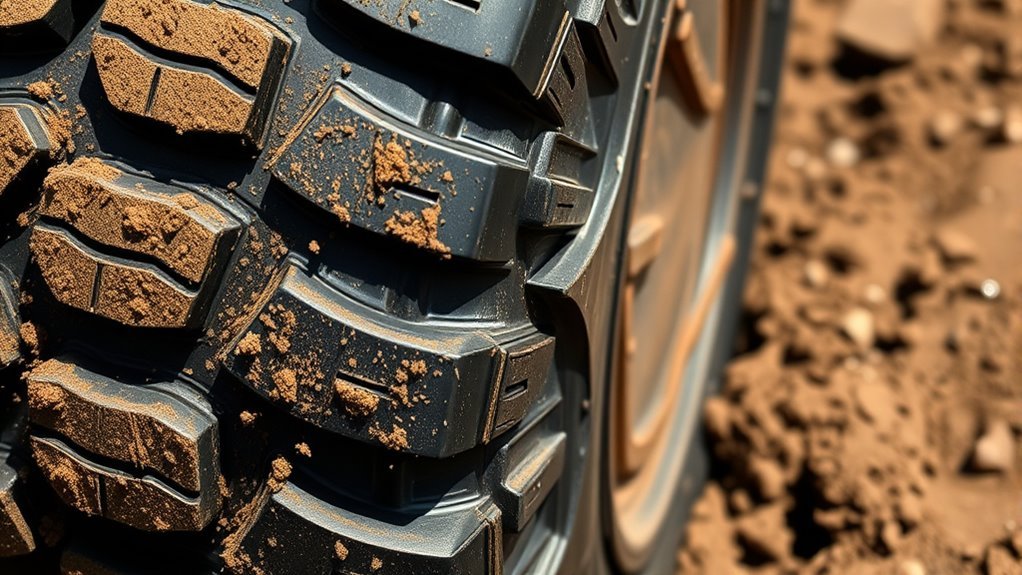
Mud-terrain tires, also called Off-Road Maximum Traction tires, are built for rough terrain where normal highway tread cannot keep a clean contact patch. Tire Rack describes this category as tires designed for extreme off-road conditions, with aggressive tread blocks, reinforced sidewalls, and chip- or puncture-resistant rubber compounds for mud, rock, sand, and off-camber terrain. You can review the category overview from Tire Rack’s mud-terrain tire guide.
The grip comes from three main actions: digging, shearing, and clearing. Tall lugs dig into soft ground. The edges of those lugs shear mud, dirt, and loose gravel so the tire can push against something solid. The open voids between the lugs give mud, stones, and debris a path to leave the tread as the tire rotates.
Think of the tread blocks as paddles. On soft ground, the lugs press into the surface and create small pressure points. Those pressure points help the tire bite instead of skate. On rocks and roots, the rubber compound and block shape help the tread conform to uneven surfaces, while the sidewall and shoulder design protect the tire from cuts and bruising.
Note: “Maximum traction” does not mean “best everywhere.” A mud-terrain tire is strongest in deep mud, loose soil, and trail conditions. For mostly highway driving, packed snow, or ice, an all-terrain, all-weather, or winter-rated tire may be safer and more comfortable.
Why Wide Lugs and Open Voids Enable Self-Cleaning and Flotation
When a tire enters mud, the tread can either clear itself or pack solid. Once mud fills the spaces between tread blocks, the tire loses its biting edges and starts acting like a smooth tire. That is why open voids are so important. They create escape channels for mud, small stones, wet clay, and sand.
Wide lugs also help with flotation. Flotation means the tire spreads the vehicle’s weight over a wider contact area so it rides higher on soft ground instead of digging straight down. This is useful in mud, sand, and loose soil, but it only works when the tire size, pressure, vehicle weight, and terrain match.
On many modern mud-terrain tires, self-cleaning is supported by design features such as shoulder grooves, stone ejectors, and mud-release bars. For example, Tire Rack’s description of the BFGoodrich Mud-Terrain T/A KM3 notes stone bumpers that help eject small rocks and mud-phobic shoulder bars that help the tire self-clean in mud or soft soil. You can see those design details on the BFGoodrich Mud-Terrain T/A KM3 product page.
The best off-road tread is not just the one with the biggest blocks. It is the one that keeps its voids open, protects its sidewalls, and matches the surface you actually drive.
Best Tread Pattern by Terrain
No tread pattern wins every surface. Use the table below as a practical starting point when choosing between mud-terrain, all-terrain, rugged-terrain, and highway tires.
| Terrain | Best tread choice | Why it works |
|---|---|---|
| Deep mud and ruts | Mud-terrain | Tall lugs and open voids dig, shear, and eject mud. |
| Loose dirt and clay | Mud-terrain or rugged-terrain | Aggressive blocks maintain forward bite and side grip. |
| Wet rock and rocky trails | Mud-terrain with strong sidewalls | Reinforced shoulders and flexible compounds help resist cuts and grip uneven rock. |
| Sand | All-terrain or carefully managed M/T | Flotation matters more than digging; overly aggressive lugs can dig if pressure and throttle are wrong. |
| Gravel roads | All-terrain or rugged-terrain | Better balance of chip resistance, ride quality, and tread life. |
| Wet pavement | All-terrain or highway-terrain | More continuous tread and siping can improve water evacuation and braking feel. |
| Packed snow and ice | 3PMSF-rated all-terrain, all-weather, or winter tire | Large mud lugs can lack the dense siping needed for packed snow and ice traction. |
| Daily highway driving | All-terrain or highway-terrain | Lower noise, better comfort, longer wear, and usually better fuel economy. |
[Products Worth Considering]
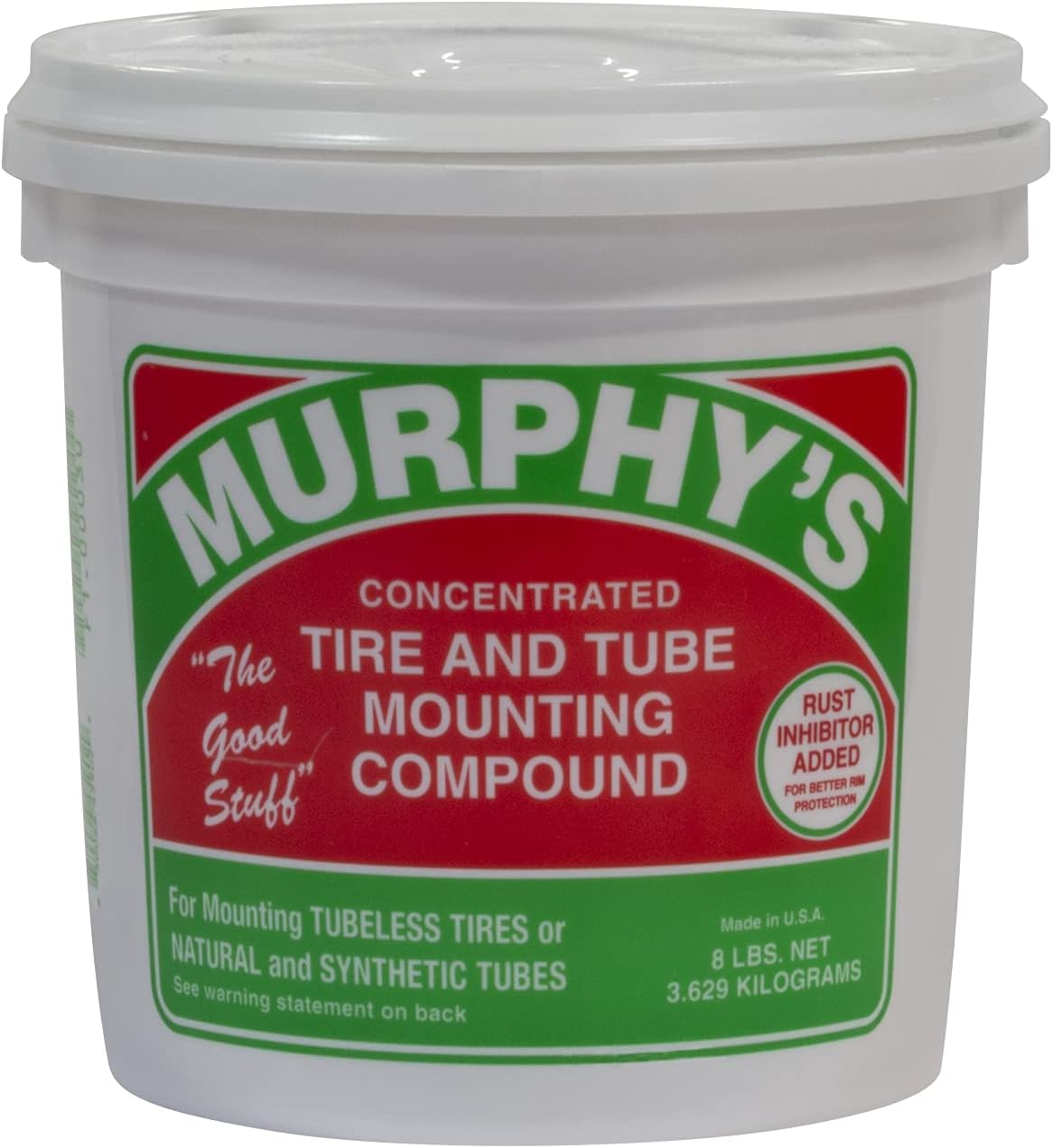
A concentrated tire and tube mounting compound designed to help simplify mounting rubber tires and tubes on passenger, semi truck, construction, and OTR applications. Its ultra-thick formula packs beads effectively and includes rust inhibitors to help protect against corrosion during use.

Measure tire tread depth quickly and accurately with this LUMITECO dial gauge that reads in 1/32" increments up to 14/32". The color-coded green/yellow/red zones make it easy to judge tire wear and know when replacement is needed. A rugged, compact design with a protective pouch helps keep the gauge ready for use on cars, trucks, motorcycles, and more.

Monitor tire tread wear with a smart, color-coded depth gauge that shows clear condition ranges at a glance. The bar is range marked for fast, easy readings, helping you maintain safer traction and performance. Each gauge is portable with a pocket clip, and the set includes 20 units for daily use and sharing.
Sidewall Design and Rubber Compounds: Durability Off Road
Off-road traction is not only about the center tread. The sidewall often takes the hardest trail hits. Rocks, roots, sharp stubs, and ruts can pinch or scrape the tire, especially when the tire is aired down. That is why many mud-terrain tires use reinforced sidewalls, thicker shoulder rubber, or multi-ply casing designs.
A strong sidewall helps in three ways. First, it resists punctures and bruising. Second, it supports the tread when the tire is loaded or flexed over rocks. Third, aggressive sidewall lugs can add grip when the tire is pressed against a rut wall or rock face.
Rubber compound also matters. A softer, cut-resistant compound can help the tread conform to trail surfaces, but it may wear faster on hot pavement. A harder compound may last longer on the road, but it can feel less sticky on rock and wet trail surfaces. The right choice depends on whether your vehicle is a daily driver, a weekend trail rig, or a dedicated off-road build.
Warning: Upgrading to a stronger LT or mud-terrain tire does not increase your vehicle’s rated payload, axle rating, or towing limit. Always follow the load limits on the vehicle placard and owner’s manual, and never install tires with a lower load index than the vehicle requires.
[Products Worth Considering]
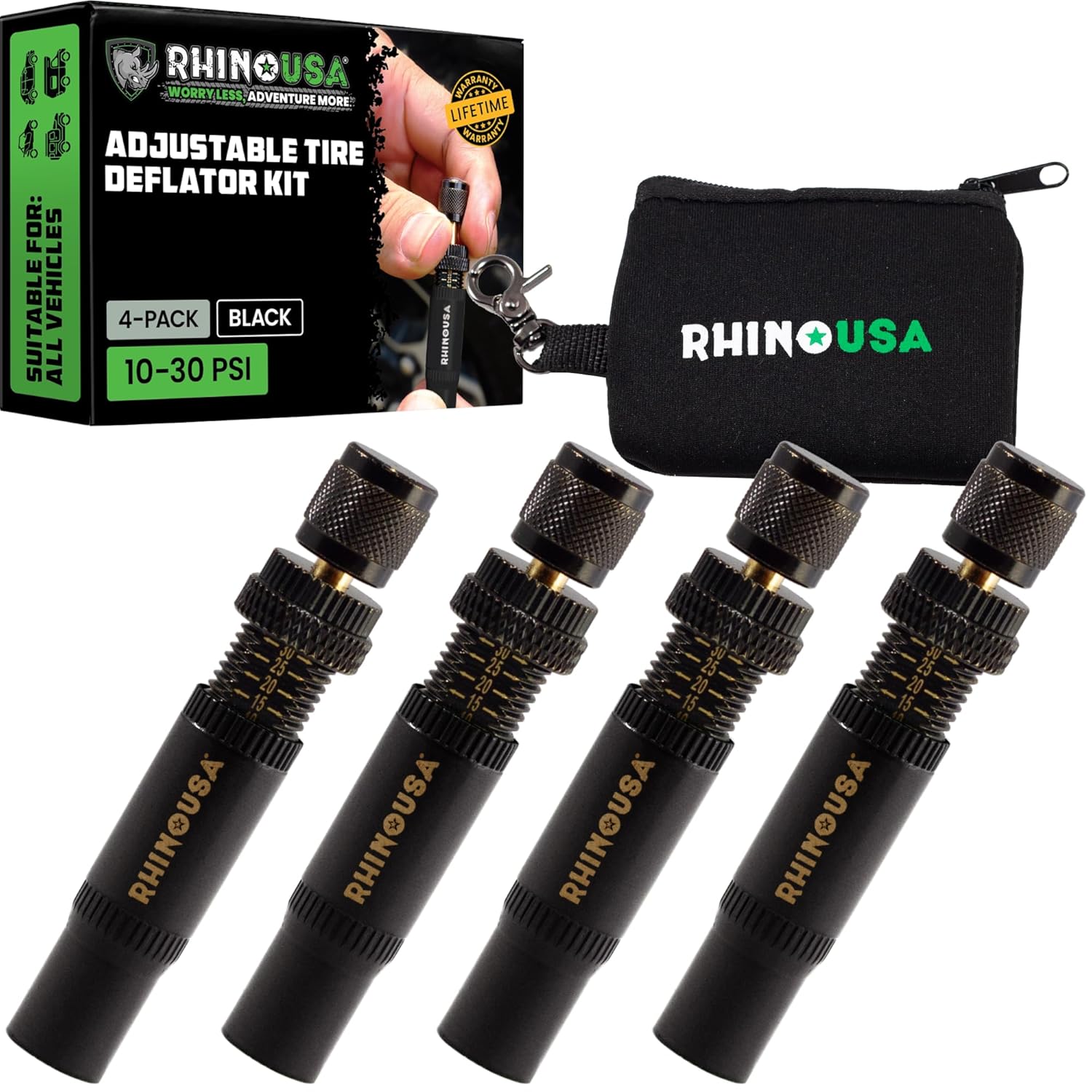
Use the Rhino USA adjustable tire deflators to air down all four tires at once by screwing one deflator onto each valve stem, letting you step away while the tires reach your preset pressure. Each deflator independently adjusts across a 10–30 PSI range with laser-etched indicators for quick setup and verification, making it ideal for beach, sand, and rocky off-road trails.

The SAFELIFE dial tire tread depth gauge measures tread depth in 1/32 inch increments with clear, easy-to-read 2-inch dial face. Color zones using a traffic light system help you quickly judge whether tread is low, marginal, or ample for safer driving. Built with a durable zinc cast body and a metal detect probe for precise, comfortable use across cars, motorcycles, trucks, and buses.

Keep your tires properly inflated with this analog VONDIOR tire pressure gauge, designed for fast, easy readings without batteries. The swiveling, two-axis hose and large glow dial help you measure at any tire angle with instant visibility. Built with a protective rubber shield, it supports durable, low-maintenance use for cars and trucks.
On-Road Trade-Offs: Noise, Wear, and Fuel Economy
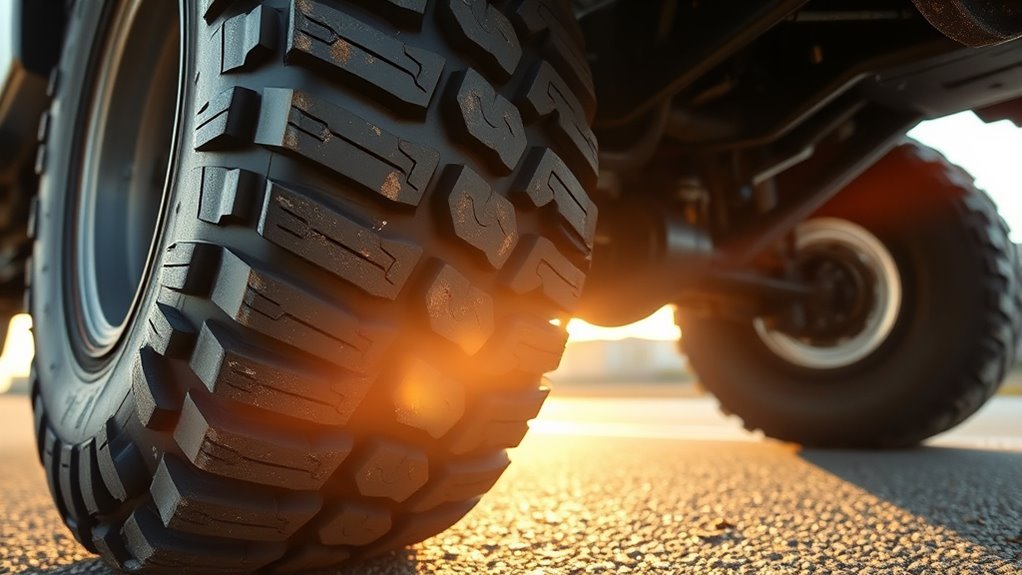
The same tread that performs well off-road creates compromises on pavement. Large tread blocks slap the road surface and create more pattern noise. Deep voids reduce the amount of rubber in constant contact with the pavement. Heavy construction and aggressive tread can also increase rolling resistance.
Rolling resistance matters because it affects fuel use. NHTSA notes that lower tire rolling resistance can improve vehicle fuel economy, and the U.S. Department of Energy has reported that a 10% reduction in rolling resistance can reduce fuel expenses by about 1–2% for typical vehicles. That does not mean every mud tire has the same MPG penalty, but it does explain why aggressive tread, added weight, and soft compounds can cost fuel on long highway drives.
| Trade-off | What you may notice | How to reduce the downside |
|---|---|---|
| Noise | Humming, drone, or vibration at highway speed. | Choose variable-pitch tread, rotate on schedule, and keep alignment correct. |
| Wear | Faster edge wear, cupping, or uneven block wear. | Rotate regularly, balance tires, and avoid long highway miles at incorrect pressure. |
| Fuel economy | Lower MPG from added weight and rolling resistance. | Avoid oversized tires unless needed and keep road pressure at the recommended cold PSI. |
| Wet-road grip | Longer braking feel or less precise steering on slick pavement. | Check wet-traction reviews and consider an all-terrain tire if pavement is most of your driving. |
| Winter performance | Deep snow may be manageable, but packed snow and ice can be poor. | Look for the three-peak mountain snowflake symbol if you drive in severe winter conditions. |
Choosing the Right M/T Tread for Your Vehicle and Driving Style
Choose a mud-terrain tire only after you match the tread to your vehicle and real driving mix. A tire that looks aggressive on a parked truck may be wrong for towing, wet pavement, snow, or daily commuting.
Start with the basics:
- Correct size: Make sure the tire fits the wheel, clears the suspension, and does not rub at full steering lock or full suspension compression.
- Load index and load range: Match or exceed the vehicle manufacturer’s required tire load rating. The tire must support the vehicle safely when properly inflated.
- Sidewall strength: Choose stronger sidewalls for rocks, roots, heavy vehicles, and low-pressure trail use.
- Void ratio: Bigger voids clear mud better, but they usually make more noise and reduce smooth road feel.
- Shoulder lugs: Helpful for ruts, side bite, and aired-down traction.
- Siping: More siping can help wet and snow traction, while large smooth lugs may struggle on ice.
- Warranty and availability: Check current product lines, because popular older models may be replaced by newer versions.
- Actual use: If you drive more pavement than trail, a rugged-terrain or all-terrain tire may be the smarter compromise.
If you want a hybrid option, products such as the Nitto Ridge Grappler are designed to blend off-road capability with a quieter, more comfortable highway ride. Nitto describes it as a dynamic hybrid tread pattern with variable pitch design for smoother road manners and shoulder grooves that help clear mud. That makes it a useful middle ground, but it is still not the same as a dedicated mud-terrain tire in deep mud.
Pro Tip: For a daily-driven truck or SUV, use a simple rule: choose mud-terrain if serious off-road traction matters more than noise and wear. Choose all-terrain or rugged-terrain if most of your miles are pavement, gravel, rain, and occasional trails.
[Products Worth Considering]

Accurately measure tire tread depth with a calibrated gauge marked from 0 to 1 inch in 1/32 inch increments. The color-coded bar helps you quickly identify tread condition ranges, supporting safe driving for trucks, motorcycles, automobiles, and passenger vehicles.

Vigorder rubber cement glue delivers superior adhesion and cures quickly within about 30 seconds for seamless rubber bonding. Once cured, it helps provide a strong, durable, waterproof seal that holds up to vehicle weight, pressure, and heat. Suitable for cars, motorcycles, trucks, bicycles, and off-road tires, it’s designed for emergency patch and maintenance repairs.

This ALL-TOP auto-stop tire deflator valve kit lets you air down off-road tires quickly without watching pressure, automatically stopping when your preset PSI is reached. Each valve is individually calibrated for reliable performance with an acceptable +/- 2 PSI tolerance. The adjustable deflator range covers 10 to 30 PSI and includes four valves plus valve caps and a zipper pouch for easy setup on trucks, SUVs, RVs, UTVs, and powersports.
Tire Pressure, Load, and Trail Safety
Tire pressure changes how a tread works. On the road, follow the vehicle manufacturer’s recommended cold inflation pressure shown on the door placard or in the owner’s manual. NHTSA’s TireWise safety guidance explains that cold pressure means the tire has not been driven for at least three hours.
Off-road drivers often air down to increase the footprint and improve ride comfort over rocks, sand, or washboard trails. That can help traction, but it also increases sidewall flex, heat, and the chance of bead damage if pressure is too low. Air back up before highway driving. A portable compressor, accurate gauge, valve tools, and a repair kit are basic trail gear for anyone running mud-terrain tires off pavement.
Also check the tire’s sidewall information before you buy. The Tire Industry Association explains sidewall markings such as tire identification number and manufacture date. Avoid old, damaged, cracked, or mismatched tires, even if the tread looks deep.
Maintenance for Mud-Terrain Tires
Mud-terrain tires need more attention than highway tires because the tread blocks are larger and the vehicle is often used harder. Good maintenance protects traction, reduces noise, and helps the tire wear evenly.
- Rotate often: Follow the tire maker’s rotation interval, and rotate sooner if you see feathering, cupping, or uneven shoulder wear.
- Check pressure cold: Use the correct road pressure before highway driving and check again after major temperature changes.
- Inspect after trails: Look for sidewall cuts, stones stuck in grooves, missing chunks, bead damage, and exposed cords.
- Balance and align: Mud-terrain tires are heavy, and small balance or alignment problems can quickly become vibration and uneven wear.
- Clean the tread: Remove packed mud and stones after a trail day so the tire can dry and you can inspect damage.
- Do not forget the spare: If you run larger M/T tires, carry a matching spare that fits the same wheel, diameter, and load needs.
Frequently Asked Questions
What tire tread pattern gives the most off-road traction?
A mud-terrain tread gives the most traction in deep mud, loose dirt, ruts, wet rock, and technical off-road terrain. Its deep lugs, open voids, shoulder blocks, and reinforced sidewalls help the tire bite and self-clean. It is not the best choice for quiet highway driving, packed snow, or ice.
What is the best aggressive all-terrain tire?
There is no single best aggressive all-terrain tire for every vehicle. The BFGoodrich All-Terrain T/A KO3 is the current successor to the KO2 in many sizes and is designed for improved wear, gravel durability, and snow traction while keeping all-terrain toughness. Still, the right tire depends on your size, load rating, winter needs, road noise tolerance, and terrain.
Are mud-terrain tires good on the highway?
Mud-terrain tires can be driven on the highway if they are DOT-approved, correctly sized, properly inflated, and in good condition. However, they usually create more noise, more vibration, faster tread wear, and lower fuel economy than all-terrain or highway-terrain tires.
Are mud-terrain tires good in snow and ice?
Mud-terrain tires can move through deep loose snow, but they are often weaker on packed snow and ice because their large tread blocks may have fewer biting sipes. If you regularly drive in severe winter conditions, look for a tire with the three-peak mountain snowflake symbol or use dedicated winter tires.
Do wider mud tires always give better off-road traction?
No. Wider tires can improve flotation in sand or soft ground, but they can also rub, add weight, reduce fuel economy, strain drivetrain parts, and dig in if used with poor pressure or throttle control. The best width depends on vehicle weight, wheel size, clearance, terrain, and load rating.
How often should mud-terrain tires be rotated?
Follow the tire manufacturer’s rotation schedule, but inspect them often and rotate sooner if you see cupping, feathering, or uneven shoulder wear. Heavy trucks, towing, off-road use, and aggressive tread blocks can make uneven wear show up faster than on highway tires.
Conclusion
Mud-terrain tread geometry gives the strongest off-road bite when the trail is soft, loose, rocky, or muddy. Large lugs create grip, open voids clear debris, and reinforced sidewalls protect the tire when the trail gets rough. The cost is more noise, more wear, more rolling resistance, and less refinement on pavement.
The smart choice is not always the most aggressive tread. Match the tire to your vehicle weight, load rating, daily driving needs, weather, and terrain. If mud and rocks are your priority, M/T tread is the right tool. If your truck spends most of its life on pavement, gravel, rain, or snow, an all-terrain or rugged-terrain tire may give you more useful traction overall.
Sources
- Tire Rack — Mud Terrain Tires — supports mud-terrain category definition, off-road maximum traction use, and common construction features.
- Tire Rack — BFGoodrich Mud-Terrain T/A KM3 — supports self-cleaning features, sidewall protection, mud/rock traction, and winter caveats for M/T tires.
- NHTSA TireWise — supports tire safety, cold inflation pressure, and tire-care guidance.
- Tire Industry Association — Reading a Tire Sidewall — supports sidewall markings, tire identification number, and tire date-code guidance.
- BFGoodrich — All-Terrain T/A KO3 — supports current KO3 all-terrain features and warranty information.
- Nitto Tire — Ridge Grappler — supports hybrid-terrain tread, variable-pitch road comfort design, and off-road feature claims.