
Importance of Matching Tires on an AWD RAV4: Why It’s Critical
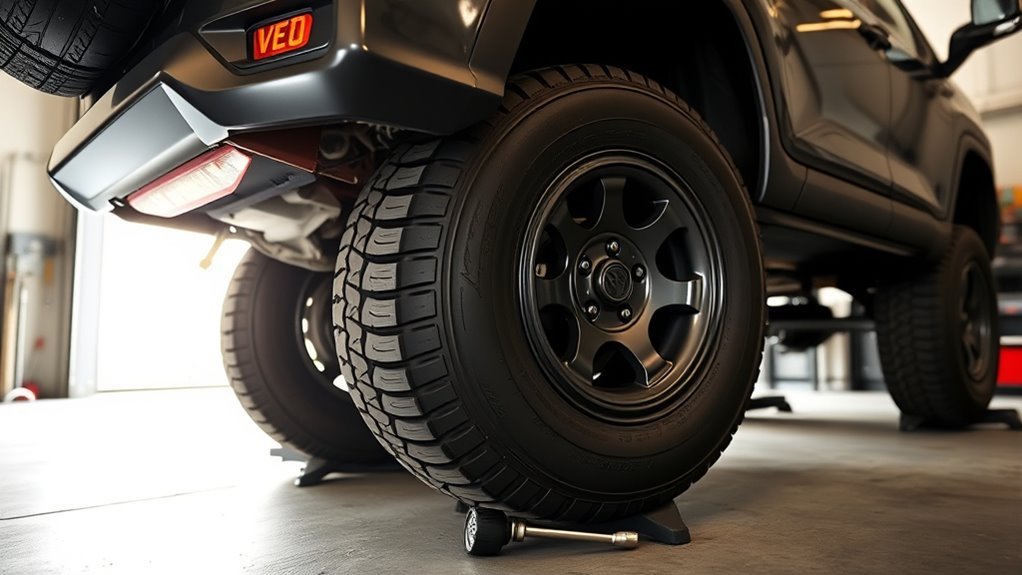
You shouldn’t fit a single new tire to your AWD RAV4 because even small differences in diameter or tread depth change rolling circumference and wheel speed, forcing the AWD system and traction control to compensate and increasing wear on clutches, differentials, and remaining tires. Mismatches also degrade handling and ABS function, raising failure risk. Replace all four or match circumferences within about 1/4–1/2 inch (or shave new tires) to protect the drivetrain—more practical guidance follows.
Quick Answer: Can You Replace One Tire on a RAV4 AWD?
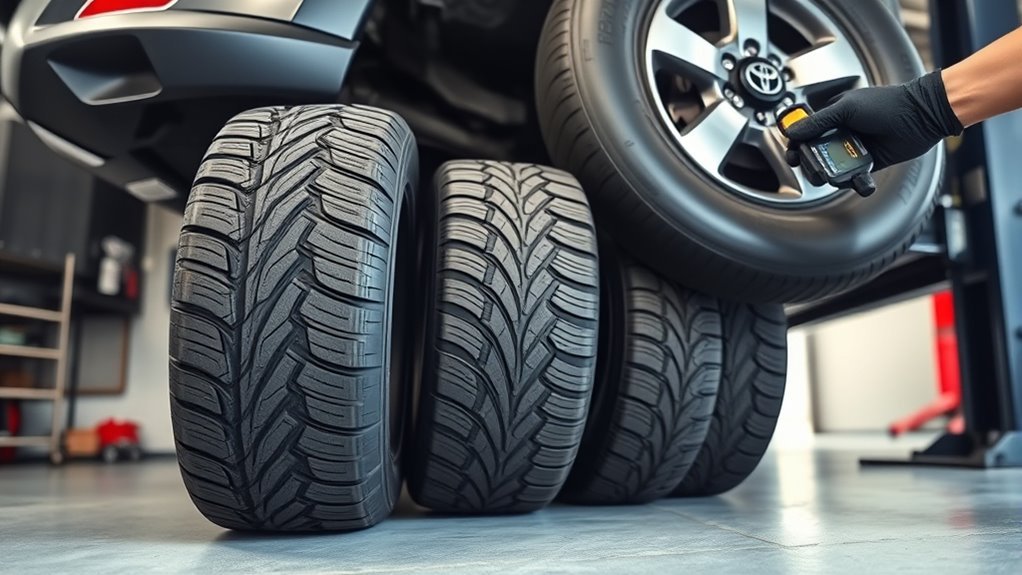
While you can physically replace a single tire on an AWD RAV4, you shouldn’t unless the new tire matches the other three in diameter and tread depth, because differences in rolling circumference force the AWD system to compensate and can stress drivetrain components. You’ll create size and tread depth imbalances that change wheel rotational speeds, which can confuse traction control sensors and force continuous compensation. That ongoing correction accelerates tire wear on the remaining tires and places mechanical strain on differentials and transfer components. For reliable performance, replace all four tires or match the new tire through tread shaving to equalize diameter and tread depth temporarily. Choose shops that measure tread depth precisely and confirm matched rolling circumference before installation. You want freedom from breakdowns and expensive repairs, so prioritize uniformity over convenience. That practical choice preserves drivetrain integrity, maintains predictable handling, and keeps traction control operating as designed.
How RAV4 AWD Works : Why Tire Uniformity Matters
Because the RAV4’s AWD uses electronic controls to shift torque between front and rear axles, you need all four tires to match in circumference and tread depth so the system can manage power without constantly compensating. The electronic controller expects near-identical rolling diameters; mismatches force it to correct by engaging clutches and motors more often, elevating wear and draining efficiency. Keep circumferences within 1/4–1/2 inch and use matching brand and design to preserve consistent traction and stability so you can drive free of avoidable constraints.
You should monitor tire pressure and tread depth regularly, and replace tires in pairs or all four when necessary. Since the RAV4 Prime lacks a mechanical center differential, uneven tires undermine torque distribution and can stress the drivetrain, shortening component life. Uniform tires let the AWD system operate predictably, protecting drivetrain health and giving you dependable control in varied conditions.
How Tire Diameter, Tread Depth, and Rotation Speed Stress the Drivetrain
Having uniform tires lets the AWD controller do its job, but even small differences in diameter or tread depth will make the system work harder and shorten component life. You’ll notice that a 1/4-inch diameter mismatch or uneven tread depths forces unequal rotation speeds, producing differential stress across the drivetrain. Keep tire pressure correct and account for seasonal changes to minimize diameter variance from temperature and wear.
- Diameter: small radius differences change effective gearing, increasing torque transfer and component load.
- Tread depth: unequal depths alter rolling circumference and traction, forcing continuous compensations.
- Rotation speed: mismatched wheels spin at different rates, stressing viscous couplings, transfer cases, and bearings.
- Maintenance: regular rotations and pressure checks equalize wear, reducing drivetrain fatigue and failure risk.
You want freedom from breakdowns—maintain uniform tires, monitor tire pressure, rotate per schedule, and plan for seasonal changes to preserve AWD reliability and safety.
Risks of Mismatched Tires on a RAV4: Drivetrain, Handling, and ABS
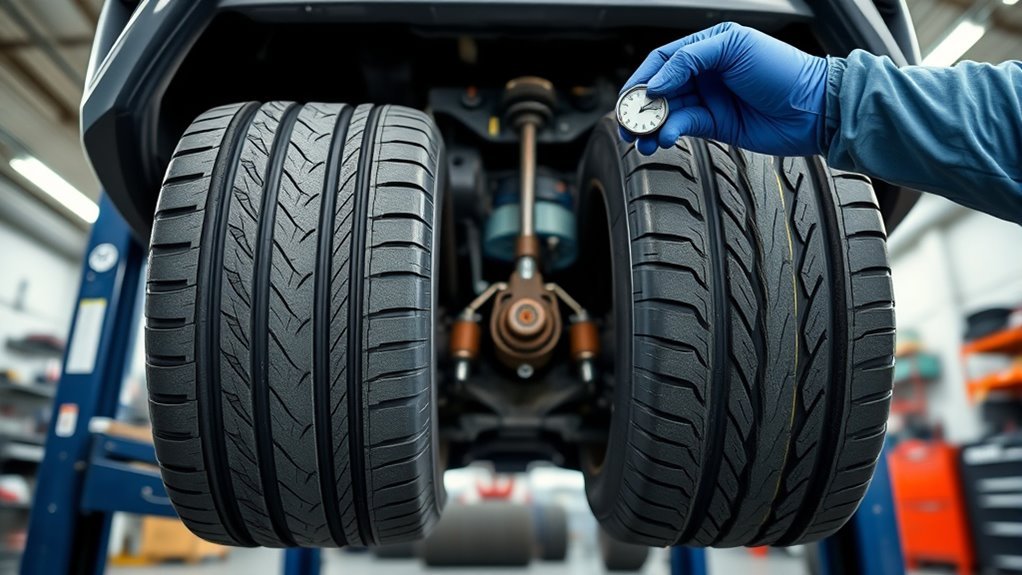
If you fit tires that differ in diameter or tread depth, your RAV4’s AWD components, handling, and ABS can all be compromised: uneven circumferences force different wheel speeds that load the transfer case and differentials, make the vehicle pull or respond unpredictably in turns, and can trigger ABS/traction-control faults or prevent rear-drive engagement when diameter differences exceed about 3%. You’ll accelerate drivetrain strain, risking expensive failures if mismatches persist. Handling stability degrades—expect lateral pull, delayed steering feedback, and reduced confidence in evasive maneuvers. ABS and traction control depend on consistent wheel speeds; mismatched tires can cause false activations, warning lights, or inhibited braking performance.
| Effect | Cause | Result |
|---|---|---|
| Drivetrain strain | Uneven wheel speeds | Transfer case/diff wear |
| Handling stability loss | Asymmetric grip/diameter | Pulling, unstable turns |
| ABS faults | Sensor speed mismatch | False activation/warnings |
| AWD disengage risk | >3% diameter diff | Reduced traction capability |
Keep tire uniformity to reclaim control and avoid mechanical liberation being undermined by avoidable wear.
When Replacing Tires, Why Replacing All Four Is Usually Safest
When you replace all four tires on an AWD RAV4, you maintain consistent diameter and tread depth across the drivetrain, preventing unequal wheel speeds that would otherwise load the center differential and transfer case. You preserve traction performance and handling stability, and you reduce uneven tire wear that shortens service life.
- Replacing all four keeps rotational parity, protecting drivetrain longevity and avoiding costly mechanical stress.
- Uniform tread helps in varied weather conditions, so you won’t compromise grip or ABS responsiveness in rain or snow.
- Maintain tire pressure and follow maintenance tips—regular checks and aligned rotations slow tire wear and extend freedom from breakdowns.
- Set a disciplined replacement frequency based on tread depth and manufacturer guidance to sustain safe handling and predictable traction.
Choose full-set replacement to simplify upkeep, optimize performance, and liberate yourself from preventable repairs. Consistency across tires is practical, technical, and essential for long-term AWD reliability.
Acceptable Tread and Diameter Tolerances for RAV4 AWD : How to Measure Them
You’ve just seen why replacing all four tires keeps an AWD RAV4’s drivetrain happy; now you need specific limits and measuring steps so you can verify tolerances before deciding on replacements. Measure circumference or diameter at several points using a tape or rolling method; aim for differences within 1/4–1/2 inch. Even small inconsistencies change wheel speed and engage the AWD system improperly.
Use consistent tire measurement techniques: check diameter with the wheel off the ground or rotate the tire and mark one point, then measure one revolution. For tread, use calibrated tread depth tools and record readings at inner, center, and outer grooves. Maintain maximum tread-depth variance of 2/32–4/32 inch across all four tires.
If measurements exceed these tolerances, replace as a set—don’t gamble with the drivetrain. Regularly document readings to catch uneven wear early. These pragmatic steps give you control and protect both handling and the AWD system’s longevity.
How to Match New Tires: Replace All, Pair Axles, or Shave New Tires
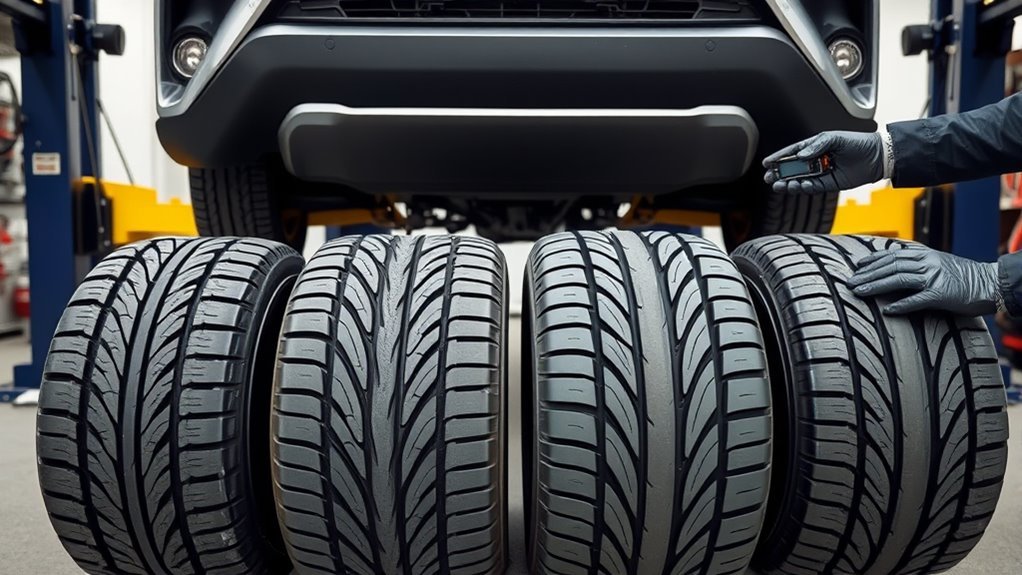
When you replace tires on an AWD RAV4, the safest option is to swap all four at once to keep circumference and tread depth uniform and avoid drivetrain stress. If that’s not possible, fit matched tires on the same axle and monitor circumference differences closely, knowing some imbalance may remain. Alternatively, have new tires shaved to match remaining tread depth so rolling diameter stays within the recommended 1/4–1/2 inch tolerance.
Replace All Four Tires
Although replacing all four tires may cost more up front, it’s the safest way to keep an AWD RAV4’s drivetrain and stability intact because identical tire circumference and tread depth prevent differential binding and uneven torque distribution. You’ll achieve consistent handling, preserve tire longevity, and adapt to varied driving conditions without risking costly driveline wear.
- Replace all four to maintain circumference within 1/4–1/2 inch and tread depth uniformity.
- Target tread depth match within 2/32–4/32 inches to avoid traction and handling issues.
- Use identical tire models and sizes to protect AWD sensors and differentials.
- Prioritize full replacement when you want a definitive, low-risk solution rather than interim fixes.
This approach frees you from frequent compromises and keeps control precise and reliable.
Tire Shaving Vs Pairing
If you’re not ready to replace all four tires on your AWD RAV4, consider two common alternatives: pairing axles or shaving new tires to match tread depth. You’ll save money pairing axles—swap both tires on one axle—but you must monitor tread wear differences closely. Aim for no more than 2/32 to 4/32 inches variance; larger gaps can strain the drivetrain and degrade tire performance. Tire shaving trims new tires to the depth of worn tires, typically $25–$35 per tire, restoring rotational parity without discarding usable rubber. Follow manufacturer guidelines on brand and design matching. If you want freedom from drivetrain headaches, shave new tires or replace all four; pairing is a budget compromise with measurable risks.
AWD-Optimized Tire Rotation Schedule and Patterns for the RAV4
Because uneven tread wears faster on one axle than another, you should rotate your RAV4’s tires every 5,000–7,500 miles using a front-to-back/back-to-front pattern to keep tread depths within about 2/32–4/32″ of each other and minimize AWD drivetrain strain. You’ll keep traction balanced and avoid forced differential action by following consistent tire rotation techniques and disciplined tread depth monitoring.
- Inspect tread depth at each interval; flag any tire deviating beyond 2/32–4/32″ and rotate immediately.
- Use the front-to-back/back-to-front pattern for AWD RAV4s; it equalizes wear without complex cross patterns.
- Record rotations and measurements; manufacturers’ intervals protect drivetrain components and stability.
- If you find irregular wear, correct alignment or suspension issues before next rotation to prevent repeated imbalance.
You’re freeing yourself from avoidable repairs by enforcing this schedule; it’s a practical, technical routine that preserves AWD performance and your independence on the road.
Choosing the Right Tire Brand and Model for Consistent AWD Performance
When you choose tires for an AWD RAV4, pick the same brand and model across all four corners to keep rolling diameter, tread compound, and tread pattern consistent—mismatched tires can produce different grip and circumference that strain the AWD system, increase wear, and degrade handling. You’ll preserve tire performance and protect drivetrain components by insisting on identical tires that match tread design and rubber compound.
| Benefit | Effect |
|---|---|
| Uniform circumference | Prevents differential binding |
| Identical grip | Maintains predictable handling |
| Same wear rates | Simplifies replacement planning |
Select tires rated for your RAV4’s load and performance class and prioritize models marketed for AWD or all-season stability. Check manufacturer specs and avoid mixing sizes or categories. Consistent tires reduce electronic compensation, lower mechanical stress, and extend component life. You’re choosing freedom from avoidable failures: a precise, unified tire setup gives you confident control, durable performance, and the liberation to drive without drivetrain compromise.
Simple Maintenance Checklist to Keep Tires Matched and Protect Your AWD System
Although regular tire checks seem simple, you’ll protect your RAV4’s AWD system by following a focused maintenance checklist:
- Use a tread gauge monthly to verify all four tires stay within 2/32–4/32″ of each other; consistent tread prevents differential strain.
- Rotate tires front-to-back every 5,000–7,500 miles to equalize wear patterns and preserve matched rolling diameter.
- Implement pressure monitoring monthly—keep all tires at the manufacturer’s psi—to avoid effective size differences that stress the AWD drivetrain.
- When wear necessitates replacement, opt for all four tires or identical pairs and schedule wheel alignments to prevent rapid mismatch and uneven wear.
This concise routine empowers you to maintain freedom on the road: proactive tire maintenance reduces mechanical risk, preserves traction symmetry, and minimizes drivetrain repairs. Stay disciplined—regular checks and timely service keep your AWD system balanced and reliable.
Frequently Asked Questions
What Is the 3% Tire Rule?
The 3% tire rule says you must keep tire diameter differences under three percent to avoid drivetrain stress; you’ll reduce uneven tire wear and traction differences, preserving AWD function, handling, and safety while freeing yourself from preventable failures.
How Important Is It to Have Four Matching Tires?
It’s essential: you should have four matching tires to preserve tire performance, traction stability, and AWD longevity; mismatched tires create uneven rotation, strain drivetrain components, and reduce control, so replace all four when wear differs markedly.
Do I Need to Replace All Four Tires on an AWD Toyota?
Think of a crew relying on each oar: yes, you should replace all four on an AWD Toyota if tire wear differs, because mismatches harm traction performance and stress the drivetrain; replacing guarantees balanced handling and freedom.
Is It Bad to Not Have Matching Tires?
Yes, it’s bad: mismatched tire tread creates traction differences, causing drivetrain stress, performance impact and safety concerns. You’ll compromise handling, ABS function and overall liberation on the road unless you match all tires.
Conclusion
You need matched tires to keep your RAV4 AWD reliable — think of them as synchronized gears in a clock: mismatched diameter or tread throws off timing and wears the drivetrain. Replace all four when possible; if not, pair same-size tires on an axle or have new tires shaved to match. Rotate on schedule, check tread depths, and use identical models to avoid ABS and handling issues. Do this and you’ll protect performance and longevity.

Related Articles

Upsizing Wheels on a Toyota RAV4: Pros, Cons, and Considerations
Boost your Toyota RAV4's performance with larger wheels, but discover the hidden trade-offs that could impact your ride before you decide.
Read More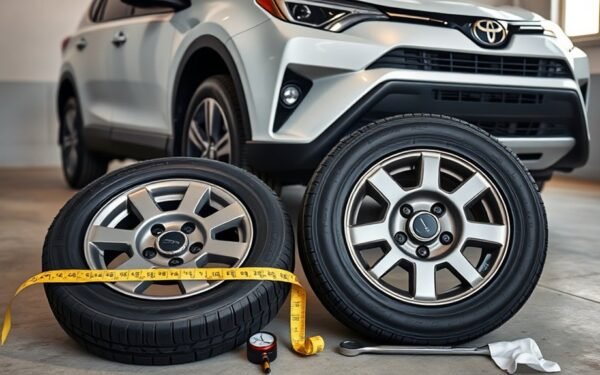
Can I Change Tire Size on My Toyota RAV4? Rules and Recommendations
Are you considering changing the tire size on your Toyota RAV4? Discover the essential rules and recommendations before making a decision.
Read More
What to Do If the TPMS Light Comes On in Your RAV4
Understand the steps to take when the TPMS light illuminates in your RAV4, as overlooking it could lead to serious tire problems.
Read More