
How to Install the Spare Tire on a Toyota RAV4
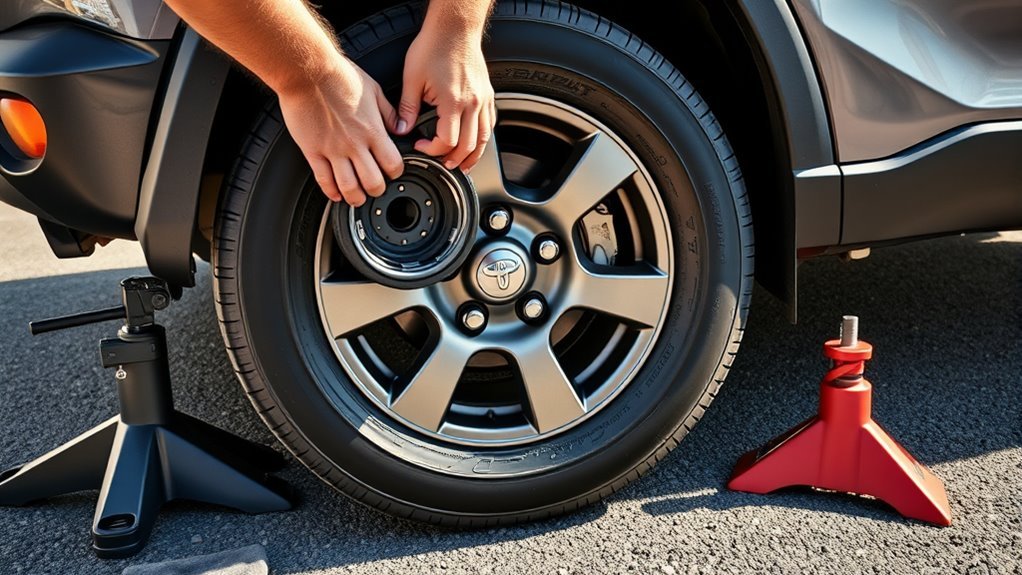
To install a spare tire on your Toyota RAV4, park on level ground away from traffic. Access the spare tire and tools from the trunk. Remove lug nuts with the wrench and take off the flat tire. Align the spare tire with the lug holes, making certain the valve stem faces outward. Hand-tighten the lug nuts, then secure them in a crisscross pattern. Finally, check the fit and confirm it’s snug for safe driving. There’s more to guarantee you’re fully prepared.
Understanding Your Toyota RAV4 Spare Tire Setup

When you need to install a spare tire on your Toyota RAV4, understanding its spare tire setup is important. The spare tire, along with the jack and lug nut wrench, is conveniently located in the trunk, providing easy access when you need it. This kit is essential for effective tire installation. When mounting the spare tire, remember to position the valve stem outward; this secures visibility and proper installation. If you’re using a donut spare tire, place it on the rear wheels for enhanced safety. Keep in mind that this type of tire has a maximum speed limit of 50 mph and a driving distance limit of 50 miles. Regular spare tire maintenance is critical, so don’t forget to conduct tire pressure checks and inspect its condition. This practice guarantees that your spare tire is ready for action whenever you need it.
Essential Tools for Changing Your Spare Tire
To change a spare tire on your Toyota RAV4, you’ll need a few essential tools: a lug nut wrench, a jack, and the spare tire itself. The lug nut wrench is important for loosening and tightening the lug nuts securely. Verify it fits the specific size of your RAV4’s lug nuts before starting. The jack, located in your trunk alongside the spare tire, raises the vehicle safely. Always place the jack on stable, level ground to prevent accidents during the lift. Familiarizing yourself with the owner’s manual can provide insights into any vehicle-specific tools or recommendations for safe tire changes. Regular tire maintenance and emergency preparedness are essential for your safety on the road. Keeping these tools accessible guarantees you’re ready to handle unexpected tire issues efficiently. Being proactive empowers you to take control of your vehicle’s maintenance and enhances your confidence in emergency situations.
Essential Preparations Before Changing Your Tire
Ensuring your safety and efficiency while changing a tire involves several key preparations. First, park your Toyota RAV4 in a safe, level area away from traffic to minimize accidents. Next, unzip the spare tire cover and remove it to access the spare tire easily. Check your spare tire kit for essential tools, including the lug wrench, jack, and jack handle, ensuring everything’s accessible from the cargo gate.
Before proceeding, verify that your spare tire is properly inflated by checking the tire pressure sensor. This step is vital for tire safety and performance. Additionally, consult your owner’s manual for specific instructions and safety protocols related to tire maintenance. Familiarizing yourself with these guidelines can markedly enhance your confidence and efficiency during the tire change process. By taking these essential preparations, you’ll set yourself up for a safer and smoother experience.
Safely Removing the Flat Tire From Your RAV4
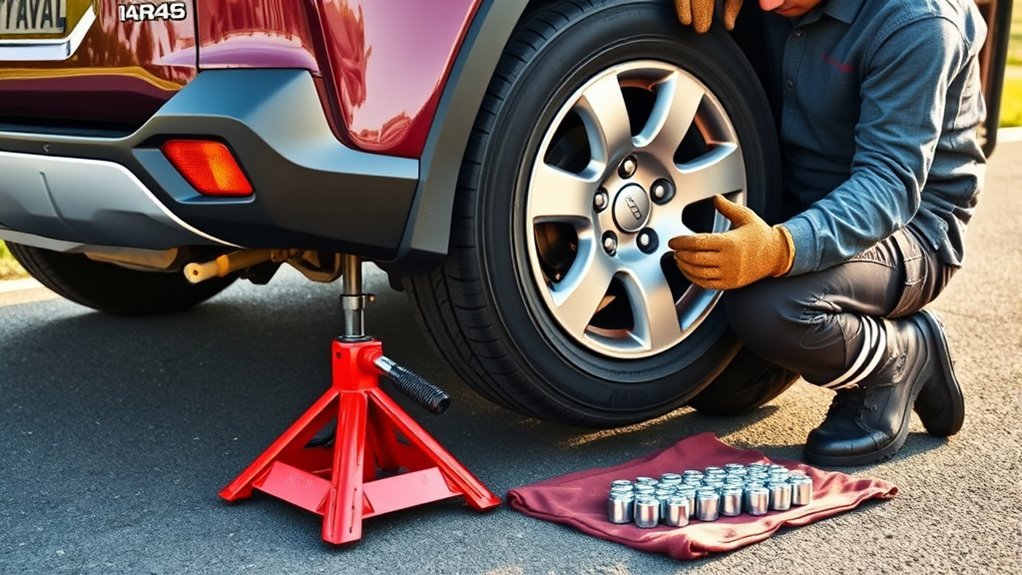
Begin by opening the spare tire cover zipper and removing the cover to expose the flat tire. With the flat tire accessible, follow these steps to guarantee safety and efficiency:
- Retrieve the lug wrench from the spare tire kit, which should be easily reachable from the cargo gate.
- Remove the lug nuts: Use the lug wrench to unscrew the three lug nuts from the flat tire. If they’re stubborn, apply extra force, but maintain control to avoid injury.
- Slide off the flat tire: Carefully lift the flat tire off the mount, taking care not to damage the rim or tire during the removal process.
Before proceeding, check the tire pressure sensor functionality to confirm ideal tire safety. Handling the flat tire with precision will prepare you for the next steps in this essential process.
How to Properly Install a Spare Tire
To properly install a spare tire, start by ensuring the tire is aligned with the lug bolts on the wheel hub, making sure the valve stem faces outward. Hand-tighten the lug nuts onto the bolts, then use the lug wrench to secure them in a crisscross pattern for uniform tightness. This method guarantees both proper alignment and secure installation, preventing any issues while driving.
Proper Tire Alignment
When installing a spare tire on your Toyota RAV4, proper alignment is essential for safety and performance. Follow these steps to guarantee effective installation:
- Align the spare wheel with the lug holes on the mount, making sure the valve stem faces outward for visibility.
- Reinstall the three lug nuts by hand onto the lugs, confirming they match the specified lug nut size in your owner’s manual.
- Use the lug wrench to tighten the lug nuts in a crisscross pattern, assuring even pressure and proper tire pressure on the spare tire.
After installation, check that the spare tire is firmly seated and doesn’t wobble when pushed. Verify that its wheel size is compatible with your vehicle for maximum safety.
Secure Lug Nut Installation
Make certain your spare tire is securely mounted by following a precise installation process for the lug nuts. Start by aligning the spare wheel with the lug bolts, ensuring the valve stem faces outward for visibility. Next, reinstall the three lug nuts, making sure they’re threaded correctly to prevent cross-threading. To achieve even pressure distribution, tighten the lug nuts in a star pattern. This method is essential for effective tire maintenance, as it helps prevent uneven wear. After securing the lug nut types, confirm that all are tightened to the manufacturer’s specifications. Finally, double-check that the spare tire is properly seated and free of obstructions before getting back on the road. Your safety depends on it.
Secure Your Spare Tire With Lug Nuts
Once you’ve aligned the spare tire with the wheel lugs, it’s time to secure it with lug nuts. Use the lug wrench to tighten them in a crisscross pattern, ensuring even distribution of pressure for a secure fit. Don’t forget to check your owner’s manual for the correct torque specifications before performing a final inspection.
Proper Lug Nut Tightening
To guarantee your spare tire is securely mounted on your Toyota RAV4, start by hand-tightening the lug nuts against the mounting lugs. Follow these steps for proper lug nut tightening:
- Use the lug wrench to snugly tighten the lug nuts in a crisscross pattern, ensuring even pressure across the tire.
- Tighten each lug nut to the manufacturer’s specified torque, which is around 76 ft-lbs for your RAV4. This step is vital for lug nut safety.
- Double-check the tightness after driving a short distance on the spare. Regularly inspect the lug nuts and retighten as necessary; this is one of the essential tire maintenance tips to maintain stability and safety.
Ensuring Correct Alignment
Making sure your spare tire is correctly aligned is essential for safe driving. Start by positioning the valve stem outward for best tire visibility. Align the spare wheel with the lugs on the mount before securing it with lug nuts. Use the lug wrench to tighten the three lug nuts in a crisscross pattern, which helps distribute pressure evenly.
Here are some alignment tips to keep in mind:
| Step | Action |
|---|---|
| 1. Valve Stem Position | Face outward for visibility |
| 2. Align Wheel | Make certain lugs fit perfectly |
| 3. Tighten Nuts | Use crisscross pattern |
| 4. Check Specifications | Verify lug nut tightness |
| 5. Inspect Tire | Look for any signs of damage |
Double-check your work to make sure of a secure fit.
Checking for Secure Fit
Securely installing the lug nuts is vital to guarantee your spare tire stays in place while driving. Follow these steps for a secure fit:
- Hand-tighten each lug nut to avoid cross-threading after aligning the spare tire with the wheel lugs.
- Use the lug wrench to tighten the lug nuts in a crisscross pattern. This guarantees even pressure, which is essential for proper wheel alignment and ideal tire pressure.
- Confirm each lug nut’s torque is set to the manufacturer’s specifications to prevent loosening during operation.
After installation, check for any visible gaps between the tire and wheel hub to confirm proper seating. Regularly inspect the lug nuts after driving a short distance, ensuring they remain tight for your safety.
Ensure Your Spare Tire Fits Right
When installing your spare tire, making certain it fits correctly is essential for both safety and performance. First, check that the spare tire is the right size and compatible with your Toyota RAV4. Different spare tire types, such as full-size or donut spares, have specific applications; for ideal safety, the donut spare should be mounted on the rear wheels.
Before installation, inspect the tire for proper inflation and condition. Confirm the valve stem faces outward for visibility and functionality. After you mount the tire, securely tighten the lug nuts to prevent any loosening while driving.
Here’s a quick reference table to assist you:
| Tire Type | Recommended Pressure | Installation Location |
|---|---|---|
| Full-size | 30-35 psi | Any wheel |
| Donut | 60 psi | Rear wheels |
| Temporary | 40 psi | Front or rear |
| Off-road | 25-30 psi | Variable |
| Regular | 30-35 psi | Any wheel |
Reattach the Tire Cover: Steps You Need to Know

To reattach the tire cover, start by positioning the zipper at the top of the spare tire for proper alignment. This guarantees ideal coverage and tire cover maintenance. Follow these steps for a secure fit:
- Slide the bottom part of the cover over the tire, making sure it fits snugly around the edges.
- Begin zipping the cover from the top down, securely fastening it in place.
- Check the zipper functionality to confirm it operates smoothly without any snags.
After zipping, verify that the cover is properly aligned and securely attached. This protects your spare tire from the elements, extending its lifespan. Remember, a well-maintained tire cover not only enhances the look of your vehicle but also provides essential protection. Confirming proper attachment is key to retaining the integrity of your spare tire for future use.
Store Your Tools and Tire Cover Properly
After you’ve finished using your spare tire, store your jack tools in their designated bag to avoid loss or damage. Make certain the tire cover is correctly positioned with the zipper at the top for quick access, and securely slide it over the tire while zipping it closed. Regularly inspect the cover’s zipper and elastic cord to guarantee a tight fit, locking it in place with the tabs to protect against dirt and debris.
Proper Tool Storage
Properly storing your tools and tire cover is essential for maintaining organization and readiness in your Toyota RAV4. Effective tool organization and trunk management will enhance your driving experience. Follow these steps:
- Store the jack, lug nut wrench, and jack handle back in the trunk, ensuring they’re organized and easily accessible.
- Secure your tool bag with the tabs in the trunk to prevent movement while driving, keeping everything in place.
- Check the tire cover regularly for wear and tear, ensuring it’s zipped and positioned correctly to protect the spare tire from dirt and debris.
Secure Tire Cover
Securing your tire cover is crucial for protecting the spare tire from the elements. Position the zipper part at the top for easy access and alignment. Slide the cover over the spare tire, checking for proper fitment around the entire circumference. Start zipping from the top down, confirming alignment to prevent exposure to rain, snow, or debris. Once zipped, lock the tire cover in place with the tabs to make sure it stays secure during driving or adverse weather conditions. Regular tire cover maintenance will enhance its lifespan, providing maximum weather protection. Finally, store your jack tools back in their designated bag, making sure all components are accounted for and accessible for future use.
Easy Access Locations
Once you’ve secured your tire cover, it’s important to know where to store your tools and spare tire for quick access. Proper trunk organization guarantees that everything you need is readily available when you encounter a flat. Follow these steps for ideal tool accessibility:
- Store the lug nut wrench and jack handle in the designated compartments to prevent shifting during travel.
- Position the spare tire with the valve stem facing up, allowing easy access for inflating or checking pressure.
- Regularly check the tire cover and tools to verify they’re in good working order before any potential tire changes.
Maintain Your Spare Tire and Tools Effectively
Maintaining your spare tire and tools is essential for safety and reliability on the road. Start by regularly inspecting your spare tire for proper inflation—ensure it meets the recommended pressure. This simple step enhances both safety and performance. Store the spare tire and jack tools in a clean, dry area in your trunk to prevent rust and corrosion.
Check the condition of the lug wrench and jack frequently; they must function properly when you need them. Keep the spare tire cover free from debris and fasten it securely to avoid losing it during high winds or car washes.
Familiarize yourself with your owner’s manual for specific maintenance tips related to your Toyota RAV4’s spare tire and tools. By committing to these spare tire care and tool maintenance practices, you empower yourself for any unexpected roadside situations, ensuring your vehicle remains reliable and ready for the journey ahead.
Frequently Asked Questions
Can I Put a Spare Tire on Myself?
Yes, you can definitely do a DIY tire replacement. Make certain you prioritize spare tire safety by parking on level ground, loosening lug nuts before lifting, and securely tightening them in a crisscross pattern after installation.
Conclusion
Now that you’ve mastered the art of changing your spare tire on a Toyota RAV4, you can tackle roadside emergencies with confidence. Just like a trusty sidekick, your spare tire is always there when you need it. Regular maintenance and proper storage will guarantee it’s ready for action whenever you face a flat. So, gear up, stay prepared, and remember: a little know-how goes a long way in keeping your journeys smooth and safe!

Related Articles

Upsizing Wheels on a Toyota RAV4: Pros, Cons, and Considerations
Boost your Toyota RAV4's performance with larger wheels, but discover the hidden trade-offs that could impact your ride before you decide.
Read More
Can I Change Tire Size on My Toyota RAV4? Rules and Recommendations
Are you considering changing the tire size on your Toyota RAV4? Discover the essential rules and recommendations before making a decision.
Read More
What to Do If the TPMS Light Comes On in Your RAV4
Understand the steps to take when the TPMS light illuminates in your RAV4, as overlooking it could lead to serious tire problems.
Read More