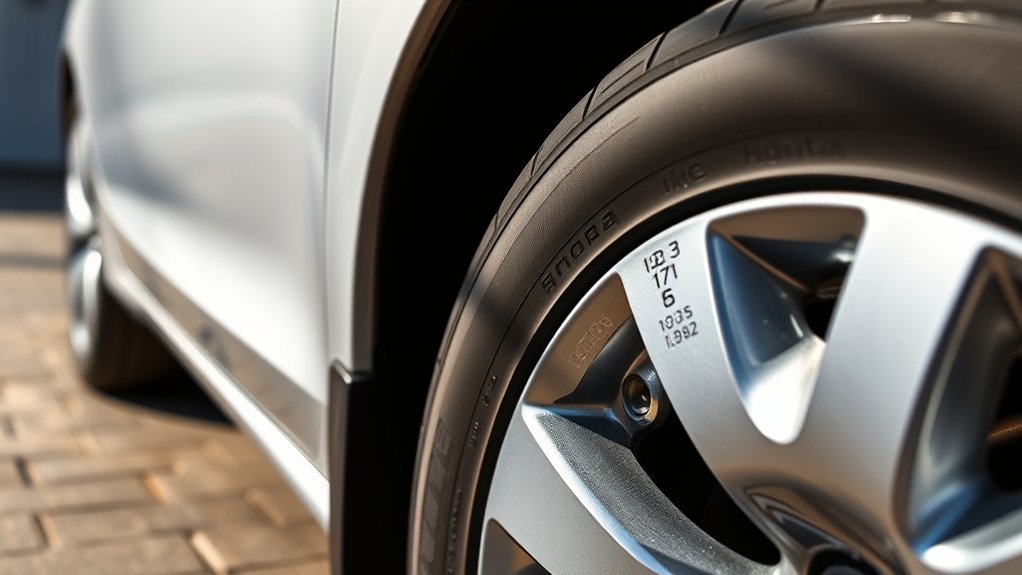
Choosing tires for a 2013 Honda Accord is easier when you start with the exact trim, wheel package, and tire placard on the driver-side door jamb. Most U.S. 2013 Accord models use 16-, 17-, or 18-inch tires from the factory, and the right size affects ride comfort, steering feel, fuel economy, braking, and tire-wear patterns.
Quick Answer
Common 2013 Honda Accord tire sizes are 205/65R16 for the LX sedan, 215/55R17 for many EX, EX-L, LX-S, Touring, and coupe models, and 235/45R18 for the Sport and some V6 or Touring packages. Most recommended cold pressures are around 33 PSI front and 32–33 PSI rear, but your door-jamb placard is the final authority.
Key Takeaways
- Do not guess by model year alone; confirm the tire size on the driver-side tire placard or the tire sidewall.
- The common OEM sizes are 205/65R16, 215/55R17, and 235/45R18, depending on trim and wheel package.
- Check pressure when tires are cold, not after a highway drive, and never use the sidewall max PSI as the normal inflation target.
- Replace tires at the wear bars, at 2/32 inch tread depth, when damaged, or when age and condition make them unsafe.
- Rotate tires on schedule and recheck pressure afterward to help prevent uneven wear.
At a Glance
| Time Required | 10–15 minutes for size, pressure, tread, and DOT date checks |
| Difficulty | Easy |
| Tools Needed | Tire pressure gauge, tread-depth gauge or penny, flashlight, and owner’s manual |
| Cost | Usually $0–$15 if you already have a gauge; professional tire inspection costs vary by shop |
2013 Honda Accord Tire Size by Trim
The most common 2013 Honda Accord tire sizes are 205/65R16, 215/55R17, and 235/45R18. Some coupe listings may show a 19-inch option, but you should not assume a 19-inch tire fits your car unless the wheel package, tire placard, and a qualified tire shop confirm it.
| 2013 Accord model | Common OEM tire size | Common load / speed rating | Notes |
|---|---|---|---|
| Sedan LX | 205/65R16 | 95H | Common 16-inch LX setup |
| Sedan EX, EX-L, EX-L V6 | 215/55R17 | 94V | Common 17-inch setup |
| Sedan Sport | 235/45R18 | 94V | Common 18-inch Sport setup |
| Sedan Touring | 215/55R17 or 235/45R18 | 94V | Depends on wheel package; confirm the placard |
| Coupe LX-S, EX, EX-L | 215/55R17 | 94V | Common coupe 17-inch setup |
| Coupe EX-L V6 | 235/45R18; some listings show 235/40R19 | 94V or appropriate equivalent | Verify 19-inch fitment before buying |
Note: The table above covers common U.S. fitments, but the tire and loading information label on your own Accord is the best reference. Previous wheel swaps, dealer accessories, and replacement wheels can change what is currently installed.
[Products Worth Considering]

This TPMS sensor training and relearn reset tool is customized for Ford, Lincoln, and Mercury vehicles to help activate tire pressure programming after sensor replacement or tire rotation. It can activate individual tire pressure sensors with one-button operation, helping prevent TPMS warning light illumination. It is not a sensor programming tool and cannot program replacement sensors—use it to trigger/activate sensors only.

Monitor tire tread wear with a smart, color-coded depth gauge that shows clear condition ranges at a glance. The bar is range marked for fast, easy readings, helping you maintain safer traction and performance. Each gauge is portable with a pocket clip, and the set includes 20 units for daily use and sharing.

Keep your tires properly inflated with this analog VONDIOR tire pressure gauge, designed for fast, easy readings without batteries. The swiveling, two-axis hose and large glow dial help you measure at any tire angle with instant visibility. Built with a protective rubber shield, it supports durable, low-maintenance use for cars and trucks.
How to Read the Tire Size Code
A tire marked 205/65R16 95H tells you more than the width and wheel diameter. Here is what each part means:
- 205 — tire width in millimeters.
- 65 — sidewall height as a percentage of the tire width.
- R — radial tire construction.
- 16 — wheel diameter in inches.
- 95 — load index, or how much weight the tire can support at its rated pressure.
- H — speed rating. Many 2013 Accord fitments use H- or V-rated tires.
When replacing tires, match the tire size, load index, and speed rating shown on the placard or original equipment specification unless a qualified tire professional confirms an approved alternative.
Recommended Tire Pressure for Your Honda Accord
Recommended tire pressure depends on the tire size and wheel package. Do not inflate based on the tire sidewall’s maximum pressure; that number is the tire’s maximum limit, not the vehicle’s normal cold-pressure recommendation. Use the driver-side door-jamb label first, then the owner’s manual if you need more detail.
| Tire size | Common front PSI | Common rear PSI | Common models |
|---|---|---|---|
| 205/65R16 95H | 33 PSI | 32 PSI | LX sedan |
| 215/55R17 94V | 33 PSI | 33 PSI | EX, EX-L, LX-S, Touring, many coupes |
| 235/45R18 94V | 33 PSI | 32 PSI | Sport, some EX-L V6, some Touring packages |
Warning: Underinflated tires can overheat and wear unevenly. Overinflated tires can reduce grip and make the ride harsh. Check pressure monthly when the tires are cold, and adjust to the placard value, not the sidewall maximum.
Proper Cold Tire Pressure
Cold tire pressure means the car has been parked for several hours or driven only a short distance at low speed. Heat from driving raises pressure, so a reading taken after a long drive can make the tires look more inflated than they are when cold.
- Park the Accord on level ground before the tires heat up.
- Remove the valve cap from one tire.
- Press a reliable gauge straight onto the valve stem.
- Compare the reading with the door-jamb placard.
- Add or release air as needed.
- Recheck the pressure and reinstall the valve cap.
- Repeat on all four tires and check the spare if equipped.
Pro Tip: Keep a small tire gauge in the glove box. TPMS is a warning system, not a replacement for regular pressure checks.
Effects of Incorrect Pressure
Incorrect tire pressure affects more than comfort. It can change braking distance, steering response, fuel economy, and tread life.
- Low pressure can cause shoulder wear, heat buildup, poor fuel economy, and sluggish steering.
- High pressure can cause center wear, a harsher ride, and less tire contact with the road.
- Uneven pressure side to side can make the car pull or feel unstable.
- Ignored TPMS warnings can allow a small pressure problem to become a tire failure risk.
When to Replace Your Tires?
Replace tires based on condition, tread depth, age, and performance—not mileage alone. Many tires last several years, but heat, potholes, poor alignment, low pressure, and hard driving can shorten their life.
Recommended Replacement Mileage
There is no single mileage number that fits every 2013 Honda Accord. A commuter who checks pressure monthly and rotates tires on schedule may get far more life than a driver who runs underinflated tires or drives on rough roads. Instead of relying only on miles, use this checklist:
- Replace at 2/32 inch tread depth or when the treadwear bars are flush with the tread.
- Plan earlier replacement if wet grip, braking, or winter traction has noticeably declined.
- Inspect annually after about five years of service because rubber ages even when tread remains.
- Replace by about ten years from manufacture as a precaution, or sooner if the tire maker or vehicle maker recommends it.
- Replace immediately if you see bulges, exposed cords, major cracking, or sidewall damage.
Signs of Tire Wear
Check each tire in several places across the tread. Uneven wear can reveal pressure, alignment, suspension, or rotation problems.
| What you see | Possible cause | What to do |
|---|---|---|
| Both shoulders worn | Underinflation or hard cornering | Check cold pressure and inspect alignment |
| Center worn faster | Overinflation | Adjust to placard pressure |
| One edge worn | Alignment or suspension issue | Schedule alignment and tire inspection |
| Cupping or scalloping | Worn suspension, imbalance, or skipped rotations | Have the tire, wheel, and suspension checked |
| Cracks, bubbles, cords, or sidewall cuts | Aging or structural damage | Stop using the tire until a professional inspects it |
How to Check Tread Wear and Rotate Tires
A tread-depth gauge is the most accurate tool, but the penny test can quickly show whether a tire is near the 2/32-inch minimum. Insert a penny into a major tread groove with Lincoln’s head upside down. If the top of Lincoln’s head is fully visible, the tire is at or near the replacement point.
Tread depth is only one safety check. A tire can have legal tread and still be unsafe if it has sidewall damage, bulges, cracks, vibration, or age-related deterioration.
Rotate tires according to the maintenance reminder or about every 5,000 to 7,500 miles if your driving pattern calls for a regular interval. Rotation helps even out front-to-rear wear, especially on a front-wheel-drive Accord.
- Non-directional tires: many front-wheel-drive rotation patterns move the front tires straight back and cross the rear tires to the front.
- Directional tires: rotate front to rear on the same side only, following the arrow on the sidewall.
- Different front/rear sizes: do not rotate front to rear unless the tire maker and vehicle fitment allow it.
- After rotation: recheck pressure, tighten wheel nuts to the Honda-specified torque, and follow the owner’s manual for any TPMS reset or calibration step.
Note: If you feel vibration after a rotation, the tires may need balancing or one tire may have uneven wear. Do not ignore new vibration at highway speed.
How to Read Tire Identification Numbers (TIN)
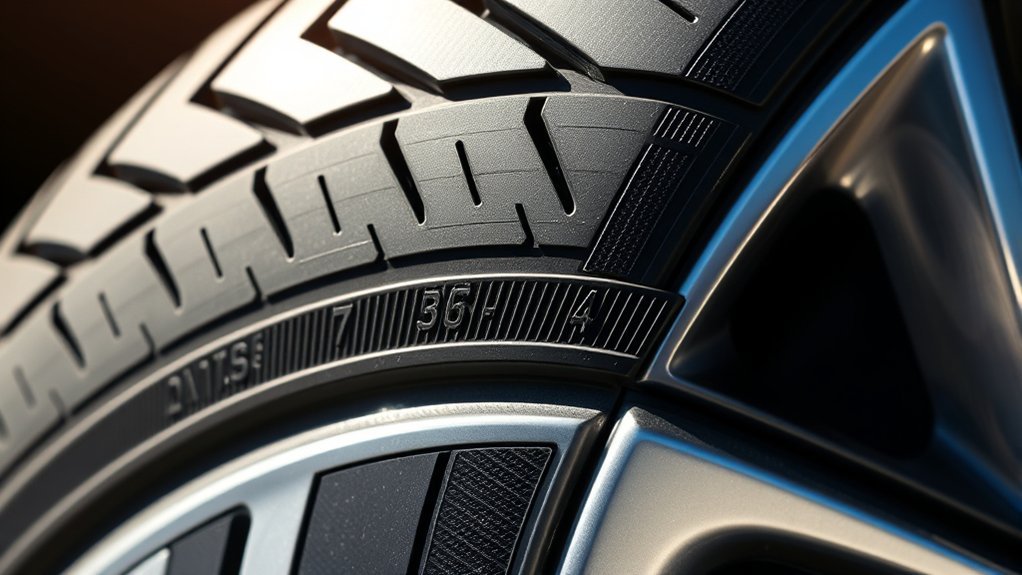
The DOT Tire Identification Number, often called the TIN, is molded into the tire sidewall. The final four digits show the tire’s manufacturing week and year. For example, a code ending in 3520 means the tire was made during the 35th week of 2020.
Sometimes the full DOT code appears on only one side of the tire. If you cannot see the date code on the outer sidewall, check the inner sidewall with a flashlight or ask a tire shop to inspect it.
Selecting Honda Accord Tires Based on Driving Conditions
The correct size is only the starting point. Pick a tire category that matches how and where you drive.
- Daily commuting: A touring or grand-touring all-season tire usually gives the best mix of comfort, tread life, and road noise control.
- Rain-heavy climates: Look for strong wet-braking ratings, wide circumferential grooves, and good hydroplaning resistance.
- Snow and ice: Use dedicated winter tires in the correct size if you regularly drive in freezing conditions. All-season tires are not a full substitute for winter tires on ice.
- Sportier driving: Performance all-season or summer tires can improve steering response, but they may ride firmer and wear faster.
- Long highway trips: Prioritize comfort, wet traction, low noise, and proper load/speed ratings.
Warning: Do not mix different tire sizes or constructions on the same axle. Mismatched tires can affect braking, stability control, ABS behavior, and handling.
[Products Worth Considering]

Measure tire tread depth quickly and accurately with this LUMITECO dial gauge that reads in 1/32" increments up to 14/32". The color-coded green/yellow/red zones make it easy to judge tire wear and know when replacement is needed. A rugged, compact design with a protective pouch helps keep the gauge ready for use on cars, trucks, motorcycles, and more.

AstroAI’s calibrated digital tire pressure gauge delivers precise readings across a 0–150 PSI range, with high clarity from a backlit LCD. Built for everyday road use, it features one-button operation, an anti-slip ergonomic grip, and support for multiple pressure units plus auto shutoff. Powered by AAA batteries, it’s an all-weather essential for checking tire health and TPMS warnings.

Steelman white tire marking crayons provide high-contrast, semi-permanent marks for repairing and inspecting tires and equipment. They write on wet or dry, smooth or coarse surfaces including rubber, metal, glass, and wood, making them ideal for puncture location and damage outlining. The lead- and zinc-free crayons resist weather and fading yet wipe away when you no longer need the marks.
Replacement Tire Buying Checklist
Before buying new tires for your 2013 Honda Accord, verify these points:
- Size: Match the door placard or an approved alternate size.
- Load index: Use the same or higher load index unless Honda or a tire professional approves otherwise.
- Speed rating: Use the same or higher speed rating for normal replacement.
- Tire type: Choose all-season, all-weather, winter, touring, or performance based on your climate and driving style.
- Set matching: Four matching tires are best. If replacing only two, ask the installer whether the new pair should go on the rear axle for stability.
- Age: Check the DOT date code on any tire before installation, especially if it has been stored for a long time.
- Alignment: If the old tires wore unevenly, fix the alignment or suspension issue before wearing out the new set.
[Products Worth Considering]

The Milton S-693 straight foot dual head air chuck is designed for accurate tire pressure checks and quick, secure valve-core engagement with lock-on threads on both ends. With a 1/4" FNPT connection and a maximum 150 PSI rating, it’s built for use on inner duals and common vehicle tires, including trucks and RVs.

Measure tyre tread depth precisely with a digital gauge that reads in both MM and inches, helping you monitor safe driving conditions. The large LCD screen is easy to operate, and the compact tool fits for cars, trucks, and motorcycles. It provides high accuracy with a 0-25.4mm range and includes a 1-year warranty for added peace of mind.

The Trivd Frol 1/2" air impact wrench delivers high performance torque up to 1500 ft-lbs with a twin hammer impact mechanism for strong, balanced blows. It features an ergonomic grip, compact lightweight design, and quick-stop control with 3 forward speeds up to 8000 RPM plus a reverse speed. Built for demanding automotive repair and tire shop work, the rear exhaust helps keep debris away from the surface.
Why Tire Rotation Matters for Your Accord
Regular tire rotation helps each tire share the workload. On a front-wheel-drive Accord, the front tires handle most steering, braking, and acceleration force, so they often wear faster than the rear tires.
| Tire maintenance benefit | Why it matters |
|---|---|
| More even tread wear | Helps prevent one pair of tires from wearing out early |
| Better handling consistency | Keeps front and rear grip more balanced |
| Early problem detection | A rotation is a good time to spot nails, cracks, cupping, or alignment wear |
| Longer tire life | A well-maintained set usually lasts longer than neglected tires |
Frequently Asked Questions
What tire size fits a 2013 Honda Accord?
Common sizes are 205/65R16 for the LX sedan, 215/55R17 for many EX, EX-L, LX-S, Touring, and coupe models, and 235/45R18 for the Sport and some V6 or Touring packages. Always confirm the size on your driver-side door-jamb placard before ordering.
What PSI should 2013 Honda Accord tires be?
Many 2013 Accord tire packages use about 33 PSI in front and 32–33 PSI in the rear when cold. The exact number depends on tire size and trim, so use the tire placard on your Accord as the final reference.
Is 33 PSI or 35 PSI better for a 2013 Accord?
Neither is automatically better. Use the cold tire pressure listed on the door placard. A 35 PSI reading may be too high for normal driving on some Accord tire packages unless the placard, load condition, or tire professional recommends it.
Can I use 235/45R18 instead of 215/55R17?
Only if you also have compatible 18-inch wheels with the correct width, offset, clearance, load rating, and lug fitment. Do not mount an 18-inch tire on a 17-inch wheel. If you are plus-sizing, have the setup checked before buying.
How often should I rotate tires on a 2013 Honda Accord?
Follow the Maintenance Minder or owner’s manual. As a practical guideline, many drivers rotate tires about every 5,000 to 7,500 miles, sooner if wear is uneven or the vehicle is driven on rough roads.
How do I know if my tires are too old?
Check the last four digits of the DOT date code. They show the manufacturing week and year. Have tires inspected regularly after about five years of service and replace old, cracked, damaged, or degraded tires even if tread remains.
Conclusion
The safest way to choose 2013 Honda Accord tires is to confirm your trim, read the tire placard, and match the correct size, load index, speed rating, and cold pressure. For most models, the common sizes are 205/65R16, 215/55R17, and 235/45R18, but your individual car may vary by wheel package. Check pressure monthly, watch tread depth and tire age, rotate on schedule, and replace damaged or worn tires before they compromise braking or handling.
Sources
- Honda Owners — 2013 Accord owner’s manuals — vehicle-specific owner guidance and placard/manual confirmation.
- Honda News — 2013 Honda Accord specifications and features — official model and trim specification reference.
- Honda News — 2013 Honda Accord chassis — factory wheel-size range and chassis/tire context.
- NHTSA TireWise — tire pressure, TPMS, tire aging, labeling, and safety guidance.
- eCFR 49 CFR § 570.62 — Tires — federal tire inspection and tread-depth reference.
- Michelin — When to Replace Tires — tire age, treadwear indicators, sidewall damage, and replacement signs.