
Eco-Friendly Tire Disposal: Responsible Options in the US
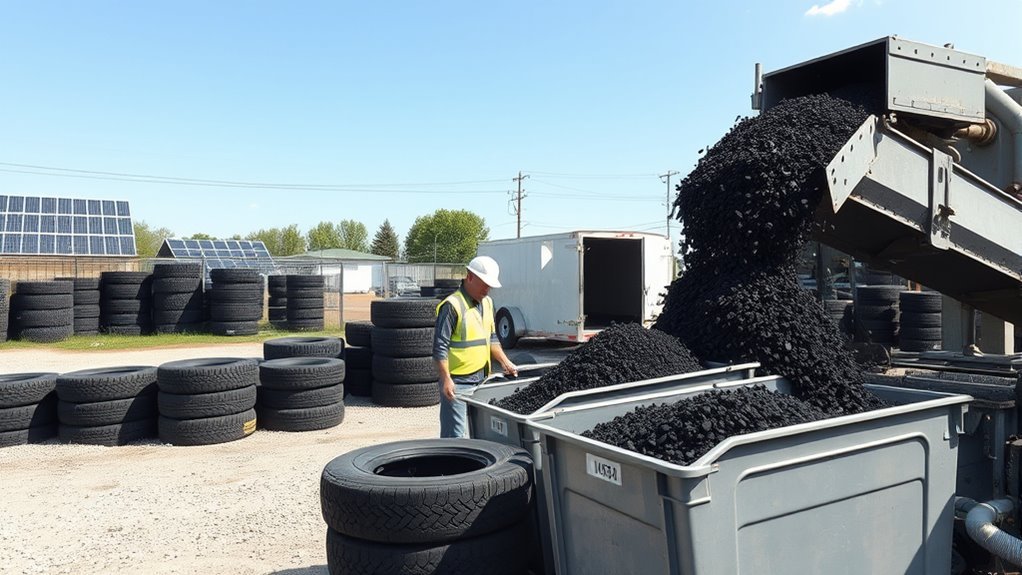
You can dispose of tires responsibly by using retailer take‑back programs, municipal drop‑offs, or certified recyclers, and by exploring retreading or shredding options that meet state regulations. Check local rules, fees ($1–$5 typical), accepted quantities, and documentation requirements before you go. Store tires dry and shaded, remove valve stems, and inventory loads for manifests. Prioritize programs that provide proof of proper handling and track diversion rates, and keep going to learn practical steps and local options.
Quick Steps to Recycle Tires Responsibly
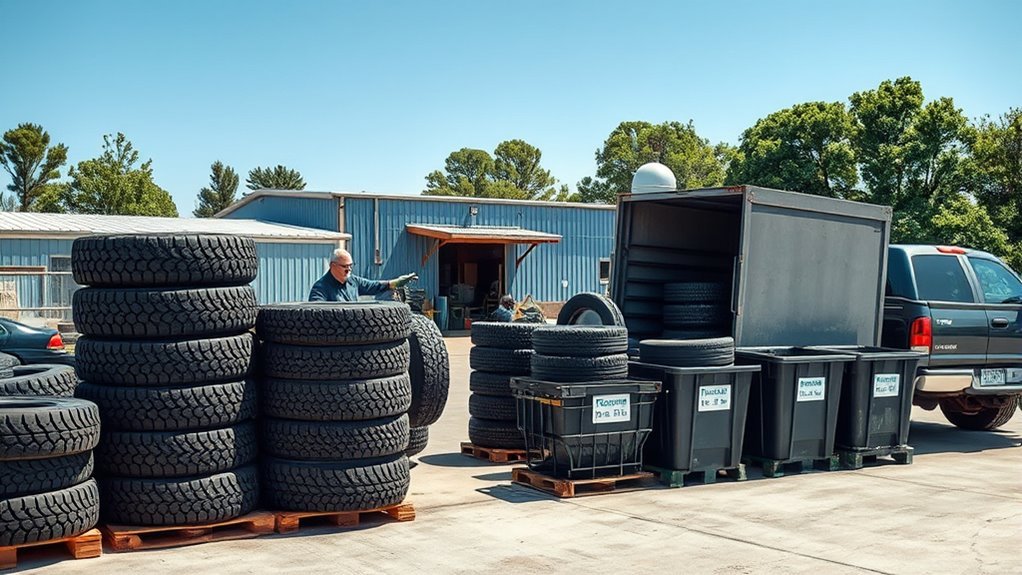
Start by checking local options: many tire retailers accept used tires free when you buy replacements, and municipalities often host collection events that cut illegal dumping and ease recycling; if those aren’t available, contact specialized recyclers (fee: about $1–$5 per tire) and store tires in a dry, shaded place until drop-off, removing valve stems and wheel weights and inspecting for unusual materials to confirm compliant, efficient processing. You should verify retailer and municipal requirements to ascertain regulatory compliance and maximize eco benefits. Prioritize tire safety by keeping old tires dry and out of direct sun to prevent degradation that complicates processing. When you use specialized recyclers, document receipts and manifests to track lawful disposal. Removing non-rubber components reduces contamination and speeds recycling streams. These steps reduce illegal dumping, lower municipal handling costs, and support markets for crumb rubber and energy recovery. Follow local rules, collect paperwork, and choose authorized processors so your actions advance environmental justice and personal liberation from waste liability.
Where to Drop Off Old Tires Near You
You should check local drop-off centers and municipal collection events first, since many accept tires free or on scheduled dates per local regulations. Retailer take-back programs are another reliable option—most tire sellers accept old tires when you buy new ones and often include disposal in the installation fee. Confirm fees and hours on government or retailer websites to verify compliant, cost-effective disposal.
Local Drop-Off Centers
One practical option is to use local drop-off centers—retailers, municipal recycling sites, and waste facilities that accept old tires—so you can comply with disposal regulations and avoid illegal dumping. You’ll find tire collection sites listed on local government and waste management websites; they detail accepted quantities, hours, and any fees. Municipal centers and community collection events often link to state recycling incentives that reduce costs and discourage illegal dumping. Check facility guidelines before you go so you meet transport and preparation rules. Avoid relying solely on retailers’ take-back programs (covered elsewhere); focus here on public sites and scheduled events that provide clear regulatory compliance. Using these centers gives you lawful, transparent options aligned with community waste policies.
Retailer Take-Back Programs
Public drop-off centers are convenient, but retailer take-back programs can be faster and more straightforward when you’re buying new tires. Many retailers include disposal fees in installation charges and comply with state regulations on tire management, so you’ll meet legal requirements simply by using their service. Local tire shops often accept used tires and may offer better pricing or personalized handling, reflecting retailer incentives to retain customers while meeting waste rules. Private recyclers charge processing fees but provide documented recycling chains of custody. Check local government sites for collection events and designated sites to compare costs and compliance. Increase customer awareness by asking retailers about fees, recycling destinations, and proof of proper disposal before you authorize work.
Choose the Right Recycling Method (Shredding, Retread, Energy Recovery)
You should weigh shredding’s versatility—mechanical processing turns tires into crumb rubber for playgrounds and asphalt, meeting many reuse regulations. Compare that to retreading, which extends casing life and cuts raw-material demand for about 30% of U.S. tires, versus energy recovery, which supplies fuel to industrial users and accounts for roughly 50% of recycled tires. Choose the option that aligns with local regulatory standards and your sustainability priorities to maximize landfill diversion and emissions reduction.
Shredding Benefits Explained
Although shredding may seem straightforward, it’s the most widely available and evidence-backed mechanical recycling method—repurposing roughly 84% of U.S. scrapped tires annually—because it converts whole tires into versatile, lower-risk feedstock for rubber mulch, playground surfacing, asphalt additives, and Tire-Derived Fuel (TDF) for industrial kilns. You’ll see shredding advantages in reduced fire and mosquito risks, greater material uniformity for regulators, and measurable landfill diversion. It supports recycling innovations that conserve resources and lower fossil fuel dependence. Choose facilities with clear compliance records and chain-of-custody documentation to protect communities and your freedom to opt out of wasteful disposal.
| Application | Benefit | Regulatory note |
|---|---|---|
| Mulch | Erosion control | ASTM specs apply |
| Asphalt | Durability | DOT approvals needed |
| TDF | Energy offset | Emissions monitoring |
Retread Vs EnergyRecovery
When deciding between retreading and energy recovery, weigh tire condition, regulatory constraints, and your environmental objectives: you’ll choose retreading when casings are sound — it extends service life, delivers retreading benefits by conserving raw materials and lowering manufacturing emissions, and aligns with circular-economy goals. If casings are unsuitable, energy recovery converts scrap tires into high-value fuel for industrial uses like cement kilns, dramatically reducing landfill volume while complying with emissions and waste-management rules. You should also consider shredding for crumb rubber when product diversion is preferred. Assess local regulations on emissions, fuel use, and waste diversion rates; the U.S. reclaims up to 84% of scrap tires through these paths. Decide based on casing viability, permitted end-uses, and your environmental priorities.
Prepare and Store Tires for Recycling Pick‑Up or Drop‑Off
Inspect each tire for non-standard materials or modifications—like stuck-on wheel weights or altered valve stems—that can slow processing or violate facility guidelines, and remove excess mud or debris to ease handling. Use a consistent tire inspection checklist and log sizes and types to speed sorting at drop-off or pick-up. Clean tires reduce contamination risk and comply with many facility requirements.
Store tires in a dry, shaded location with adequate ventilation; limit UV and moisture exposure to preserve rubber integrity and recyclability. Label stacks clearly and keep records accessible to recycling personnel. Secure tires to prevent tipping and to meet transport safety rules. Before scheduling pickup or heading to a center, verify local guidelines—some facilities mandate specific stacking, containment, or documentation. Following regulated storage conditions and organized documentation minimizes rejection, accelerates processing, and advances your practical commitment to liberation through responsible, rule-aligned disposal.
Tire Recycling Costs, Fees, and Possible Savings
Proper storage and documentation not only streamline recycling logistics but can also reduce the fees you pay, since many programs charge per tire and waive or lower costs for bulk, pre-sorted, or pre-registered loads. You’ll typically see recycling fees of about $1–$5 per tire, varying by size and market conditions; that makes tire disposal an affordable, regulated pathway compared with illegal dumping risks and penalties. Retailers often bundle recycling fees into installation charges, so check invoices to know what you’re actually paying. Use municipal collection events and year‑round drop‑off sites when available—many offer free or reduced-cost disposal for residents, delivering measurable savings and ensuring compliance with local waste rules. Plan ahead: inventory tires, confirm accepted types, and pre-register loads if the program requires it. Those steps cut direct costs and strengthen community accountability. By prioritizing documentation and program awareness, you protect yourself from fines, lower recycling fees, and advance the larger goal of environmental liberation through compliant, cost-effective tire disposal.
Scaling Tire Reuse for Businesses and Communities
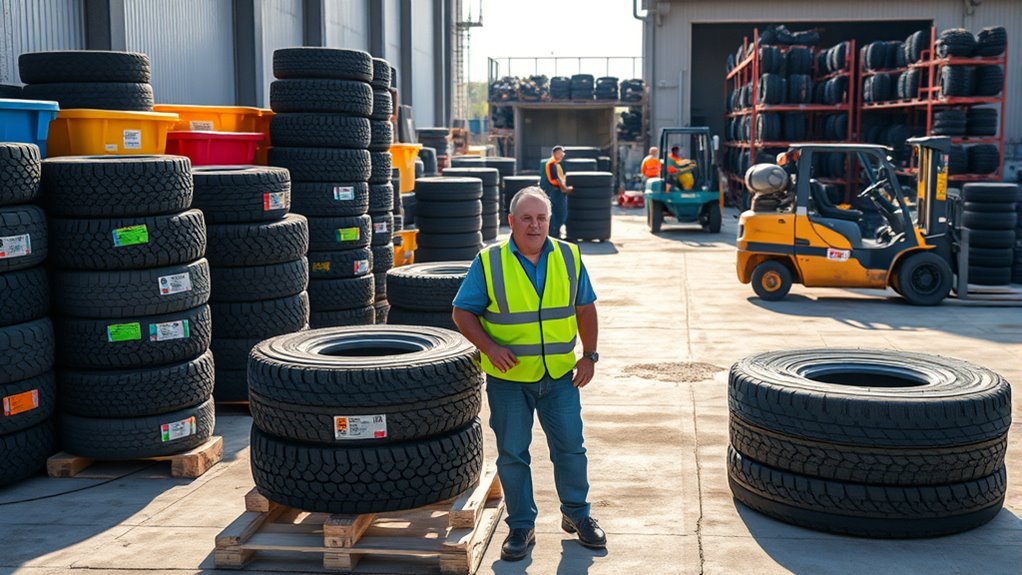
Because businesses and communities can repurpose roughly 84% of scrapped tires, scaling reuse programs should be a regulatory and operational priority to cut landfill waste and meet waste-management mandates. You’ll reduce risk and meet compliance by expanding tire take-back programs, hosting local recycling events, and contracting specialized recyclers that convert tires into rubber mulch, TDF, and durable goods. Creative reuse — playground surfacing, outdoor furniture — advances aesthetics and community resilience while lowering disposal costs. Build community partnerships with retailers, municipalities, and recyclers to consolidate collection, share data, and demonstrate regulatory compliance. Track volumes, diversion rates, and permit status to show auditors measurable progress toward circular-economy goals. Use targeted outreach to curb illegal dumping and educate residents on accessible options. This approach gives you practical, liberating control over waste streams and aligns operations with environmental mandates.
| Action | Outcome |
|---|---|
| Take-back programs | Accessible recycling |
| Local events | Reduced dumping |
| Recyclers | Regulatory compliance |
| Creative reuse | Community benefit |
Frequently Asked Questions
Who Is the Biggest Tire Recycling Company?
Liberty Tire Recycling is the biggest tire recycling company; you’ll see it process over 30 million tires annually. You’ll want to contemplate regulatory compliance and environmental impact as you demand transparent, liberating waste-management practices.
How to Make Money off Recycling Tires?
You can profit by tire resale, selling TDF to industry, offering retreading, making recycled rubber goods, hosting collection events, and promoting eco innovation; you’ll follow regulations, document compliance, and leverage grants to scale responsibly and liberate markets.
What Does America Do With Old Tires?
Like a river turned to resources, you divert old tires into tire recycling methods: shredding, tire-derived fuel, civil fill, and retreading, balancing environmental impacts, complying with state bans, and reducing waste under regulatory guidance.
Conclusion
You’re not just getting rid of worn tires—you’re making a smart, compliant choice that keeps communities and ecosystems cleaner. Follow local regulations, use certified drop‑offs or haulers, and prefer retread, shredding, or controlled energy recovery where allowed. Store and prepare tires per guidance to avoid fines and hazards. For businesses, track volumes and leverage rebates or fee offsets. Responsible disposal reduces liability, conserves resources, and meets regulatory expectations.
Related Articles

When to Replace Tubeless Sealant: Timing & Signs
Be warned: tubeless sealant can fail in weeks or months—learn the signs, testing tips, and exact replacement timing to avoid flats.
Read More
The Penny Test for Tread Depth: How to Do It Right
Better learn the penny test correctly—discover when Lincoln’s head reveals dangerous tread wear and what to do next.
Read More
Tire Rotation Schedule: How Often & Why It Matters
Optimizing tire life? Discover why rotating every 5,000–8,000 miles matters for safety and savings—read on to learn exact patterns and tips.
Read More