
Center Tire Wear: Overinflation & Other Root Causes
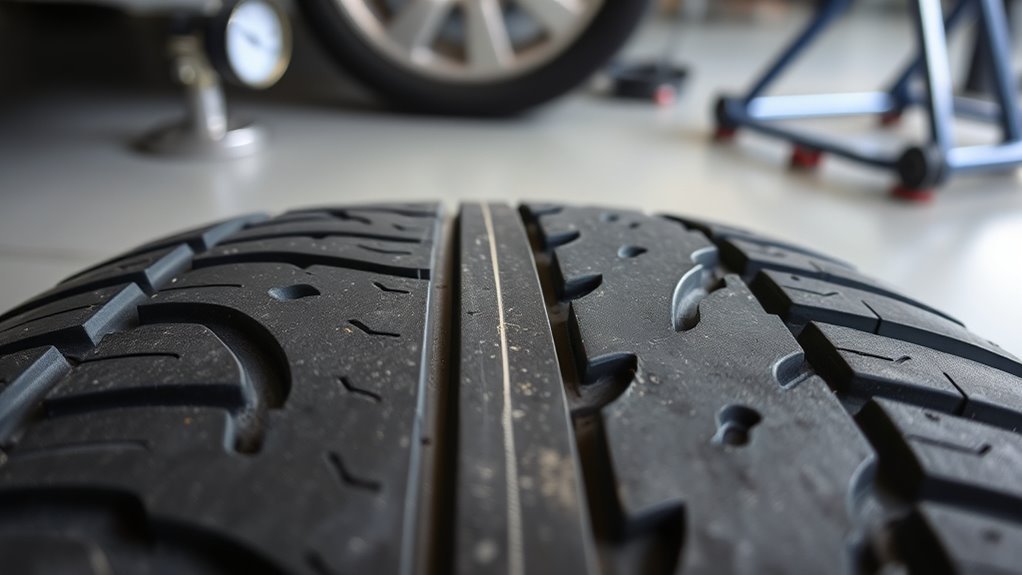
Center tire wear shows as a concave, shallower mid-rib caused primarily by overinflation that narrows the contact patch and bulges the center. You’ll also see it from excessive positive camber or toe, concentrated loads, aggressive driving, or heat-induced slip that accelerates midline loss. Check cold pressures, measure center versus shoulder tread depth, inspect for bulging, and correct alignment and load. Adjust pressures to spec and rotate tires regularly — keep going to learn specific checks and fixes.
What Center Tire Wear Looks Like and Why It Matters
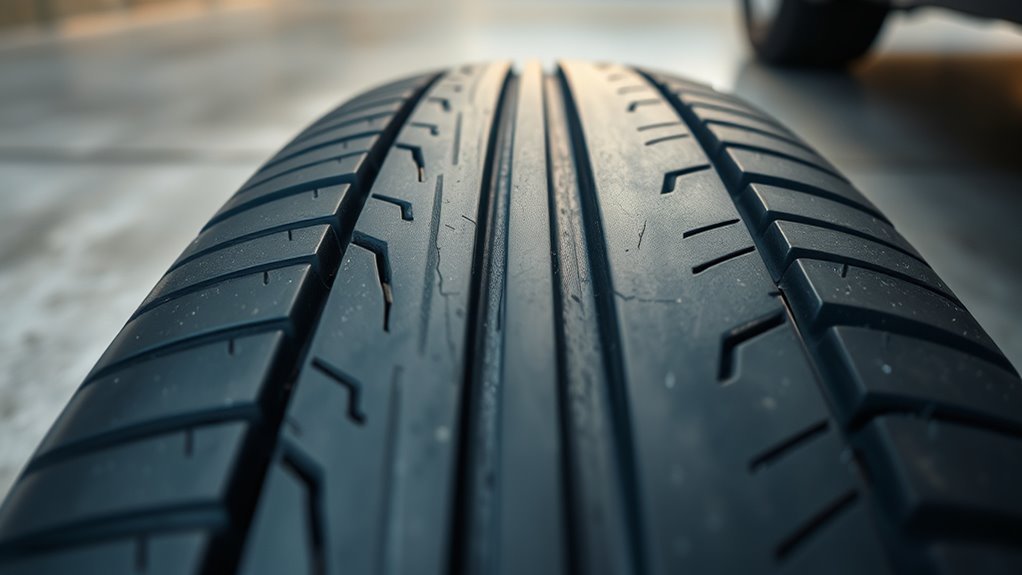
When you see the tread worn down mainly in the middle while the shoulders stay relatively intact, that’s classic center tire wear and it usually signals overinflation or alignment faults affecting load distribution; you’ll notice a distinct concave profile across the tread, with reduced groove depth centrally and preserved lateral ribs. You should interpret that pattern as a direct indicator of compromised tire performance: contact patch geometry has shifted, reducing traction and altering steering response. From a technical standpoint, the diagnostic is straightforward—measure central versus shoulder tread depths and verify PSI against manufacturer specs. The safety implications are concrete: diminished wet-grip, accelerated heat buildup, and unpredictable handling under load increase risk. You can mitigate progression by monthly pressure checks, corrective alignment focusing on toe parameters, and timely replacement when central tread approaches wear limits. This analytical approach restores control, preserves mobility, and aligns maintenance with your pursuit of liberation through dependable, resilient transport.
Why Center Tire Wear Happens (Overinflation, Alignment, Driving)
Although it’s most often a symptom of overinflation, center tire wear can also stem from alignment faults and aggressive driving that together alter contact patch and heat distribution, accelerating central tread loss. You’ll find overinflation makes the center bulge, concentrating load and abrasion there; that’s the primary mechanical cause. Excessive positive camber or incorrect toe shifts loads inward, compounding central degradation. Aggressive driving—hard launches, sustained high speeds, abrupt lane changes—increases slip and heat, accelerating rubber breakdown. To liberate yourself from avoidable wear, control pressure, alignment, and technique.
- Maintain manufacturer-recommended pressure as part of routine tire maintenance.
- Schedule wheel alignments every 20,000–30,000 km or annually.
- Inspect for positive camber and toe misalignment that bias the center.
- Adopt conservative driving techniques to reduce slip and thermal buildup.
- Monitor wear trends to intervene before failure.
These interventions are technical, actionable steps that restore even contact stress and extend tire life.
How to Spot and Measure Center Tire Wear (Quick Checks)
If you suspect center wear, start with a direct visual and tactile inspection: look for noticeably shallower tread in the middle ribs, feel for a raised or rounded center profile, and run your hand across the tread to detect abrupt depth changes. Next, quantify the condition: use a tread depth gauge to measure at three points—center and both shoulder ribs—recording millimeters or 32nds. A consistent reduction in center measurement versus edges confirms center wear. Visually inspect for tire bulging concentrated in the midline; bulging paired with reduced center tread points to sustained overinflation or localized stress. Note ride feedback: reduced traction in wet conditions or a harsher feel can corroborate mechanical evidence. Log pressure readings and compare to manufacturer PSI to contextualize measurements. These checks give you objective data and immediate indicators so you can act decisively, preserving mobility and agency rather than guessing at the problem.
How to Fix Center Tire Wear Now (Pressure, Alignment, Replacement)
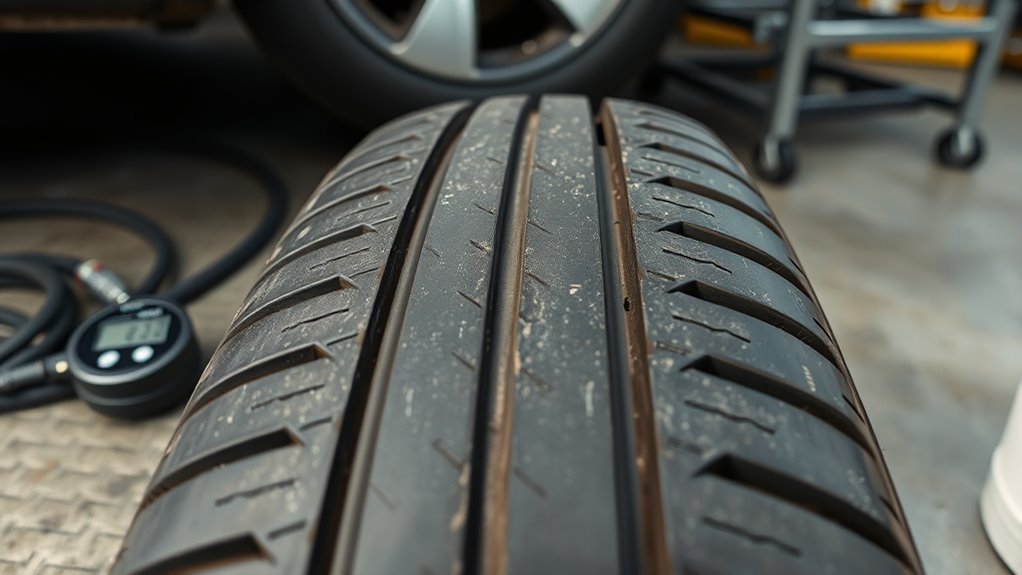
Having confirmed center wear through inspection and measurements, you can correct it by addressing pressure, alignment, and damaged tires immediately. Act: verify cold tire inflation pressure against the manufacturer’s spec and adjust to eliminate overinflation; this is primary tire maintenance to stop further center degradation. If alignment contributes, schedule a professional wheel alignment focused on toe and camber corrections; incorrect angles concentrate load on the center tread. Inspect wear indicators and tread depth; replace any tire with significant center wear, visible damage, or age approaching five years for safety. Ascertain tires are balanced; imbalance amplifies uneven center wear and reduces control.
- Check and set cold tire inflation to manufacturer specification.
- Have a pro perform toe and camber alignment adjustments.
- Inspect wear indicators and replace compromised tires promptly.
- Verify and correct tire balance during service.
- Log service dates and tire age for proactive safety decisions.
These steps give you immediate, technical control and restore liberated confidence in vehicle safety.
How to Prevent Center Tire Wear (Rotation, Pressure, Driving Habits)
Prevent center tread degradation by combining disciplined pressure management, scheduled rotations, and conservative driving habits: check PSI monthly with a calibrated gauge and set cold inflation to the manufacturer’s spec to eliminate overinflation-induced bulging; rotate tires every 6,000–8,000 miles to redistribute wear patterns; avoid overloading the vehicle, and adopt smooth acceleration and braking to reduce concentrated center contact and uneven stress. You’ll perform intentional tire maintenance and pressure monitoring to maximize service life and vehicle autonomy. Inspect tread depth and shoulder-to-center wear monthly; record PSI, load, and rotation intervals to identify trends. Drive with measured inputs—soft throttle application and progressive stops—to lower transient center loading. If you carry variable cargo, rebalance load distribution and recheck inflation after changes. Use a quality gauge, log readings, and rotate on schedule; replace tires showing persistent center cupping. These disciplined actions free you from premature failures, extend tread life, and reclaim control over operating costs and safety.
| Action | Target |
|---|---|
| Pressure monitoring | Manufacturer PSI |
| Rotation | 6,000–8,000 miles |
| Load control | Within GVWR |
| Driving input | Smooth accel/brake |
Frequently Asked Questions
What Causes the Center of Your Tire to Wear Out?
Overinflation primarily causes center tire wear by concentrating tire pressure; alignment issues, aggressive driving habits, harsh road conditions, specific tire construction, and excessive vehicle load also accelerate central tread degradation, so you must monitor and adjust proactively.
What Kind of Tire Wear Does Overinflation Cause?
You’ll get center tread wear: overinflation concentrates contact in the middle, shifting tire pressure and wear patterns toward the center. Don’t assume it’s harmless; you’ll lose traction, ride comfort, and control if you ignore proper inflation.
Conclusion
Center tire wear signals overinflation or stress that cuts tread life and compromises safety. You’ll reduce risk by maintaining correct PSI: tires overinflated by just 10% can lose up to 15% of their contact patch efficiency, increasing uneven wear. Check pressures weekly, rotate every 5–8k miles, and correct alignment promptly. If center tread is greatly reduced, replace the tire—partial repairs won’t restore original handling or heat-dissipation characteristics.
Related Articles

When to Replace Tubeless Sealant: Timing & Signs
Be warned: tubeless sealant can fail in weeks or months—learn the signs, testing tips, and exact replacement timing to avoid flats.
Read More
The Penny Test for Tread Depth: How to Do It Right
Better learn the penny test correctly—discover when Lincoln’s head reveals dangerous tread wear and what to do next.
Read More
Tire Rotation Schedule: How Often & Why It Matters
Optimizing tire life? Discover why rotating every 5,000–8,000 miles matters for safety and savings—read on to learn exact patterns and tips.
Read More