
Astro Pneumatic Tool 3018 Review: Digital Tire Inflator Gauge with Stainless Braided Hose

Disclosure: As an Amazon Associate, we earn from qualifying purchases. If you click a link on this page and make a purchase, we may receive a small commission at no extra cost to you.
Keeping tire pressure consistent is easy to put off when your gauge is hard to read or your air chuck keeps leaking. The Astro Pneumatic Tool 3018 combines a digital pressure gauge, inflator, and deflator in one compressor-powered tool, giving you a faster way to check and adjust tires. Its strongest points are the large backlit display, 0.1 PSI resolution, and 21-inch stainless braided hose. The main limitation is important: this is not a standalone electric air pump, so you need a compatible compressed-air source.
Quick Verdict
Rating: 8.6/10, recommended with caveats
Best For: Home garages, tire shops, and drivers who already own an air compressor
Bottom Line: The Astro 3018 gives you clear readings, practical inflate-and-deflate control, and a durable hose in one compact tool. It makes the most sense when you want repeatable tire service from a compressor and do not need a cordless pump.
Astro 3018 at a Glance
|
Buying Factor |
What You Get |
|---|---|
|
Pressure Control |
Inflates, deflates, and measures pressure through a two-position lever. |
|
Measurement |
3 to 175 PSI range with 0.1 PSI resolution and four selectable units. |
|
Build |
21-inch stainless braided hose, rubber protective sleeve, and replaceable chuck system. |
|
Display |
Large 3.5-inch backlit LCD for clearer low-light readings. |
|
Main Tradeoff |
Requires a regulated air compressor or compatible compressed-gas system. |
[Products Worth Considering]

Upgrade your air tools with this 18-piece air compressor accessory kit featuring a 25ft recoil poly hose, 1/4" NPT quick connect fittings, and a 100 PSI tire inflator gauge. The set also includes a heavy-duty blow gun with safety and tapered nozzles, plus couplers, inflation needles, plugs, and other essentials for everyday mechanic and workshop tasks. Corrosion-resistant steel and brass components help keep connections reliable for inflating, blowing out, and general pneumatic use.

The AstroAI 2 pack air chucks provide a heavy-duty, closed-flow locking design that helps keep air flowing during inflation while securely attaching to the valve stem. Built with 250 PSI rated brass components and compatible with Schrader valves, they feature 1/4" female NPT threads for a wide fit with common inflators. The straight tip and locking clip make filling tires and monitoring pressure more convenient.

Upgrade your tire inflating setup with this 12-inch hose adapter featuring a brass locking quick-connect chuck for secure, leak-proof attachment. The extended, flexible design helps reach hard-to-access valve stems, while the self-locking mechanism enables hands-free inflation with no pressure loss. It’s compatible with most portable air compressors and inflators, making it ideal for cars, trucks, motorcycles, and bicycles.
Key Specifications
| Specification | Detail |
|---|---|
| Brand | Astro Pneumatic Tool Company |
| Model | 3018 |
| Product Type | Digital tire inflator, deflator, and pressure gauge |
| Measuring Range | 3 to 175 PSI |
| Maximum Inlet Pressure | 218 PSI |
| Resolution | 0.1 PSI |
| Stated Accuracy | ±1.2 PSI from 0 to 58 PSI; ±2.0 PSI from 59 to 174 PSI |
| Measurement Units | PSI, BAR, KPA, and KGF |
| Hose | 21-inch stainless braided hose |
| Power | Two AAA batteries |
| Claimed Battery Life | Up to 560 hours of intermittent use |
| Working Temperature | 32°F to 104°F (0°C to 40°C) |
| Compatible Media | Compressed air, nitrogen systems, and CO₂ systems |
| Warranty | One-year limited warranty for the original user, subject to manufacturer terms |

What Is the Astro 3018?
The Astro 3018 is a pneumatic tire service tool, not a portable compressor. You connect its air inlet to a regulated compressor line, attach the chuck to a tire valve, and use the lever to add or release air while the screen shows the current pressure.
That combined design saves you from switching between a separate gauge, chuck, and bleed tool. The 3.5-inch digital face is large enough to read under a wheel arch, while the rubber sleeve adds grip and helps protect the gauge body from everyday bumps.
The tool suits passenger cars, SUVs, light trucks, motorcycles, trailers, and other tires that fall within its pressure range. You should still follow the vehicle placard or tire-service specification rather than inflating to the maximum pressure printed on the tire sidewall.
Who Should Buy It?
Best For
- You already own a compressor and want one tool for measuring, inflating, and bleeding air.
- You frequently adjust pressures on several vehicles or TPMS-equipped tires.
- You value a large display, replaceable wear parts, and a braided hose for garage use.
Skip If
- You need a cordless inflator that can create air pressure by itself.
- You need laboratory calibration or tighter stated accuracy than this model provides.
- You routinely work outside its 32°F to 104°F operating range.
Before You Buy: The Astro 3018 does not contain a motor or pump. You must connect it to a regulated compressed-air, nitrogen, or CO₂ source with a compatible fitting.
Feature-by-Feature Review
Pressure Range, Resolution, and Accuracy
The gauge reads from 3 to 175 PSI and displays pressure in PSI, BAR, KPA, or KGF. Its 0.1 PSI resolution makes small changes easy to see, which helps when you are matching pressures across an axle or responding to a TPMS warning.
Resolution and accuracy are not the same. Astro states an accuracy of ±1.2 PSI from 0 to 58 PSI and ±2.0 PSI from 59 to 174 PSI. That is practical for routine tire service, but you should compare it with a trusted master gauge when exact calibration is critical.
Inflation and Deflation Control
The two-position lever lets you add air and bleed pressure without removing the chuck. This is the feature that makes the 3018 more useful than a basic digital gauge, especially when a tire is slightly overfilled and you want to correct it in small steps.
The manual lists a maximum inlet pressure of 218 PSI. Your compressor should use a regulator, and the tool should never be exposed to pressure above its stated limit.
Hose, Chuck, and Build Quality
The 21-inch stainless braided hose gives you more reach than a short fixed chuck and resists abrasion around concrete floors, wheels, and shop equipment. A protective bend area and rubber-covered gauge body help with daily handling.
The easy-change chuck system is also useful over time. The manufacturer lists replacement chuck, hose, valve, and internal service parts, so wear in one component does not automatically mean replacing the entire inflator.
Display and Controls
The large LCD is one of the 3018’s clearest advantages. You can activate the backlight for dark garages or roadside work, and the selected pressure unit remains available for later use.
The manual states that the backlight dims after about 10 seconds and the unit shuts off after about 90 seconds of inactivity. Those timers reduce battery drain, although you may need to press the button again during slower jobs.
Battery Access
The gauge uses two AAA batteries rather than a sealed rechargeable pack. That makes replacement simple because you can keep spare cells in a toolbox and return to work without waiting for a charge cycle.
Astro lists a battery-life figure of up to 560 hours for intermittent use. Actual life will depend on backlight use, storage temperature, and battery quality. Remove the batteries before long-term storage to reduce the risk of leakage.
Buyer Feedback Themes
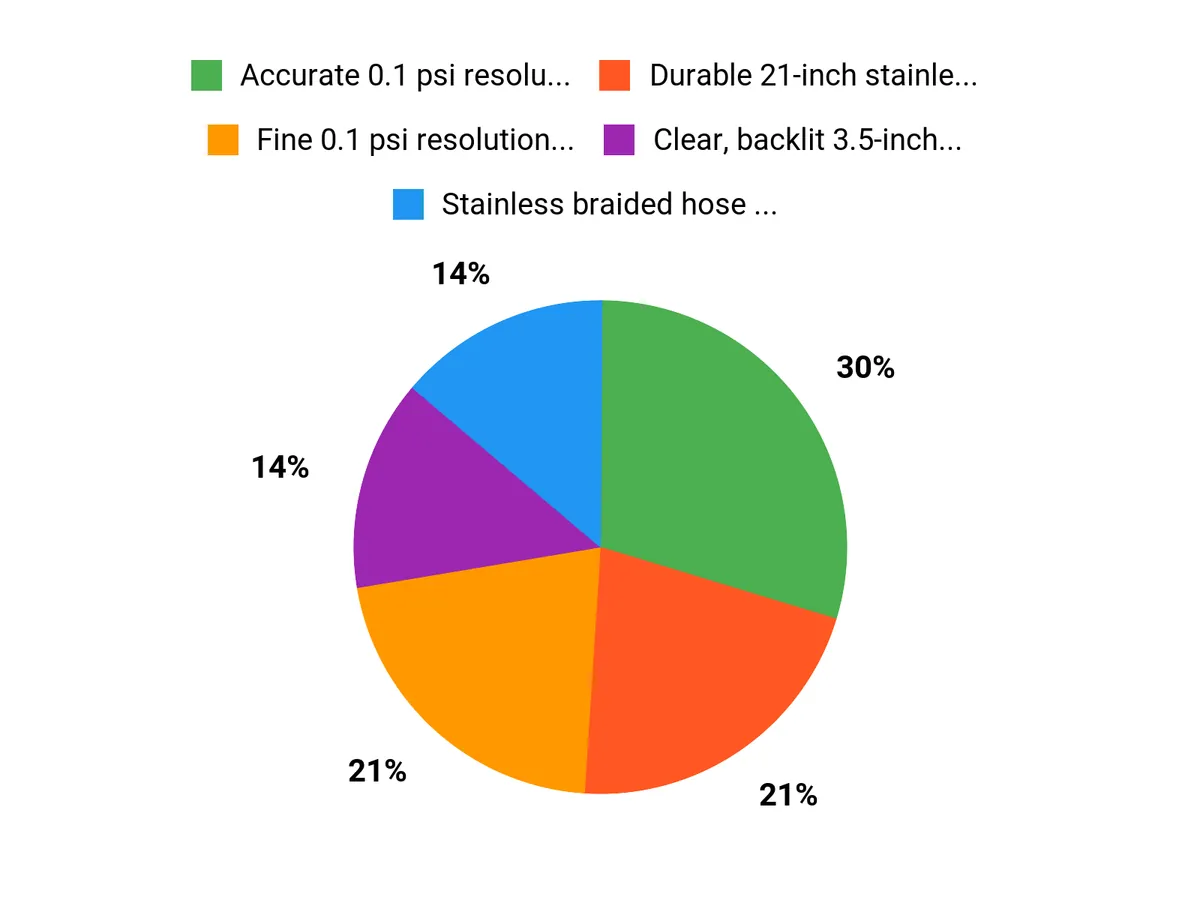
Common feedback about this model focuses on the readable screen, practical lever control, and durable hose. Buyers also tend to value the ability to use common AAA batteries instead of a proprietary battery pack. Treat the chart below as a directional summary from the original article rather than a controlled product test.

Pros and Cons
Pros
- Combines pressure reading, inflation, and controlled deflation.
- Shows small pressure changes with 0.1 PSI resolution.
- Large backlit display is easier to read in low light.
- Stainless braided 21-inch hose supports regular garage use.
- Replaceable batteries and service parts can extend useful life.
Cons
- Cannot inflate a tire without a separate compressed-air source.
- Stated accuracy is suitable for routine service, not precision calibration work.
- The 32°F to 104°F working range may limit use in very cold or hot conditions.
How It Performs in Real Use
[Products Worth Considering]

This dual head and ball air chuck set provides closed-flow tire inflation that routes air only through the chuck engaged with the valve. It includes both dual-head and ball-head chucks plus quick plug fittings for easy, fast connections to air lines and compressors. Built for reliable, leak-resistant operation, it’s ideal for filling Schrader valves on bikes, motorcycles, cars, trucks, and more.
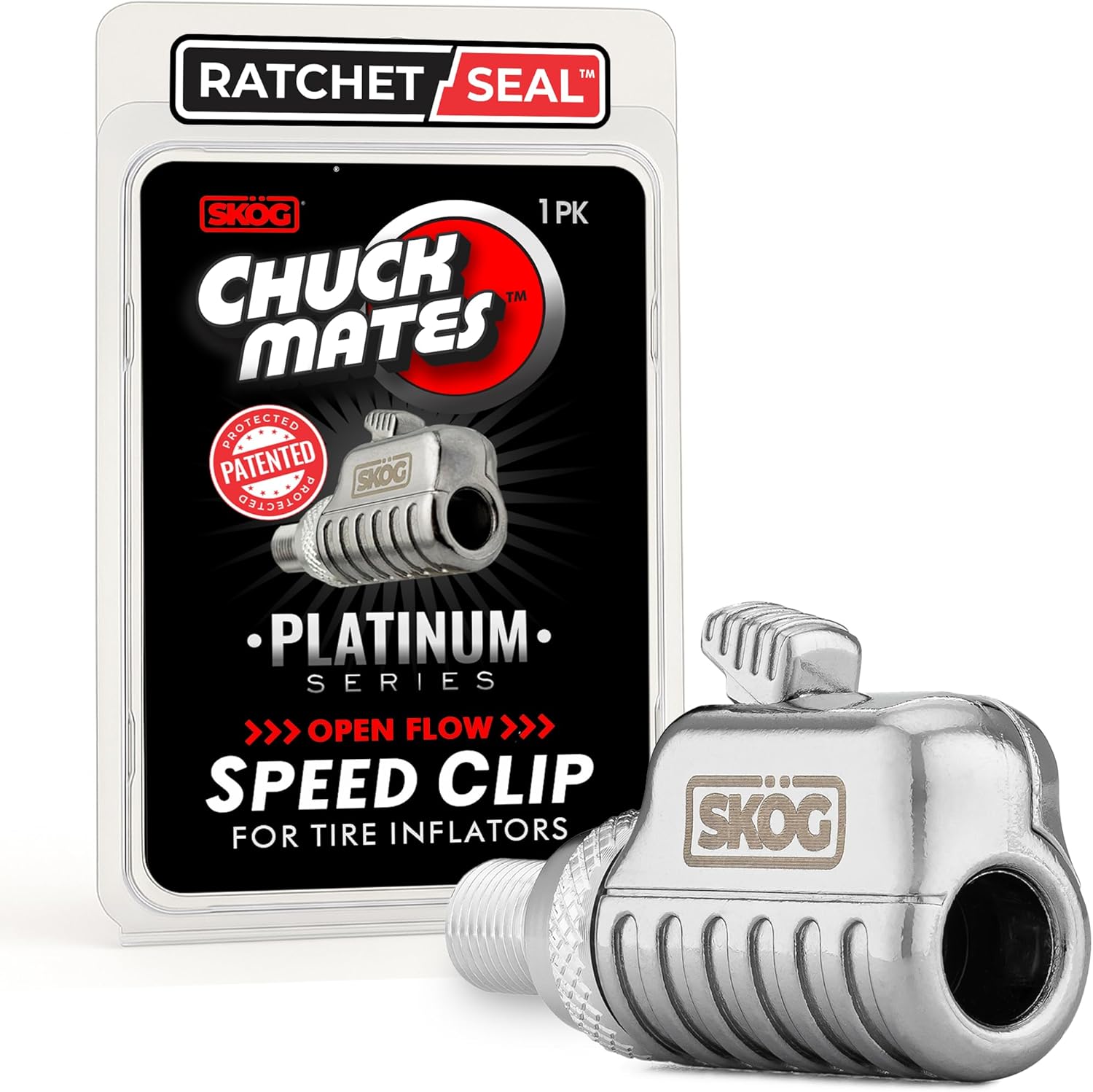
The SKÖG Chuck Mates Platinum uses a patented RatchetSeal push-to-connect system for instant, secure, air-tight attachment to standard tire valve stems. It features an easy push-button release for quick disconnects, plus 360° swivel open-flow airflow to keep operation smooth and kink-free. Universal Schrader compatibility makes it ideal for cars, bikes, motorcycles, RVs, trucks, and more.
Routine Home-Garage Checks
For monthly tire checks, the combined tool reduces back-and-forth work. You can connect the chuck, read the pressure, add air, and bleed excess pressure while watching one screen. The long hose also lets you keep the gauge body away from the valve stem.
TPMS Warning Corrections
The 0.1 PSI display makes it easy to bring four tires close to the same target. However, you should set pressure when the tires are cold and use the vehicle’s door-jamb placard as your target. A TPMS warning may also need driving time or a reset procedure before it clears.
Busy Shop Use
The braided hose, rubber sleeve, and replaceable chuck make the 3018 better suited to repeated use than a lightweight plastic gauge. The one-year limited warranty is useful, but heavy commercial users may prefer a newer metal-bodied or rechargeable inflator with tighter accuracy specifications.
Nitrogen or CO₂ Systems
Astro states that the tool can work with nitrogen and CO₂ systems. You still need a properly regulated source, compatible fittings, and safe handling procedures for compressed gas. Never direct the air stream toward a person.
Setup Tips and Common Mistakes
- Regulate the air source: Keep inlet pressure within the manufacturer’s limit and use fittings rated for your system.
- Seat the chuck fully: A poor valve-stem seal causes leakage and unstable readings.
- Check tires cold: Pressure rises as tires heat, so compare readings under similar conditions.
- Use the vehicle placard: Do not use the tire sidewall’s maximum pressure as your normal target.
- Pause after adjustment: Let the reading settle before adding or releasing more air.
- Store it dry: Keep moisture, solvents, and battery leakage away from the gauge and rubber sleeve.
Pro Tip: Compare the Astro 3018 with one trusted reference gauge when it is new. That gives you a baseline and helps you notice a future shift caused by a weak battery, damaged chuck, or leaking valve assembly.
Compatibility and Safety
The 3018 works best on standard tire valve stems that accept its chuck and on pressure ranges within 3 to 175 PSI. Its air inlet must match your compressor hose or coupler, so check your fitting size and shop setup before ordering.
Wear eye protection, keep the vehicle secure, and inspect the hose and fittings before use. Do not modify the tool, direct compressed air at skin, or exceed the maximum inlet pressure. If the gauge shows unstable readings, leaks, or damaged parts, stop using it until the issue is corrected.
Why Buyers Choose This Design
You choose the Astro 3018 when you want a familiar shop-style inflator with a digital display instead of a separate pencil gauge or dial tool. The combination of a long braided hose, common batteries, and serviceable components gives it a practical advantage for recurring tire maintenance.
Is It Worth the Price?
The Astro 3018 sits in the mid-range category for compressor-powered digital inflator gauges. Its value comes from combining three jobs, measuring, inflating, and deflating, with a large screen and a more durable hose than many basic gauges.
It is a smart buy for everyday garage use when you already have a compressor. It is less compelling when you need roadside inflation without shop air, tighter professional calibration, or a rechargeable metal-body design.
How It Compares to Alternatives
The newer Astro 3019B is worth comparing when you prefer a rechargeable battery, an aluminum body, and a stated ±1 PSI sensor. The JACO FlowPro 2.0 is another compressor-powered option with a 200 PSI range and a stated ±1 percent accuracy specification.
Milton also offers professional digital pistol-grip inflator gauges with longer hose options. The Astro 3018 remains the simpler choice when you want proven basic controls, a 21-inch braided hose, common AAA batteries, and a large single display.
Frequently Asked Questions
Is the Astro 3018 a standalone air compressor?
No. It is a digital inflator gauge that controls air from a separate compressor or compatible regulated gas source. It cannot create pressure by itself.
What pressure range does it measure?
The stated measuring range is 3 to 175 PSI. The manual lists a maximum inlet pressure of 218 PSI, which is a tool limit rather than a recommended tire pressure.
Is it accurate enough for TPMS adjustments?
Its 0.1 PSI resolution helps you make small adjustments. Astro states accuracy of ±1.2 PSI up to 58 PSI and ±2.0 PSI from 59 to 174 PSI, so use a trusted reference gauge when tighter certainty matters.
Which pressure units can the display show?
You can select PSI, BAR, KPA, or KGF. The unit button also controls the display and backlight functions.
How does the inflate-and-deflate lever work?
The two-position lever controls both functions while the chuck remains attached. Use the lever gradually and watch the display so you do not overshoot the target pressure.
What batteries does the Astro 3018 use?
It uses two AAA batteries, and the manufacturer lists batteries as included. Replace them when the low-battery indicator flashes or the display becomes dim or unresponsive.
Can it be used with nitrogen or CO₂?
Yes, Astro lists compatibility with nitrogen and CO₂ systems. Use a properly regulated source and fittings designed for that gas and pressure.
What maintenance does it need?
Keep the chuck, hose, valve assembly, and air inlet clean and inspect them for leaks. Remove batteries for long storage, and replace worn parts with compatible manufacturer-listed components.
The Bottom Line
The Astro 3018 is a strong fit for home mechanics and light-duty professionals who already have compressed air and want one readable tool for checking, adding, and bleeding tire pressure. Its 21-inch braided hose, large display, and serviceable design are the main strengths, while compressor dependence and moderate stated accuracy are the main limitations.

Related Articles

GOOLOO A6 Gear Tire Inflator Review: 160 PSI Cordless Portable Air Compressor
You want a compact, reliable way to keep your tires at the right pressure without dragging an air hose around or waiting for service.…
Read More
BLACK+DECKER BDINF20C Tire Inflator Review: 20V MAX Cordless and Corded Air Pump
You rely on a compact, reliable inflator when a tire goes low or an air mattress needs a quick top‑up, and the BLACK+DECKER BDINF20C…
Read More
150 PSI Cordless Tire Inflator Review: 5X Faster Portable Air Compressor with Digital Gauge
You do not want to be stuck with underinflated tires when safety, fuel economy, and tire life are on the line. A compact cordless…
Read More