
Does a Full Size Spare Come With a Toyota Tacoma
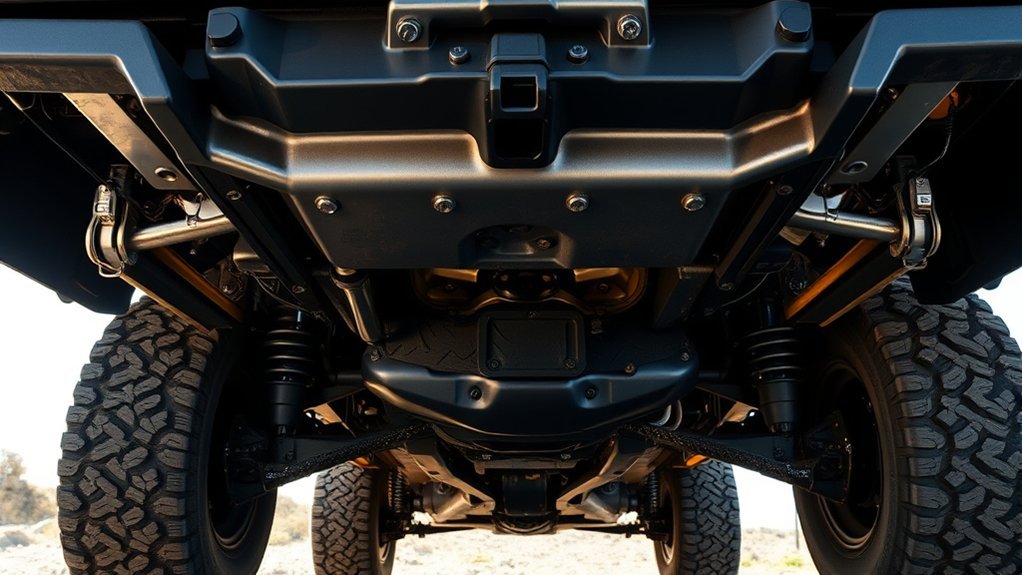
Your Toyota Tacoma may have a compact temporary spare, a narrower conventional spare, or a tire that matches the road tires. The exact setup depends on the model year and factory wheel-and-tire package, not simply whether the truck is an SR5 or TRD. Before buying an upgrade, check the spare’s sidewall, the driver-door tire label, your owner’s manual, and the truck’s VIN-specific parts information.
Quick Answer
Toyota Tacoma spare tires vary by year and wheel package. Some trucks use a compact T-series spare, while others use a conventional tire that either matches the road tires or has a narrower width with a similar overall diameter. Verify your exact tire size, wheel fitment, pressure, carrier clearance, and usage restrictions before upgrading.
Key Takeaways
- Do not assume every SR5 has a donut or every TRD has a matching full-size spare.
- A 245/75R17 spare is not the same type of tire as Toyota’s T175/90D18 compact spare.
- Match overall diameter, load capacity, wheel specifications, brake clearance, and spare-carrier clearance.
- A five-tire rotation works only when the spare truly matches the installed wheels and tires.
- Follow the pressure and temporary-use limits printed on the spare and listed for your specific Tacoma.
What Is the Standard Spare Tire for a Toyota Tacoma?
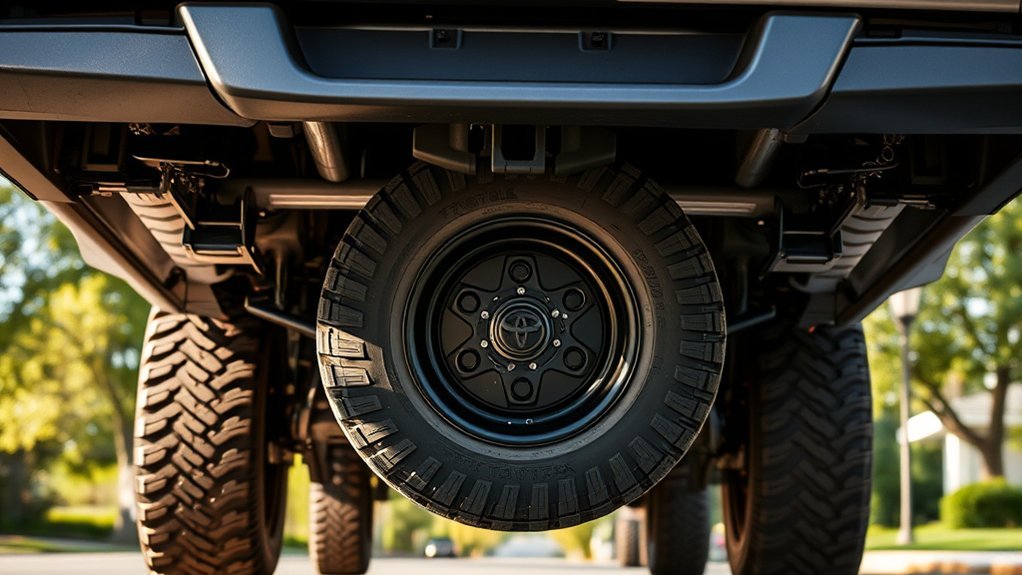
Tacoma spare-tire equipment varies by model year, cab, drivetrain, trim, and factory tire package. For the 2024 Tacoma, Toyota’s official tire-and-wheel specification table lists several different combinations rather than one universal SR5 or TRD setup.
The table below summarizes the non-hybrid 2024 Tacoma configurations published in the Toyota owner’s manual tire specifications.
| Toyota specification | Road tire | Factory spare | What it means |
|---|---|---|---|
| 17-inch Type A | 245/70R17 110T | T175/90D18 111M | Compact temporary spare; Toyota specifies 60 psi cold. |
| 17-inch Type B | 245/70R17 110T | 245/70R17 110T | Matching tire size, subject to wheel, tread, age, and TPMS compatibility. |
| 17-inch Type C | 265/70R17 115T | 245/75R17 112S | Narrower conventional spare with a similar overall diameter. |
| 17-inch Type D | 265/70R17 115T | 265/70R17 115T | Matching tire size, although wheel and TPMS details still require confirmation. |
| 18-inch Types A and B | 265/65R18 114T | 245/75R17 112S | A narrower 17-inch spare with a similar overall diameter to the 18-inch road tire. |
Toyota uses Type A, B, C, and D labels in the specification table, but you should not guess your type from trim level alone. Compare the sizes printed on your four road tires and spare, then confirm the cold pressure shown on your vehicle’s tire-information label or in the manual.
Note: A conventional spare can have nearly the same overall diameter as the road tires while using a narrower tread and a smaller wheel. That does not automatically make it suitable for unrestricted driving or five-tire rotation.
[Products Worth Considering]

Keep RV, trailer, or truck dual-axle tires protected with waterproof, UV-resistant covers that help guard against sunlight, snow, rust, and dirt. The dual tire covers are easy to install with a rope/bungee fastener for a stable fit that won’t easily slip. Designed for 27–30 inch diameter wheels, they help maintain tire condition through harsh weather.

Mount your spare tire off the floor and onto your wall using an e-track spare tire carrier that helps you stay organized in trailers, garages, and warehouses. The upgraded double-fittings design improves stability versus single-fittings and supports greater load bearing. Install by snapping into e-track anchor points and securing the tire with a lug-nut style bolt setup for quick, secure storage.

Mount your spare tire directly to the inside wall of an enclosed trailer or garage to save space and keep your tire secure. This wall-mount spare tire carrier is designed for universal trailer tire fit and includes a fixed plate and chute for convenient screw replacement. Nylon insert hex lock nuts help prevent the tire from falling off, and wing hardware enables faster load and unload during maintenance.
Can You Replace the Donut With a Full-Size Spare?
You can often replace a compact spare with a conventional or matching full-size spare, but the upgrade is safe only when the tire, wheel, carrier, and truck are compatible. The fact that a wheel bolts onto the hub does not prove that it has the correct offset, load capacity, brake clearance, lug-seat design, or overall diameter.
Warning: Do not buy a spare based only on the advertised Tacoma model year. Confirm every tire and wheel specification. A mismatched spare can affect braking, steering, four-wheel-drive operation, traction-control systems, and wheel retention.
Compatibility Checklist Before You Buy
Check the following items before purchasing a full-size Tacoma spare:
- Tire size: Start with a Toyota-approved size for your exact truck or a size approved by a qualified tire professional.
- Overall diameter: Keep the spare’s rolling diameter close to the installed tires, particularly on four-wheel-drive models.
- Load index: The spare must safely support the required axle load.
- Wheel diameter and width: The tire must be approved for the selected rim dimensions.
- Bolt pattern and hub fit: Confirm the bolt circle, center bore, and whether the wheel is hub-centric or requires an approved centering solution.
- Stud, nut, and lug-seat design: Verify thread specifications and whether the wheel uses the correct conical, flat, or other approved seat.
- Wheel offset and brake clearance: The wheel must clear the brake caliper and avoid contact with suspension or body components.
- Wheel load rating: Choose a wheel rated for the truck, not merely one with matching holes.
- Spare-carrier clearance: Check tire width, diameter, hitch clearance, exhaust clearance, and the carrier’s ability to secure the assembly.
- TPMS requirements: Decide whether the spare needs a registered transmitter, especially if it will join a five-tire rotation.
These checks become even more important when the Tacoma has a lift, aftermarket suspension, larger brakes, wheel spacers, oversized tires, a replacement bumper, or a modified hitch setup.
Benefits of a Matching Full-Size Spare
A correctly matched full-size spare can provide more predictable handling than a compact temporary spare. It may also let you travel farther to a repair facility without relying on a narrow emergency tire, provided the tire manufacturer and Toyota do not impose temporary-use restrictions.
A matching spare is especially useful for remote travel, work sites, and maintained off-pavement routes where tire service may be far away. However, the spare’s value depends on its condition. An old, underinflated, mismatched, or poorly secured full-size spare is not a safe upgrade.
A five-tire rotation may be possible when the spare matches the road tires in size, construction, usable tread, wheel specifications, and compatible tread design. You must also account for directional tires, staggered fitments, TPMS transmitters, and Toyota’s required wheel-position registration procedures.
Installation Process for the Upgrade
- Identify the factory setup: Record the road-tire size, spare size, cold pressures, wheel type, and any restrictions printed on the spare.
- Verify the replacement assembly: Confirm tire dimensions, load index, wheel fitment, offset, brake clearance, lug-seat design, and wheel load rating.
- Test the spare carrier: Raise the uninflated or cautiously inflated assembly into position and inspect clearance before finalizing the installation.
- Mount and balance professionally: Have a qualified shop install the tire, inspect the wheel, and balance the assembly.
- Inflate it cold: Use the pressure specified for that spare and vehicle setup, not a generic pressure taken from another Tacoma.
- Register or initialize TPMS if required: Toyota lists tire-size changes, tire rotations, and transmitter registration among the events that can require TPWS initialization.
- Secure the carrier: Follow the owner’s manual procedure and confirm the tire cannot rotate, sway, contact the exhaust, or loosen.
- Recheck the installation: Inspect carrier tension, tire pressure, clearance, and wheel condition after the first drive and during routine maintenance.
Pro Tip: Ask the shop to write the spare’s required cold pressure and any speed or distance restriction on your maintenance record. A spare stored under the truck is easy to forget until an emergency.
Why Do Many Owners Prefer a Full-Size Spare?
Many Tacoma owners prefer a matching full-size spare because it can restore more normal handling after a flat. A compact temporary spare uses a narrower tread, different construction, and separate operating limits. Those differences can reduce traction and alter steering or braking feel.
A matching full-size assembly may also be easier to manage during remote travel because you are not immediately dependent on a temporary tire. However, “full-size” should mean more than a large outside diameter. The spare must also have the correct load capacity, wheel specifications, pressure, and condition.
Five-tire rotation is another possible benefit, but only for truly matching assemblies. A narrower 245/75R17 spare paired with 265/70R17 or 265/65R18 road tires should not automatically enter the normal rotation pattern.
Community Experiences: What Successful Swaps Have in Common
Owner reports can help you identify possible wheel and tire combinations, but another owner’s successful installation does not confirm that the same assembly is safe for your Tacoma. Trucks that look similar may have different brakes, factory tire packages, suspension changes, or carrier clearance.
The safest spare upgrade is one verified by specifications and physical clearance, not by trim name or appearance alone.
Successful upgrades usually follow the same process:
- The owner records the original specifications before shopping.
- The wheel is verified for load, hub, offset, lug-seat, and brake fitment rather than relying only on bolt pattern.
- The spare’s overall diameter is compared with the road tires, especially on four-wheel-drive trucks.
- The assembly is mounted and balanced by a qualified tire shop.
- The underbody carrier is tested for clearance and secure retention.
- The owner confirms TPMS behavior and initialization requirements.
Dealership parts departments can use the VIN to identify factory wheel-and-tire equipment. Independent tire shops may offer more aftermarket options, but they should still verify the complete fitment rather than selling a wheel solely because it is advertised for a Tacoma.
Challenges of Switching to a Full-Size Spare
A complete spare assembly can be expensive because you may need a wheel, tire, valve, TPMS transmitter, mounting, balancing, and carrier adjustments. Factory-style steel wheels can also be temporarily unavailable or priced higher than expected.
Storage creates another challenge. A taller or wider tire may contact the hitch, exhaust, heat shield, differential area, suspension components, or an aftermarket bumper. A wheel with the wrong offset can also position the tire differently in the carrier even when the tire size appears suitable.
TPMS adds another decision. A spare used only for emergencies may not need to display live pressure in the same way as the four road tires, depending on the factory setup. A spare included in regular rotation normally needs a compatible transmitter and proper registration.
Finally, a full-size spare does not make a damaged tire situation risk-free. Stop as soon as practical, inspect the cause of the failure, install the spare correctly, and have the damaged tire assessed by a qualified professional.
Key Considerations for Buying a Full-Size Spare
[Products Worth Considering]

Camco Trailer Aid Plus tandem tire ramp lifts your trailer for quick, safe tire changes with ample clearance from its 5 1/2-inch lift. It helps you change a flat tire without unloading cargo, making roadside and routine maintenance more efficient. The heavy-duty, waterproof and rustproof polymer design supports up to 15,000 lb and is built for easy portability and storage.

Secure a full-size spare on your trailer with this powder-coated steel spare tire mount bracket. It fits most 4-, 5-, and 6-lug wheel bolt patterns and mounts to trailer tongues up to 4 in wide and 5 in tall. Built for reliable carry with a max 150 lb load rating and includes zinc-plated hardware for straightforward installation.
Compatibility With Your Existing Setup
Begin with the actual specifications on your truck. Do not rely on a listing that says “fits 2024 Tacoma” without confirming the details.
- Road-tire size: Read all four tire sidewalls and check that the truck does not have a mixed or modified setup.
- Factory spare: Record its complete size, load index, speed symbol, wheel size, and pressure.
- Door label: Use the tire-and-loading label as the starting point for approved sizes and cold pressures.
- Owner’s manual: Confirm the specification group and wheel-nut requirements.
- VIN: Ask a Toyota parts department to identify the factory wheel-and-tire package.
- Modifications: Account for lifts, spacers, oversized tires, brake upgrades, bumpers, hitches, and suspension changes.
Toyota publishes different wheel-nut torque values for certain steel and aluminum wheel configurations. Use the specification for your exact wheel and truck rather than applying one generic Tacoma torque value.
Reliability During Emergencies
A well-maintained conventional spare can provide a larger contact patch and more predictable response than a compact tire. It may also be better suited to reaching a repair shop from a remote location.
Reliability still depends on pressure, age, tread, load capacity, and installation. A spare can lose pressure slowly while stored. Corrosion can affect the wheel or carrier, and an older tire can degrade even when it has never touched the road.
Check the tire’s sidewall for temporary-use wording. Follow every printed speed, distance, inflation, and placement restriction. If the spare does not match the other tires, drive gently and repair or replace the original tire promptly.
Considerations for Off-Roading
A matching full-size spare is valuable when you travel away from paved roads, but it should not encourage you to continue a difficult trail without inspecting the truck. A puncture may be accompanied by wheel, suspension, brake-line, or underbody damage.
- Match the usable diameter: A large mismatch can create driveline stress on four-wheel-drive surfaces with good traction.
- Confirm load and construction: The spare must support the truck and expected cargo.
- Check carrier departure clearance: Larger underbody tires can reduce clearance behind the rear axle.
- Carry safe recovery equipment: Bring wheel chocks, gloves, a pressure gauge, an approved jack base, lighting, and the factory tools.
- Do not continue technical off-roading on a compact spare: Use it to leave the area carefully and obtain proper tire service.
Warning: Do not tow a trailer, carry on with aggressive off-road driving, or exceed the tire’s printed limits while using a temporary spare. Check your exact Tacoma manual before towing with any nonmatching spare installed.
How to Ensure Proper Fit for Your Full-Size Spare
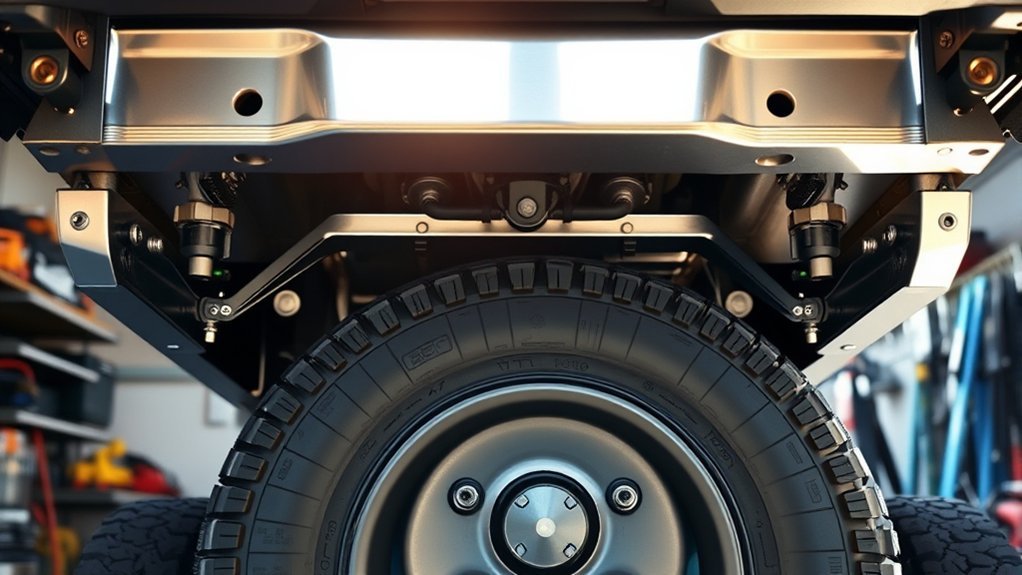
Use a specification-based process rather than comparing tires by appearance.
- Measure or calculate overall diameter: Compare the proposed spare with the road tires. A qualified tire shop can confirm the difference in rolling circumference.
- Verify the approved rim range: Confirm that the tire is suitable for the replacement wheel’s diameter and width.
- Confirm the load index: Do not select a tire with inadequate load capacity.
- Test the wheel on the truck: Confirm hub fit, brake clearance, lug engagement, and correct seating before mounting the final tire when practical.
- Check full steering and suspension clearance: If the spare may be installed on the front, make sure it clears the brake and suspension through the steering range.
- Test the underbody carrier: Raise the assembly fully, inspect every side, and confirm the hoist plate and cable retain it securely.
- Verify inflation requirements: Use the specified cold pressure for that tire and application.
- Confirm TPMS operation: Register the transmitter and initialize the system when required.
- Document the setup: Keep the size, pressure, restrictions, and shop information with your roadside tools.
A similar outside diameter does not prove that two assemblies are interchangeable. For example, Toyota pairs a 245/75R17 spare with some 265/70R17 and 265/65R18 road-tire configurations. The narrower spare is useful for emergencies, but it is not an identical fifth road tire.
Aftermarket Options for Spare Tires
You can obtain a Tacoma spare assembly through several channels:
- Toyota dealership: A parts department can use your VIN to identify factory wheel and tire information. This is a strong starting point when you want an original-style setup.
- Qualified local tire shop: A reputable shop can compare diameter, load, offset, rim width, brake clearance, and carrier space.
- Wheel manufacturer: Use a manufacturer that publishes load ratings and application data rather than a seller offering only a generic fitment claim.
- Used original equipment wheel: Inspect it for bends, cracks, corrosion, previous repairs, and correct identification markings before mounting a tire.
- Online marketplace: Verify every specification independently. Product titles and seller compatibility tools can contain errors.
A complete assembly should include a suitable tire, approved wheel, correct valve components, balancing, and TPMS equipment when required. Avoid unknown used tires because you may not know their age, repair history, impact history, or storage conditions.
Note: When changing tire size, rotating registered wheels, or adding a new TPMS transmitter, follow Toyota’s TPWS initialization requirements.
Tips for Storing and Maintaining Your Spare Tire
A spare tire can age and lose pressure even when it has never been used. Include it in your monthly tire inspection rather than waiting for a roadside emergency.
- Check pressure cold: The truck should have been parked long enough for the tire to cool. Use the pressure specified for the spare, which may differ substantially from the road tires.
- Inspect the tread and sidewalls: Look for cuts, cracking, bulges, exposed cords, punctures, and uneven deterioration.
- Check the DOT date code: The final four digits identify the manufacturing week and year. Ask a tire professional to assess an older spare even if the tread looks unused.
- Inspect the wheel: Look for bends, cracks, heavy corrosion, damaged lug holes, and damaged valve components.
- Inspect the carrier: Lower the spare periodically and check the hoist cable, retaining plate, contact points, and surrounding clearance.
- Follow the factory orientation: Store the wheel in the direction shown in the Tacoma owner’s manual so the carrier plate supports it correctly.
- Keep the tools accessible: Confirm that the jack, handle extensions, spare-lowering tool, and lug wrench are present and usable.
- Protect the valve: Keep the valve cap installed and position the valve so you can check pressure without damaging it.
The National Highway Traffic Safety Administration warns that spare tires are vulnerable to aging because they are rarely replaced. NHTSA also recommends checking every tire, including the spare, at least monthly when cold.
Frequently Asked Questions
What tools are needed to change a tire on a Tacoma?
Use the factory jack, lug wrench, jack-handle extensions, and spare-tire lowering tool supplied with the truck. Wheel chocks, gloves, a flashlight, a pressure gauge, and a stable jack base add safety. Use a properly calibrated torque wrench for final tightening to the specification required by your exact wheel.
How does a full-size spare affect fuel efficiency?
A heavier assembly adds some vehicle weight, so a small fuel-economy effect is possible. The difference is usually difficult to separate from speed, tire pressure, terrain, cargo, and driving style. No fixed Tacoma MPG loss should be assumed without controlled testing.
Can I use my Tacoma spare on another vehicle?
Do not assume that you can. Use it on another vehicle only when the vehicle or wheel manufacturer confirms the tire size, load capacity, rolling diameter, wheel dimensions, bolt pattern, hub bore, offset, stud and nut specifications, lug-seat design, and brake clearance. Temporary spares should be treated as vehicle-specific.
Is a full-size spare heavier than a donut tire?
Usually. A conventional tire and full-width wheel normally contain more material than a compact spare. Check that the factory carrier and hoist can safely support and retain the chosen assembly rather than assuming every larger spare is suitable.
How often should I check my spare tire’s pressure?
Check it at least once a month when cold and before long or remote trips. Use the pressure specified for that spare, not the pressure used in the four road tires. Toyota lists 60 psi for the T175/90D18 compact spare in one 2024 configuration, while other spare arrangements use different pressures.
Can I add my full-size spare to a five-tire rotation?
Only when it matches the road tires in approved size, construction, usable tread, wheel fitment, load capacity, and compatible tread design. Directional tires and uneven tread depths may prevent normal rotation. The spare may also need a registered TPMS transmitter and wheel-position initialization.
Can I tow or go off-road with a temporary spare installed?
Avoid towing, high-speed driving, abrupt maneuvers, and difficult off-road travel with a compact or temporary spare. Follow the limits printed on the tire and stated in your Tacoma manual. Use the spare to reach proper tire service as safely and directly as possible.
Conclusion
A Toyota Tacoma does not have one universal spare-tire setup. The 2024 specifications alone include a compact T175/90D18 spare, matching 245/70R17 and 265/70R17 arrangements, and a narrower 245/75R17 spare used with larger road tires.
You can upgrade to a full-size spare when the complete assembly is compatible with the truck. Verify diameter, load capacity, wheel fitment, lug-seat design, brake clearance, carrier clearance, pressure, and TPMS requirements. A correctly selected spare improves emergency readiness, but it does not replace cautious driving or prompt repair of the damaged road tire.
Sources
- Toyota 2024 Tacoma Owner’s Manual: Maintenance Data — factory tire sizes, spare sizes, cold pressures, wheel dimensions, and wheel-nut torque.
- Toyota 2024 Tacoma Owner’s Manual: Items to Initialize — TPWS initialization after tire-size, rotation, and transmitter changes.
- Toyota 2024 Tacoma Manuals and Warranties — official access point for the complete Tacoma owner’s manual.
- NHTSA TireWise — tire aging, DOT date codes, replacement sizing, and spare-tire safety.
- NHTSA Tire Safety Month Guidance — monthly cold-pressure, tread, damage, and spare-tire inspections.

Related Articles
How Tire Weight Affects Toyota Tacoma Performance
How does tire weight influence your Toyota Tacoma's performance and efficiency? Discover the surprising effects that could change your driving experience.
Read More
Tire Noise Levels by Tire Type on a Toyota Tacoma
A comprehensive look at how tire types affect noise levels in your Toyota Tacoma reveals surprising insights that could enhance your driving experience.
Read More
How To Choose Tires for a Dual Use Toyota Tacoma
Unlock the secrets to selecting the perfect tires for your dual-use Toyota Tacoma, ensuring optimal performance and comfort on every adventure. Discover more inside!
Read More