
Narrow Tires vs Wide Tires for Toyota Tacoma Off Road
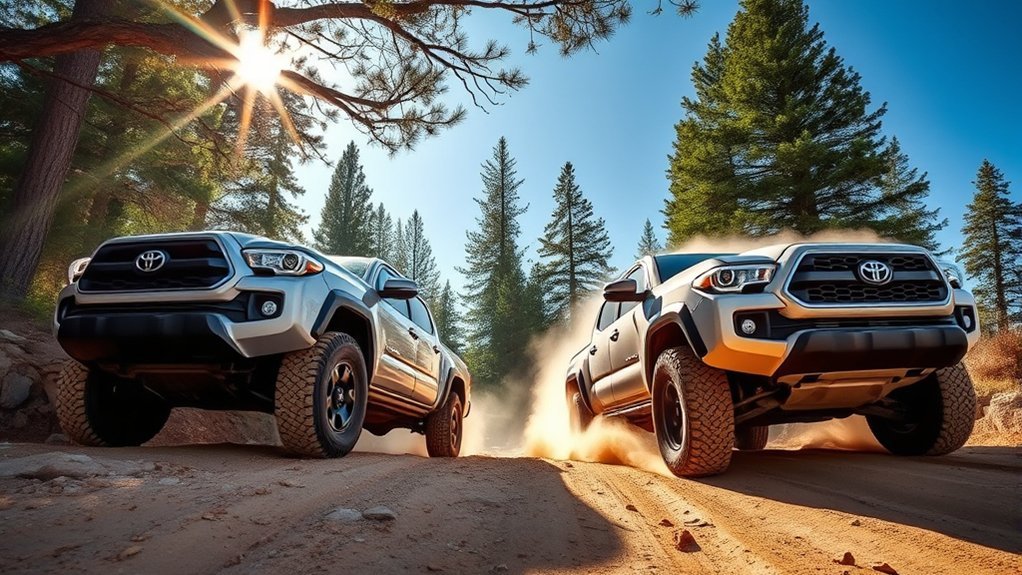
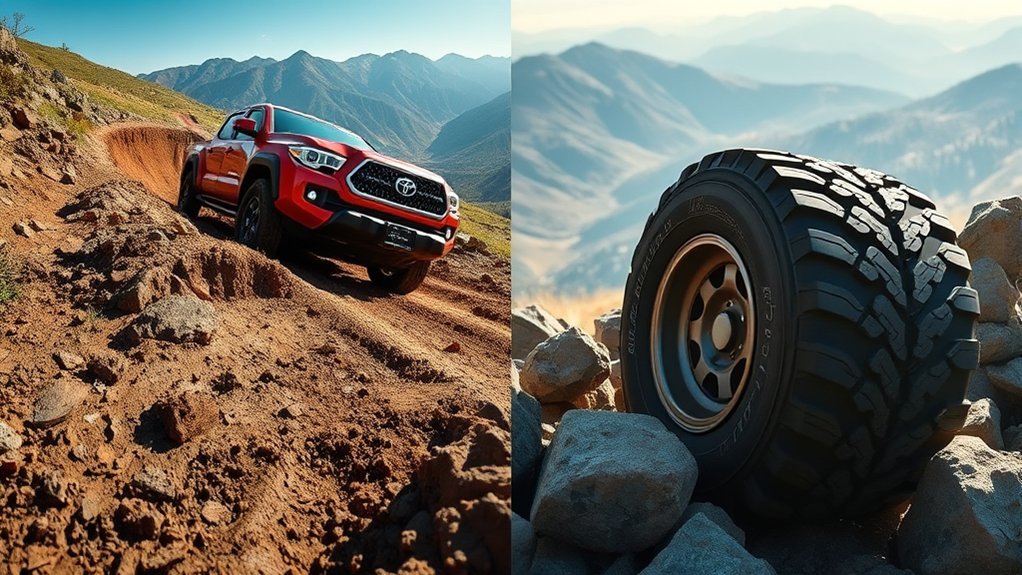
Choosing between narrow and wide tires for a Toyota Tacoma is not as simple as picking the option with the largest contact patch. Tire width can affect how the truck moves through mud, sand, rocks, snow, and standing water, but tread design, tire construction, inflation pressure, load capacity, wheel size, and vehicle fitment are just as important. The best choice is the one that matches your terrain without compromising road safety or clearance.
Quick Answer
Narrow Tacoma tires often work well in ruts, slush, and mud with a firm base because they can concentrate pressure and require less clearance. Wider tires can provide useful flotation in sand, deep snow, and very soft ground. Neither is automatically better on rocks or pavement; tread, construction, pressure, load rating, and correct fitment matter more than width alone.
Key Takeaways
- Narrow tires can dig through shallow loose material, while wide tires are more likely to float over deep soft material.
- Tread pattern, rubber compound, sidewall construction, wheel width, and inflation pressure can matter more than section width.
- A tire size that fits one Tacoma generation or trim may rub, overload a wheel, or interfere with brakes on another.
- There is no universal off-road pressure such as 15 psi; the safe pressure depends on the tire, load, wheel, terrain, and speed.
- Aired-down tires must be inspected and reinflated before normal paved-road or highway driving.
Narrow vs. Wide Tacoma Tires at a Glance
| Condition or Priority | Usually Favors | Why | Important Limitation |
| Mud with a firm base | Narrower tire | May cut through the soft upper layer and reach firmer ground. | A poor mud tread can still pack with material and lose traction. |
| Deep or bottomless mud | Depends on the surface | A wider aired-down tire may float better, while a narrow tire may dig too deeply. | Tread cleaning, momentum, vehicle weight, and mud depth are critical. |
| Soft sand or deep powder | Wider tire | A broad, elongated aired-down footprint can reduce sinking. | Excessive width, weight, or pressure can erase the benefit. |
| Rocks and ledges | Neither automatically | Tread, carcass flexibility, sidewall protection, pressure, and wheel placement usually matter more. | Wide tires may improve flotation and stability but can reduce clearance. |
| Rain and standing water | Often narrower | Less width can reduce the volume of water the tread must move. | Speed, tread depth, water depth, tread design, load, and pressure remain decisive. |
| Clearance and efficiency | Often narrower | A narrower assembly may weigh less, create less aerodynamic drag, and leave more room around suspension parts. | Actual rolling resistance and weight depend on the specific tire. |
[Products Worth Considering]
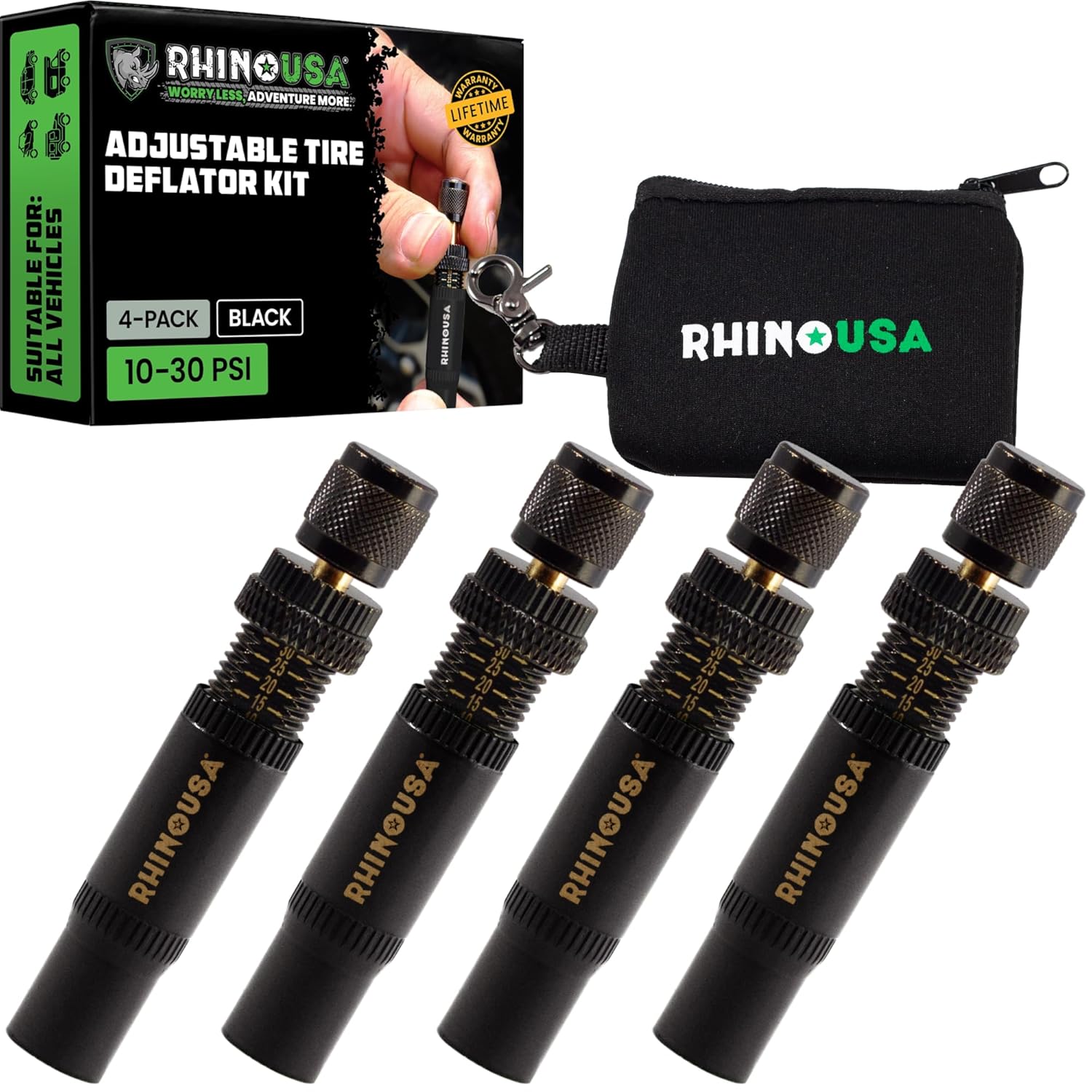
Use the Rhino USA adjustable tire deflators to air down all four tires at once by screwing one deflator onto each valve stem, letting you step away while the tires reach your preset pressure. Each deflator independently adjusts across a 10–30 PSI range with laser-etched indicators for quick setup and verification, making it ideal for beach, sand, and rocky off-road trails.

Camco Trailer Aid Plus tandem tire ramp lifts your trailer for quick, safe tire changes with ample clearance from its 5 1/2-inch lift. It helps you change a flat tire without unloading cargo, making roadside and routine maintenance more efficient. The heavy-duty, waterproof and rustproof polymer design supports up to 15,000 lb and is built for easy portability and storage.

This portable cordless tire inflator delivers up to 160 PSI with fast 17 L/min airflow to help you quickly top up tires and get back on the road. It features dual power mode, running on a 21V rechargeable battery or a 12V DC adapter for convenient roadside use. An automatic shut-off with digital pressure gauge helps prevent overinflation, and a built-in LED light improves visibility in low-light conditions.
Tire Width Basics: What You Need to Know First
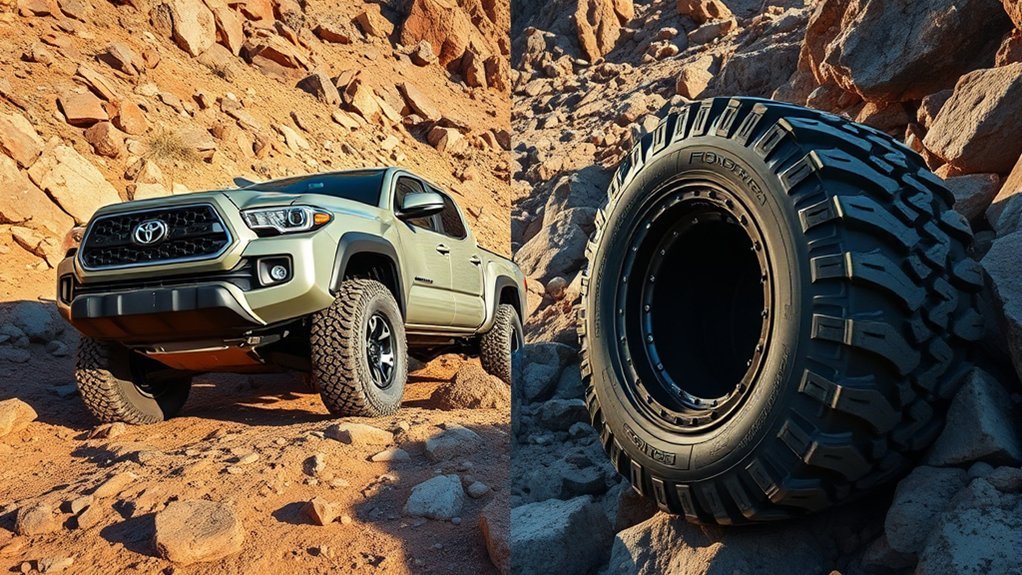
The first number in a metric tire size is its nominal section width in millimeters. For example, a 255/85R16 is nominally narrower than a 285/70R17. That number does not tell you the tire’s tread width, overall diameter, weight, construction, load capacity, or actual mounted width.
Wheel width also changes the tire’s mounted shape. A tire installed on a wheel near the narrow end of its approved range will have a different sidewall profile from the same tire on a wider approved wheel. Using a wheel outside the tire manufacturer’s approved rim-width range can reduce support and create unwanted stress.
At the same vehicle load and inflation pressure, changing width tends to alter the shape of the footprint rather than producing a simple width-equals-more-grip result. A wide footprint may be shorter and broader, while a narrow footprint may be longer and slimmer. Terrain, tread blocks, rubber compound, sidewall construction, and pressure determine how effectively that footprint creates traction.
Note: The 255/85R16 and 285/70R17 sizes discussed here are aftermarket examples, not universal Toyota Tacoma recommendations. A 16-inch wheel may not clear the brakes on every Tacoma generation or trim, and either size may require different wheels, suspension changes, or body clearance.
Narrow vs. Wide Tires: Which Offers Better Traction?
Neither width provides the best traction in every condition. The correct answer depends on whether the tire needs to cut through material, float over it, conform around an obstacle, evacuate water, or resist lateral movement.
Traction in Mud Conditions
Narrow tires can work well when a soft layer of mud covers a firmer base. Their concentrated ground pressure may help the tread move through the upper layer and reach material that can support the truck. They also tend to fit ruts more easily and may throw less mud against the body.
That does not mean narrow tires always win in mud. If the mud is deep and has no firm base, a tire that digs aggressively can bury the truck. A wider tire aired down to an appropriate pressure may create more flotation and reduce sinking. In either case, an open mud-terrain tread that clears packed material can matter more than a small difference in width.
Performance on Rock Terrain
Rock traction depends heavily on tread-block placement, rubber compound, carcass flexibility, sidewall protection, pressure, and driver line choice. A wider tire may provide lateral stability and place rubber on more parts of an irregular obstacle. A narrower tire may offer more steering clearance and can place pressure on a smaller contact zone.
Width alone does not show which tire will grip a wet ledge, resist a sidewall cut, or conform around a rock. Compare the complete tire design and make sure the wheel properly supports the tire.
Performance in Sand and Deep Snow
Wide tires generally have the clearer advantage when the goal is flotation. Lowering pressure within safe limits lengthens and broadens the footprint, helping the Tacoma stay nearer the surface instead of digging down.
Narrow tires may still work in shallow snow, established tracks, or conditions where they can reach a firmer layer. On packed snow and ice, tread compound, siping, and winter certification are usually more important than width.
Hydroplaning Resistance Differences
A narrower tire often has less water to displace across its tread width, which can help in standing water. However, hydroplaning is not controlled by width alone. Vehicle speed, water depth, vehicle load, tire pressure, tread depth, and groove design all affect when a tire begins to ride on water.
Slow down in heavy rain, avoid worn or underinflated tires, and never rely on a narrow size as a substitute for a quality wet-weather tread.
How Narrow Tires Enhance Off-Road Performance
Narrow tires can be practical for Tacoma owners who value clearance, predictable tracking in ruts, lower assembly weight, and the ability to move through shallow loose material. They may also reduce contact with upper control arms, frame sections, fender liners, and body mounts compared with a wider tire of similar diameter.
A tall, narrow tire can add ground clearance without becoming excessively wide, but its larger overall diameter may still create rubbing at full steering lock or suspension compression. A taller tire can also change effective gearing, acceleration, braking feel, speedometer accuracy, and transmission behavior.
Narrow tires are most useful when their width supports the terrain and the complete size remains compatible with the truck. They are not automatically lighter or more efficient; an aggressive LT tire can be heavier and have more rolling resistance than a wider road-oriented tire.
The Advantages of Wide Tires in Various Terrains
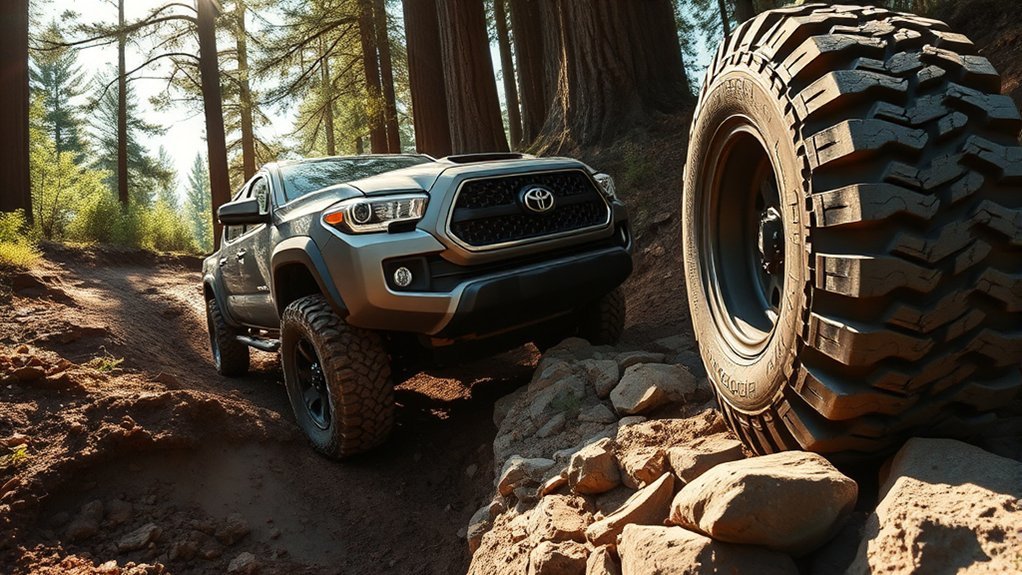
Wide tires can provide valuable flotation in sand, deep snow, and very soft soil. They can also offer a stable feel on dry surfaces when mounted on an appropriate wheel and used at the correct pressure.
Their main potential advantages include:
- Flotation: A broad footprint can reduce sinking on soft surfaces.
- Lateral support: The truck may feel more planted during low-speed off-camber travel when the complete wheel-and-tire package is properly matched.
- Tread availability: Some off-road tire models and aggressive tread patterns are offered in more wide-size options.
- Appearance: Many Tacoma owners prefer the fuller stance of a wide tire.
The trade-offs may include added weight, greater steering effort, more road noise, reduced wet-weather margin, lower fuel economy, and contact with the frame, suspension, body mount, or fender liner. The wheel’s offset and backspacing can move the interference from one area to another, so simply pushing the tire outward is not a complete fix.
Do Narrow Tires Save Fuel?
A narrower tire may help fuel economy when it also reduces rolling resistance, aerodynamic drag, and rotating mass. Width by itself does not guarantee a measurable improvement.
Tread compound, tread depth, carcass construction, tire pressure, wheel weight, overall diameter, alignment, and driving speed can outweigh the effect of width. An aggressive narrow mud-terrain tire may consume more energy than a wider highway tire designed for low rolling resistance.
NHTSA explains that a 10% reduction in tire rolling resistance may improve vehicle fuel economy by approximately 1–2%. That does not mean making a tire narrower will automatically produce the same change. Compare the actual tire models, their weight, and their intended use instead of relying on a universal MPG estimate.
Tire width is only one part of efficiency. A heavy, aggressive narrow tire can require more energy than a lighter, wider highway tire.
What to Consider for Tire Fitment Choices
Tacoma fitment varies by model year, trim, drivetrain, suspension, brake package, wheel, and factory option package. Begin with the tire-and-loading placard on the driver’s door area and the owner’s manual for the exact truck.
For example, Toyota’s 2024 Tacoma specifications include several factory configurations, such as 245/70R17, 265/70R17, and 265/65R18, with different wheel widths and recommended cold pressures. This variation within one model year shows why a generic Tacoma size recommendation is unreliable. Review the official Toyota Tacoma maintenance data and select the correct model year before using any specification.
[Products Worth Considering]

This portable cordless tire inflator delivers fast, efficient inflation for cars, motorcycles, bikes, and sports balls with a digital pressure gauge. Use the one-click PSI preset with auto shut-off for accurate, hands-free topping to your target pressure up to 150 PSI. It’s compact and rechargeable with a built-in emergency LED light plus valve adapters and accessories for quick, ready-to-go use.

RVMATE dual-axle RV tire covers help shield your tires from sunlight, snow, rust, and dirt to keep them in better condition in harsh weather. Made with heavy-duty waterproof, UV-resistant 420D Oxford fabric, they provide strong shading and help reduce wear. They install easily by placing the cover on the wheel and fastening the rope for a stable fit.
Verify These Items Before Buying
- Model year and trim: Confirm the truck by VIN, drivetrain, cab, bed, suspension, and option package.
- Wheel diameter: Make sure the wheel clears the brake caliper and other hardware.
- Approved rim width: Use a wheel within the tire manufacturer’s specified range.
- Wheel load rating: The wheel must safely support the truck’s required axle load.
- Load capacity: Choose a tire with sufficient capacity at the pressure it will actually use. Check the truck’s front and rear GAWR, payload, accessories, and towing load.
- Construction: Do not assume that P-metric, LT-metric, and high-flotation tires use the same pressure for the same load.
- Overall diameter: A larger diameter may alter gearing, speedometer readings, braking, transmission behavior, and electronic-control operation.
- Offset and backspacing: Check clearance at the upper control arm, frame, body mount, fender liner, mud flap, and outer fender.
- Full movement: Test full steering lock in both directions and full suspension compression, not just clearance while parked straight.
- Spare tire: Confirm that a usable spare fits its storage location and is sufficiently close in diameter for the drivetrain.
- TPMS: Confirm that compatible sensors are installed, registered, and initialized when required.
Warning: Do not choose a replacement tire by width, appearance, or Load Range E labeling alone. An incorrect tire, wheel, pressure, or offset can reduce load capacity, damage components, cause rubbing, or change the Tacoma’s steering and braking behavior. Have a qualified tire professional verify the complete package.
Load Range Is Not the Same as Correct Load Capacity
A Load Range E tire may be suitable for some heavy-duty uses, but it can also be heavier and stiffer than necessary. The important question is whether the tire supports the required axle load at the recommended operating pressure while fitting an appropriately rated wheel.
If you change from a factory P-metric tire to an LT-metric or high-flotation tire, do not assume the door-placard pressure transfers directly. Use the replacement tire manufacturer’s load-and-inflation information and obtain a pressure recommendation for the truck’s actual axle loads.
Tire Pressure Management for Optimal Performance
For normal paved-road driving on the original tire application, use the recommended cold pressure on the vehicle placard or in the correct Toyota manual. Check pressure before driving or after the truck has been parked long enough for the tires to cool. The pressure molded on the tire sidewall is not the Tacoma’s recommended road pressure.
If you install a different tire size or construction, the correct pressure may change. BFGoodrich advises consulting the tire manufacturer or a qualified professional because replacement LT and flotation tires can have different load-and-inflation requirements. Review its off-road tire and pressure guidance before changing pressure for trail use.
How to Air Down More Safely
- Begin with tires in good condition and a known road pressure.
- Know the truck’s load, including passengers, cargo, accessories, and trailer tongue weight.
- Lower pressure gradually rather than jumping to a predetermined number.
- Drive slowly and check steering response, sidewall bulge, wheel clearance, and traction.
- Avoid sharp turns, high speed, hard braking, and impacts that could unseat the bead or pinch the sidewall.
- Stop if a tire contacts the body, wheel, suspension, or terrain.
- Carry an accurate gauge, valve tool, and compressor capable of reinflating all four tires.
- Inspect the tread, sidewalls, beads, and wheels after the trail.
- Reinflate to the correct road pressure before normal paved-road or highway driving.
Warning: There is no universal safe pressure of 15 psi for a Tacoma. A pressure that works for one wheel, tire, vehicle load, and terrain can unseat a bead or damage another setup. Very low pressure requires specialized knowledge, low speed, suitable equipment, and enough remaining load capacity.
Pro Tip: Record the pressure, load, terrain, and results after each trail trip. This creates useful setup notes for your exact Tacoma instead of relying on another driver’s pressure number.
Debunking Myths: What You Really Need to Know About Tire Width
Myth: Wider Tires Always Create More Traction
Reality: They can provide flotation and a stable feel, but their performance still depends on tread, compound, construction, pressure, wheel support, load, and surface conditions.
Myth: Narrow Tires Always Dig Through Mud
Reality: They may reach a firm base in shallow mud, but they can dig the truck deeper when the material is soft and bottomless.
Myth: Wider Tires Must Run More Pressure
Reality: Pressure must support the required load for the specific tire. Width alone does not determine the answer.
Myth: Load Range E Automatically Means Safer
Reality: Load Range E describes part of the tire’s construction and pressure capability. The tire still needs the correct load capacity, pressure, wheel, size, and application.
Myth: Tire Width Determines Fuel Economy
Reality: Rolling resistance, weight, tread, compound, pressure, diameter, aerodynamics, alignment, and driving conditions all contribute.
Personal Experiences: What Tacoma Owners Often Prefer
Tacoma owners commonly choose different widths because their priorities differ. Drivers who spend time in ruts, wet roads, slush, forest trails, or tight wheel wells often value a relatively narrow tire. Drivers who spend more time in dunes, powder, soft soil, or on wide open trails may prefer a broader footprint.
These preferences are anecdotal rather than proof that one width is best. Owner reports are most useful when the truck’s model year, tire model, wheel size, offset, pressure, load, suspension, and terrain are all provided. A statement such as “285s worked better” has limited value if those details are missing.
How to Choose the Best Tires for Your Driving Style
- List your real use: Estimate how much time the Tacoma spends on pavement, mud, sand, rocks, snow, towing, and loaded travel.
- Choose the tire category: Highway-terrain, all-terrain, hybrid, mud-terrain, and winter tires can behave very differently even at the same width.
- Prioritize tread and construction: Match the tread, compound, sidewall, and carcass to the terrain before focusing on appearance.
- Decide whether you need digging or flotation: A narrow tire may help reach a firm base, while a wider tire may help the truck remain on top of deep soft material.
- Verify the complete fitment: Check wheel diameter, width, offset, load rating, brakes, suspension, body clearance, spare storage, and TPMS.
- Account for road use: Consider wet braking, noise, steering feel, fuel use, ride comfort, and emergency handling.
- Use a qualified installer: Ask for a load-and-inflation check, not just confirmation that the tire can be physically mounted.
- Test cautiously: After installation, check rubbing at full lock and compression, verify pressure, and recheck wheel torque according to the correct service guidance.
For many daily-driven Tacomas, a moderately sized tire with the right tread and correct load capacity is more useful than an extreme width. It can preserve road manners while still improving trail performance.
Frequently Asked Questions
Are skinnier tires better for off-road driving?
They can be better in ruts, slush, tight clearances, and mud with a firm base. They are not automatically better in deep sand, powder, or bottomless mud, where flotation may be more useful. Tread, construction, pressure, and load remain essential.
Is it better to have wider or narrower Tacoma tires?
Choose narrower tires when clearance, ruts, wet roads, and lower assembly weight are priorities. Consider wider tires when flotation in sand, deep snow, or very soft ground matters most. For rocks and mixed driving, the specific tire design and pressure often matter more than width.
Will 255/85R16 tires fit a Toyota Tacoma?
Fitment depends on the Tacoma’s model year, trim, brakes, wheel specifications, suspension, offset, and available clearance. The size requires a 16-inch wheel, and a 16-inch wheel may not clear the brakes on every Tacoma. Verify the complete application before purchase.
Do 285/70R17 tires require a lift on a Tacoma?
Some Tacoma configurations can use this size with little or no suspension lift, while others may rub the body mount, frame, fender liner, mud flap, or upper control arm. Wheel offset and tire model also change the mounted dimensions. A lift alone does not guarantee clearance at full steering lock and compression.
Is 15 psi safe for off-road Tacoma tires?
Not as a universal recommendation. Safe air-down pressure depends on vehicle load, tire type, wheel design, terrain, temperature, and speed. Lowering pressure too far can unseat the bead or damage the sidewall and wheel. Use load-based guidance, reduce pressure gradually, drive slowly, and reinflate before pavement.
Do narrow Tacoma tires improve fuel economy?
They may help if the complete tire-and-wheel assembly is lighter and has lower rolling and aerodynamic resistance. Width alone does not predict the result. An aggressive narrow LT tire can use more energy than a wider highway tire.
Conclusion
The best Tacoma tire width depends on what you need the tire to do. A narrow tire can provide useful clearance, rut tracking, wet-road advantages, and the ability to reach a firm base beneath shallow mud or snow. A wider tire can improve flotation in sand, deep powder, and very soft ground.
Do not choose by width alone. Compare the tread, compound, construction, load capacity, wheel compatibility, overall diameter, pressure requirements, and complete vehicle fitment. When those factors are correct, either a narrow or wide tire can perform well. When they are ignored, even a popular size can reduce safety and trail capability.
Sources
- Toyota 2024 Tacoma Maintenance Data — factory tire sizes, wheel sizes, and recommended cold inflation pressures for different Tacoma configurations.
- Toyota Tacoma Items to Initialize — TPMS procedures following pressure, tire-size, or wheel changes.
- National Highway Traffic Safety Administration TireWise — tire pressure, replacement, maintenance, load, and rolling-resistance guidance.
- NHTSA Tire and Road-Trip Safety Guidance — cold-pressure checks and use of the vehicle manufacturer’s placard.
- BFGoodrich Off-Road Tire Selection Guide — alternate-size pressure, airing down, reinflation, and off-road tire preparation.
- U.S. Department of Energy Fleet Efficiency Guidance — proper inflation and rolling-resistance effects on fuel use.

Related Articles
How Tire Weight Affects Toyota Tacoma Performance
How does tire weight influence your Toyota Tacoma's performance and efficiency? Discover the surprising effects that could change your driving experience.
Read More
Tire Noise Levels by Tire Type on a Toyota Tacoma
A comprehensive look at how tire types affect noise levels in your Toyota Tacoma reveals surprising insights that could enhance your driving experience.
Read More
How To Choose Tires for a Dual Use Toyota Tacoma
Unlock the secrets to selecting the perfect tires for your dual-use Toyota Tacoma, ensuring optimal performance and comfort on every adventure. Discover more inside!
Read More