
Toyota Tacoma Tire Setup for Long Distance Travel
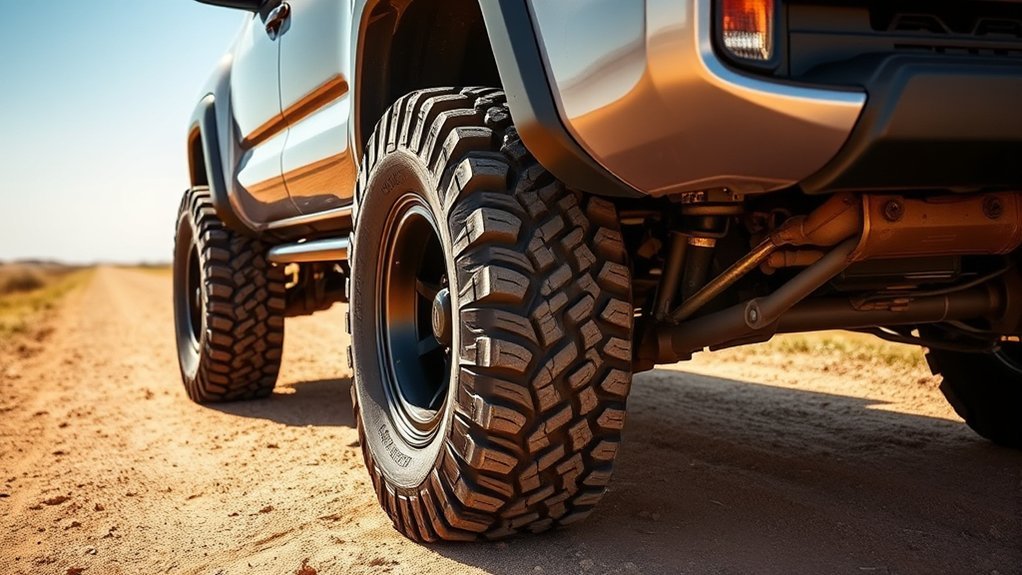
Choosing the right Toyota Tacoma tires for long-distance travel is not only about going bigger or picking the most aggressive tread. The best setup keeps your truck stable on the highway, quiet enough for long hours, efficient enough to avoid wasting fuel, and strong enough for the load you carry.
For most Tacoma owners, the safest starting point is the factory tire size listed on the driver-door placard or in the owner’s manual. From there, you can decide whether a mild all-terrain tire, a highway-terrain tire, or a modest upsized fitment makes sense for your mix of pavement, gravel, snow, towing, and trail use.
Quick Answer
For long-distance Tacoma travel, stay close to the factory tire size unless you need extra off-road clearance. Sizes such as 265/70R17 or 265/75R16 are common on many Tacomas, while 275/70R17 is a mild upgrade on some builds. Use the cold PSI on your door placard, choose the right load rating, and test for rubbing before a trip.
Key Takeaways
- Stock or near-stock tire sizes are usually best for highway comfort, MPG, braking, and steering feel.
- A mild all-terrain tire is a good choice if your trip includes gravel, forest roads, campsites, or snow.
- Aggressive mud-terrain tires can add noise, weight, vibration, and fuel use on long paved trips.
- Always use the cold tire pressure listed on your Tacoma’s door placard or owner’s manual, not the maximum PSI printed on the tire sidewall.
- After changing tire size, wheel offset, or suspension height, check for rubbing, alignment, speedometer error, and TPMS function before a long drive.
At a Glance
| Time Required | 15 to 30 minutes for a pre-trip tire check; longer if you are test-fitting larger tires. |
| Difficulty | Easy for pressure and tread checks; moderate if changing size, offset, or suspension height. |
| Tools Needed | Tire pressure gauge, tread depth gauge, flashlight, portable inflator, torque wrench, and tire repair kit. |
| Cost | Basic tools often cost $25 to $150 total; tires, alignment, lift parts, and mounting vary widely by setup. |
Choosing the Right Tire Size for Long Journeys
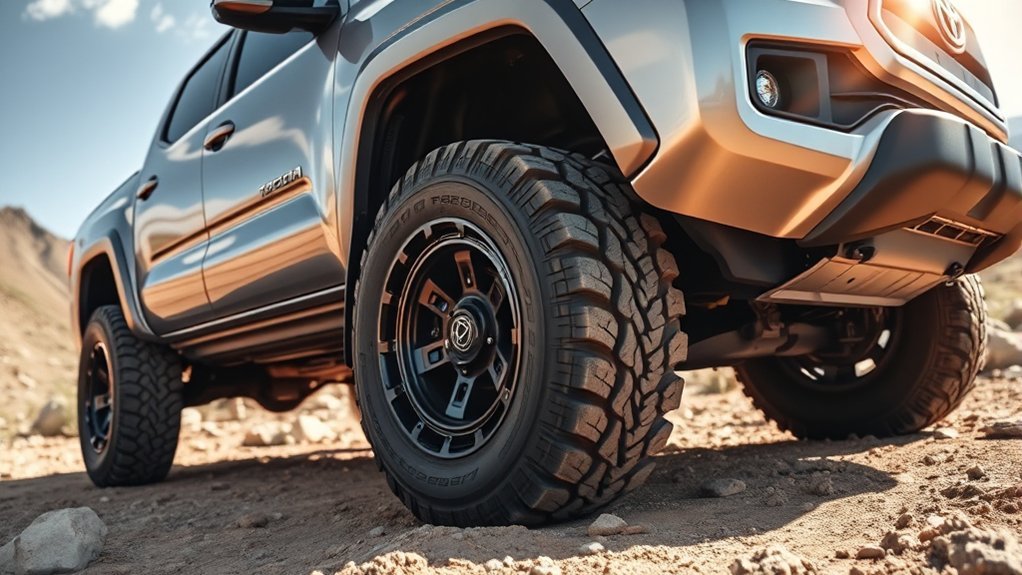
When planning long journeys in your Toyota Tacoma, the best tire size is usually the one that keeps the truck close to its factory geometry. That means predictable steering, accurate gearing, proper brake feel, fewer rubbing issues, and easier tire-pressure setup.
Common Tacoma sizes such as 265/70R17 and 265/75R16 often work well for road trips because they give you enough sidewall for comfort without forcing major suspension or body changes. A mild step up to 275/70R17 can add a wider footprint and a little more height on some builds, but it may require careful offset selection and rubbing checks.
Larger tires such as 285/70R17 can improve off-road clearance, but they are not automatically better for highway travel. They can add weight, reduce acceleration, affect braking feel, change effective gearing, reduce fuel economy, and create rubbing at full steering lock or suspension compression.
Warning: Do not choose a Tacoma tire size by looks alone. Confirm the load index, speed rating, wheel width, offset, brake clearance, and cold PSI requirements before driving at highway speeds or towing.
[Products Worth Considering]

EVOULTES heavy duty tire inflator with an integrated gauge delivers accurate pressure readings from 10–120 PSI, helping you inflate, deflate, and check tires in one tool. The 16.5-inch extended dual-head air chuck with swivel base reaches hard-to-access dual wheel valves on trucks and RVs. A brass trigger core and side-mounted air release valve make operation smooth, with standard 1/4" NPT threading and quick-connect compatibility for easy setup.

This portable cordless tire inflator delivers up to 160 PSI with fast 17 L/min airflow to help you quickly top up tires and get back on the road. It features dual power mode, running on a 21V rechargeable battery or a 12V DC adapter for convenient roadside use. An automatic shut-off with digital pressure gauge helps prevent overinflation, and a built-in LED light improves visibility in low-light conditions.

This compact capsule-style tire repair kit helps you quickly fix punctures and plug flats with minimal effort. The rugged stainless steel shell protects the contents for reliable roadside use, while the simple plug assembly makes repairs fast and tool-free. Suitable for motorcycles, cars, ATVs, UTVs, and even mountain bikes.
Best Tacoma Tire Sizes by Use Case
| Tire Size | Best For | Long-Trip Notes |
| Factory size on your door placard | Best comfort, MPG, steering, and safety baseline | Start here if most of your trip is highway driving. |
| 265/70R17 | Balanced road-trip and light trail use | A common Tacoma-friendly size on many 17-inch wheel setups. |
| 265/75R16 | More sidewall on 16-inch wheels | Good for comfort and rough roads when compatible with your wheel and trim. |
| 275/70R17 | Mild upsizing and added stance | Check rubbing at full lock and over bumps before a long trip. |
| 285/70R17 | Off-road-focused builds | Often needs lift, trimming, offset planning, and speedometer awareness. |
Because Tacoma trims and generations vary, do not assume a size that fits one truck will fit yours. Check your exact model year, trim, wheel size, suspension height, and tire placard before buying.
Recommended Tire Types for Comfort and Performance
Comfort and performance in your Toyota Tacoma depend more on tire type than brand alone. A quiet highway-terrain tire can feel better on a 1,000-mile road trip than a heavy all-terrain tire, even if the all-terrain looks tougher.
For mostly paved travel, a highway-terrain or touring light-truck tire is often the smoothest option. It usually gives lower road noise, stable tracking, and better fuel economy than aggressive off-road tread.
For mixed travel, a mild all-terrain tire is the best compromise. Tires in this category can handle gravel, campsites, forest roads, and light snow while still behaving well on the highway. Popular examples include all-terrain lines from BFGoodrich, Goodyear, Falken, Toyo, Michelin, and Yokohama, but the right model depends on size, load rating, road noise, winter rating, and price.
For heavy off-road use, a rugged-terrain or mud-terrain tire gives more bite in mud, rocks, and ruts. The tradeoff is usually more noise, more weight, faster wear on pavement, and lower fuel efficiency. For long-distance travel, mud-terrain tires should be a special-use choice, not the default.
Pro Tip: If your Tacoma spends 80% or more of its time on pavement, shop for wet braking, road-noise ratings, tread warranty, and load rating before you shop for the most aggressive tread pattern.
Why Upgrade Your Tacoma Tires?
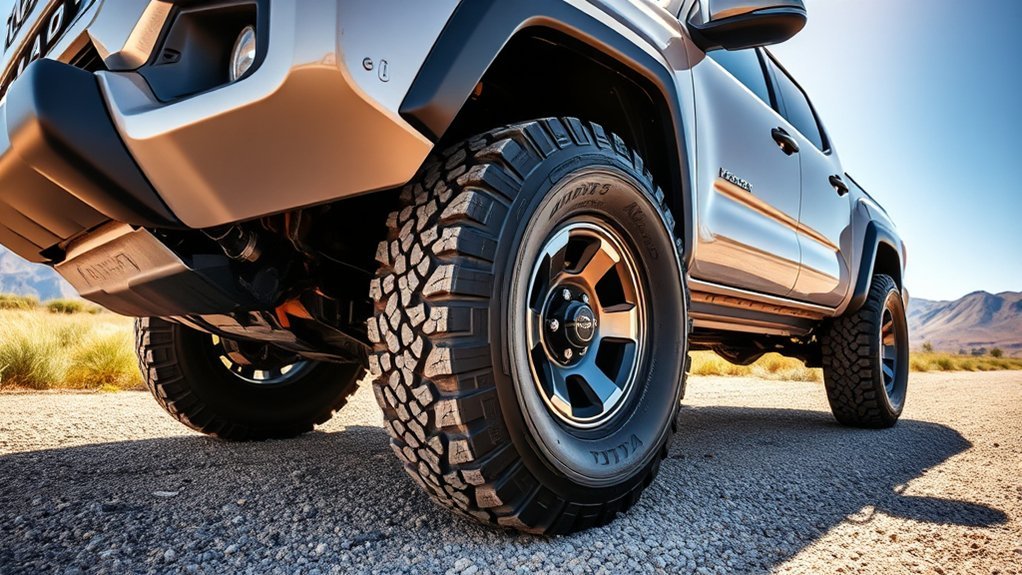
Upgrading your Tacoma tires can make sense when your current tires are worn, noisy, poor in rain, weak on gravel, or not suited to the kind of travel you do. The goal is not always to go larger. The goal is to match the tire to your trip.
Enhanced Comfort Levels
A comfortable Tacoma tire has enough sidewall to absorb sharp bumps, a tread pattern that does not drone on the highway, and a load rating that is not unnecessarily stiff for your actual use. This is why many long-distance drivers prefer 16- or 17-inch wheels with a reasonable sidewall instead of very large wheels with low-profile tires.
LT-rated tires can be useful for towing, heavy payloads, sharp rocks, and rough trails, but they may ride firmer than P-metric or standard-load tires. If you do not tow or carry heavy gear, a lighter tire can feel smoother and may help preserve MPG.
Improved Fuel Efficiency
The biggest tire-related MPG wins usually come from staying close to factory size, keeping tires properly inflated, avoiding unnecessary weight, and choosing a tread pattern that does not add excessive rolling resistance. Underinflated tires waste energy because they flex more and increase rolling resistance.
All-terrain tires can be worth the small efficiency tradeoff if your route includes gravel, snow, or remote roads. But if your trip is almost all highway, a quiet highway-terrain tire may be the better long-distance choice.
Increased Off-Road Capability
If you plan to tackle rugged terrain, a stronger all-terrain tire can improve puncture resistance and traction. A slightly taller tire can also add ground clearance, but only if it fits without rubbing and does not overload the drivetrain or brakes.
For long overland routes, look for a tire with a suitable load rating, strong sidewall, good wet-road behavior, and a tread pattern that will not become exhausting after hours of pavement. A tire that is excellent in rocks but loud on the freeway may not be the best road-trip tire.
P-Metric vs LT Tires for a Tacoma
Before choosing a tire, check whether you need a P-metric, standard-load, extra-load, or LT tire. This choice affects ride quality, sidewall strength, pressure requirements, weight, and towing confidence.
- P-metric or standard-load tires: Often smoother and lighter for daily driving and highway trips.
- Extra-load tires: Can add load capacity without being as stiff as some LT tires.
- LT tires: Better for heavy payloads, towing, sharp rocks, and rough travel, but often heavier and firmer.
Do not assume that an LT tire should use the same PSI as your original tire. When changing tire type or load range, ask a qualified tire shop to confirm the correct pressure based on your Tacoma’s weight, tire load table, and intended load.
How Wheel Size Influences Ride Quality and Handling
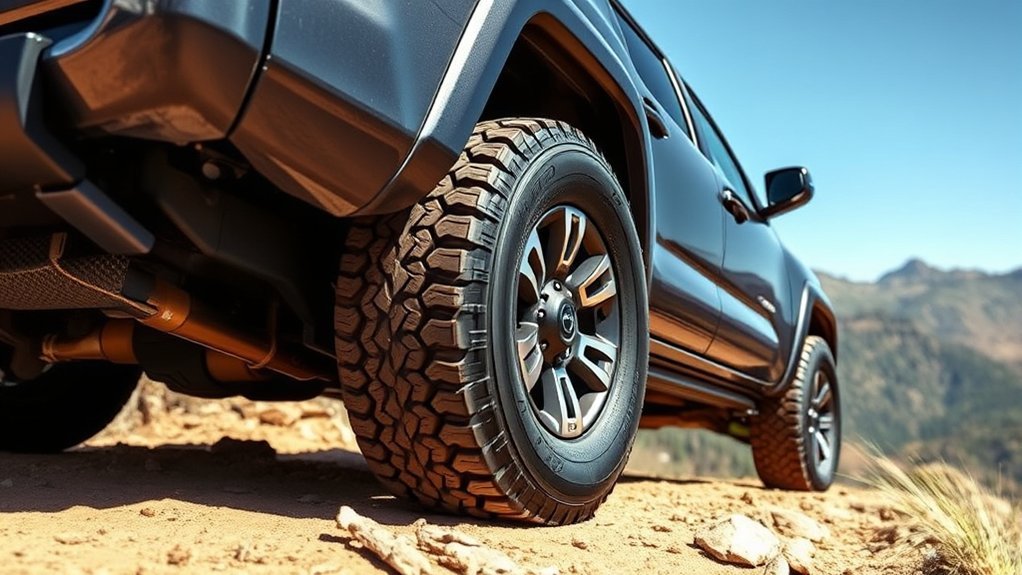
Choosing the right wheel size for your Toyota Tacoma can significantly affect ride quality and handling. The wheel and tire work together. A larger wheel often means a shorter sidewall if the outside tire diameter stays similar. A shorter sidewall can sharpen steering, but it can also make bumps feel harsher.
- Wheel size: Larger wheels can look good, but 16- and 17-inch wheels often give better long-trip comfort because they allow more sidewall.
- Sidewall height: More sidewall can help absorb potholes, washboard roads, and rough pavement.
- Tire width: Wider tires can add stability and traction, but they may also increase weight, drag, spray, and rubbing risk.
- Wheel offset: Staying close to factory offset usually protects highway manners. More negative offset pushes the tire outward and may increase fender or liner contact.
Why Tire Pressure Matters for Fuel Efficiency
Maintaining the correct tire pressure greatly influences your Toyota Tacoma’s fuel efficiency, handling, braking, tire wear, and heat buildup. Underinflated tires flex more as they roll, which increases heat and rolling resistance. Overinflated tires can reduce comfort and may cause uneven center wear.
For the safest pressure setting, use the Toyota owner’s manual and tire placard information for your exact Tacoma. The placard is usually on the driver-side door jamb and lists the factory cold inflation pressure for the original tire size.
Check pressure when the tires are cold, ideally before you drive or after the truck has been parked for several hours. Do not use the maximum PSI printed on the tire sidewall as your normal road-trip pressure. That number is the tire’s maximum cold pressure, not your Tacoma’s recommended setting.
Note: If your Tacoma is heavily loaded for camping, towing, or overlanding, pressure may need to be checked against the tire’s load table. A tire shop can help you avoid underinflation or overinflation after a tire-type change.
How Proper Maintenance Boosts Your Tacoma’s Performance
Proper tire maintenance helps your Tacoma track straight, brake predictably, and avoid uneven wear on long trips. Focus on pressure, tread depth, rotation, balance, and alignment before you leave.
Tire Pressure Management
Tire pressure management is one of the easiest ways to improve road-trip safety. Use a quality gauge rather than relying only on the dashboard warning light.
- Check cold pressure: Check all four tires and the spare before a long drive.
- Use the placard: Follow the driver-door placard or owner’s manual for the original tire size.
- Recheck after weather changes: Cold weather can lower PSI, and hot weather can raise it.
- Do not ignore TPMS: A warning light means you should stop safely and check pressure with a gauge.
Regular Alignment Checks
Alignment affects steering feel, tire wear, and how relaxed the truck feels on a long highway drive. You do not need an alignment every time you check tire pressure, but you should schedule one if the truck pulls, the steering wheel sits off-center, the tires show uneven wear, or you have recently installed new tires, wheels, lift parts, or suspension parts.
After upsizing tires or changing offset, alignment becomes even more important. A proper alignment helps the tires contact the road evenly and reduces the chance of feathering, cupping, or shoulder wear.
Choosing the Right Wheel Offset for Stability
Wheel offset controls how far the tire sits inward or outward from the hub. On a Tacoma, offset affects stance, steering feel, rubbing, fender clearance, and stress on suspension components.
For long-distance highway stability, staying close to factory offset is usually the safest choice. Mild negative offset can help clear suspension parts with wider tires, but too much negative offset can push the tire into the fender liner, mud flap, or cab mount during turns.
- Start with your factory wheel specs: Know your current wheel width and offset before shopping.
- Match offset to tire size: A 265-width tire needs less clearance help than a 285-width tire.
- Test full steering lock: Turn both directions and check liners, mud flaps, cab mounts, and upper control arms.
- Check under compression: A tire that clears in the driveway may still rub on dips, bumps, or trail flex.
[Products Worth Considering]

This roadside assistance kit helps drivers and passengers in urgent situations after an accident or breakdown, providing practical support while waiting for help. It includes a lightweight, compact tire inflator for fast inflation of standard vehicle tires, plus reinforced jumper cable protection for safer handling. Ideal for winter weather, road trips, camping, and travel, with everything stowed neatly in a trunk bag.

The JACO FlowPro Tire Inflator measures, inflates, and airs down tires up to 100 PSI with battery-free operation and ±2% accuracy after calibration. It features a glowing pressure dial for night visibility, a heavy-duty steel build with a hybrid hose, and a precision push-to-inflate thumb trigger. The patented Lightning Air Chuck locks on for a secure seal, and the kit includes quick-connect hardware for easy inline use with your air compressor.
Avoiding Rubbing Issues on Long Trips
Rubbing is more than an annoying noise. On a long trip, repeated rubbing can damage tire shoulders, plastic liners, mud flaps, wiring, and body mounts. It can also make the truck feel less stable during tight turns or rough-road compression.
Larger tires can rub against fender liners, cab mounts, mud flaps, or suspension components, especially during full turns or off-road maneuvers. With mild sizes, a careful wheel offset and small liner adjustment may be enough. With larger sizes such as 285/70R17, some Tacomas may need trimming, aftermarket upper control arms, a lift or leveling kit, or more involved clearance work.
Before a road trip, load the Tacoma the way you will travel, then check clearance with passengers, gear, water, tools, and camping equipment inside. A loaded truck sits lower, which can reveal rubbing you did not notice when empty.
Must-Have Tools for Maintaining Your Tacoma Tires
To keep your Tacoma tires in top shape, equip yourself with basic tools that make pressure checks, tread checks, and small roadside problems easier to handle.
Essential Tire Maintenance Tools
- Portable air compressor: Lets you adjust pressure at home, at camp, or after airing down for gravel or trails.
- Tire pressure gauge: Helps you maintain the recommended cold PSI and catch slow leaks early.
- Tread depth gauge: Shows whether the tire has enough tread for rain, snow, and emergency braking.
- Tire repair kit: Plugs and patches can help with simple tread punctures, but sidewall damage requires tire replacement.
- Torque wrench: Helps confirm lug nuts are tightened correctly after a wheel change.
- Flashlight and gloves: Make it easier to inspect sidewalls, tread, valve stems, and the spare at night.
Tire Pressure Monitoring Systems
A Tire Pressure Monitoring System, or TPMS, is useful because it warns you when tire pressure drops too low. Still, TPMS is not a substitute for a manual gauge. Some systems show individual tire pressures, while others only warn when pressure is significantly low.
| TPMS Feature | Why It Helps |
| Low-pressure warning | Alerts you before a low tire overheats or wears unevenly. |
| Individual PSI display, if equipped | Helps spot a slow leak before the warning light appears. |
| Spare-tire check | Not all systems monitor the spare, so check it manually before long trips. |
| Manual gauge backup | Confirms actual pressure and avoids guessing after temperature swings. |
Winter and Wet-Weather Considerations
If your long-distance Tacoma trip includes mountain passes, snow, freezing rain, or remote winter roads, tire choice matters more than tread appearance. Look for the Three-Peak Mountain Snowflake symbol if you need a tire rated for severe snow service. Some all-terrain tires carry this marking, but not all do.
For heavy winter driving, dedicated winter tires usually outperform all-terrain tires on ice and packed snow. For mixed climates, a mild all-terrain with good wet-road behavior and a 3PMSF rating can be a practical compromise.
Tread depth also matters. A tire that is legal at 2/32 inch is not ideal for heavy rain, snow, gravel, or long mountain travel. Replace tires sooner if traction is poor, tread is uneven, sidewalls are cracked, or the tire has bulges, exposed cords, or repeated air loss.
Pre-Trip Tacoma Tire Checklist
Use this checklist before a long highway drive, camping trip, towing route, or overland journey:
- Check cold PSI on all four tires and the spare.
- Inspect tread depth across the inside, center, and outside of each tire.
- Look for damage such as cuts, nails, bulges, cords, cracking, or sidewall bubbles.
- Check lug nut torque if wheels were recently removed.
- Confirm TPMS function and do not ignore warning lights.
- Test for rubbing at full steering lock, especially after upsizing tires.
- Verify spare compatibility if your current tires are larger than stock.
- Schedule alignment or balancing if the truck pulls, shakes, wanders, or wears tires unevenly.
Final Tips for a Smooth Tacoma Journey
When planning your next adventure in a Toyota Tacoma, use your tires as part of the full travel setup. Tires affect comfort, fuel use, braking, steering, towing, and off-road confidence.
- Stay close to factory size for highway comfort: Stock or near-stock sizes are usually the easiest to live with on long trips.
- Choose tread by route: Highway-terrain for pavement, mild all-terrain for mixed roads, and rugged tires only when the terrain justifies them.
- Use the correct pressure: Follow the cold PSI on the placard or manual, then get professional guidance if you change tire type or load range.
- Do not ignore weight: Heavier tires can affect MPG, braking, acceleration, and ride comfort.
- Fix vibration before leaving: A small shake around town can become exhausting or unsafe after hours on the highway.
Frequently Asked Questions
How often should I rotate my Tacoma tires for best performance?
Many Tacoma owners rotate tires about every 5,000 to 7,500 miles, but the best interval depends on your owner’s manual, tire type, driving conditions, and whether you tow or drive off-road. Rotate sooner if you see uneven wear.
What is the ideal tire pressure for long-distance travel?
Use the cold tire pressure listed on your Tacoma’s driver-door placard or owner’s manual. Do not rely on a universal 35 PSI rule or the maximum PSI printed on the tire. If you changed tire size, load range, or payload, ask a qualified tire shop to confirm the correct pressure.
Can I mix different tire sizes on my Tacoma?
You should not mix different tire sizes on normal Tacoma road use. Mismatched tires can affect handling, braking, ABS, traction control, 4WD operation, and drivetrain stress. Use four matching tires with the same size, type, and similar tread depth.
How do I know when to replace my tires?
Replace tires when tread reaches 2/32 inch, when wear bars are flush, or sooner if wet or winter traction is poor. Also replace tires with sidewall cracks, bulges, exposed cords, repeated leaks, punctures outside the repairable tread area, or age-related damage.
What are the signs of uneven tire wear?
Common signs include inside-edge wear, outside-edge wear, center wear, cupping, feathering, bald patches, vibration, pulling, or a steering wheel that sits off-center. Causes can include wrong pressure, poor alignment, worn shocks, unbalanced tires, or loose suspension parts.
Are all-terrain tires good for long road trips?
Mild all-terrain tires can be excellent for long trips that include gravel, campsites, dirt roads, or snow. For mostly paved highway travel, a highway-terrain tire may be quieter, smoother, and more fuel-efficient. Avoid aggressive mud-terrain tires unless you truly need that level of off-road traction.
Conclusion
The best Tacoma tire for long-distance travel is the one that fits your exact truck, route, load, and comfort needs. Stock or near-stock sizes usually give the best highway manners, while mild all-terrain tires add useful traction for gravel, snow, and campsites. Bigger tires can help off-road, but they also bring tradeoffs in weight, rubbing, gearing, MPG, braking, and speedometer accuracy.
Before any long trip, check your cold tire pressure, tread depth, sidewalls, spare, lug torque, TPMS, and alignment symptoms. A careful tire setup turns your Tacoma from a capable truck into a more comfortable, safer, and more predictable travel partner.
Sources
- Toyota Owner’s Manuals and Warranty Guides — supports using the exact Tacoma owner’s manual and tire placard for tire pressure and model-specific guidance.
- NHTSA Tire Safety — supports tire pressure, tread, sidewall, and tire safety inspection guidance.
- FuelEconomy.gov Maintenance Tips — supports the link between proper tire inflation, maintenance, and fuel economy.
- 49 CFR § 571.138 Tire Pressure Monitoring Systems — supports TPMS warning-system context for underinflation.
- BFGoodrich All-Terrain T/A KO3 — supports current all-terrain tire lineup context for truck and SUV use.

Related Articles
How Tire Weight Affects Toyota Tacoma Performance
How does tire weight influence your Toyota Tacoma's performance and efficiency? Discover the surprising effects that could change your driving experience.
Read More
Tire Noise Levels by Tire Type on a Toyota Tacoma
A comprehensive look at how tire types affect noise levels in your Toyota Tacoma reveals surprising insights that could enhance your driving experience.
Read More
How To Choose Tires for a Dual Use Toyota Tacoma
Unlock the secrets to selecting the perfect tires for your dual-use Toyota Tacoma, ensuring optimal performance and comfort on every adventure. Discover more inside!
Read More