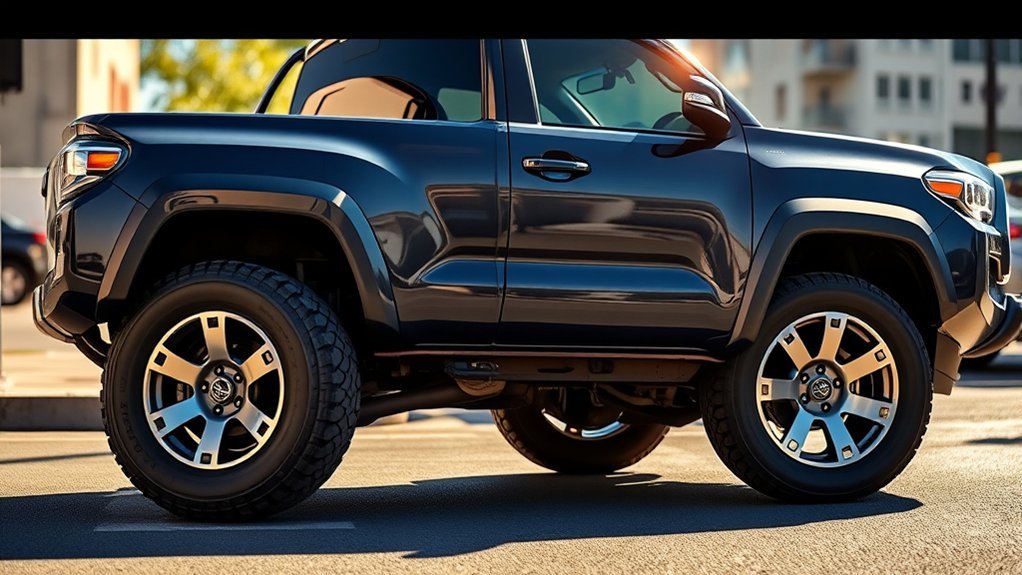
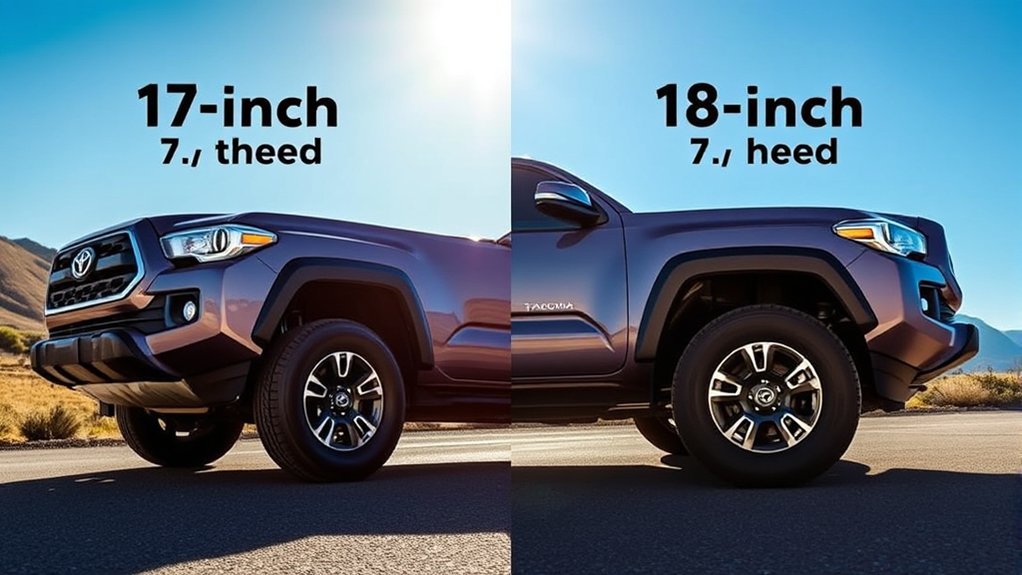
Choosing between 17-inch and 18-inch wheels for your Toyota Tacoma comes down to how you use the truck, not just how the wheels look. A 17-inch setup usually gives you more sidewall, better comfort on rough roads, and more flexibility for trail tires. An 18-inch setup can still make sense if you drive mostly on pavement, want a factory-style look, or own a newer Tacoma trim that already uses 18-inch wheels with a tall all-terrain tire.
Quick Answer
For most Tacoma owners who care about ride comfort, trail traction, tire choice, and wheel protection, 17-inch wheels are the better default. Choose 18-inch wheels if you drive mostly on pavement, prefer the look, or want to stay close to a factory 18-inch Tacoma package. Tire diameter, load rating, offset, and clearance matter more than wheel diameter alone.
Key Takeaways
- 17-inch wheels usually give your Tacoma more tire sidewall, which helps ride comfort, airing down, and rim protection on rough terrain.
- 18-inch wheels can feel sharper on pavement and match newer factory Tacoma packages, but they leave less sidewall when tire diameter stays similar.
- A 265/70R17 tire has about 7.3 inches of sidewall, while a 265/65R18 has about 6.8 inches, even though their outside diameters are close.
- Toyota lists current Tacoma off-road packages with 18-inch wheels and 32- or 33-inch all-terrain tires, so 18s are not automatically street-only.
- Always match or exceed the factory load rating and confirm cold tire pressure from your Tacoma’s door placard or owner’s manual.
Comparing 17” and 18” Wheels: What You Need to Know
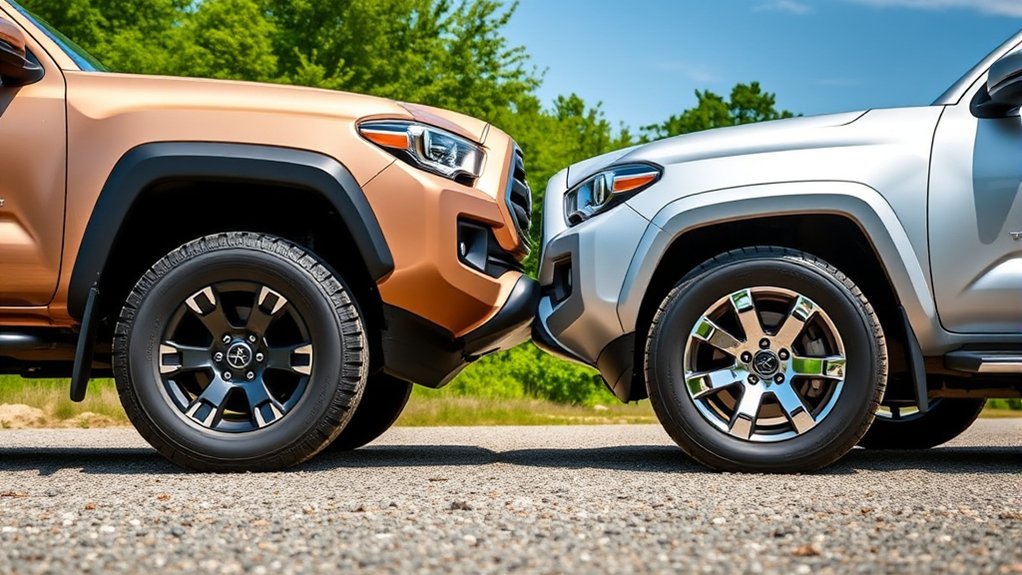
The wheel size itself does not tell the whole story. What matters most is the full wheel-and-tire package: outside diameter, tire width, sidewall height, load rating, tread type, wheel width, offset, brake clearance, hub fit, and suspension clearance.
If you compare two tires with similar outside diameters, the 17-inch wheel leaves more room for tire sidewall. That extra rubber can absorb impacts, protect the wheel from rocks and potholes, and make the tire more forgiving when you air down off-road. That is why many Tacoma owners who trail ride, camp, tow on rough roads, or drive forest roads prefer 17s.
An 18-inch wheel reduces sidewall height when the outside tire diameter stays close to stock. That can make steering feel more direct on smooth pavement. It can also give the truck a cleaner factory-style look. Toyota also uses 18-inch wheels on several current Tacoma off-road packages, including 32-inch Goodyear all-terrain tires on the TRD Off-Road i-FORCE Premium Package and 33-inch tires on Trailhunter and TRD Pro packages, according to Toyota’s 2026 Tacoma release.
| Wheel Choice | Main Advantage | Main Trade-Off | Best Fit |
|---|---|---|---|
| 17-inch wheels | More sidewall with a similar outside tire diameter | Less of a large-wheel street look | Trails, gravel, camping, winter roads, comfort, and all-terrain tires |
| 18-inch wheels | Sharper steering feel and factory-style appearance | Less sidewall if tire diameter stays close to stock | Daily driving, newer factory packages, light trails, and pavement-focused builds |
How Wheel Size Impacts Off-Road Performance
Off-road performance depends heavily on sidewall height. A taller sidewall lets the tire flex over rocks, roots, washboard roads, sand, snow, and uneven dirt. It also gives you more room to lower tire pressure for trail traction without putting the wheel lip as close to impacts.
A 17-inch wheel usually gives your Tacoma more off-road flexibility because it makes it easier to keep useful sidewall with common all-terrain, rugged-terrain, and mud-terrain tires. That extra sidewall can help the tire conform to rough surfaces and reduce harsh impacts through the cab.
An 18-inch wheel can still work off-road if the tire is tall enough. Toyota’s fourth-generation Tacoma Trailhunter and TRD Pro examples show that 18-inch wheels can support serious off-road packages when paired with tall 33-inch tires. The problem starts when you pair an 18-inch wheel with a shorter tire and expect the same cushioning as a taller 17-inch setup.
Note: For trail use, compare the full tire size, not just the wheel diameter. A tall 18-inch tire can work well, while a short 18-inch tire can feel harsh and expose the wheel to more damage.
Comparing Ride Quality: 17” vs. 18” Wheels
Ride quality is one of the biggest reasons Tacoma owners choose 17-inch wheels. When the overall tire diameter stays similar, a smaller wheel gives the tire a taller sidewall. That sidewall acts like an extra cushion between the truck and the road.
For example, a 265/70R17 tire has a sidewall height of about 185.5 mm, or 7.3 inches. A 265/65R18 tire has a sidewall height of about 172.3 mm, or 6.8 inches. Their overall diameters are nearly the same, but the 17-inch version gives you about half an inch more sidewall on each side of the wheel.
With similar outside tire diameter, the 265/70R17 example gives about 0.52 inch more sidewall than a 265/65R18 tire.
That extra sidewall can make potholes, gravel roads, forest roads, and washboard surfaces feel less sharp. It can also reduce the chance of bending or scraping a wheel on rocky trails.
18-inch wheels can feel more direct on smooth pavement because the shorter sidewall flexes less. If your Tacoma is a daily driver that spends most of its time on highways, city streets, and light gravel, that firmer feel may not bother you. If comfort matters most, 17s usually win.
Tire Options: Best Choices for 17” and 18” Wheels
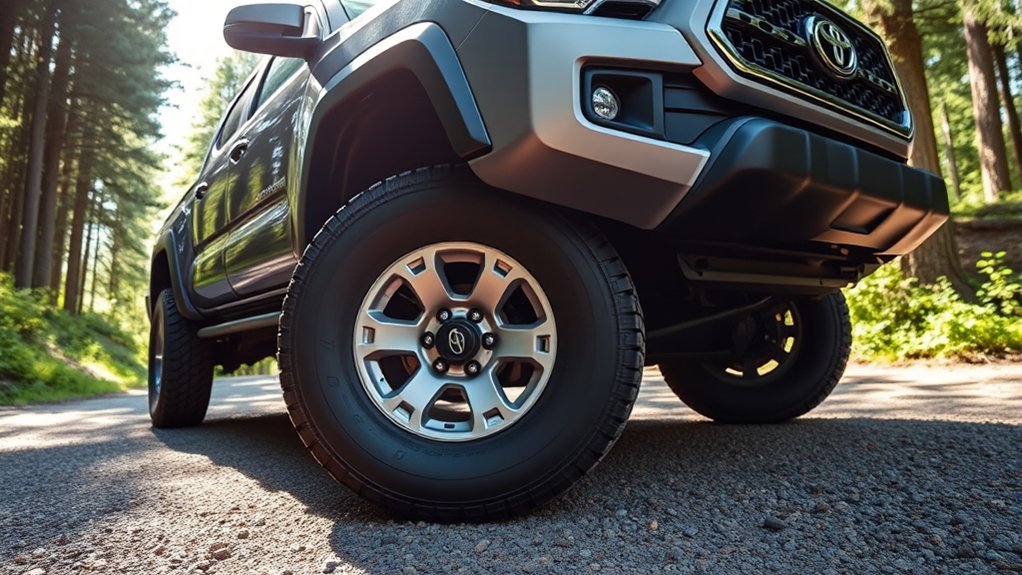
The best tire size depends on your Tacoma’s generation, trim, suspension, wheel width, offset, and how much rubbing you can tolerate. Start with the tire size listed on your Tacoma’s driver-side Tire and Loading Information Label or owner’s manual. NHTSA TireWise also recommends checking that label or the owner’s manual when choosing the correct tire size.
| Wheel Size | Common Tire Direction | Best For |
|---|---|---|
| 17-inch | 265/70R17, 275/70R17, or taller sizes when clearance allows | Off-road use, camping, rough roads, comfort, and broad all-terrain availability |
| 18-inch | 265/65R18, 275/65R18, or 32- to 33-inch tires when the truck supports them | Daily driving, factory-style appearance, newer trim packages, and mixed road use |
Do not choose a tire only because it fits the wheel diameter. Check the tire’s load index, speed rating, maximum load, tread type, real measured diameter, approved rim width, and intended service type. A Tacoma is a truck, so load capacity matters, especially if you tow, carry tools, use a camper shell, or add armor and recovery gear.
Warning: Never install a tire with a lower load rating than your Tacoma requires. Also confirm brake clearance, lug-nut seat type, hub fitment, TPMS compatibility, and rub-free movement before driving at speed.
[Products Worth Considering]

This manual duck head tire changer kit makes tire installation and removal simpler by letting you embed the duck head into the tire with applied pressure. The integrated design and durable steel construction help reduce friction and improve efficiency and safety during use. Suitable for 16–21 inch wheels, it’s convenient for cars, trucks, SUVs, and ATV tires, with 24-hour after-sales support.

These aluminum alloy tire valve stem caps with an O-ring seal help protect valve stems from corrosion while adding a clean, stylish look to your vehicle. The universal fit works across cars, trucks, motorcycles, bicycles, and more, making them an easy upgrade for everyday driving and off-road use. Installation is quick, and the included four-pack keeps all your tires dressed and protected.
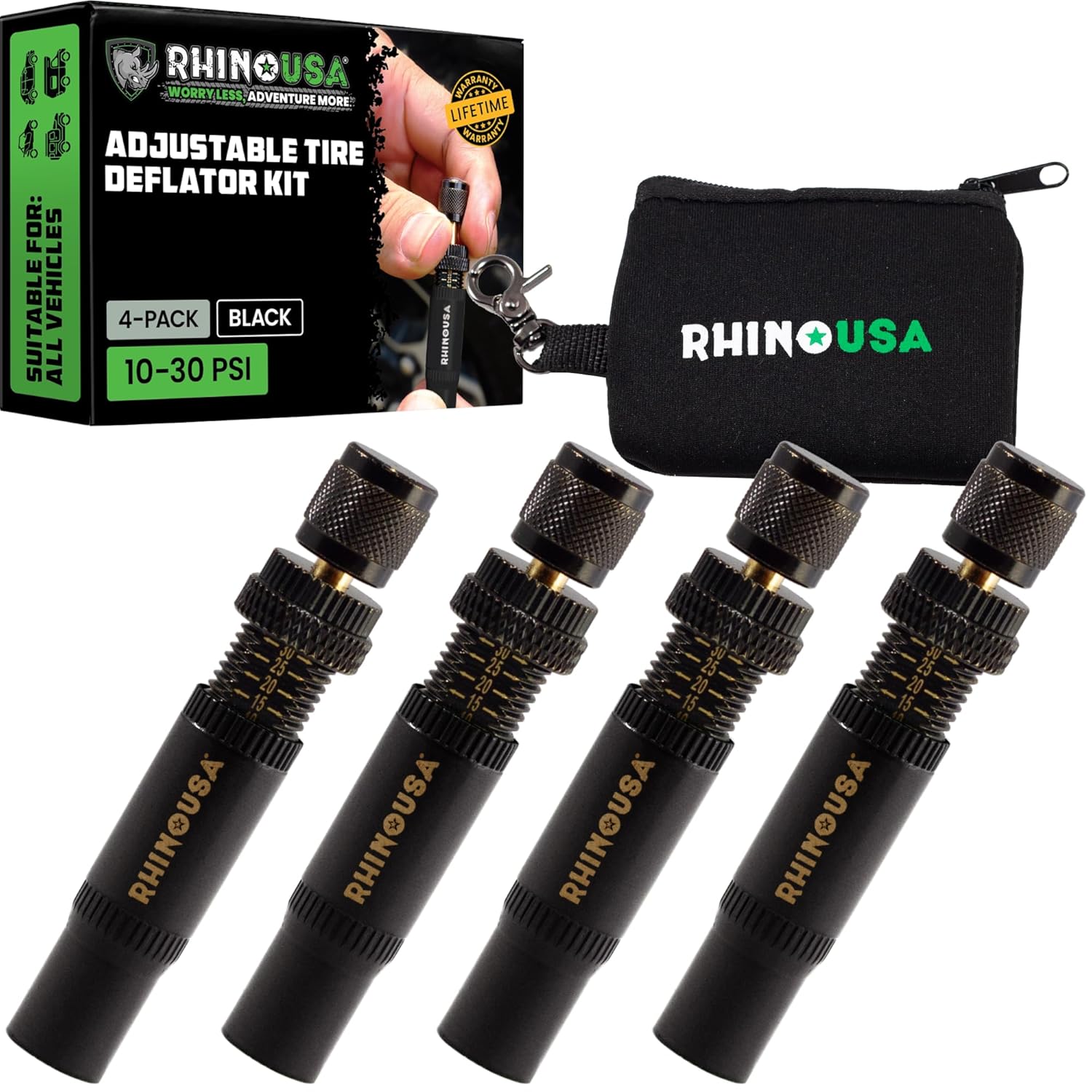
Use the Rhino USA adjustable tire deflators to air down all four tires at once by screwing one deflator onto each valve stem, letting you step away while the tires reach your preset pressure. Each deflator independently adjusts across a 10–30 PSI range with laser-etched indicators for quick setup and verification, making it ideal for beach, sand, and rocky off-road trails.
How to Compare Tire Size, Sidewall, and Diameter
Tire size math helps explain why 17-inch wheels often feel better on rough roads. In a size like 265/70R17, the first number is the tire width in millimeters, the second number is the aspect ratio, and the final number is the wheel diameter in inches. The sidewall height is the width multiplied by the aspect ratio.
| Example Size | Sidewall Height | Approx. Outside Diameter | What It Means |
|---|---|---|---|
| 265/70R17 | About 7.3 inches | About 31.6 inches | More cushion and wheel protection |
| 265/65R18 | About 6.8 inches | About 31.6 inches | Sharper feel with less cushion |
That comparison shows why two tires can be almost the same height while riding differently. Outside diameter affects ground clearance, gearing, speedometer accuracy, and rubbing. Sidewall height affects comfort, tire flex, and wheel protection.
How Sidewall Height Affects Ride and Traction
Sidewall height affects comfort, traction, and wheel protection. A taller sidewall can flex more, which helps the tire conform to uneven surfaces. That matters on dirt, sand, gravel, snow, and rock because the tire can create a longer, more forgiving contact patch when properly aired down for the surface.
A shorter sidewall usually feels firmer. That can improve steering response on smooth pavement, but it can also send more impact into the cabin on broken roads. It gives the wheel less protection when you hit a pothole or sharp trail edge.
For a Tacoma that sees regular trails, forest roads, and winter ruts, sidewall is your friend. For a Tacoma that spends most of its time commuting, towing on pavement, or driving around town, 18-inch wheels can still make sense when paired with the right tire.
Can You Switch From 18-Inch to 17-Inch Tacoma Wheels?
You can switch from 18-inch to 17-inch wheels on some Tacoma setups, but you should never assume the smaller wheel clears everything. Brake clearance is the first concern. A 17-inch wheel must clear the calipers, rotor hardware, wheel weights, and inner barrel shape.
You also need the correct bolt pattern, center bore or hub fit, lug-nut seat type, offset, wheel width, and load rating. TPMS sensors must also work with your Tacoma’s system. If your truck came with 18-inch wheels from the factory, ask the wheel manufacturer or a qualified tire shop to confirm the exact 17-inch wheel fitment before buying.
- Brake clearance: Confirm the wheel clears the front and rear brakes before mounting tires.
- Hub fit: Use the correct hub bore or hub-centric rings when required by the wheel design.
- Lug hardware: Match the correct lug-nut seat type and torque specification.
- Offset and width: Avoid pushing the tire into the fender liner, mud flap, body mount, or upper control arm.
- TPMS: Confirm sensor compatibility before installation.
- Load rating: Use wheels and tires rated for the truck’s weight and use.
[Products Worth Considering]

These universal tire valve stem caps help protect valve cores from dust, debris, and moisture while helping maintain stable tire pressure. The corrosion-resistant metal construction and sealed design provide reliable protection in road grime, mud, and winter conditions. Twist-on installation makes them quick to fit on cars, SUVs, trucks, and motorcycles.

Keep your tires properly inflated with this analog VONDIOR tire pressure gauge, designed for fast, easy readings without batteries. The swiveling, two-axis hose and large glow dial help you measure at any tire angle with instant visibility. Built with a protective rubber shield, it supports durable, low-maintenance use for cars and trucks.

This professional wheel and rim brush kit makes it easy to lift brake dust, grime, and dirt from wheels and tires without scratching finishes. The brushes feature soft, metal-free wool heads and a flexible 360-degree rim brush design for reaching hard-to-clean areas. Includes multiple brush types plus accessories for thorough car, motorcycle, and general vehicle detailing.
Fitment Tips to Prevent Rubbing
Rubbing happens when the tire contacts the fender liner, mud flap, body mount area, upper control arm, bumper, or suspension during turns or compression. Wheel diameter alone does not cause or prevent rubbing. Tire width, actual tire diameter, wheel offset, wheel width, alignment, lift height, and Tacoma generation all work together.
Use these checks before buying wheels or tires:
- Start with your factory size. Look at the tire placard on your Tacoma and compare the new tire’s outside diameter, width, load rating, and speed rating.
- Check actual tire measurements. Two tires with the same printed size can measure differently depending on brand, tread design, and load range.
- Confirm wheel width and offset. More negative offset pushes the tire outward. That can improve upper-control-arm clearance but can also increase rubbing at the fender liner, mud flap, and body mount area.
- Test full steering lock. Turn left and right on level ground, then test carefully over dips or shop ramps to check compression clearance.
- Recheck after alignment. Caster changes can move the tire in the wheel well and affect rub points.
[Products Worth Considering]

Upgrade your Toyota’s wheels with durable aluminum alloy valve stem caps that help protect valve cores from corrosion and direct exposure to road grime, clay, water, and snow. Rubber rings improve sealing to help prevent air leakage and maintain stable tire pressure for safer driving. These caps are easy to install or remove without tools and add a unique, stylish look to your car.

The 22800 wheel stud installer makes replacing wheel studs quick and secure, saving time and effort during tire service. It uses a ratchet or impact wrench to pull new studs firmly into place, helping when existing studs are too long. Compatible with most automotive wheels and light-duty truck wheel studs, it’s designed for easy, tool-assisted installation.

The Tymate TM2 RV tire pressure monitoring system keeps you informed with a color LCD display, automatic backlight, and solar charging for dependable operation. It supports up to 10 tire positions with four pre-paired sensors, while offering multiple alarm modes for fast leak detection, pressure extremes, temperature alerts, and low-signal warnings. Built-in monitoring uses accurate readings and reliable 433.92MHz communication to help protect your RV, trailer, truck, or SUV.
Offset Considerations
Offset describes where the wheel mounting surface sits compared with the wheel centerline. A more positive offset tucks the wheel inward. A more negative offset pushes the wheel outward.
No single offset works for every Tacoma. A 17×8.5 wheel with one offset can clear differently than an 18×9 wheel with the same tire. A third-generation Tacoma may rub in a different spot than a fourth-generation Tacoma. Aftermarket upper control arms, lift kits, bumper trimming, mud flaps, and alignment settings can all change the result.
For a conservative daily-driver setup, stay close to proven Tacoma fitments for your generation and tire size. For wider or taller tires, expect more testing and possible trimming.
Lift Kit Benefits
A lift kit can improve clearance, approach angle, and stance, but it does not automatically make every tire fit. A taller tire can still rub during steering or suspension compression if the wheel offset, width, and alignment push it into the wrong area.
| Change | What It Helps | What It Does Not Guarantee |
|---|---|---|
| Mild lift | More vertical clearance and improved stance | No rubbing at full lock or compression |
| More negative offset | More inner clearance near some suspension parts | Fender, mud flap, bumper, or body mount clearance |
| Taller tire | More ground clearance under the axle area | Correct gearing, MPG, speedometer accuracy, or rub-free fitment |
Pro Tip: Before ordering aggressive wheels, search for your exact Tacoma generation, trim, lift height, wheel width, offset, and tire model. A “33-inch tire” result is not enough because real measured size and tread shape vary.
Tacoma Owners’ Preferences: Choosing Between Wheel Sizes
Tacoma owners often split into two groups. The first group wants comfort, sidewall, tire availability, and trail performance. That group usually prefers 17-inch wheels. The second group wants a sharper look, a firmer road feel, or a wheel size that matches a newer factory package. That group may prefer 18-inch wheels.
Your own use should decide the winner. If your Tacoma sees rocky tracks, sand, snow, forest roads, or long camping trips, the 17-inch setup gives you more tire flexibility. If your Tacoma is a commuter, weekend hauler, or mostly pavement truck, an 18-inch setup can look clean and drive well.
Also think about replacement tire cost and availability. In many all-terrain sizes, 17-inch tires are widely available because they are popular with trucks and off-road SUVs. Some 18-inch all-terrain sizes are also easy to find, but the exact size, load rating, and tire model can narrow your options.
| Your Tacoma Use | Better Starting Point | Why |
|---|---|---|
| Daily commuting | 17-inch or 18-inch | Choose 17s for comfort or 18s for appearance and steering feel. |
| Forest roads and camping | 17-inch | More sidewall helps with bumps, gravel, ruts, and airing down. |
| Factory-style newer build | 18-inch | Many newer Tacoma packages use 18-inch wheels with tall tires. |
| Overlanding or rocky trails | 17-inch | More sidewall gives more protection and pressure flexibility. |
| Towing or hauling | Either, with correct rating | Load rating, inflation pressure, and tire construction matter most. |
Do Larger Wheels Impact MPG?
Larger wheels can affect MPG, but wheel diameter is only part of the story. Fuel economy changes usually come from the complete package: tire weight, wheel weight, tread aggressiveness, tire width, rolling resistance, pressure, and outside diameter.
If you move from a lighter highway tire to a heavier all-terrain or mud-terrain tire, you may notice lower MPG even if the wheel diameter stays the same. If you increase the tire’s outside diameter, your effective gearing changes. That can make the truck feel slower off the line and can affect speedometer accuracy.
If you move from a 17-inch setup to an 18-inch setup but keep a similar outside diameter and choose a similar tire type, the MPG change may be small. If the new 18-inch package is heavier, wider, taller, or more aggressive, expect a larger real-world penalty.
Tire pressure also matters. Use the cold tire pressure listed on your Tacoma’s placard for the factory tire size. NHTSA says the correct tire pressure is the vehicle manufacturer’s recommended cold pressure on the Tire and Loading Information Label or owner’s manual, not the pressure printed as the tire’s maximum. If you change tire size or load range, ask a qualified tire shop to confirm the correct pressure for the new tire and the truck’s load.
Balancing Looks and Performance: What to Consider
The right Tacoma wheel size should balance the way the truck looks with the way it works. An 18-inch wheel can fill the wheel opening nicely and match the style of newer trims. A 17-inch wheel can look more rugged because the taller sidewall makes the truck appear more trail-ready.
Aesthetic Appeal Considerations
If you want a modern factory-style look, 18-inch wheels may fit your taste better. They often make the truck look sharper and more finished, especially with clean all-terrain tires.
If you prefer an off-road stance, 17-inch wheels usually look more practical. The taller sidewall gives the tire more visual weight and suits a Tacoma with rock sliders, recovery gear, roof racks, or camping accessories.
Ride Comfort Factors
Ride comfort favors the setup with more sidewall, all else equal. That usually means 17-inch wheels when you compare similar overall tire diameters. A taller sidewall can soften impacts and reduce the sharpness you feel through the steering wheel and seat.
Suspension still matters. Toyota tunes Tacoma trims differently, and newer trims can include different shocks, rear suspension layouts, and off-road hardware. A Tacoma Limited, TRD Off-Road, Trailhunter, and TRD Pro can feel different even on the same wheel diameter.
Performance Trade-Offs
A 17-inch setup can help off-road traction and comfort because you have more sidewall to work with. It can also protect wheels better when you air down and crawl over rough terrain.
An 18-inch setup can improve steering feel on pavement because the shorter sidewall flexes less. It may also clear larger brake packages on some vehicles, though you still need to confirm brake clearance with the exact wheel design.
The trade-off is simple: more sidewall usually helps comfort and trail use; less sidewall usually helps steering response and style. Your tire choice can make either setup better or worse.
Recommendations for Choosing the Right Wheel Size for Your Tacoma
Pick 17-inch wheels if you want the most practical Tacoma setup for mixed driving, off-road use, tire availability, and ride comfort. This size gives you more sidewall with common all-terrain tires and leaves more room for airing down on trails.
Pick 18-inch wheels if you like the look, drive mostly on pavement, or want to stay close to a factory-style setup on newer Tacoma trims. Just make sure the tire is tall enough for your comfort goals and strong enough for your truck’s load needs.
Before buying, confirm these details:
- Tire outside diameter: Keep it close to stock unless you understand the speedometer, gearing, rubbing, braking, and MPG effects.
- Load rating: Match or exceed what your Tacoma requires.
- Wheel specs: Confirm bolt pattern, hub bore, width, offset, brake clearance, and lug-nut seat type.
- TPMS: Make sure the tire pressure sensors work with your Tacoma.
- Clearance: Test full steering lock and compression before assuming the setup is safe.
- Pressure: Use the vehicle placard for factory-size pressure and get a tire professional’s pressure guidance after major tire-size or load-range changes.
If you want the safest all-around answer, choose 17-inch wheels with a quality all-terrain tire in a size known to fit your Tacoma generation. If you want the factory-style look and mostly drive on road, choose 18-inch wheels with enough sidewall and a tire that matches your load and comfort needs.
Frequently Asked Questions
What size wheels give a Tacoma the smoothest ride?
A 17-inch wheel usually gives a Tacoma the smoothest ride when the outside tire diameter is similar. The smaller wheel leaves more room for tire sidewall, which helps absorb bumps, potholes, gravel, and washboard roads.
Are 17-inch wheels better than 18-inch wheels for off-roading?
For most Tacoma off-road builds, yes. A 17-inch wheel usually gives you more sidewall, better impact cushioning, and more flexibility when airing down. An 18-inch wheel can still work off-road if you pair it with a tall enough all-terrain or rugged-terrain tire.
Do 18-inch wheels make a Tacoma ride rougher?
They can, especially when the tire outside diameter stays close to stock. An 18-inch wheel leaves less sidewall than a 17-inch wheel, so impacts can feel sharper. Tire model, pressure, suspension, and load also affect ride quality.
Will 17-inch wheels fit every Toyota Tacoma?
No. Many Tacomas can run 17-inch wheels, but fitment depends on generation, brake clearance, wheel design, bolt pattern, hub bore, offset, lug hardware, and trim. Always confirm the exact wheel specs before downsizing from 18-inch wheels.
Do bigger wheels hurt Tacoma MPG?
They can, but not always. MPG usually drops when the new wheel-and-tire package is heavier, wider, taller, underinflated, or more aggressive. A similar-diameter tire with similar weight and tread may have a smaller effect.
Can I run 33-inch tires on 17-inch or 18-inch Tacoma wheels?
Sometimes, but it depends on your Tacoma generation, trim, suspension, wheel width, offset, alignment, and actual tire model. Some factory Tacoma packages use 33-inch tires, but that does not mean every 33-inch tire fits every Tacoma without rubbing or trimming.
Is a 17-inch wheel stronger than an 18-inch wheel?
Not automatically. Wheel strength depends on the wheel’s design, material, construction, load rating, and intended use. The 17-inch setup mainly helps because it usually allows more tire sidewall to protect the wheel from impacts.
Should I use the tire pressure on the tire sidewall?
No. The pressure on the tire sidewall is usually the tire’s maximum pressure, not your Tacoma’s recommended cold pressure. Use the Tire and Loading Information Label on the driver-side door area or your owner’s manual for the factory tire size.
Conclusion
For most Toyota Tacoma owners, 17-inch wheels offer the better balance of comfort, tire choice, off-road traction, and wheel protection. They are the safer default if your truck sees trails, gravel, snow, camping roads, or rough pavement.
Choose 18-inch wheels if you prefer the look, drive mostly on pavement, or want to stay close to a newer factory-style Tacoma package. Just avoid choosing by wheel size alone. The right tire diameter, sidewall height, load rating, offset, brake clearance, and rub-free fitment matter more than the one-inch difference between the wheels.
Sources
- Toyota USA Newsroom: The 2026 Toyota Tacoma: Adventure Awaits – supports current Tacoma trim, wheel, tire, MPG, suspension, and off-road package context.
- Toyota USA Newsroom: 2024 Toyota Tacoma is the Ultimate Adventure Machine – supports fourth-generation Tacoma platform, suspension tuning, 33-inch tire examples, off-road systems, and airing-down context.
- NHTSA TireWise: Tire Safety Ratings and Awareness – supports tire size, tire pressure, tire placard, tire maintenance, tread, rotation, and safety guidance.