
Toyota Tacoma Tires: 7 Winter Prep Safety Tips
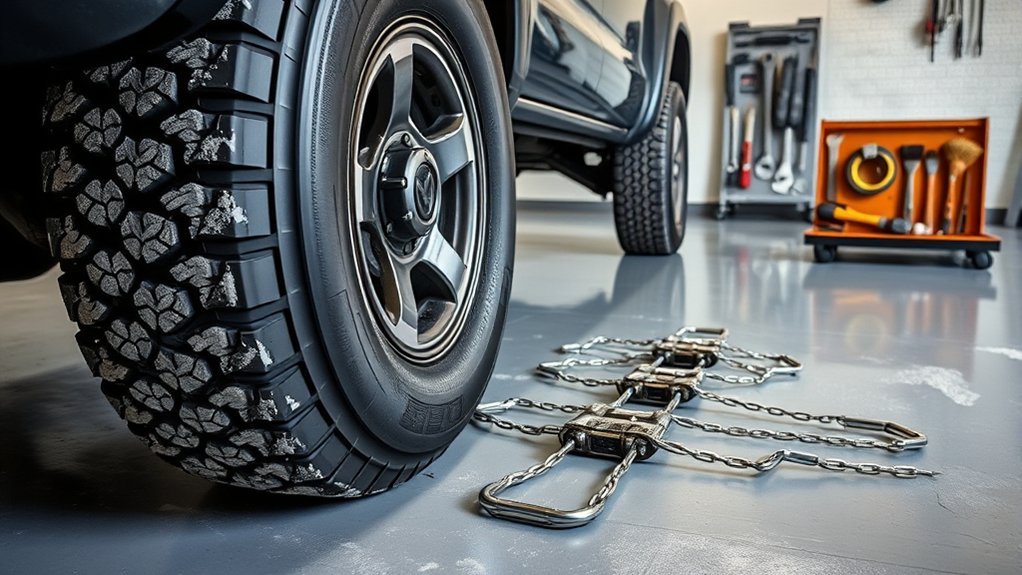
Preparing your Toyota Tacoma tires for winter is not just about buying a set of snow-rated tires. You also need the right cold tire pressure, enough tread, even wear, damage-free sidewalls, properly sized traction devices, and a plan for icy roads. A few checks before the first storm can make your Tacoma safer, steadier, and easier to control when temperatures drop.
Quick Answer
To prepare Toyota Tacoma tires for winter, check cold PSI against the driver-door tire label, inspect tread with a gauge, choose properly sized 3PMSF-rated winter or all-terrain tires, rotate and balance on schedule, inspect for damage, and carry correctly fitted chains where winter road rules require them.
Key Takeaways
- Check Tacoma tire pressure when the tires are cold, and use the driver-door Tire and Loading Information label or owner’s manual, not the maximum PSI molded on the tire sidewall.
- Replace tires at the legal/safety minimum of 2/32 inch, but plan winter trips with more tread. A tread gauge is better than guessing.
- For snow and mountain travel, choose tires in the correct Tacoma size, load rating, and speed rating with the Three-Peak Mountain Snowflake symbol when winter traction matters.
- Rotate, balance, and align tires on schedule to reduce uneven wear before snow, slush, and ice expose handling problems.
- Use tire chains only when legal, required, and compatible with your Tacoma’s tire size and clearance.
At a Glance
| Time Required | 20–45 minutes for basic checks; longer if installing winter tires or practicing chains |
| Difficulty | Easy for inspection and pressure checks; moderate for chain practice |
| Tools Needed | Tire pressure gauge, tread-depth gauge, air compressor, flashlight, gloves, torque wrench if removing wheels, and correctly sized chains if needed |
| Cost | About $10–$30 for gauges; $80–$250+ for chains; winter or all-weather tire cost varies by Tacoma size and load rating |
Check Tire Pressure and Tread Depth for Safety
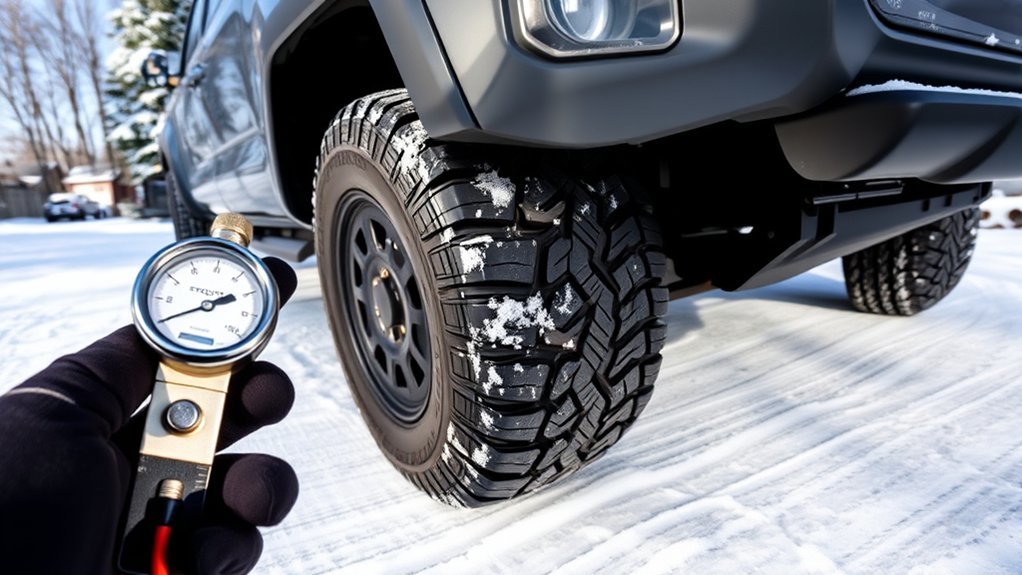
Start with tire pressure because cold weather changes it quickly. The U.S. Tire Manufacturers Association says inflation pressure can increase or decrease by about 1 to 2 PSI for every 10°F of temperature change. That means a Tacoma that was correct on a mild fall afternoon may be underinflated on a freezing morning.
Check pressure when the tires are cold, which means the truck has been parked for at least three hours. Use the PSI listed on your Tacoma’s driver-door Tire and Loading Information label or in the Toyota owner’s manual. Do not use the maximum PSI printed on the tire sidewall as your target pressure.
Note: Check all four tires and the spare. Also remember that the TPMS light may not come on until a tire is significantly underinflated, so a real pressure gauge is still the better winter habit.
Next, measure tread depth. The National Highway Traffic Safety Administration says tires should be replaced when the tread is worn to 2/32 inch. For winter travel, do not wait until the last moment. Snow, slush, standing water, and mountain chain laws often demand more usable tread than dry pavement does.
You can use the penny test in a pinch: place a penny into the tread groove with Lincoln’s head upside down and facing you. If you can see the top of Lincoln’s head, the tire is at the replacement point. A tread-depth gauge is more precise and helps you compare all four tires.
NHTSA lists 511 motor vehicle traffic fatalities in tire-related crashes in 2024, which is a strong reminder that tire maintenance is a real safety issue, not just a seasonal chore.
[Products Worth Considering]

EVOULTES heavy duty tire inflator with an integrated gauge delivers accurate pressure readings from 10–120 PSI, helping you inflate, deflate, and check tires in one tool. The 16.5-inch extended dual-head air chuck with swivel base reaches hard-to-access dual wheel valves on trucks and RVs. A brass trigger core and side-mounted air release valve make operation smooth, with standard 1/4" NPT threading and quick-connect compatibility for easy setup.

This portable cordless tire inflator delivers up to 160 PSI with fast 17 L/min airflow to help you quickly top up tires and get back on the road. It features dual power mode, running on a 21V rechargeable battery or a 12V DC adapter for convenient roadside use. An automatic shut-off with digital pressure gauge helps prevent overinflation, and a built-in LED light improves visibility in low-light conditions.

This portable cordless tire inflator delivers fast, efficient inflation for cars, motorcycles, bikes, and sports balls with a digital pressure gauge. Use the one-click PSI preset with auto shut-off for accurate, hands-free topping to your target pressure up to 150 PSI. It’s compact and rechargeable with a built-in emergency LED light plus valve adapters and accessories for quick, ready-to-go use.
Choose the Best Winter Tires for Your Tacoma
The best winter tire for your Toyota Tacoma depends on where you drive. A Tacoma used mostly on plowed city roads has different needs than one used for mountain passes, forest roads, towing, or deep snow. Before buying, match the tire size, load index, speed rating, and load range to your Tacoma’s door label and owner’s manual.
For winter traction, look beyond basic M+S markings. A tire with the Three-Peak Mountain Snowflake symbol has met a snow-traction performance standard for severe snow service. This is especially useful if you drive in mountain areas, ski towns, icy rural roads, or places with traction laws.
Pro Tip: If winter grip matters most, install four matching snow-rated tires. Mixing tire types, tread depths, or sizes can make braking and handling less predictable on slick roads.
Here is a simple way to choose:
- Dedicated winter tires: Best for regular snow, ice, and freezing temperatures. They usually offer the strongest cold-weather grip but wear faster in warm weather.
- All-weather tires with 3PMSF: Good for drivers who see winter weather but do not want a seasonal tire swap.
- All-terrain tires with 3PMSF: A practical Tacoma choice for mixed highway, gravel, dirt, and snow use, but not always equal to a dedicated winter tire on ice.
If you want all-terrain examples, the Falken WILDPEAK A/T4W is severe-snow-rated and listed by Falken among popular Toyota Tacoma fitments. The Toyo Open Country A/T III is also Three-Peak Mountain Snowflake qualified for severe snow conditions. Always confirm the exact size and load rating for your Tacoma before buying.
Rotate and Balance Your Tires for Even Wear
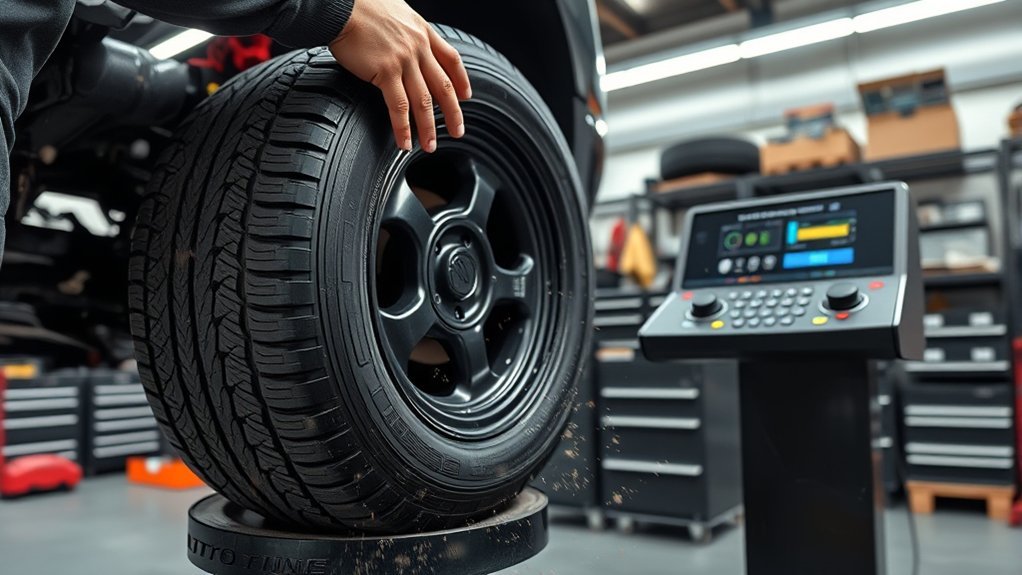
Even good winter tires lose effectiveness if they wear unevenly. Rotate your Tacoma tires according to Toyota’s maintenance schedule or your tire manufacturer’s guidance. If no interval is specified, NHTSA and USTMA both point to a general 5,000–8,000 mile rotation interval when recommended by the vehicle manufacturer or when no interval is specified.
Balancing matters too. A tire that is out of balance can vibrate, cup, or wear unevenly, and those problems can become more noticeable on cold, rough winter roads. Balance tires when new tires are installed, when a vibration appears, or when your tire shop recommends it during rotation.
Alignment is another winter safety check. If your Tacoma pulls to one side, the steering wheel is off-center, or the tread is wearing faster on one edge, have the alignment inspected before winter. Snow and ice reduce your margin for error, so you want all four tires tracking straight.
Inspect Your Tires for Damage and Wear
Before hitting snowy roads, inspect your Tacoma tires closely. A flashlight helps you see inside tread grooves and along the inner sidewalls. Look for problems before cold weather, potholes, and packed snow make them worse.
- Visible damage: Replace or have a tire professional inspect any tire with cracks, cuts, exposed cords, sidewall bubbles, or bulges.
- Uneven wear: Feathering, cupping, edge wear, or one tire wearing faster than the rest can point to alignment, balance, suspension, or pressure problems.
- Embedded objects: Nails, screws, and sharp stones can cause slow leaks that become more dangerous on long winter drives.
- Age and rubber condition: Even if tread looks acceptable, old, cracked, or hardened rubber may not grip well in cold weather.
- Spare tire condition: A flat or underinflated spare is almost useless during a winter roadside emergency.
Warning: Do not drive on a tire with a sidewall bulge, exposed cords, or severe cracking. Replace it or have it inspected by a qualified tire professional before driving in winter conditions.
Use Tire Chains for Improved Traction
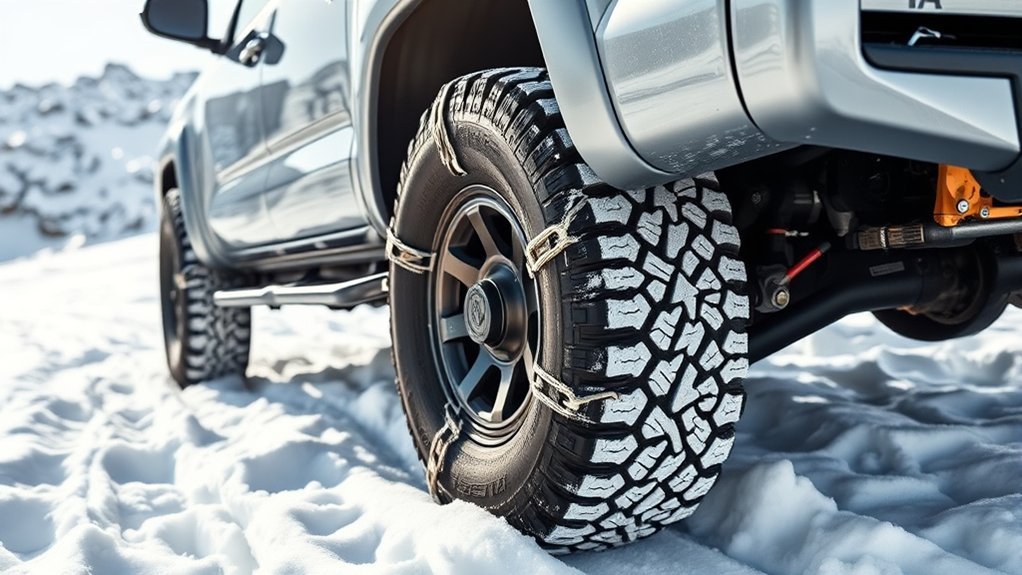
Tire chains can help when roads are steep, icy, or under chain control, but only if they fit your Tacoma’s tire size and wheel-well clearance. Check your Toyota owner’s manual, the tire-chain manufacturer’s instructions, and local rules before you need them. Practice installing chains at home with gloves on, because the roadside is not the place to learn.
Chain laws vary by state, road, and storm condition. Caltrans says drivers must stop and put on chains when highway signs require them, chain-control areas can change rapidly, and the speed limit when chains are required is usually 25 or 30 mph.
- Buy the correct size: Match chains to the exact tire size on your Tacoma, including width, aspect ratio, and wheel diameter.
- Check clearance: Oversized tires, aftermarket wheels, lifts, or suspension changes can affect chain clearance.
- Install safely: Pull completely off the roadway before installing or removing chains.
- Drive gently: Avoid sudden acceleration, hard braking, high speed, and dry pavement when chains are on.
- Recheck tension: Stop after a short distance and confirm the chains are tight and centered.
[Products Worth Considering]

This VEVOR tire bead breaker uses a slide-hammer impact and wedge tip to separate tire beads from rims quickly and efficiently without damaging hub surfaces. The long handle and sturdy steel construction help reduce user strain while providing reliable, portable tire changing for cars, trucks, and more. Ideal for home mechanics and repair shops handling multiple vehicle tire sizes.
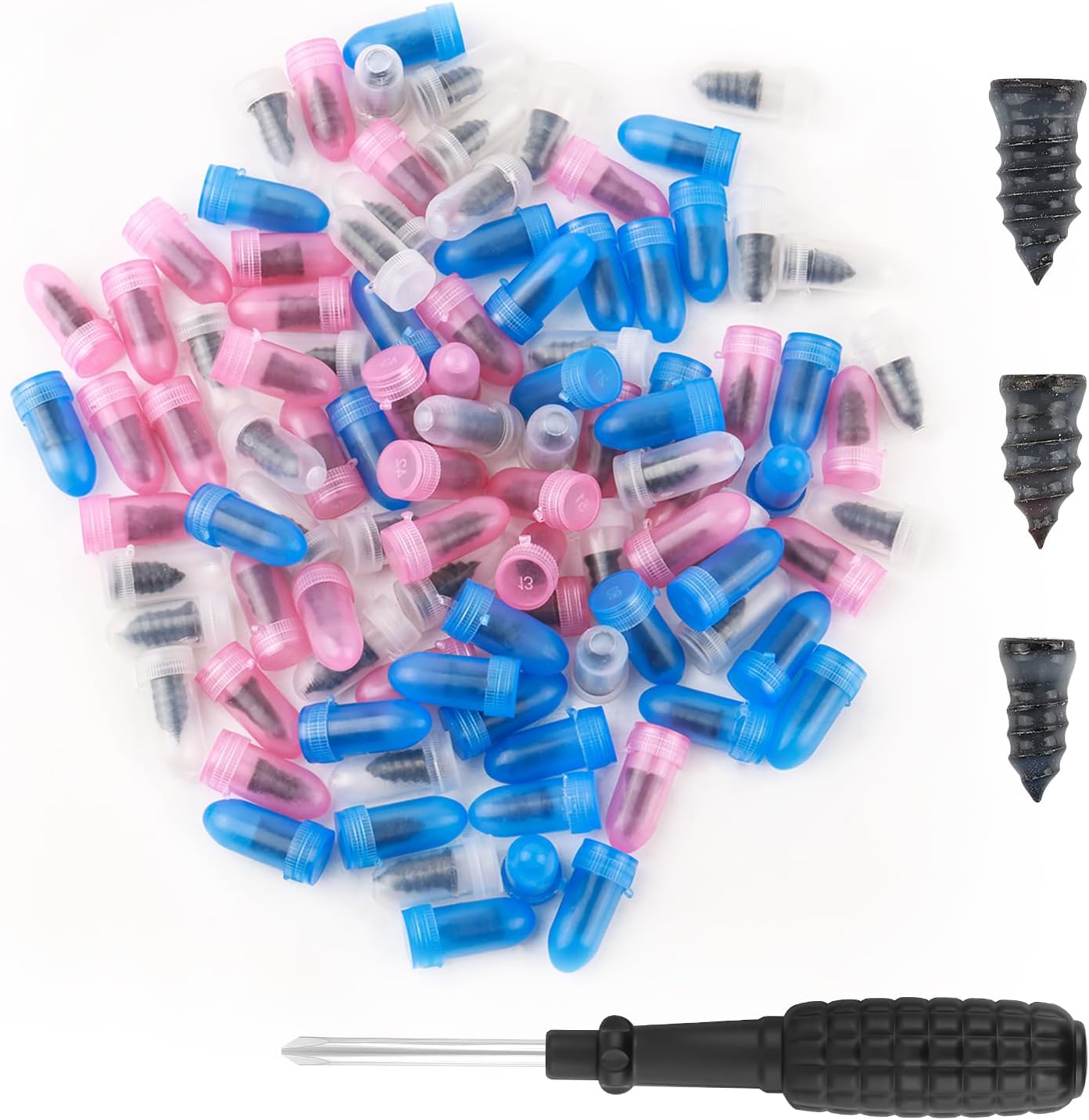
This 100-piece tire repair screw plug kit provides a fast, self-service solution for punctures on the road. Choose the correct plug size, insert it into the break, and screw it in to help seal the puncture and temporarily restore tire pressure. Thickened threads and rubber-wrapped plugs improve bite and sealing while remaining compact and easy to carry.
Adjust Your Winter Driving Habits
Good tires help, but they do not cancel winter physics. Four-wheel drive can help your Tacoma move forward, but it does not make the truck stop faster on ice. Slow down before curves, increase following distance, brake early, and avoid sudden steering or throttle inputs.
If your Tacoma has selectable drive modes, 4WD, crawl control, or terrain settings, read the owner’s manual before using them in snow. Use 4WD only as Toyota directs, and remember that traction aids work best when your tires still have enough grip.
Store and Swap Winter Tires the Right Way
If you use dedicated winter tires, swap them on before freezing weather becomes routine and remove them once warm weather returns. Winter compounds are designed for cold conditions and can wear faster on hot pavement.
When storing off-season tires, clean off road salt and grime, let them dry, and keep them in a cool, dry place away from direct sunlight, heat, petroleum products, and electric motors. If the tires are mounted on wheels, store them stacked or hung. If they are unmounted, store them upright and rotate their position occasionally.
Frequently Asked Questions
How do you winterize Toyota Tacoma tires?
Check cold tire pressure against the driver-door label, measure tread depth, inspect for sidewall damage and uneven wear, rotate and balance if due, confirm the spare tire is usable, and choose properly sized winter, all-weather, or 3PMSF-rated all-terrain tires for your conditions.
Do you need to fill your tires with air in the winter?
Often, yes. Cold temperatures can lower tire pressure, so check PSI when the tires are cold and add air to match the Tacoma’s recommended pressure on the Tire and Loading Information label. Recheck after major temperature swings.
What tread depth is safe for Tacoma winter driving?
Replace tires at 2/32 inch because that is the minimum replacement point used by major tire-safety guidance. For winter trips, especially snow, slush, and mountain travel, plan with more tread than the minimum and use a tread-depth gauge instead of guessing.
Are all-terrain tires enough for a Toyota Tacoma in snow?
Some all-terrain tires work well in light to moderate snow, especially if they carry the Three-Peak Mountain Snowflake symbol. For frequent ice, deep snow, or severe winter roads, dedicated winter tires usually provide better cold-weather grip.
Do you need tire chains if your Tacoma has 4WD?
Sometimes. Four-wheel drive may help you get moving, but chain-control rules can still require you to carry or install traction devices. Follow posted road signs, local rules, Toyota’s chain guidance, and the chain manufacturer’s instructions.
What are the biggest mistakes when driving a Tacoma in snow?
The biggest mistakes are driving too fast, assuming 4WD shortens stopping distance, ignoring tire pressure, using worn tires, failing to practice chain installation, and waiting until a storm to inspect your tires.
Conclusion
Winter-ready Tacoma tires come down to a simple routine: set cold pressure correctly, measure tread, fix uneven wear, choose snow-rated tires when conditions demand them, and carry properly fitted chains where the road rules require them. Do those checks before the first storm, and your Tacoma will be far better prepared for snow, slush, ice, and cold-weather road trips.
Sources
- National Highway Traffic Safety Administration: TireWise — tire pressure, tread depth, tire-related fatality data, rotation, balance, alignment, and replacement guidance
- U.S. Tire Manufacturers Association: Tire Care Essentials — cold pressure checks, PSI temperature change, tread inspection, rotation, and alignment guidance
- Toyota Manuals and Warranties — model-specific Toyota owner’s manual reference for tire pressure, sizing, and traction-device guidance
- Caltrans Chain Controls / Chain Installation — chain-control levels, posted chain requirements, and chain-control speed guidance
- Falken WILDPEAK A/T4W — current severe-snow-rated all-terrain tire example with Toyota Tacoma listed among popular fitments
- Toyo Open Country A/T III — Three-Peak Mountain Snowflake all-terrain tire example for trucks and SUVs

Related Articles
How Tire Weight Affects Toyota Tacoma Performance
How does tire weight influence your Toyota Tacoma's performance and efficiency? Discover the surprising effects that could change your driving experience.
Read More
Tire Noise Levels by Tire Type on a Toyota Tacoma
A comprehensive look at how tire types affect noise levels in your Toyota Tacoma reveals surprising insights that could enhance your driving experience.
Read More
How To Choose Tires for a Dual Use Toyota Tacoma
Unlock the secrets to selecting the perfect tires for your dual-use Toyota Tacoma, ensuring optimal performance and comfort on every adventure. Discover more inside!
Read More