
Tire Flat Spotting: Why It Happens & How to Prevent It

Tire flat spotting is the flat area that can form where a tire sits against the ground under the weight of a parked vehicle. It often feels like a thump, shake, or steering-wheel vibration when you first drive away, especially after cold nights or long storage. Most mild flat spots disappear as the tire warms up, but vibration that does not fade needs a tire inspection.
Quick Answer
Tire flat spotting is usually temporary. If your car sat for days or weeks, drive gently until the tires warm up and recheck pressure at the vehicle placard setting. If the vibration continues after several miles, or the tire shows uneven wear, cupping, cracking, or a visible flat area, have a tire specialist inspect it.
Key Takeaways
- Temporary flat spots often cause a thump or vibration for the first few miles, then improve as the tire reaches normal operating temperature.
- Long storage, cold temperatures, underinflation, heavy loads, and hard braking increase the risk of more serious flat spotting.
- Use the tire pressure listed on the driver-door placard or owner’s manual; do not overinflate beyond manufacturer guidance.
- For storage, keep tires clean, shaded, dry, properly inflated, and unloaded when possible with jack stands or safe storage supports.
- Persistent vibration, visible tread damage, or uneven wear means the tire should be checked by a qualified tire professional.
At a Glance
| Time Required | 5 minutes for a pressure check; 10–20 minutes for a warm-up drive; longer for storage prep |
| Difficulty | Easy for basic checks; moderate if lifting the vehicle for storage |
| Tools Needed | Accurate tire pressure gauge, air source, tread-depth gauge or penny, flashlight, and jack stands if safely lifting the vehicle |
| Cost | Usually $0–$25 for basic checks; more if using storage supports or replacing damaged tires |
What Is Tire Flat Spotting and How It Affects Your Drive

Tire flat spotting happens when a tire stays in one position under load and the contact patch flattens slightly. As Continental explains, the contact patch can flatten as the tire cools after parking, and the risk increases with long storage, cold temperatures, underinflation, overloading, and large temperature swings.
You may feel a rhythmic thump through the seat, floor, or steering wheel when you first start driving. In many cases, the vibration fades once the tire warms up and regains its round shape. If the shake stays the same, gets worse, or comes with visible tread damage, do not assume it is harmless. A persistent vibration can also come from wheel imbalance, bent wheels, suspension wear, alignment problems, or internal tire damage.
Good tire care lowers the risk. Keep the tires at the pressure shown on your vehicle’s tire placard, drive the vehicle regularly, avoid overloading it, and store it correctly when it will sit for a long time. The National Highway Traffic Safety Administration also emphasizes regular tire maintenance, tire labeling, aging, and pressure awareness as core parts of tire safety.
[Products Worth Considering]

EVOULTES heavy duty tire inflator with an integrated gauge delivers accurate pressure readings from 10–120 PSI, helping you inflate, deflate, and check tires in one tool. The 16.5-inch extended dual-head air chuck with swivel base reaches hard-to-access dual wheel valves on trucks and RVs. A brass trigger core and side-mounted air release valve make operation smooth, with standard 1/4" NPT threading and quick-connect compatibility for easy setup.

This portable cordless tire inflator delivers up to 160 PSI with fast 17 L/min airflow to help you quickly top up tires and get back on the road. It features dual power mode, running on a 21V rechargeable battery or a 12V DC adapter for convenient roadside use. An automatic shut-off with digital pressure gauge helps prevent overinflation, and a built-in LED light improves visibility in low-light conditions.

The JACO FlowPro Tire Inflator measures, inflates, and airs down tires up to 100 PSI with battery-free operation and ±2% accuracy after calibration. It features a glowing pressure dial for night visibility, a heavy-duty steel build with a hybrid hose, and a precision push-to-inflate thumb trigger. The patented Lightning Air Chuck locks on for a secure seal, and the kit includes quick-connect hardware for easy inline use with your air compressor.
Temporary vs. Semi-Permanent Flat Spots: What’s the Difference?
The main difference is whether the tire returns to normal after driving. Temporary flat spotting is common and often clears up. Semi-permanent flat spotting lasts longer and may require inspection or replacement.
Temporary Flat Spotting
Temporary flat spotting can happen after a vehicle sits for a few days or weeks, especially in cold weather. The tire may feel out of round for the first few miles, then smooth out as heat and flexing help the rubber regain shape.
You are more likely to notice temporary flat spotting on vehicles with performance tires, wide tires, soft rubber compounds, or tires parked overnight in low temperatures. It does not always mean the tire is damaged, but it is a sign to check pressure and watch how the vibration changes as you drive.
Semi-Permanent Damage Signs
Semi-permanent flat spotting is more likely after long storage while the tire is carrying vehicle weight. Continental notes that semi-permanent flat spotting can occur when tires stand still under load for a month or longer, especially with high temperatures and low tire pressure.
Watch for these warning signs:
- Vibration that does not improve after several miles of smooth-road driving.
- A repeated thump that changes with vehicle speed.
- Uneven shoulder wear, cupping, or a visible worn patch.
- Steering shake that remains after tire pressure is corrected.
- A tire that looks out of round when rotated on a balancer.
Warning: Do not ignore vibration that remains after the tires warm up. A tire, wheel, brake, or suspension problem can reduce control, especially at highway speed.
Recovery and Repair
For mild temporary flat spotting, the first step is simple: check cold tire pressure, then drive at a moderate speed on a safe, smooth road. If the vibration fades, the tire was probably recovering as it warmed.
If the vibration does not fade, schedule a tire inspection. A technician can check tire runout, balance, tread depth, internal damage, wheel condition, and alignment. Severe flat spotting from long storage or a locked-wheel skid may not repair itself and can require tire replacement.
How to Spot Flat Spots Fast: Vibration, Thump, and Visual Cues
The fastest clue is a steady thump or vibration right after a vehicle has been parked for a while. It often feels strongest at low to moderate speeds, then improves as the tires warm.
Use this quick check:
- Think about the timing. Did the vehicle sit overnight in cold weather, several weeks in a garage, or months in storage?
- Feel the vibration pattern. A tire flat spot often produces a repeated pulse that changes with road speed.
- Check the pressure cold. Use the placard pressure, not the number molded on the tire sidewall unless your owner’s manual instructs otherwise.
- Inspect the tread. Look for a smooth worn patch, shoulder wear, cupping, cracks, bulges, or exposed cords.
- Recheck after driving. If the shake remains after a warm-up drive, get the tire inspected.
Do not rely on sight alone. A mild flat spot may be hard to see, while a tire shop can measure runout and balance the wheel assembly to confirm whether the tire is still round enough for safe use.
Quick Fixes: Warm-Up Driving, How Far to Go, and Pressure Checks

If the symptoms are mild and there is no visible tire damage, try a safe warm-up drive. Drive gently for 10–20 minutes on smooth roads and avoid hard acceleration, high speed, and sudden braking until the vibration improves.
A service bulletin hosted by NHTSA for dealer inventory vehicles notes that flat-spot vibration can appear after 30–45 days depending on tire design, parking surface, and weather conditions, and that many cases improve after the tires heat up during driving. The same bulletin says vehicles that sit more than 90 days may develop flat spots that require tire replacement.
Before and after the drive, check tire pressure when the tires are cold. The Tire Industry Association recommends checking tire pressure monthly and before long trips, using the pressure listed on the doorjamb placard or in the owner’s manual.
Pro Tip: Check pressure first thing in the morning or after the vehicle has been parked for at least two hours. Warm tires read higher, which can lead you to set the wrong pressure.
Best Prevention for Short- and Long-Term Storage
Prevention is easier than repair. For short parking periods, the best steps are simple: use the correct tire pressure, avoid overloading the vehicle, and drive it regularly. For storage longer than a few weeks, add more protection.
For storage, follow these steps:
- Set pressure correctly. Inflate to the pressure recommended by the vehicle manufacturer unless your owner’s manual or tire manufacturer gives a specific storage procedure.
- Clean the tires. Remove mud, oil, road salt, and chemical residue before storage.
- Choose the right space. Store the vehicle in a clean, dry, shaded area away from heat, ozone sources, solvents, fuel, and direct sunlight.
- Reduce load if storage is long. If safe and appropriate for the vehicle, use jack stands to take weight off the tires. Follow the owner’s manual and use proper lift points.
- Move the vehicle periodically. If you cannot unload the tires, roll the vehicle enough to change the contact patch.
- Reset pressure before driving. If any temporary storage pressure change was made under manufacturer guidance, restore the placard pressure before normal road use.
The U.S. Tire Manufacturers Association recommends indoor tire storage in clean, dry, well-ventilated, temperate, shaded or dark conditions, and warns that poor storage conditions can damage tires and may eventually lead to tire failure.
Do Tire Cradles, Foam Pads, or Overinflation Really Help?
Tire supports can help in some storage situations, but they are not magic. The best approach is still correct pressure, safe load reduction, clean storage, and periodic movement.
[Products Worth Considering]

Powools cordless tire inflator delivers up to 150 PSI for fast, reliable inflation in a compact, travel-ready design. The LED digital display shows real-time and preset...
Tire Cradles: Do They Work?
Tire cradles are curved supports that spread the tire’s contact area over a larger surface. In theory, that can reduce localized flattening. However, Michelin says the cradle curvature would need to match the tire curvature to be effective and notes that it does not have data verifying that cradles reduce flat spotting.
Use cradles as an extra layer of protection, not as your only storage plan. They do not replace proper pressure, indoor storage, and moving or unloading the vehicle when possible.
Foam Pads: Practicality vs. Cost
Dense foam pads or purpose-built tire support pads may help spread load and reduce sharp pressure points. They are most useful when the vehicle must sit on its tires and you cannot safely put it on stands.
Choose pads that are rated for vehicle weight and wide enough for the full tire footprint. Very soft foam can collapse, and very hard plastic may not distribute load much better than the floor. If the vehicle will sit for months, lifting the vehicle correctly or moving it on a schedule is usually more reliable.
Overinflation: Risks and Limits
Overinflation is not a cure for flat spotting. Michelin states that it does not recommend inflating beyond the vehicle placard pressure and says overinflation can make flat spotting worse in some cases. Continental notes that a slight pressure increase may reduce flat-spot risk in certain long-parking situations, but it also warns never to exceed the maximum recommended cold inflation pressure.
The safest rule for most drivers is this: follow the vehicle placard, owner’s manual, and tire manufacturer guidance. Do not guess, and do not drive on tires that are intentionally inflated beyond the correct operating pressure.
Note: The maximum pressure molded on a tire sidewall is not the normal recommended pressure for your vehicle. Use the tire placard or owner’s manual for everyday driving pressure.
Hard-Braking Flat Spots vs. Storage Flat Spots
Not all flat spots come from storage. A tire can also be flat-spotted by severe braking if the wheel locks and the tread scrubs against the road in one place. This type is a worn patch, not just a temporary shape change.
Modern anti-lock braking systems reduce the chance of this happening, but it can still occur in some conditions or on vehicles without ABS. A braking flat spot may be visible on the tread and can take a long time to wear smooth. If the vibration is strong or the tread damage is obvious, replacement may be the safest option.
When Balancing or Alignment Helps and When It Doesn’t
Wheel balancing and alignment can reduce some vibration problems, but they do not repair a tire that has lost its round shape or has tread damage.
- Balancing helps when the wheel and tire assembly has a heavy spot that causes vibration at certain speeds.
- Alignment helps when the wheels are not pointed correctly and the tires are wearing unevenly.
- Tire replacement may be needed when the tire has a permanent flat spot, internal damage, bulge, exposed cords, or unsafe tread wear.
If you feel vibration after storage, ask the shop to inspect the tires before simply balancing them. Balancing a damaged tire can hide the symptom without solving the safety issue.
When to See a Tire Specialist and Your Replacement Options
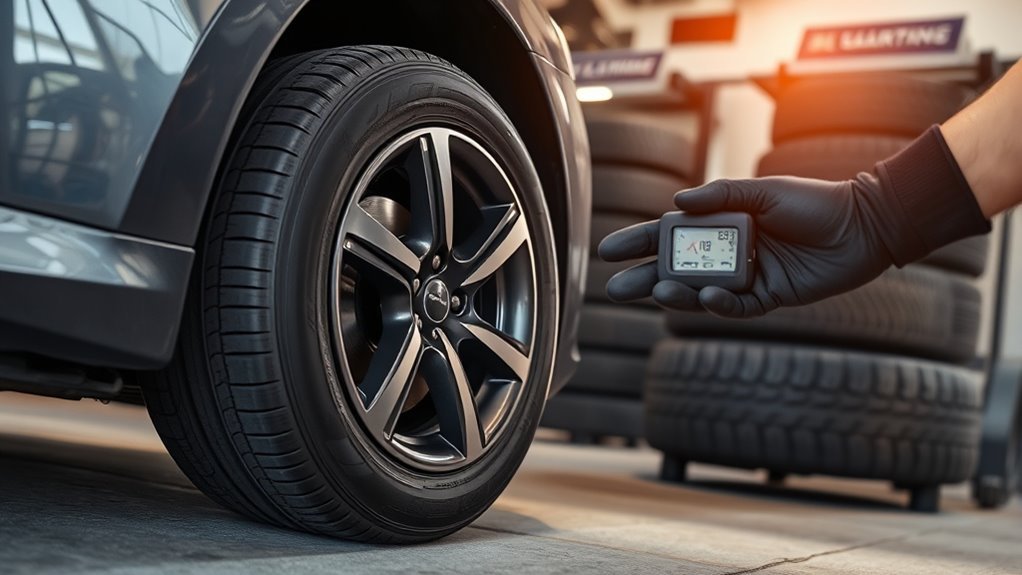
See a tire specialist if the vibration does not improve after a warm-up drive, if the tire has visible damage, or if the vehicle pulls, shakes, or feels unstable. A professional can check tire balance, wheel runout, alignment, suspension parts, tread depth, and internal tire condition.
Replacement may be recommended when the tire has:
- A flat spot that remains after driving.
- Uneven tread wear that cannot be corrected.
- Sidewall bulges, cracks, cuts, or exposed cords.
- Internal separation or excessive runout.
- Tread depth at or below the legal or safe limit.
Warranty coverage depends on the tire brand, tire age, cause of damage, and the written warranty. Michelin, for example, states that its limited warranty covers defects in workmanship and materials for eligible tires, but storage damage, misuse, and normal wear are not automatically covered. Keep pressure logs, storage records, photos, and service invoices if you plan to ask about warranty help.
Frequently Asked Questions
Can flat spots affect modern run-flat tires?
Yes. Run-flat tires can still develop flat spots because they still carry vehicle weight through the contact patch. Their stiffer construction may change how the vibration feels, but storage time, temperature, pressure, and load still matter.
Can airless tires get flat spots?
Airless tires use a different structure, so they do not behave exactly like pneumatic tires. However, any tire or wheel system can have storage, load, vibration, or deformation limits. Follow the manufacturer’s storage and service instructions for that specific tire design.
Do temperature changes worsen existing flat spots?
Yes. Cold temperatures can make rubber less flexible, so a flat spot may feel worse during the first few miles. Large temperature swings can also affect tire pressure, which is why pressure checks are important during seasonal storage.
Can tire balancing or alignment fix flat-spot vibrations?
Balancing can reduce vibration from uneven weight, and alignment can correct uneven tire wear caused by vehicle geometry. Neither one can fully repair a tire with a permanent flat spot, internal damage, or a worn patch from locked-wheel braking.
Are flat spots covered by tire or vehicle warranties?
Usually not automatically. Warranties commonly cover defects in materials or workmanship, not damage from storage, underinflation, overloading, road hazards, or misuse. Ask the tire maker or retailer to inspect the tire and review the written warranty terms.
Will wheel chocks prevent flat spotting?
Wheel chocks help stop a vehicle from rolling, but they do not remove the vehicle’s weight from the tires. For flat-spot prevention, use chocks for safety when needed, then rely on correct pressure, periodic movement, tire supports, or jack stands for storage protection.
How long does a car need to sit before tires get flat spots?
Mild temporary flat spotting can happen after a cold night or a few days of parking. More noticeable vibration is more likely after several weeks, and long-term storage increases the chance that the flat spot will not fully recover.
Should I drive fast to warm up flat-spotted tires?
No. Start with gentle, moderate-speed driving on a smooth road. High speed, hard braking, and aggressive cornering are not safe when the vehicle is vibrating or when you are unsure of tire condition.
Conclusion
Tire flat spotting is common after a vehicle sits, and mild cases often clear up once the tires warm and flex. The safest fix is not guesswork: check cold pressure, drive gently, inspect the tread, and watch whether the vibration fades. For storage, keep tires clean, dry, shaded, properly inflated, and unloaded or moved when possible. If the thump or steering vibration does not go away, have the tire inspected before driving farther or faster.
Sources
- Michelin: Tire Flat Spotting — causes, overinflation guidance, tire cradles, and when to see a specialist.
- Continental Tires: Flat-Spotting — temporary vs. semi-permanent flat spotting and prevention factors.
- U.S. Tire Manufacturers Association: Tire Storage Recommendations — proper tire storage conditions and storage warnings.
- NHTSA TireWise — tire safety, maintenance, labeling, aging, and consumer tire information.
- Tire Industry Association: Tire Inflation Pressure — monthly pressure checks and correct pressure-setting process.
- GM Service Bulletin hosted by NHTSA: Tire Flat-Spotting — dealer inventory guidance on storage time, vibration, and pressure reset before delivery.

Related Articles
How to Apply Tire Shine: Step-by-Step Guide for a Perfect Finish
With the right tire shine and technique, your tires can look flawless—discover the step-by-step method that keeps the finish looking even better.
Read More
How to Use Tire Sealer: Step-by-Step Guide for a Quick Fix
Keen to fix a flat fast, this step-by-step tire sealer guide shows what works, what to avoid, and when you still need help.
Read More
How to Tire Yourself Out to Sleep: Evening Routines That Work
Melt into better sleep with simple evening routines that quietly wear you down—discover the surprising habits that make rest come easier.
Read More