
Toyota Tacoma 4th Gen Tire Size Guide 2024 and Newer
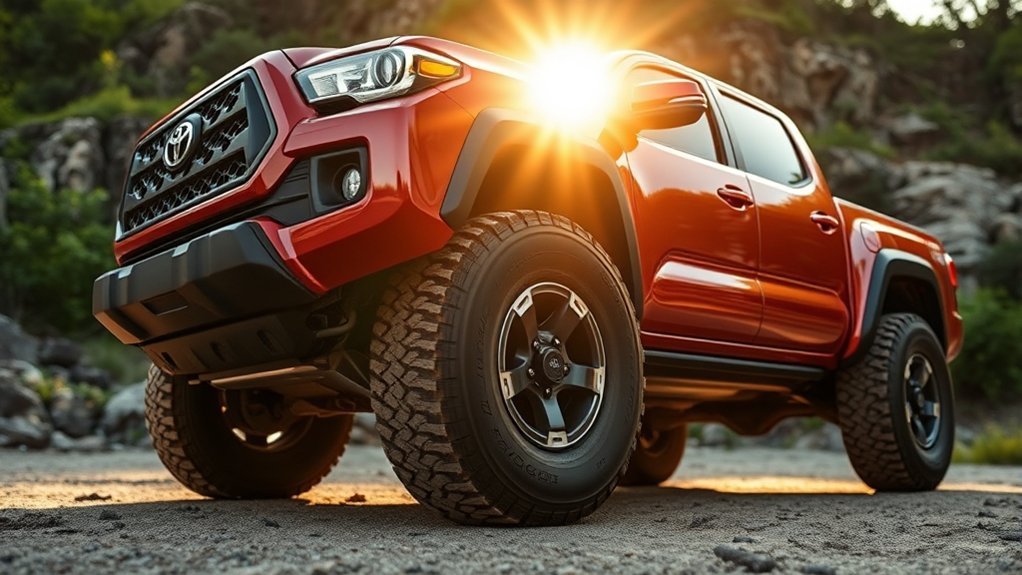
For your 2024 Toyota Tacoma, the right tire size depends on the trim, wheel package, load rating, and how much clearance your truck actually has. Some Tacomas use 245/70R17 tires, others use 265/70R17 or 265/65R18, and higher off-road trims can come with factory 33-inch tires. Before buying a bigger set, check your door-jamb tire placard, confirm wheel offset, and plan for alignment if you change tire size or suspension height.
Quick Answer
Most 2024 Toyota Tacoma trims use 245/70R17, 265/70R17, 265/65R18, or factory 33-inch tires depending on trim and wheel package. A stock truck should stay close to its door-placard size unless clearance is verified. Many 35×12.50 setups need lift, correct offset, trimming checks, TPMS attention, and alignment.
Key Takeaways
- Check the tire and loading placard on your Tacoma before using any online size chart.
- Factory 2024 Tacoma tire sizes include 245/70R17, 265/70R17, 265/65R18, available 265/70R18, and 33-inch Goodyear Territory R/T tires on select off-road trims.
- A 35-inch tire is not a simple universal bolt-on; lift height, wheel offset, tire model, mud flaps, cab mount area, and suspension travel all matter.
- After changing tire size or installing a lift, get an alignment and check for rubbing at full steering lock and during suspension compression.
At a Glance
| Time Required | 15–30 minutes to verify the factory size, placard pressure, wheel size, and basic clearance before buying tires. |
| Difficulty | Easy for factory replacement tires; moderate to advanced for larger tires, lift kits, trimming, and offset changes. |
| Tools Needed | Tire pressure gauge, flashlight, tape measure, wheel/tire spec sheet, and access to your door-jamb tire placard. |
| Cost | $0 to inspect; usually $100–$200 for alignment; much more if you add wheels, lift kits, or trimming labor. |
Understanding the 2024 Tacoma Tire Specifications
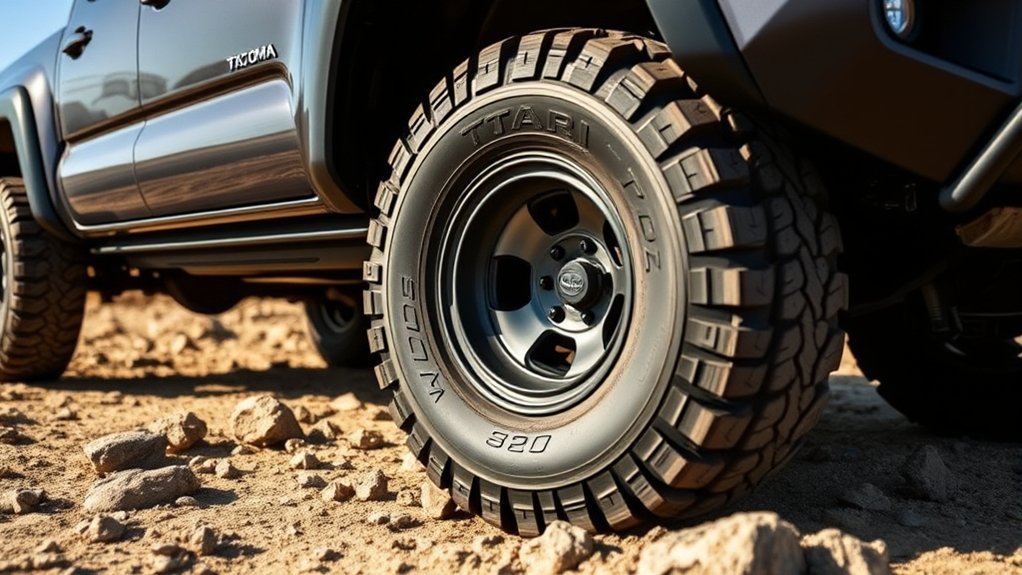
When you’re checking 2024 Toyota Tacoma tire specifications, do not rely on trim names alone. Toyota sold the Tacoma with different cab, drivetrain, wheel, and package combinations, so two trucks with the same model year may not use the same tire size.
According to Toyota’s official 2024 Tacoma brochure, factory wheel and tire combinations include 17-inch steel wheels with 245/70R17 tires, 17-inch styled alloy wheels with 245/70R17 tires, 17-inch TRD PreRunner alloy wheels with 265/70R17 all-terrain tires, 18-inch TRD Sport wheels with 265/65R18 tires, 18-inch Limited wheels with 265/65R18 tires, available 265/70R18 all-terrain tires on TRD Off-Road, and 33-inch Goodyear Territory R/T tires on Trailhunter and TRD Pro models. You can verify the factory chart in the official Toyota 2024 Tacoma brochure.
Note: The tire and loading information label on the driver-side door jamb is the best source for your exact truck. It lists the original tire size, load information, and recommended cold tire pressure for that specific vehicle.
[Products Worth Considering]

EVOULTES heavy duty tire inflator with an integrated gauge delivers accurate pressure readings from 10–120 PSI, helping you inflate, deflate, and check tires in one tool. The 16.5-inch extended dual-head air chuck with swivel base reaches hard-to-access dual wheel valves on trucks and RVs. A brass trigger core and side-mounted air release valve make operation smooth, with standard 1/4" NPT threading and quick-connect compatibility for easy setup.
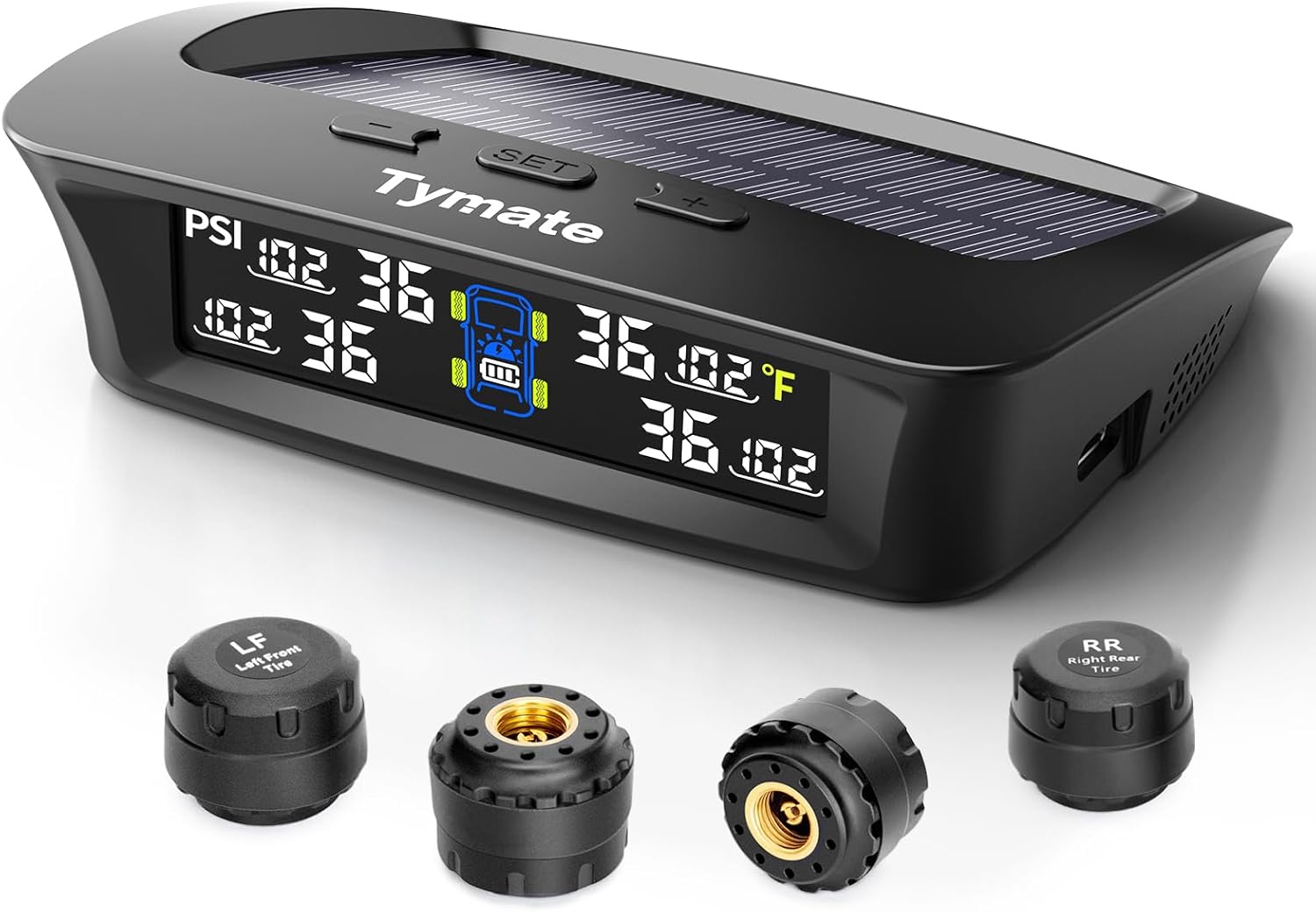
The Tymate TM3 RV TPMS delivers real-time tire pressure monitoring from 0 to 144 PSI with accurate readings and dependable wireless communication. It includes four external sensors with pre-pairing, six alarm modes for rapid leak, pressure extremes, temperature, and signal loss, plus an easy-reference setup for alert thresholds. Solar and USB-C charging help keep the display powered, while the color LCD and adaptive backlight improve visibility for safer driving and towing.

Keep RV, trailer, or truck dual-axle tires protected with waterproof, UV-resistant covers that help guard against sunlight, snow, rust, and dirt. The dual tire covers are easy to install with a rope/bungee fastener for a stable fit that won’t easily slip. Designed for 27–30 inch diameter wheels, they help maintain tire condition through harsh weather.
Factory 2024 Tacoma Tire Size Chart
| Trim / Wheel Package | Common Factory Tire Size | Best Use |
| SR / SR5 17-inch wheel packages | 245/70R17 | Daily driving, fuel economy, factory replacement |
| TRD PreRunner / some TRD Off-Road 17-inch packages | 265/70R17 | All-terrain use with factory-like fitment |
| TRD Sport / Limited 18-inch packages | 265/65R18 | Street comfort with a wider factory footprint |
| Available TRD Off-Road 18-inch all-terrain package | 265/70R18 | More ground clearance and trail-oriented factory fitment |
| Trailhunter / TRD Pro | 33-inch Goodyear Territory R/T | Factory off-road and overlanding setup |
If your owner’s manual or tire chart uses Type A, Type B, and Type C labels, treat them as tire/wheel groupings rather than trim names. For the 17-inch setups commonly referenced, Type A and Type B can be listed as 245/70R17 110T, while Type C can be listed as 265/70R17 115T. Spare tire size and pressure can also vary, so check the placard and manual before replacing the spare.
How to Read a Tacoma Tire Size
A tire size such as 265/70R17 breaks down like this: 265 is the tire width in millimeters, 70 is the sidewall height as a percentage of the width, R means radial construction, and 17 is the wheel diameter in inches. The service description after the size, such as 110T or 115T, tells you the tire’s load index and speed rating. For replacement tires, match or exceed the factory load index unless a qualified tire professional confirms a safe alternative.
Warning: Do not set tire pressure from the number molded on the tire sidewall. That is a maximum tire rating, not your Tacoma’s recommended cold pressure. Use the tire placard and Toyota’s tire inflation pressure guidance.
What Size Tires Can You Fit on a 2024 Tacoma?
For the safest factory-style replacement, use the same size, load index, and speed rating shown on your door placard. Most owners replacing worn tires should stay with 245/70R17, 265/70R17, 265/65R18, 265/70R18, or the factory 33-inch size that came on their specific truck.
If you want a larger tire, think in terms of clearance, not just diameter. A tire that clears while parked can still rub when the steering is fully turned, when the suspension compresses, when the truck is loaded, or when mud flaps and inner liners flex.
Stock vs. Lifted Tire Fitment
- Factory replacement: Best choice for ride quality, speedometer accuracy, warranty simplicity, and no-rub fitment.
- Mild upsizing: Often possible, but depends on wheel offset, tire shape, tread shoulder, and trim-specific clearance.
- 34-inch to 35-inch range: Usually requires careful planning, and may need lift, offset changes, trimming, mud-flap relocation, alignment, and repeated clearance checks.
Some lift-kit manufacturers publish specific limits. For example, Westcott Designs lists a 2.5-inch front and .75-inch rear preload collar lift for many 2024–2026 Tacoma trims and notes that proper-offset wheels are needed for up to 35-inch tire setups. ReadyLIFT is more conservative for its 2.5-inch SST kit, listing 285/75R17 on a 17×8 +35 wheel as a no-trim maximum. That difference is exactly why you should verify fitment for your exact lift, wheel, and tire model.
Pro Tip: Two tires with the same printed size can measure differently once mounted. A 35×12.50 all-terrain with rounded shoulders may clear better than a more aggressive mud-terrain with square shoulders.
Top Recommended Tires for Off-Road and Daily Driving
The best Tacoma tire is not just the biggest tire that fits. Choose the tire type based on how you actually drive: commuting, towing, trail driving, mud, rock, snow, or overlanding. Also confirm the correct load index, speed rating, and wheel diameter before ordering.
| Driving Style | Best Tire Type | What to Watch |
| Daily commuting and highway driving | Highway-terrain or mild all-season truck tire | Quiet ride, wet braking, tread life, and fuel economy |
| Mixed pavement, gravel, camping, light trails | All-terrain tire such as Falken Wildpeak A/T4W or BFGoodrich All-Terrain T/A KO3, if available in your needed size and rating | Weight, road noise, snow rating, and load range |
| Frequent rocky trails or overlanding | Rugged-terrain or tougher all-terrain tire | Sidewall strength, aired-down performance, puncture resistance, and spare matching |
| Towing, hauling, or carrying heavy accessories | Correctly rated LT-metric tire only if the load need justifies it | LT tires can ride firmer and weigh more; use proper load inflation guidance |
Opting for LT tires can make sense for heavy hauling, towing, sharp-rock trails, or an overland build with added weight. However, LT does not automatically mean “better” for every Tacoma. A heavier tire can reduce ride comfort, braking feel, acceleration, and fuel economy. Match the tire to your actual use, not just the most aggressive look.
How to Use Lift Kits for Bigger Tires
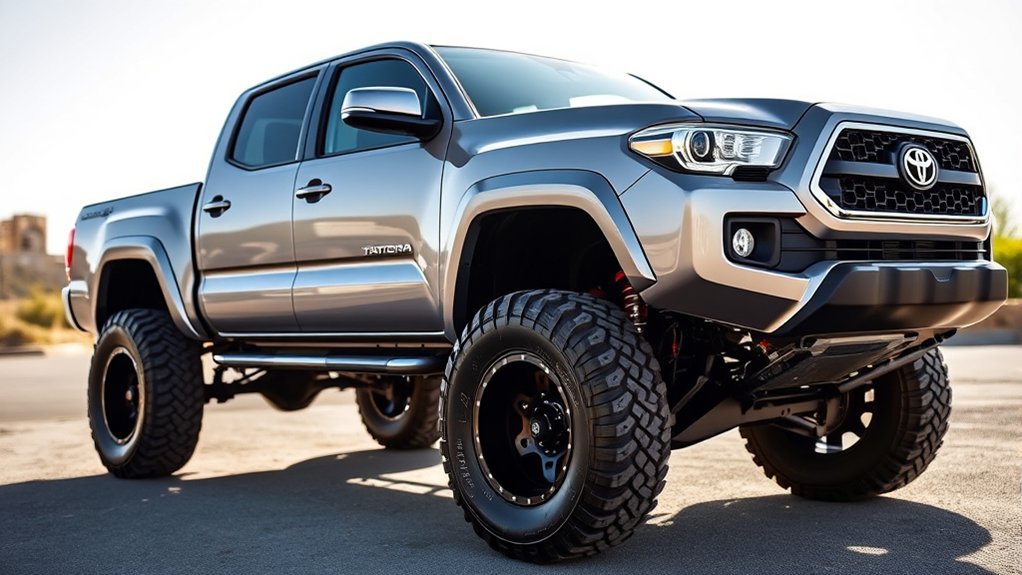
To fit larger tires on your Toyota Tacoma, a lift kit can add clearance and improve approach, breakover, and departure angles. But lift height alone does not guarantee tire clearance. Wheel offset, backspacing, tire width, tread shape, control-arm clearance, mud flaps, and inner fender liners all matter.
A common 2024 Tacoma upgrade path is a mild front lift or preload collar lift paired with 17-inch wheels and all-terrain tires. Westcott Designs lists 2.5 inches of front lift and .75 inch of rear lift for many Tacoma trims, while some kits and trims have different stated lift heights. Always read the manufacturer notes for your exact trim, especially if you have TRD Pro, Limited AVS suspension, Trailhunter, or hybrid components.
Lift Kit Fitment Checklist Before Buying Tires
- Confirm your current tire size on the driver-door placard and tire sidewall.
- Write down wheel specs: diameter, width, offset, and bolt pattern.
- Check the lift-kit manufacturer’s max tire guidance for your exact Tacoma trim.
- Verify tire width and real mounted diameter, not just the advertised size.
- Check rubbing points at the mud flap, inner fender liner, body mount area, upper control arm, sway bar, and front bumper edge.
- Plan an alignment after lift or tire-size changes.
- Check the spare so you are not stranded with a mismatched or unusable tire.
- Recheck clearance loaded if you tow, haul, or carry camping gear.
Warning: Removing brackets, trimming liners, or changing suspension geometry can affect safety, noise, warranty coverage, and resale value. If you are not comfortable checking clearance and alignment, use a qualified 4×4 shop.
Tire Pressure, Load Rating, and Safety Checks
Tire pressure is one of the easiest things to get wrong after changing tire size. Toyota’s owner guidance says to check tire pressure when the tires are cold and to use the recommended pressure shown on the tire and loading information label. NHTSA also emphasizes that correct tire pressure and load limits are key parts of tire safety; see its TireWise tire safety guidance.
A tire-size upgrade is only safe when the tire has the right load capacity, enough physical clearance, correct inflation, and a proper alignment.
[Products Worth Considering]
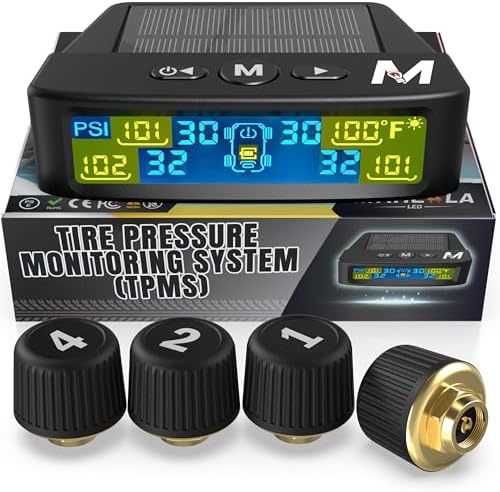
Marcala’s TPMS set of four sensors helps you monitor tire pressure and temperature in real time while driving, with updates every second. The bright color LCD uses auto-dimming for easy viewing, powered by dual solar and USB charging, and offers six alarm modes. Built for trailers, RVs, campers, trucks, and towing setups, the sensors support monitoring 1-4 wheels up to 98 PSI with IP67 waterproof protection.

Universal magnetic jack pad with aluminum grooved design to protect vehicle pinch welds during lifting. Durable nylon pad inserts are upgraded and secured with screws to resist damage and keep in place. Designed to fit most single vehicle pinpoint welds for safer, stable jacking when changing tires, repairs, or performing oil changes.
What to Check After Installing New Tires
- Cold tire pressure: Set pressure using the placard or tire professional’s load-inflation guidance for non-OE tire types.
- TPMS: Confirm the sensors read correctly after tire or wheel changes.
- Alignment: Get an alignment after lift kits, new upper control arms, or major tire-size changes.
- Speedometer: Larger tires can make the speedometer read lower than your real road speed.
- Spare tire: Make sure the spare fits the truck and clears the brake and suspension hardware.
- Lug nuts: Recheck torque after the installer’s recommended break-in mileage.
Addressing Common Tire Fitment Issues
After installing a lift kit or larger tires, the most common issue is tire rubbing. Rubbing may happen only in reverse, at full steering lock, on driveway angles, or when the suspension compresses off-road. That makes a parking-lot test helpful, but not enough.
Common Rubbing Points on a 2024 Tacoma
- Mud flaps: Wide tires often contact factory mud flaps first.
- Front inner fender liner: Heat or liner adjustment may be needed on some builds.
- Body mount / rear of front wheel well: Aggressive offsets and wide 35-inch tires are more likely to rub here.
- Upper control arm: Wheel offset and tire width can create clearance problems.
- Front bumper edge or valance: Larger tires can touch during steering or compression.
Additionally, wheel alignment becomes essential after suspension changes. Misalignment can cause uneven tire wear, poor tracking, and unstable handling. Stock models should use factory-size tires unless you have confirmed clearance; if you go beyond the factory fitment, expect some combination of lift, offset changes, trimming, or professional adjustment.
Note: If your Tacoma rubs only on one side, do not assume the tire size is the only problem. Alignment, caster setting, slight liner differences, and suspension settling can all change clearance.
Frequently Asked Questions
What size tires fit on a 2024 Tacoma?
Common factory sizes include 245/70R17, 265/70R17, 265/65R18, available 265/70R18, and factory 33-inch tires on select off-road trims. The safest replacement is the size shown on your driver-door placard. Larger tires can fit some builds, but clearance depends on lift, wheel offset, tire width, and trim.
What is the largest tire for a stock 2024 Toyota Tacoma?
The largest factory tire depends on the trim. Trailhunter and TRD Pro models use factory 33-inch Goodyear Territory R/T tires, and Toyota also lists available 265/70R18 all-terrain tires on TRD Off-Road. For a lower trim with smaller stock tires, do not assume the factory 33-inch setup will clear without the matching factory hardware or a professional fitment check.
Can you put 35-inch tires on a 2024 Tacoma?
Yes, some 2024 Tacoma builds can run 35-inch tires, but they are not a universal bolt-on. Most setups need lift, correct wheel offset, careful tire-width selection, rubbing checks, alignment, and sometimes trimming or mud-flap relocation. Confirm the exact setup before buying.
Do bigger tires affect Tacoma fuel economy and speedometer accuracy?
Yes. Larger and heavier tires can reduce fuel economy, slow acceleration, increase braking distance, and change speedometer readings. The bigger the jump from the factory tire diameter, the more noticeable the change can be.
Should I choose LT tires for my Tacoma?
Choose LT-metric tires if you need stronger sidewalls or higher load capability for towing, hauling, rocky trails, or overland weight. For mostly daily driving, an SL or properly rated P-metric/all-season tire may ride better and weigh less. Always match the required load capacity.
What tire pressure should I use after changing tire size?
For factory-size tires, use the cold pressure on the driver-door tire placard. If you switch to a different load range or LT-metric tire, have a tire professional calculate the correct pressure using load-inflation data. Do not use the sidewall maximum as your normal driving pressure.
What is the best oil to use for a Toyota Tacoma?
For many 2024 Toyota Tacoma 2.4L turbo models, Toyota owner materials commonly point to SAE 0W-20 oil, but this tire guide is not a full oil-service guide. Check your owner’s manual and oil filler cap for the exact viscosity and specification for your engine.
Conclusion
The right 2024 Tacoma tire size is the one that matches your truck’s placard, load needs, wheel specs, and real clearance. Factory-size tires are the simplest and safest route for daily driving. Larger all-terrain or 35-inch tires can look great and improve trail capability, but they require more planning: lift height, wheel offset, alignment, TPMS, spare-tire fitment, and rubbing checks all matter. Choose the tire that fits your Tacoma’s actual use, not just the biggest size that looks possible online.
Sources
- Toyota 2024 Tacoma eBrochure — factory wheel and tire package references.
- Toyota 2024 Tacoma Tire Inflation Pressure Guidance — cold tire pressure and tire-pressure checking guidance.
- NHTSA TireWise Tire Safety — tire pressure, maintenance, recalls, and tire-safety guidance.
- Westcott Designs 2024–2026 Tacoma Preload Collar Lift Kit — lift-height and 35-inch tire fitment notes.
- ReadyLIFT 2.5-inch SST Lift Kit for 2024 Toyota Tacoma — no-trim maximum tire-size guidance for its kit.
- BFGoodrich All-Terrain T/A KO3 and Falken Wildpeak A/T4W — all-terrain tire category examples.

Related Articles
How Tire Weight Affects Toyota Tacoma Performance
How does tire weight influence your Toyota Tacoma's performance and efficiency? Discover the surprising effects that could change your driving experience.
Read More
Tire Noise Levels by Tire Type on a Toyota Tacoma
A comprehensive look at how tire types affect noise levels in your Toyota Tacoma reveals surprising insights that could enhance your driving experience.
Read More
How To Choose Tires for a Dual Use Toyota Tacoma
Unlock the secrets to selecting the perfect tires for your dual-use Toyota Tacoma, ensuring optimal performance and comfort on every adventure. Discover more inside!
Read More