
How To Read Tire Wear Patterns on a Toyota Tacoma
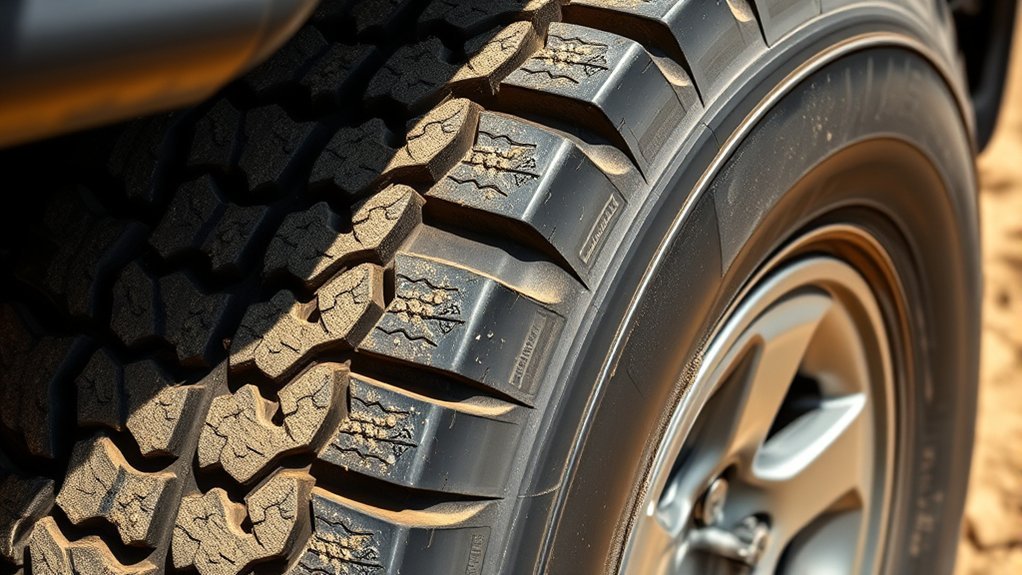
Your Toyota Tacoma’s tires can tell you a lot before a warning light ever appears. Center wear, shoulder wear, feathering, cupping, diagonal patches, bulges, and chunking each point to a different problem with inflation, alignment, balance, suspension, load, or road impact. Read the pattern early, and you can often fix the cause before it ruins a full set of tires.
Quick Answer
To read tire wear patterns on a Toyota Tacoma, inspect the inner, center, and outer tread on every tire. Center wear usually points to overinflation, both-edge wear to underinflation or overload, one-sided wear to alignment, cupping to suspension or balance problems, and bulges or exposed cords to immediate replacement.
Key Takeaways
- Check Tacoma tire pressure when the tires are cold and use the pressure listed on the driver-side door placard or owner’s manual, not the maximum PSI on the tire sidewall.
- Both shoulders worn usually means low pressure, overloading, or heat buildup; one inner or outer edge worn usually means alignment, camber, toe, or worn steering/suspension parts.
- Cupping, scalloping, diagonal wear, vibration, or road noise should trigger a balance, alignment, and suspension inspection.
- Replace tires when tread reaches 2/32 inch, treadwear indicators are flush, cords show, or any sidewall bulge appears.
At a Glance
| Time Required | 10–15 minutes for a driveway inspection; longer if you measure and record tread depth on every tire. |
| Difficulty | Easy for inspection; professional help is recommended for alignment, balancing, suspension checks, and tire replacement. |
| Tools Needed | Tire pressure gauge, tread depth gauge or penny, flashlight, gloves, and a notebook or phone for recording readings. |
| Cost | Free if you already have tools; usually under $20 for a basic pressure gauge and tread depth gauge. |
Warning: Do not keep driving on a Tacoma tire with a sidewall bulge, exposed cords, a deep cut, severe cracking, rapid air loss, or tread that has separated. Install the spare if it is safe to do so and have the tire inspected or replaced by a qualified tire professional.
Common Tire Wear Patterns You Should Know
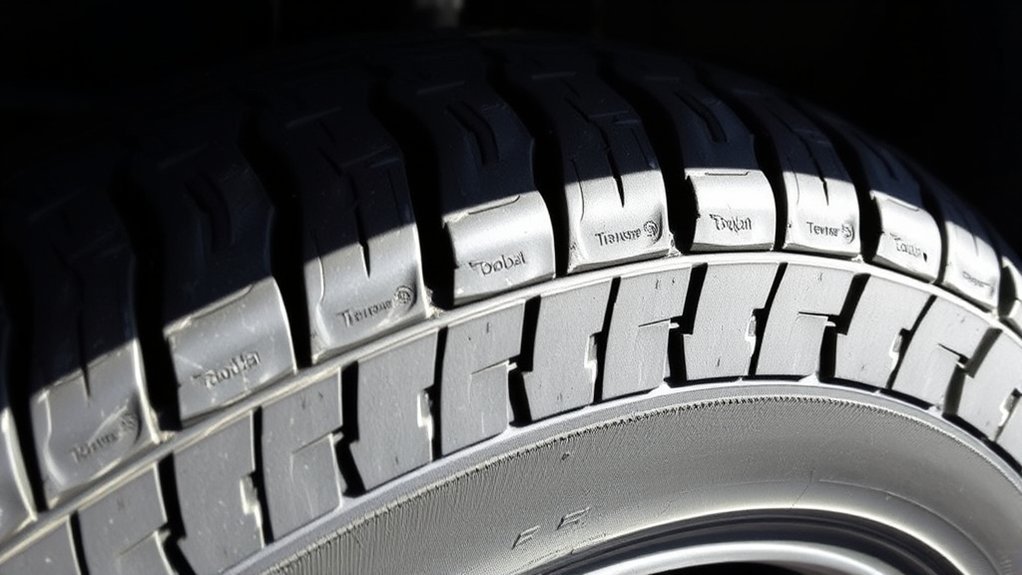
The fastest way to diagnose Tacoma tire wear is to compare the inner edge, center ribs, and outer edge of each tire. Look for whether the wear is even across the tread, heavier in the center, heavier on both shoulders, heavier on one side, or chopped into dips and patches.
| Wear Pattern | What It Usually Means | What To Do Next |
|---|---|---|
| Center wear | Overinflation or too much pressure for the current load and tire setup. | Check cold PSI and adjust to the Tacoma’s door-jamb placard or owner’s manual. |
| Both shoulders worn | Underinflation, overloading, heat buildup, or repeated hard cornering. | Inspect for leaks, correct PSI, reduce overload, and check load limits. |
| One inner or outer edge worn | Toe, camber, worn steering parts, worn suspension parts, or impact damage. | Schedule an alignment and suspension inspection before installing new tires. |
| Feathering | Toe alignment problem; tread blocks feel sharp one way and smooth the other. | Have toe settings checked and corrected. |
| Cupping or scalloping | Worn shocks, struts, loose suspension parts, imbalance, or repeated bouncing. | Inspect suspension and balance the tires; replace damaged components first. |
| Diagonal or patchy wear | Imbalance, alignment drift, missed rotations, tire damage, or wheel damage. | Get a tire balance, rotation check, wheel inspection, and alignment evaluation. |
| Flat spot | Hard braking, locked wheel, long parking, or tire construction damage. | Inspect for vibration and replace the tire if the flat spot is severe. |
| Chunking or torn tread | Rocks, off-road use, low pressure, overloading, aggressive throttle, or old/damaged rubber. | Reduce speed, inspect for exposed cords, and replace the tire if damage is deep. |
| Sidewall bulge | Internal cord damage from impact, pothole, curb strike, or structural failure. | Stop driving as soon as safe and replace the tire. |
[Products Worth Considering]

EVOULTES heavy duty tire inflator with an integrated gauge delivers accurate pressure readings from 10–120 PSI, helping you inflate, deflate, and check tires in one tool. The 16.5-inch extended dual-head air chuck with swivel base reaches hard-to-access dual wheel valves on trucks and RVs. A brass trigger core and side-mounted air release valve make operation smooth, with standard 1/4" NPT threading and quick-connect compatibility for easy setup.

The JACO FlowPro Tire Inflator measures, inflates, and airs down tires up to 100 PSI with battery-free operation and ±2% accuracy after calibration. It features a glowing pressure dial for night visibility, a heavy-duty steel build with a hybrid hose, and a precision push-to-inflate thumb trigger. The patented Lightning Air Chuck locks on for a secure seal, and the kit includes quick-connect hardware for easy inline use with your air compressor.

Blackline Blackout is a water-based trim and tire dressing that restores rubber, vinyl, and plastic with a rich satin, blackout look. Its no-sling formula dries quickly and helps prevent messy transfer onto paint. The coating repels water and offers UV protection to help prevent fading, cracking, and discoloration for a clean, long-lasting finish.
How to Inspect Your Tacoma Tires Step by Step
- Park on level ground and let the tires cool. Tire pressure should be checked cold, ideally before driving or after the truck has been parked for several hours.
- Check the placard first. Find the recommended cold tire pressure on the driver-side door-jamb Tire and Loading Information Label or in the Toyota Tacoma tire inflation pressure guide.
- Measure PSI on all tires, including the spare. The maximum PSI molded on the tire sidewall is not the normal target pressure for daily driving.
- Use a flashlight and inspect each tread zone. Look at the inner shoulder, center ribs, and outer shoulder. Turn the front wheels left and right to see the inside edges.
- Measure tread depth in three places. Check the inner, center, and outer tread on each tire. Use the smallest reading as the safety reading.
- Feel the tread blocks by hand. A saw-tooth feel usually means feathering from toe misalignment. Dips or waves usually mean cupping or scalloping.
- Check the sidewalls. Look for bulges, bubbles, cuts, cracking, exposed cords, and impact marks from curbs, potholes, or rocks.
- Compare tire to tire. If one Tacoma tire looks much worse than the others, suspect alignment, suspension, brake, wheel, or rotation issues.
Pro Tip: Take a photo of each tire and record PSI plus tread depth every month. If one tire loses pressure faster or wears faster, you will catch the trend before it becomes a blowout, vibration, or premature replacement.
Why Understanding Tire Wear Matters for Your Tacoma
Tire wear is more than a cosmetic issue. It affects traction, braking, steering feel, fuel economy, ride comfort, and how safely your Tacoma handles rain, gravel, towing, and highway speed.
The National Highway Traffic Safety Administration recommends regular tire-pressure, treadwear, damage, rotation, balancing, and alignment checks because poor tire maintenance can lead to flats, blowouts, and tread separation. Toyota also tells Tacoma owners to check for treadwear indicators, uneven wear, tire damage, and spare tire condition in its Tacoma tire inspection guidance.
A tire that still has “some tread left” may still be unsafe if the tread is uneven, the sidewall is damaged, or the tire is losing pressure.
How to Address Center and Edge Wear
Center and edge wear are the easiest patterns to spot, but they are also easy to misread. Do not rely on a quick glance at the outside shoulder only. A Tacoma tire can look acceptable from the curb side while the inside shoulder is almost bald.
| Tire Wear Type | Likely Causes | Solutions |
|---|---|---|
| Center Wear | Overinflation, too much pressure for the load, or long highway use with incorrect PSI. | Set cold tire pressure to the Tacoma placard or owner’s manual. Recheck after the truck sits. |
| Both Shoulder Edges | Underinflation, overload, slow leak, heavy cargo, towing, or excessive heat buildup. | Inspect for punctures or leaking valve stems, correct PSI, and stay within load limits. |
| One Inner or Outer Edge | Toe or camber misalignment, bent wheel, worn ball joint, worn tie rod, or suspension damage. | Schedule an alignment and suspension inspection. Replacing tires without fixing the cause will repeat the wear. |
For a Tacoma that tows, hauls tools, carries camping gear, or runs off-road, tire pressure checks matter even more. Load, temperature, terrain, and tire type can change how the tread contacts the road.
Cupping: Causes and Remedies
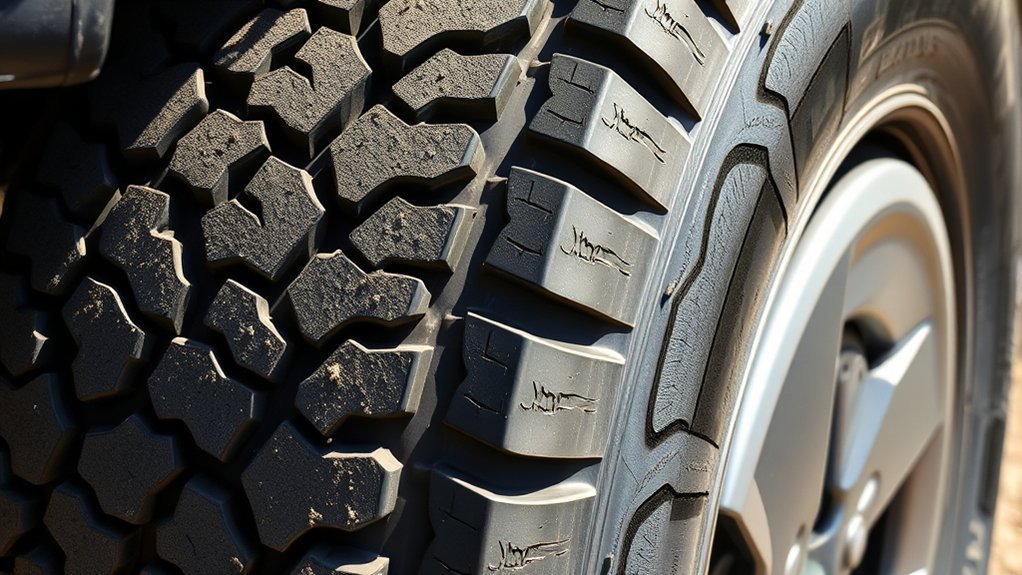
Cupping, also called scalloping, looks like uneven scoops or dips around the tire. You may also hear a rhythmic humming, roaring, or thumping noise that gets louder with speed.
Common causes include worn shocks, worn struts, loose suspension components, unbalanced tires, bent wheels, or a tire that has been bouncing instead of staying planted. On a Tacoma used on washboard roads, trails, potholes, or construction sites, cupping can show up faster if suspension parts are worn or tire pressure is wrong.
- Inspect shocks and suspension: Look for leaking shocks, loose bushings, worn ball joints, and play in steering components.
- Balance the tires: Imbalance can create vibration and uneven tread loading.
- Check alignment: Misalignment can make cupping worse and shorten tire life.
- Rotate on schedule: Toyota’s general maintenance guidance recommends tire rotation at regular mileage intervals, and your exact owner’s manual schedule should be the final reference.
Note: Once cupping is deep, the tire may stay noisy even after the suspension or balance issue is fixed. The repair stops the cause, but it may not make the damaged tread smooth again.
What Diagonal or Patchy Wear Means
Diagonal or patchy wear appears as angled strips, random smooth spots, or sections of tread that wear faster than the surrounding rubber. It often comes with vibration, steering-wheel shake, seat vibration, or a repeating road noise.
The likely causes include tire imbalance, wheel damage, alignment drift, missed rotations, worn suspension parts, or uneven load distribution. If your Tacoma recently hit a pothole, curb, rock, or trail obstacle, inspect both the tire and wheel carefully.
Do not assume diagonal wear is “just a balance issue.” Balance the tire, but also check alignment, wheel runout, suspension, and the condition of the tire itself. If the tread is separated, cracked, or visibly distorted, replace the tire instead of trying to save it with rotation.
What You Need to Know About Tire Feathering
Tire feathering happens when tread blocks wear into a saw-tooth shape. Run your hand lightly across the tread in one direction, then the other. If one direction feels sharp and the other feels smooth, the tire is feathered.
Feathering is usually tied to toe alignment. Excessive toe-in or toe-out causes the tire to scrub sideways as it rolls, shaving the tread blocks unevenly. You may also notice the Tacoma wandering, the steering wheel sitting off-center, or the truck pulling slightly on a straight, level road.
- Inner tread block feathering: Often points toward too much toe-in or related alignment/suspension issues.
- Outer tread block feathering: Often points toward too much toe-out or related alignment/suspension issues.
- Feathering on all tires: Check rotation history, tire pressure habits, and alignment on both axles.
- Feathering after a lift or leveling kit: Have the alignment checked after the suspension change settles.
Correcting the alignment early can save the tire. Waiting too long can leave the tread noisy, uneven, and harder to balance.
[Products Worth Considering]

This multi-function tire valve stem removal tool set makes it fast to remove, install, bleed, and clean valve cores for easier tire maintenance. It includes valve core removers, a 4-way spool tool, replacement valve caps, and spare cores to handle replacements and repairs with confidence. Universal compatibility suits cars, trucks, motorcycles, bicycles, and more for roadside convenience.
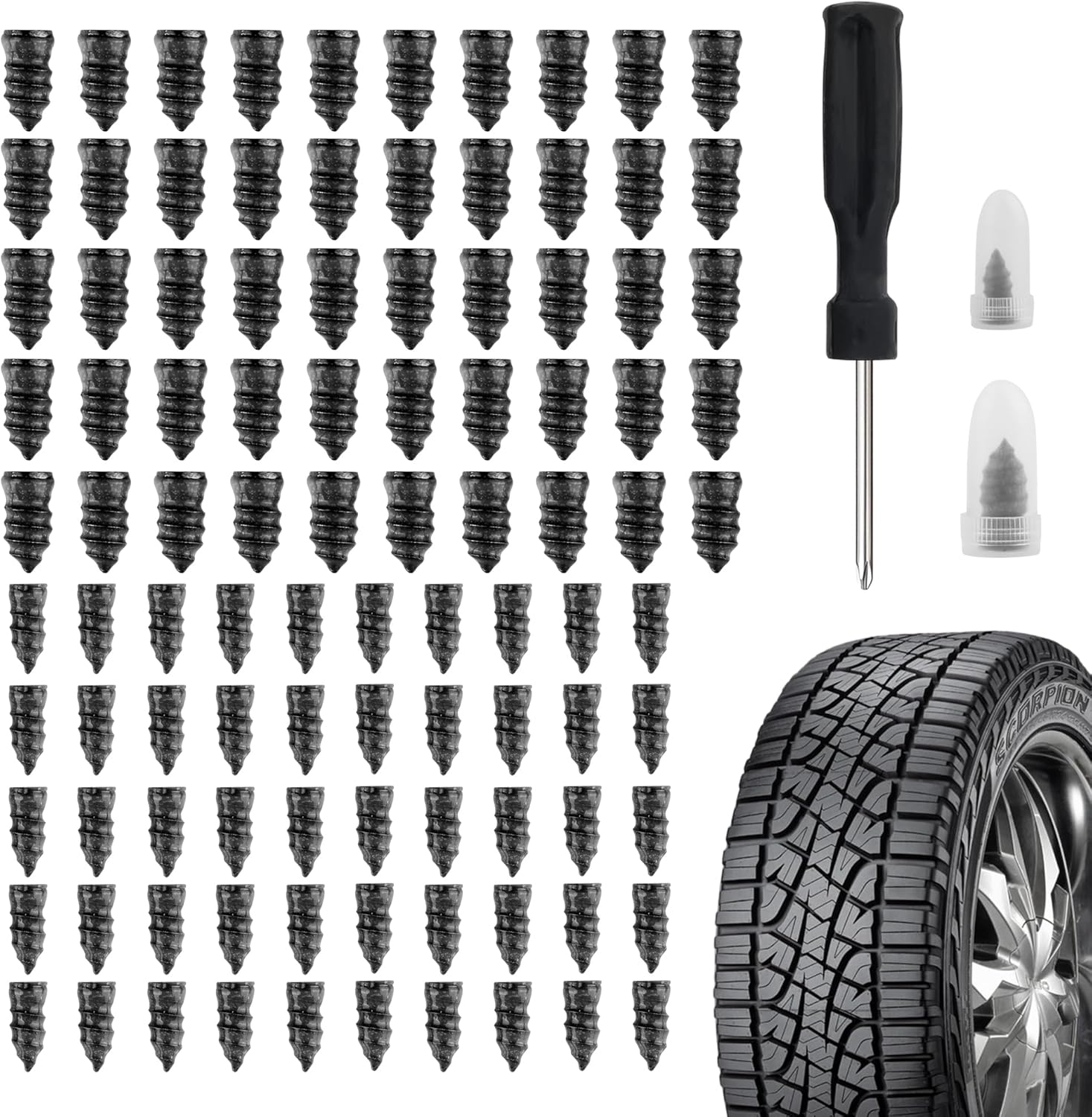
Salior’s tire plug kit provides a fast, reliable self-service fix for punctured or leaking tires without the need for flaring tools. Choose the correct plug size, then screw the nail into the puncture using the included screwdriver for an enhanced seal. The set is durable and convenient for on-the-go maintenance across multiple vehicle types.
Understanding the Risks of Sidewall Bulges and Tire Chunking
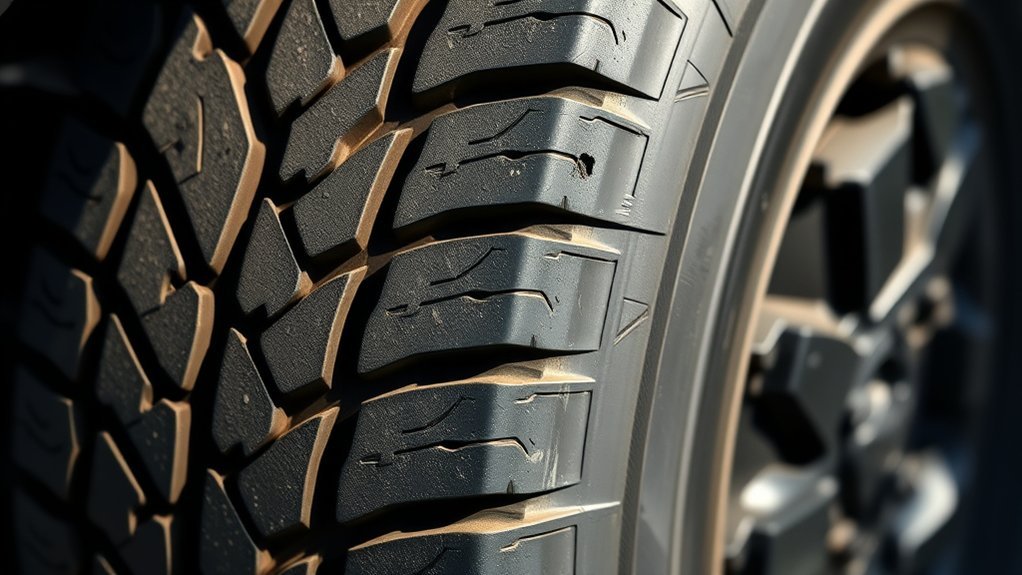
Sidewall bulges and tread chunking deserve more urgency than normal tread wear. A sidewall bulge usually means internal tire cords have been damaged, often from a curb, pothole, rock, or severe impact. Michelin’s tire repair guidance says a sidewall bulge or bubble means the tire should be replaced because it is a structural failure, not a cosmetic problem.
Tire chunking means pieces of tread have torn away. Tacoma owners may see this after rocky trails, gravel roads, sharp debris, low-pressure off-road driving, aggressive throttle, or overloading. A little cosmetic chipping on an all-terrain tire may not be an emergency, but deep chunks, exposed cords, spreading cracks, or vibration require professional inspection.
Warning: A bulge, bubble, exposed cord, or tread separation is not a “watch it for a while” issue. Replace the tire. If you must move the truck, drive only as far as needed to get out of danger, then install the spare or call for roadside help.
Measuring Tire Tread Depth
Measuring tread depth tells you whether the tire still has enough rubber to clear water, grip the road, and pass a basic safety check. According to NHTSA, tires are not safe and should be replaced when tread is worn to 2/32 inch. NHTSA also recommends checking tread at least once a month when checking tire pressure.
Tread Depth Tools
- Tread depth gauge: Best option. Measure in 32nds of an inch at the inner, center, and outer tread.
- Penny test: Insert a penny into the tread with Lincoln’s head upside down and facing you. If you can see the top of Lincoln’s head, replace the tire.
- Treadwear indicators: Look for raised bars in the tread grooves. When the tread is level with the bars, replacement is due.
- Visual inspection: Look for exposed cords, cracks, cuts, bubbles, punctures, and uneven wear patterns.
Measuring Techniques
Measure each tire in at least three tread zones: inner edge, center, and outer edge. Then repeat at more than one place around the tire. Use the lowest reading, not the average, because the thinnest area is the safety limit.
If one side of a tire is much lower than the other, the tire may still need replacement even if the center tread looks decent. Uneven tread depth can also point to alignment, worn suspension, or a missed rotation schedule.
Note: For rain, towing, heavy loads, or off-road use, do not wait until the tire is at the legal minimum if traction already feels weak. The 2/32-inch mark is a replacement threshold, not a performance target.
Best Practices for Maintaining Tire Health on Your Tacoma
The best tire-wear fix is prevention. Keep pressure correct, rotate on schedule, check alignment when symptoms appear, and inspect tires after impacts or trail use.
Regular Tire Pressure Checks
- Check pressure cold at least monthly: NHTSA recommends checking all tires, including the spare, when cold. Weekly checks are a smart habit if you tow, haul, commute long distances, or drive off-road.
- Use the Tacoma placard: The correct pressure is on the Tire and Loading Information Label or in the owner’s manual, not the tire sidewall maximum.
- Do not rely only on TPMS: Tire Pressure Monitoring Systems usually warn only after a tire is significantly underinflated.
- Adjust after load changes: If you add cargo, camping gear, tools, armor, larger tires, or a trailer, verify pressure and load ratings.
- Inspect after impacts: A pothole, curb, rock, or rough trail can cause air loss, wheel damage, or sidewall injury.
Scheduled Rotation and Alignment
Regular tire rotation helps even out wear between front and rear tires. Toyota’s general scheduled maintenance material recommends rotating tires every 5,000 to 7,500 miles, but your Tacoma’s exact owner’s manual and tire setup should guide the final interval. NHTSA also recommends following the owner’s manual and rotating sooner if uneven wear appears.
Alignment is different from rotation. Rotation moves tires to different positions; alignment corrects the wheel angles. Get an alignment check if your Tacoma pulls, the steering wheel sits off-center, the inner or outer edges wear quickly, feathering appears, or the truck recently hit a hard impact.
Balancing and Suspension Checks
Balance problems often show up as vibration at certain speeds. Suspension problems often show up as cupping, scalloping, clunking, loose steering, nose dive, or poor ride control. If a shop balances the tires but the vibration returns, ask for a wheel, tire, and suspension inspection instead of repeating the same balance over and over.
Tacoma-Specific Off-Road and Load Tips
- After off-road driving: Inspect for chunking, sidewall cuts, bead damage, rocks stuck in tread, and bent wheels.
- After towing or hauling: Check for both-shoulder wear, heat damage, and pressure loss.
- After a lift, leveling kit, or new wheels: Get an alignment and monitor wear during the first few thousand miles.
- Before long trips: Check pressure, tread depth, spare tire pressure, and lug nut condition.
Frequently Asked Questions
Is a 700 treadwear rating good?
Yes, a 700 UTQG treadwear rating generally suggests a long-wearing tire compared with lower-rated tires. However, it is not a mileage guarantee. The NHTSA UTQG guide explains that treadwear grades are comparative ratings tested under controlled conditions, and real-world wear changes with driving habits, service practices, road surfaces, climate, load, pressure, and alignment.
Can uneven Tacoma tire wear be fixed?
The cause can often be fixed, but the worn tread usually cannot be restored. Correct the pressure, alignment, balance, suspension, or rotation issue first. If tread is too low, cords are exposed, or damage is structural, replace the tire.
How often should I rotate Toyota Tacoma tires?
A common Toyota rotation interval is every 5,000 to 7,500 miles, but the best answer is the interval in your Tacoma owner’s manual and tire warranty. Rotate sooner if uneven wear appears, especially after off-road driving, towing, or suspension changes.
What does inside-edge tire wear mean on a Tacoma?
Inside-edge wear usually points to alignment, toe, camber, worn suspension parts, worn steering parts, or impact damage. Have the alignment and suspension checked before replacing the tires, or the new tires may wear the same way.
Is it safe to drive with a sidewall bulge?
No. A sidewall bulge or bubble usually means internal tire damage. Stop driving as soon as it is safe, install the spare if appropriate, and replace the damaged tire.
Conclusion
Reading tire wear patterns on your Toyota Tacoma is one of the simplest ways to catch inflation, alignment, balance, suspension, and load problems early. Center wear, shoulder wear, feathering, cupping, patchy tread, chunking, and bulges each tell a different story. Check pressure cold, measure tread depth across the whole tire, rotate on schedule, and act quickly when damage appears. A few minutes of inspection can prevent wasted tires, poor handling, and unsafe driving.
Sources
- NHTSA TireWise: Tire Safety Ratings and Awareness — supports tire pressure, tread depth, rotation, balancing, alignment, TPMS, damage, and penny-test guidance.
- Toyota 2026 Tacoma Owner’s Manual: Tires — supports Tacoma tire inspection, treadwear indicators, uneven wear checks, and spare tire checks.
- Toyota 2026 Tacoma Owner’s Manual: Tire Inflation Pressure — supports using Toyota’s recommended tire inflation pressure.
- Toyota Scheduled Maintenance Guide — supports general Toyota tire rotation interval guidance.
- NHTSA Consumer Guide to Uniform Tire Quality Grading — supports UTQG treadwear rating context.
- Michelin: Can My Tire Be Repaired? — supports replacement guidance for sidewall bulges and structural tire damage.

Related Articles
How Tire Weight Affects Toyota Tacoma Performance
How does tire weight influence your Toyota Tacoma's performance and efficiency? Discover the surprising effects that could change your driving experience.
Read More
Tire Noise Levels by Tire Type on a Toyota Tacoma
A comprehensive look at how tire types affect noise levels in your Toyota Tacoma reveals surprising insights that could enhance your driving experience.
Read More
How To Choose Tires for a Dual Use Toyota Tacoma
Unlock the secrets to selecting the perfect tires for your dual-use Toyota Tacoma, ensuring optimal performance and comfort on every adventure. Discover more inside!
Read More