
Tire Traction in Rain: Why Tread Design Matters
Good tire tread can greatly reduce hydroplaning risk, but it cannot make a tire immune to standing water, high speed, poor inflation, or deep puddles. The tread’s job is simple: move water away from the contact patch fast enough for rubber to keep touching the road. When grooves get shallow, sipes wear down, or pressure is wrong, wet grip drops quickly.
Quick Answer
Tread helps prevent hydroplaning by channeling water away from the tire’s contact patch, but it cannot prevent hydroplaning in every situation. Deep grooves, effective sipes, correct tire pressure, and slower speeds all matter. Replace tires at 2/32 inch minimum, and start paying close attention once wet-weather tread depth drops near 4/32 inch.
Key Takeaways
- Tread reduces hydroplaning by giving water a path out from under the tire.
- Speed, water depth, tire width, vehicle load, tread depth, tread design, and inflation pressure all affect hydroplaning risk.
- Tires at 4/32 inch can already lose a large amount of wet braking and handling performance compared with new tires.
- At 2/32 inch, tread wear indicators are typically flush, and the tire should be replaced.
- Directional, asymmetrical, and heavily siped tread designs can improve wet control when matched to your driving needs.
At a Glance
| Time Required | 5–10 minutes to check all four tires |
| Difficulty | Easy |
| Tools Needed | Tread depth gauge, penny, tire pressure gauge, flashlight |
| Cost | Usually under $10 for a basic tread gauge |
Can Tread Prevent Hydroplaning? The Short Answer
Tread can help prevent hydroplaning, but only up to a point. Hydroplaning happens when a layer of water builds between the tire and the road, lifting the tire away from the pavement. Once that happens, steering, braking, and acceleration can feel delayed or completely unresponsive.
The tire’s grooves, channels, and sipes create escape routes for water. When those channels are deep and open, the tire can push more water aside and keep more rubber in contact with the road. When the tread is worn, clogged, uneven, or underinflated, water has less room to escape.
According to Tire Rack, hydroplaning depends on several factors, including water depth, vehicle speed, vehicle weight, tire width, tread depth, and tread design. That means no tread pattern can overcome unsafe speed or deep standing water every time.
Warning: If your tires skim across standing water, do not slam the brakes or jerk the steering wheel. Ease off the accelerator, keep the wheel pointed where you want to go, and let the tires regain contact gradually.
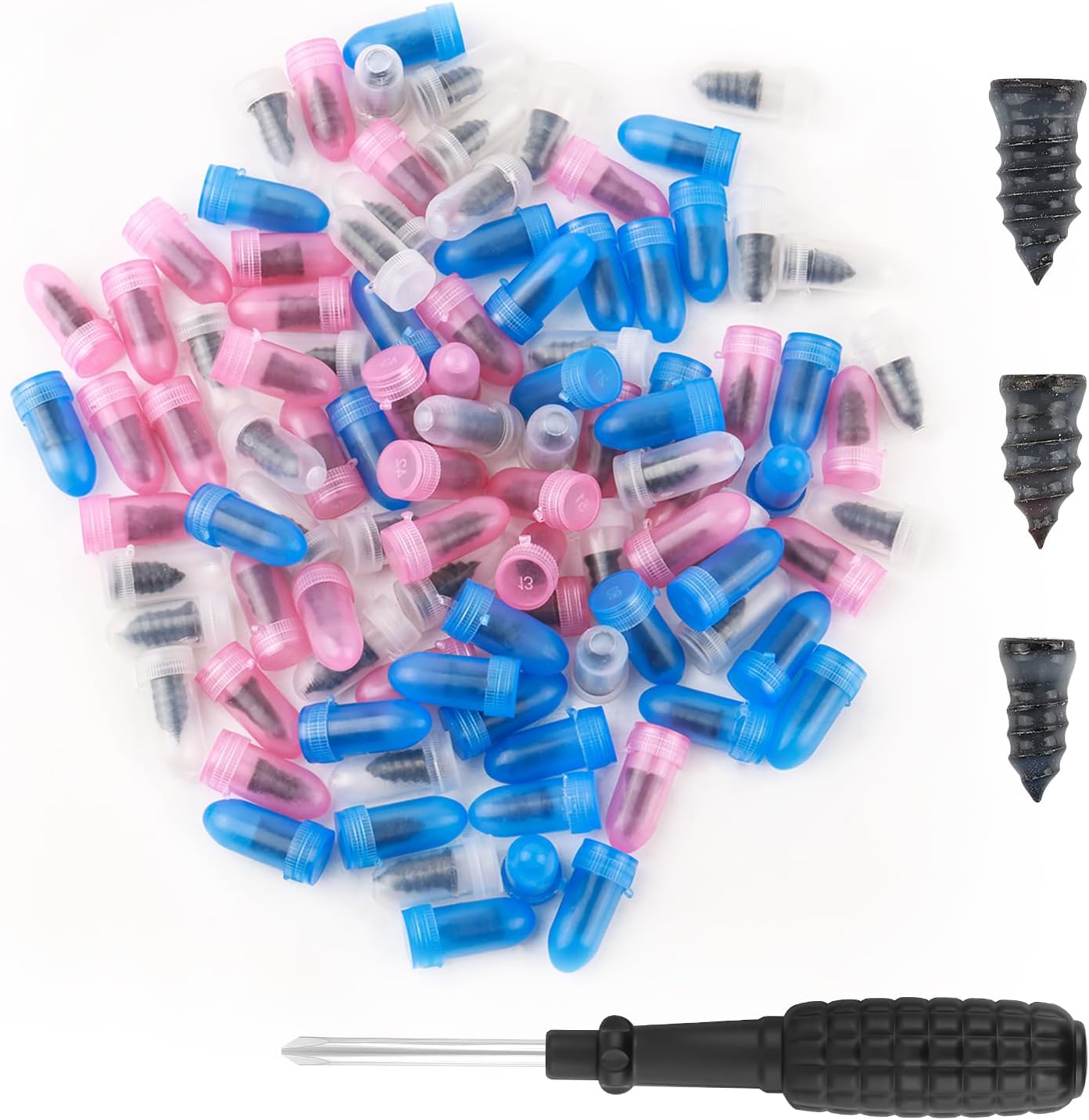
This 100-piece tire repair screw plug kit provides a fast, self-service solution for punctures on the road. Choose the correct plug size, insert it into the break, and screw...
How Tire Tread Reduces Hydroplaning Risk
Tire tread works like a water-management system. Its main wet-road jobs are to evacuate water, create biting edges, keep the tread blocks stable, and maintain enough contact pressure to cut through the film of water on the road.
| Tread Feature | What It Does in Rain | Why It Matters |
|---|---|---|
| Circumferential grooves | Move water around the tire as it rolls | Reduce the chance that water lifts the tire off the road |
| Lateral grooves | Push water outward toward the tire shoulders | Improve drainage during braking and cornering |
| Sipes | Add small biting edges | Help grip thin water films and slick pavement |
| Rubber compound | Stays flexible enough to conform to the road | Supports braking, cornering, and traction in wet conditions |
| Correct inflation | Keeps the footprint properly shaped | Helps the tread press evenly into the road and move water effectively |
Think of tread as risk reduction, not a guarantee. Even excellent rain tires can hydroplane if you hit deep water too fast.
Key Tread Features for Wet Grip: Grooves, Sipes, and Compound
Wet grip depends on more than tread depth alone. A tire with good depth but poor tread design may not evacuate water as well as a tire designed specifically for rain. The best wet-weather performance comes from the right combination of groove depth, sipe design, tread pattern, compound, and pressure.
Groove Depth Importance
Groove depth determines how much water the tire can store and move away from the contact patch. Deeper grooves create more room for water to escape. As tread wears down, those grooves shrink, and the tire has less capacity to clear water at speed.
The National Highway Traffic Safety Administration recommends keeping tread at least 2/32 inch deep. The U.S. Tire Manufacturers Association also states that tires are worn out at 2/32 inch and should be replaced.
- Deep grooves increase water-displacement volume.
- Open channels help water flow away from the center of the tire.
- Uneven wear can leave one part of the tire more vulnerable to hydroplaning than another.
- Tread wear bars that are flush with the tread signal that the tire is at its replacement point.
Note: The 2/32-inch rule is a minimum replacement point, not an ideal wet-weather target. Wet braking and handling can decline well before a tire reaches that limit.
Sipe Density Effects
Sipes are the small slits cut into tread blocks. They create extra biting edges and help the tread conform to wet pavement. In light rain, sipes can improve grip by helping the rubber cut through thin films of water.
More sipes are not automatically better. Too many cuts can make tread blocks flex too much, especially in performance driving. Good tire design balances sipe density with block stiffness so the tire can grip in rain without feeling unstable in corners.
- More biting edges can improve traction on slick surfaces.
- Proper sipe placement helps guide water into larger grooves.
- Flexible rubber compounds help sipes work in cooler wet weather.
- Worn sipes lose effectiveness as the tire ages and tread blocks shrink.
Rubber Compound and Wet Grip
The rubber compound affects how well the tire conforms to pavement texture. A compound that is too hard may slide more easily on wet roads, while a compound designed for wet grip can maintain better contact with small surface irregularities.
However, compound choice is always a tradeoff. Softer wet-grip compounds may wear faster, while harder long-life compounds may not feel as confident in heavy rain. This is why tire choice should match your climate, driving style, vehicle, and replacement budget.
How Worn Tread Increases Stopping Distance and Loss of Control
Worn tread increases stopping distance because the tire can no longer clear water as efficiently. Instead of pressing firmly into the pavement, the tire rides on more water, reducing friction and steering response.
AAA testing found that, compared with new tires, all-season tires worn to 4/32 inch increased wet stopping distance by an average of 87 feet for a passenger car and reduced handling ability by 33%.
That AAA test result matters because 4/32 inch is still above the common 2/32-inch legal wear limit. In other words, a tire can be legally usable and still perform much worse in the rain than a new tire.
- Reduced channeling: shallow grooves move less water, so the tire is easier to lift onto a water film.
- Lower wet friction: less tread depth and fewer sharp edges reduce grip.
- Longer braking distance: the vehicle needs more road to stop safely.
- Weaker steering response: the tire reacts more slowly when you turn or correct direction.
- Less safety margin: sudden traffic stops, puddles, and highway ruts become more dangerous.
Tread Depth Guide for Wet Roads
Use a tread depth gauge for the most reliable reading. Check multiple spots across each tire: inner edge, center, and outer edge. Uneven wear can hide a problem if you measure only one groove.
| Tread Depth | Wet-Road Meaning | Recommended Action |
|---|---|---|
| 10/32–12/32 inch | Typical new-tire range for many passenger tires | Maintain pressure and rotation schedule |
| 6/32 inch | Generally usable, but wet performance is lower than new | Inspect regularly and watch for uneven wear |
| 4/32 inch | Wet braking and handling can drop sharply | Plan replacement soon, especially in rainy climates |
| 2/32 inch | Minimum replacement point; tread wear bars are typically flush | Replace the tire |
Pro Tip: Check tread depth before rainy season, not after the first storm. If your tires are near 4/32 inch and you regularly drive highways in rain, shopping early gives you more control over tire choice and price.
Choose a Tread Pattern for Wet Roads and Your Driving Style
Choose a tread pattern based on how you drive and the wet-road conditions you face most often. The best tire for daily rain commuting may not be the same tire you would choose for spirited dry-road handling, long tread life, snow, or towing.
Wet-Road Tread Types
Directional, asymmetrical, and all-season tread designs can all work well in wet weather when they are properly engineered and maintained.
- Directional tread: V-shaped or arrow-like channels move water in one main direction. This pattern is often strong in heavy rain but must be mounted in the correct rotation direction.
- Asymmetrical tread: Different inner and outer tread zones balance wet drainage, dry cornering, and stability.
- Symmetrical tread: A common all-season design that can be quiet, durable, and easy to rotate, though not always the most aggressive in heavy rain.
- Performance wet-weather tread: Usually combines wide grooves, advanced compounds, and stable tread blocks for better braking and steering in rain.
Driving Style Match
If you drive calmly at moderate speeds, a quality touring or all-season tire with strong wet-braking ratings may be enough. If you drive aggressively, make high-speed lane changes, or corner hard, look for a tire with good wet handling and stable shoulder blocks, not just deep grooves.
If you often face heavy rain, standing water, or highway ruts, prioritize water evacuation and wet braking over appearance. Large tread blocks may look sporty, but without enough grooves and sipes, they may not be ideal for rain.
Speed and Hydroplaning
Speed is one of the biggest hydroplaning factors. The faster the tire rolls into water, the less time it has to push that water away. Even a good tread pattern can be overwhelmed if the water is deep or the vehicle is moving too fast.
- Slow down before entering standing water.
- Avoid cruise control in heavy rain so you can manage throttle more smoothly.
- Increase following distance because braking takes longer on wet pavement.
- Stay out of deep wheel ruts where water collects.
- Avoid sudden steering, braking, or acceleration.
Check Tread Now: Penny Test, Depth Gauge, and a Wet-Road Check
Checking tread is quick, and it can tell you whether your tires still have enough groove depth to manage rain safely. Do not rely on one quick glance. Measure all four tires and look for uneven wear, cracks, bulges, exposed cords, embedded objects, and damaged sidewalls.
How to Check Tire Tread Depth
- Park safely: Use a flat surface, set the parking brake, and turn the front wheels if you need better access.
- Use a tread depth gauge: Place the probe into a main tread groove and press the base flat against the tread.
- Measure several grooves: Check the inner, center, and outer tread areas on each tire.
- Repeat around the tire: Measure at more than one point because tread can wear unevenly.
- Compare the readings: Use the lowest measurement as your safety guide.
- Inspect wear bars: If tread wear indicators are flush with the tread, the tire is due for replacement.
Penny Test vs. Depth Gauge
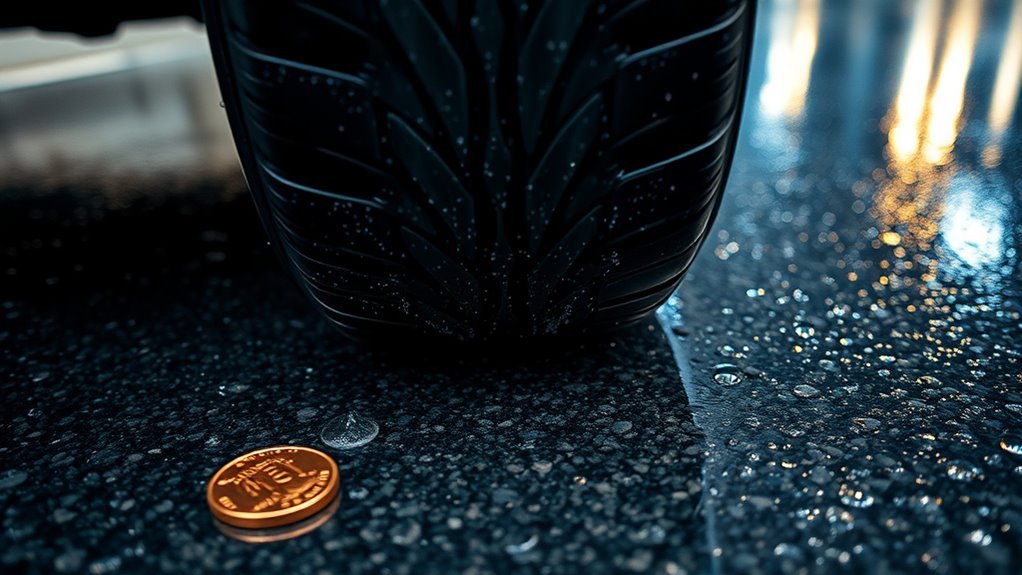
The penny test is useful as a quick warning, but it is not as precise as a tread gauge. To do it, place a penny into a tread groove with Lincoln’s head upside down and facing you. If you can see the top of Lincoln’s head, the tire is at or near 2/32 inch and should be replaced.
A tread gauge is better because it gives you an exact measurement. That matters in wet weather because the difference between 4/32 inch and 2/32 inch can be significant for braking and hydroplaning resistance.
Wet-Road Check
A wet-road check should never mean testing limits on public roads. Instead, pay attention during normal low-speed driving after rain starts. Warning signs include early traction-control activation, longer stopping distance, vague steering, wheelspin from a stop, or the vehicle pulling when it crosses puddles.
If you feel any of those symptoms, inspect tread depth and tire pressure before driving at highway speed in rain.
Repair or Replace? Making Safe Wet-Weather Tire Decisions
Repair decisions should be based on the tire’s tread depth, damage location, damage size, age, and overall condition. A simple puncture in the repairable tread area may be fixable, but sidewall damage, shoulder damage, large cuts, exposed cords, bubbles, or severe uneven wear usually require replacement.
- Replace immediately if tread depth is 2/32 inch or less anywhere on the tire.
- Plan replacement soon if wet-weather tread depth is near 4/32 inch and you drive often in rain.
- Do not repair sidewall damage or large cuts that weaken the tire structure.
- Check the whole axle because replacing only one tire can create tread-depth differences.
- Install newer tires on the rear axle when replacing only two tires, unless your vehicle manufacturer gives different instructions.
The U.S. Tire Manufacturers Association notes that if only two tires are replaced, the new tires should generally be installed on the rear axle. This helps reduce the chance of rear-tire traction loss on wet roads.
Note: Tire pressure monitoring systems warn about inflation pressure, not tread depth. A tire can have correct pressure and still be unsafe in rain because the tread is worn out.
Frequently Asked Questions
What is the best tread pattern for rain?
The best tread pattern for rain is usually one with wide circumferential grooves, lateral channels, and enough sipes to create wet-road biting edges. Directional patterns are often strong in heavy rain, while asymmetrical patterns can balance wet grip, dry handling, and stability.
Which tread pattern is designed for improved wet traction?
Directional and asymmetrical tread patterns are commonly designed for improved wet traction. Directional tread helps channel water away quickly, while asymmetrical tread uses different zones for drainage, cornering grip, and stability.
Can new tires hydroplane?
Yes. New tires reduce hydroplaning risk, but they can still hydroplane in deep water, at high speed, with incorrect tire pressure, or on roads with heavy standing water. Tread helps manage water; it does not cancel physics.
At what tread depth should tires be replaced for rain?
Tires should be replaced at 2/32 inch at the latest, but wet performance can decline before that. If your tires are around 4/32 inch and you drive often in rain, begin planning replacement instead of waiting for the legal minimum.
Does tire pressure affect hydroplaning?
Yes. Incorrect tire pressure can change the shape and pressure of the tire’s contact patch. That can reduce the tread’s ability to press into the road and move water away evenly. Check pressure when tires are cold and follow the vehicle placard, not the maximum pressure printed on the sidewall.
Conclusion
Tread can help prevent hydroplaning by evacuating water and keeping rubber in contact with the road, but it cannot make wet driving risk-free. Deep grooves, effective sipes, a good wet-weather compound, correct inflation, and slower speeds all work together. Once tread wears near 4/32 inch, wet braking and handling can decline sharply; at 2/32 inch, replacement is due. Check your tires regularly, choose a tread pattern that matches your roads, and treat wet-road traction as a safety margin you must maintain before the storm arrives.
Sources
- National Highway Traffic Safety Administration: Summer Driving Tips — tire inspections, damage checks, and 2/32-inch tread guidance
- U.S. Tire Manufacturers Association: Tire Care Essentials — tread depth, traction, wear bars, and tire maintenance
- U.S. Tire Manufacturers Association: Replacing Tires — replacement guidance and rear-axle placement when replacing two tires
- AAA Newsroom: Tread Lightly, Worn Tires Put Drivers at Risk — wet stopping-distance and handling test results at 4/32 inch
- Tire Rack: What Causes Tire Hydroplaning? — hydroplaning factors including speed, water depth, weight, tire width, tread depth, and tread design
- Tire Rack: What Honest Abe Doesn’t Tell You About Minimum Tread Depths — wet braking comparison at different tread depths

Related Articles
Why Put a Plastic Bottle on Your Tire? The Viral Trick Explained
Mysterious plastic bottle on your tire? Discover the viral trick’s surprising truth and what it really means before you assume it’s protecting your car.
Read More
What Happens When a Tire Blows Out at Highway Speed? Full Guide
Buckle up to discover what really happens when a tire blows out at highway speed, and why your next move could change everything.
Read More
What Does V Mean on a Tire? Load, Speed & Rating Guide
Need to know what “V” means on a tire and how load and speed ratings affect safety?
Read More