
Best All-Terrain Tires for Wet Roads in 2026

Affiliate disclosure: As an Amazon Associate, we may earn from qualifying purchases through the links in this article, at no extra cost to you.
Choosing all-terrain tires for wet roads is about more than finding an aggressive tread pattern. When pavement is wet, the right tire design can help support water evacuation, wet braking stability, steering control, and hydroplaning resistance.
This guide highlights six strong all-terrain tire options for wet weather and mixed driving. You will also find a simple checklist to help you match the right tire to your vehicle size, load needs, road conditions, and driving style.
Quick verdict: best all-terrain tires for wet roads
- Best overall starting point: Cooper Discoverer Road+Trail AT
- Best for wet-road comfort: Pirelli Scorpion All Terrain Plus
- Best for tougher off-road use: BFGoodrich All-Terrain T/A KO3
- Best balanced year-round pick: Falken WildPeak A/T3W
- Best daily-driver rain option: Yokohama Geolandar A/T G015
- Best for hauling and mixed-duty use: Firestone Destination X/T
Important: Always confirm the exact tire size, load index, speed rating, load range, and vehicle fitment before ordering. Tire ratings and warranties can vary by size.
[Products Worth Considering]

Measure tire tread depth quickly and accurately with this LUMITECO dial gauge that reads in 1/32" increments up to 14/32". The color-coded green/yellow/red zones make it easy to judge tire wear and know when replacement is needed. A rugged, compact design with a protective pouch helps keep the gauge ready for use on cars, trucks, motorcycles, and more.

Keep your tires properly inflated with this analog VONDIOR tire pressure gauge, designed for fast, easy readings without batteries. The swiveling, two-axis hose and large glow dial help you measure at any tire angle with instant visibility. Built with a protective rubber shield, it supports durable, low-maintenance use for cars and trucks.
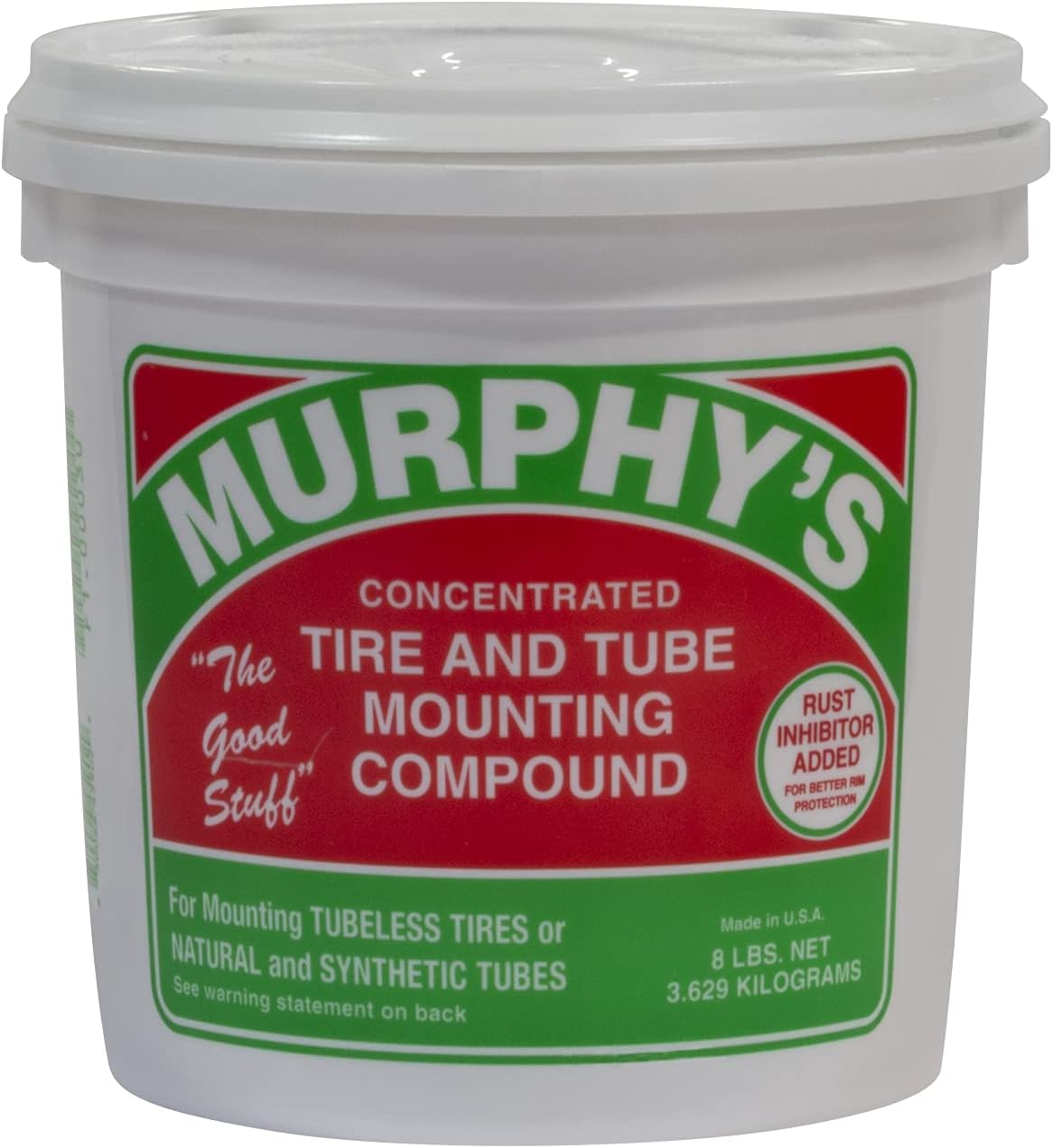
A concentrated tire and tube mounting compound designed to help simplify mounting rubber tires and tubes on passenger, semi truck, construction, and OTR applications. Its ultra-thick formula packs beads effectively and includes rust inhibitors to help protect against corrosion during use.
How these wet-road all-terrain tires were selected
These picks were compared by buyer intent, tread design, wet-weather features, all-terrain usefulness, road comfort, durability focus, and fitment flexibility. This is not a lab test, so use the guidance below as a buying shortlist and verify the exact tire size before purchase.
What makes an all-terrain tire good on wet pavement?
All-terrain tires are built to handle a mix of surfaces, but wet pavement performance depends on a few specific design elements. Look for these features when comparing models:
- Water evacuation grooves and channels: Wider, deeper channels and angled grooves help move water out from under the tire.
- Sipes and biting edges: Many small sipes create extra edges that can help improve grip as the road surface gets slick.
- Hydroplaning resistance: A tire with effective water channeling can help keep more rubber in contact with the road, especially at highway speeds.
- Wet-ready rubber compound: Many premium all-terrain tires use advanced compounds, often including silica, to support wet traction.
- Predictable handling: A good wet-road tire should feel stable during cornering, lane changes, and braking in rain.
Quick comparison: best all-terrain tires for wet roads
Use this table to match each tire with the type of driving you do most often.
| Tire | Best For | Wet-Road Strength | Amazon |
|---|---|---|---|
| Cooper Discoverer Road+Trail AT | Daily drivers who want wet-road confidence with light trail ability | Water channels, biting edges, and stable road feel | Check Price on Amazon |
| Pirelli Scorpion All Terrain Plus | Rainy commutes, highway use, and light off-road driving | Comfort-focused wet handling and water management | Check Current Amazon Availability |
| BFGoodrich All-Terrain T/A KO3 | Drivers who need tougher off-road capability | Updated all-terrain design with wet-grip-focused tread features | Check Product Details on Amazon |
| Falken WildPeak A/T3W | Balanced pavement, trail, rain, and winter use | Deep grooves and full-depth siping | View Latest Deal on Amazon |
| Yokohama Geolandar A/T G015 | Daily driving in frequent rain | Sipe density, wet-focused compound, and road comfort | Check Price on Amazon |
| Firestone Destination X/T | Towing, hauling, and tougher mixed-duty driving | Wide grooves, shoulder support, and durable construction | Check Product Details on Amazon |
Quick shortlist: the best all-terrain tires for wet roads
Below are six models commonly chosen by drivers who want off-road capability without ignoring wet-weather road manners. Links lead to Amazon listings so you can check size availability, fitment, and current pricing.
⭐ #1 Cooper Discoverer Road+Trail AT (Best overall for wet roads)
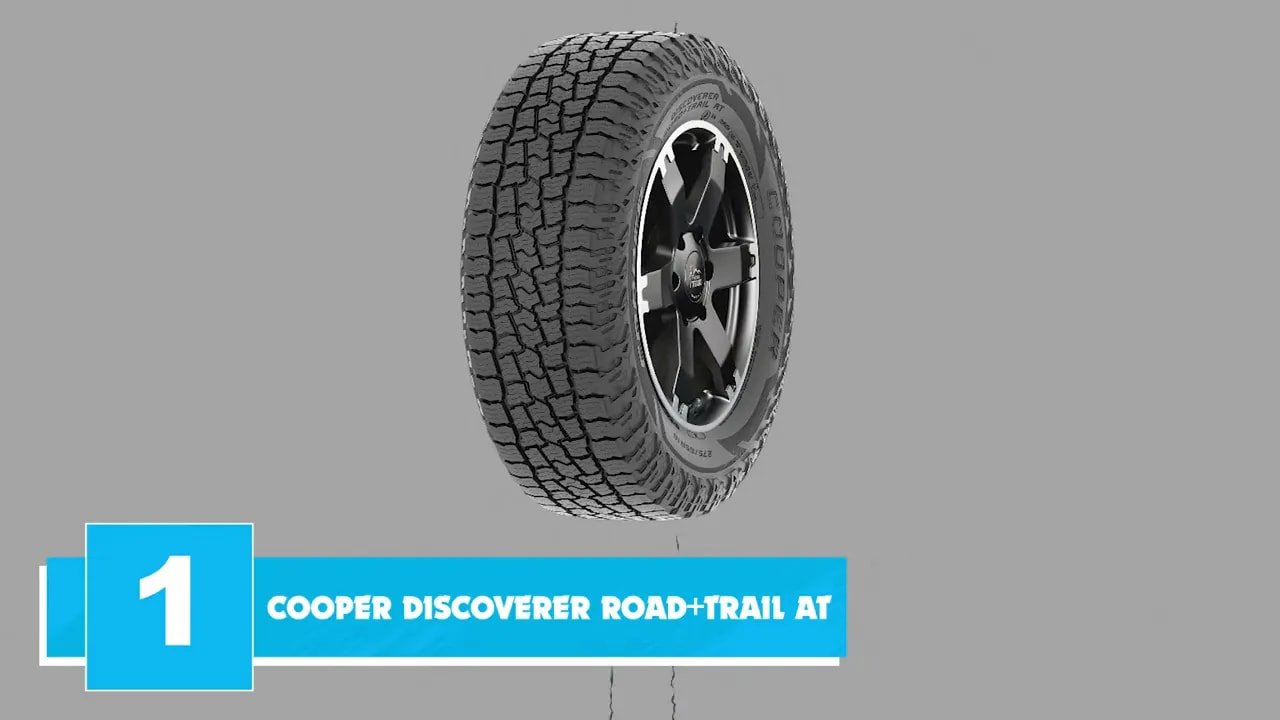
If your priorities are wet braking feel, hydroplaning resistance, and confident cornering, this is a strong place to start. It suits drivers who spend most of their time on pavement but still want all-terrain styling and light trail capability.
- Why you’ll like it: It is aimed at drivers who want a road-friendly all-terrain tire rather than the most aggressive mud-style tread.
- Why it stands out in the rain: The tread pattern uses many biting edges plus wide water-extraction channels.
- Wet confidence: Designed to feel planted through rain and shallow standing water when driven responsibly.
- All-weather use: Often promoted with winter-ready capability, but confirm the rating for your exact size.
- Tread life: A good fit for drivers who want a practical all-terrain tire for regular mileage.
Best for: SUV and truck owners who want a wet-road-focused all-terrain tire for daily driving.
Consider another option if: You need the most aggressive mud-terrain style tread for deep mud or severe off-road use.
⭐ #2 Pirelli Scorpion All Terrain Plus (Wet traction with a quieter ride)
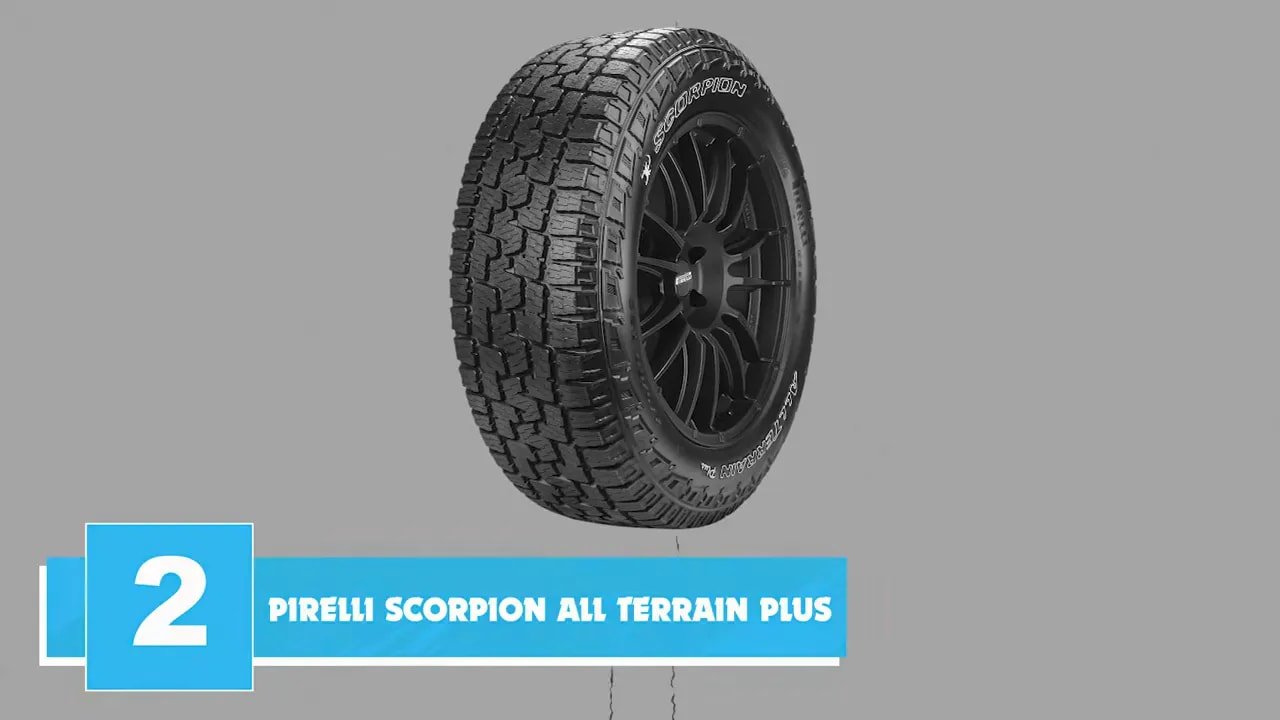
This option targets drivers who want secure wet pavement performance while keeping ride comfort in mind. It is a strong choice for people who do more commuting, highway driving, and gravel-road travel than rock crawling.
- Why you’ll like it: It leans toward a more refined all-terrain feel for daily driving and wet commutes.
- Water management: Angled tread grooves and a design meant to clear water efficiently.
- Braking confidence: Built to help maintain control when slowing down on wet roads.
- Hydroplaning resistance: A good match for drivers who regularly face rain and wet highways.
- Off-road ability: Enough grip for gravel, dirt, and light mud.
Best for: Drivers who want a more refined all-terrain tire for wet commutes and weekend light trails.
Consider another option if: You need maximum sidewall toughness for frequent rocky terrain.
Check Current Amazon Availability
⭐ #3 BFGoodrich All-Terrain T/A KO3 (Modern wet-grip update)
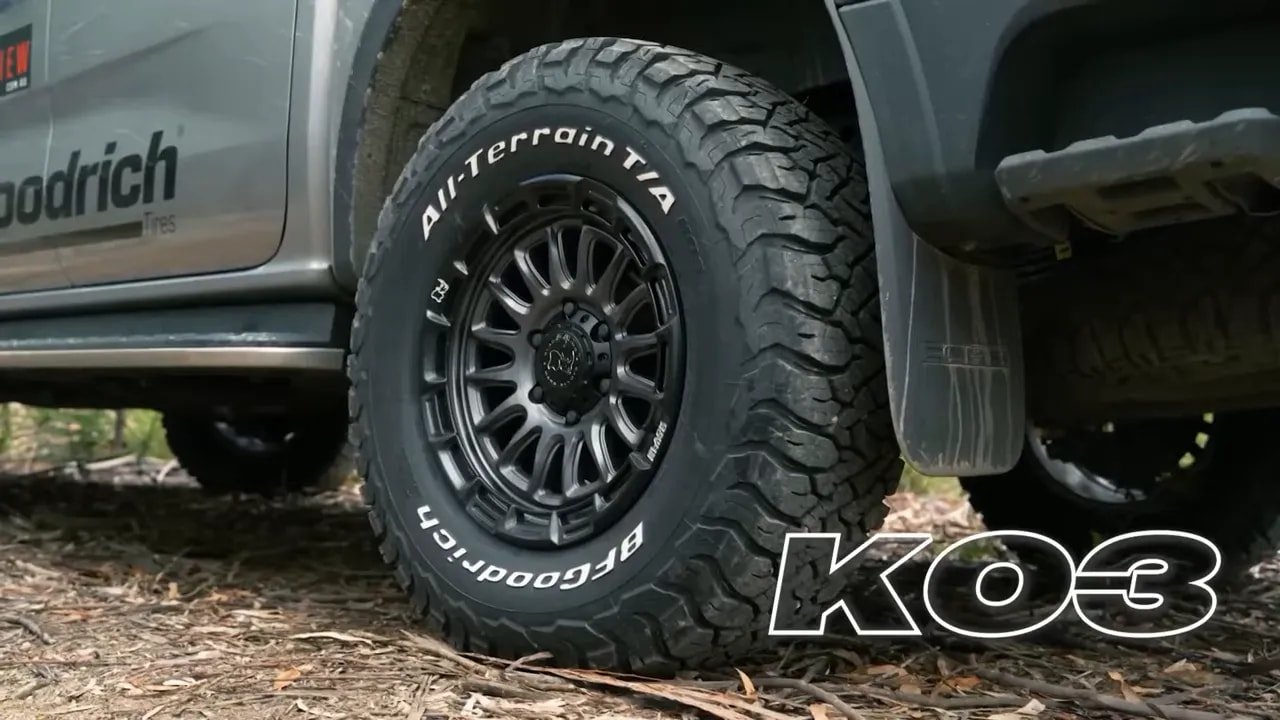
The KO3 is an updated all-terrain built to deliver toughness without ignoring wet traction. It is a good match for drivers who want an off-road-capable tire that still feels predictable in rain.
- Why you’ll like it: It is a strong option when off-road durability matters as much as wet-road manners.
- Wet traction improvements: Tread updates are intended to push water out and provide additional grip edges.
- Rubber and siping: Designed to support wet grip and control during braking.
- Off-road durability: Built with sturdy sidewall construction and off-road-oriented styling.
- Cleaner tread behavior: Features can help reduce buildup in muddy conditions.
Best for: Truck and SUV owners who want a tough all-terrain tire with improved road manners in wet conditions.
Consider another option if: Your main goal is the quietest possible highway ride or the softest daily commute.
Check Product Details on Amazon
⭐ #4 Falken WildPeak A/T3W (Balanced wet handling + year-round versatility)
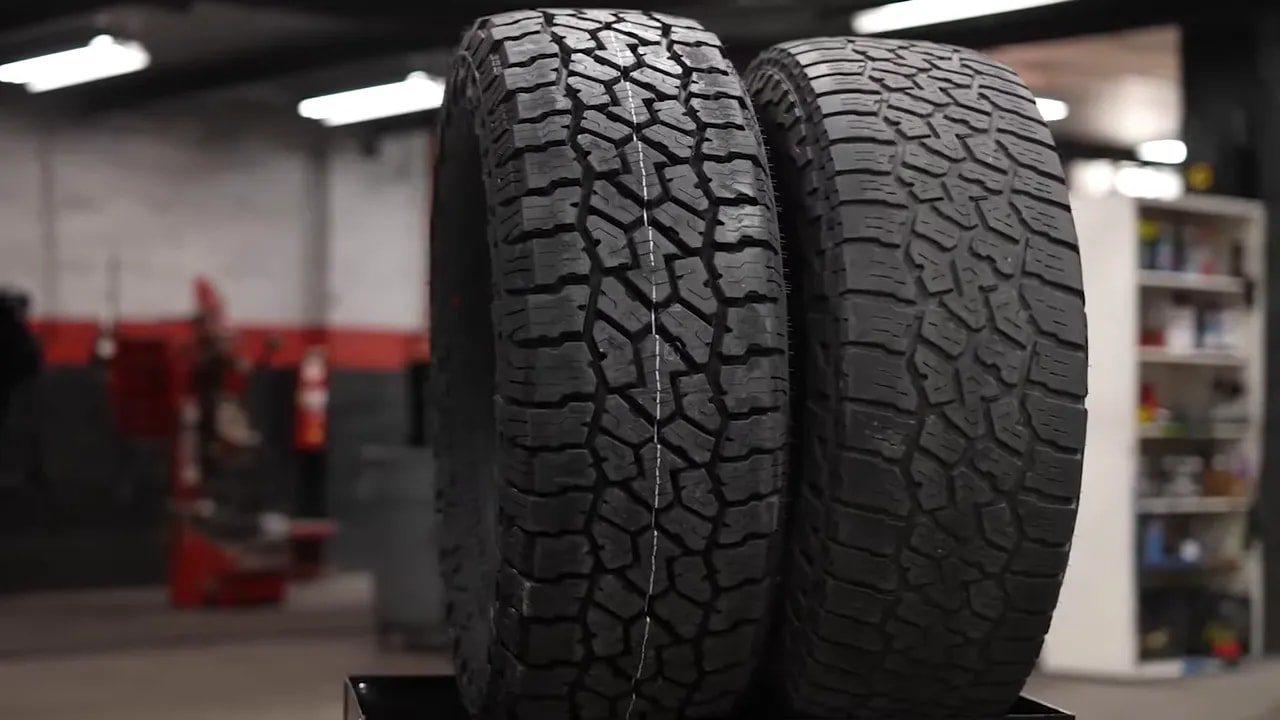
This is a well-rounded all-terrain aimed at drivers who want strong wet-road control without excessive noise. It also offers useful performance across multiple seasons, making it appealing for drivers who face rain, cold weather, gravel, and occasional snow.
- Why you’ll like it: It balances wet-road control, trail use, and year-round practicality better than many highly specialized options.
- Wet-ready design: Deep grooves and full-depth sipes help maintain traction as conditions change.
- Water evacuation: Large channels help clear water quickly.
- Road comfort: Designed to reduce noise while still being capable off-road.
- 3PMSF note: Some sizes may carry severe-snow certification, but confirm the marking for your exact tire size before buying.
Best for: Drivers who want one tire for wet roads, light trails, winter conditions, and daily driving.
Consider another option if: You mostly drive dry highways and want a less aggressive touring-style tire.
[Products Worth Considering]

This digital tire pressure gauge with built-in inflator helps you accurately check and adjust tire pressure for safer driving and better fuel efficiency. It supports multiple units (PSI, KPA, BAR, KG/CM²) and reads within 1% for reliable results. The 3-in-1 design inflates, deflates, and measures, with a quick-connect air chuck and compatible hose setup for cars, trucks, SUVs, RVs, and motorcycles.

AZUNO’s digital tire inflator delivers stable, accurate pressure readings with a bright LCD and a 0.1 resolution display for confident inflation. It supports one-handed operation for inflating and quick deflating, and it’s built with rugged steel and brass components for reliable shop or garage use. With multi-unit pressure display and compatibility across cars, SUVs, motorcycles, and trucks, it’s a convenient accessory for everyday tire maintenance.

The ETENWOLF T600 digital tire pressure gauge delivers precise, manually calibrated readings to ANSI B40.7 Grade 2A standards with ±0.5% PSI accuracy. Its 360° rotating nozzle and display hold make it easy to check pressures from any angle, while a bleed button helps dial tires to the perfect level. With a 0–250 PSI range and support for PSI, BAR, and KPA, it’s a convenient tool for maintaining tire performance across many vehicles and seasons.
⭐ #5 Yokohama Geolandar A/T G015 (Great wet traction for daily driving)
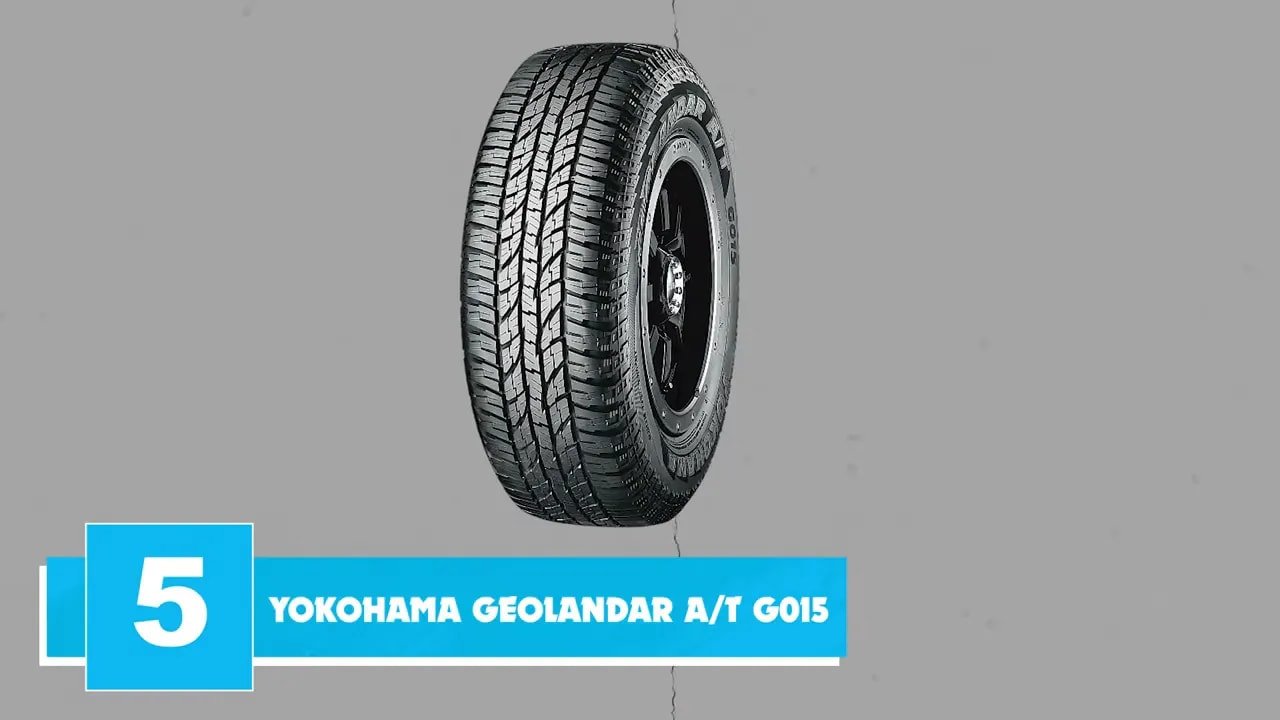
The Geolandar G015 is commonly considered a strong option for drivers who face rain often and still want an all-terrain tire that works well year-round. It is especially appealing if you want daily comfort with enough capability for gravel roads and mild trail use.
- Why you’ll like it: It is an easy-living choice for wet daily driving, light trail use, and all-season practicality.
- Silica-based traction: Designed to support grip on wet surfaces.
- Sipe density: Many small sipes help create extra edges for wet traction.
- Water evacuation: Deep grooves help reduce slipping or sliding in wet conditions.
- Long tread life: Often chosen by drivers who want practical mileage from an all-terrain tire.
- 3PMSF certification: Suitable for snowy and winter conditions when confirmed for your exact tire size.
Best for: Daily drivers who want an easy-living all-terrain tire for wet roads and year-round use.
Consider another option if: You tow heavy loads often or need a more rugged heavy-duty tire.
⭐ #6 Firestone Destination X/T (Wet stability with tough-duty construction)
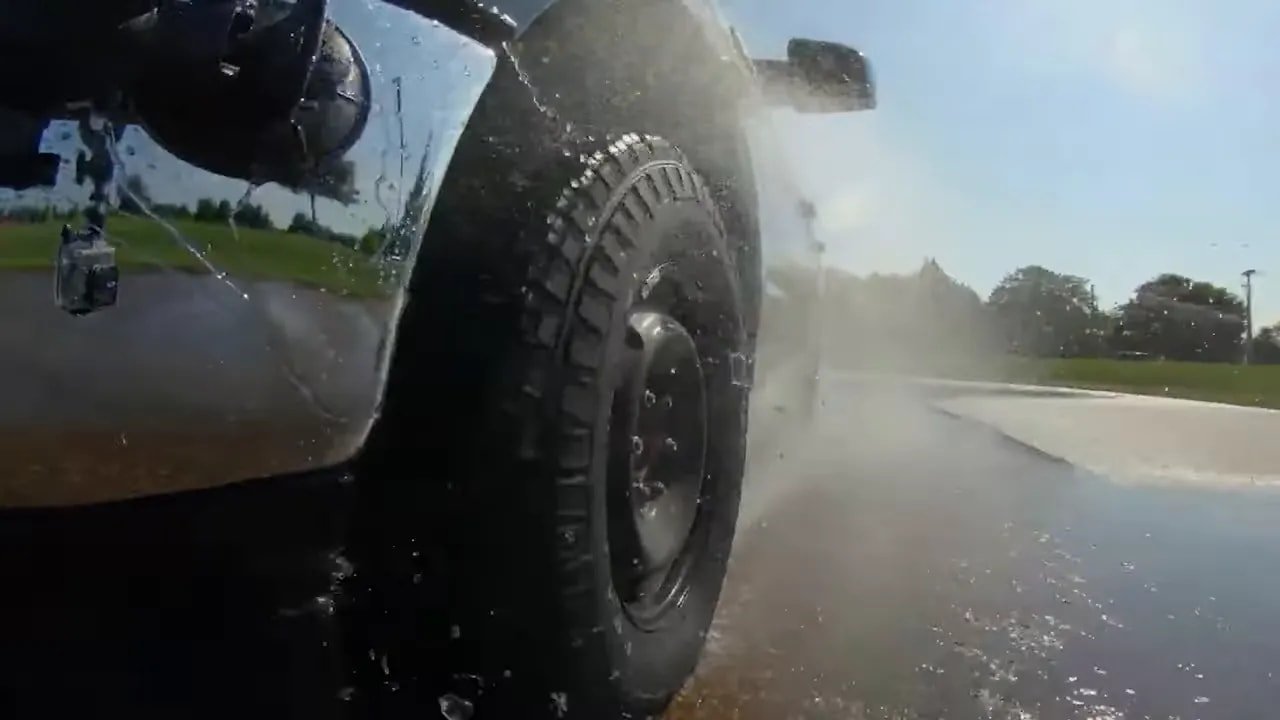
If you want an all-terrain tire that emphasizes durability and confident wet behavior for mixed pavement and occasional off-road use, this is a solid choice. It is especially useful for drivers who value toughness for towing, hauling, and rougher road conditions.
- Why you’ll like it: It is built for drivers who need more durability than a comfort-focused daily-driver tire.
- Shoulder and groove design: Large shoulder lugs and wide grooves help push water away.
- Steady feel in rain: Designed to help maintain traction during wet conditions.
- Towing and hauling readiness: Built with heavier-duty use in mind.
- High mileage warranty: Often positioned for long service life, but confirm warranty details for your tire size.
Best for: Truck owners who need an all-terrain tire for wet roads, rough work use, towing, and mixed surfaces.
Consider another option if: You drive a lighter SUV and prioritize quiet ride comfort above toughness.
Check Product Details on Amazon
How to choose the right wet-road tire for your vehicle
Even the “best” wet all-terrain tire may not be the best pick for your exact needs. Use this selection framework before buying.
1) Match the tire to your driving reality
- Mostly highway and rain: Prioritize wet braking stability, hydroplaning resistance, and predictable handling. Cooper and Pirelli are strong starting points.
- Daily rain with light trail use: Look for dense siping, steady road manners, and a less aggressive tread pattern. Yokohama is a strong option to compare.
- Mixed road and moderate trails: Look for strong siping, water evacuation, and balanced comfort. Falken and Yokohama fit this use case well.
- Towing, hauling, rougher mixed use: Consider tougher construction and durability-focused designs. Firestone is a practical option here.
- More off-road toughness: Choose a tire with stronger sidewall design and more aggressive tread support, such as the BFGoodrich KO3.
2) Confirm your size and load needs
Always check your vehicle’s door-jamb tire placard for the correct tire size, load index, and speed rating. Do not rely only on “it fits” search results. A tire that matches diameter and width may still be wrong if the load rating is too low.
3) Decide between comfort and off-road aggressiveness
More aggressive tread can be excellent off-road, but wet performance, ride comfort, fuel economy, and noise can vary by design. If wet stability and daily comfort matter most, focus on tread patterns optimized for water evacuation, siping, and road contact rather than only blocky looks.
4) Consider winter needs (3PMSF)
If you drive in snow or ice, prioritize tires with 3PMSF certification. Wet grip and winter grip are related, but not identical. Confirm the certification for the exact model and size you buy.
5) Think about tread wear before judging wet performance
A tire that performs well when new may feel different after thousands of miles. Wet traction, braking stability, and hydroplaning resistance can drop as tread wears, so rotate on schedule and replace tires before they become unsafe.
Before you buy: quick fitment checklist
- Match the size printed on your current tire or door-jamb placard.
- Confirm load index and speed rating meet or exceed your vehicle’s requirement.
- Check whether the exact size has the treadwear warranty, 3PMSF rating, or load range you expect.
- Compare road noise and ride comfort if most of your driving is on pavement.
- Confirm whether you need P-metric, LT, XL, or a specific load range.
- Replace tires in sets when possible to keep handling balanced.
Common mistakes when buying all-terrain tires for wet roads
- Buying based only on tread depth or looks: Wet traction depends on siping, rubber compound, and how efficiently the tire channels water away.
- Ignoring tire age and wear: A new tire can perform very differently than one near the wear bars, especially in wet conditions.
- Incorrect inflation: Underinflation and overinflation can reduce contact patch shape and worsen wet braking.
- Overlooking rotation and alignment: Uneven wear can cause traction loss and pulling in rain.
- Skipping size verification: A tire that “works” for width and diameter but misses load index can be unsafe.
- Assuming every size has the same rating: Tire warranties, load ranges, and winter certifications can vary by size.
Wet-weather safety checklist (works for any all-terrain)
Use this before and after installation to keep wet traction at its best:
- Inflation check: Set cold tire pressure to the placard value.
- Rotation schedule: Rotate on time to keep tread wear even.
- Alignment verification: If you notice steering drift or uneven wear, get an alignment.
- Replace when near wear bars: Wet braking performance drops as tread wears down.
- Mind driving habits: Avoid sudden braking and hard turns on standing water when possible.
- Slow down in heavy rain: Even a strong wet-road tire cannot fully remove hydroplaning risk at unsafe speeds.
FAQ: Best all-terrain tires for wet roads
Are all-terrain tires good in heavy rain?
Are all-terrain tires better than highway tires in rain?
What matters more for wet performance: tread depth or tread design?
Do 3PMSF-rated all-terrain tires perform better in wet conditions too?
Can an all-terrain tire improve braking on wet roads?
How do I avoid hydroplaning with an all-terrain tire?
What size should I buy for my vehicle?
Which all-terrain tire is best if I mostly drive on wet highways?
Which tire should I choose for towing or hauling in wet weather?
Takeaway
If your goal is better wet-road confidence with real all-terrain capability, start by comparing these six options based on your driving needs:
- Best overall starting point: Cooper Discoverer Road+Trail AT
- Wet-focused comfort: Pirelli Scorpion All Terrain Plus
- Updated off-road toughness with wet improvements: BFGoodrich All-Terrain T/A KO3
- Balanced wet handling: Falken WildPeak A/T3W
- Rain-friendly year-round option: Yokohama Geolandar A/T G015
- Durability with wet stability: Firestone Destination X/T
To make the best final choice, verify your exact size, confirm load index and speed rating, and prioritize tread patterns that clear water efficiently and maintain biting edges in wet conditions.
[Products Worth Considering]
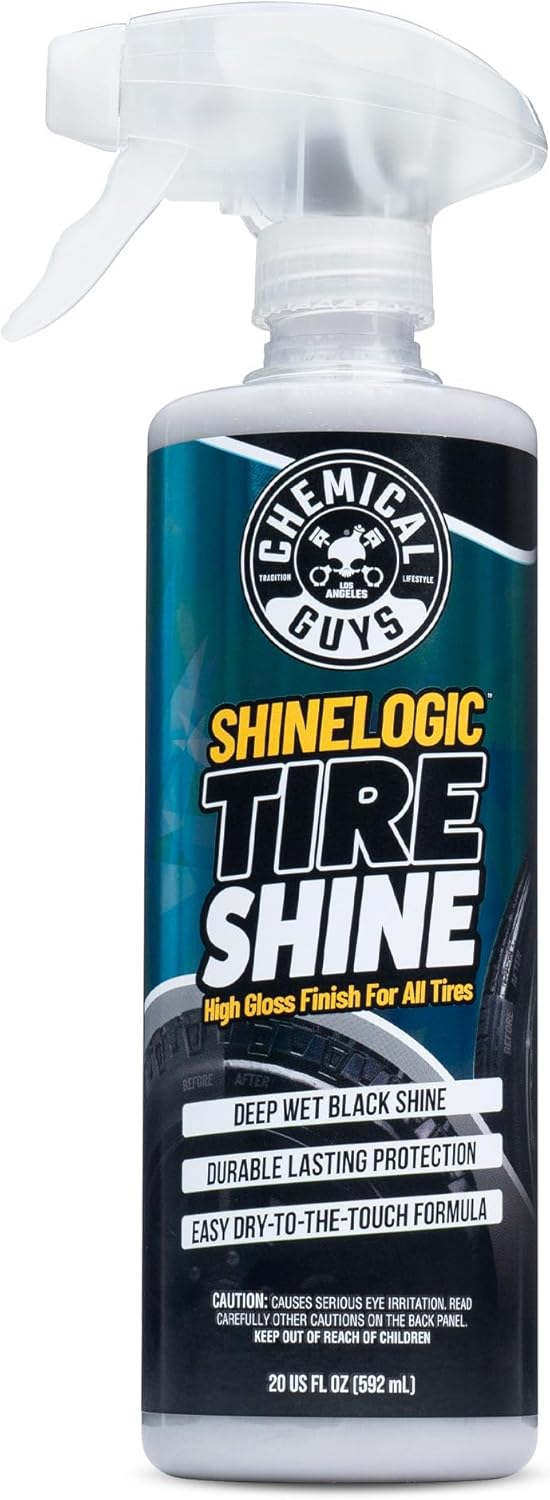
Chemical Guys ShineLogic Tire Shine delivers a deep wet black, high-shine finish for rubber tires with a sleek look. It’s designed for durable, one-step application with minimal drips, streaks, or runs, and it helps produce effortless, long-lasting shine. Choose aerosol or trigger spray for easy use on cars, trucks, motorcycles, RVs, and more.

Milton S-921 pencil tire pressure gauge helps you maintain optimal tire pressure for passenger cars with accurate readings in PSI and kPa. It features a built-in deflator valve for convenient pressure adjustments, plus a single chuck head and nylon indicator bar for easy use on the go. Built from durable plated brass and designed for reliable performance, it’s a practical road trip and cold-weather maintenance tool.

Secure your vehicle during transport with this 4-pack of heavy-duty tire tie down straps designed for trailers and hauling. The ratchet system with flat hooks and D-rings helps you tension the straps quickly, while the wheel-friendly design protects tires. With high break strength and corrosion-resistant hardware, these straps provide reliable, confidence-inspiring tie-down security for cars, trucks, and UTVs.

Related Articles
How Much Does Tire Retreading Cost?
Whether you’re pricing passenger or truck tires, tire retreading costs vary widely, and the real reasons behind the savings may surprise you.
Read More
Firestone Tire Installation Cost: Full Price Guide
Compare Firestone tire installation costs and discover what hidden fees could change your final bill.
Read More
Tire Rack vs Costco: Which Is Better for Tires?
Pick the better tire deal between Tire Rack and Costco before hidden differences change your choice.
Read More