
Kevlar vs Steel Bead Tires: Weight, Tubeless, and Use
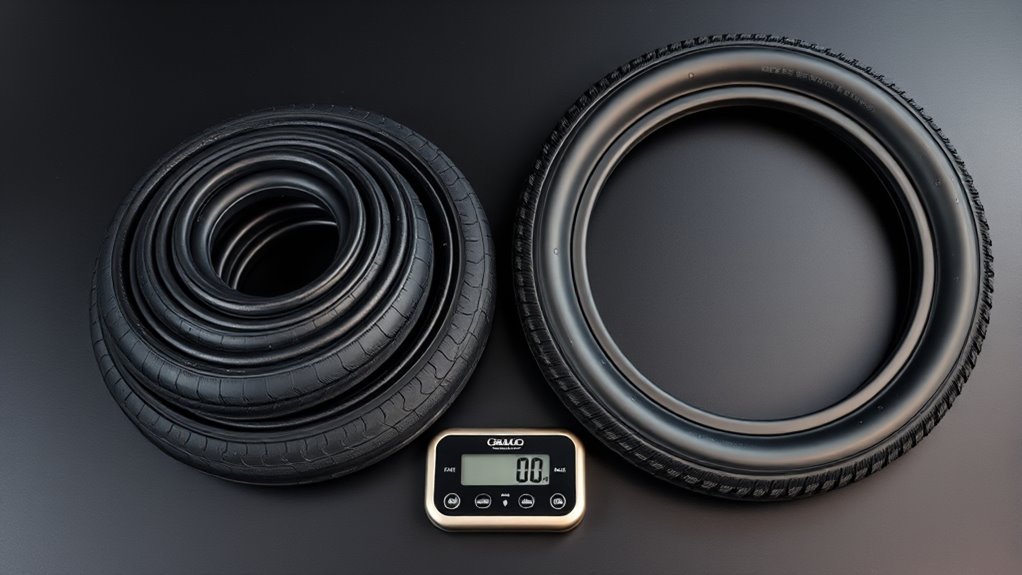
You’ll save noticeable weight and gain packability with Kevlar (folding) beads, while steel (wire) beads trade that for lower cost and slightly greater toughness. Kevlar beads are flexible, lighter, easier to mount and often tubeless-ready, reducing rotational mass and easing swaps. Steel beads are rigid, heavier, non-folding, and require more force to fit but can resist rough handling and long mileage. Keep going to see specific performance, mounting and discipline recommendations.
Quick Answer: Kevlar Vs Steel Bead – One-Line Verdict + Trade-Offs
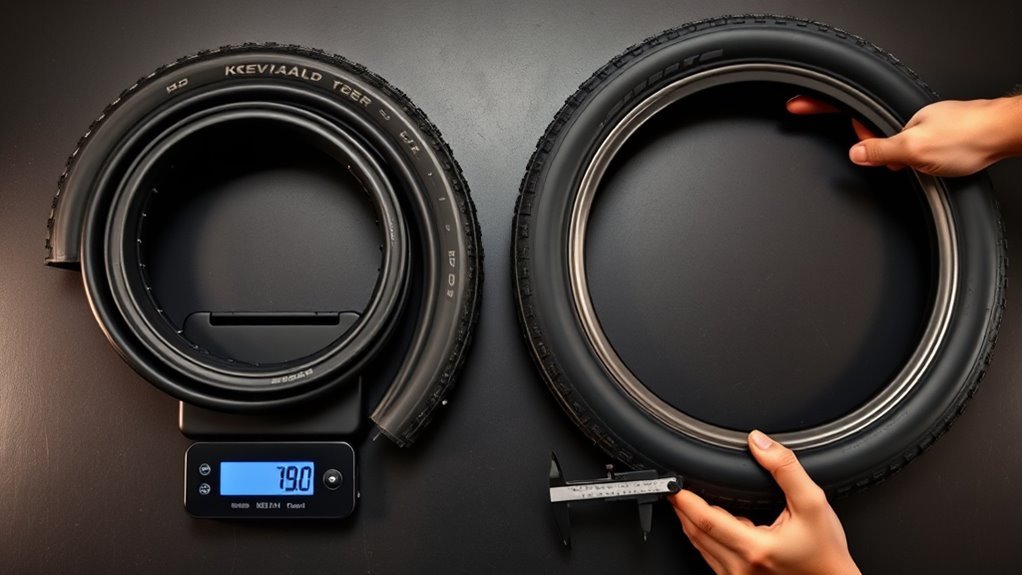
While both bead types will hold your tire on the rim, Kevlar beads give you lighter, foldable, easier-to-mount tires at a higher price, whereas steel beads deliver lower cost and rigidity but add weight and complicate mounting.
Choose Kevlar when minimizing mass and improving packability matters. The woven aramid construction reduces rolling resistance and lets the tire fold for transport. Choose steel when budget and structural stiffness trump portability. The rigid wire bead keeps cost down but increases wheel weight and complicates mounting.
Consider trade-offs objectively: Kevlar supports bead innovations that prioritize weight savings and user mobility, while steel favors proven economy and rigidity. Kevlar beads are often stable over repeated mounts. Steel can stretch with repeated use and may need closer inspection over time. Decide based on whether liberation comes from mobility and low mass or from durability and lower expense.
What a Tire Bead Is and Why Bead Material Matters
You rely on the bead to lock the tire to the rim and maintain an airtight seal under high pressure. Bead material — Kevlar’s flexible, low-mass fibers versus steel’s rigid wire — directly affects fit, mounting effort, and long-term retention.
That choice also alters ride behavior: Kevlar preserves consistent fit and lighter rotational weight, while steel can add stiffness, weight, and may stretch over time, risking loosened fit under heavy cornering.
Bead Function And Seal
Think of the bead as the tire’s anchoring lip. It locks the tire to the rim and creates the air-tight seal that holds pressure during rides.
You rely on that interface for handling, cornering, and safety. A compromised seal or poor bead maintenance increases the risk of pop-offs under load. Kevlar beads give you flexibility and lighter weight, aiding quick seating and reduced rolling resistance. Steel beads offer rigidity and long-term toughness.
Monitor bead seating, rim compatibility, and tubeless valve torque to preserve seal integrity. Inspect for stretching, corrosion, or deformation, and replace beads showing loss of tension. Prioritize regular bead maintenance so your tires remain reliable under load.
Material Effects On Fit
Having covered how bead seating and seal affect safety and handling, we can now examine how bead material alters fit and performance at the rim interface. The bead is the tire edge that locks to the rim. Material dictates fit precision and maintenance of that lock.
- Kevlar beads: provide superior bead flexibility, lower mass, and easier installation. They fold for transport and resist permanent stretch, supporting consistent tire longevity.
- Steel beads: are rigid, higher mass, and demand greater force to mount. Repeated stress can allow stretch, risking loosening at the rim over time.
- Practical choice: select Kevlar when you prioritize packability and long-term secure fit. Choose steel only for cost-driven durability needs.
Impact On Ride Performance
Because the bead locks the tire to the rim, its material directly influences ride performance. Kevlar beads cut weight and flex under load, reducing rotational mass and rolling resistance. Steel beads add rigidity and mass, which damp acceleration and require more pedaling effort.
You’ll notice performance gains with Kevlar: quicker starts, easier sustained speed, and improved traction when paired with advanced compounds. Steel beads give durability and predictable stability at the cost of added effort and less carcass flexibility.
Installation is easier with Kevlar, supporting rapid swaps. Choose based on priorities: speed and responsiveness versus toughness and cost.
| Attribute | Effect |
|---|---|
| Weight | Kevlar lowers, steel increases |
| Rolling resistance | Kevlar reduces, steel elevates |
| Installation | Kevlar easier, steel harder |
| Traction | Kevlar enhanced, steel stable |
Kevlar (Folding) Bead: Construction, Benefits, and Trade-Offs
When you need a light, packable tire that still holds the bead under load, kevlar (folding) bead designs deliver. Woven aramid strands replace steel wire to cut about 50–90 g (≈2–3 oz) per tire, reduce rotational mass, and permit compact rolling for transport. You’ll see how this choice affects handling, logistics, and maintenance.
- Construction: woven Kevlar/aramid beads provide flexibility for folding without permanent stretch. They form a secure hoop that resists pop-off during hard cornering while enabling easier installation and removal for travel.
- Benefits: reduced rotational weight improves acceleration and climbing. Compact packing frees you from bulky gear. These tires are often paired with superior rubber compounds that boost traction and durability. For manufacturer-level detail on folding tires and typical weight savings see Schwalbe’s guide.
- Trade-offs: higher cost due to advanced materials, and marginally less bead rigidity than steel. In practice, real-world retention under load remains strong for modern folding designs.
You’ll gain mobility and performance by choosing folding Kevlar beads where weight, packability, and secure fit matter most.
[Products Worth Considering]

Ride confidently at dusk or dawn: Reflective sidewalls and slick tread reduce rolling resistance and boost visibility on city streets and asphalt paths.
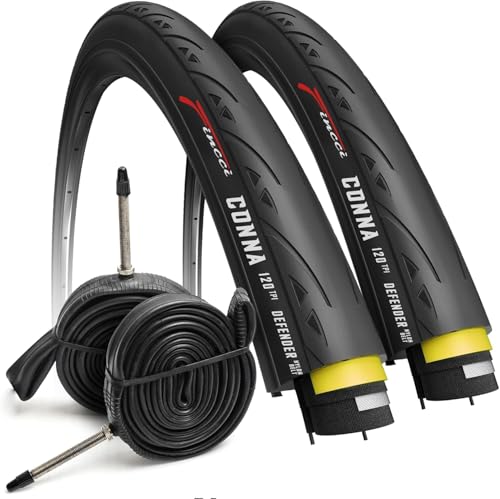
Train or race on fast pavement: These 700x25c bike tire and 700x25c tube pairs feature a 120 TPI casing and 1 mm nylon layer to reduce flats and rolling resistance—ideal for racing bike, trainer tires 700c, and intense cycling sessions.
Steel (Wire) Bead: Construction, Benefits, and Trade-Offs
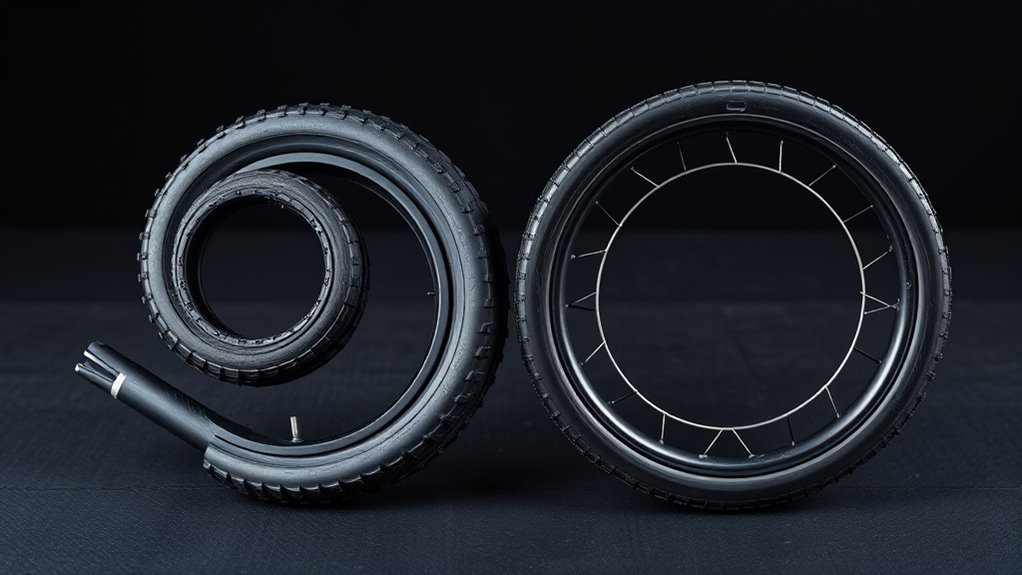
Steel (wire) bead tires use a rigid steel wire loop embedded in the casing to form a firm hoop that seats securely on the rim. This construction yields durable, cost-effective tires that suit daily riders and commuters.
You’ll get reliable toughness and predictable performance from steel beads. They tolerate urban abuse and lower maintenance. They are less flexible, so you cannot fold them for packing — plan storage accordingly. They cost less upfront, making them pragmatic for riders who value economy over marginal performance improvements.
| Feature | Benefit | Trade-off |
|---|---|---|
| Construction | Rigid steel loop | Heavier mass |
| Durability | High puncture resistance | Can stretch over time |
| Cost | Economical purchase price | Lower resale/value |
| Flexibility | Stable rim seating | Non-foldable, bulky |
| Maintenance | Simple to mount | Potential loosening with repeat mounts |
Choose steel beads when durability, predictable expense, and resilience matter more than minimal weight or packability.
Weight, Packing & Rotational-Mass: Practical Effects
Although the mass difference is modest — folding (Kevlar) beads commonly save about 50–90 g per tire — that weight sits at the rim and increases rotational inertia. You gain quicker spin-up and slightly sharper responsiveness. The effect is marginal for casual rides but noticeable in attacks or climbs.
Kevlar also improves packing efficiency. You’ll fold and stow tires more compactly, easing transport and multi-day freedom.
- Acceleration: reduced rotational mass at the rim lowers the moment of inertia, so you’ll accelerate with less energy input — useful when shedding constraints and exploiting gaps.
- Packing: Kevlar’s flexibility yields smaller bundles, better weight distribution in luggage, and simpler carry for travel.
- Trade-offs: steel beads add durability and rim protection but worsen bulk and stiffness, so you’ll accept a small mass penalty for ruggedness.
Make choices aligned with your priorities: speed and packing efficiency, or durability and fixed structure.
Rolling Resistance, Grip & Cornering: How Bead Affects Ride
Bead construction changes how a tire deforms and contacts the road, so it directly affects rolling resistance, traction, and cornering behavior. Kevlar beads reduce mass and allow greater carcass flex, which lowers rolling resistance and can improve acceleration.
You’ll notice softer compounds paired with Kevlar increase grip, especially on wet or irregular surfaces. That helps cornering lines stay truer under load. The flexible bead also helps reduce bead-to-rim slippage during aggressive lean angles.
Steel-bead assemblies are heavier and stiffer, which can raise rolling resistance and blunt responsiveness. That limits speed efficiency and precise corner inputs. Manage tire pressure to tune hysteresis and contact patch shape: lower pressures enhance terrain adaptability and grip but raise puncture and rolling loss risk; higher pressures reduce deformation for speed but sacrifice traction.
Choose Kevlar if you prioritize low resistance, confident cornering, and adaptable traction across variable terrain. Choose steel when you favor structural rigidity over marginal performance gains.
Durability, Stretch, Puncture Risk & Maintenance
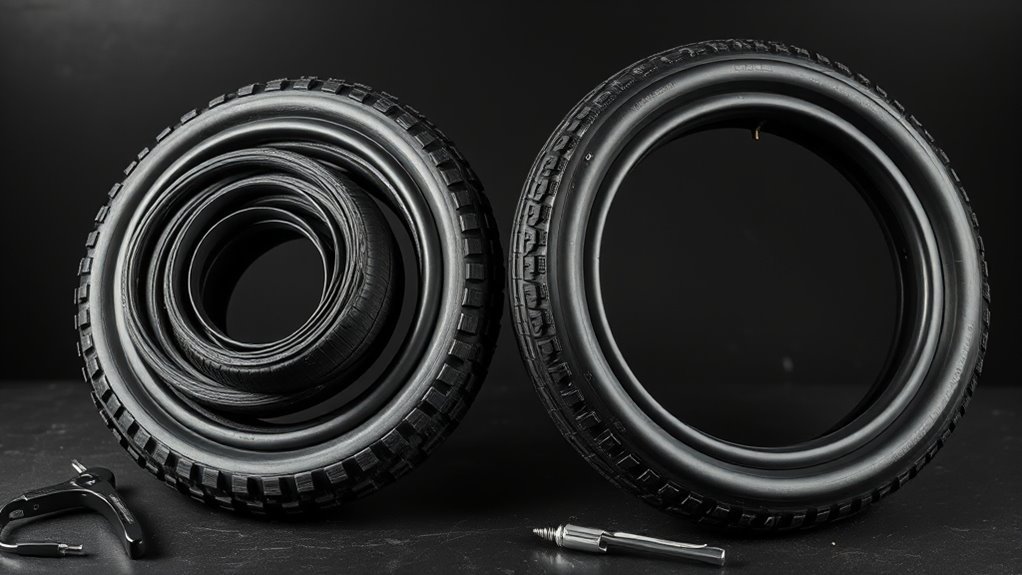
When you mount and remount tires frequently, bead construction matters. Kevlar beads hold their shape and are generally easier to install and remove. Steel beads, while robust for heavy-duty use, can stretch over time and become harder to seat.
- Durability comparison: steel beads deliver higher structural toughness under load and abrasion. Kevlar beads trade some raw toughness for flexibility and lower mass, which aids handling and transport freedom.
- Puncture risk: bead type alone does not determine flats. Tire casing, tread compound, and integrated anti-puncture belts are the main factors, so choose based on overall construction rather than bead material alone.
- Maintenance challenges: steel-bead tires demand more leverage, time, and tools to mount and demount. Kevlar beads lower friction and kink risk, simplifying field swaps and empowering self-reliant riders.
Tubeless Readiness, Mounting Tips & Rim Compatibility
Check the tire and rim specs to confirm tubeless compatibility. Folding/Kevlar beads often pair with tubeless-ready constructions, while many steel-bead tires are not tubeless-ready by design. Compatibility depends on rim profile, bead seat diameter, and the rim/tire match.
For practical rim and bead-seat guidance, see Park Tool’s tubeless compatibility guide, which explains rim profiles and how older rims differ from modern tubeless-ready designs.
When mounting, use proper levers and seat the bead carefully. The flexible Kevlar bead is easier to manipulate while stiffer steel beads require more force. Fit appropriate rim tape and a compatible tubeless valve (or a standard valve and tube where required) to guarantee an airtight seal and safe inflation.
[Products Worth Considering]

Lighter, faster and with stronger sidewalls. The new standard in road tubeless ready technology. Ride faster, more comfortable, and with increased puncture protection. Tubeless Ready.
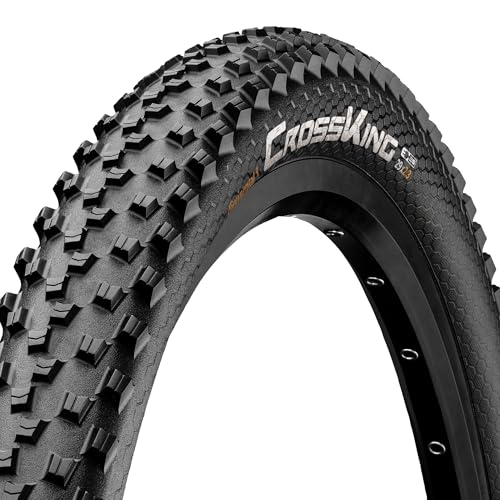
The Cross King is a versatile competition and trail tire, sure footed in turns
The Cross King is a versatile competition and trail tire, sure footed in turns
Tubeless Compatibility Guide
If you want to run tubeless, start by confirming the tire bead and rim are compatible. Most folding (Kevlar) bead tires are manufactured tubeless-ready but compatibility depends on rim profile, bead seat diameter, and rim tape/valve setup.
- Inspect rims: verify clean, damage-free bead seats, correct bead seat diameter, and tubeless-rated rim profile; improper seats cause leaks.
- Sealant and tape: use quality rim tape and fresh sealant to maintain an airtight system and self-seal small punctures.
- Pressure control: monitor tire pressure precisely. Under-inflation risks burping, over-inflation risks blow-offs.
Convert confidently — reliable, well-matched components make tubeless setups trustworthy.
Mounting And Seating Tips
Because tubeless systems rely on an exact bead-to-rim interface, confirm compatibility and seat the bead deliberately. Verify tire and rim are tubeless-compatible to prevent leaks and difficult installation.
Start by aligning the bead in the rim’s center channel to create slack. This lets you work the bead over the rim edge without overstretching the casing. Use tire levers sparingly to avoid cutting the bead or rim finish, and follow a systematic clockwise progression so each segment seats evenly.
Inflate slowly while monitoring the bead seating line for uniform contact and audible clicks. If gaps appear, deflate, reposition the bead into the center channel, and retry. These steps reduce failures on the road and help ensure durable tubeless performance.
Rim Tape And Valve Choices
Having seated the bead properly, turn next to rim tape and valve selection. These small items make tubeless setups hold air.
Confirm rim internal width and install matching rim tape for continuous coverage. Choose valve length by rim depth — short valves for shallow rims, long valves for deep rims — to guarantee proper inflation access. Tighten valve cores and use a rubber base or grommet as needed.
- Measure rim internal width and install rim tape sized to the rim.
- Choose valve length by rim depth and tighten the core.
- Verify manufacturer specs for Kevlar bead vs steel bead compatibility before final inflation.
Which to Choose: Recommendations by Road, Gravel, Commuting, Touring
When you pick tires for a specific discipline, match bead type to priorities. Choose folding (Kevlar) beads for road racing and gravel where lower weight, reduced rolling resistance, and better compound options boost performance. Wire beads suit commuting and touring for their greater durability and lower cost.
Tire longevity and bead flexibility should be weighed differently by mission. Prioritize folding for speed and compound choice, wire for predictable wear and budget resilience. Decide by mission and pick the configuration that maximizes freedom on your routes.
| Discipline | Recommended Bead | Rationale |
|---|---|---|
| Road racing | Folding (Kevlar) | Lower weight, lower rolling resistance |
| Gravel | Folding (Kevlar) | Better compound options, traction, puncture resistance |
| Commuting | Wire (steel) | Durability, lower replacement cost |
| Touring | Wire (steel) | Sturdiness, predictable longevity |
| Mixed-use | Choose by priority | Weight/performance vs cost/durability trade-off |
Match bead flexibility to your goals and choose the setup that maximizes freedom on your routes.
[Products Worth Considering]

The right tire when it comes to tough conditions. The right choice for a strong performance in the urban field and on tour.
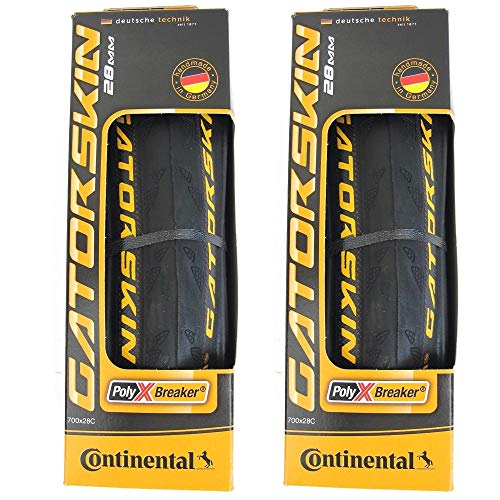
The right tire when it comes to tough conditions. The right choice for a strong performance in the urban field and on tour.

Slick tread and 30 TPI casing reduce rolling resistance for smooth, quiet rides—suited for city bike users and adult road bikes alike on asphalt.
Frequently Asked Questions
Are Folding Tires Lighter?
Yes. Folding tires use Kevlar in the bead, which reduces mass. Typical folding variants save roughly 50–90 g per tire, which lowers rotational inertia and improves acceleration.
Are Tires With Kevlar Better?
It depends on priorities. Kevlar brings lighter, foldable tires that can boost performance and make spares easier to carry. They usually cost more. If you value low weight and packability, Kevlar is the better choice. If you need the cheapest, most robust option, steel may be better.
Which Is Better, Folding Bead or Wire Bead?
Folding bead tires are generally better for performance and portability. Wire beads are better for budget-conscious riders who want predictable durability. Match the bead to how you ride.
What Is the 105% Rule on Tires?
The article notes a common rule of thumb that some riders use to push pressure slightly above the manufacturer’s recommended number, often referenced as up to 105%. Pressure safety depends on tire and rim ratings. Always check manufacturer limits before exceeding recommended pressures.
Conclusion
Choose Kevlar for lighter weight, easier packing, and quicker acceleration. Choose steel for lower cost, higher abrasion durability, and snug rim fit. Expect slightly different ride feel: Kevlar folds and saves grams, steel grips beads and holds shape.
Balance weight, puncture risk, tubeless needs, and rim compatibility to get the best real-world performance for your riding.

Related Articles
What Is a Fat Tire? Complete Guide & Best Options
I’ll show you what makes fat tires different, which setups work best, and why the right choice could change your ride.
Read More
What Does W Mean on a Tire? Load, Speed & Rating Guide
Huh, what does W on a tire really mean, and why could choosing the wrong rating affect your safety and performance?
Read More
What Does Tire Flipping Work? Muscles, Benefits & Workout Guide
Strong tire flips hammer your entire body, but which muscles and benefits matter most?
Read More