
How to Measure Wheel Offset on a Toyota Hilux
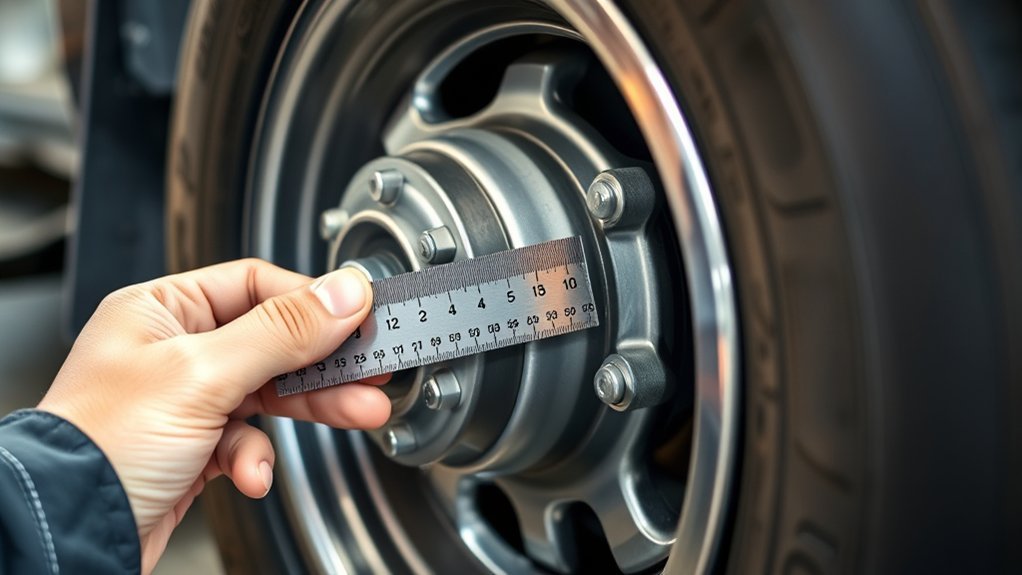
Measuring wheel offset on a Toyota Hilux is a simple job once you know the right reference points. The key is to measure the wheel’s backspacing, find the wheel centerline, and then calculate how far the hub mounting face sits from that centerline. Getting this number right helps you avoid tyre rubbing, poor steering feel, brake clearance problems, and an aftermarket wheel that looks good but fits badly.
Quick Answer
To measure Toyota Hilux wheel offset, remove the wheel, place it face down, measure the backspacing from the hub mounting face to the inner rim lip, then subtract half of the wheel’s total outside width. Convert the result to millimeters. Positive offset tucks the wheel inward; negative offset pushes it outward.
Key Takeaways
- Wheel offset is the distance between the wheel centerline and the hub mounting face, usually shown as an ET number in millimeters.
- The easiest home method is to measure backspacing first, then calculate offset from that measurement.
- Many modern Hilux alloy wheels are around ET30, while some narrower steel wheels may be around ET45–50 depending on market and trim.
- Do not choose wheels by offset alone; also check PCD, centre bore, load rating, brake clearance, tyre size, suspension setup, and local road rules.
At a Glance
| Time Required | 10–20 minutes per wheel |
| Difficulty | Beginner to intermediate |
| Tools Needed | Straight edge, tape measure or ruler, calculator, notepad, flat work surface, and optional calipers |
| Cost | Usually $0–$20 if you already have basic measuring tools |
Why Measuring Wheel Offset Is Important for Your Hilux
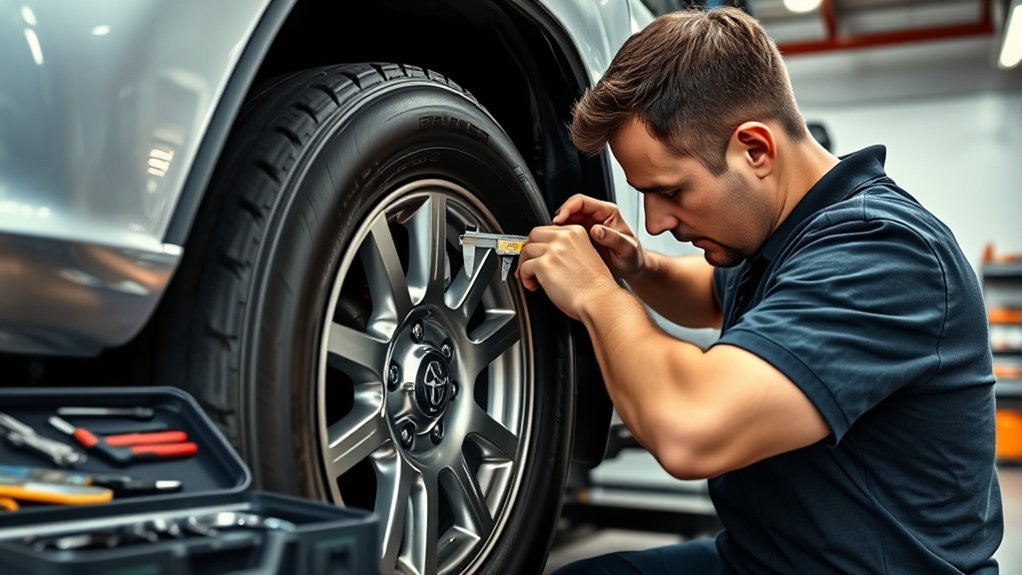
Wheel offset controls where the wheel and tyre sit in relation to the suspension, brakes, and guards. On a Toyota Hilux, that matters because many owners fit larger tyres, stronger wheels, lift kits, flares, or off-road suspension. A small offset change can move the tyre inward toward the upper control arm or outward toward the guard.
Offset is measured from the wheel centerline to the hub mounting surface. A positive offset means the mounting face is closer to the outer face of the wheel, which tucks the wheel inward. A negative offset means the mounting face is closer to the inner side of the wheel, which pushes the wheel outward.
Correct offset helps maintain steering feel, brake clearance, suspension clearance, and legal tyre coverage. Incorrect offset can cause rubbing at full steering lock, extra load on wheel bearings, poor steering feedback, tyre wear, or a wheel that sits too far outside the bodywork.
Warning: If you remove a wheel from the Hilux, work on level ground, chock the opposite wheels, use proper axle stands, and never rely on a jack alone. After refitting the wheel, torque the wheel nuts to the specification for your exact Hilux model.
[Products Worth Considering]

These M14x1.5 closed-end chrome lug nuts are a one-piece replacement designed for secure fitment on compatible GM, Ford, and select Chrysler/Dodge models. Featuring a 60-degree conical seat and anti-rust chrome plating, they help resist corrosion and maintain a bright look for everyday driving. Built for long-term durability, they include OEM-style part references and are backed by 12 months of support.

Upgrade your wheels with MIKKUPPA closed-end lug nuts designed for reliable fit and corrosion resistance. The one-piece, cold-forged and heat-treated steel construction helps resist rust and stripping, while the integrated finish delivers a durable black appearance. Built to OEM standards with a conical 60-degree seat, these nuts provide a secure solution for compatible Ford, Honda, Jeep, and Chevrolet models.

This universal wheel alignment tool helps you accurately restore tire tilt angles after tire or suspension repairs using an adjustable camber gauge. It features a powerful magnetic base that firmly attaches to brake rotors for stationary, slip-free readings, improving consistency during measurement. Built from durable PC plastic, it resists wear and corrosion and is compact enough for car, truck, RV, and motorcycle alignment tasks.
Tools You’ll Need to Measure Wheel Offset Accurately
You do not need specialist workshop equipment to measure wheel offset, but you do need a straight reference edge and careful measurements. Gather these tools before you start:
| Tool | Purpose | Accuracy Tip |
|---|---|---|
| Straight edge | Spans the inner rim lip so you can measure backspacing | Use a rigid metal ruler, level, or flat bar |
| Tape measure or ruler | Measures backspacing and wheel width | Measure to the nearest millimeter or 1/16 inch |
| Calculator | Converts inches to millimeters | Use 25.4 mm = 1 inch |
| Calipers, optional | Checks smaller dimensions more precisely | Useful for confirming rim lip and centre bore measurements |
Note: A tyre does not have to be removed if your straight edge can sit flat on the rim lip without touching tyre sidewall bulge. For the most accurate workshop-style measurement, measure the bare wheel.
Step-by-Step Guide to Measuring Wheel Offset
The cleanest home method is to measure backspacing first, then calculate offset. Backspacing is the distance from the wheel’s hub mounting surface to the inner rim lip. Offset is the mounting surface position compared with the wheel centerline.
Step 1: Remove and Inspect the Wheel
Remove the wheel from the Hilux and clean the inner barrel enough to see the markings. Many wheels have their size and offset cast or stamped on the back, such as 17×7.5J ET30. In that example, ET30 means the wheel has a +30 mm offset.
Pro Tip: Always look for the stamped ET marking before measuring. Measuring is still useful when markings are missing, painted over, damaged, or when you want to confirm an aftermarket wheel.
Step 2: Place the Wheel Face Down
Place the wheel face down on a clean, flat surface. The inner side of the wheel should face upward. Make sure the wheel is stable and not rocking. If the tyre is still mounted, ensure the tyre sidewall does not lift the rim lip away from the surface or interfere with the straight edge.
Step 3: Measure Backspacing
Lay the straight edge across the inner rim lip. Measure straight down from the underside of the straight edge to the hub mounting face, which is the flat surface that contacts the Hilux hub. This is your backspacing.
For example, a common 7.5-inch Hilux alloy wheel around ET30 may have backspacing close to 5.43 inches, depending on the wheel design.
Step 4: Find the Wheel Centerline
Wheel width can be confusing because the advertised width, such as 7.5J, is measured between the tyre bead seats, not across the outside of both rim lips. For offset calculations, you need the wheel’s approximate total outside width. A common rule is:
Total outside width ≈ stated wheel width + 1 inch
Then divide that total outside width by two:
Wheel centerline = total outside width ÷ 2
Example: a 7.5J wheel is roughly 8.5 inches wide outside-to-outside. Half of 8.5 inches is 4.25 inches.
Step 5: Calculate Offset
Use this formula when measuring in inches:
Offset in mm = (backspacing − wheel centerline) × 25.4
Example using a 7.5J wheel:
- Approximate outside width: 8.5 inches
- Centerline: 4.25 inches
- Measured backspacing: 5.43 inches
- Offset: (5.43 − 4.25) × 25.4 = 29.97 mm
That wheel is effectively ET30, or +30 mm offset.
What You Need to Know About Positive, Negative, and Zero Offsets
Offset tells you whether the wheel sits inward, outward, or centered on the hub. The number is usually written as ET, followed by a millimeter value.
Positive Offset Explained
A positive offset means the hub mounting surface sits toward the outside face of the wheel. This moves more of the wheel inward toward the brakes and suspension. Many factory Hilux wheels use positive offset because it helps keep the tyre tucked within the body line and close to the suspension geometry Toyota designed.
Example: ET30 means the hub mounting surface is 30 mm outward from the wheel centerline. ET35 means it is 35 mm outward from the centerline, so the wheel will generally sit about 5 mm farther inward than an ET30 wheel of the same width.
Negative Offset Implications
A negative offset means the hub mounting surface sits toward the inner side of the wheel. This pushes the wheel outward, creating a wider stance. Negative offset is popular on some off-road Hilux builds because it can help clear wider tyres from inner suspension parts, but it also creates tradeoffs.
Too much negative offset can increase steering kickback, load the wheel bearings and suspension harder, increase tyre spray, rub the outer guards, and push the tyre outside legal body coverage in some areas. A wide stance is not automatically better if the wheel no longer clears the body or suspension through full travel.
Zero Offset Explained
Zero offset, or ET0, means the hub mounting face is exactly on the wheel centerline. It is less common on modern factory Hilux wheels but may appear on some aftermarket off-road wheels.
Calculating Backspacing: A Step-by-Step Guide
If you already know wheel width and offset, you can calculate backspacing before buying a wheel. This helps you compare a new wheel with your current Hilux wheel.
Use this formula:
Backspacing in inches = ((wheel width + 1) ÷ 2) + (offset ÷ 25.4)
Example for a 17×7.5J ET30 wheel:
- Wheel width: 7.5 inches
- Add 1 inch for rim lips: 8.5 inches
- Centerline: 8.5 ÷ 2 = 4.25 inches
- Offset in inches: 30 ÷ 25.4 = 1.18 inches
- Backspacing: 4.25 + 1.18 = 5.43 inches
Example for a 17×7.5J ET0 wheel:
- Centerline: 4.25 inches
- Offset in inches: 0
- Backspacing: 4.25 inches
Compared with ET30, the ET0 wheel of the same width sits about 30 mm farther outward and has less inner backspacing.
Top 5 Mistakes in Wheel Offset Measurement and How to Avoid Them
[Products Worth Considering]

This 1/2-inch drive breaker bar delivers powerful leverage for loosening and tightening stubborn lug nuts and automotive fasteners. The 180-degree flex head helps you reach tight spaces at the angle you need, making tire and brake jobs easier. A spring-loaded ball detent design holds 1/2-inch sockets securely while the chrome-moly head provides durable strength for everyday use.

These aluminum alloy tire valve stem caps with an O-ring seal help protect valve stems from corrosion while adding a clean, stylish look to your vehicle. The universal fit works across cars, trucks, motorcycles, bicycles, and more, making them an easy upgrade for everyday driving and off-road use. Installation is quick, and the included four-pack keeps all your tires dressed and protected.

Upgrade your wheels with MIKKUPPA M12x1.5 mag seat lug nuts built for secure, corrosion-resistant performance. These closed-end chrome lug nuts are a direct replacement for select Toyota models, including Camry, Corolla, RAV4, Sienna, Avalon, Highlander, Matrix, Venza, and Prius. Triple-chromium plating and cold-forged, heat-treated steel help deliver strength for daily driving and replacement needs.
1. Measuring to the Tyre Instead of the Rim Lip
Backspacing is measured to the rim flange, not the tyre sidewall. If the tyre bulges past the rim, your measurement can be wrong.
2. Forgetting the Extra Inch for Rim Lips
A 7.5J wheel is not 7.5 inches wide outside-to-outside. The stated width is bead-seat width. For a practical offset calculation, add about one inch to estimate total outside width.
3. Mixing Inches and Millimeters
Backspacing is often measured in inches, while offset is normally listed in millimeters. Always convert using 1 inch = 25.4 mm.
4. Assuming Every Hilux Has the Same Offset
Hilux wheel specs vary by generation, market, trim, wheel width, and steel versus alloy wheel design. Toyota’s current Hilux product information shows different wheel sizes by grade, and many fitment databases list both ET30-style alloy applications and higher-positive-offset steel-wheel applications. Check the actual wheel stamp and confirm with a Toyota dealer or wheel specialist before buying.
5. Ignoring Real-World Clearance
Offset math is only the first step. You still need to test clearance at full steering lock, under suspension compression, and around the brake caliper, upper control arm, mud flap, guard liner, and outer guard.
Warning: Do not rely on offset alone when choosing aftermarket wheels. A wheel with the “right” offset can still be unsafe if the load rating, centre bore, lug seat, brake clearance, or tyre size is wrong.
How Wheel Offset Affects Your Vehicle’s Performance and Handling
Changing offset changes the tyre’s position relative to the steering axis and suspension. On a Hilux, this can affect steering effort, steering kickback on rough tracks, brake clearance, wheel-bearing load, suspension clearance, and tyre wear.
A slightly lower positive offset can move the tyre outward for a stronger stance and more inner clearance. But going too far outward can make the tyre hit the guard, especially with wider tyres or a loaded suspension. A higher positive offset can tuck the wheel inward, but too much inward movement can create contact with the upper control arm, shock, brake line, or inner guard.
Before driving on a new setup, check:
- Full left and right steering lock
- Clearance to upper control arms and suspension
- Brake caliper and brake hose clearance
- Inner guard and mud flap clearance
- Outer guard/fender coverage
- Wheel nut seat type and thread engagement
- Wheel load rating for Hilux use
- Tyre load rating and overall diameter
Changing Your Wheel Offset for Style and Function
Changing offset can improve the look of your Hilux, but the best setup balances stance, clearance, steering, and durability. A common upgrade goal is to move the tyre outward enough to look stronger and clear wider rubber, without causing outer guard rub or excessive bearing load.
As a general guide, compare the new wheel against your current wheel using both inner clearance change and outer poke change. For example, changing from a 17×7.5J ET30 wheel to a 17×8.5J ET20 wheel does two things at once: it adds one inch of width and lowers the offset by 10 mm. The wheel will sit farther outward, but it may also change inner clearance depending on the exact width and tyre.
Note: Many modern Hilux wheels use a 6×139.7 mm bolt pattern and 106.1 mm centre bore, but you should confirm the specification for your exact year, market, and trim before ordering wheels.
FAQs About Wheel Offset for the Toyota Hilux
Wheel offset questions usually come down to three things: what your current wheel is, how far the new wheel will move inward or outward, and whether the full wheel-and-tyre package clears the Hilux body and suspension. The safest first step is to read the ET stamp on your existing wheel, measure if the stamp is missing, then compare any new wheel against that baseline.
Many recent Hilux alloy wheels are around ET30, while some steel-wheel variants can be closer to ET45–50. Because Hilux specifications vary by market and grade, never assume one offset fits every Hilux. Confirm your PCD, centre bore, wheel width, load rating, and tyre size before buying.
Frequently Asked Questions
What does +35 offset mean on a rim?
A +35 offset means the wheel’s hub mounting face is 35 mm toward the outside face of the wheel from the wheel centerline. Compared with a +30 wheel of the same width, a +35 wheel usually sits 5 mm farther inward.
Where is the offset marked on a Toyota Hilux wheel?
Look on the back of the wheel spokes or inner barrel for a marking such as ET30, ET45, or 17×7.5J ET30. The ET number is the offset in millimeters. If the marking is missing or unreadable, measure the wheel manually.
What is the standard Toyota Hilux wheel offset?
There is no single standard offset for every Hilux. Many modern Hilux alloy wheels are around ET30, while some narrower steel wheels may be around ET45–50 depending on market, year, and trim. Always check your actual wheel stamp or confirm with Toyota or a fitment specialist.
Can I measure wheel offset with the tyre still fitted?
Yes, but only if the tyre sidewall does not stop the straight edge from sitting flat on the rim lip. If the tyre bulges past the rim or makes the wheel unstable, remove the tyre or ask a wheel shop to measure it.
Is backspacing the same as offset?
No. Backspacing is the distance from the hub mounting face to the inner rim lip, usually measured in inches. Offset is the distance from the wheel centerline to the hub mounting face, usually measured in millimeters.
Will negative offset damage my Hilux?
A small offset change may be fine if the wheel and tyre clear everything, but aggressive negative offset can increase wheel-bearing and suspension load, create steering kickback, and cause tyre rub. Test fit carefully and get professional advice for large changes.
Do I need a wheel alignment after changing offset?
Changing wheels alone does not adjust alignment settings, but a different offset or tyre size can change steering feel and reveal clearance problems. If you also fit a lift kit, new suspension, wider tyres, or notice pulling or uneven tyre wear, get an alignment.
Conclusion
Measuring wheel offset on a Toyota Hilux is about using the correct reference points: backspacing, total wheel width, and the wheel centerline. Measure carefully, convert inches to millimeters, and compare the result with the ET marking on the wheel when available. For most Hilux owners, the offset number is only part of the fitment decision. Always check bolt pattern, centre bore, load rating, brake clearance, tyre size, suspension clearance, and local road rules before fitting new wheels.
Sources
- Tire Rack — What Is Wheel Offset? — supports offset, positive offset, negative offset, zero offset, and backspacing definitions.
- Michelin Technical Bulletin — How to Measure Offset — supports the definition of wheel offset and the positive/negative/zero offset categories.
- Coker Tire — How to Measure Wheel Backspacing — supports the straight-edge backspacing method and the distinction between bead width and outside rim width.
- Speedway Motors — Wheel Offset vs Backspacing Explained — supports using backspacing and centerline to calculate offset and verifying clearance with actual tyres.
- Toyota Hilux Product Guide — supports current Hilux wheel-size variation by grade and the need to check local specifications.
- Toyota Australia — Genuine Parts — supports using vehicle-specific wheel components designed for Toyota fitment and safety.
[Products Worth Considering]

The Ziopetru adjustable magnetic wheel alignment tool helps you check and restore camber and caster positioning after removing and reinstalling undercarriage components. With a clear leveling/bubble measurement system and an easy zeroing adjustment knob, it supports precise horizontal angle checking. The strong magnetic base mounts to metal surfaces for convenient use at home on cars, motorcycles, trucks, vans, and SUVs.

Upgrade your Toyota’s wheels with durable aluminum alloy valve stem caps that help protect valve cores from corrosion and direct exposure to road grime, clay, water, and snow. Rubber rings improve sealing to help prevent air leakage and maintain stable tire pressure for safer driving. These caps are easy to install or remove without tools and add a unique, stylish look to your car.

This car D-wheel lock nut key provides an anti-theft solution for D-shaped wheel lock bolts, helping keep your wheels secure. It features a flower-shaped internal pattern that resists micro-adjustment theft while allowing removal and mounting of compatible locking nuts. Made for reliable performance under high torque, it’s easy to use with standard socket wrench turning for quick tire maintenance and emergency repairs.

Related Articles
Toyota Hilux Run-Flat Tires: What You Need to Know
Take control of your safety with Toyota Hilux run-flat tires; discover their benefits and hidden costs that could change your driving experience forever.
Read More
Effects of Underinflated Tires on the Toyota Hilux
Inadequate tire pressure in your Toyota Hilux can lead to serious safety issues and costly repairs; discover how to avoid these pitfalls.
Read More
The Risks of Overinflating Toyota Hilux Tires
Overinflating your Toyota Hilux tires can lead to dangerous blowouts and uneven wear, but understanding the risks is crucial for your safety.
Read More