
Tire Load Index Explained: How to Find Your Weight Capacity

The tire load index is a two- or three-digit code on the sidewall that indicates the maximum weight a single tire can carry at its rated inflation pressure. You can use a load index chart to convert this number into pounds or kilograms. Multiply that figure by the number of tires to find your vehicle’s total carrying capacity. Always match or exceed the load rating on your vehicle’s tire placard and maintain proper inflation. Keep reading for specific examples and steps to find the right tires.
What Is the Tire Load Index? (Quick Answer)
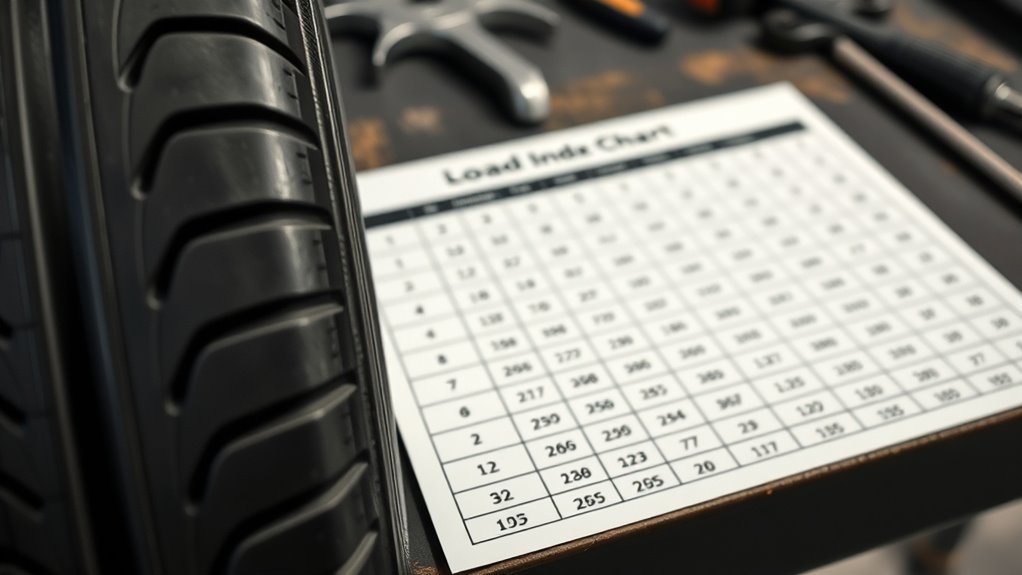
The tire load index is a numeric code that shows the maximum weight a tire can safely carry at its specified inflation. Passenger tire indexes typically range from 70 to 120. You use this code to match tires to your vehicle’s required load ratings. This ensures predictable handling and tire safety. Each index links to a specific weight. For example, a 94 index equals 1,477 pounds at maximum pressure. Automakers set original equipment (OE) load ratings to balance handling, durability, and safety. You need to pick replacement tires with the same or a higher load index than the OE tires. This preserves braking performance and cornering stability. Installing tires with a lower load rating increases the risk of a blowout. You can find your required index on the vehicle placard or in the owner’s manual.
How Do You Read the Load Index Number on the Sidewall?
Look for the service description on the tire sidewall. This is the sequence of characters right after the tire size. It combines the load index and the speed symbol. Read the two- or three-digit number to find the tire’s maximum load. For instance, a 94 means the tire can hold 1,477 pounds at its rated pressure. Check that any replacement tire has a load index equal to or higher than the original equipment rating.
Locate The Service Description
To read the load index on your tire, locate the service description. This is a two- or three-digit number followed by a speed letter, such as 94Y. These tire markings show the absolute limits for load and speed.
- Find the cluster next to the tire size (225/40 R18 94Y).
- Note the numeric load index (94 means 1,477 lbs).
- Confirm the index is equal to or greater than the original equipment rating.
- Check standard ranges for passenger tires, which usually fall between 75 and 110.
- Consult a load index chart before buying replacements.
Match your tires to your vehicle’s gross weight to keep the structural integrity intact. Never downgrade the load index. Reducing this capacity directly raises the risk of tire failure.
Decode Load And Speed
The number stamped after your tire size tells you the maximum weight that single tire can carry. A 94 in “225/40 R18 94Y” is the load index. You use this number to confirm load capacity and maintain tire safety. Read the number, check a load index chart, and verify it meets your vehicle’s original rating. Choosing a lower index risks overloading the tire. Choosing an equal or higher index provides a safe capacity buffer.
| Fact | Impact |
|---|---|
| Load index value | Shows max load per tire |
| Example 94 | 1,477 lbs per tire |
| Range 70–120 | Covers most passenger tires |
| Match OE rating | Maintains vehicle performance |
| Load chart use | Informs accurate tire selection |
How to Use a Tire Load Index Chart to Find Weight Capacity
A tire load index chart converts each index number into the maximum weight a single properly inflated tire can carry. You can determine a vehicle’s total carrying capacity by multiplying that per-tire weight by four. Check the chart for your specific index number. An index of 94 equals 1,477 pounds. Multiply that by your tire count to confirm your total capacity. Always follow the recommended indexes in the owner’s manual or on the tire placard. Using under-rated tires increases the chance of a blowout.
- Find your tire’s index number on the standard chart.
- Note the exact weight limit in pounds or kilograms.
- Multiply that weight by the number of tires on the vehicle.
- Compare this total to your vehicle’s required capacity.
- Ensure your selected tires meet or exceed the required specs.
Common Passenger Tire Load Index Values
While you should always consult a complete load index chart for your specific tires, here are a few common index numbers and their corresponding weight limits:
- 85: 1,135 lbs (515 kg)
- 90: 1,323 lbs (600 kg)
- 95: 1,521 lbs (690 kg)
- 100: 1,764 lbs (800 kg)
- 105: 2,039 lbs (925 kg)
Find Your Vehicle’s Required Load Index in 3 Steps
Start by checking the vehicle placard or owner’s manual for the manufacturer’s specified load rating. Next, check the load index number on your current tire sidewall to compare the markings. Finally, use a standardized load index chart to match the required rating. Select tires with an equal or higher capacity, or ask a tire professional for help if you are unsure.
Check Vehicle Placard
Check the vehicle placard to find the exact load index needed for replacement tires. You will usually find this sticker on the driver’s doorjamb or inside the fuel filler door. It lists the manufacturer’s specified load index and the recommended tire size. You need this number to ensure your new tires can support the vehicle’s weight safely. The placard also shows the required tire pressure for daily driving. You can read more about proper vehicle maintenance in the NHTSA tire safety guidelines.
- Placard location: Driver’s doorjamb or fuel filler door.
- Data shown: Recommended tire size and load index.
- Meaning: Maximum weight per tire at a specified inflation.
- Action: Compare the placard rating to the replacement tires.
- Frequency: Inspect the placard whenever you change tires.
Note Current Tire Markings
After checking the vehicle placard, look at the markings on your current tires. Inspect the tire sidewall markings near the rim. You will see the tire size, a two- or three-digit load index, and a speed rating. Record the load index number. This number quantifies the maximum load capacity when the tires are properly inflated. Compare your current tire’s number to the OE specification on the door placard. Choose replacement tires with the same or higher load index to preserve handling and braking. Underrating your tires increases the risk of tread failure. Overrating them helps preserve your safety margins.
Consult Load Index Chart
Check the owner’s manual or the doorjamb placard for the recommended load index. Then, use a standard load index chart to translate that number into a maximum weight limit. Compare the chart values to the vehicle’s requirement. Pick tires that meet or exceed that number to preserve tire compatibility and safety. Never downgrade below the recommended index.
- Open the owner’s manual to the tire specifications page.
- Inspect the driver-side doorjamb placard.
- Find the corresponding number on a load index chart.
- Note the pound or kilogram capacity for that index.
- Choose tires that meet or exceed the listed value.
How Load Index, Tire Pressure, and XL (Extra Load) Relate
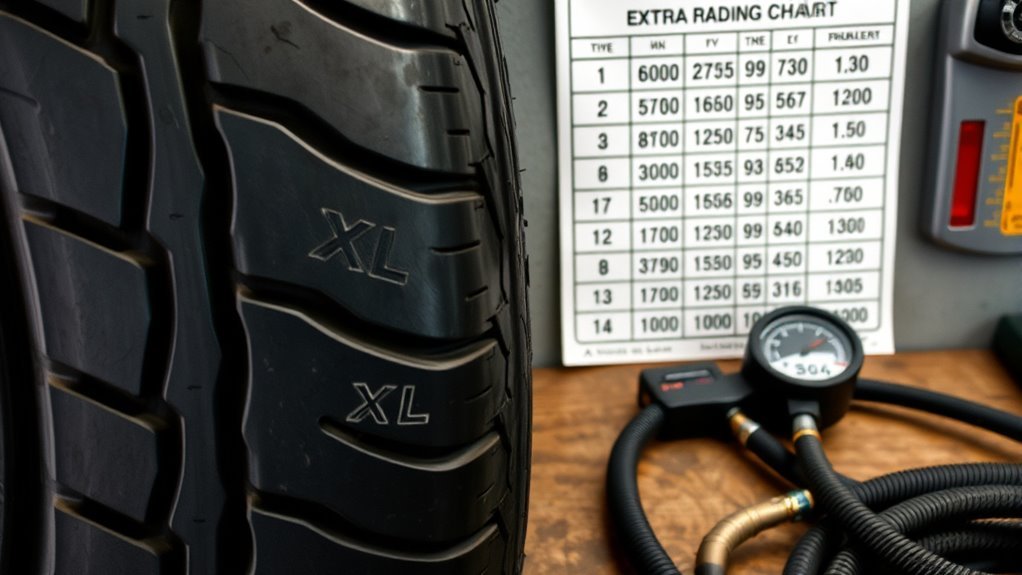
The tire load index, inflation pressure, and the XL (Extra Load) designation work together to determine a tire’s usable carrying capacity. You need to consider all three when matching tires to your vehicle. The load index gives a maximum weight at a specific pressure. The XL designation means the tire has a reinforced construction and requires higher air pressures to reach its maximum load. Correct inflation prevents heat buildup and prevents tire failure.
| Attribute | Effect |
|---|---|
| Load index | Maximum supported weight per tire |
| XL designation | Reinforced construction for higher capacity |
| Inflation pressure | Required to reach the rated capacity |
| Underinflation | Increases heat buildup and blowout risk |
| Match to spec | Ensures a safe load margin for the vehicle |
How Load Index Differs for Cars, Light‑Trucks, and Commercial Vehicles
Vehicle designs dictate different load index ranges. Passenger cars typically use tires with an index between 75 and 105 (about 850 to 2,039 lbs per tire). Light trucks usually need an index between 85 and 120 (roughly 1,135 to 3,086 lbs). Commercial trucks require much higher ratings, often ranging from 100 to 150 (1,764 to 7,385 lbs). Matching these ratings to the manufacturer’s specifications preserves vehicle safety.
- Compact sedans: Lower index optimized for passenger weights.
- Pickups: Mid-range index that accounts for heavy payload and towing.
- Delivery box trucks: High index built for heavy, repetitive loads.
- Commercial vans: Specific index chosen for cargo distribution.
- Fleet tractors: Very high indices designed for sustained heavy loads.
Can You Install Tires With a Higher or Lower Load Index?
You can safely install tires with a higher load index than the original equipment. Doing this increases your load capacity and reinforces safety under the vehicle’s operational limits. Higher-index tires carry more weight at their rated pressure. This reduces strain and lowers the risk of failure when hauling heavy cargo.
However, you must never install tires with a lower load index than the manufacturer specifies. Lower-index tires reduce your load capacity and degrade traction. They also accelerate wear and drastically raise the blowout probability when loaded. Each index maps to a precise weight limit, so never guess or compromise.
Match or exceed the vehicle’s required index based on the tire placard or the owner’s manual. If you need greater capacity, select a higher index but maintain the proper size, inflation, and load distribution to avoid harsh ride quality.
Quick Checklist: Pick the Right Replacement Tires (Step‑by‑Step)
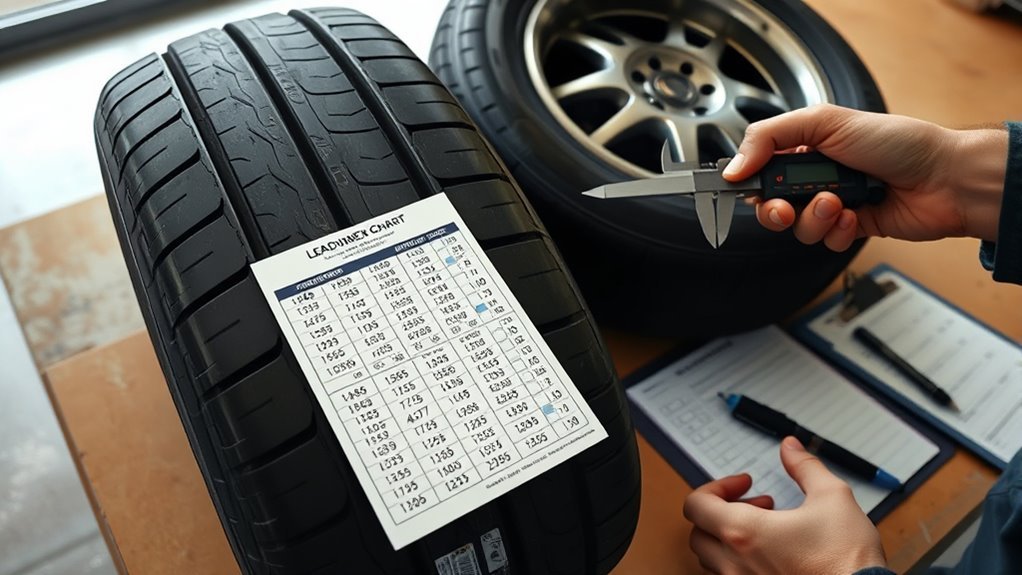
Locate your vehicle’s OE tire load index and speed rating on the doorjamb placard or in the owner’s manual. This allows you to match or exceed those specifications. Next, use a tire load index chart to convert the numeric index into the allowable load per tire. Confirm the chosen index easily supports the total vehicle weight, including passengers and cargo. Prioritize equal-or-higher load indexes if you carry heavy loads regularly.
- Verify the OE index and speed rating on the vehicle placard.
- Cross-reference the replacement index on a standard load chart.
- Calculate total vehicle payload and required per‑tire capacity.
- Choose an equal or greater load index for heavy-duty use.
- Record tire specs and check your tire pressure monthly.
Selecting the appropriate load‑rated tires protects your vehicle’s structural integrity and prevents premature tread wear.
Common Mistakes to Avoid When Choosing Load‑Rated Tires
Do not pick tires with a lower load index than your vehicle’s OE specification. This instantly raises the risk of overload, premature wear, and catastrophic failure. Never compromise load capacity for a cheaper price or a better-looking tread pattern. Always choose tires with a load index equal to or greater than the OE rating to maintain predictable handling.
Avoid putting passenger-rated tires on heavy trucks. Doing so causes uneven wear, longer braking distances, and handling instability. Ensure all four tires share the same load index rating to maintain proper balance. Verify that the tire size is compatible with your wheel size and suspension limits. Resist mixing different load ratings on the same vehicle, even if the tread patterns look identical. Making choices based on measured capacity prevents completely avoidable tire failures.
Frequently Asked Questions
How to Tell if a Tire Is 8 Ply or 10 Ply?
Check the tire sidewall for the construction and ply rating markings. You will usually see a Load Range letter, such as Load Range D (8-ply equivalent) or Load Range E (10-ply equivalent). You can also consult the manufacturer’s specifications to confirm the exact ply rating.
What Does a 116 Load Index Tire Mean?
A 116 load index means the tire has a maximum carrying capacity of 2,756 pounds (1,250 kg) when fully inflated to its rated pressure. This high rating is common on light trucks and larger SUVs that require heavy-duty support for towing or hauling cargo.
Conclusion
Always pick tires that meet or exceed your vehicle’s required load index, and make sure they match the required pressure and XL ratings. Choosing tires with a load index that is too low is dangerous and can lead to a blowout while driving. Use a load index chart, follow the manufacturer sticker on your doorjamb, and never guess when it comes to tire weight capacity.

Related Articles

Why Put a Plastic Bottle on Your Tire? The Viral Trick Explained
Mysterious plastic bottle on your tire? Discover the viral trick’s surprising truth and what it really means before you assume it’s protecting your car.
Read More
What Happens When a Tire Blows Out at Highway Speed? Full Guide
Buckle up to discover what really happens when a tire blows out at highway speed, and why your next move could change everything.
Read More
What Does V Mean on a Tire? Load, Speed & Rating Guide
Need to know what “V” means on a tire and how load and speed ratings affect safety?
Read More
One Comment