
Wheel Bearing Noise vs Tire Noise on a Tundra: How to Tell the Difference
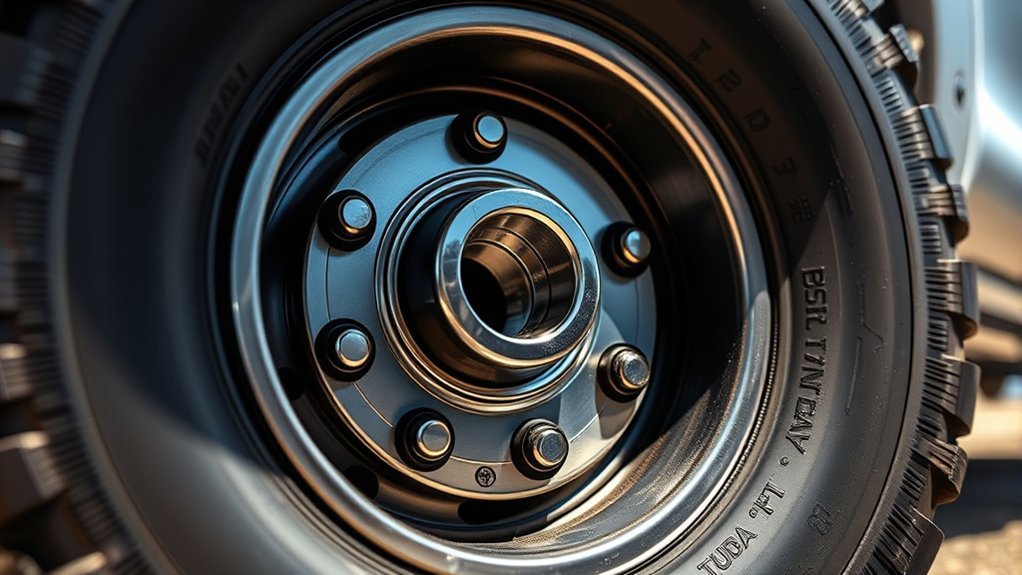
A humming, roaring, or growling sound from your Toyota Tundra can come from a wheel bearing, a tire, or another rotating component. You can narrow the source by comparing the sound on different pavement, applying gentle steering load, checking tire pressure and tread wear, and safely inspecting the wheel for roughness or play. No single symptom confirms a failed bearing.
Quick Answer
Wheel bearing noise usually sounds like a hum, rumble, or growl that rises with vehicle speed and changes when you gently steer left or right. Tire noise more often changes with pavement and follows the tread rhythm. Neither clue is conclusive, so inspect tire wear, pressure, and wheel play before replacing parts.
Key Takeaways
- Wheel bearing noise often changes when steering shifts the vehicle’s weight from one side to the other.
- Tire noise is more likely to change with pavement and may repeat in time with wheel rotation.
- Cupping, scalloping, feathering, incorrect pressure, or an out-of-round tire can imitate bearing noise.
- Wheel play or roughness identifies a wheel-end problem, but it does not prove the bearing is the only failed part.
- Severe grinding, visible wobble, unstable steering, or major looseness requires immediate professional inspection.
At a Glance
| Time Required | About 15–30 minutes for road and tire checks; additional time for a professional lifted inspection |
| Difficulty | Easy for road and tire checks; intermediate for a safely supported wheel inspection |
| Tools Needed | Tire-pressure gauge, flashlight, tread-depth gauge or penny, wheel chocks, and approved lifting equipment if performing an off-ground check |
| Cost | Basic checks have no parts cost if you own the tools; shop diagnosis and repair costs vary by model year, axle, parts, and labor rate |
Warning: Never crawl beneath a Tundra supported only by its factory jack or a hydraulic jack. Work on a hard, level surface, chock the wheels, use the exact Toyota lift points, and support the truck with properly rated jack stands. Stop driving if you notice severe grinding, visible wheel wobble, unstable steering, or major looseness.
Understanding Wheel Bearing Noise Characteristics
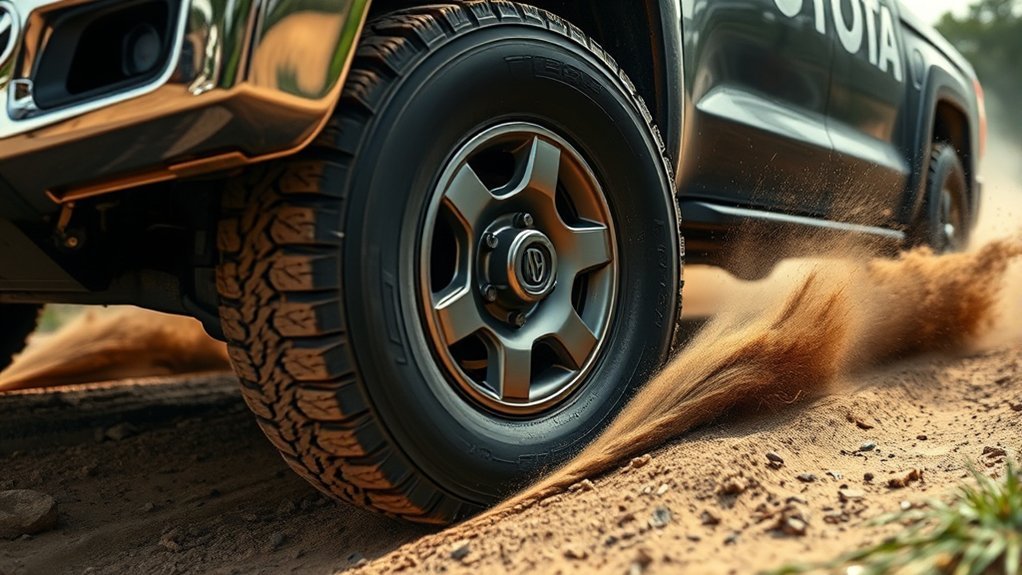
A worn Tundra wheel bearing often produces a low hum, rumble, or growl that becomes faster or louder as road speed increases. The sound may remain present while you coast because the wheel and hub continue rotating even when engine load drops.
The strongest bearing clue is often a change in sound during a gentle left or right curve. Steering shifts weight between the left and right wheel bearings. A damaged bearing may become louder when additional load reaches that side and quieter when the load moves away.
Timken’s wheel-hub diagnostic guidance warns that humming, rumbling, and growling can also come from tires, drivetrain parts, or electrical components. Treat the sound as a starting clue rather than a final diagnosis.
- Possible early symptom: A faint hum that rises with speed.
- Possible advanced symptom: Grinding, roughness, looseness, or a noticeable wobble.
- Load-related clue: The sound changes during a gradual curve or gentle lane-position adjustment.
- Possible related warning: An ABS or traction-control warning appears with wheel-end noise.
A bearing can still be damaged even if the raised wheel turns quietly. Removing the vehicle’s weight may reduce the load that produced the sound on the road.
[Products Worth Considering]

These universal aluminum tire valve stem caps help protect valve cores from corrosion caused by dirt, water, and snow while helping prevent air leaks to maintain steady tire pressure. They’re easy to install with a simple screw-on fit and are suitable for cars, SUVs, trucks, bicycles, motorcycles, and other vehicles. The stylish black caps add a clean, standout look to your wheels while supporting reliable long-term performance.

These universal tire valve stem caps help protect your valve core from dust, debris, moisture, and corrosion, supporting more stable tire pressure. The aluminum alloy design resists long-term wear, while the sealing construction helps help prevent air leakage. They twist on easily for quick installation and help safeguard driving safety across cars, SUVs, trucks, and motorcycles.

Upgrade your Toyota tire setup with these corrosion-resistant, leak-proof valve stem caps designed to help protect the valve core from water, snow, and road grime. The caps feature a snug rubber seal and durable copper alloy construction to resist rust and oxidation while maintaining stable tire pressure. Ideal for replacing worn original caps and keeping your wheels looking clean and stylish.
How to Diagnose and Isolate the Noise Source
Begin with tests that do not require lifting the truck. Record when the sound starts, where you feel it, and what makes it change. Avoid replacing a hub or tire based on sound alone.
Sound Behavior Analysis
- Choose a safe route. Use a familiar road with light traffic, legal speeds, and both smooth and coarse pavement. Do not make sudden swerves.
- Hold a steady speed. Note whether the sound follows vehicle speed rather than engine rpm. A wheel, tire, hub, brake, axle, or driveshaft noise normally follows road speed.
- Compare pavement. Drive over smooth asphalt and then a rougher surface at a similar speed. A large, immediate change points more strongly toward the tires.
- Coast safely. Lift off the accelerator while maintaining a safe speed. A wheel-bearing or tire sound may continue, while some drivetrain noises change with acceleration and deceleration.
- Apply gentle steering load. On a safe, gradual curve, listen for a repeatable change when the truck leans slightly left or right.
- Test the brakes lightly. If the sound changes as soon as you apply light brake pressure, inspect the brake pads, rotors, calipers, backing plates, and dust shields before blaming the bearing.
Pro Tip: Record a short voice note after each test. Include the speed, road surface, steering direction, braking input, and where the sound seemed loudest. A technician can use those details to reproduce the problem faster.
When the sound becomes louder during a gentle left curve, the right-side bearing is often under greater load and becomes a suspect. The opposite applies during a right curve. This rule is not absolute because cabin acoustics, rear-axle noise, and tire resonance can make the sound appear to come from the wrong corner.
Visual Inspection Techniques
Park on a hard, level surface before inspecting the tires and wheels.
- Check cold tire pressure. Use the pressure printed on the driver-door Tire and Loading Information label, not the maximum pressure molded into the tire sidewall. The National Highway Traffic Safety Administration recommends checking all tires when cold at least once a month.
- Inspect the tread. Look for cupping, scalloping, feathered edges, flat spots, exposed cords, embedded objects, or one section worn more deeply than the rest.
- Inspect the sidewalls. Do not continue driving on a tire with a bulge, exposed cords, deep cracking, or serious impact damage.
- Look for contact marks. Check whether a bent brake dust shield, packed debris, or loose liner is rubbing against a rotating part.
- Check wheel attachment. Missing or visibly loose wheel nuts require immediate attention. Do not guess at torque; use the exact model-year specification.
For an off-ground check, follow the lifting instructions in your exact Toyota Tundra owner’s manual. Once the wheel is safely supported, grasp it at the 3-and-9 positions, then at the 12-and-6 positions. Push and pull while watching the steering and suspension joints.
Movement at 3-and-9 may involve a tie rod or steering component. Movement at 12-and-6 may involve a bearing or ball joint. Movement in both directions can involve the hub, fasteners, or another wheel-end component. A technician may need to observe each joint while a helper moves the wheel.
Rotate the wheel slowly by hand. Roughness, scraping, looseness, or noise strengthens the bearing diagnosis, but brake contact can also create resistance. Timken’s hub-check procedure recommends confirming tire, road, alignment, suspension, and maintenance causes before condemning the hub.
Recognizing Wheel Bearing and Tire Noise Patterns
Use several clues together. One test can point you in the right direction, but a repeatable pattern provides a stronger diagnosis.
Distinct Noise Characteristics
| Diagnostic clue | More consistent with a wheel bearing | More consistent with a tire |
|---|---|---|
| Typical sound | Hum, rumble, growl, or grinding that follows road speed | Rhythmic roar, whir, slap, or helicopter-like pulse |
| Pavement change | Often changes less between smooth and rough surfaces | Often becomes noticeably louder or quieter with road texture |
| Gentle steering input | May change as weight shifts between sides | Usually less directly tied to steering load, although cupped tires can vary |
| Physical inspection | Possible hub roughness, looseness, heat-related damage, or ABS concern | Cupping, feathering, flat spots, damage, incorrect pressure, or out-of-round tread |
| After a permitted tire rotation | Noise usually remains associated with the same corner or axle | Noise may move, change pitch, or become louder at a different seating position |
A tire can remain noisy on every type of pavement, especially after severe cupping develops. A bearing can also produce an irregular sound instead of a perfect steady hum. Use the table as a probability guide, not a guarantee.
Influence of Road Conditions
Tire tread creates noise where the rubber meets the pavement. Coarse concrete, grooved roads, gravel, and worn asphalt can make aggressive or irregular tread much louder. Smooth pavement usually reduces this contact noise.
Wheel-bearing noise originates inside the wheel-end assembly, so pavement texture normally has less direct influence. The sound can still appear different because road vibration, cabin resonance, and vehicle load change what you hear.
Repeat the comparison at the same speed. A sound that changes instantly when the pavement changes strongly supports a tire-related cause. A sound that changes mainly when steering load shifts supports a bearing or suspension-related cause.
How Driving Conditions Impact Noise
Different driving inputs can help separate the possible sources:
- Acceleration versus coasting: A differential, driveshaft, CV joint, or U-joint noise may change when torque is applied or removed.
- Light braking: A scraping or grinding sound that changes with brake pressure may come from pads, rotors, calipers, or a dust shield.
- Sharp low-speed turns: Repeated clicking is more commonly associated with a CV joint than a wheel bearing.
- Highway-speed vibration: An out-of-balance or out-of-round tire is a common cause, especially when the steering wheel or seat shakes at a narrow speed range.
- Heavy cargo or towing: Added load may make several wheel-end, tire, suspension, or axle noises more noticeable. It does not identify the failed part.
- Wet or cold weather: Tire rubber, tread contact, trapped debris, and brake-surface conditions can temporarily change noise.
Do not use aggressive steering, hard braking, or excessive speed to amplify a sound. A controlled, repeatable test provides better information with less risk.
Other Noises That Can Mimic Wheel Bearing or Tire Noise
A Tundra has several rotating and suspension components that can imitate tire or bearing noise:
- Brake dust shield or backing plate: Creates a light scrape that may change while turning or braking.
- Brake pad, rotor, or caliper: Produces grinding, scraping, pulsation, or a pull during braking.
- CV joint: Often clicks or pops during sharper turns, especially under power.
- U-joint or driveshaft: May create a clunk, vibration, or speed-related hum.
- Differential or transfer case: May whine or hum differently during acceleration, coasting, or four-wheel-drive operation.
- Ball joint or tie rod: Can create looseness, clunks, steering movement, or irregular tire wear.
- Shock or strut wear: Can allow tire cupping that produces a repeating roar.
- Loose wheel or damaged wheel: Can cause wobble, vibration, or rapidly worsening noise and requires immediate attention.
Signs of Wheel Bearing Failure to Watch For
Multiple symptoms occurring together make a bearing problem more likely:
- A hum, rumble, or growl rises with road speed.
- The sound changes predictably during gentle left and right curves.
- The hub feels rough when rotated by hand.
- The wheel has measurable play after steering and suspension movement have been ruled out.
- You feel a wobble that does not match a tire balance problem.
- An ABS or traction-control warning appears with wheel-end noise.
- The noise progresses from humming to grinding.
Stop the road test if the truck develops severe grinding, steering instability, visible wobble, strong brake pull, or rapidly worsening vibration. Park in a safe location and arrange a professional inspection or towing rather than continuing to drive.
How to Address Tire Issues After Identifying Symptoms
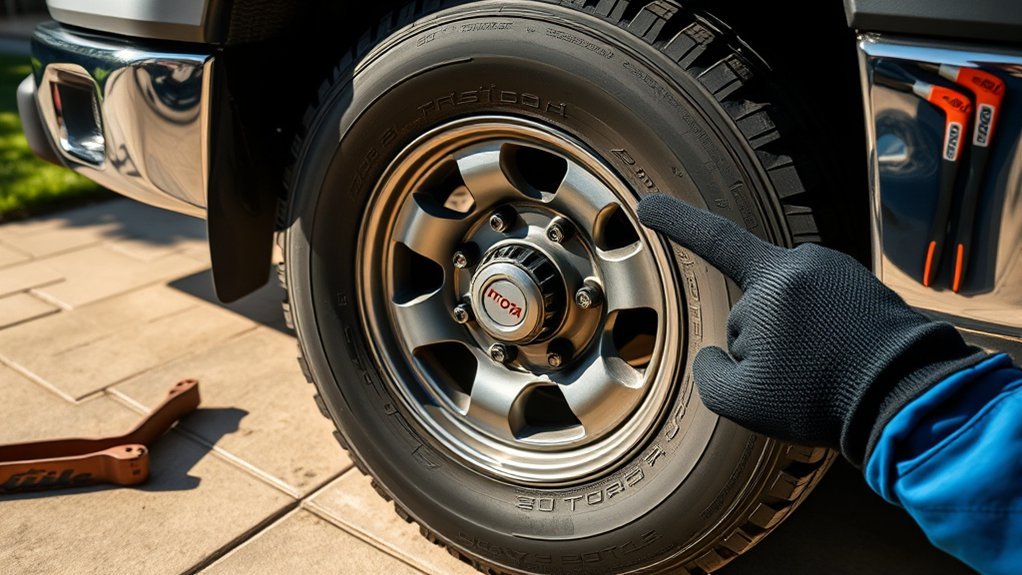
Start with pressure and tread condition before paying for wheel-bearing work.
- Set cold pressure correctly. Use the driver-door placard for your truck’s original tire configuration. Recheck after the Tundra has been parked for at least several hours.
- Inspect all four tires. Compare tread depth and wear patterns across each tire and between the front and rear axle.
- Correct alignment or balance problems. Feathered shoulders can indicate alignment trouble, while highway-speed vibration and cupping may indicate balance or suspension concerns.
- Inspect the suspension. Worn shocks, bushings, ball joints, or tie rods can create irregular tread wear that continues even after balancing.
- Rotate only when permitted. Follow the model-year maintenance guide and the tire maker’s directional or staggered-fitment restrictions.
- Retest the noise. If a permitted rotation moves or noticeably changes the sound, a tire becomes the stronger suspect.
Michelin’s tire guidance identifies uneven or irregular wear as a common cause of loud tire noise. It also notes that cupping can result from worn suspension parts, misalignment, or wheel-and-tire imbalance.
Correcting alignment, balance, pressure, or suspension faults can prevent further damage, but it cannot restore tread that has already worn into deep cups or flat spots. A severely or irregularly worn tire may remain noisy and may require replacement.
[Products Worth Considering]

These cute duck tire valve caps glow in the dark after absorbing sunlight, adding a fun, personalized look to your ride. Made with titanium alloy and resin for durability, they help protect the valve core by isolating air and shielding against dust, water, and oil. Universal fit makes them suitable for cars, motorcycles, trucks, and bicycles.

Universal magnetic jack pad with aluminum grooved design to protect vehicle pinch welds during lifting. Durable nylon pad inserts are upgraded and secured with screws to resist damage and keep in place. Designed to fit most single vehicle pinpoint welds for safer, stable jacking when changing tires, repairs, or performing oil changes.
How to Repair Wheel Bearings and Tires
Confirm the source before ordering parts. A wheel-bearing repair and a tire correction solve different problems, and replacing the wrong component wastes money without removing the noise.
Wheel-Bearing Repair
The required repair depends on the Tundra’s model year, drivetrain, axle, and wheel position. The job may involve a complete hub assembly, a separate bearing, seals, an axle component, or press work. A hydraulic press is not required for every Tundra wheel-bearing repair.
Use the exact Toyota service procedure for:
- Lift and support points
- Hub, knuckle, axle, and brake removal
- Single-use nuts, seals, clips, bolts, or washers
- Axle-nut and wheel-nut torque
- Bearing orientation and ABS encoder position
- Final end-play, rotation, brake, and ABS checks
Incorrect pressing force, impact-gun use, contaminated installation, reused single-use hardware, or improper axle-nut torque can damage a new bearing. A qualified technician should perform the repair when model-specific tools, torque data, or bearing-press procedures are required.
Tire Repair or Correction
A repairable tread puncture may be handled by a tire professional after the tire is removed and inspected internally. Sidewall damage, exposed cords, bulges, severe cracking, or serious irregular wear normally requires tire replacement rather than a simple patch.
Balance, alignment, and suspension repairs can correct the cause of abnormal wear. They do not reverse tread damage that has already occurred. Replace tires in a way that maintains the correct size, load capacity, speed rating, axle matching, and four-wheel-drive compatibility for your Tundra.
Tips for Preventive Maintenance and Noise Prevention
Regular tire and wheel-end checks help you catch noise before it becomes a major repair.
| Action | When to do it | Why it helps |
|---|---|---|
| Check cold tire pressure | At least monthly and before long trips | Reduces irregular wear, heat, handling problems, and pressure-related noise |
| Inspect tread and sidewalls | Monthly and after a pothole or curb impact | Finds cupping, feathering, bulges, cuts, and uneven wear early |
| Rotate tires when permitted | Follow the exact Toyota maintenance guide and tire instructions | Promotes even wear and can help reveal whether noise follows a tire |
| Check balance and alignment | When vibration, pulling, steering-wheel offset, or uneven wear appears | Prevents recurring tire noise and premature tread damage |
| Inspect wheel-end and suspension parts | When noise, looseness, roughness, clunks, or ABS concerns develop | Separates bearing faults from ball-joint, tie-rod, brake, and suspension problems |
Avoid pressure settings based on the tire sidewall maximum. Keep the pressure at the vehicle manufacturer’s cold specification unless Toyota supplies different instructions for a specific load or configuration.
Key Differences Between Wheel Bearing Noise and Tire Noise?
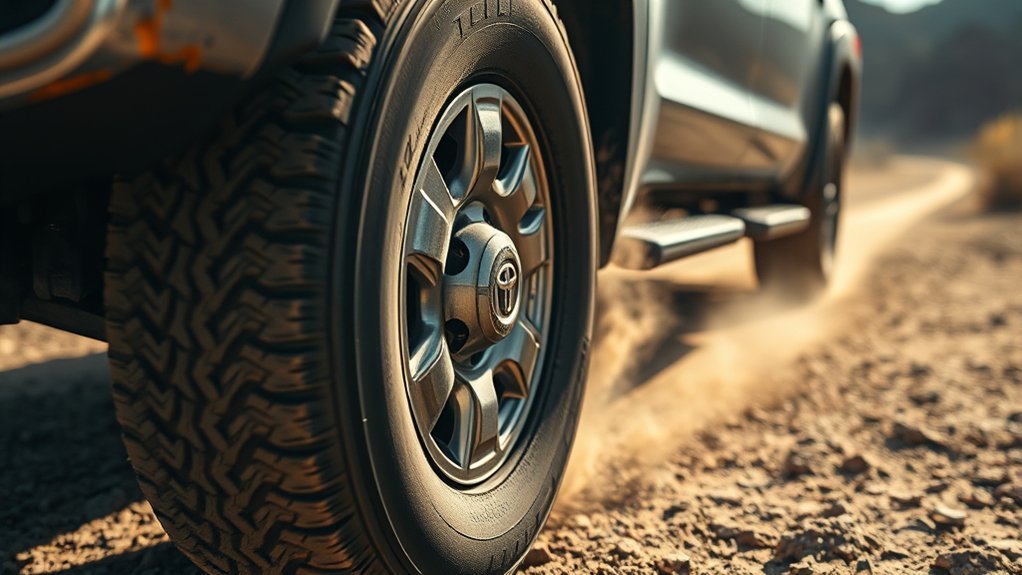
A wheel bearing becomes more likely when the noise follows road speed, changes predictably during gentle steering, and is supported by hub roughness or looseness. A tire becomes more likely when the noise changes sharply with pavement, follows a repeating tread rhythm, and appears with cupping, feathering, pressure problems, or an out-of-round condition.
Use this decision sequence:
- If the noise changes immediately with pavement, inspect the tires first.
- If the noise changes mainly with gentle steering load, inspect the wheel bearings and suspension.
- If light braking changes the noise, inspect the brakes and dust shields.
- If acceleration or coasting changes the sound, include the differential, driveshaft, CV joints, and U-joints in the diagnosis.
- If a permitted tire rotation moves or changes the sound, the tire is the stronger suspect.
- If the raised wheel has roughness or looseness, isolate the hub from the steering, suspension, and brake components.
Do not use a quiet off-ground spin as proof that the bearing is healthy. The bearing may produce noise only while supporting the truck’s weight.
When to Stop Driving and Call a Technician
End the test drive and arrange immediate inspection when you notice any of the following:
- Severe or rapidly worsening grinding
- A visible wheel wobble
- Strong steering instability or wandering
- Excessive wheel play
- A loose or missing wheel nut
- A tire bulge, exposed cord, or rapid pressure loss
- Brake pull or pulsation combined with wheel-end noise
- An ABS warning combined with roughness, looseness, or grinding
A technician can confirm the source with a chassis-ear system, dial indicator, loaded lift, vibration analysis, model-specific end-play checks, and inspection of the hub, brakes, axle, steering, and suspension.
Frequently Asked Questions
How do you check a Tundra wheel bearing?
Compare the sound on different pavement, listen for changes during gentle left and right curves, inspect the tires, and safely raise the suspected wheel using the correct Toyota lift points. Check at 3-and-9 and 12-and-6, then rotate the wheel by hand. Roughness or looseness supports a bearing diagnosis but should be isolated from steering, suspension, and brake movement.
Does wheel bearing noise always change when turning?
No. Many damaged bearings become louder or quieter when steering changes the load, but some remain nearly constant. Rear-axle acoustics and tire noise can also hide the change, so use steering response as one clue rather than a required symptom.
Can cupped tires sound like a bad wheel bearing?
Yes. Cupped or scalloped tread can create a deep roar, hum, or helicopter-like pulse that rises with speed. The tire may feel wavy when you run a hand across the tread. Balance, alignment, shocks, and other suspension parts should be checked before fitting another tire.
Can you keep driving with a noisy Tundra wheel bearing?
A faint new hum still deserves prompt inspection because the rate of deterioration is unpredictable. Stop driving and arrange towing when you notice grinding, major looseness, wobble, steering instability, brake problems, or an ABS warning combined with wheel-end symptoms.
Will rotating the tires help identify tire noise?
It can. When the tire configuration permits rotation, a tire-related sound may move, change pitch, or become louder in a different seating position. A bearing sound usually remains associated with the same wheel location. Follow Toyota’s rotation pattern and do not rotate directional or staggered tires incorrectly.
Conclusion
Wheel bearing noise on a Tundra is more likely to change when gentle steering shifts the load, while tire noise is more likely to react to pavement and show a repeating tread pattern. Neither behavior proves the cause by itself. Check pressure, tread wear, braking response, wheel play, and hub roughness before authorizing a repair.
Use safe lifting equipment and the service information for your exact Tundra model year. Severe grinding, wobble, major looseness, or unstable steering is a reason to stop driving and have the truck inspected immediately.
Sources
- Timken: Checking a Hub Bearing Assembly — wheel-play, hand-rotation, roughness, and source-verification procedure
- Timken: Symptoms of a Worn Wheel Hub Bearing — common sounds, steering-load response, vibration, tire wear, and ABS concerns
- NHTSA TireWise — cold inflation pressure, tread inspection, rotation, alignment, and tire-safety guidance
- Michelin Tire FAQs — irregular tire noise, cupping, vibration, and inspection guidance
- Toyota Manuals and Warranties — model-year-specific lifting, tire, maintenance, and service information

Related Articles
Toyota Tundra Tire and Wheel Package: What to Consider Before Buying
Unlock the secrets to choosing the perfect tire and wheel package for your Toyota Tundra—essential tips await to enhance your ride.
Read More
Do Bigger Tires Void a Toyota Tundra Warranty? Magnuson-Moss Act Explained
Bigger tires might not void your Toyota Tundra warranty, but understanding the Magnuson-Moss Act is crucial—discover how to protect your investment effectively.
Read More
Toyota Tundra Tire Rack Setup: Garage Storage Ideas for Seasonal Sets
Better tire storage for your Toyota Tundra awaits—discover essential tips to maximize space and protect your seasonal sets in the garage!
Read More