
Tire Load Range C vs D vs E: Which Do You Need for a Toyota Tundra?
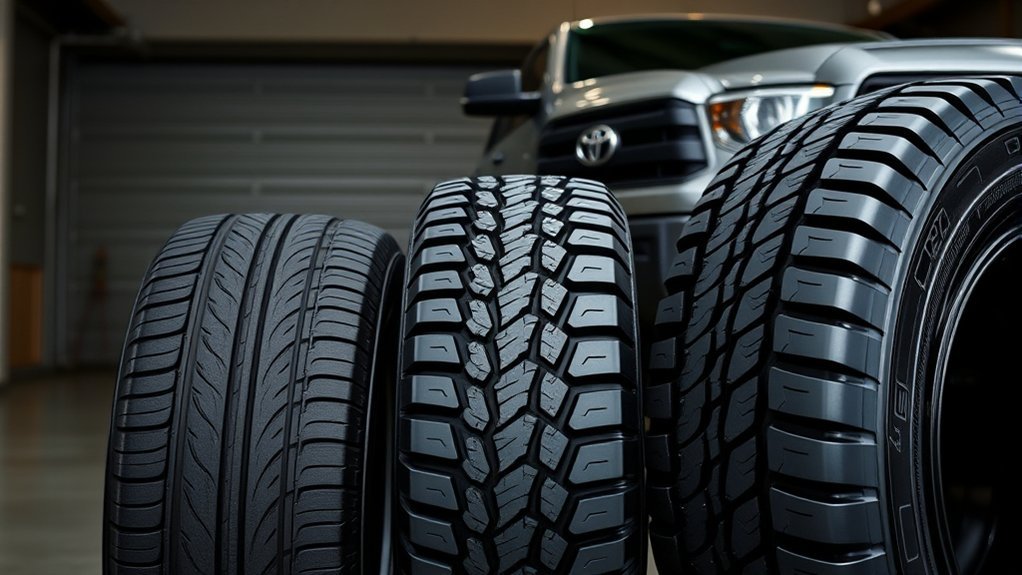
Choosing between Load Range C, D, and E tires for a Toyota Tundra is not about picking the stiffest or “strongest” tire by default. The right choice depends on your Tundra’s door-jamb tire label, tire size, load index, wheel rating, payload, towing tongue weight, and how you actually drive.
Quick Answer
For most daily-driven Toyota Tundras, choose the load range that matches the original tire size and load rating on the driver-door placard. Load Range C usually rides softer, Load Range D is a middle ground, and Load Range E is best only when your actual load, towing setup, and tire load table require the extra capacity.
Key Takeaways
- Start with the tire-and-loading label on your Tundra’s driver-side door jamb, not a generic PSI number.
- Load Range C, D, and E describe tire strength and inflation capability, but the actual load capacity also depends on tire size and load index.
- Load Range E can help for heavier towing or hauling, but it may ride firmer and does not increase your truck’s GVWR, GAWR, payload, or tow rating.
- Avoid mixing different load ranges, sizes, or tire constructions, especially on the same axle.
- Use cold tire pressure from the placard first; use tire-maker load and inflation tables when changing to LT tires, larger sizes, or heavier towing setups.
At a Glance
| Time Required | 10–30 minutes to check the placard, tire sidewall, payload, and towing needs |
| Difficulty | Easy for stock replacement tires; moderate if changing tire size, load range, or wheel setup |
| Tools Needed | Tire pressure gauge, driver-door placard, tire sidewall markings, owner’s manual, trailer/payload weight information |
| Cost | Free if you already have a gauge; usually $10–$25 for a basic pressure gauge |
Understanding Tire Load Ranges: C, D, and E Explained
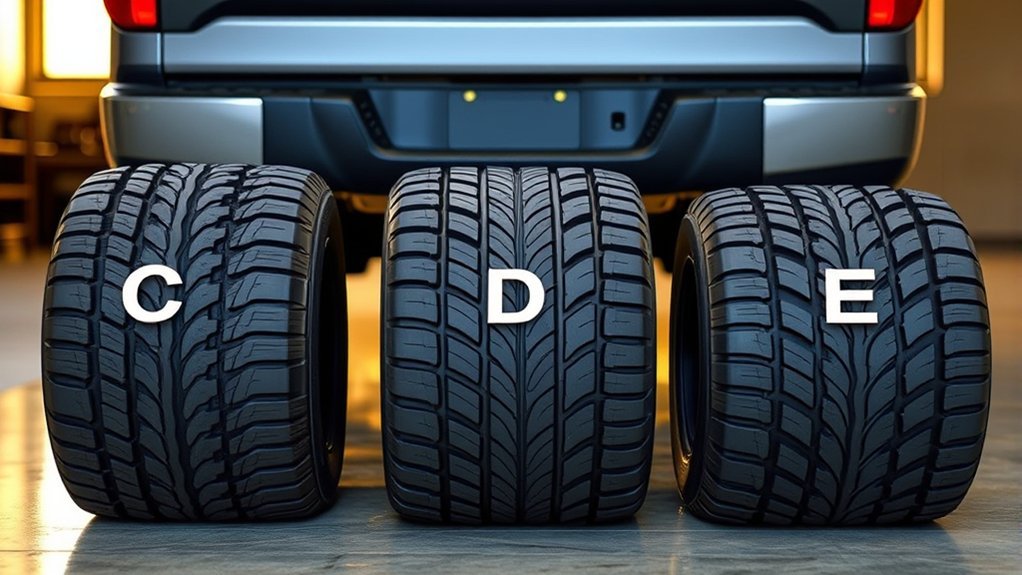
Load range is a tire strength category. On many LT-metric and flotation light-truck tires, the letters C, D, and E tell you how much air pressure the tire is designed to use at its rated maximum load. They do not tell the whole story by themselves.
The actual safe load depends on the tire’s size, load index, load range, inflation pressure, and the ratings of the truck, axle, wheel, and hitch. That is why the first step is always the Tundra’s tire-and-loading label and the replacement tire’s data, not only the load range letter.
For common LT tires up to 295 mm or 11.5 inches wide, Tire Rack’s load range guide lists typical maximum-load pressures of 50 psi for Load Range C, 65 psi for Load Range D, and 80 psi for Load Range E. Wider LT/flotation sizes and some specific tire designs can differ, so always check the sidewall and the tire maker’s data.
Note: “6-ply,” “8-ply,” and “10-ply” are legacy ply-rating terms. Modern tires usually do not have that many physical plies. Treat the rating as a strength/load classification, not a literal ply count.
| Load Range | Common LT Ply Rating | Typical Max-Load Pressure* | Best Fit on a Tundra | Main Trade-Off |
| C | 6-ply rating | 50 psi on many LT sizes | Daily driving, light hauling, light trail use, and drivers who value ride comfort | Less reserve capacity than D or E in the same tire size |
| D | 8-ply rating | 65 psi on many LT sizes | Moderate hauling or towing when C is not enough but E feels excessive | Fewer tire choices in some Tundra sizes |
| E | 10-ply rating | 80 psi on many LT sizes | Frequent towing, heavier payloads, work use, or rough-road durability needs | Can ride firmer and add tire weight if not needed |
*Typical pressure examples apply to many LT-metric and flotation light-truck sizes. Always follow the tire sidewall, tire manufacturer data, vehicle placard, and wheel limits.
[Products Worth Considering]

The Chemical Guys Gerbil Wheel & Rim Brush is designed to safely clean wheels, rims, exhaust tips, tires, and engine bay components without scratching delicate finishes. Its...
How to Pick the Best Load Range for Your Tundra
Use this order when choosing between Load Range C, D, and E. It keeps the decision tied to your real truck instead of generic internet advice.
- Read the tire-and-loading label first. Toyota owner guidance says the recommended cold tire inflation pressure and tire size are shown on the tire-and-loading information label. Start there before changing load range or PSI.
- Match or exceed the original load capacity. A replacement tire should not have less load-carrying capacity than the tire specified for the vehicle. Check the size, load index, speed rating, and load range.
- Know your real use case. Daily commuting, light camping gear, and occasional dirt roads usually need less tire than a work truck that carries tools, bed cargo, and trailer tongue weight every week.
- Check actual towing and payload loads. Trailer tongue weight, passengers, cargo, bed accessories, and aftermarket bumpers all count toward payload and axle load.
- Respect the wheel and truck ratings. A stronger tire does not increase the wheel rating, axle rating, payload rating, or towing rating of the Tundra.
- Use a tire load/inflation table for non-stock setups. This matters most when switching from passenger-rated tires to LT tires, changing tire size, or towing near the truck’s limits.
Warning: Do not set your Tundra’s tire pressure to the sidewall maximum just because the tire allows it. The sidewall number is a limit at rated load, not the automatic best pressure for daily driving. Overinflation can reduce ride quality and change wear; underinflation can build heat and increase tire-failure risk.
Choose Load Range C If…
- Your Tundra is mostly used for commuting, errands, road trips, and light weekend hauling.
- You want a more comfortable ride and do not tow heavy loads often.
- The exact tire size and load index still meet or exceed the load requirement shown for your truck.
- You do light off-road driving and want a tire that can flex more comfortably on rough surfaces when properly aired down off-road and reinflated for pavement.
Choose Load Range D If…
- You want more load capacity than many C-rated options but do not need the firmness or weight of many E-rated tires.
- You tow or haul moderately and want a middle-ground choice.
- A Load Range D option is available in your exact size, load index, and speed rating needs.
Choose Load Range E If…
- You tow or haul heavy loads often, especially with meaningful trailer tongue weight.
- Your axle weights and tire load table support the need for the higher load range.
- You use your Tundra for work, overlanding, rough roads, or frequent loaded travel.
- You accept the possibility of a firmer ride and extra tire weight in exchange for load reserve and durability.
Pro Tip: If you tow with an LT tire, weigh the truck and trailer at a public scale when loaded for a real trip. Front axle weight, rear axle weight, trailer tongue weight, and total combined weight are more useful than guessing from the trailer’s empty weight.
Load Range vs. Load Index: What Tundra Owners Miss
Load range and load index are related, but they are not the same thing.
- Load range is the letter, such as C, D, or E. It describes the tire’s strength category and pressure capability.
- Load index is the number in the tire service description. It tells you the tire’s maximum load rating at the proper pressure for that tire.
- Sidewall max pressure is the tire’s pressure limit for its rated maximum load. It is not automatically your daily-driving pressure.
- Vehicle ratings such as GVWR, GAWR, payload, and towing capacity still control what the truck can safely carry or pull.
For example, two tires can both be Load Range E but have different load capacities because they are different sizes or have different load indexes. That is why a safe tire choice must match the whole service description, not only the letter.
User Feedback on Load Range C, D, and E
Tundra owners often split into two groups: drivers who want the smoothest daily ride and drivers who want extra load reserve for towing, hauling, or rough roads.
Load Range C tends to get praise from daily drivers because it usually feels more compliant than a heavier LT E tire in similar use. For light trail runs, camping trips, and unloaded commuting, it can be the more comfortable choice when the size and load rating are correct.
Load Range D is less common in some Tundra tire sizes, but it can be a useful compromise. It may provide more load reserve than C without the full stiffness or weight of many E-rated options.
Load Range E is popular with drivers who tow frequently, carry bed weight, run armor or overlanding gear, or want a tougher LT casing for rough-road use. The downside is that an E-rated tire can feel firmer when the truck is unloaded, especially if pressure is set too high for the actual load.
Popular all-terrain tires, including options such as the BFGoodrich All-Terrain T/A KO2, are sold in multiple sizes and specifications. Do not assume one owner’s mileage, pressure, or load range applies to your Tundra. Match the exact tire size, service description, and load table to your truck.
How Load Ratings Affect Day-to-Day Driving
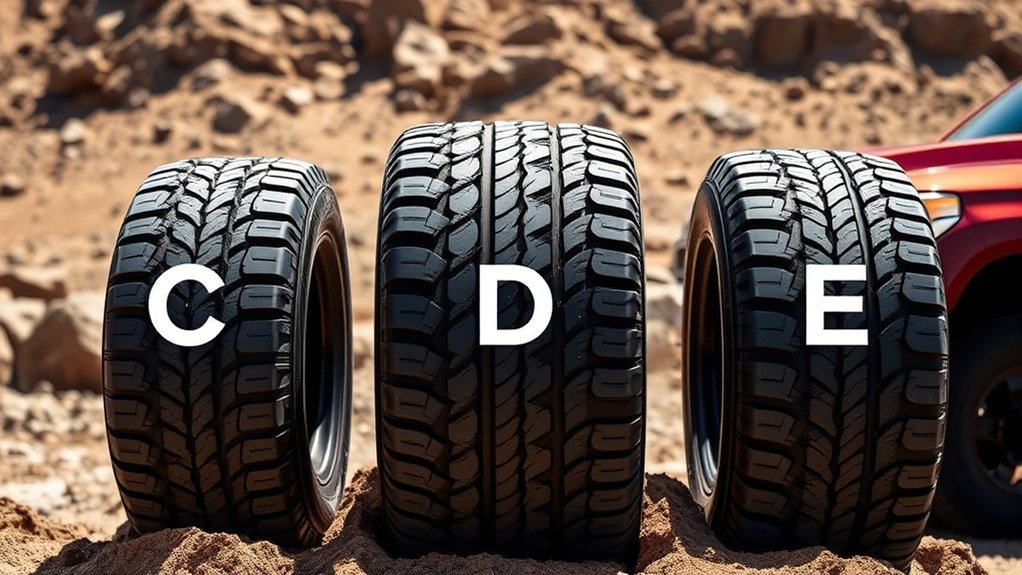
Load range can change how your Tundra feels every day. It affects ride firmness, steering response, unsprung weight, tire heat, load reserve, and sometimes fuel economy.
- Ride comfort: A lighter-duty tire, when properly rated for the truck, often rides softer than a heavier-duty tire. This is one reason some daily drivers prefer Load Range C.
- Towing stability: A tire with more load reserve can feel more stable under trailer tongue weight or bed cargo, but only when paired with the right pressure and the correct vehicle ratings.
- Fuel economy: Heavier LT tires can add rolling weight. The effect varies by tire design, tread pattern, size, and pressure.
- Off-road use: Stronger casings can help on rocks and rough roads, while a more flexible tire may ride better on mild trails. Airing down should be done carefully and followed by reinflation before highway driving.
- Tread wear: Too much pressure for the actual load can wear the center of the tread; too little pressure can build heat and wear shoulders. Alignment and rotation matter too.
The best load range is the one that safely carries your real load while keeping the ride, handling, and tire wear acceptable for how you use your Tundra.
Stock vs. Aftermarket Tires on a Tundra
If you are replacing factory-size tires with the same size, service description, and type, the decision is simpler: stay close to the original specifications and follow the tire-and-loading label.
If you are changing tire size, switching from passenger-rated tires to LT tires, moving to a more aggressive all-terrain, or adding heavier wheels, the decision becomes more important. According to Bridgestone’s replacement tire selection manual, replacement tires should be selected to maintain the performance characteristics intended by the vehicle manufacturer, including size, load index, and speed symbol shown on the tire placard or in the owner’s manual.
Also check wheel width, wheel load rating, suspension clearance, spare tire fitment, and TPMS compatibility. A tire with enough load capacity can still be a poor choice if it rubs, overloads the wheel, changes handling, or cannot be inflated correctly for the load.
Essential Maintenance Tips for Load Range Tires
Maintaining Load Range C, D, or E tires is mostly about pressure, wear, rotation, and load control. The basics matter more than the letter on the sidewall.
- Check pressure cold. Toyota says to check tire pressure when the tires are cold. A cold reading generally means the truck has been parked for at least three hours or driven less than about one mile.
- Use the placard as your baseline. The Toyota Owners tire inflation guide points drivers to the tire-and-loading label for the recommended cold tire pressure and size.
- Check at least monthly. Toyota recommends checking tire pressure every two weeks or at least once a month, including the spare.
- Rotate on schedule. Follow your Toyota maintenance schedule and your tire manufacturer’s guidance. Many truck tires are rotated around 5,000 miles, but the correct interval depends on your setup and wear pattern.
- Watch tread depth. Replace tires when treadwear indicators show or when the tread reaches the minimum safe/legal threshold. For rain, snow, or towing, consider replacing earlier if traction drops.
- Inspect after off-road use. Look for cuts, sidewall damage, punctures, embedded rocks, bead damage, and uneven wear.
- Balance and align when needed. Vibration, pulling, cupping, or fast uneven wear can point to balance, alignment, suspension, or pressure problems.
Note: NHTSA’s TireWise tire safety guidance recommends using the vehicle’s recommended cold inflation pressure from the tire information placard or certification label, not judging pressure by appearance.
Frequently Asked Questions
Can I mix different load range tires on my Tundra?
It is not recommended. Keep the same size, construction, load rating, and general tire type across the axle, and ideally across all four positions. Mixing Load Range C, D, and E can change ride height, flex, handling, braking, and stability, especially while towing.
How do load ranges affect fuel efficiency?
A higher load range can add tire weight and stiffness, which may reduce fuel economy depending on the tire size, tread pattern, pressure, and driving style. The difference is not the same for every tire. Choosing more tire than you need can make the truck feel heavier without adding usable payload or towing capacity.
What is the lifespan of Load Range C, D, and E tires?
There is no single lifespan for C, D, or E tires. Tire life depends on the tire model, compound, alignment, rotation schedule, inflation pressure, vehicle load, towing frequency, road surface, and driving style. Check the specific tire’s warranty and inspect tread depth regularly.
Are there specific brands recommended for each load range?
Brand matters less than the exact tire size, load index, load range, speed rating, tread type, and intended use. Michelin, BFGoodrich, Goodyear, Bridgestone, Falken, Toyo, Nitto, and other major brands make truck tires in different load ranges. Choose the tire that matches your Tundra’s load needs and driving conditions.
How do I know if my Tundra needs a load range upgrade?
Consider a higher load range if you regularly tow, carry heavy bed cargo, run heavy accessories, drive rough jobsite roads, or see sidewall flex and heat while loaded. Confirm the need with actual axle weights, your tire load table, and the truck’s placard and ratings before buying.
Is Load Range E always better for towing?
No. Load Range E can be a good towing choice when your tire size, load index, axle weight, and inflation table require the extra capacity. But it can ride firmer when unloaded, and it does not increase the truck’s factory towing or payload rating.
What PSI should I run with Load Range E tires on a Tundra?
Do not assume every Load Range E tire should run at 80 psi. Start with the truck’s door placard for stock-size tires. If you changed size or switched to LT tires, use the tire maker’s load and inflation table based on actual axle weight, while staying within the tire and wheel limits.
Can I use passenger-rated tires instead of LT tires on a Tundra?
Sometimes, if the tire size and load rating match what Toyota specified for your exact truck. However, towing, hauling, larger aftermarket sizes, and rough-road use may call for LT tires. Do not install a tire with less load capacity than the vehicle placard requires.
Conclusion
The best load range for your Toyota Tundra is the one that matches your truck’s required load capacity and your real driving needs. Load Range C often makes sense for comfort-focused daily driving and light use. Load Range D can be a useful middle ground when available in the right size. Load Range E is the stronger choice for frequent towing, hauling, work use, and rough-road durability, but it may ride firmer and add weight.
Before buying, check the driver-door tire label, confirm the tire size and load index, consider your real payload and trailer tongue weight, and never exceed tire, wheel, axle, or vehicle ratings. That approach gives you the safest balance of ride comfort, load capacity, fuel economy, and tire life.
Sources
- Toyota Owners — Tundra Tire Inflation Pressure — backs up placard-based cold tire pressure guidance and pressure-check intervals.
- NHTSA TireWise — Tire Safety Ratings and Awareness — backs up tire pressure, placard, and tire safety guidance.
- Tire Rack — What Is Maximum Load for a Tire? — backs up load range, maximum load, and typical LT pressure examples.
- Bridgestone — Replacement Tire Selection Manual — backs up replacement tire selection, load index, speed rating, placard, and safety cautions.
- eCFR — 49 CFR 570.9 Tires — backs up same-axle tire matching and tire inspection requirements.
- BFGoodrich — All-Terrain T/A KO2 — backs up the KO2’s intended all-terrain/off-road use and manufacturer product context.

Related Articles
Toyota Tundra Tire and Wheel Package: What to Consider Before Buying
Unlock the secrets to choosing the perfect tire and wheel package for your Toyota Tundra—essential tips await to enhance your ride.
Read More
Do Bigger Tires Void a Toyota Tundra Warranty? Magnuson-Moss Act Explained
Bigger tires might not void your Toyota Tundra warranty, but understanding the Magnuson-Moss Act is crucial—discover how to protect your investment effectively.
Read More
Toyota Tundra Tire Rack Setup: Garage Storage Ideas for Seasonal Sets
Better tire storage for your Toyota Tundra awaits—discover essential tips to maximize space and protect your seasonal sets in the garage!
Read More