
Biggest Tire That Fits a Stock Toyota Tundra With No Lift (by Generation)
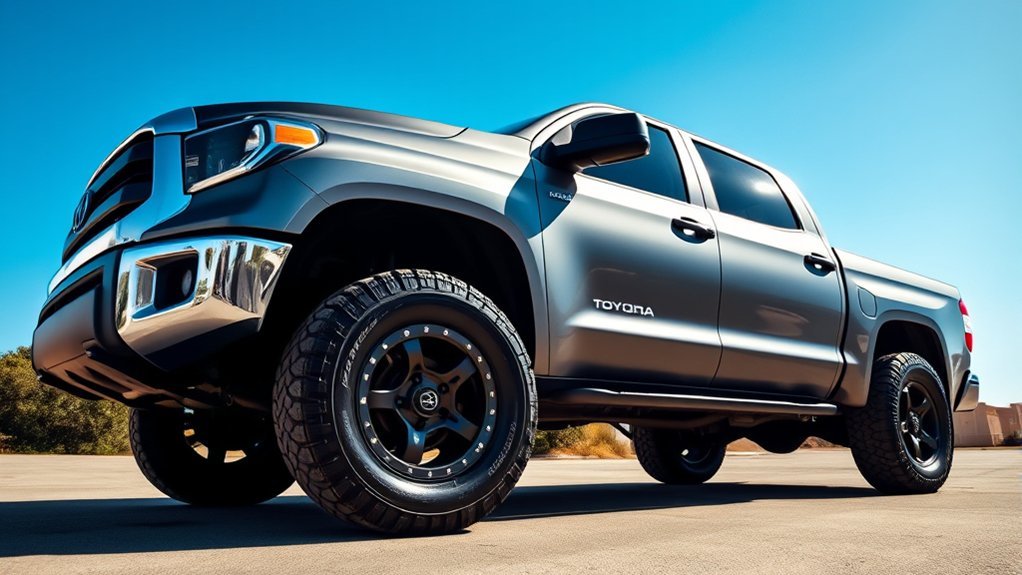
For a stock Toyota Tundra, the biggest tire that fits depends on the generation, trim, wheel offset, tire brand, and how strict you are about “no modifications.” A tire can bolt on and still rub at full steering lock, during suspension compression, or when towing. Use this guide as a practical fitment starting point, then confirm the final size against your door placard, owner’s manual, and a tire professional before buying.
Quick Answer
On a stock Toyota Tundra, a conservative no-rub upgrade is usually about 31.5–32 inches on 2000–2006 trucks, about 33 inches on 2007–2021 trucks, and about 33–34 inches on 2022–2026+ trucks. Aggressive sizes such as 295/70R18 may fit some setups, but often need minor liner, mud-flap, or alignment adjustments.
Key Takeaways
- The “biggest tire” is not one universal size. Year, trim, stock wheel offset, tire shoulder shape, and alignment all matter.
- For 2007–2021 Tundras, 275/70R18 is a common conservative upgrade at about 33.2 inches tall.
- For 2022–2026+ Tundras, 285/65R18 is an OE-size reference on some trims, while 295/70R18 is an aggressive stock-height fitment that may rub.
- Never choose a tire with a lower load index than the tire listed on your placard or owner’s manual, especially if you tow or haul.
- Always test for rubbing at full lock, in reverse, over driveway angles, and with the suspension loaded before assuming the size is safe.
At a Glance
| Time Required | 30–60 minutes to measure, inspect, and test drive after installation |
| Difficulty | Beginner for checking sizes; intermediate if trimming liners or adjusting mud flaps |
| Tools Needed | Tape measure, flashlight, tire-pressure gauge, torque wrench, tire-size calculator, and a safe test-drive area |
| Cost | Inspection is free; tire costs vary widely by size, load range, and brand |
Maximum Tire Size for Each Tundra Generation Without Modifications
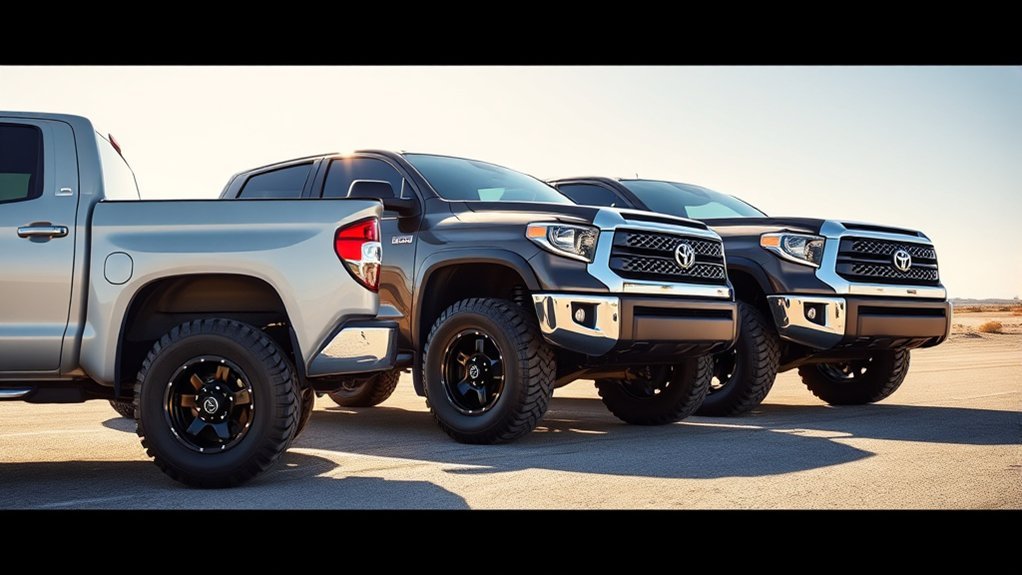
The safest way to think about Tundra tire fitment is by generation. Toyota changed body shape, suspension layout, wheel size, and factory tire options over time, so a tire that clears one truck may rub badly on another.
| Tundra generation | Conservative stock-height upgrade | Aggressive stock-height size | What to watch |
|---|---|---|---|
| 2000–2006 first generation | 265/75R16 or similar, about 31.6 inches | Some owners run near-32-inch sizes, but clearance varies | Front mud flaps, fender liner, older suspension sag, and wheel offset |
| 2007–2021 second generation | 275/70R18, about 33.2 inches | 285/70R18 or narrow 34-inch options may fit some trucks | Upper control arm clearance, cab mount area, mud flaps, and full-lock turning |
| 2022–2026+ third generation | 285/65R18, about 32.6 inches, is an OE-style reference on some trims | 295/70R18, about 34.3 inches, is aggressive and may need small clearance work | Front fender liner, mud flaps, offset, tire shoulder width, and suspension compression |
For the first-generation Tundra, a 265/75R16 is a common upper-end stock-height choice because it stays close to 31.6 inches tall. That gives a mild increase over many factory sizes without jumping into the clearance problems that come with true 33-inch tires.
For the second-generation Tundra, 275/70R18 is one of the best balanced upgrades. It is about 33.2 inches tall, not 32.3 inches, and it usually gives a fuller look without pushing into the same risk zone as taller or wider 34–35-inch tires.
For the third-generation Tundra, stock sizes vary by trim. Toyota’s owner resources and factory configurations include sizes such as 265/70R18, 265/60R20, 285/65R18, and 265/50R22 depending on model and package. Because of that, a “stock Tundra” can start from different baselines. A 295/70R18 may fit some 2022–2026+ trucks, but it is better treated as an aggressive size than a guaranteed no-modification fit.
Warning: A tire that clears on flat pavement may still rub while turning in reverse, braking downhill, driving off-road, or towing with the suspension compressed. Check real clearance before taking the truck on a trip.
[Products Worth Considering]
Protect and organize your Airmoto tire inflator with a purpose-designed carrying case made for a precise fit. The durable polyurethane shell and soft interior help guard...
Identifying and Solving Rubbing Issues With Larger Tires
Rubbing usually shows up in a few predictable places: the front mud flap, inner fender liner, front bumper edge, body mount area, and upper control arm. Wider tires can also rub sooner than taller but narrower tires because the shoulder sticks out farther during turns.
If you choose larger options such as 295/70R18, expect possible light rubbing at full lock unless your truck’s wheel offset, alignment, and trim combination are friendly to that size. Minor changes such as removing or reshaping mud flaps, gently moving the fender liner, or adjusting alignment within safe specs can help. Cutting metal, grinding body mounts, or altering suspension geometry moves the setup beyond a simple stock fitment.
After installation, test the truck slowly in a safe area. Turn the wheel fully left and right while moving forward and backward. Then drive over a driveway entrance at an angle to compress one side of the suspension. Look for fresh scuff marks on plastic liners, mud flaps, and tire sidewalls.
Pro Tip: Test fitment with the tire pressure set correctly and with the truck loaded the way you normally use it. A size that clears empty may rub when the bed is full or a trailer is connected.
Best Tire Options for Stock Toyota Tundras
The best tire size for a stock Toyota Tundra is not always the largest one. The better choice is the largest size that clears consistently, keeps the correct load rating, does not overload the steering and suspension, and matches how you drive.
- Daily driving and towing: Stay close to OE diameter and load rating. This keeps steering, braking, and speedometer accuracy more predictable.
- Mild off-road use: A one-size-up all-terrain tire is often the sweet spot. For many second-gen trucks, that means sizes around 33 inches. For many third-gen trucks, 285/65R18 or similar is a practical reference point.
- Aggressive stance: Wider 34-inch sizes can look better but increase the chance of rubbing, speedometer error, extra tire weight, and fuel-economy loss.
- Winter or rough-road use: A slightly narrower tire can sometimes clear better and cut through snow or mud more predictably than a very wide tire.
Popular all-terrain tire families include models from Michelin, BFGoodrich, Toyo, Falken, Goodyear, and Nitto, but the brand name alone does not guarantee fitment. Two tires with the same printed size can have different real-world section widths, tread shoulders, weights, and tread depths.
User Insights on Tire Fitment
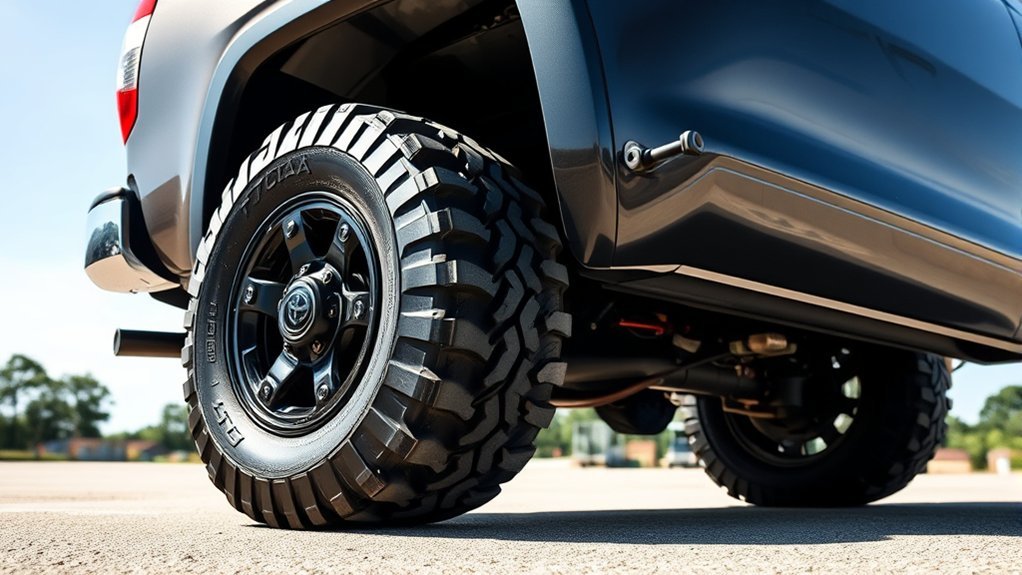
Owner reports are useful, but they should be treated as examples, not guarantees. A 275/70R18 that fits one 2021 Tundra may rub on another if the wheel offset is different. A 295/70R18 that clears a 2024 TRD Pro may not clear a different trim with different mud flaps, alignment, or tire model.
The most reliable owner reports include the complete setup: year, trim, suspension, wheel size, wheel offset, tire size, tire brand, alignment specs, whether mud flaps are installed, and whether trimming was done. Reports that only say “35s fit” or “295s fit” are incomplete because they leave out the details that decide clearance.
The real question is not only “What is the tallest tire?” It is “What is the tallest tire that clears safely with my exact wheels, trim, alignment, load, and driving style?”
How to Choose the Right Tire Size for Your Tundra
Start with the tire information placard on the driver’s door jamb and your owner’s manual. The Toyota owner’s manual and warranty resources are the best place to confirm the original tire size and recommended cold tire pressure for your exact truck. NHTSA also recommends using the original tire size or another size recommended by the manufacturer and consulting the placard, manual, or tire dealer when unsure.
Stock Tire Specifications
Factory tire sizes vary by year and trim. For example, a 2004 Tundra may have factory sizes such as 245/70R16, 265/70R16, or 265/65R17 depending on configuration. A 2021 Tundra commonly uses sizes such as 255/70R18, 275/65R18, or 275/55R20 depending on trim. A 2022–2026+ Tundra may use sizes such as 265/70R18, 265/60R20, 285/65R18, or 265/50R22 depending on package.
That is why the first step is always to identify your starting point. A tire that is a mild upgrade from one factory size could be a major jump from another.
Consider Rubbing Potential
Rubbing risk comes from diameter, width, wheel offset, tire shoulder shape, and suspension movement. Diameter affects top and front/back clearance. Width affects control arm, frame, and fender-liner clearance. Offset changes where the tire sits in the wheel well.
A stock-looking wheel offset usually keeps the tire tucked in, which can help fender clearance but may reduce upper control arm clearance. A lower or negative offset pushes the tire outward, which can improve inner clearance but may increase rubbing on the fender liner or bumper edge.
Use the Tire Size Formula
You can estimate tire diameter with this formula:
Overall diameter = wheel diameter + 2 × section width × aspect ratio ÷ 25.4
- 265/75R16: about 31.6 inches tall
- 275/70R18: about 33.2 inches tall
- 285/65R18: about 32.6 inches tall
- 295/70R18: about 34.3 inches tall
- 285/75R18: about 34.8 inches tall
Actual mounted height can be slightly different because tire brands measure differently and tread depth varies.
Note: Metric tire sizes are not exact promises. Always check the manufacturer’s spec sheet for the specific tire model, load range, and size you plan to buy.
Aftermarket Alternatives for Stock Wheels
Aftermarket wheels can make a larger tire easier or harder to fit. The two most important numbers are wheel width and offset. Width affects sidewall shape, while offset controls how far inward or outward the tire sits.
Tire Size Options
For stock wheels and stock suspension, these are practical starting points:
- First gen, 2000–2006: 265/75R16 is a common mild upgrade near 31.6 inches.
- Second gen, 2007–2021: 275/70R18 is a strong conservative choice near 33.2 inches.
- Third gen, 2022–2026+: 285/65R18 is a safer OE-style reference on some trims; 295/70R18 is more aggressive.
If you want a more aggressive setup, check whether your exact wheel width is approved for the tire. Also compare the tire’s load index, speed rating, and load range to the original tire listed on your placard.
Wheel Offset Considerations
Wheel offset can change everything. A wheel with more positive offset keeps the tire farther inward. A wheel with less positive offset or negative offset pushes the tire outward. Pushing the tire outward may improve upper control arm clearance, but it also swings the tire through a wider arc when turning, which can create new rubbing at the liner, mud flap, and bumper edge.
If you want to keep a stock appearance and reduce unnecessary rubbing risk, stay close to the factory wheel width and offset. If you change wheels, buy from a fitment specialist who can confirm the wheel, tire, trim, and suspension combination together.
Benefits of Optimal Tire Sizes for Performance
The optimal tire size improves the truck without creating new problems. A well-chosen tire can add ground clearance, improve off-road traction, and give the Tundra a more balanced stance. But going too large can reduce acceleration, braking response, fuel economy, and steering feel.
- Better clearance: A slightly taller tire can raise the lowest points of the truck.
- Improved traction: All-terrain tread can help on gravel, dirt, snow, and jobsite surfaces.
- Stable handling: Staying within a reasonable size keeps steering and braking more predictable.
- Longer component life: Avoiding excessive tire weight helps reduce stress on brakes, bearings, suspension parts, and steering components.
Tire Weight and Its Impact on Tundra Performance
Tire weight matters because the truck has to accelerate, brake, and turn that rotating mass. Larger all-terrain and mud-terrain tires can be much heavier than the original tires. That extra weight can make the truck feel slower, reduce fuel economy, and increase brake workload.
| Tire type | Typical benefit | Possible tradeoff |
|---|---|---|
| Highway all-season | Quiet ride and good fuel economy | Less aggressive off-road traction |
| All-terrain | Balanced street and trail performance | Usually heavier and louder than highway tires |
| Mud-terrain | Strong mud and loose-terrain grip | More noise, weight, rolling resistance, and wet-road compromise |
| LT load-range tire | Stronger casing for hauling, towing, and rough use | Firmer ride and more weight than many passenger-rated tires |
Load Rating, Tire Pressure, and Towing Safety
Do not choose a larger tire by size alone. The tire must have the correct load index and speed rating for the truck. The Tire Industry Association advises that replacement tires should not have a lower load index than the original equipment tire listed on the placard or in the owner’s manual.
Also remember that the number molded on the tire sidewall is the tire’s maximum pressure, not automatically the correct pressure for your Tundra. Use the door placard and owner’s manual as the starting point, then consult a tire professional if you move to a different size or load range.
Warning: Bigger tires can affect towing performance, braking distance, and payload behavior. If you tow or haul near the truck’s limits, prioritize correct load capacity and professional fitment over maximum tire height.
Speedometer, Odometer, and Fuel Economy Impact
A taller tire travels farther with each wheel revolution. That can make the speedometer read lower than your actual road speed and can change odometer and fuel-economy calculations. A heavier tire can also reduce fuel economy because the truck uses more energy to spin it.
For mild tire-size changes, the effect may be small. For larger jumps, consider recalibrating the speedometer if your truck and equipment support it. At minimum, compare your indicated speed with a GPS speed reading after installation.
Maintenance Tips for Larger Tires on Toyota Tundras
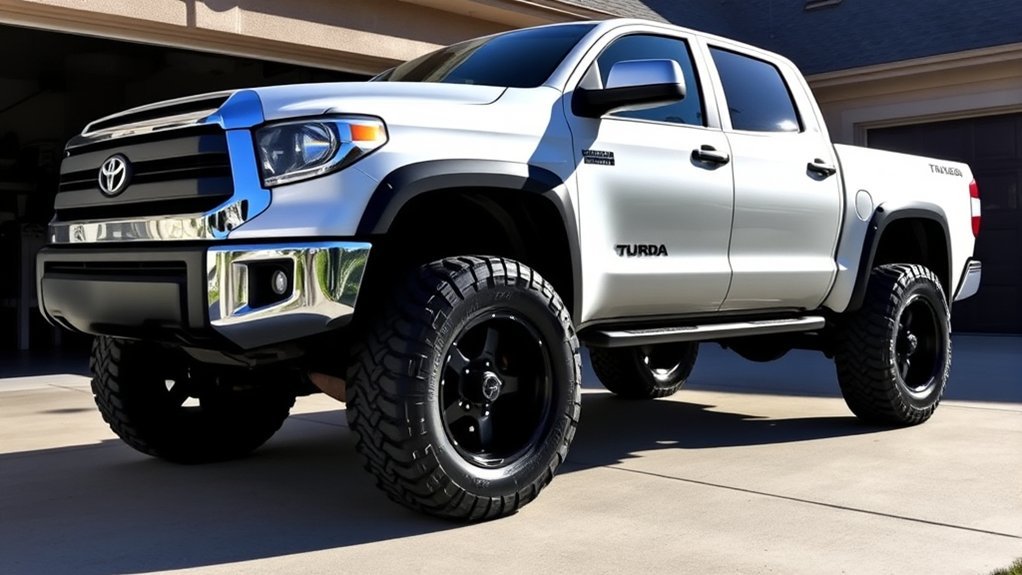
When you upgrade to larger tires, maintenance becomes more important. Bigger tires can hide early wear problems, stress suspension parts, and make alignment issues show up faster.
Tire Pressure Management
Check tire pressure when the tires are cold. Use the door placard and owner’s manual as your starting point, then ask a qualified tire professional for the correct pressure if you move to a different size, load range, or LT construction.
- Check pressure at least monthly and before long trips.
- Recheck after seasonal temperature changes.
- Do not assume the sidewall maximum pressure is the correct daily-driving pressure.
- Watch for center wear, edge wear, or cupping, which can indicate pressure or alignment problems.
Regular Alignment Checks
Get an alignment after installing larger tires, especially if the truck pulls, the steering wheel is off-center, or the tires show uneven wear. Larger tires make small alignment problems more expensive because they wear costly tread faster.
| When to check alignment | Why it matters |
|---|---|
| After installing larger tires | Confirms steering angle and clearance are correct |
| Every 5,000–10,000 miles | Helps prevent uneven tread wear |
| After hard off-road use | Catches impacts that may shift alignment |
| After hitting a curb or pothole | Protects tire life and steering stability |
Inspect for Rubbing
Inspect for rubbing after the first drive, after the first week, and after the first off-road or towing trip. Look for polished plastic, fresh cuts, worn paint, or tire sidewall marks.
- Turn the wheel fully left and right while parked and while moving slowly.
- Check the mud flaps, fender liner, bumper edge, body mount area, and upper control arm.
- Test in reverse because some rubbing only appears when backing up.
- Inspect again after suspension compression, such as entering a steep driveway.
Visual Reference: Tire Fitment on Various Tundra Models
Photos and owner galleries can help you decide what looks right, but do not rely on looks alone. When comparing visual references, look for the complete setup details: year, trim, suspension, wheel size, wheel offset, tire size, tire model, and trimming notes.
A 275/70R18 on a second-generation truck usually gives a full but practical stance. A 295/70R18 on a third-generation truck looks more aggressive, but the same size can rub depending on tire shoulder, offset, mud flaps, and alignment. For true 35-inch tires, expect a higher chance of trimming, leveling, or other modifications.
How to Test Fit Larger Tires Before Committing
Use this checklist before you commit to a larger size:
- Read the placard: Confirm your OE tire size, cold pressure, and load rating.
- Calculate the new diameter: Compare the new tire height to your current tire.
- Check rim width: Make sure the tire manufacturer approves your wheel width.
- Compare load index: Do not go below the original tire’s required load capacity.
- Confirm offset: Ask how your wheel offset affects inner and outer clearance.
- Test full lock: Turn left and right, forward and reverse.
- Compress the suspension: Use a driveway angle or safe uneven surface to check real movement.
- Recheck after driving: Look for fresh rubbing marks after 25–50 miles.
Frequently Asked Questions
Can I use 275/70R16 tires without modifications?
On many first-generation Tundras, 275/70R16 is close to 31.2 inches tall and may fit, but it is wider than some stock sizes. Check mud flap, fender liner, and full-lock clearance before assuming it is rub-free.
Will larger tires affect fuel efficiency?
Yes. Larger and heavier tires can reduce fuel economy because they increase rotating mass and rolling resistance. The effect depends on tire weight, tread design, pressure, driving speed, and how much taller the new tire is than stock.
What is the recommended tire pressure for 265/75R16?
Use the cold tire pressure listed on your Toyota Tundra’s door placard or owner’s manual as the starting point. If the 265/75R16 is a different load range or construction than the original tire, ask a tire professional to calculate the correct pressure.
Do bigger tires impact towing capacity?
Bigger tires do not officially raise towing capacity. They can make towing feel different by changing effective gearing, braking response, tire weight, and speedometer accuracy. If you tow, choose a tire with the correct load index and avoid sizes that rub under load.
How do tire brands compare in size accuracy?
The printed size is only a category. Actual diameter, section width, tread width, and shoulder shape can vary by brand and model. Always check the manufacturer’s spec sheet for the exact tire before buying.
Will 35-inch tires fit a stock Toyota Tundra?
True 35-inch tires are usually not a safe no-modification assumption on a stock Tundra. Some owners make them work with the right wheel offset, trimming, leveling, or suspension changes, but rubbing is likely without careful setup.
Is 295/70R18 the same as a 35-inch tire?
No. A 295/70R18 is about 34.3 inches tall by calculation, although actual mounted height varies by tire model. It is closer to a 34-inch tire than a true 35.
Should I recalibrate the speedometer after larger tires?
If the new tire is much taller than stock, recalibration is a good idea when supported by your vehicle or aftermarket equipment. At minimum, compare your speedometer to a GPS speed reading after installation.
Conclusion
The biggest tire on a stock Toyota Tundra is not one fixed size. For a first-generation truck, think around 31.5–32 inches. For a second-generation truck, 275/70R18 is a strong conservative choice at about 33.2 inches. For a third-generation truck, 285/65R18 is a practical OE-style reference, while 295/70R18 is an aggressive option that may need minor clearance work.
The smartest choice is the largest tire that clears safely, carries the correct load, keeps the truck predictable, and matches how you drive. Measure carefully, check the placard, confirm load rating, test for rubbing, and do not trade safety for size.
Sources
- Toyota Owners Manuals & Warranties — official owner’s manual and placard reference guidance by model year.
- Toyota 2022 Tundra Tire Inflation Pressure Manual Page — factory tire pressure and tire-size reference location.
- NHTSA Tire Safety Brochure — replacement tire size, placard, and tire-safety guidance.
- NHTSA TireWise — tire safety, pressure, tread, recall, and maintenance information.
- Tire Industry Association Tire Replacement Guidance — load index, speed rating, and replacement tire safety guidance.

Related Articles
Toyota Tundra Tire and Wheel Package: What to Consider Before Buying
Unlock the secrets to choosing the perfect tire and wheel package for your Toyota Tundra—essential tips await to enhance your ride.
Read More
Do Bigger Tires Void a Toyota Tundra Warranty? Magnuson-Moss Act Explained
Bigger tires might not void your Toyota Tundra warranty, but understanding the Magnuson-Moss Act is crucial—discover how to protect your investment effectively.
Read More
Toyota Tundra Tire Rack Setup: Garage Storage Ideas for Seasonal Sets
Better tire storage for your Toyota Tundra awaits—discover essential tips to maximize space and protect your seasonal sets in the garage!
Read More