
How to Check Tire Tread Depth at Home: 3 Easy Methods That Work
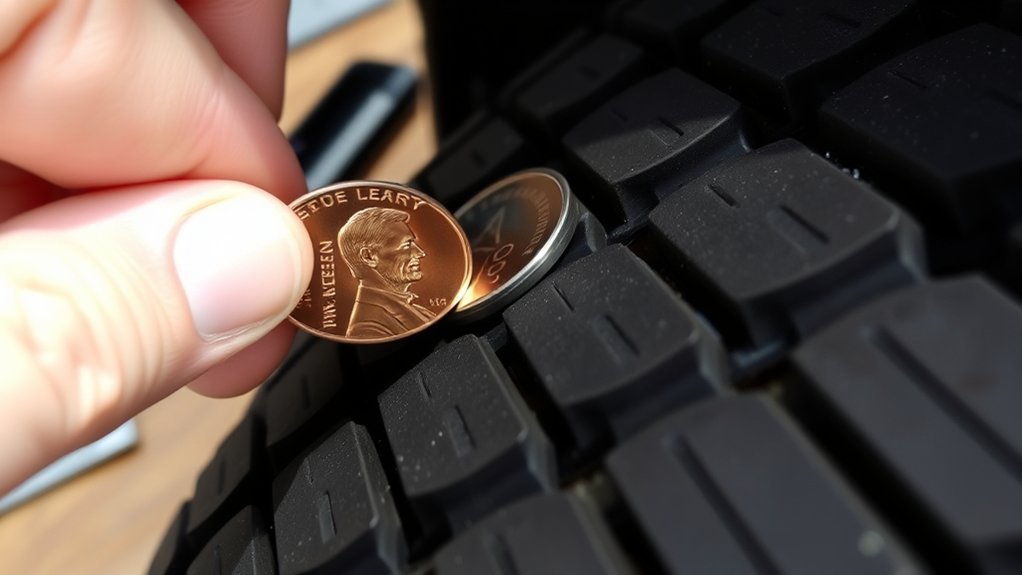
Checking tire tread depth at home takes only a few minutes, and it can help you spot unsafe wear before rain, snow, or a long trip makes it a bigger problem. You can use a penny, a quarter, the tire’s built-in wear bars, or a simple tread depth gauge. The key is to check several spots on every tire and use the lowest reading.
Quick Answer
To check tire tread depth at home, place a penny into the tread with Lincoln’s head upside down. If you can see the top of his head, the tire is at or near 2/32 inch and should be replaced. For a more accurate check, use a tread depth gauge and measure the lowest groove on each tire.
Key Takeaways
- At 2/32 inch, your tread is too low and the tire needs replacement.
- At 4/32 inch, consider replacing tires if you drive in frequent rain or wet conditions.
- At about 5/32 inch, snow traction can start to drop, especially on all-season tires.
- Always check the inner, center, and outer tread grooves because tires can wear unevenly.
- A tread depth gauge is the most accurate at-home tool; coin tests are quick screening methods.
At a Glance
| Time Required | 5 to 10 minutes for all four tires |
| Difficulty | Easy |
| Tools Needed | Penny, quarter, tread depth gauge, and good lighting |
| Cost | Free with coins; usually a few dollars for a basic tread depth gauge |
Warning: Do not rely on tread depth alone if a tire has cracks, bulges, exposed cords, punctures, vibration, or severe uneven wear. Have the tire inspected by a qualified tire professional before driving farther than necessary.
What Tire Tread Depth Is Safe?
Tread depth is usually measured in thirty-seconds of an inch. Many passenger tires start around 10/32 inch or more when new, but the exact starting depth depends on the tire model. The minimum replacement point commonly used in U.S. safety guidance is 2/32 inch. Waiting until that point is not ideal if you often drive in heavy rain or snow.
| 10/32 inch or more | Common new-tire range for many passenger tires. |
| 5/32 inch | Snow traction may be reduced; consider replacement before winter driving. |
| 4/32 inch | Wet traction is reduced; consider replacement if you drive often in rain. |
| 2/32 inch | Replace the tire. This is the common minimum tread depth used in U.S. tire safety guidance. |
AAA testing found that tires worn to 4/32 inch had longer average wet-road stopping distances than new tires, including an 87-foot increase for a passenger car.
Use the Penny Test to Check Tire Tread Depth
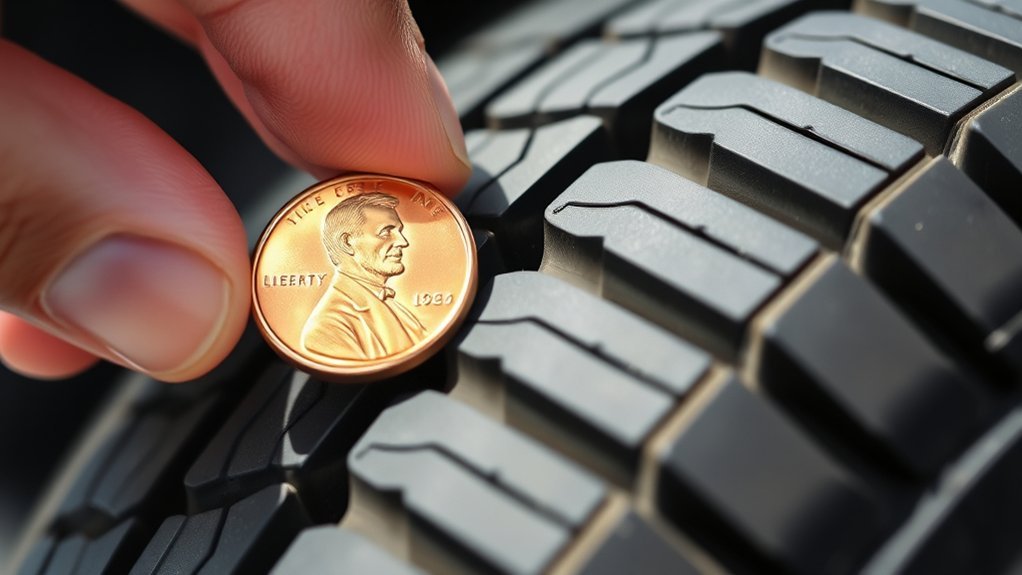
The penny test is the fastest way to check whether your tire tread is near the replacement point. Place a penny into a main tread groove with Lincoln’s head facing down into the tire. If the tread covers part of Lincoln’s head, the tire has more than about 2/32 inch of tread at that spot. If you can see the top of Lincoln’s head, the tire is too worn and should be replaced.
Check more than one spot. Measure the inner edge, center, and outer edge of each tire. If one area fails the penny test but another area passes, use the lowest reading as your safety guide. Uneven tread depth can mean the tire needs rotation, alignment, inflation correction, or inspection.
Pro Tip: Turn the steering wheel to one side before checking the front tires. This exposes more tread and makes it easier to inspect the inner and outer edges.
Measure Your Tread Depth With a Quarter
The quarter test is useful because it gives you an earlier warning than the penny test. Insert a quarter into the tread groove with George Washington’s head facing down. If the tread touches or covers part of Washington’s head, you likely have more than about 4/32 inch of tread in that spot. If the top of Washington’s head is visible, the tire is around 4/32 inch or lower.
That does not always mean the tire is illegal, but it does mean wet-road traction can be reduced. If you drive in frequent rain, highway traffic, or standing water, start planning replacement around 4/32 inch instead of waiting for 2/32 inch. Tire Rack recommends considering replacement at 4/32 inch for wet conditions and around 5/32 inch for snow-covered roads.
[Products Worth Considering]

This compact capsule-style tire repair kit helps you quickly fix punctures and plug flats with minimal effort. The rugged stainless steel shell protects the contents for reliable roadside use, while the simple plug assembly makes repairs fast and tool-free. Suitable for motorcycles, cars, ATVs, UTVs, and even mountain bikes.

This wheel brush kit delivers pro-level cleaning at home, lifting dirt, grime, and brake dust to help restore wheel appearance. It includes multiple brush styles and applicator pads for tackling different wheel surfaces, with gentle, metal-free bristles designed to reduce scratching risk. The flat and double-ended brushes are built for comfort and reach, making wheel care easier for cars, trucks, and RVs.

Blackline Blackout is a water-based trim and tire dressing that restores rubber, vinyl, and plastic with a rich satin, blackout look. Its no-sling formula dries quickly and helps prevent messy transfer onto paint. The coating repels water and offers UV protection to help prevent fading, cracking, and discoloration for a clean, long-lasting finish.
Check Your Tread Depth With a Gauge
A tread depth gauge is the most precise at-home method because it gives you an actual measurement in thirty-seconds of an inch or millimeters. Use it when the coin test is close, when tread wear looks uneven, or before a road trip.
- Park on a flat surface and make sure the vehicle is secure.
- Place the gauge probe into a main tread groove, not on top of a tread block or wear bar.
- Press the gauge base flat against the tread blocks.
- Read the measurement.
- Repeat on the inner, center, and outer grooves of each tire.
- Use the lowest measurement you find on that tire.
If any main groove reads 2/32 inch or less, replace the tire. If one side is much lower than the other, schedule an inspection because the vehicle may have an alignment, suspension, rotation, or inflation issue.
[Products Worth Considering]

The JACO FlowPro Tire Inflator measures, inflates, and airs down tires up to 100 PSI with battery-free operation and ±2% accuracy after calibration. It features a glowing pressure dial for night visibility, a heavy-duty steel build with a hybrid hose, and a precision push-to-inflate thumb trigger. The patented Lightning Air Chuck locks on for a secure seal, and the kit includes quick-connect hardware for easy inline use with your air compressor.
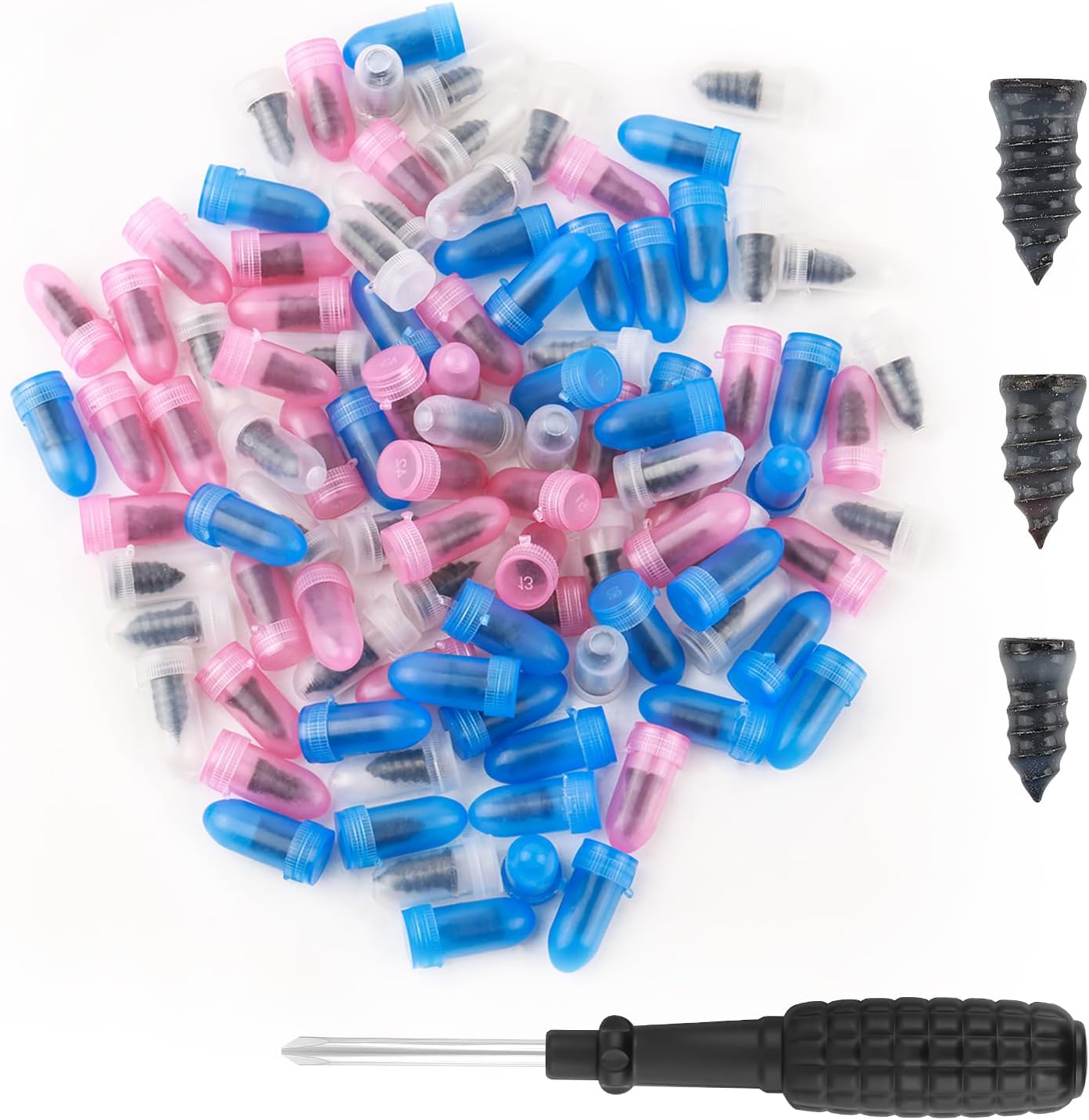
This 100-piece tire repair screw plug kit provides a fast, self-service solution for punctures on the road. Choose the correct plug size, insert it into the break, and screw it in to help seal the puncture and temporarily restore tire pressure. Thickened threads and rubber-wrapped plugs improve bite and sealing while remaining compact and easy to carry.
Check the Built-In Tread Wear Bars
Most modern tires have built-in tread wear indicators, also called wear bars. These are small raised bars that run across the tread grooves. When the tread surface is level with the wear bars, the tire has reached the replacement point and should not be kept in normal service.
Wear bars are helpful because they are always on the tire, but they are not as detailed as a gauge. If the tread is getting close to the bars, use a tread depth gauge or have the tire checked by a tire shop.
Note: Check the spare tire too. A spare can have plenty of tread but still be unsafe if it is old, cracked, underinflated, or damaged.
Where and How Often to Check Your Tires
Check tread depth at least once a month and before long trips. It is also smart to check before heavy rain, snow season, or towing. While you are checking tread, inspect the sidewalls and tread face for cuts, punctures, bulges, scrapes, cracks, bumps, embedded objects, or exposed cords.
Also check tire pressure when the tires are cold, meaning the vehicle has been parked for at least three hours. Proper pressure does not replace tread depth, but it helps tires wear evenly and supports fuel economy, handling, and tire life.
What Uneven Tread Wear Means
Uneven tread wear is a warning sign. It can make one part of the tire unsafe even when another part still looks fine.
- More wear in the center: the tire may have been overinflated.
- More wear on both outer edges: the tire may have been underinflated.
- More wear on one edge: the vehicle may need alignment or suspension service.
- Cupping or scalloped dips: the tire may need balancing, suspension inspection, or replacement.
If the wear pattern looks uneven, do not just replace one tire and ignore the cause. Have the vehicle inspected so the next set of tires does not wear out early.
When to Replace Your Tires
Replace your tires when tread reaches 2/32 inch, when wear bars are flush with the tread, or when the tire has unsafe damage. You should also consider replacing earlier if you regularly drive in rain, snow, or slush. For wet driving, 4/32 inch is a practical caution point. For snow, about 5/32 inch is a better planning point.
Tire age also matters. Some vehicle manufacturers recommend replacing tires every six years regardless of use, but you should follow your owner’s manual and the tire manufacturer’s guidance. If you are unsure how old your tires are, look for the DOT date code on the sidewall or ask a tire shop to check it.
Frequently Asked Questions
How often should I check my tire tread depth?
Check tire tread depth at least once a month and before long trips. It is best to inspect tread at the same time you check cold tire pressure, because inflation problems often cause uneven wear.
What are the signs of worn-out tires?
Common signs include tread at 2/32 inch or less, wear bars flush with the tread, uneven wear, reduced wet traction, vibration, cracks, bulges, exposed cords, or repeated pressure loss. Any bulge, cord exposure, or severe vibration needs professional inspection right away.
Can I drive with low tread depth?
Driving with low tread depth is risky, especially on wet, snowy, or slushy roads. At 2/32 inch, replace the tire. At 4/32 inch, plan replacement if rain is common where you drive. At about 5/32 inch, snow traction can already be reduced.
How does tire tread affect fuel efficiency?
Tread condition affects traction, braking, and control most directly. Fuel efficiency is usually affected more by tire pressure, alignment, tire type, and rolling resistance. Keeping tires properly inflated and evenly worn helps support safer handling and better fuel economy.
When should I replace my tires?
Replace tires when the tread reaches 2/32 inch, when wear bars are flush with the tread, or when there is serious damage. Consider replacement sooner at 4/32 inch for wet driving or around 5/32 inch for snow. Also follow the tire and vehicle manufacturer’s age guidance.
Is a tread depth gauge better than the penny test?
Yes. The penny test is fast and useful, but a tread depth gauge gives a real measurement. Use a gauge if the tire is close to the limit, if tread wear looks uneven, or if you want a more accurate check before a long trip.
Conclusion
Regularly checking tire tread depth is one of the easiest ways to protect traction, braking, and control. Use the penny test for a fast 2/32-inch check, the quarter test as an earlier wet-weather warning, and a tread depth gauge for the most accurate reading. Check several grooves on every tire, watch for uneven wear or damage, and replace tires before low tread turns into a safety problem.
Sources
- NHTSA Summer Driving & Road Trip Tips — supports monthly tire inspection, penny test, 2/32-inch tread guidance, cold tire checks, tire age note, and damage inspection.
- U.S. Tire Manufacturers Association Tire Care Essentials — supports 2/32-inch tread guidance, wear bars, penny test, monthly checks, and rotation guidance.
- Tire Rack: How Much Tread Depth Is Enough? — supports 4/32-inch wet-condition and 5/32-inch snow-condition replacement planning.
- AAA Newsroom: Worn Tires Put Drivers at Risk — supports wet-road stopping-distance data for tires worn to 4/32 inch.
- NHTSA Tire Safety Ratings and Awareness — supports tire maintenance, tire safety, traction, and fuel-consumption context.

Related Articles
Toyota Tundra Tire and Wheel Package: What to Consider Before Buying
Unlock the secrets to choosing the perfect tire and wheel package for your Toyota Tundra—essential tips await to enhance your ride.
Read More
Do Bigger Tires Void a Toyota Tundra Warranty? Magnuson-Moss Act Explained
Bigger tires might not void your Toyota Tundra warranty, but understanding the Magnuson-Moss Act is crucial—discover how to protect your investment effectively.
Read More
Toyota Tundra Tire Rack Setup: Garage Storage Ideas for Seasonal Sets
Better tire storage for your Toyota Tundra awaits—discover essential tips to maximize space and protect your seasonal sets in the garage!
Read More