
When to Switch From All-Season to Winter Tires on a 4Runner
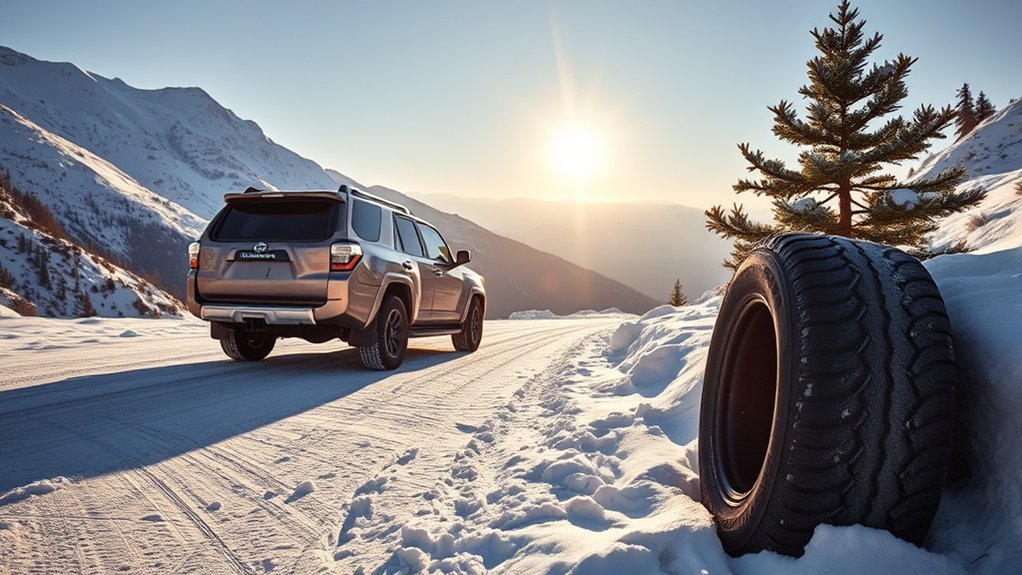
Your Toyota 4Runner may have four-wheel drive, but its tires still provide the only contact with the road. When temperatures stay cold or your routes include snow, slush, or ice, dedicated winter tires can improve braking, steering, and overall control. The right time to switch depends more on temperature and road conditions than on a specific calendar date.
Last reviewed: July 17, 2026.
Quick Answer
If temperatures in your area stay at or below 7°C (45°F), or you regularly drive on snow, slush, or ice, install four matched winter tires on your 4Runner. Choose the exact size and load rating specified for your model year and trim, and look for the three-peak mountain snowflake symbol.
Key Takeaways
- Use sustained temperatures near or below 7°C (45°F), not the month alone, as your main switching signal.
- Install winter tires as a matched set of four, even on a 4WD 4Runner.
- Look for the three-peak mountain snowflake symbol and match Toyota’s specified tire size and load capacity.
- Check pressure when the tires are cold and plan to replace winter tires before tread approaches 4 mm (5/32 inch).
- A second wheel set can simplify seasonal changes, but wheel fitment, brake clearance, TPMS sensors, storage, and total cost all matter.
Warning: Four-wheel drive helps your 4Runner move through loose snow, but it does not create extra tire grip for braking or cornering on ice. Slow down, increase following distance, and avoid abrupt steering or braking regardless of the tires fitted.
When Should You Switch Your 4Runner to Winter Tires?
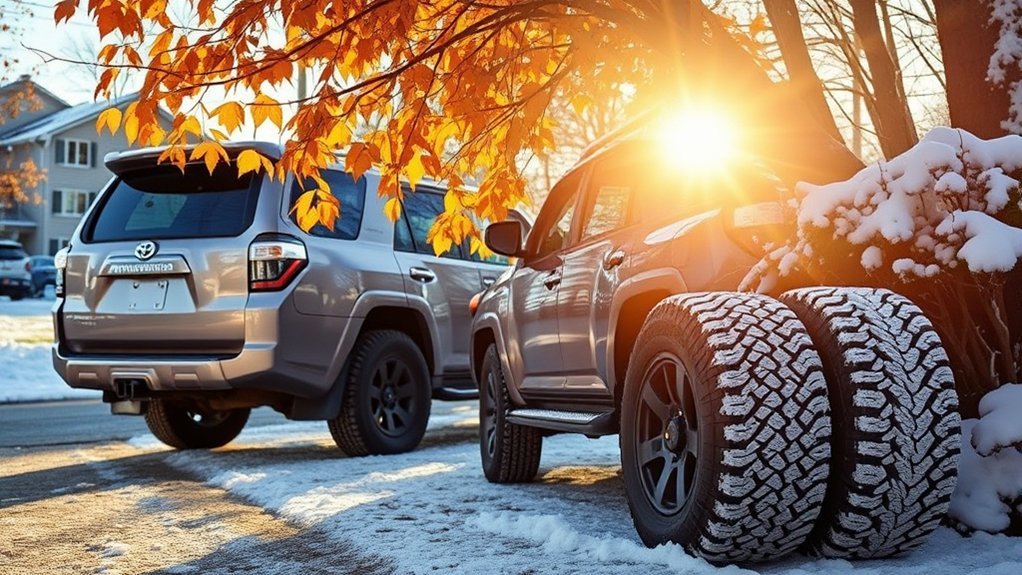
Plan the change when daytime and nighttime temperatures regularly stay near or below 7°C (45°F). At lower temperatures, typical all-season and summer compounds become less flexible, while winter compounds are designed to remain pliable.
You do not need to wait for the first major snowstorm. Booking the installation before the first freeze avoids crowded tire shops and gives you time to confirm wheel fitment, tire pressure, and TPMS operation. Remove dedicated winter tires after temperatures consistently rise above the same range, because warm pavement can increase wear and soften steering response.
Below about 7°C (45°F), compound flexibility becomes a major reason winter tires can retain more cold-weather grip than typical all-season tires.
[Products Worth Considering]
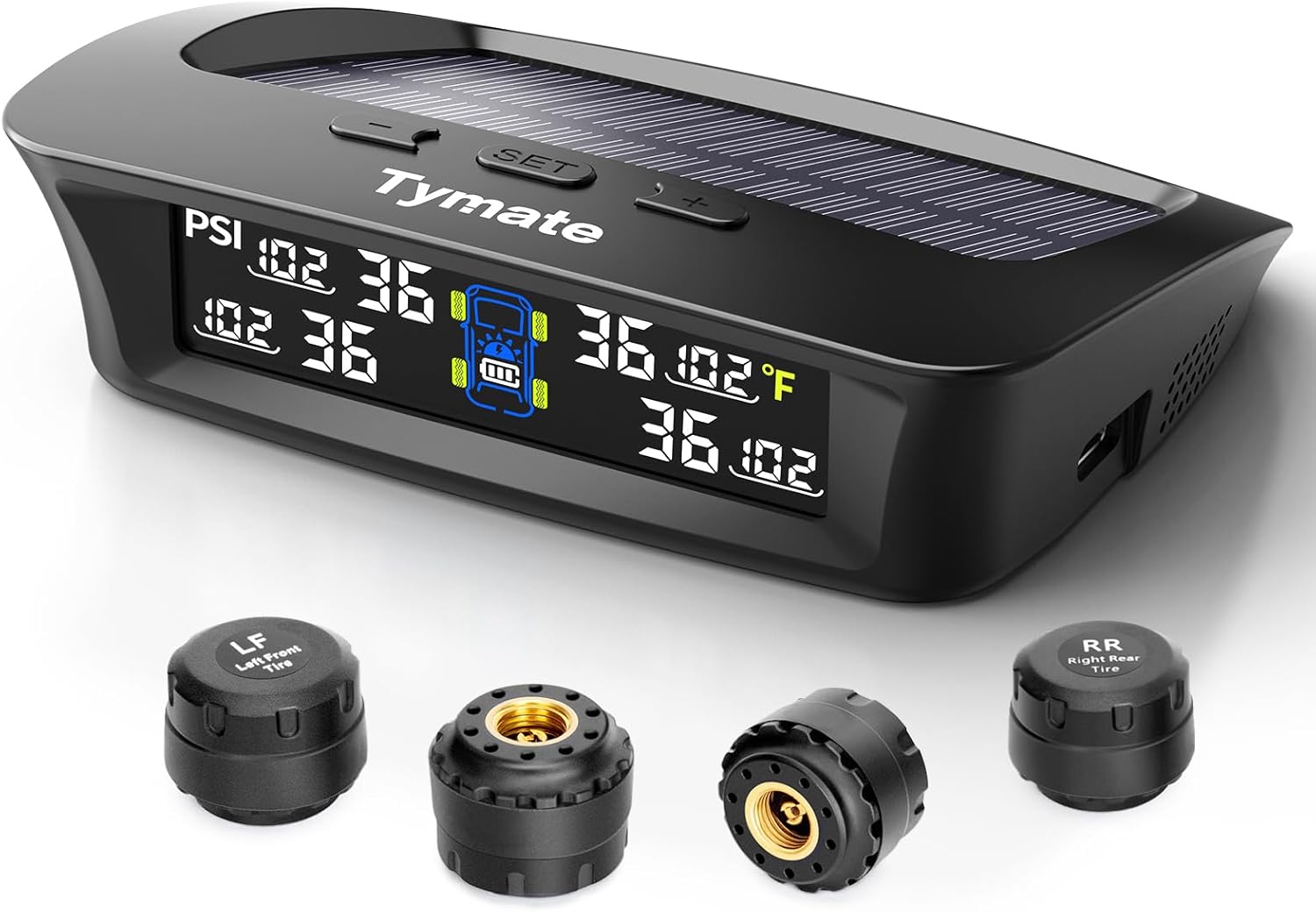
The Tymate TM3 RV TPMS delivers real-time tire pressure monitoring from 0 to 144 PSI with accurate readings and dependable wireless communication. It includes four external sensors with pre-pairing, six alarm modes for rapid leak, pressure extremes, temperature, and signal loss, plus an easy-reference setup for alert thresholds. Solar and USB-C charging help keep the display powered, while the color LCD and adaptive backlight improve visibility for safer driving and towing.

Keep RV, trailer, or truck dual-axle tires protected with waterproof, UV-resistant covers that help guard against sunlight, snow, rust, and dirt. The dual tire covers are easy to install with a rope/bungee fastener for a stable fit that won’t easily slip. Designed for 27–30 inch diameter wheels, they help maintain tire condition through harsh weather.
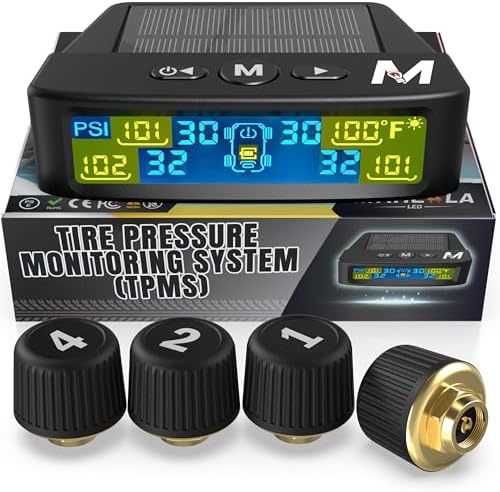
Marcala’s TPMS set of four sensors helps you monitor tire pressure and temperature in real time while driving, with updates every second. The bright color LCD uses auto-dimming for easy viewing, powered by dual solar and USB charging, and offers six alarm modes. Built for trailers, RVs, campers, trucks, and towing setups, the sensors support monitoring 1-4 wheels up to 98 PSI with IP67 waterproof protection.
Signs You Should Change Sooner
- Freezing nights are becoming common, even if daytime temperatures are still mild.
- Your commute includes shaded hills, bridges, unplowed roads, mountain passes, or frequent black ice.
- Weather forecasts show an approaching freeze, snowstorm, or repeated winter precipitation.
- Your current tires have worn tread, cracking, uneven wear, or poor wet-weather grip.
- You tow, carry heavy loads, or drive in remote areas where losing traction has greater consequences.
Does a Toyota 4Runner Need Winter Tires?
A 4Runner benefits from winter tires when it regularly sees cold pavement, packed snow, slush, or ice. The need becomes stronger when you drive before roads are plowed, travel through steep terrain, or face long periods below freezing. Drivers in mild climates with little frost may not need a dedicated set, but they should still use tires suited to their actual conditions.
Four-wheel drive improves the ability to send engine power to available traction. It does not shorten stopping distance by itself. Government winter-driving guidance warns that a 4WD SUV may get moving more easily but still cannot stop sooner after the tires lose grip. That is why tire choice matters even on a capable off-road vehicle.
Note: “All-weather” and “all-season” are not interchangeable terms. Some all-weather tires carry the three-peak mountain snowflake symbol and can work well in moderate winters. Standard all-season tires may only carry an M+S marking and usually provide less severe-snow capability.
What Are the Benefits of Winter Tires for a 4Runner?
Better Cold-Weather Grip
Winter tires use compounds and tread features intended for cold conditions. Their blocks, grooves, and sipes create more edges that can grip packed snow and help move slush away from the contact patch. Results vary by tire model, surface, temperature, tread depth, and speed, so no tire can eliminate winter-driving risk.
More Controlled Braking and Steering
Transport Canada testing and guidance show that all-season tires can require more distance to stop on slippery surfaces than winter tires. The practical benefit is not a guaranteed number of feet or meters. It is a better chance of maintaining usable grip during braking, lane changes, and emergency steering when the road is cold and slick.
More Predictable Handling
A matched set of four winter tires helps keep the front and rear axles responding in a similar way. Mixing winter tires with all-season or all-terrain tires can create a traction imbalance, which may increase understeer, oversteer, or instability during braking and cornering.
Winter Tires vs. All-Terrain, All-Weather, and All-Season Tires
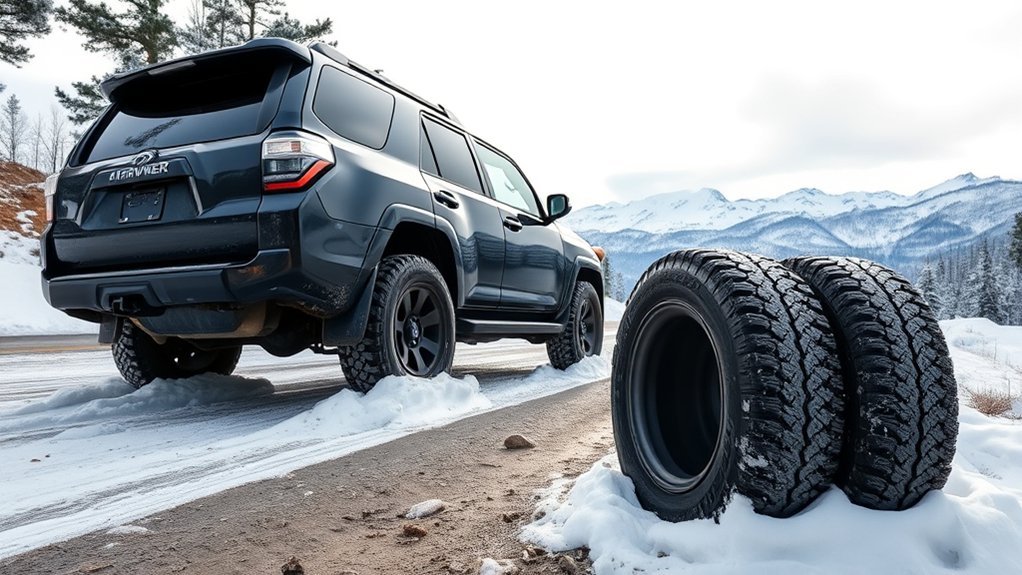
The category name alone does not tell you how a tire will behave in severe winter conditions. Check the sidewall markings, manufacturer specifications, independent testing, and your driving needs.
| Tire Type | Cold, Snow, and Ice | Best Fit | Main Trade-Off |
|---|---|---|---|
| Dedicated winter | Usually the strongest choice for persistent cold, packed snow, and ice | Severe or long winters, mountain routes, frequent unplowed roads | Seasonal changeover and faster wear in warm weather |
| All-weather with 3PMSF | Designed to meet a severe-snow traction standard, but ice performance varies | Moderate winters and drivers who want one year-round set | May not match a top dedicated winter tire in harsh ice or deep snow |
| All-terrain | Varies widely; some carry 3PMSF, while others are mainly M+S | Mixed pavement and off-road use, with tire-specific winter verification | Aggressive tread alone does not guarantee strong ice braking |
| Standard all-season | Acceptable for mild conditions, but less capable in severe snow and persistent cold | Regions with limited freezing weather | Reduced cold-weather and severe-snow performance |
How to Choose Winter Tires for Your 4Runner
Tire Performance in Snow: Look for the Three-Peak Mountain Snowflake Symbol
The three-peak mountain snowflake, often shortened to 3PMSF, identifies tires that meet a defined snow-traction performance requirement. An M+S marking is based on a tread-pattern definition and does not provide the same severe-snow performance certification. For regular winter use, prioritize 3PMSF-marked tires.
Match the Tire to Local Weather and Road Conditions
Choose for the worst conditions you expect to drive through, not only the average winter day. Frequent black ice, steep grades, lake-effect snow, remote highways, and early-morning travel favor a dedicated winter tire. A milder urban climate with prompt plowing may suit a quality all-weather 3PMSF tire, provided its load rating and fitment are correct.
Match the Correct Size, Load Capacity, and Construction
Use the tire size and recommended cold pressure shown on the driver’s door placard and in the owner’s manual for your exact model year and trim. Toyota 4Runner sizes and wheel specifications vary across generations and trims. The replacement tire should also meet or exceed the required load index and use a suitable speed rating.
Toyota’s current 4Runner manuals list multiple factory wheel and tire combinations, which is why a size that fits one trim may not fit another. Confirm brake clearance, wheel width, offset, hub bore, lug-seat design, and load rating before buying a second wheel set.
Install Four Matching Winter Tires
Toyota’s 4Runner winter-driving guidance calls for snow tires on all four wheels and warns against mixing different makes, models, tread patterns, or substantially different tread wear on 4WD models. Four matched tires support balanced braking, steering, and stability-control operation.
Check Tread Depth Before Winter
The general wear bars at 2/32 inch indicate a tire is worn out for normal service, but that depth is not a sensible winter-performance target. Transport Canada advises against using tires near or below 4 mm (5/32 inch) on snow-covered roads. Replace them sooner if grip has noticeably declined or wear is uneven.
Check Chain, Stud, and Local-Law Requirements
Chain clearance and permitted chain placement can vary by 4Runner model year, tire size, and trim. Some Toyota manuals prohibit chains on specific tire sizes because clearance is too tight. Studded-tire dates and restrictions also vary by jurisdiction. Check your exact owner’s manual and local transportation authority before buying chains or studs.
Pro Tip: Take a photo of the driver’s door tire placard before shopping. It gives the tire shop a reliable starting point for size and pressure, while your exact model year, trim, brake package, and intended load determine final fitment.
Is a Second Set of Wheels Worth It?
A separate wheel set can make seasonal changes faster because the tires do not need to be mounted and dismounted twice each year. It can also reduce repeated handling of the tire beads. However, the setup only makes financial sense after comparing wheel cost, TPMS sensors, installation, balancing, storage, and how long you expect to keep the vehicle.
| A Second Wheel Set Makes More Sense When | Keeping One Wheel Set May Be Better When |
|---|---|
| You keep the 4Runner for several winters | You may sell or change vehicles soon |
| Local mounting fees are high | Seasonal mounting is inexpensive or included |
| You have secure, dry storage | You have limited storage space |
| Compatible wheels and TPMS sensors are readily available | Your trim has difficult clearance or expensive sensor requirements |
[Products Worth Considering]
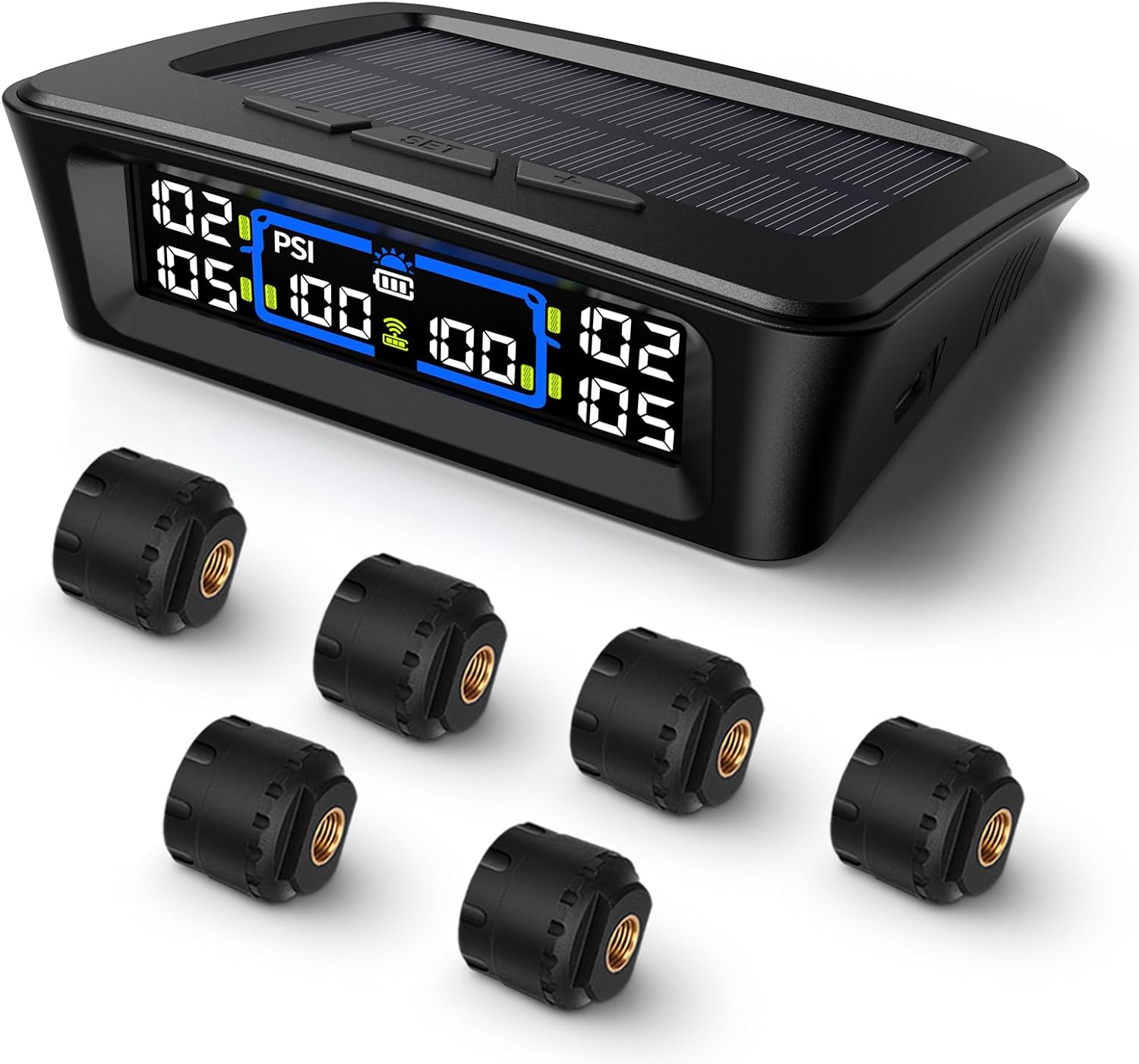
The Tymate TM12 RV TPMS delivers real-time tire pressure and temperature monitoring with a stable 433Hz display for safer long-distance driving. It supports simultaneous monitoring across vehicle and trailer zones, includes six alarm modes for pressure, temperature, leakage, battery, and signal loss, and features easy DIY installation with auto calibration. Power is supplied via USB-C charging or solar recharging, with a wide 0–144 PSI range and up to 50 ft signal coverage for RVs and towable trailers.

RVMATE dual-axle RV tire covers help shield your tires from sunlight, snow, rust, and dirt to keep them in better condition in harsh weather. Made with heavy-duty waterproof, UV-resistant 420D Oxford fabric, they provide strong shading and help reduce wear. They install easily by placing the cover on the wheel and fastening the rope for a stable fit.
TPMS Considerations
Many 4Runners use tire-pressure warning valves and transmitters in the wheels. A second wheel set may need compatible sensors, and the vehicle may need registration or relearning after a swap. Toyota advises using a qualified dealer or tire retailer when snow-tire work affects the pressure-warning system. The warning system does not replace a manual cold-pressure check, and a second wheel set should be checked for correct sensor communication after installation.
Winter Tire Maintenance for Reliable Performance
Check Pressure When the Tires Are Cold
Cold air lowers tire pressure. Use the pressure on the vehicle placard or in the owner’s manual, not the maximum pressure molded into the tire sidewall. NHTSA recommends checking pressure when tires have been parked for at least three hours, and checking all four tires plus the spare at least monthly.
Inspect Wear and Damage
- Measure tread in several grooves and at several points around each tire.
- Look for cuts, bulges, cracks, punctures, exposed cords, and uneven shoulder wear.
- Have alignment checked if the 4Runner pulls, the steering wheel sits off-center, or wear is uneven.
- Confirm directional tires face the correct way and asymmetric tires have the proper side outward.
Rotate and Retorque as Required
Follow the rotation interval and pattern in your owner’s manual and the tire manufacturer’s guidance. Rotation may not be possible if the setup uses different front and rear sizes or certain directional arrangements. After wheel installation, have lug nuts tightened to the model-specific torque and rechecked if the wheel or service provider recommends it.
Store Off-Season Tires Correctly
Clean and dry the tires before storage. Keep them indoors in a cool, dry place away from direct sunlight, heaters, electric motors, solvents, and ozone sources. Mark each tire’s previous position so the next rotation can be planned correctly. Store mounted assemblies securely so they cannot roll or fall.
4Runner Winter Tire Installation Checklist
- Confirm the exact model year, trim, tire size, load index, and wheel specifications.
- Choose four matching tires with the three-peak mountain snowflake symbol.
- Inspect tread depth and manufacturing date before installation.
- Verify wheel clearance, lug hardware, and TPMS compatibility.
- Inflate to the vehicle’s specified cold pressure.
- Confirm directional or asymmetric mounting orientation.
- Check for vibration, pulling, warning lights, or air loss after installation.
- Review chain restrictions and local winter-equipment laws before travel.
Frequently Asked Questions
Does a 4Runner need winter tires?
A 4Runner should use winter tires when it regularly encounters sustained cold, snow, slush, or ice. Four-wheel drive helps with acceleration, but tire grip still controls braking and steering. Mild-climate drivers may be able to use a suitable all-weather 3PMSF tire instead.
Is October too early for winter tires?
October is not automatically too early. Install them when local temperatures regularly approach 7°C (45°F) or an early freeze is expected. In warmer regions, wait until sustained cold arrives so the winter compound does not spend unnecessary time on warm pavement.
Can I install only two winter tires on my 4Runner?
No. Install a matched set of four. Two winter tires can create a large grip difference between axles, which may make the vehicle unstable while braking or cornering. Toyota and Transport Canada both recommend winter tires on all four wheel positions.
Are all-terrain tires enough for winter?
It depends on the tire and conditions. Some all-terrain tires carry the 3PMSF symbol and work well in moderate snow. Others only carry M+S. For frequent ice, packed snow, mountain roads, or long periods of severe cold, a dedicated winter tire is usually the safer choice.
When should I replace my winter tires?
Replace them when damage, age, cracking, uneven wear, or declining grip makes them unsafe. For snow use, do not wait for the general 2/32-inch wear bars. Transport Canada advises against using tires near or below 4 mm (5/32 inch) on snow-covered roads.
Do I need tire chains if I have winter tires?
Possibly. Some roads require chains or approved traction devices during severe weather, even when winter tires are fitted. Chain compatibility varies by 4Runner year and tire size, so check the exact owner’s manual and local road rules before traveling.
Conclusion
Switch your 4Runner to four matched winter tires when temperatures consistently approach 7°C (45°F) or your routes regularly include snow and ice. Choose 3PMSF-marked tires that match Toyota’s size and load requirements, maintain the placard pressure, and replace them before winter tread becomes too shallow. A second wheel set can add convenience, but only after you confirm fitment, TPMS compatibility, storage, and total cost.
Sources
- Transport Canada: Using Winter Tires: 7°C guidance, 3PMSF identification, four-tire installation, pressure, and winter tread depth.
- Toyota 4Runner Owner’s Manual: Winter Driving Tips: snow-tire installation, matching tires, chain restrictions, and TPMS precautions.
- Toyota 2026 4Runner Owner’s Manual: Tires and Wheels: model-specific tire sizes, wheel specifications, pressure, and torque examples.
- NHTSA TireWise: tire selection, tread, pressure, rotation, and TPMS guidance.
- U.S. Tire Manufacturers Association: Snow Tire Definition: the M+S marking and its tread-pattern basis.
- Indiana Department of Transportation: Winter Driving Safety: limits of four-wheel drive for stopping and control.

Related Articles
4Runner Tire Mileage: How Many Miles Should They Last
Curious about how long your 4Runner tires should last? Discover essential tips and factors that influence tire longevity.
Read More
How Long Do Toyota 4Runner Tires Typically Last
How long do Toyota 4Runner tires typically last? Discover the factors that influence tire longevity and essential tips for maintenance.
Read More
How to Choose the Right Tires for Your 4Runner Build
Match your 4Runner's tires to your build goals, but one wrong choice could cost you thousands—here's what most owners overlook.
Read More