
6th Gen 4Runner Tire Size: What Comes From the Factory
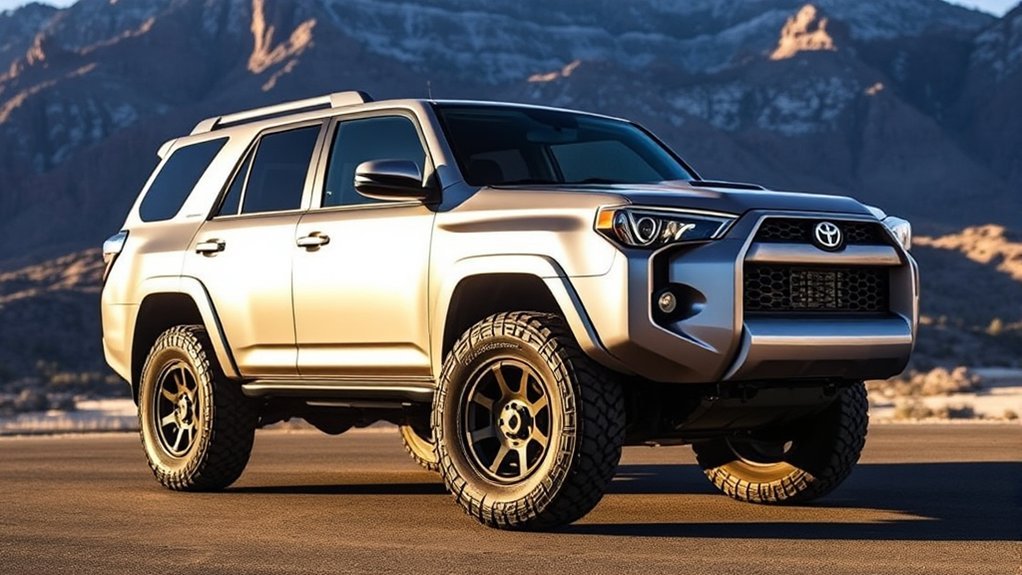
The sixth-generation Toyota 4Runner uses several factory tire sizes depending on its trim, wheel package, drivetrain, and model year. Common U.S.-market sizes range from 245/70R17 on the SR5 to 265/70R18 on off-road-focused grades and 265/55R20 on road-oriented or luxury trims. Before replacing or upsizing tires, confirm the exact specification on your driver-door tire placard.
Quick Answer
Common 2025–2026 4Runner factory sizes are 245/70R17 for the SR5, 265/55R20 for TRD Sport, Limited, and Platinum grades, and 265/70R18 for TRD Off-Road, TRD Pro, and Trailhunter grades. Equipment can vary, so the tire placard on your own vehicle is the final authority.
Key Takeaways
- The sixth-generation 4Runner covers the 2025 and 2026 model years and is offered in nine grades.
- The SR5 commonly uses 245/70R17, not 265/65R17.
- TRD Off-Road, TRD Pro, and Trailhunter grades commonly use 265/70R18 tires with a nominal diameter of about 32.6 inches.
- Use the cold pressure printed on the driver-door placard rather than a generic PSI range or the maximum pressure molded into the tire sidewall.
- A larger tire is not guaranteed to fit because wheel offset, actual tire dimensions, alignment, suspension travel, body clearance, and vehicle load all matter.
- Replacement tires should meet the required load capacity and speed rating and fit a wheel width approved by the tire manufacturer.
2025–2026 4Runner Factory Tire Sizes by Trim
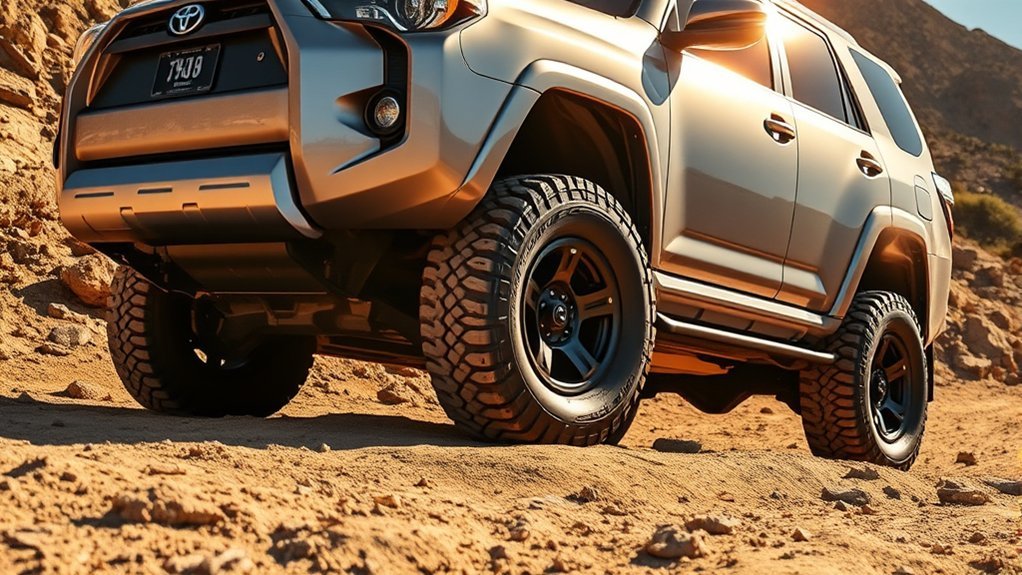
Toyota introduced the sixth-generation 4Runner for the 2025 model year and continued it for 2026. The lineup includes SR5, TRD Sport, TRD Sport Premium, TRD Off-Road, TRD Off-Road Premium, Limited, Platinum, TRD Pro, and Trailhunter. Toyota lists the current grades and equipment on its 4Runner specifications page.
The following chart shows common U.S.-market original-equipment fitments. Package, drivetrain, regional, and production changes are possible, so verify the size printed on your vehicle before ordering tires.
| Trim | Common OE Size | Wheel Diameter | Nominal Tire Diameter |
|---|---|---|---|
| SR5 | 245/70R17 | 17 inches | About 30.5 inches |
| TRD Sport | 265/55R20 | 20 inches | About 31.5 inches |
| TRD Sport Premium | 265/55R20 | 20 inches | About 31.5 inches |
| TRD Off-Road | 265/70R18 | 18 inches | About 32.6 inches |
| TRD Off-Road Premium | 265/70R18 | 18 inches | About 32.6 inches |
| Limited | 265/55R20 | 20 inches | About 31.5 inches |
| Platinum | 265/55R20 | 20 inches | About 31.5 inches |
| TRD Pro | 265/70R18 | 18 inches | About 32.6 inches; marketed as 33 inches |
| Trailhunter | 265/70R18 | 18 inches | About 32.6 inches; marketed as 33 inches |
Note: Original-equipment tire brands and models can change during a production run. Match the size, load index, speed rating, and tire type required for your vehicle rather than assuming every 4Runner of the same trim left the factory with the same tire brand.
[Products Worth Considering]

EVOULTES heavy duty tire inflator with an integrated gauge delivers accurate pressure readings from 10–120 PSI, helping you inflate, deflate, and check tires in one tool. The 16.5-inch extended dual-head air chuck with swivel base reaches hard-to-access dual wheel valves on trucks and RVs. A brass trigger core and side-mounted air release valve make operation smooth, with standard 1/4" NPT threading and quick-connect compatibility for easy setup.

This portable cordless tire inflator delivers up to 160 PSI with fast 17 L/min airflow to help you quickly top up tires and get back on the road. It features dual power mode, running on a 21V rechargeable battery or a 12V DC adapter for convenient roadside use. An automatic shut-off with digital pressure gauge helps prevent overinflation, and a built-in LED light improves visibility in low-light conditions.

RVMATE dual-axle RV tire covers help shield your tires from sunlight, snow, rust, and dirt to keep them in better condition in harsh weather. Made with heavy-duty waterproof, UV-resistant 420D Oxford fabric, they provide strong shading and help reduce wear. They install easily by placing the cover on the wheel and fastening the rope for a stable fit.
How to Verify Your 4Runner’s Original Tire Size
The chart is a useful starting point, but your own vehicle provides the most reliable answer. Check these locations before buying tires or wheels:
- Driver-door tire placard: Open the driver’s door and find the tire-and-loading label on the door jamb or pillar. It lists the original tire size and recommended cold pressure.
- Current tire sidewall: Confirm the size installed on all four corners. Do not assume the current tires are original.
- Spare tire: Inspect its sidewall and confirm that it is suitable for the vehicle’s drivetrain and intended use.
- Original window sticker or build record: This can identify factory wheel packages or trim-specific equipment.
- VIN-specific Toyota information: A Toyota dealer can check parts and build data when the placard, wheels, and current tires do not agree.
Warning: Do not order replacement tires from the trim name alone. A dealer-installed wheel package, optional equipment, regional specification, or previous-owner modification can change what is fitted to the vehicle.
How to Read a Size Such as 265/70R18
A tire size contains more information than its overall width. In 265/70R18:
| Marking | Meaning |
|---|---|
| 265 | Nominal section width in millimeters |
| 70 | Sidewall height expressed as 70% of the section width |
| R | Radial construction |
| 18 | Required wheel diameter in inches |
A 265/70R18 has a calculated nominal diameter of about 32.6 inches, which is why it is commonly described as a 33-inch tire. The tire manufacturer’s published diameter and section width may differ slightly because tread design, construction, and measuring-wheel width affect the final dimensions.
Also check the markings that follow the size, such as 116T. The number is the load index, and the letter is the speed rating. A replacement should meet the vehicle manufacturer’s requirements and be suitable for the vehicle’s maximum loaded weight.
Why Different 4Runner Trims Use Different Tire Sizes
Wheel diameter and sidewall height change how a 4Runner feels and performs. Toyota combines each trim’s tires with suspension tuning and intended use.
- Seventeen-inch setup: The SR5’s taller sidewall can provide more impact cushioning and usually gives buyers a broad selection of replacement tires.
- Twenty-inch setup: TRD Sport, Limited, and Platinum configurations use a shorter sidewall. This can produce a more direct steering response but leaves less sidewall between the wheel and a pothole or rock.
- Eighteen-inch off-road setup: The 265/70R18 size combines a taller overall diameter with useful sidewall height. Toyota equips off-road-focused grades with this general configuration.
Wheel diameter alone does not determine traction. Tire compound, tread pattern, construction, pressure, temperature, load, and road surface are equally important.
Highway, All-Terrain, Mud-Terrain, or Winter Tires
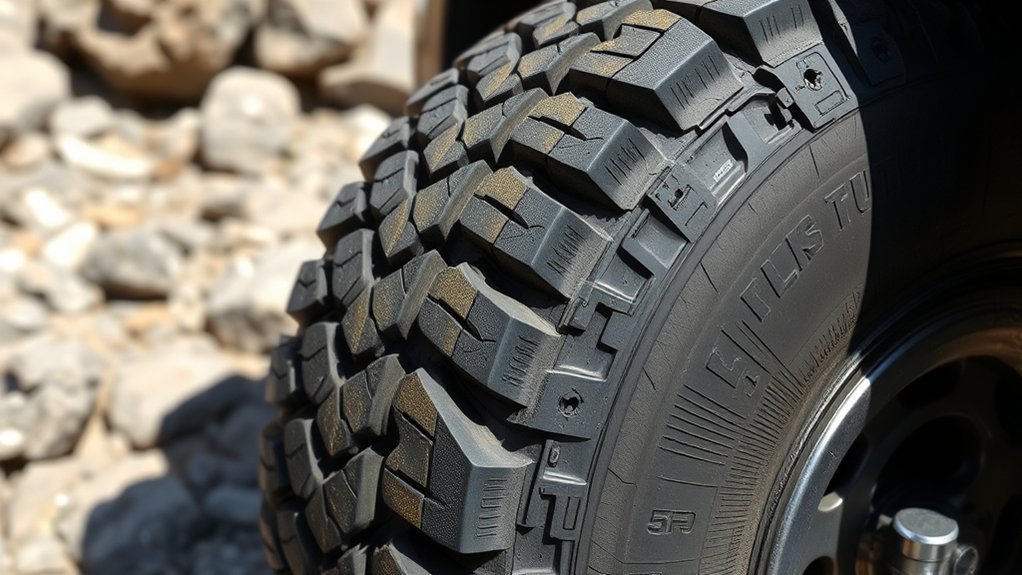
Choose a tire category before choosing a more aggressive appearance. Each type has different strengths and compromises.
| Tire Type | Best For | Main Advantages | Tradeoffs |
|---|---|---|---|
| Highway or touring | Commuting, road trips, towing on pavement | Quiet ride, predictable pavement handling, often lower rolling resistance | Less grip and sidewall protection on difficult trails |
| All-terrain | Mixed pavement, gravel, dirt, light mud, and trail use | Balanced road manners and off-road traction | May be heavier, louder, and less efficient than a highway tire |
| Mud-terrain | Frequent deep mud, rocks, and difficult low-speed trails | Open tread, strong self-cleaning ability, robust off-road construction | More road noise, weight, vibration, and possible wet-pavement compromises |
| All-weather | Year-round road use with regular cold, slush, or snow | Stronger winter performance than a basic all-season tire | May wear faster or feel less responsive than a warm-climate touring tire |
| Dedicated winter | Frequent snow, ice, and sustained cold temperatures | Cold-weather compound and winter-focused tread | Seasonal changeover and storage are required |
For meaningful winter capability, look for the 3-Peak Mountain Snowflake symbol. It confirms that the tire passed a standardized acceleration-traction test in snow. The symbol does not make a tire equal to a dedicated winter tire in every icy or cold-weather condition.
Pro Tip: Compare the tire’s actual weight as well as its tread. A substantially heavier tire adds rotating and unsprung mass, which can affect acceleration, braking, steering response, ride quality, and fuel use even when its outer diameter is close to stock.
Correct Tire Pressure for a Sixth-Generation 4Runner
The correct pressure is the cold PSI printed on the driver-door tire placard. Toyota’s tire-pressure guidance directs owners to this label or the owner’s manual rather than a generic pressure range.
Check Pressure When the Tires Are Cold
A cold reading is taken before substantial driving, ideally after the vehicle has been parked for several hours. Driving heats the tire and raises its pressure, so bleeding air from a warm tire can leave it underinflated after it cools.
Check all four tires and the spare at least once a month, before a long trip, and after a major temperature change. The National Highway Traffic Safety Administration also recommends regular pressure, tread, and damage inspections.
Do Not Use the Sidewall Maximum as the Target
The pressure molded into the tire sidewall is associated with the tire’s rated load conditions. It is not the normal inflation recommendation for the 4Runner. Use the vehicle placard unless Toyota provides a different approved specification for a particular operating condition.
Proper inflation supports predictable handling, even tread wear, load capacity, and fuel efficiency—but the correct number comes from the vehicle placard, not a universal PSI range.
The U.S. Department of Energy reports that properly inflated tires may improve fuel economy by about 0.6% on average and up to 3% in some cases. It estimates that fuel economy drops by about 0.2% for each 1 psi that all four tires are below their recommended pressure. See the current guidance at FuelEconomy.gov.
Airing Down for Off-Road Use
Some drivers temporarily reduce pressure at low speed on sand, rocks, or washboard roads to increase the tire’s contact area and allow the sidewall to flex. The appropriate pressure depends on tire construction, wheel design, vehicle weight, load, terrain, and speed. There is no single safe off-road PSI for every 4Runner.
Warning: Low pressure increases heat, sidewall damage, wheel impact, and bead-separation risk. Drive slowly while aired down and reinflate the tires to the placard specification before returning to normal paved-road speeds.
What Must Match When Replacing the Factory Tires
A matching size is only one part of a safe replacement. Confirm all of the following:
- Load index: The tire must provide enough capacity for the vehicle’s gross axle and vehicle weight ratings.
- Speed rating: Use a rating that meets Toyota’s specification and suits the vehicle’s operating conditions.
- Approved wheel-width range: Check the tire manufacturer’s data sheet. A tire can physically mount on a wheel that is outside its approved measuring or permitted rim range.
- Overall diameter: A major change affects speedometer readings, gearing, ground clearance, braking leverage, and electronic systems.
- Construction and service type: Passenger-metric and LT-metric tires can require different pressures to carry a comparable load.
- TPMS compatibility: New wheels may require compatible sensors, seals, programming, and a relearn procedure.
- Spare compatibility: The spare should be usable with the drivetrain and should fit its storage location.
On a four-wheel-drive vehicle, use four tires with closely matched size, construction, tread type, and remaining tread depth. A substantial rolling-circumference difference can make the driveline work against itself.
Larger Tires on Stock Suspension
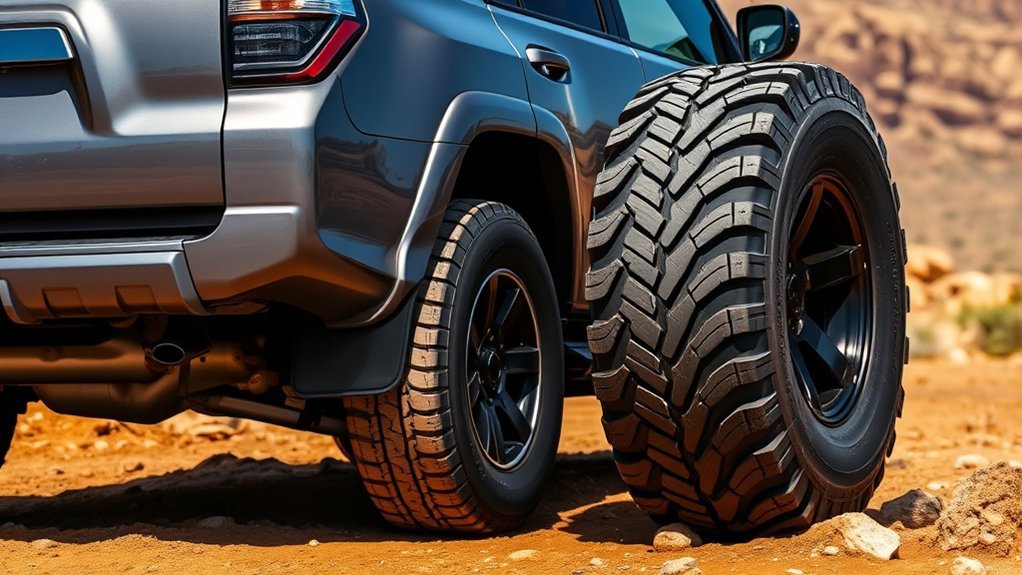
There is no universal “largest tire that fits” answer for every sixth-generation 4Runner. Even two tires with the same sidewall size can differ in measured diameter, section width, shoulder shape, tread depth, and weight.
Warning: A leveling kit or suspension lift does not automatically prevent rubbing. It may increase static clearance while leaving interference at the body mount, firewall, bumper, mud flap, liner, or upper control arm during steering and suspension compression.
| Change | Likely Effect | What Must Be Checked |
|---|---|---|
| Same factory size | Lowest fitment risk | Load rating, speed rating, actual dimensions, and approved rim width |
| Slightly wider tire | More section and shoulder width | Upper-control-arm, liner, mud-flap, body, and full-lock clearance |
| Taller tire | More ground clearance and a longer effective gear ratio | Compression clearance, gearing, braking, speedometer, spare storage, and sensors |
| Different wheel offset | Moves the tire inward or outward | Control-arm clearance, fender coverage, scrub radius, wheel-bearing load, and rubbing |
| Heavier LT or off-road tire | Greater rotating and unsprung mass | Ride, braking, acceleration, balance, pressure requirements, and payload |
Are 275-Width Tires a Direct Fit?
A 275-width option may fit some stock or lightly modified configurations, but width alone does not answer the question. A 275/70R17, 275/65R18, and 275/55R20 have different diameters, sidewall heights, and wheel requirements. Wheel offset and the tire’s actual measured width can also decide whether it rubs.
Do not describe a 275 tire as modification-free until the exact tire-and-wheel combination has been tested on the same trim and suspension configuration.
Can You Fit 285 Tires?
A 285 tire is wider and, depending on its aspect ratio, may also be taller than stock. Some installations require a combination of wheel changes, alignment adjustments, liner repositioning, mud-flap removal, trimming, or suspension work. Other combinations may still rub after a lift.
Before choosing a 285-size tire, obtain its manufacturer-published:
- Overall diameter
- Section width
- Tread width
- Approved rim-width range
- Load index and maximum load
- Weight
- Revolutions per mile
Compare those measurements with the stock tire rather than relying only on the nominal sidewall code.
How to Test Tire Clearance
A proper fitment check should include more than looking at the parked vehicle:
- Confirm the wheel seats correctly and clears the brake caliper, hub, studs, and suspension components.
- Turn the steering from lock to lock while moving slowly forward and in reverse.
- Inspect the front and rear of each wheel well, including liners, mud flaps, body mounts, bumper edges, and control arms.
- Repeat the test with realistic passenger and cargo weight.
- Check clearance while the suspension is compressed and articulated, not only at normal ride height.
- Inspect for fresh rub marks after a cautious test drive.
- Recheck wheel-nut torque according to Toyota or wheel-manufacturer instructions after wheel service.
How Larger Tires Affect the Speedometer and Odometer
A taller tire travels farther with each revolution. Unless the vehicle compensates for the change, the actual road speed can be higher than the displayed speed, and the odometer can record fewer miles than the vehicle travels.
You can estimate the difference with this formula:
Percentage change = (new tire diameter ÷ original tire diameter − 1) × 100
For example, changing from a nominal 32.6-inch tire to a 33.7-inch tire increases diameter by about 3.4%. At an indicated 60 mph, the calculated actual speed would be roughly 62 mph. This is an estimate; use the tire manufacturer’s revolutions-per-mile data or a verified GPS comparison for a more useful check.
[Products Worth Considering]
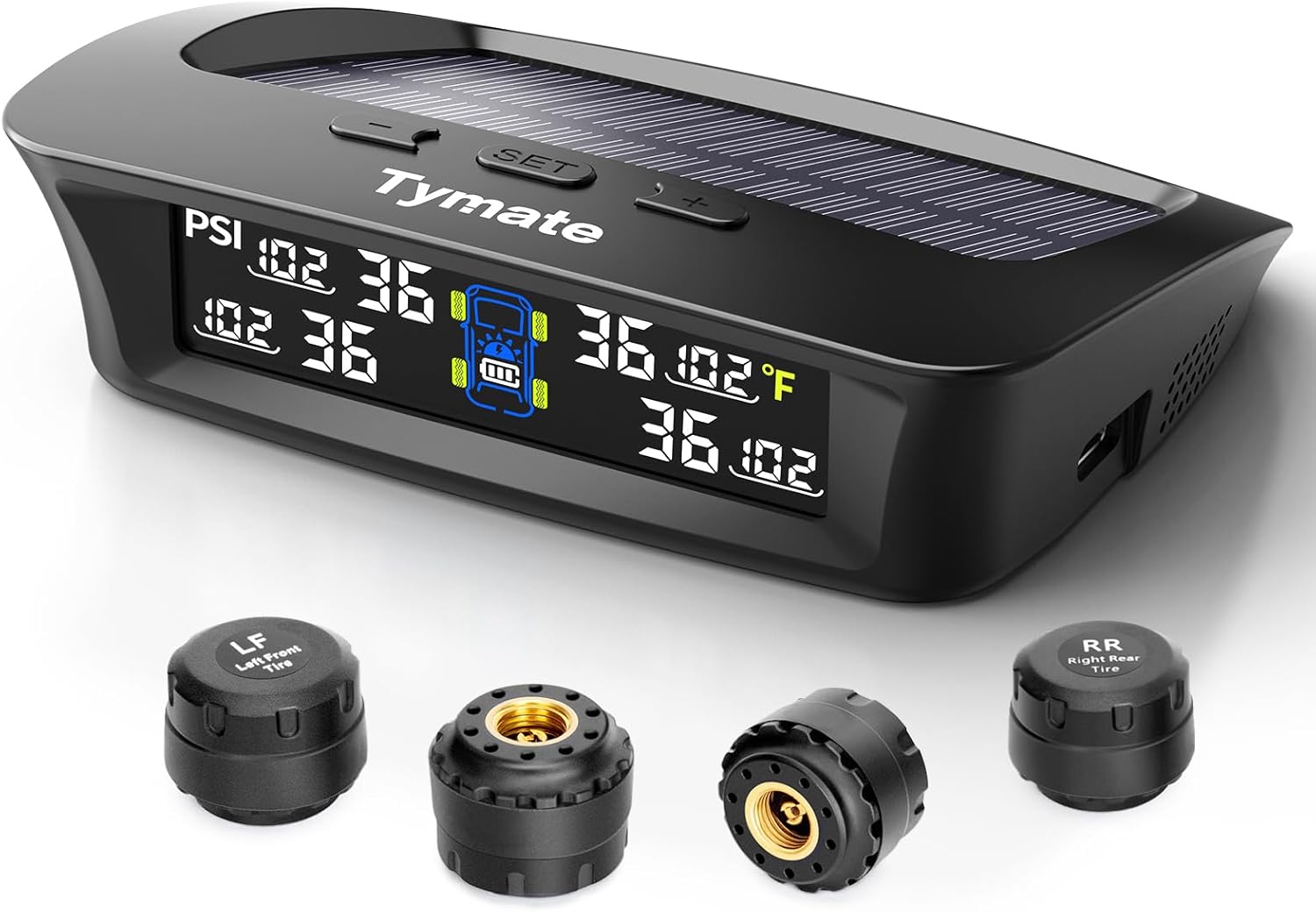
The Tymate TM3 RV TPMS delivers real-time tire pressure monitoring from 0 to 144 PSI with accurate readings and dependable wireless communication. It includes four external sensors with pre-pairing, six alarm modes for rapid leak, pressure extremes, temperature, and signal loss, plus an easy-reference setup for alert thresholds. Solar and USB-C charging help keep the display powered, while the color LCD and adaptive backlight improve visibility for safer driving and towing.

This portable cordless tire inflator delivers fast, efficient inflation for cars, motorcycles, bikes, and sports balls with a digital pressure gauge. Use the one-click PSI preset with auto shut-off for accurate, hands-free topping to your target pressure up to 150 PSI. It’s compact and rechargeable with a built-in emergency LED light plus valve adapters and accessories for quick, ready-to-go use.
Larger Tires, Lifts, and Toyota Safety Sense
The sixth-generation 4Runner uses cameras, radar, wheel-speed information, steering data, and other inputs for its driver-assistance features. Toyota’s 2026 driving-support documentation warns that non-standard tire sizes and suspension changes may prevent some systems from operating correctly.
After a major tire, wheel, alignment, or ride-height change, check:
- Speedometer accuracy
- Steering-wheel centering
- Alignment and caster
- TPMS operation
- ABS and stability-control warning lights
- Lane-departure and lane-tracing behavior
- Pre-collision and adaptive-cruise operation
- Whether Toyota specifies camera or radar inspection or calibration
Do not assume that the absence of a dashboard warning proves every system is working within its intended calibration.
Wheel Fitment Details That Matter
An 18-inch wheel is not automatically compatible just because the original tire uses an 18-inch wheel. Confirm every relevant dimension:
- Bolt pattern: The number and spacing of the wheel studs must match.
- Center bore and hub fit: The wheel must locate correctly on the hub using an approved design.
- Wheel width: It must fall within the tire manufacturer’s permitted rim-width range.
- Offset and backspacing: These determine how far the tire sits inward or outward.
- Brake clearance: Spoke shape and barrel dimensions must clear the caliper and rotor.
- Wheel load rating: The wheel must be rated for the 4Runner’s axle loads and intended use.
- Fastener seat: Lug-nut seat style, thread, shank, and engagement must match the wheel.
- TPMS provisions: The wheel must accept compatible sensors and valve hardware.
Use specifications from Toyota or the wheel manufacturer for the exact part number. Avoid carrying wheel measurements from an earlier 4Runner generation into a sixth-generation fitment decision.
Best Tire Setup by Driving Style
| Driving Pattern | Practical Starting Point | Priorities |
|---|---|---|
| Daily commuting and road trips | Factory-size highway, touring, or mild all-terrain tire | Wet braking, noise, comfort, tread life, and efficiency |
| Mixed road and weekend trails | Factory-size all-terrain tire | Moderate tread, puncture resistance, wet grip, and manageable weight |
| Overlanding with cargo | Load-appropriate all-terrain tire with a verified pressure plan | Load capacity, heat control, durability, repair access, and spare matching |
| Frequent snow and ice | Dedicated winter tire or capable 3PMSF all-weather tire | Cold-temperature compound, snow braking, ice performance, and legal requirements |
| Difficult low-speed trails | Durable all-terrain or mud-terrain tire after a complete fitment review | Sidewall construction, tread clearance, repairability, wheel protection, and low-speed control |
Staying with the factory size is often the most effective upgrade path. You can change tread design, winter rating, casing strength, noise level, and puncture resistance without introducing the clearance and calibration issues of a substantially larger tire.
Tire Maintenance for Better Life and Performance
Use a consistent maintenance routine rather than waiting for the TPMS warning light:
- Check cold pressure in all tires, including the spare, once a month and before long trips.
- Inspect tread, sidewalls, and valve stems for cuts, cracks, bulges, punctures, embedded objects, and uneven wear.
- Rotate the tires at the interval in the Toyota maintenance schedule or the tire manufacturer’s instructions. Many tire makers use an interval in the 5,000- to 8,000-mile range, but the applicable manual and warranty control.
- Have the alignment checked after a hard impact, suspension work, or the appearance of feathering or one-sided wear.
- Balance the tires when vibration appears or when new tires are installed.
- Investigate repeated pressure loss rather than repeatedly adding air.
- Keep the spare inflated and confirm that the tools needed to lower and install it are present.
- Replace tires that are damaged, aged, or worn to an unsafe level even when some tread remains elsewhere on the tire.
How to Make the Right Tire Choice
Begin with the tire placard, not an online picture or a trim-name assumption. Then decide whether the factory size already meets your needs. For many drivers, a better tire in the original size delivers more useful wet grip, winter traction, durability, or trail performance without changing the vehicle’s geometry.
Before changing size, answer these questions:
- Will the new tire meet the required load index and speed rating?
- Is it approved for the wheel’s width?
- How much does actual diameter, width, and weight change?
- Will it clear the body and suspension at full steering lock and compression?
- Will the spare match and fit in its storage position?
- How much speedometer and odometer error will it create?
- Could the change affect TPMS, stability control, or Toyota Safety Sense?
- Are the extra noise, weight, cost, and fuel use acceptable for the terrain you actually drive?
A tire that passes all eight checks is a stronger choice than one selected only because it is wider or is marketed as a larger “inch” size.
Frequently Asked Questions
What factory tire sizes come on the sixth-generation Toyota 4Runner?
Common U.S.-market sizes are 245/70R17 on the SR5, 265/55R20 on TRD Sport, TRD Sport Premium, Limited, and Platinum, and 265/70R18 on TRD Off-Road, TRD Off-Road Premium, TRD Pro, and Trailhunter. Verify the driver-door placard because packages and production specifications can vary.
What tires do new Toyota 4Runners come with?
Toyota uses different original-equipment tires by trim and may change suppliers during production. Road-oriented trims generally use highway-focused tires, while TRD Off-Road, TRD Pro, and Trailhunter configurations use more trail-oriented all-terrain equipment. Check the sidewall on the individual vehicle for its exact brand and model.
What tire pressure should a 2025 or 2026 4Runner use?
Use the cold pressure printed on the driver-door tire placard for your exact vehicle. Do not rely on a generic 30- to 36-psi range, and do not use the maximum pressure molded into the tire sidewall as the normal target.
Is a 265 or 275 tire better for a 4Runner?
Neither width is automatically better. A factory 265-size tire offers known clearance on trims designed for it. A 275 may add width or diameter but can also increase weight, rubbing risk, road noise, and fuel use. Compare the complete size, measured dimensions, wheel requirements, load rating, and intended terrain.
Will 275 tires fit a stock sixth-generation 4Runner?
Some 275-size combinations may fit some stock configurations, but there is no universal answer. Aspect ratio, wheel diameter, wheel width, offset, tire shoulder shape, alignment, mud flaps, and suspension compression all affect clearance. Test the exact combination before treating it as modification-free.
Do 285 tires require a lift?
A lift may help with some clearance points but does not guarantee that a 285 tire will avoid rubbing. The result depends on the complete tire size, actual dimensions, wheel offset, caster, body and liner clearance, and suspension movement. Some installations require additional alignment or body-clearance work.
Do gas and hybrid TRD Off-Road models use different tire sizes?
The common factory fitment for sixth-generation TRD Off-Road and TRD Off-Road Premium configurations is 265/70R18, including versions offered with the i-FORCE MAX powertrain. Confirm the placard on the individual vehicle before ordering.
Will larger tires affect the speedometer or Toyota Safety Sense?
A taller tire can make the vehicle travel faster and farther than the speedometer and odometer indicate. Toyota also warns that non-standard tire sizes and suspension modifications may affect driver-assistance operation. Verify accuracy and determine whether inspection or calibration is needed after a major change.
Conclusion
The correct sixth-generation 4Runner tire starts with the size and cold pressure on the driver-door placard. Common factory fitments include 245/70R17, 265/55R20, and 265/70R18, but trim names and online charts should not replace vehicle-specific verification.
For most owners, choosing a better tire in the factory size is the simplest way to improve wet grip, winter traction, tread durability, or trail performance. A larger size can work, but only after checking load capacity, wheel compatibility, true dimensions, clearance, spare fit, speedometer error, and driver-assistance operation.
Sources
- Toyota 4Runner specifications — current grades, equipment, and manufacturer specifications
- Toyota: The All-New 2025 Toyota 4Runner — sixth-generation introduction and TRD Pro and Trailhunter tire equipment
- Toyota: The 2026 Toyota 4Runner — current nine-grade lineup and off-road wheel and tire descriptions
- Toyota tire-pressure guide — placard location and routine pressure guidance
- NHTSA TireWise — tire pressure, tread, damage, and maintenance guidance
- FuelEconomy.gov vehicle maintenance guidance — inflation and fuel-economy information

Related Articles

When to Switch From All-Season to Winter Tires on a 4Runner
Ineffective all-season tires in cold weather can jeopardize your safety—discover when to make the crucial switch for better traction and handling.
Read More
4Runner Tire Mileage: How Many Miles Should They Last
Curious about how long your 4Runner tires should last? Discover essential tips and factors that influence tire longevity.
Read More
How Long Do Toyota 4Runner Tires Typically Last
How long do Toyota 4Runner tires typically last? Discover the factors that influence tire longevity and essential tips for maintenance.
Read More