
Backspacing vs Offset: A Simple Guide for 4Runner Owners
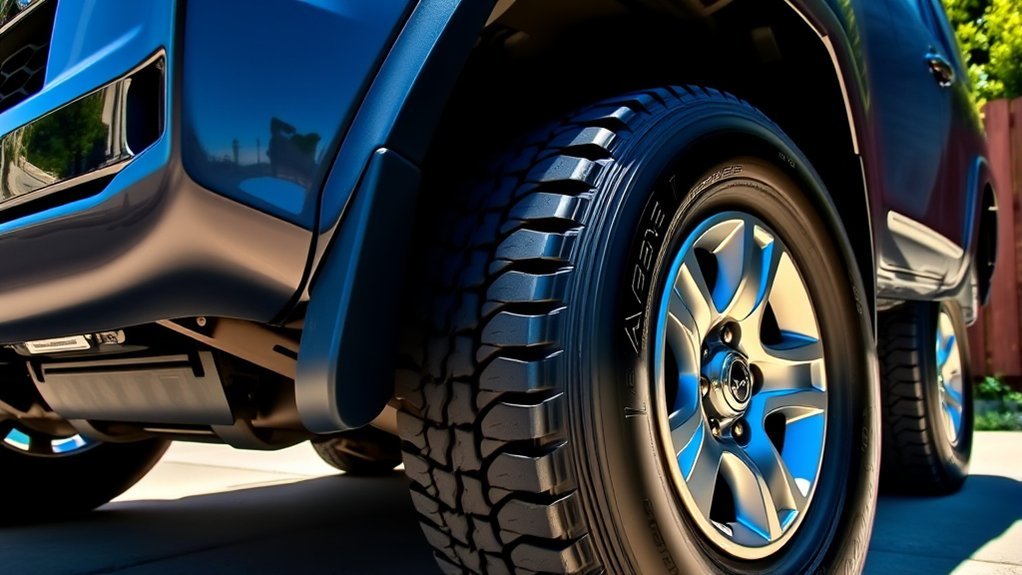
Choosing the right backspacing and offset for your 4Runner is not just about getting a more aggressive stance. These two measurements decide where the wheel and tire sit in the wheel well, how much clearance you have near the brakes and suspension, and how likely the tires are to rub at full steering lock or during suspension travel.
Quick Answer
For many 2010–2024 5th-gen 4Runners, a practical aftermarket starting point is a 17×8 to 17×9 wheel with about 4.5–5.0 inches of backspacing and an offset near +15 mm to -12 mm, depending on tire size. For 2025+ 6th-gen 4Runners, verify your exact trim first because factory fitment changed.
Key Takeaways
- Backspacing is the distance from the wheel mounting surface to the inner/back lip of the wheel.
- Offset is the distance from the mounting surface to the wheel centerline, measured in millimeters.
- Lower offset or lower backspacing pushes the wheel outward; higher offset or higher backspacing tucks it inward.
- A 285/70R17 tire often needs a lift, trimming, or alignment/caster changes on many 5th-gen 4Runners, but exact fitment depends on the tire, wheel, and suspension.
- Always verify bolt pattern, hub bore, lug hardware, wheel load rating, tire load index, TPMS compatibility, and full-lock clearance before driving.
At a Glance
| Time Required | 15–30 minutes to compare specs before ordering wheels; longer if test-fitting tires |
| Difficulty | Easy for planning; moderate if measuring and test-fitting on the vehicle |
| Tools Needed | Tape measure, straightedge, wheel spec sheet, tire size calculator, torque wrench, and a trusted fitment chart |
| Cost | Free to plan; extra cost may include alignment, trimming, hub-centric rings, TPMS sensors, or professional test-fit help |
What Is Backspacing and Why Does It Matter for 4Runners?
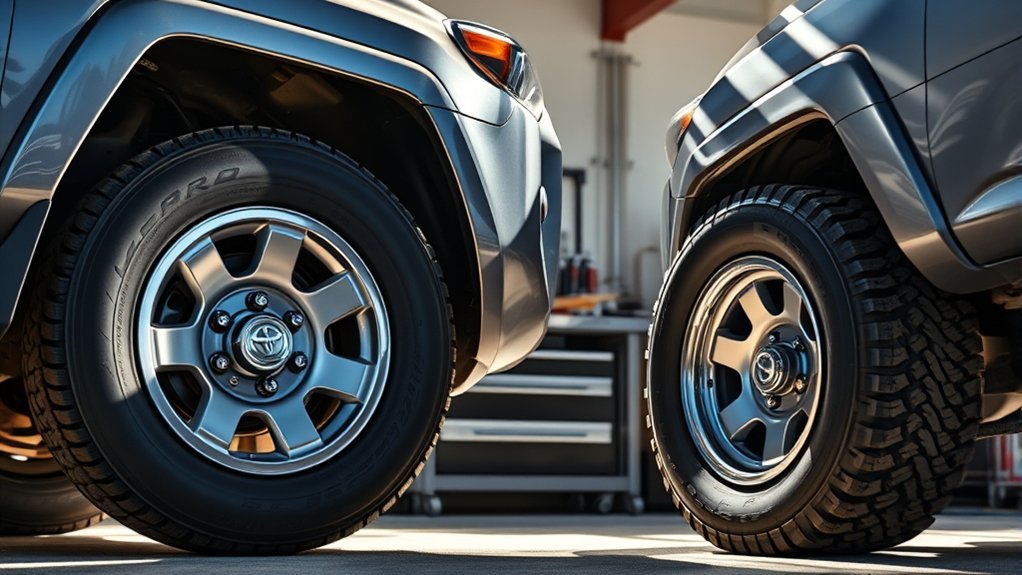
Backspacing is the distance from the wheel’s hub mounting surface to the inner lip of the wheel. In simple terms, it tells you how far the wheel reaches inward toward the suspension, brakes, and steering parts. Discount Tire describes backspacing as the distance from the mounting surface to the wheel’s back lip, while Tire Rack explains that it is similar to offset but measured in inches.
On a 4Runner, backspacing matters because the inner side of the tire can rub the upper control arm, sway bar, inner fender, brake components, or frame area if the wheel sits too far inward. Too little backspacing pushes the wheel outward, which can improve stance and inner clearance, but it can also create fender, mud-flap, bumper, and body-mount rubbing.
Note: The common 4.0–4.5 inch backspacing advice mainly applies to many 2010–2024 5th-gen 4Runner aftermarket off-road setups. It is not a universal rule for every 4Runner year, trim, wheel width, or tire size.
[Products Worth Considering]

This 13-inch flat-free wheelbarrow tire uses solid polyurethane foam construction with steel rims, so it will not puncture, rot, or go flat. The anti-skid tread improves...
How Wheel Offset Impacts Your 4Runner’s Performance
Wheel offset is the distance from the hub mounting surface to the wheel’s centerline. It is measured in millimeters and can be positive, zero, or negative.
- Positive offset moves the wheel inward toward the suspension and brakes.
- Zero offset places the mounting surface at the wheel centerline.
- Negative offset pushes the wheel outward toward the fender.
Lower offset can give your 4Runner a wider stance and more clearance from the upper control arm, but it can also increase fender poke, steering effort, scrub radius, rock spray, and rubbing at the bumper or body mount. Higher offset keeps the wheel tucked in, but too much inward movement can reduce clearance near the suspension and brake area.
Tire Rack notes that incorrect offset can negatively affect handling, and that changing wheel width often requires changing offset to maintain proper clearance. That is why a “good” offset number only makes sense when paired with wheel width, tire size, suspension height, alignment, and your specific 4Runner generation.
Check Your 4Runner Generation Before Buying Wheels
The biggest mistake is assuming all 4Runners use the same wheel fitment. They do not. Many popular online 4Runner fitment recommendations are aimed at the 2010–2024 5th-gen 4Runner. Current 2025+ 6th-gen 4Runner models use different factory fitment details, so older wheel advice may not transfer cleanly.
Warning: Before ordering wheels, confirm your exact year, trim, bolt pattern, center bore, lug thread, lug-seat type, brake clearance, TPMS compatibility, and wheel load rating. Do not rely on offset alone.
Use Toyota’s official specs and owner resources for your vehicle, then confirm the final wheel choice with the wheel manufacturer or a qualified tire shop. Toyota also notes that specifications can vary by region and availability, so exact trim verification matters.
How to Measure Backspacing and Convert It to Offset
To measure backspacing, lay the wheel face down on a protected surface. Place a straightedge across the inner lip of the wheel, then measure from the hub mounting pad up to the straightedge. That measurement is the wheel’s backspacing.
Backspacing formula: backspacing = (nominal wheel width + 1) ÷ 2 + (offset ÷ 25.4). The extra inch accounts for the wheel lips, and 25.4 converts millimeters to inches.
Pro Tip: A 4.5-inch backspace does not equal one fixed offset. On an 8-inch-wide wheel, it is about 0 mm offset. On an 8.5-inch-wide wheel, it is about -6 mm. On a 7-inch-wide wheel, it is about +13 mm.
How to Choose Backspacing and Offset for Your 4Runner
Start with your current wheel and tire size, then choose the tire size you want before choosing the wheel. A wheel that works well with a 265/70R17 tire may rub with a wider or taller 285/70R17 tire, even if the offset looks reasonable on paper.
For many 2010–2024 5th-gen 4Runners, the ranges below are useful starting points, not guaranteed fitments:
| Setup | Common Starting Point | What to Check |
|---|---|---|
| Stock or mild daily-driver 5th-gen | 17×7.5 to 17×8.5 wheel, near factory-style offset, 265/70R17 or similar tire | Brake clearance, hub fit, lug hardware, and tire load index |
| Lifted 5th-gen with moderate tire upgrade | 17×8 to 17×9 wheel, about 4.5–5.0 inches backspacing, roughly +15 mm to -12 mm offset | Upper control arm, fender liner, mud flap, bumper, and caster alignment |
| 5th-gen with 285/70R17 tires | Often paired with lift, careful offset choice, and possible trimming | Body mount clearance, full-lock rubbing, tire brand’s actual section width, and alignment |
| Aggressive negative-offset setup | More outward poke and wider stance | Higher chance of fender, bumper, body mount, and mud-flap rubbing |
| 2025+ 6th-gen 4Runner | Do not assume 5th-gen specs apply | Verify current Toyota specs, hub bore, thread size, offset, brake clearance, and TPMS before buying |
Always match the tire to the wheel width range approved by the tire manufacturer. Also make sure the wheel and tire load ratings are suitable for your 4Runner. NHTSA’s TireWise guidance emphasizes tire buying, maintenance, labeling, and pressure awareness, and federal tire-selection rules are designed to help prevent tire overloading.
Clearance Checklist Before You Drive
After installing new wheels or tires, check clearance before normal driving. A setup can look fine while parked but rub when turning, braking, reversing, or flexing off-road.
- Turn the steering wheel fully left and right while checking the fender liner, bumper edge, mud flaps, and body mount area.
- Check inner clearance near the upper control arm, sway bar, coilover, brake caliper, and brake lines.
- Look for spoke-to-caliper clearance, not just tire-to-suspension clearance.
- Confirm the wheel sits correctly on the hub and uses the correct lug-seat style.
- Recheck lug torque with a torque wrench after installation and after the wheel has been driven and heat-cycled.
- Get an alignment after changing tire size, suspension height, or stance, especially if you are trying to clear 285s.
What to Avoid When Choosing Wheels for Your 4Runner
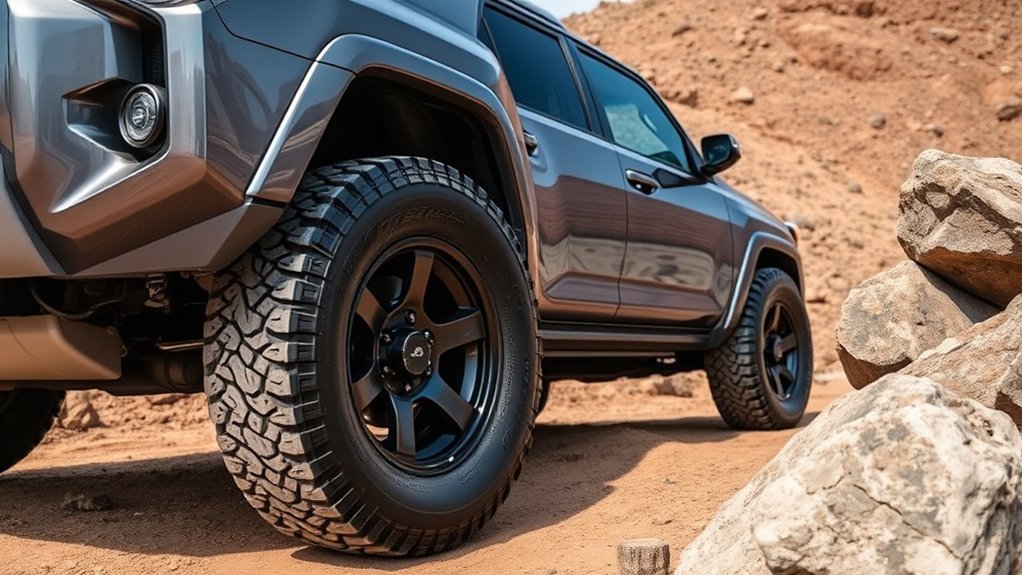
When upgrading your 4Runner’s wheels, avoid choosing by looks alone. A wheel that pokes perfectly in photos may rub badly on your specific suspension and tire combination.
- Avoid excessive positive offset or high backspacing if it moves the tire too close to the upper control arm, brake components, or inner wheel well.
- Avoid excessive negative offset or very low backspacing if you do not want fender poke, mud-flap rubbing, bumper contact, or body-mount interference.
- Avoid assuming 17×8.5, 17×9, or 285/70R17 always fits. Tire brands vary in actual width, and alignment settings can change the result.
- Avoid cheap universal spacers. If spacers are used, they should be high-quality, hub-centric when appropriate, correctly torqued, and matched to the vehicle hardware.
- Avoid wheels with an unknown load rating. A wheel can have the right offset and still be wrong for the vehicle if it is not rated for the load.
Warning: Do not grind brake calipers, stretch tires beyond the manufacturer’s approved rim-width range, or run wheels with the wrong lug seat just to make a fitment work. Those are safety issues, not cosmetic shortcuts.
How to Fix Common Wheel Selection Mistakes for Your 4Runner
If you already bought wheels and the fitment is not right, start by identifying where the tire or wheel is making contact. The fix depends on whether the problem is inner clearance, outer clearance, tire size, alignment, or hardware.
- Rubbing the upper control arm: You may need less backspacing, lower offset, a different wheel width, aftermarket upper control arms, or a narrower tire.
- Rubbing the fender liner or mud flap: Reposition the liner, remove or trim mud flaps, add caster through alignment, or choose a less aggressive offset.
- Rubbing near the body mount: Reduce tire size, adjust alignment where possible, or have a professional evaluate whether trimming or a body-mount modification is appropriate.
- Brake caliper or spoke contact: Do not drive it. You need a wheel with more brake clearance or a properly engineered spacer solution.
- Too much poke: Choose a higher offset wheel, narrower tire, or narrower wheel width.
- Vibration after installation: Check hub fit, lug torque, wheel balance, hub-centric rings if required, and tire uniformity.
If you are comparing two wheel options, do not compare offset alone. A 17×9 -12 mm wheel will sit differently from a 17×8.5 -12 mm wheel because the extra width changes both inner clearance and outer poke.
Frequently Asked Questions
What offset equals 4.5-inch backspacing?
There is no single answer because the conversion depends on wheel width. Using the common backspacing formula, 4.5 inches of backspacing is about 0 mm offset on an 8-inch wheel, about -6 mm on an 8.5-inch wheel, and about +13 mm on a 7-inch wheel.
How much offset difference is too much?
A small change, such as 5–10 mm, is usually easier to manage than a large jump, but “too much” depends on wheel width, tire size, suspension, and alignment. Big changes can affect steering feel, scrub radius, bearing load, fender clearance, and suspension clearance.
What offset is equivalent to a 2-inch spacer?
A 2-inch spacer reduces effective offset by about 50.8 mm. For example, a +15 mm wheel with a 2-inch spacer acts like roughly -36 mm offset. A 0 mm wheel with the same spacer acts like roughly -51 mm offset.
Do 285/70R17 tires fit a stock 4Runner?
Sometimes they can be mounted, but they commonly rub on many 5th-gen 4Runners without lift, trimming, liner adjustment, or alignment changes. Actual fit depends on tire brand, wheel width, offset, caster, bumper/mud-flap setup, and suspension condition.
Is negative offset bad for a 4Runner?
Negative offset is not automatically bad, but aggressive negative offset can increase poke, scrub radius, steering effort, road spray, and rubbing risk. It can also add leverage to wheel bearings and suspension parts, especially with heavy tires.
Can I use 5th-gen 4Runner wheel advice on a 2025+ 4Runner?
Do not assume it transfers. The 2025+ 6th-gen 4Runner has different factory fitment details than the 2010–2024 5th-gen platform. Verify the exact year, trim, hub bore, lug thread, offset, brake clearance, and TPMS requirements before buying.
Conclusion
The right 4Runner backspacing and offset depends on more than one number. Wheel width, tire size, suspension height, alignment, generation, brake clearance, and load rating all matter. For many 2010–2024 5th-gen 4Runners, a moderate 17-inch wheel with sensible backspacing and offset is the cleanest path to better stance and fewer rubbing problems. For 2025+ 4Runners, verify current specs first instead of copying older fitment advice.
Before you buy, compare the full wheel specs, check tire manufacturer rim-width guidance, test clearance at full lock, and use a torque wrench after installation. That extra planning is what keeps your 4Runner looking right, driving safely, and staying trail-ready.
Sources
- Tire Rack — What Is Wheel Offset? — backs up offset and backspacing definitions and clearance concerns.
- Discount Tire — Wheel Offset & Backspacing — backs up backspacing definition and measurement method.
- Toyota — 2025 4Runner Full Specs — official Toyota specifications reference for current 4Runner models.
- Toyota Owners — 2024 4Runner Manuals and Warranties — official owner resource for model-specific information.
- NHTSA TireWise — backs up tire safety, labeling, pressure, and maintenance guidance.
- eCFR 49 CFR 571.110 — backs up tire selection and load-carrying safety requirements for light vehicles.

Related Articles

When to Switch From All-Season to Winter Tires on a 4Runner
Ineffective all-season tires in cold weather can jeopardize your safety—discover when to make the crucial switch for better traction and handling.
Read More
4Runner Tire Mileage: How Many Miles Should They Last
Curious about how long your 4Runner tires should last? Discover essential tips and factors that influence tire longevity.
Read More
How Long Do Toyota 4Runner Tires Typically Last
How long do Toyota 4Runner tires typically last? Discover the factors that influence tire longevity and essential tips for maintenance.
Read More