
Toyota 4Runner Bolt Pattern Explained: 6×139.7mm
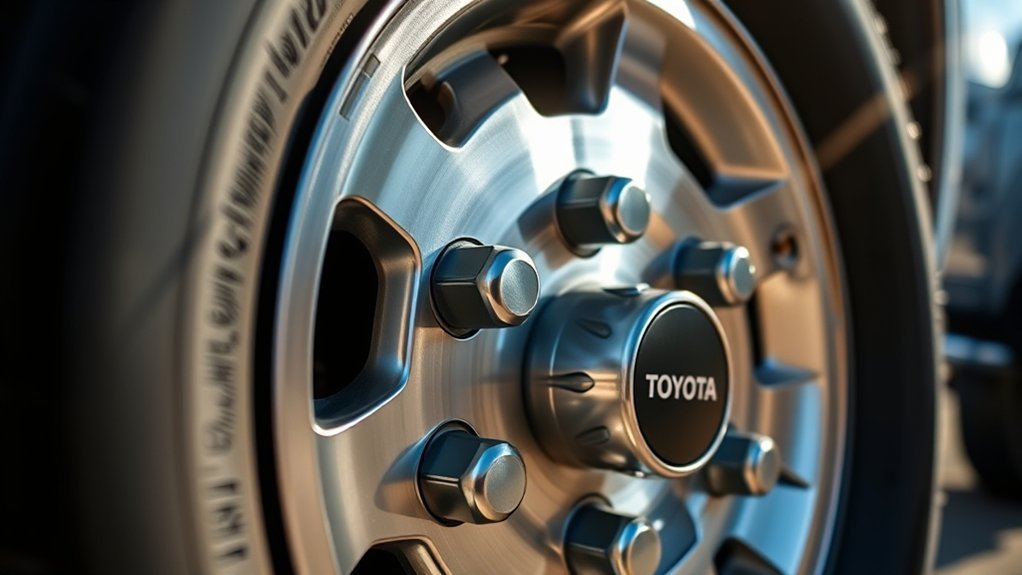
The Toyota 4Runner bolt pattern is one of the first specs to check before buying replacement wheels, aftermarket wheels, or wheel spacers. The pattern is simple, but safe fitment depends on more than the six-lug layout. You also need the right center bore, lug thread, lug-seat type, offset, load rating, and wheel-nut torque for your exact model year.
Quick Answer
The Toyota 4Runner uses a 6×139.7mm bolt pattern, also written as 6×5.5 inches. That means six lug holes on a 139.7mm pitch circle. Before installing wheels, also confirm the center bore, lug nut thread, lug-seat style, offset, load rating, and torque spec for your exact year.
Key Takeaways
- The 4Runner bolt pattern is 6×139.7mm, which equals 6×5.5 inches.
- A matching bolt pattern does not guarantee a safe fit. Center bore, offset, brake clearance, lug-seat type, and load rating still matter.
- Many earlier 4Runners use M12x1.5 lug nuts, while 2025+ 6th-gen fitment data lists M14x1.5 lug nuts and a 95.1mm center bore.
- Use a torque wrench and the owner’s manual for your year. For 2025+ models, owner-manual summaries list 97 ft-lb for aluminum wheels and 154 ft-lb for steel wheels.
At a Glance
| Time Required | 10–20 minutes to verify specs before buying wheels; 30–60 minutes for a basic wheel swap. |
| Difficulty | Easy for spec checking; moderate for wheel installation if you have safe lifting equipment. |
| Tools Needed | Owner’s manual, wheel spec sheet, torque wrench, correct socket, jack, jack stands, and a hub bore/offset reference. |
| Cost | Spec checking is free; hub-centric rings, lug nuts, spacers, or professional installation add cost if needed. |
Understanding the 6×139.7mm Bolt Pattern
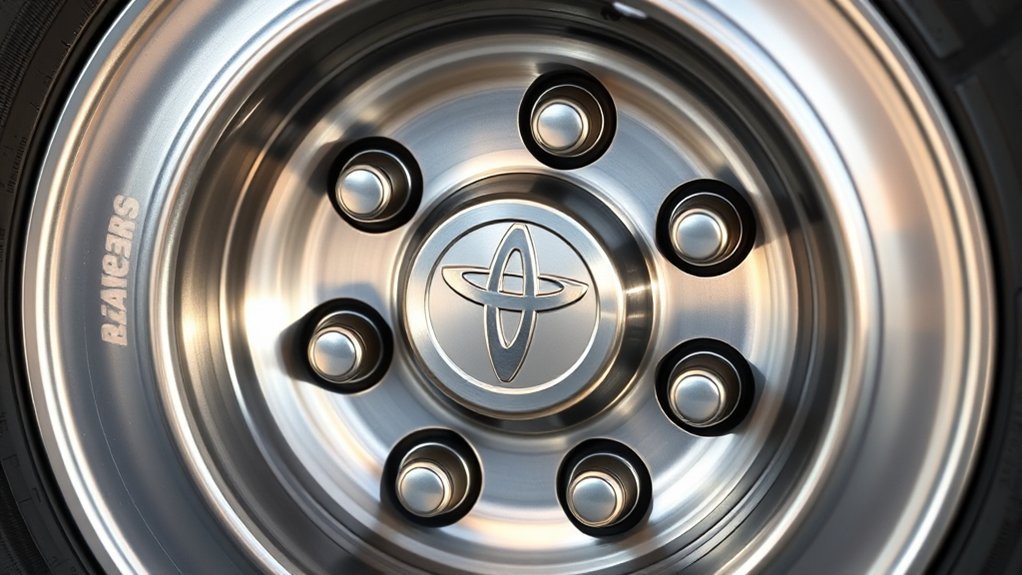
The Toyota 4Runner uses a 6×139.7mm bolt pattern, also known as 6×5.5 inches. The “6” means the wheel has six lug holes. The “139.7mm” measurement is the pitch circle diameter, which is the circle that passes through the center of those lug holes.
This pattern is common on Toyota trucks and body-on-frame SUVs, so there are plenty of wheel choices. Still, the bolt pattern is only one part of fitment. A wheel can be 6×139.7 and still be unsafe or unusable if the hub bore, offset, lug nuts, brake clearance, or load rating are wrong.
Warning: Never install wheels just because the bolt pattern matches. A wrong center bore, wrong lug-seat type, incorrect offset, or incorrect torque can cause vibration, stud damage, wheel loosening, brake interference, or tire rubbing.
[Products Worth Considering]

ETENWOLF’s calibrated digital tire pressure gauges deliver accurate readings across a wide pressure range, from below 12 PSI to above 140 PSI. The built-in thermal...
Toyota 4Runner Bolt Pattern Specs by Generation
The bolt pattern is consistent, but the supporting specs are not identical across every model year. Use this table as a fitment starting point, then verify your exact trim, wheel, and owner’s manual before buying or installing wheels.
| Model Years | Bolt Pattern | Common Lug Thread | Fitment Notes |
|---|---|---|---|
| 1984–2024 | 6×139.7mm / 6×5.5 | Often M12x1.5, but verify by year | Center bore, wheel offset, torque, and OEM wheel sizes vary. Do not assume 5th-gen wheels fit older or newer models without checking clearance. |
| 2025–2026 6th gen | 6×139.7mm / 6×5.5 | M14x1.5 in current fitment data | Specialist fitment data lists a 95.1mm hub bore. Common OE-style offsets vary by wheel size, including ET45–ET55 examples, so check the exact wheel. |
Toyota’s official 2025 and 2026 4Runner pages confirm the current 6th-generation context and factory wheel/tire variety, including trims with 18-inch wheels and 33-inch all-terrain tires. For the bolt pattern, center bore, and thread-size details, use a fitment database, the wheel manufacturer’s spec sheet, and your Toyota owner’s manual together.
Generational Consistency of the Bolt Pattern
The biggest advantage for 4Runner owners is that the 6×139.7mm bolt pattern has been widely used across the 4Runner lineup. That makes shopping easier because many aftermarket wheels are drilled for the same pattern.
Consistent Design Evolution
The 4Runner’s long-running six-lug layout helps explain why so many off-road and overland wheel brands offer compatible options. You can find steel wheels, flow-formed wheels, forged wheels, beadlock-style wheels, and OEM takeoffs in the same basic bolt pattern.
But “same bolt pattern” is not the same as “direct fit.” A wheel from another Toyota truck may bolt on but sit too far inboard, poke too far outside the fender, rub the suspension, need different lug nuts, or have the wrong center bore.
Compatibility Across Generations
Cross-generation wheel swaps are possible, but they require careful measuring. The main specs to compare are:
- Bolt pattern: 6×139.7mm / 6×5.5.
- Center bore: The wheel’s center hole must fit over the 4Runner hub. If the wheel bore is larger than the hub, hub-centric rings may help center the wheel.
- Lug thread and seat: Older and newer 4Runners may use different thread sizes. Lug nuts also have different seat shapes, such as mag seat, conical seat, or ball seat.
- Offset and backspacing: These control how far the wheel sits in or out.
- Brake and suspension clearance: A wheel can clear the hub but still hit the brake caliper, upper control arm, fender liner, or body mount.
Impact on Aftermarket Options
Because 6×139.7mm is a popular truck/SUV pattern, aftermarket options are strong. You will see many choices in 17-inch, 18-inch, and 20-inch sizes. For off-road use, 17-inch and 18-inch wheels are popular because they allow more tire sidewall than many 20-inch setups.
Pro Tip: When comparing wheels, look for a complete spec line: size, width, bolt pattern, center bore, offset, backspacing, load rating, lug-seat type, and compatible tire size. If any of those are missing, ask the wheel seller before buying.
Importance of Bolt Pattern for Wheel Compatibility
The bolt pattern is the first pass/fail test for wheel fitment. If the pattern is not 6×139.7mm, the wheel will not mount correctly without an adapter. Adapters add another safety and legality question, so they should be chosen carefully and installed only when they are high-quality, hub-centric, correctly torqued, and appropriate for your use.
Proper Wheel Fitment
Proper 4Runner wheel fitment means the wheel sits flat against the hub, centers correctly, clears the brakes, uses the right lug nuts, and keeps the tire away from the fender, body mount, mudflap, and suspension through the full steering range.
Check fitment in this order:
- Confirm the wheel is 6×139.7mm.
- Confirm the center bore fits the 4Runner hub.
- Confirm the lug nuts match the stud thread and wheel-seat type.
- Confirm the wheel width and offset keep the tire clear of the suspension and body.
- Confirm the wheel load rating is suitable for a 4Runner.
- Test fit one front wheel before mounting all four tires if you are using an aggressive size.
Enhanced Safety Measures
Wheel installation is safety-critical. Hand-thread every lug nut before tightening, use a star or crisscross pattern, and finish with a calibrated torque wrench. Do not rely on an impact wrench alone for final tightening.
For 2025+ 4Runner models, owner-manual summaries list 97 ft-lb for aluminum wheels and 154 ft-lb for steel wheels. Older model years may use different torque values, so always check your owner’s manual or Toyota service information for your exact year and wheel type.
Note: Retorque the wheels after the first short driving interval recommended by your tire shop, wheel maker, or owner’s manual. Retorquing helps confirm the lug nuts remain seated after the wheel and hardware settle.
What You Need for Wheel Installation
When you are ready to install new wheels on your Toyota 4Runner, gather the correct tools and specs first. Do not start with the vehicle lifted until you have confirmed the wheel and lug hardware are correct.
- Correct lug nuts: Match the thread size and seat style. Many earlier 4Runners use M12x1.5; 2025+ fitment data lists M14x1.5.
- Torque wrench: Tighten to the Toyota spec for your exact year and wheel type.
- Hub-centric rings: Use them only when the wheel bore is larger than the hub and the wheel maker recommends them.
- Wheel spec sheet: Confirm width, diameter, offset, backspacing, load rating, and center bore.
- Safe lifting gear: Use a rated jack and jack stands on stable ground.
- Clearance check: Turn the steering wheel lock-to-lock and inspect the front fender liner, mudflap, body mount, brake caliper, and upper control arm.
For 2025+ 4Runner fitment, do not rely on the old “+40 to +45 offset” rule. Some current fitment references show OE-style examples around ET45 to ET55 depending on wheel size. Older 4Runners can use very different offsets. The best offset depends on your wheel width, tire size, suspension, alignment, and whether you are willing to trim.
How to Measure a Six-Lug Bolt Pattern
If you are checking a wheel by hand, a six-lug pattern is easier to measure than a five-lug pattern. Measure from the center of one lug hole directly across to the center of the opposite lug hole. On a 4Runner wheel, that measurement should be about 139.7mm, or 5.5 inches.
You may also see the same pattern written as:
- 6×139.7
- 6×139.7mm
- 6×5.5
- 6×5.5 inches
- PCD 6×139.7
6×139.7mm and 6×5.5 inches describe the same six-lug bolt pattern. The wording changes, but the measurement does not.
Myths About Bolt Patterns?
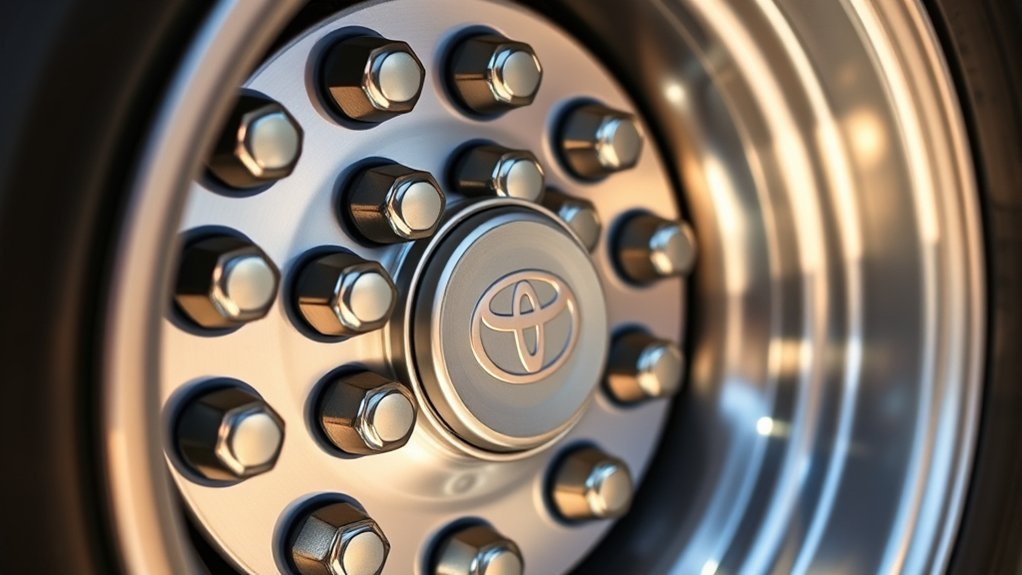
Myths about bolt patterns can lead to expensive and unsafe mistakes. The most common myth is that all Toyota six-lug wheels fit all Toyota six-lug vehicles. They do not. Tacoma, Tundra, Sequoia, Land Cruiser, and 4Runner wheels may share a 6×139.7mm pattern in some years, but the center bore, lug thread, wheel offset, brake clearance, and load rating may differ.
Another myth is that adapters solve every fitment issue. Adapters can change bolt pattern or spacing, but they also add thickness, move the wheel outward, add another set of fasteners, and change the load path. Use them only when the adapter is high-quality, hub-centric, properly torqued, and suitable for the vehicle’s weight and intended driving.
A third myth is that bolt pattern does not affect handling. The bolt pattern itself does not tune handling, but correct wheel fitment affects stability, vibration, bearing load, tire wear, steering feel, and brake clearance. A wheel that is close enough to bolt on is not always close enough to drive safely.
How to Modify for Better Fitment
If you are fitting larger tires, lower-offset wheels, or wider wheels, the bolt pattern is only the beginning. You may need extra clearance around the front fender liner, mudflaps, body mount, crash brackets, or upper control arms.
Common clearance changes include:
- Removing or trimming mudflaps if the tire rubs at steering lock.
- Adjusting or heating the front fender liner to move it forward.
- Trimming fender flare edges when running wider tires.
- Checking body mount clearance before choosing very large tires.
- Using alignment settings that improve caster and help move the tire away from the rear of the front fender well.
- Choosing wheel offset carefully instead of using spacers as a first solution.
Warning: Cutting crash brackets, trimming structural metal, or changing suspension geometry can affect safety and resale value. If you are unsure, have a qualified shop inspect the setup before driving at highway speed or off-road.
Frequently Asked Questions About the 4Runner Bolt Pattern
Here are the core specs most 4Runner owners look for before buying wheels. Treat them as a starting point, not a substitute for your owner’s manual or the wheel manufacturer’s fitment chart.
| Specification | Detail |
|---|---|
| Bolt Pattern | 6×139.7mm / 6×5.5 inches |
| 2025+ Center Bore | 95.1mm in current specialist fitment data |
| Older 4Runner Center Bore | Varies by year; many references list 106.1mm for several earlier generations |
| 2025+ Lug Thread | M14x1.5 in current fitment data |
| Older Lug Thread | Often M12x1.5, but verify by model year |
| Torque | Use your owner’s manual. 2025+ owner-manual summaries list 97 ft-lb aluminum and 154 ft-lb steel. |
| Common Toyota Overlap | Some Tacoma, Tundra, Sequoia, and Land Cruiser wheels may share 6×139.7, but full fitment still must be checked. |
Frequently Asked Questions
What is the bolt pattern on a Toyota 4Runner 6-lug?
The Toyota 4Runner 6-lug bolt pattern is 6×139.7mm, also written as 6×5.5 inches. This is the main pattern to look for when shopping for 4Runner wheels.
Is 6×139.7mm the same as 6×5.5?
Yes. 6×139.7mm and 6×5.5 inches are the same bolt pattern. The first version uses metric measurement, and the second uses inches.
What cars have a 6×139.7mm bolt pattern?
The 6×139.7mm pattern appears on many trucks and SUVs, including some Toyota Tacoma, Toyota Tundra, Toyota Sequoia, Toyota Land Cruiser, Nissan, Chevrolet, GMC, and other truck-based models. Always check center bore, offset, lug thread, brake clearance, and load rating before using wheels from another vehicle.
Will Tacoma wheels fit a 4Runner?
Some Tacoma wheels can fit some 4Runner models because they may share the 6×139.7mm pattern, but it is not automatic. Compare center bore, lug thread, lug-seat type, offset, brake clearance, and tire size before installing them.
Do I need hub-centric rings on a 4Runner?
You may need hub-centric rings if the wheel’s center bore is larger than the 4Runner’s hub and the wheel manufacturer recommends using rings. The rings help center the wheel on the hub, which can reduce vibration.
Can I use wheel adapters to change the 4Runner bolt pattern?
Adapters can change bolt pattern or spacing, but they add complexity and must be chosen carefully. Use only high-quality hub-centric adapters with the correct studs, nuts, thickness, and torque specs. For daily driving, towing, or off-road use, get professional advice before relying on adapters.
Conclusion
The Toyota 4Runner bolt pattern is 6×139.7mm, or 6×5.5 inches. That simple six-lug spec opens the door to many wheel options, but it is not the whole fitment story. For a safe upgrade, match the bolt pattern, center bore, lug thread, lug-seat type, offset, brake clearance, tire clearance, load rating, and torque spec. Check your owner’s manual, confirm the wheel manufacturer’s specs, and test fit carefully before trusting any wheel on the road.
Sources
- Toyota 2026 4Runner official page — current 2026 4Runner context, trims, factory wheel/tire references, and model information.
- Toyota 2025 4Runner specifications — official 2025 4Runner specifications and equipment context.
- Toyota Owners Manuals & Warranties: 2025 4Runner — owner’s manual access point for model-specific torque and maintenance information.
- Wheel-Size.com 2026 Toyota 4Runner fitment data — bolt pattern, wheel size, offset, tire, and center-bore fitment reference.
- Continental Tires: Retorquing wheels — tire-industry guidance on checking wheel torque after installation.
- Discount Tire: Wheel torque guide — torque wrench and lug tightening pattern guidance.

Related Articles

When to Switch From All-Season to Winter Tires on a 4Runner
Ineffective all-season tires in cold weather can jeopardize your safety—discover when to make the crucial switch for better traction and handling.
Read More
4Runner Tire Mileage: How Many Miles Should They Last
Curious about how long your 4Runner tires should last? Discover essential tips and factors that influence tire longevity.
Read More
How Long Do Toyota 4Runner Tires Typically Last
How long do Toyota 4Runner tires typically last? Discover the factors that influence tire longevity and essential tips for maintenance.
Read More