How to Read Tire Size Numbers: Decode the Sidewall
You’ll decode sidewall markings like P205/55R16 by reading left to right: the initial letter shows tire type (P=passenger), the three-digit number is tread width in millimeters (205), the two-digit aspect ratio gives sidewall height as a percent of width (55), R denotes radial construction, and the final number is wheel diameter in inches (16). Also check the load index and speed letter, DOT date code, and winter symbols to confirm capacity and age—keep going to see fitment and replacement tips.
Read a Tire Size at a Glance (Example: P205/55R16)
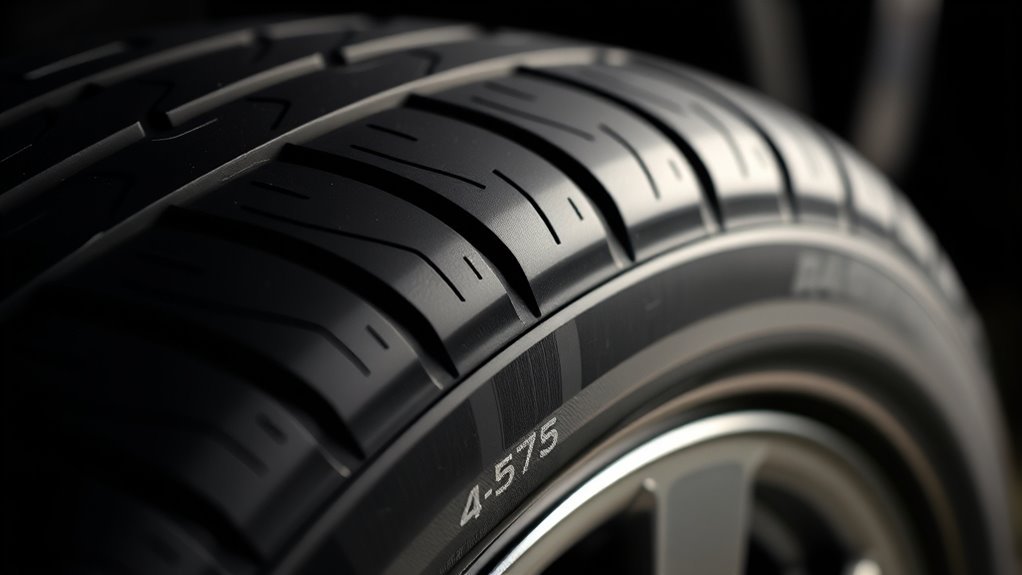
Think of P205/55R16 as a compact specification that tells you type, width, profile, construction, and wheel size at a glance. You’ll use basic reading techniques: start left-to-right, note the initial letter for type (P = passenger), read the three-digit width in millimetres, interpret the two-digit aspect ratio as sidewall height percentage, confirm the construction letter (R = radial), then match the final number to wheel diameter in inches. Avoid common misconceptions like treating the aspect ratio or width as absolute performance metrics—they’re dimensional, not ratings. Rely on visual aids such as annotated sidewall diagrams or labelled photos to speed recognition. With practice, you’ll decode tire size data quickly and choose correct replacements confidently.
Decode Tire Size Parts: Type, Width, Aspect Ratio, Construction, Diameter
A tire size string like P205/55R17 breaks down into five key parts you’ll use to confirm fit and performance: You’ll read tire type first (P = passenger), then width measurements in millimeters (205) across the tread. The aspect ratio follows (55), showing sidewall height as a percentage of width. Construction features are next; R denotes radial construction, the modern standard that improves grip and durability. Diameter significance is the final number (17), the wheel rim size in inches the tire fits.
- Tire type: identifies vehicle class and mounting norms.
- Width measurements: affect contact patch and clearance.
- Aspect ratio: controls sidewall height and ride behavior.
- Construction features and diameter significance: guarantee compatibility.
Decode Load Index and Speed Rating (What Numbers and Letters Mean)
While the tire size tells you fit, the load index and speed rating tell you what the tire can safely carry and how fast it can operate; the load index is a two- or three-digit number denoting load capacity (e.g., 91 = 1,356 lbs/615 kg) and the speed rating is a letter indicating maximum safe speed (e.g., S=112 mph, T=118 mph, H=130 mph). You should always match or exceed the manufacturer’s specified load capacity and speed limits to preserve handling, stability, and safety. Mixing tires with differing load indices or speed ratings can degrade performance and create unsafe dynamics. Before purchase, verify the stamped load index and speed rating on the sidewall to confirm compatibility with your vehicle’s requirements.
Find DOT, Manufacture Date, and Winter/Ply Markings
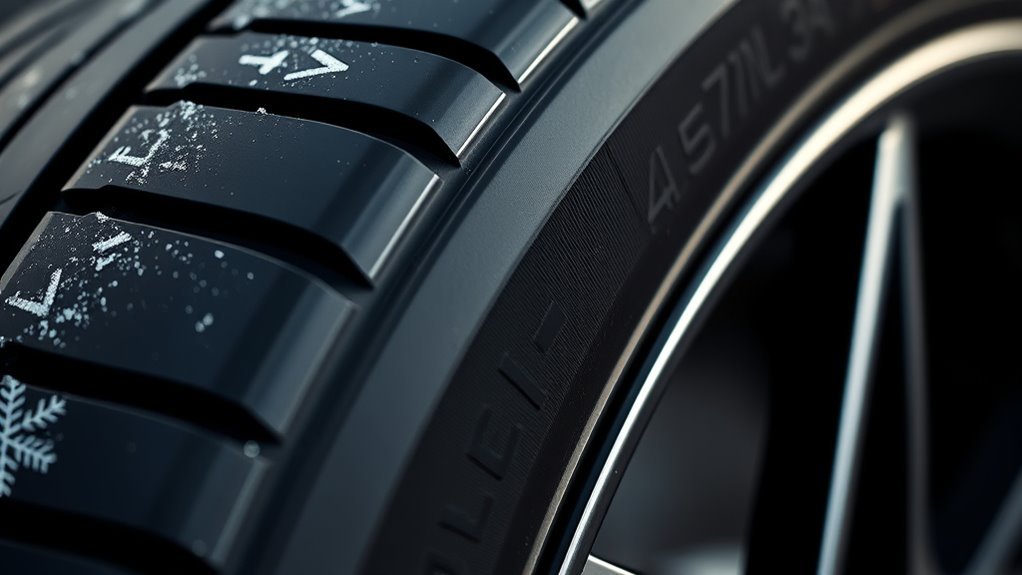
Locate the DOT code and inspection markings on the sidewall to confirm compliance, manufacture date, and winter or ply designations. You’ll read DOT markings to verify the tire meets safety standards; the last four digits give the manufacture date (week and year, e.g., 0424 = 4th week of 2024). Avoid buying tires older than two years; replace between six to ten years per manufacturers.
- Inspect DOT markings for factory ID and the four-digit manufacture date; record it for age tracking.
- Check winter markings: 3PMSF indicates certified severe-snow performance; M+S indicates mud and snow capability but not severe-snow certification.
- Read ply ratings stamped as “X Ply” to assess layer count, load capacity, and durability.
- Use these codes to confirm safe, season-appropriate tires.
Choose the Right Replacement Tire (Size, Load, Speed) and Troubleshoot Fitment Issues
Start by matching the exact tire size on your vehicle placard (for example, P205/55R17) so width, aspect ratio, and rim diameter align with the original specifications; mismatches can alter speedometer accuracy, handling, and clearance. Next confirm tire compatibility by checking the replacement’s load index against your vehicle’s load requirements — choose equal or higher capacity (e.g., index 91 = 1,356 lbs). Verify speed capacity with a speed rating that meets or exceeds the original (V = 149 mph example) to preserve handling and heat tolerance. Troubleshoot fitment: verify new tires maintain similar width and aspect ratio to avoid rubbing, reduced stability, or altered gearing. Always consult the owner’s manual or manufacturer specs for final verification before installation.
Frequently Asked Questions
What Does 275 60R20 Mean?
275/60R20 means your tire has a 275 mm tire width, a 60% aspect ratio (sidewall height), radial construction, fits a 20-inch wheel diameter, and you’ll also check the load index for weight capacity.
What Does 295 Mean on a Tire?
295 indicates the tire width in millimeters; you’re looking at a 295 mm tire width. You’ll also check the aspect ratio next to it to determine sidewall height and confirm wheel, load and clearance compatibility.
What Does 275 70R18 Mean?
About 275 mm tire width means you’ve got a 275 mm tread. The 70 aspect ratio gives a sidewall height 70% of that width. R18 denotes radial construction for an 18-inch wheel fitment.
What Does 245 35R18 Mean?
245/35R18 means your tire specifications: 245 mm width, 35% aspect ratio (sidewall height), radial construction (R), and fits an 18-inch wheel. Use sidewall markings to confirm fitment and performance.
Conclusion
So next time you squint at your tire like it’s a secret map, remember: those letters and numbers aren’t mysterious poetry — they’re specifications. Match type, width, aspect, construction, rim diameter, load and speed ratings, and manufacture date. Buy what fits and legally supports your load, not what “looks cool.” Otherwise you’ll enjoy unpredictable handling, premature wear, and a reminder that vanity tires make expensive mistakes. Read the sidewall; don’t play tire roulette.

Related Articles
What Holds a Tire on a Car? Full Wheel & Hub Assembly Guide
Just how does a tire stay securely attached to your car? Discover the wheel, hub, and lug nut system that keeps it all in place.
Read More
How Wide Is a 265 Tire? Width in Inches, MM & Fitment Guide
How wide is a 265 tire? Discover inches, millimeters, and fitment tips before you choose the wrong wheel size.
Read More
How Tall Is a 265 70R17 Tire? Exact Height, Width & Dimensions
Discover the exact height, width, and dimensions of a 265/70R17 tire, and why it’s closer to 32 inches than many expect.
Read More