
How Tire Pressure Affects Fuel Economy on a Toyota Camry: The Real Impact
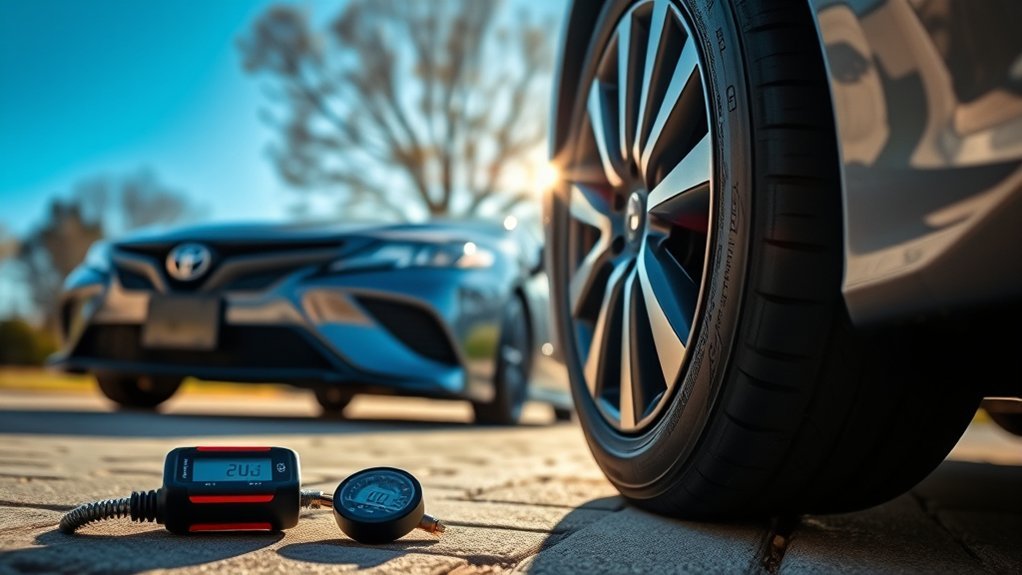
Correct tire pressure helps your Toyota Camry use fuel efficiently, respond predictably, and wear its tires evenly. However, you should not assume that every Camry needs 35 PSI. The correct pressure depends on the model year, wheel and tire package, axle requirements, and market. Your driver-door Tire and Loading Information label is the final reference.
Last updated: July 17, 2026
Quick Answer
Use the cold tire pressure printed on your Camry’s driver-door placard, not a universal 35 PSI target or the maximum shown on the tire sidewall. Correct pressure reduces rolling resistance and supports safe handling. DOE says proper inflation improves gas mileage by about 0.6% on average and up to 3%.
Key Takeaways
- Find the correct cold PSI on the driver-side doorjamb label or in the owner’s manual.
- Do not use the maximum PSI molded into the tire sidewall as your normal target.
- Check all tires with a gauge at least once a month and before long trips.
- Proper inflation can improve fuel economy, but overinflating the tires is not a safe MPG shortcut.
- Investigate any tire that repeatedly loses pressure instead of continually adding air.
How Tire Pressure Affects Your Fuel Economy
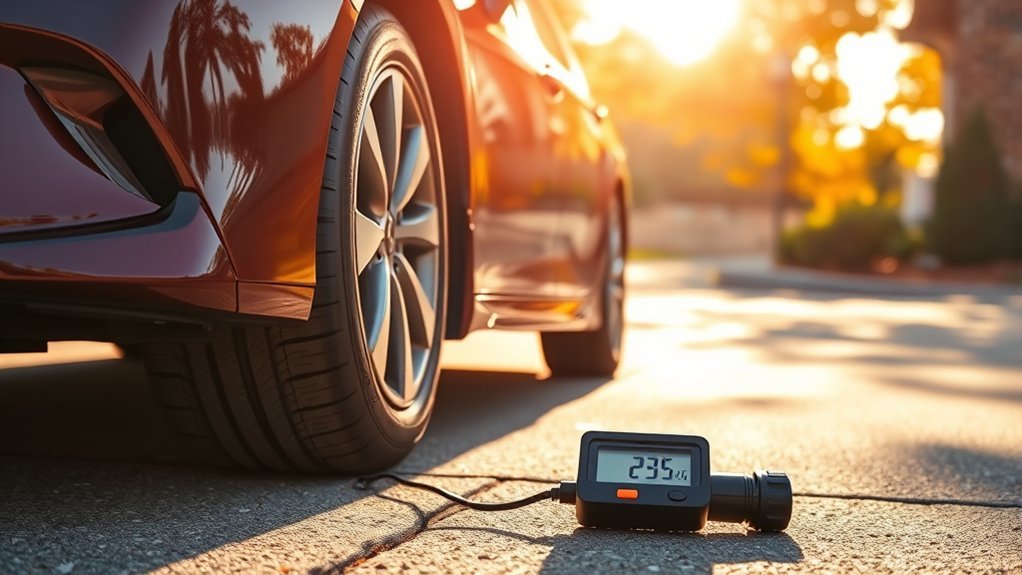
Your Camry must overcome several forces as it moves. One of them is tire rolling resistance. An underinflated tire flexes more as its contact patch rolls across the road. That extra flex wastes energy as heat, so the engine or hybrid system must work harder.
The effect is real, but it is normally smaller than the original article suggested. According to the U.S. Department of Energy, proper inflation can improve gas mileage by about 0.6% on average and up to 3%. DOE also uses an average estimate of roughly 0.2% lower fuel economy for each 1 PSI drop across all four tires.
Proper tire pressure is a small maintenance detail that supports fuel economy, tire life, braking, handling, and ride quality at the same time.
Your actual change in MPG will depend on how far the pressure has fallen, your tires, road conditions, temperature, speed, vehicle load, and driving style. Avoid treating any percentage as a guaranteed result for every Camry.
[Products Worth Considering]

These universal tire valve stem caps help protect your valve core from dust, debris, moisture, and corrosion, supporting more stable tire pressure. The aluminum alloy design resists long-term wear, while the sealing construction helps help prevent air leakage. They twist on easily for quick installation and help safeguard driving safety across cars, SUVs, trucks, and motorcycles.

Upgrade your Toyota tire setup with these corrosion-resistant, leak-proof valve stem caps designed to help protect the valve core from water, snow, and road grime. The caps feature a snug rubber seal and durable copper alloy construction to resist rust and oxidation while maintaining stable tire pressure. Ideal for replacing worn original caps and keeping your wheels looking clean and stylish.
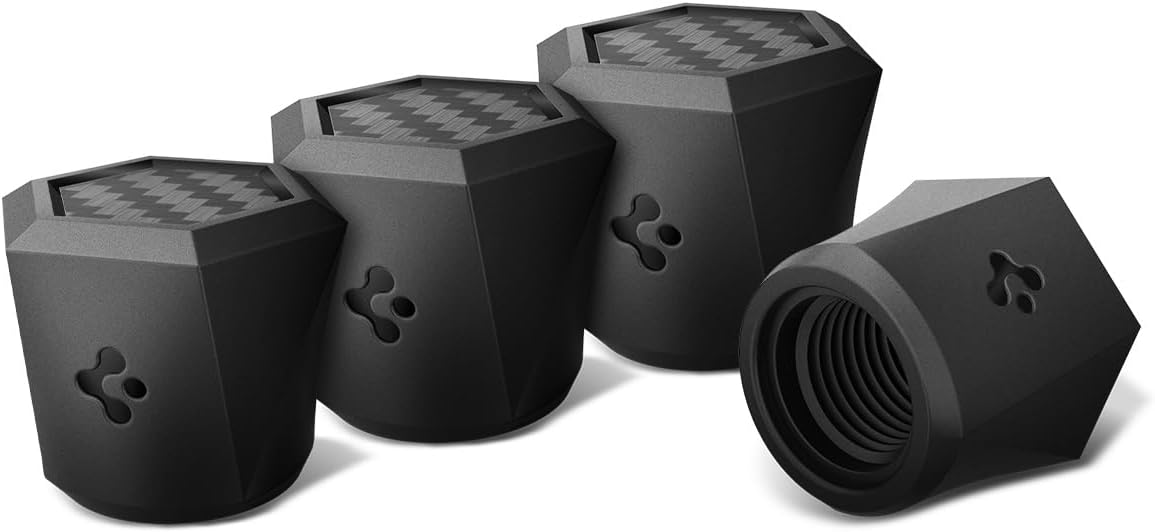
Spigen magnetic tire valve caps attach securely to metal surfaces so you never have to search for lost caps. Designed for Schrader valve stems, they install quickly, help protect against air leakage and corrosion, and feature a light magnet that won’t interfere with TPMS signals.
How to Find the Correct Toyota Camry Tire Pressure
Open the driver’s door and look for the Tire and Loading Information label on the doorjamb or door edge. It lists the recommended cold pressure for the original tire configuration. The front and rear values may be the same, but you should follow separate values when the label lists them.
You can also check the model-specific owner’s manual. Toyota Camry specifications vary by model year, trim, wheel size, tire type, and country, so a pressure found online for another Camry may not match yours.
Warning: Do not inflate your Camry’s tires to the PSI molded into the tire sidewall unless that value also matches the vehicle placard. The sidewall number is generally the tire’s maximum cold inflation pressure, not Toyota’s normal operating recommendation for your vehicle.
The National Highway Traffic Safety Administration recommends using the vehicle manufacturer’s pressure shown on the placard or in the owner’s manual.
What “Cold Tire Pressure” Means
A cold reading is taken before driving, normally after the car has been parked for at least three hours. Driving heats the tires and temporarily raises pressure, so a reading taken after a trip can be higher than the true cold value.
Do not release air from a warm tire merely because the gauge reads above the placard number. Check it again after the tire has cooled. If you must add air while the tire is warm, recheck and fine-tune it later when cold.
How to Check and Adjust the Pressure
- Park the Camry on a safe, level surface and allow the tires to cool.
- Read the front and rear cold-pressure values on the driver-door placard.
- Remove one valve cap and press a reliable gauge firmly onto the valve stem.
- Add air when the reading is below the placard value.
- Release a small amount of air when a cold reading is too high.
- Measure the tire again after each adjustment.
- Repeat the process for every road tire and the spare, when equipped.
- Reinstall each valve cap and inspect the tire for visible damage.
Pro Tip: Keep a digital or dial pressure gauge in the glove box. Gas-station gauges can be damaged or poorly calibrated, so using the same personal gauge makes your monthly readings easier to compare.
What Happens If Your Camry’s Tires Are Underinflated?
Underinflation increases tire flex and rolling resistance. It can also create excess heat, reduce steering response, lengthen stopping distance, and wear the tire shoulders faster. Severe underinflation raises the chance of tire damage or failure.
| Condition | Possible effects | Best response |
|---|---|---|
| Below placard pressure | Higher rolling resistance, heat, slower response, shoulder wear, and reduced fuel economy | Inflate each cold tire to its listed value and inspect for leaks or damage |
| At placard pressure | The intended balance of load capacity, ride, handling, wear, and efficiency | Recheck monthly and before long trips |
| Above placard pressure | Harsher ride, reduced compliance, possible center wear, and less predictable grip | Adjust to the placard value when the tire is cold |
| One tire keeps dropping | Possible puncture, leaking valve, damaged wheel, or bead-seal problem | Have the tire inspected instead of repeatedly topping it up |
Does the TPMS Warning Light Mean the Other Tires Are Fine?
No. Your Tire Pressure Monitoring System is a warning system, not a replacement for a pressure gauge. NHTSA notes that TPMS may not alert you until a tire is already significantly underinflated. Several tires can also be equally low without looking obviously flat.
Check every tire manually at least once a month even when the warning light is off. If the light flashes before remaining on, the system itself may have a fault that needs diagnosis.
How Speed and Tire Pressure Affect Fuel Economy
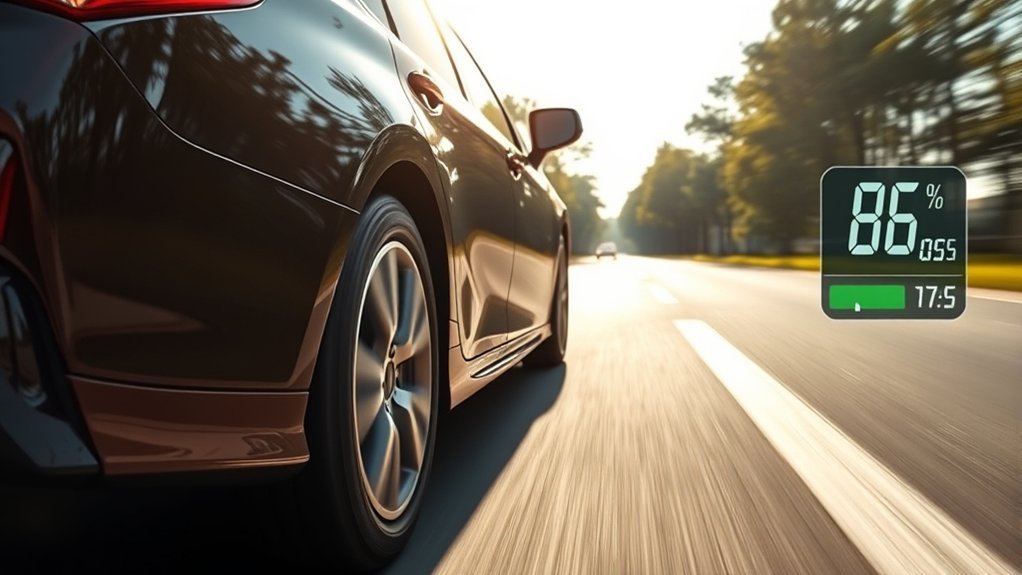
Speed and tire pressure affect fuel consumption in different ways. Underinflation increases rolling resistance, while higher speed greatly increases the energy needed to push the vehicle through the air.
DOE reports that fuel economy usually falls significantly above 50 mph, although the most efficient speed differs by vehicle and drivetrain. A steady 60 mph will therefore usually use less fuel than 70 mph under similar conditions, but traffic, hills, wind, temperature, and acceleration can change the result.
Correcting low tire pressure will not cancel the fuel penalty of speeding. For better highway efficiency, use the placard pressure, accelerate smoothly, keep a safe steady speed, and avoid unnecessary cargo.
A Practical Camry Tire-Maintenance Routine
Check the tires at least once a month and before long journeys. Pressure can fall slowly through normal air loss, and potholes, nails, damaged valves, or leaking wheel beads can cause faster losses.
- Check pressure cold: Compare every tire with the driver-door label.
- Inspect the tread: Look for uneven wear, embedded objects, and low tread depth.
- Inspect the sidewalls: Watch for cuts, cracks, bubbles, bulges, or exposed material.
- Check after temperature changes: Colder air can lower the measured pressure.
- Rotate on schedule: Follow the interval in your Camry’s maintenance guide.
- Investigate repeated losses: A tire that needs frequent air may have a repairable leak or structural damage.
Note: When cold weather lowers pressure, add enough air to return each cold tire to the vehicle placard value. Do not add an arbitrary seasonal amount above Toyota’s specification.
Toyota’s tire-pressure guidance also recommends accounting for seasonal temperature changes by checking and adjusting the tires rather than relying only on the dashboard warning.
[Products Worth Considering]

Upgrade your ride with Tactilian American Flag tire valve stem caps featuring a subdued USA design and matte black aluminum look. The set of four includes rubber O-rings for a leakproof fit and is suitable for cars, trucks, bikes, motorcycles, and other wheels. Show patriotism while keeping valve caps secure and stylish.
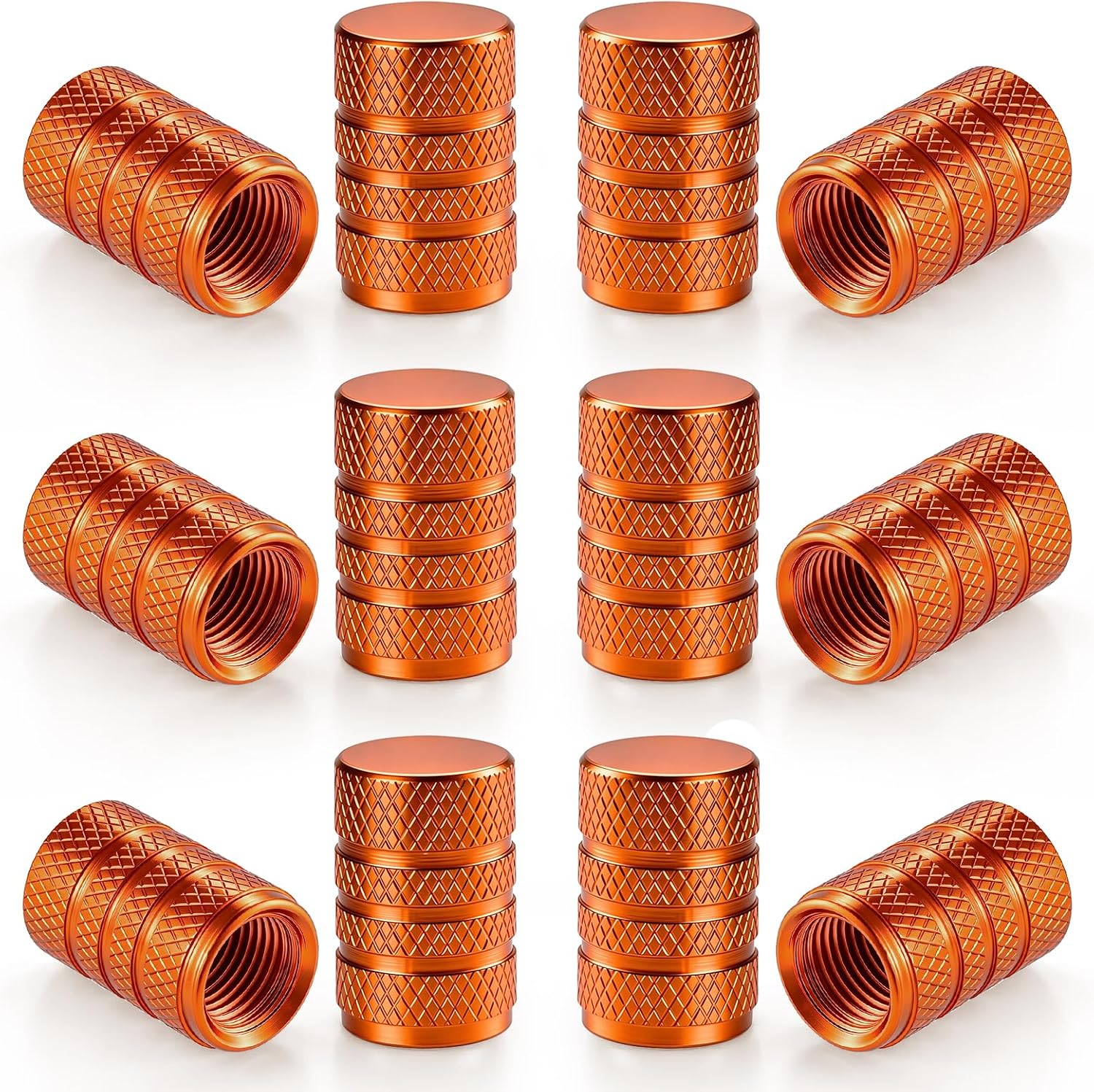
Upgrade your vehicles with these universal aluminum alloy tire valve stem caps designed to help keep dust out and maintain stable tire pressure. Each cap features an internal rubber seal for long-lasting leak protection and features an easy screw-on installation that won’t damage the valve stem threads. Suitable for cars, trucks, motorcycles, and bicycles, they also add a personalized decorative touch to your wheels.
Benefits of Low-Rolling-Resistance Tires
Low-rolling-resistance tires use tread compounds and construction methods that reduce energy loss as the tire flexes. The U.S. Environmental Protection Agency recognizes these tires as one way vehicle manufacturers improve efficiency.
However, efficiency should not be your only selection factor. Any replacement tire must match the correct size, load capacity, speed rating, wheel, and operating needs for your Camry. Also compare wet braking, ride comfort, expected tread life, noise, and winter performance.
A low-rolling-resistance tire will not deliver its intended benefit when it is underinflated, poorly aligned, damaged, or installed in the wrong specification. Correct maintenance remains essential after replacement.
Balancing Ride Quality, Grip, and Fuel Efficiency

The placard pressure represents Toyota’s intended balance of tire load capacity, comfort, handling, wear, and efficiency for the vehicle’s original configuration. Increasing pressure above that value may slightly reduce rolling resistance, but it can also make the ride harsher and change the tire’s contact with the road.
Do not use 40, 43, or 45 PSI simply because another Camry owner reports better MPG. Those values are appropriate only when your specific vehicle label, approved tire setup, or manufacturer documentation calls for them.
Pay attention to how the tires wear. Excess shoulder wear can indicate underinflation, while unusual center wear may be associated with excessive pressure or other setup issues. Alignment, suspension condition, driving style, and rotation history can also affect the pattern, so tire wear should be diagnosed rather than blamed on pressure alone.
Frequently Asked Questions
How much can tire pressure affect Toyota Camry fuel economy?
DOE estimates that keeping tires properly inflated improves gas mileage by about 0.6% on average and up to 3%. It also estimates roughly a 0.2% fuel-economy decrease for each 1 PSI drop in the average pressure across all four tires. Your result will vary with the vehicle, tires, speed, load, and conditions.
Is 60 mph more fuel-efficient than 70 mph?
Usually, yes. Aerodynamic drag rises as speed increases, and DOE says fuel economy commonly drops significantly above 50 mph. The exact difference between 60 and 70 mph depends on your Camry, road grade, wind, traffic, temperature, and driving behavior.
Is 40 PSI good for Toyota Camry MPG?
Use 40 PSI only when the driver-door placard or approved manufacturer documentation specifies it. Do not raise the pressure to 40 PSI merely to improve MPG. The correct cold value gives the intended balance of safety, grip, load capacity, comfort, wear, and efficiency.
Is 35 or 45 PSI better for a Toyota Camry?
Neither number is automatically correct. Use the cold pressure printed on your specific Camry’s driver-door label. If the label says 35 PSI, use 35 PSI cold. Do not use 45 PSI unless Toyota or the vehicle placard specifically requires that value for your configuration.
How often should I check my Camry’s tire pressure?
Check every tire with a gauge at least once a month, before long trips, and after major temperature changes. Also inspect any tire immediately when the TPMS light comes on, the vehicle pulls to one side, or a tire appears damaged or unusually low.
Conclusion
Correct Toyota Camry tire pressure can support fuel economy, predictable handling, ride quality, and even tire wear. The safest target is not a pressure copied from another driver or the maximum printed on the sidewall. It is the cold pressure listed on your own driver-door placard.
Check the tires monthly with a reliable gauge, restore low tires to the listed value, and inspect recurring pressure loss. These simple steps offer a more dependable benefit than overinflating the tires in search of a small and uncertain MPG gain.
Sources
- NHTSA TireWise — recommended pressure location, cold checks, TPMS limitations, tire safety, and rolling resistance.
- U.S. Department of Energy Alternative Fuels Data Center — fuel-economy effects of tire inflation and vehicle speed.
- U.S. Department of Energy Fleet Management Guidance — average fuel-economy change per PSI and proper-inflation benefits.
- Toyota Tire Pressure Guide — pressure-checking procedure and seasonal considerations.
- U.S. Environmental Protection Agency — low-rolling-resistance tire technology and vehicle efficiency.

Related Articles

Toyota Camry All-Season Tires Explained: What They Can and Can’t Do
In exploring Toyota Camry all-season tires, discover their benefits and limitations—are they really the right choice for your driving needs?
Read More
Toyota Camry Tire Traction in Ice and Snow: A Practical Winter Driving Guide
Learn essential tips for maximizing tire traction on ice and snow in your Toyota Camry, ensuring your winter driving is safe and confident. Discover more now!
Read More
Do Toyota Camry Tires Need Snow Chains? When They Help and When They Don’t
How do snow chains enhance your Toyota Camry's winter driving safety, and when should you avoid using them? Discover the essential details inside!
Read More