
Toyota Camry TPMS Sensor Not Reading After Rotation: Causes and Solutions
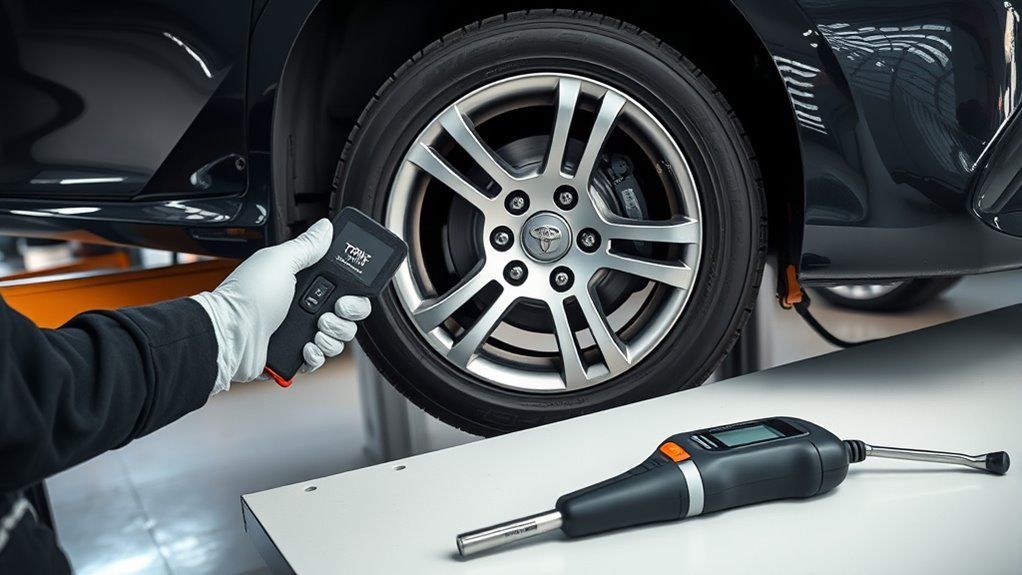
If your Toyota Camry TPMS stopped reading after a tire rotation, start with the simple checks before blaming the sensor. Set all tires to the cold pressure listed on the driver-door tire and loading label, then use the reset, initialization, or wheel-position registration procedure for your Camry’s model year. If the light flashes, readings stay missing, or one wheel will not communicate, a TPMS-capable scan tool can confirm whether the problem is a relearn issue, a damaged sensor, a dead sensor battery, or an unregistered sensor ID.
Quick Answer
A Camry TPMS sensor may stop reading after rotation because tire pressure is low, the system has not relearned the new wheel positions, a sensor ID is not registered, or a sensor battery has failed. Check cold pressure first, reset or register wheel positions, then use a TPMS scan tool if the warning remains.
Key Takeaways
- Use the tire pressure on your Camry’s driver-door placard, not the maximum PSI on the tire sidewall.
- A steady TPMS light usually points to low pressure; a flashing light that stays on usually points to a system malfunction.
- After rotation, some Camry models need wheel-position registration so the display matches the correct tire location.
- After sensor replacement, the new sensor ID must be registered with the vehicle.
- A TPMS-capable scan tool can read sensor IDs, pressure, temperature, battery status, and signal problems.
At a Glance
| Time Required | 10 to 30 minutes for pressure check and reset; longer if a shop must program or replace a sensor. |
| Difficulty | Easy for pressure checks; moderate to professional for TPMS relearn, ID registration, or sensor replacement. |
| Tools Needed | Accurate tire pressure gauge, air source, owner’s manual, and a TPMS scan/relearn tool if the light will not clear. |
| Cost | DIY pressure check/reset is usually free after you own a gauge. Shop diagnosis, programming, or sensor replacement varies by model year, sensor type, and labor rate. |
What the Camry TPMS Light Means

When your Toyota Camry’s TPMS light comes on, it is not a vague warning. It means the tire pressure warning system has detected either low tire pressure or a problem with the system that reports tire pressure.
A steady TPMS light usually means one or more tires are significantly underinflated. A TPMS light that flashes for about a minute and then stays on usually means the system has a malfunction, such as a dead sensor, an unregistered sensor, or a communication issue. The National Highway Traffic Safety Administration also warns that TPMS is not a replacement for regular pressure checks with a gauge.
Warning: If a tire looks flat, is visibly damaged, or loses air quickly, do not keep driving just to clear the TPMS light. Pull over safely, inspect the tire, and use the spare or roadside help if needed.
[Products Worth Considering]
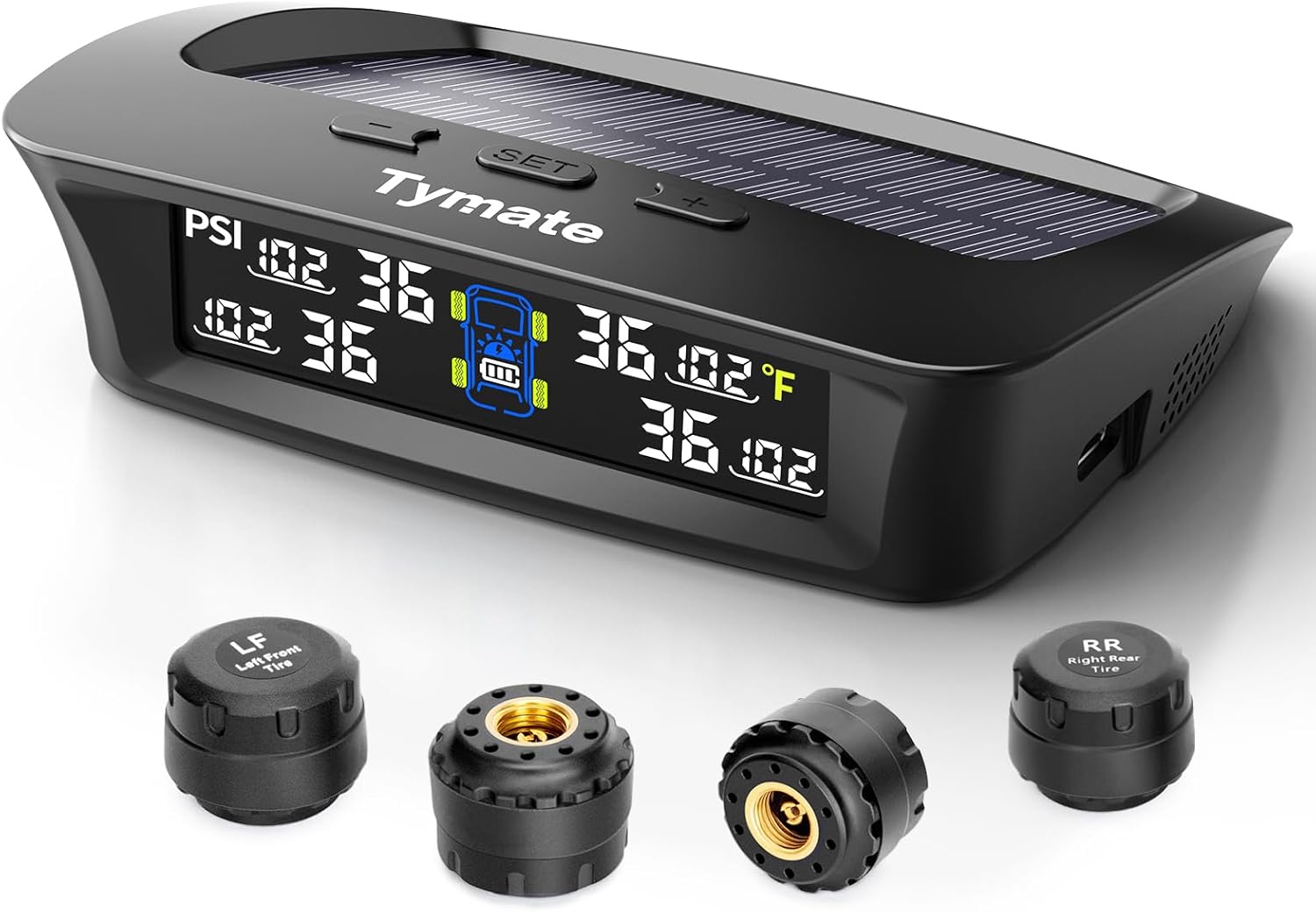
The Tymate TM3 RV TPMS delivers real-time tire pressure monitoring from 0 to 144 PSI with accurate readings and dependable wireless communication. It includes four external sensors with pre-pairing, six alarm modes for rapid leak, pressure extremes, temperature, and signal loss, plus an easy-reference setup for alert thresholds. Solar and USB-C charging help keep the display powered, while the color LCD and adaptive backlight improve visibility for safer driving and towing.

The AstroAI 2 pack air chucks provide a heavy-duty, closed-flow locking design that helps keep air flowing during inflation while securely attaching to the valve stem. Built with 250 PSI rated brass components and compatible with Schrader valves, they feature 1/4" female NPT threads for a wide fit with common inflators. The straight tip and locking clip make filling tires and monitoring pressure more convenient.

The JACO FlowPro Tire Inflator measures, inflates, and airs down tires up to 100 PSI with battery-free operation and ±2% accuracy after calibration. It features a glowing pressure dial for night visibility, a heavy-duty steel build with a hybrid hose, and a precision push-to-inflate thumb trigger. The patented Lightning Air Chuck locks on for a secure seal, and the kit includes quick-connect hardware for easy inline use with your air compressor.
Why Camry TPMS Fails After Tire Rotation
A tire rotation can expose an existing TPMS problem or create a new mismatch between the sensor location and the vehicle’s stored position data. The most common causes are low tire pressure after service, wheel-position registration that was not completed, a sensor damaged during tire work, a weak sensor battery, or a sensor ID that was never registered after replacement.
Sensor Position Mismatch
Many Camry models use direct TPMS sensors mounted at each wheel. After rotation, the sensors may still transmit normally, but the vehicle may not know which sensor is now at the front-left, front-right, rear-left, or rear-right position. That can make the pressure display wrong or incomplete.
For newer Camry models, Toyota’s owner-manual language includes a wheel position registration procedure after rotating tires. Older Camrys may use a SET button or a simpler initialization procedure. Always follow the procedure for your exact model year.
Faulty TPMS Battery
A weak TPMS sensor battery can show up right after rotation even if the rotation did not cause the failure. Direct TPMS sensors have sealed internal batteries. Once the battery is depleted, the sensor usually has to be replaced rather than repaired. TPMS sensor makers commonly list a typical operating life of about 5 to 10 years, depending on sensor design, driving, temperature, and use conditions.
Watch for intermittent readings, one tire position that disappears, or a warning light that flashes and then stays on. Those are stronger signs of a sensor or communication fault than a normal low-pressure warning.
Relearn And Reset Issues
“Reset,” “initialize,” “register position,” and “register ID codes” are related, but they are not the same thing.
- Pressure reset or initialization teaches the vehicle the current tire pressure baseline.
- Wheel-position registration teaches the vehicle where each existing sensor is located after rotation.
- Sensor ID registration adds a new sensor’s unique ID code after a sensor or wheel is replaced.
If a shop only rotates the tires and does not complete the correct registration step, the Camry may keep showing old positions, missing readings, or a warning light.
Check Tire Pressure First
Before you reset or diagnose anything, check the pressure of all four tires with an accurate gauge. Use the cold tire pressure listed on the driver-door tire and loading label or in your owner’s manual. Do not use the maximum PSI printed on the tire sidewall as your target pressure.
A cold tire is usually one that has been parked for at least three hours or driven only a short distance. Pressure rises as tires heat up, so a warm reading can mislead you. If your Camry has a spare tire, check it manually too. Not every spare reports to the TPMS display, but a low spare is still a safety problem.
Pro Tip: If the TPMS light appears on a cold morning and turns off after driving, the tires may still be slightly low. Recheck and adjust them when cold instead of assuming the system fixed itself.
How to Reset Camry TPMS
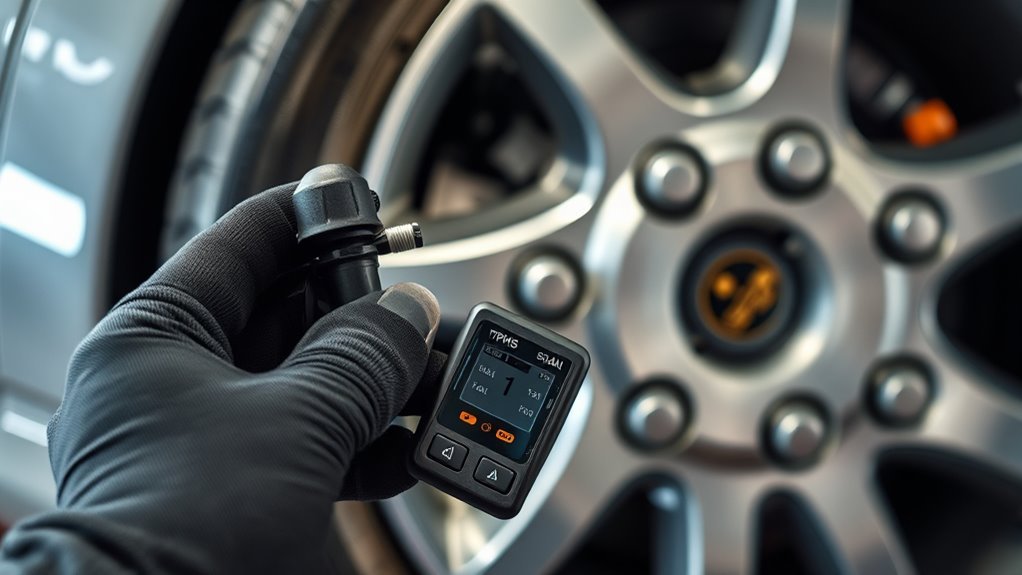
The correct reset method depends on your Camry’s model year and equipment. Use your owner’s manual as the final authority, because Toyota changed TPMS menus and registration steps across generations.
Basic Reset Sequence for Many Camry Models
- Park safely on level ground.
- Set all tires to the cold pressure listed on the driver-door placard.
- Turn the ignition or power switch to ON without driving.
- If your Camry has a TPMS SET button, press and hold it until the tire pressure warning light blinks three times.
- If your Camry uses the display menu, use the meter controls to open the vehicle settings or TPWS settings and select the tire pressure setting or initialization option.
- Drive at a safe speed as directed by your manual so the vehicle can complete learning.
- Recheck the warning light and tire pressure display.
Some Toyota quick-reference instructions describe driving at approximately 25 mph or more for about 10 minutes after initialization. That is useful guidance for many older procedures, but newer Camrys may require menu-based wheel-position registration instead of only a button reset.
Note: A normal pressure reset will not fix a dead sensor, wrong-frequency sensor, missing sensor, damaged valve stem, or unregistered replacement sensor.
Why the TPMS Relearn Fails
If the TPMS relearn or registration will not complete, the vehicle is usually missing valid data from one or more sensors. That can happen because the sensor battery is dead, the wrong replacement sensor was installed, the sensor ID was not registered, or the vehicle cannot receive the sensor signal.
Sensor Battery Failure
A direct TPMS sensor cannot transmit accurate pressure data after its internal battery fails. Because most TPMS sensor batteries are sealed inside the sensor housing, the usual repair is sensor replacement followed by ID registration.
Battery failure is more likely on older Camrys, but age is not the only factor. Heat, cold, driving patterns, sensor design, and road conditions can affect sensor life. A TPMS scan tool can often show whether a sensor is transmitting and whether the battery status is weak.
Relearn Tool Required
Some TPMS work requires a dedicated TPMS tool, not just a basic OBD-II scanner. A TPMS tool can wake up sensors, read sensor IDs, check pressure and temperature data, and help register positions or replacement IDs.
Use a TPMS-capable shop or Toyota dealer when:
- One tire position shows no reading after the reset.
- The warning light flashes, then stays on.
- A sensor was replaced.
- Aftermarket wheels or sensors were installed.
- The tire shop rotated the tires but did not perform wheel-position registration.
Solid vs. Flashing TPMS Light
The light pattern tells you where to start.
| TPMS Light Pattern | Most Likely Meaning | What to Do |
|---|---|---|
| Steady light | One or more tires may be low. | Check all tire pressures cold and inflate to the placard value. |
| Flashes, then stays on | TPMS malfunction, sensor issue, or communication problem. | Use a TPMS scan tool or visit a qualified tire shop/dealer. |
| Light comes and goes with temperature | Marginal low pressure affected by cold weather. | Set pressure when cold and recheck after major temperature swings. |
Signs of a Bad TPMS Sensor
A failing Toyota Camry TPMS sensor usually shows up as a communication problem, not just a low-pressure warning. Look for these symptoms:
- One tire position shows “–” or no reading.
- The TPMS light flashes for about a minute, then stays on.
- The pressure shown on the dash does not match a manual gauge reading.
- The system will not complete reset, initialization, or wheel-position registration.
- A tire shop finds no signal from one wheel sensor.
- The issue appeared after tire mounting, wheel replacement, or valve stem work.
Sensor age also matters. If the car is several years old and one sensor starts dropping in and out, a weak sealed battery is a realistic cause.
[Products Worth Considering]

This multi-function tire valve stem removal tool set makes it fast to remove, install, bleed, and clean valve cores for easier tire maintenance. It includes valve core removers, a 4-way spool tool, replacement valve caps, and spare cores to handle replacements and repairs with confidence. Universal compatibility suits cars, trucks, motorcycles, bicycles, and more for roadside convenience.

EVOULTES heavy duty tire inflator with an integrated gauge delivers accurate pressure readings from 10–120 PSI, helping you inflate, deflate, and check tires in one tool. The 16.5-inch extended dual-head air chuck with swivel base reaches hard-to-access dual wheel valves on trucks and RVs. A brass trigger core and side-mounted air release valve make operation smooth, with standard 1/4" NPT threading and quick-connect compatibility for easy setup.
What a Tire Shop Can Diagnose
A capable tire shop can do more than clear a dashboard light. With the right TPMS tool, a technician can read each sensor directly and compare that data with what the Camry has stored.
| Check | Result | Meaning |
|---|---|---|
| Sensor signal | No response from one wheel | Dead sensor, damaged sensor, or wrong sensor type |
| Sensor ID | ID not stored in vehicle | Replacement sensor needs registration |
| Wheel position | Positions do not match rotation | Wheel-position registration is needed |
| Battery status | Weak or failed | Sensor replacement is likely |
| Valve stem and mounting | Cracked, loose, corroded, or leaking | Mechanical damage or installation issue |
When to Use a Scanner or Dealer
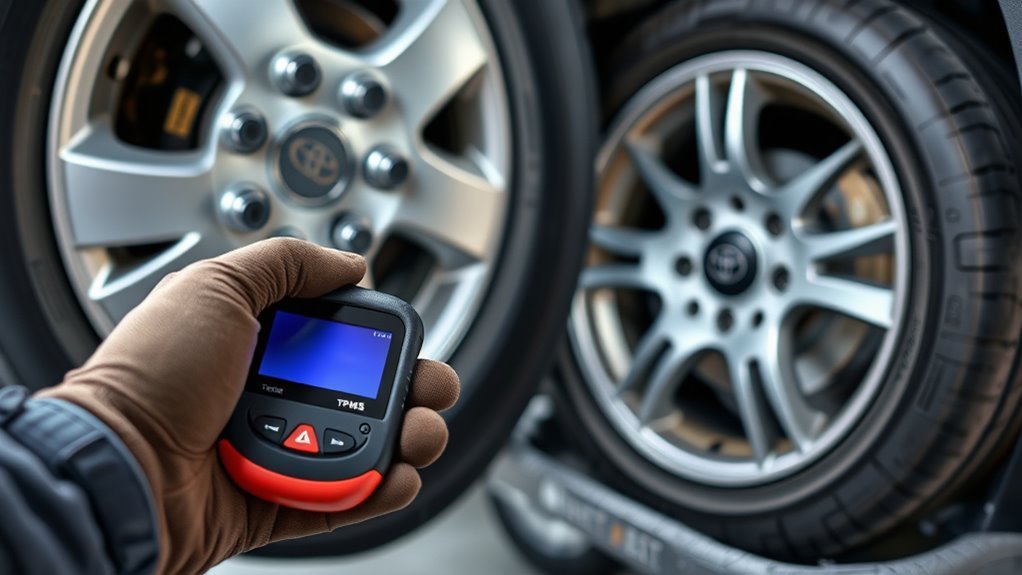
Use a scanner or dealer-level diagnostic tool when the normal pressure check and reset do not fix the issue. A generic code reader may not be enough. You need a tool that can communicate with the TPMS sensors and the vehicle’s tire pressure warning computer.
A TPMS-capable scanner can help confirm:
- Which wheel sensor is not transmitting.
- Whether each sensor ID is registered to the Camry.
- Whether the displayed wheel positions match the actual tire locations.
- Whether a replacement sensor is compatible.
- Whether the issue is a sensor, registration, receiver, or pressure problem.
If your Camry still has a TPMS warning after a shop rotation, ask the shop whether it performed wheel-position registration or only moved the wheels. That one question often separates a simple relearn from an unnecessary sensor replacement.
Replacing Camry TPMS Sensors
Replacing a Camry TPMS sensor is not just a parts swap. The replacement sensor must be compatible with your model year, wheel type, and TPMS system. After installation, its unique ID code must be registered so the vehicle can recognize it.
Use these rules before replacing parts:
- Confirm the pressure is correct with a manual gauge.
- Confirm the sensor is actually not transmitting.
- Confirm the sensor frequency and protocol match your Camry.
- Register the replacement sensor ID after installation.
- Perform wheel-position registration if the vehicle displays tire locations.
- Clear TPMS-related codes only after the underlying issue is fixed.
If one sensor has failed from age, ask the shop to check the other sensors too. Replacing only the failed unit is often enough, but if all sensors are the same age and several batteries are weak, replacing more than one during the same tire service may save labor later.
Quick Troubleshooting Flow
- Check pressure cold. Set all tires to the driver-door placard value.
- Inspect the tires. Look for punctures, sidewall bubbles, leaks, or valve damage.
- Identify the light pattern. Steady light usually means pressure; flashing-then-solid usually means malfunction.
- Use the correct reset method. Follow the SET button or TPWS menu procedure for your model year.
- Register wheel positions after rotation. This matters on systems that display individual tire positions.
- Scan the sensors if the light stays on. Check ID, signal, pressure, temperature, and battery status.
- Replace and register the sensor only after diagnosis. Do not guess based only on the dashboard light.
Frequently Asked Questions
How do you reset TPMS sensors after rotating Toyota Camry tires?
First set all tires to the cold pressure on the driver-door placard. Then follow your model year’s reset or TPWS menu procedure. Older Camrys may use a SET button, while newer models may require TPWS settings and wheel-position registration through the multi-information display.
Why does my Camry TPMS light stay on after tire rotation?
The most common reasons are low tire pressure, a reset that was not completed, wheel positions that were not registered after rotation, a damaged sensor, or a weak sensor battery. If the light flashes before staying on, treat it as a TPMS malfunction and have the sensors scanned.
What is the life expectancy of a Toyota Camry TPMS sensor?
Most direct TPMS sensors last about 5 to 10 years, but lifespan varies with temperature, driving patterns, sensor design, and road conditions. Because the battery is sealed inside the sensor, a dead battery usually means the sensor must be replaced and registered.
Can I drive with the TPMS light on?
You should check tire pressure as soon as possible. If a tire is visibly low, damaged, or losing pressure quickly, do not keep driving. If all tires are properly inflated and the light flashes then stays on, the vehicle may be drivable, but the TPMS needs diagnosis because the warning system may not protect you.
Do new TPMS sensors need programming on a Camry?
Yes. A replacement TPMS sensor has a unique ID code that must be registered to the vehicle. Depending on the Camry’s model year and equipment, the shop may also need to perform wheel-position registration so the display shows each tire in the correct location.
Conclusion
If your Camry TPMS will not read after a tire rotation, do not start by buying sensors. Start with cold tire pressure, inspect for leaks or valve damage, and follow the correct reset or TPWS procedure for your model year. If the light flashes, one wheel shows no reading, or the display positions are wrong, the next step is a TPMS-capable scan tool. A proper scan can separate a simple wheel-position relearn from a failed battery, damaged sensor, or unregistered replacement ID.
Sources
- Toyota Support — Tire Pressure Monitor System overview — supports Toyota-specific TPMS warning behavior and owner-manual reliance.
- Toyota 2025 Camry Hybrid Owner’s Manual — Tires and TPWS settings — supports tire rotation, wheel-position registration, sensor valves/transmitters, and TPWS menu guidance.
- NHTSA TireWise — Tire safety and TPMS guidance — supports cold tire pressure checks, placard pressure, monthly checks, and TPMS light meanings.
- eCFR 49 CFR 571.138 — Tire pressure monitoring systems — supports federal TPMS warning and malfunction requirements.
- REDI-Sensor — Understanding TPMS batteries — supports typical TPMS sensor lifespan and sealed battery replacement guidance.

Related Articles

Toyota Camry All-Season Tires Explained: What They Can and Can’t Do
In exploring Toyota Camry all-season tires, discover their benefits and limitations—are they really the right choice for your driving needs?
Read More
Toyota Camry Tire Traction in Ice and Snow: A Practical Winter Driving Guide
Learn essential tips for maximizing tire traction on ice and snow in your Toyota Camry, ensuring your winter driving is safe and confident. Discover more now!
Read More
Do Toyota Camry Tires Need Snow Chains? When They Help and When They Don’t
How do snow chains enhance your Toyota Camry's winter driving safety, and when should you avoid using them? Discover the essential details inside!
Read More