
Toyota Camry TPMS Warning Light: Common Causes and How to Fix It

If your Toyota Camry TPMS warning light stays on, start with tire pressure, not the reset button. Check all four road tires with a reliable gauge when the tires are cold, inflate them to the pressure shown on the driver-door tire-and-loading label, and inspect for leaks or tire damage. If the light blinks for about a minute before staying on, treat it as a TPMS malfunction that may need sensor diagnosis.
Quick Answer
A Toyota Camry TPMS light usually means one or more tires are low, but a blinking light that turns solid points to a system malfunction. Check cold tire pressure first, repair leaks, then reset TPWS only after the tires match the door-jamb pressure label.
Key Takeaways
- A steady TPMS light usually means low tire pressure or a flat tire; a blinking light followed by a steady light usually means a TPMS malfunction.
- Use the pressure on the Camry’s tire-and-loading label, not the maximum pressure printed on the tire sidewall.
- Do not reset TPMS until the tires are correctly inflated and checked for leaks.
- Some Camrys use a physical TPMS reset switch, while newer models may use a TPWS menu in the multi-information display.
- Check the spare for safety, but do not assume every Camry spare has a TPMS sensor; compact spares may not be monitored.
At a Glance
| Time Required | 10–30 minutes for pressure check and reset; longer if a leak or sensor fault is found |
| Difficulty | Easy for pressure checks; moderate if sensor diagnosis is needed |
| Tools Needed | Accurate tire pressure gauge, air compressor, flashlight, soapy water for leak checks, TPMS scan tool if the light blinks |
| Cost | Usually free if tires only need air; sensor diagnosis or replacement varies by shop and sensor type |
What Does the Toyota Camry TPMS Light Mean?
The Toyota Camry TPMS light means the tire pressure warning system has detected a pressure problem or a system fault. Toyota explains that when the system senses seriously low pressure, the low tire pressure icon appears and the driver should check the tires, then refill, repair, or replace any tire below the proper pressure. You can read Toyota’s overview here: Toyota Tire Pressure Monitoring System support.
TPMS is a safety backup, not a replacement for manual tire checks. Federal TPMS rules describe the system as a way to warn drivers about significant underinflation and related safety problems. They also state that drivers remain responsible for correct tire pressure even if the warning has not yet triggered. For the federal standard, see 49 CFR § 571.138, Standard No. 138.
NHTSA reported that direct TPMS was 55.6% effective at reducing severe underinflation in a 2010–2011 evaluation, but the system still depends on drivers checking and maintaining tire pressure.
Why Is My Toyota Camry TPMS Light On?
If your Toyota Camry TPMS light is on, the most common cause is low pressure in one or more tires. Pressure can drop from normal air loss, cold weather, a puncture, a leaking valve stem, wheel corrosion, or a tire bead leak. A recent tire rotation, new tire installation, wheel change, or sensor replacement can also require TPWS initialization or sensor registration.
Use this quick guide before resetting anything:
| What You See | Likely Meaning | What to Do |
|---|---|---|
| Light stays solid | Low tire pressure or a flat tire | Check all four road tires cold, inflate to the door-jamb label, and inspect for damage. |
| Light blinks for about 1 minute, then stays on | TPMS malfunction | Have the system scanned for a failed sensor, dead sensor battery, receiver issue, or registration fault. |
| Pressure display shows dashes or missing readings, if equipped | A sensor may not be transmitting | Verify pressures manually, then scan the TPMS if readings do not return. |
| Light returns after reset | Slow leak, wrong baseline, unregistered sensor, or sensor fault | Recheck pressure cold, inspect for leaks, then diagnose the TPMS if pressure is correct. |
Warning: Do not reset TPMS just to turn the light off. First confirm the tires are safe, correctly inflated, and free of obvious leaks or sidewall damage.
How Do You Check and Inflate the Tires?
Start with the car parked on level ground and the tires cold. “Cold” means the car has been parked for several hours or driven only a short distance at low speed. Then follow these steps:
- Open the driver door and find the tire-and-loading information label. Use that pressure, not the maximum PSI molded into the tire sidewall.
- Remove each valve stem cap.
- Press a reliable tire pressure gauge firmly onto the valve stem.
- Compare the reading with the label pressure.
- Add air gradually if the tire is low. If you add too much, release small amounts and recheck.
- Look for nails, screws, sidewall bulges, cracks, or uneven wear.
- After adjusting pressure, apply a small amount of soapy water around the valve stem if you suspect a leak. Bubbles can show air escaping.
- Reinstall the valve cap to help keep dirt and moisture out.
Check all four road tires at least monthly and before long trips. Pressure changes with temperature, so a light that appears during a cold morning may still need correction even if the tire looked fine the day before.
Pro Tip: Keep a pencil-style or digital tire gauge in the glove box. Gas-station gauges can be inaccurate or damaged, so your own gauge gives you a better baseline.
[Products Worth Considering]

EVOULTES heavy duty tire inflator with an integrated gauge delivers accurate pressure readings from 10–120 PSI, helping you inflate, deflate, and check tires in one tool. The 16.5-inch extended dual-head air chuck with swivel base reaches hard-to-access dual wheel valves on trucks and RVs. A brass trigger core and side-mounted air release valve make operation smooth, with standard 1/4" NPT threading and quick-connect compatibility for easy setup.

This portable cordless tire inflator delivers up to 160 PSI with fast 17 L/min airflow to help you quickly top up tires and get back on the road. It features dual power mode, running on a 21V rechargeable battery or a 12V DC adapter for convenient roadside use. An automatic shut-off with digital pressure gauge helps prevent overinflation, and a built-in LED light improves visibility in low-light conditions.

The JACO FlowPro Tire Inflator measures, inflates, and airs down tires up to 100 PSI with battery-free operation and ±2% accuracy after calibration. It features a glowing pressure dial for night visibility, a heavy-duty steel build with a hybrid hose, and a precision push-to-inflate thumb trigger. The patented Lightning Air Chuck locks on for a secure seal, and the kit includes quick-connect hardware for easy inline use with your air compressor.
Don’t Forget the Spare Tire Sensor
You should check the spare tire pressure for safety, but do not assume every Toyota Camry spare is monitored by TPMS. Some Camry models and wheel sets may use a sensor-equipped spare, while compact temporary spares may not have a tire pressure warning valve and transmitter. Toyota’s 2025 Camry manual also notes that if a compact spare is installed after the tire pressure warning light comes on, the light may remain on. See Toyota’s flat-tire guidance here: Toyota Camry flat tire information.
Spare Tire Pressure Check
Check the spare tire during your normal tire-pressure routine. A spare can lose air slowly even when it has not been used. If your Camry has a compact temporary spare, look for the pressure listed on the spare tire sidewall, the tire-and-loading label, or the owner’s manual. Do not use a compact spare as a long-term replacement for a road tire.
Spare Sensor Faults
If your Camry has a sensor-equipped spare or a second registered tire set, a weak sensor battery, damaged valve stem, corrosion, or an unregistered sensor can trigger TPMS warnings. If the four road tires are correctly inflated and the light still blinks or pressure readings are missing, ask a tire shop or Toyota dealer to scan each sensor and confirm which wheel position is not communicating.
How Do You Reset the Toyota Camry TPMS Light?
Reset the Toyota Camry TPMS light only after all tires are set to the correct cold pressure and any leaks are repaired. The exact reset method depends on model year, trim, and market. Your Camry may use a physical reset switch, a TPWS menu in the multi-information display, or automatic relearning after pressure is corrected.
Method 1: Physical TPMS Reset Switch
Some older Camry models use a physical tire pressure warning reset switch, often under the dash, near the steering column, near the glove box, or in another lower-panel location. If your Camry has this switch:
- Set all four road tires to the correct cold pressure.
- Turn the ignition to “On” without starting the engine, or use the accessory/on sequence listed in your manual.
- Press and hold the TPMS reset switch until the tire pressure warning light blinks three times.
- Release the switch.
- Start the vehicle and drive normally as directed by the owner’s manual so the system can relearn the baseline.
Method 2: TPWS Menu Reset
Many newer Camrys use the display menu instead of a dedicated button. The menu wording can vary, but the path is commonly similar to:
- Set all tires to the correct cold pressure.
- Turn the vehicle on.
- Use the steering-wheel controls to open the settings menu.
- Go to Vehicle Settings.
- Select TPWS or tire pressure warning settings.
- Choose Set Pressure or the equivalent initialization option.
- Press and hold OK until the system confirms the setting or the indicator flashes.
- Drive normally so the system can complete its learning process.
Toyota’s 2025 Camry manual describes the tire pressure warning light as part of the TPMS/TPWS system and distinguishes between low pressure and system malfunction. For the current manual section, see Toyota Camry warning light details.
Note: If your Camry does not have a reset button and the menu path is different, use the owner’s manual for your exact year. Toyota changes controls across generations and trims.
Why Does the Toyota Camry TPMS Light Keep Coming Back?
If your Toyota Camry TPMS light keeps coming back, the system is usually reacting to an unresolved problem. The most common causes are:
- A slow leak from a puncture, valve stem, bead, or cracked wheel
- Pressure set while tires were warm, causing the cold pressure to fall below spec later
- Incorrect tire pressure after rotation or tire replacement
- TPWS reset performed before all tires were correctly inflated
- A sensor that was damaged during tire service
- A dead or weak TPMS sensor battery
- A sensor that needs registration after wheel or sensor replacement
- Signal interference or a receiver/module fault
If the warning returns within a day or two, recheck pressure when the tires are cold. If one tire is lower than the others, look for a leak. If all tire pressures are correct and the warning blinks before staying on, schedule TPMS diagnostics instead of repeating resets.
Signs Your Camry TPMS Sensors Need Replacement
Your Camry’s TPMS sensors may need replacement if the warning light blinks for about a minute, individual pressure readings disappear on models that show them, or a scan tool shows that one sensor is not transmitting. A failed sensor battery usually means replacing the sensor unit, not just the battery.
Many direct TPMS sensors last for years, but battery life is finite. DENSO, an OE automotive parts supplier, lists TPMS sensor battery life as an estimated 5–10 years or 100,000 miles, depending on use and conditions. For more detail, see DENSO’s TPMS sensor replacement guidance.
Common replacement signs include:
- Light blinks, then stays on
- Pressure reading is missing for one wheel, if equipped
- TPMS scan tool cannot wake up one sensor
- Warning appears shortly after tire service
- Valve stem is cracked, leaking, corroded, or damaged
- Sensors are near the end of their expected battery life
[Products Worth Considering]

The AstroAI L7 Air Tire Inflator refills car tires quickly with up to 150PSI max pressure and a fast 1-minute inflation claim. It includes 5 preset modes for car, motorcycle, bicycle, balls, and manual use, along with an auto shutoff to help prevent overinflation. Designed for convenience, it features a digital gauge with unit switching, a top LED light with multiple modes, and USB-C/USB ports for backup power.

This compact capsule-style tire repair kit helps you quickly fix punctures and plug flats with minimal effort. The rugged stainless steel shell protects the contents for reliable roadside use, while the simple plug assembly makes repairs fast and tool-free. Suitable for motorcycles, cars, ATVs, UTVs, and even mountain bikes.
When Should a Mechanic Diagnose the TPMS?
A mechanic should diagnose your TPMS when the light stays on after you have confirmed all four road tires are correctly inflated, or when the light blinks for about a minute before staying solid. That blinking pattern points to a malfunction rather than a simple low-pressure warning.
Visit a tire shop or Toyota dealer if you notice any of these problems:
- The light blinks for about one minute, then remains on
- A tire keeps losing pressure after inflation
- The pressure display shows missing or unstable readings, if equipped
- The light came on after tire rotation, wheel replacement, or sensor replacement
- The reset switch does not make the light blink three times
- The TPWS menu reset fails or the warning returns after driving
- The vehicle has older sensors that may have weak batteries
A shop can read TPMS trouble codes, wake up each sensor, check sensor battery status, verify sensor IDs, register new sensors, and confirm whether the issue is a tire leak, wheel problem, sensor fault, or receiver/module issue.
[Products Worth Considering]

[Brand-New ArtiDiag500] We've got everything you're looking for! Forget basic OBD2 scanners; TOPDON's ArtiDiag500 car scanner offers more. The all-new ArtiDiag500 not only includes full OBD2 functions and 4-system diagnostics but also provides DIYers with 6 maintenance services. The brand-new, cost effective AD500 is back in full swing!
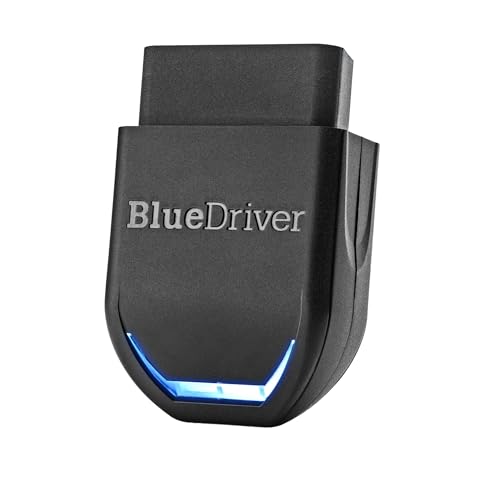
[Diagnose Like a Pro] BlueDriver Pro Next-Gen is a professional OBD2 scanner and diagnostic tool that helps you scan, understand, and clear vehicle trouble codes with confidence. Turn your phone into a powerful car diagnostic scanner—no guesswork, no unnecessary repairs.

[All System Diagnostics, Professional-Level Scanner] - BLCKTEC 460T is the ultimate OBD2 diagnostic tool for home mechanics and professionals. It supports all 10 OBD2 modes, reads and clears Engine/Transmission/ABS/SRS codes, performs All-System Diagnostics, offers workshop reset tools, and provides real-time live data. It helps you pinpoint issues, assess your car's condition, and prepare for SMOG checks with ease. NOTE: Function availability depends on your vehicle. Before you buy, be sure to use the Compatibility Checker on BLCKTEC website or contact our customer support to verify that the features you need are supported for your vehicle’s specific year, make, and model.
Common Mistakes That Keep the TPMS Light On
A TPMS light that refuses to clear is often caused by a small setup mistake. Before replacing parts, check for these issues:
- Using the tire sidewall PSI: The sidewall shows maximum pressure, not the Camry’s recommended operating pressure.
- Checking hot tires: Pressure rises after driving. Set pressure when tires are cold whenever possible.
- Ignoring one low tire: One tire can be several PSI low while the others look normal.
- Resetting too early: Resetting before the tires are correct can teach the system the wrong baseline.
- Forgetting recent service: New tires, rotated tires, new wheels, or replaced sensors may need registration or relearning.
- Assuming the spare is always monitored: Check spare pressure for safety, but confirm whether your spare has a TPMS sensor.
Frequently Asked Questions
Can I fix a TPMS error myself?
Yes, if the problem is simple low pressure. Check all four road tires cold, inflate them to the driver-door label, inspect for leaks, and reset TPWS only after pressure is correct. If the light blinks for about one minute or readings are missing, you will likely need a TPMS scan tool or professional diagnosis.
What is the life expectancy of the TPMS sensor on a Toyota Camry?
Many direct TPMS sensors last about 5–10 years, but the exact life depends on sensor design, climate, mileage, and driving patterns. When the sealed sensor battery fails, the usual repair is replacing the sensor unit and registering it to the vehicle.
Why is my Camry TPMS light blinking?
A TPMS light that blinks for about one minute and then stays on usually indicates a malfunction in the tire pressure warning system. Possible causes include a failed sensor, dead sensor battery, unregistered sensor, receiver issue, or communication fault.
Where is the Toyota Camry TPMS reset button?
It depends on the model year and trim. Some Camrys have a physical reset switch under the dash, near the steering column, near the glove box, or near the lower driver-side panel. Many newer Camrys use the TPWS menu in the multi-information display instead of a physical button.
Can I drive with the TPMS light on?
Drive only long enough to stop safely and check the tires. If a tire is visibly flat, the car pulls, handling feels unstable, or pressure is very low, do not keep driving on it. If all tires are correctly inflated and the light blinks, the car may still drive, but the TPMS may not warn you about a future low tire until it is repaired.
Will the TPMS light reset itself after I add air?
Sometimes it will turn off after the tires are corrected and the vehicle is driven. Other times you must initialize TPWS with a reset switch or vehicle settings menu. If it returns after pressure is correct, look for a leak or TPMS fault.
Conclusion
If your Toyota Camry TPMS light stays on, treat it as a real tire-safety warning until you prove otherwise. Check cold tire pressure, use the door-jamb label, inspect for leaks, and reset TPWS only after everything is correct. If the light blinks for about a minute, pressure readings are missing, or the warning keeps coming back, have the sensors and TPMS system scanned. A few minutes with a gauge can prevent tire damage, poor handling, and a missed flat.
Sources
- Toyota Support — Tire Pressure Monitoring System — backs up what the TPMS warning means and the need to check, refill, repair, or replace low tires.
- Toyota 2025 Camry Owner’s Manual — Warning Lights — backs up steady vs. blinking tire pressure warning light guidance.
- Toyota 2025 Camry Owner’s Manual — Tire Inflation Pressure — supports using the vehicle’s tire-and-loading information label for cold inflation pressure.
- Toyota 2025 Camry Owner’s Manual — If You Have a Flat Tire — supports compact spare and tire pressure warning light cautions.
- eCFR — 49 CFR § 571.138, Tire Pressure Monitoring Systems — backs up federal TPMS purpose, underinflation warning, malfunction warning, and maintenance responsibility.
- NHTSA — Tire-Related Surveys: Results and Implications — backs up TPMS effectiveness and severe-underinflation context.

Related Articles

Toyota Camry All-Season Tires Explained: What They Can and Can’t Do
In exploring Toyota Camry all-season tires, discover their benefits and limitations—are they really the right choice for your driving needs?
Read More
Toyota Camry Tire Traction in Ice and Snow: A Practical Winter Driving Guide
Learn essential tips for maximizing tire traction on ice and snow in your Toyota Camry, ensuring your winter driving is safe and confident. Discover more now!
Read More
Do Toyota Camry Tires Need Snow Chains? When They Help and When They Don’t
How do snow chains enhance your Toyota Camry's winter driving safety, and when should you avoid using them? Discover the essential details inside!
Read More